Categories
Accountability crime and punishment ideological culture

Secrets of Liars & Calumniators

A federal grand jury in Montgomery, Alabama, indicted the Southern Poverty Law Center, last week, on 11 counts including wire fraud, false statements to a federally insured bank, and conspiracy to commit money laundering. The Department of Justice claims that the organization deceived donors and banks about its use of charitable contributions from 2014 through 2023.

Now, the shocking accusation that “the SPLC’s paid informants (‘field sources’) engaged in the active promotion of racist groups, including the Ku Klux Klan, the Aryan Nation, and the National Alliance” is not what the SPLC is being prosecuted for. Neither is the SPLC’s distribution of over $3 million to such secret agents. Like the SPLC’s public strategy of lying and calumny, undercover support of infiltrators (as the SPLC defends its agents) isn’t illegal. 

Of course, those same agents encouraging crimes does implicate the SPLC in conspiracy to commit acts of terror, but that’s not the crime being prosecuted. 

The charges come, instead, from the methods allegedly used to keep these disreputable methods secret. 

Not everyone’s impressed with the case; the DOJ may lose. So the bigger question becomes, will the progressive media continue to exalt the SPLC? 

And for the SPLC itself, will anti-racist benefactors still give money to an organization shown to gin up hatred the better to soak in donations? 

Upon learning that the organization you funded to fight the evil, violent racists turned around and funded the evil, violent racists, would you continue to donate?

Yet the lines of ideological loyalty remain clear. In normal fraud cases, it is the defrauded who feel the most aggrieved. But here it is their political enemies who express the outrage that the defrauded should be feeling.

That may be the saddest element of this sick situation.

This is Common Sense. I’m Paul Jacob.


PDF for printing

Illustration created with Grok Imagine

See all recent commentary
(simplified and organized)
See recent popular posts

Categories
ideological culture subsidy too much government

The Government Store to Nowhere

New York City Mayor Commie Mamdani is putting into action, sort of, his plan to introduce government-run grocery stores and bring down grocery prices.

Renting a Brooklyn storefront may cost anywhere between $60,000 to $600,000 a year depending on location and square footage. And there are other costs. Investors profit when they’re right about the opportunity and revenue exceeds costs. This means that they must satisfy customers.

Or . . . taxpayers can fund everything regardless of success or failure.

One goal a city official mentioned about the government-run stores: “We will listen to the community, so the food on the shelves will reflect what people in this neighborhood eat.” Meanwhile, stores catering to ethnic-food preferences of neighborhoods abound in New York City. Mission accomplished.

“Listening to the community” means that neighborhood people have to talk. In markets, they need only buy or not buy. Money talks, businesses already listen.

When nobody buys Product X, vendors stop selling it. When many buy Product Y, more units get stocked. Of course, customers can ask a store to carry some product. And the store can either oblige or explain that unfortunately nobody else wants to buy it.

Mamdani’s government-run stores will follow practices that either emulate the market — unnecessary, as plenty of private grocery stores and supermarkets already exist — or interfere with market processes and make everything more cumbersome and expensive. But the government subsidies will make everything seems cheap to the customer waiting in the long line. 

The real costs will be the ever-suffering taxpayers’ job to pay.

This is Common Sense. I’m Paul Jacob.


PDF for printing

Illustration created with Nano Banana

See all recent commentary
(simplified and organized)
See recent popular posts
Categories
education and schooling general freedom ideological culture international affairs subsidy

The Price of a Canadian Education?

At a convention of Canadian Liberals, tech executive Patrick Pichette proposed that youngsters eager to escape Canada be charged a half-million dollars for what he apparently regards as a privilege, not a right.

We must remind ourselves that the word “liberal,” here, is used in its modern, anti-liberal sense: of the ideology of ever-increasing restraints on everybody.

Very illiberal.

Even if Pichette means Canadian dollars, that’s still $360,000 in real USD dollars. Hardly a ten-dollar processing fee. More like extortion. He rationalizes that the kids owe that much anyway thanks to Canada’s heavily subsidized education system.

Terry Newman observes that Pichette “is a Canadian who left Canada for better opportunities himself.” He went to California and Google and now lives in London.

But Pichette and his de facto self-exemption are not the problem. The problem is all Liberals who “want to govern as many aspects [of the economy] as possible, pick winners, and unload the tax burden of the massive bureaucracy onto Canadians, the smartest of which understand this clearly and choose to leave.”

While Pichette’s proposal had his audience of Canadian Liberals cheering, sane individuals rightfully express varying degrees of alarm. After all, punishing people for leaving a country is eerily reminiscent of what totalitarian states do: prevent them from leaving altogether.

Pichette’s rationale itself is based on a misunderstanding. Are the half-million per student subsidies really there to educate? More like to placate well-organized lobbies of too-often ideologically driven careerists. 

The idea that Canadian students actually receive half-a-million-dollar educations is not believable.

This is Common Sense. I’m Paul Jacob.


PDF for printing

Illustration created with Nano Banana

See all recent commentary
(simplified and organized)
See recent popular posts
Categories
ideological culture

Semiquincentennial Blues

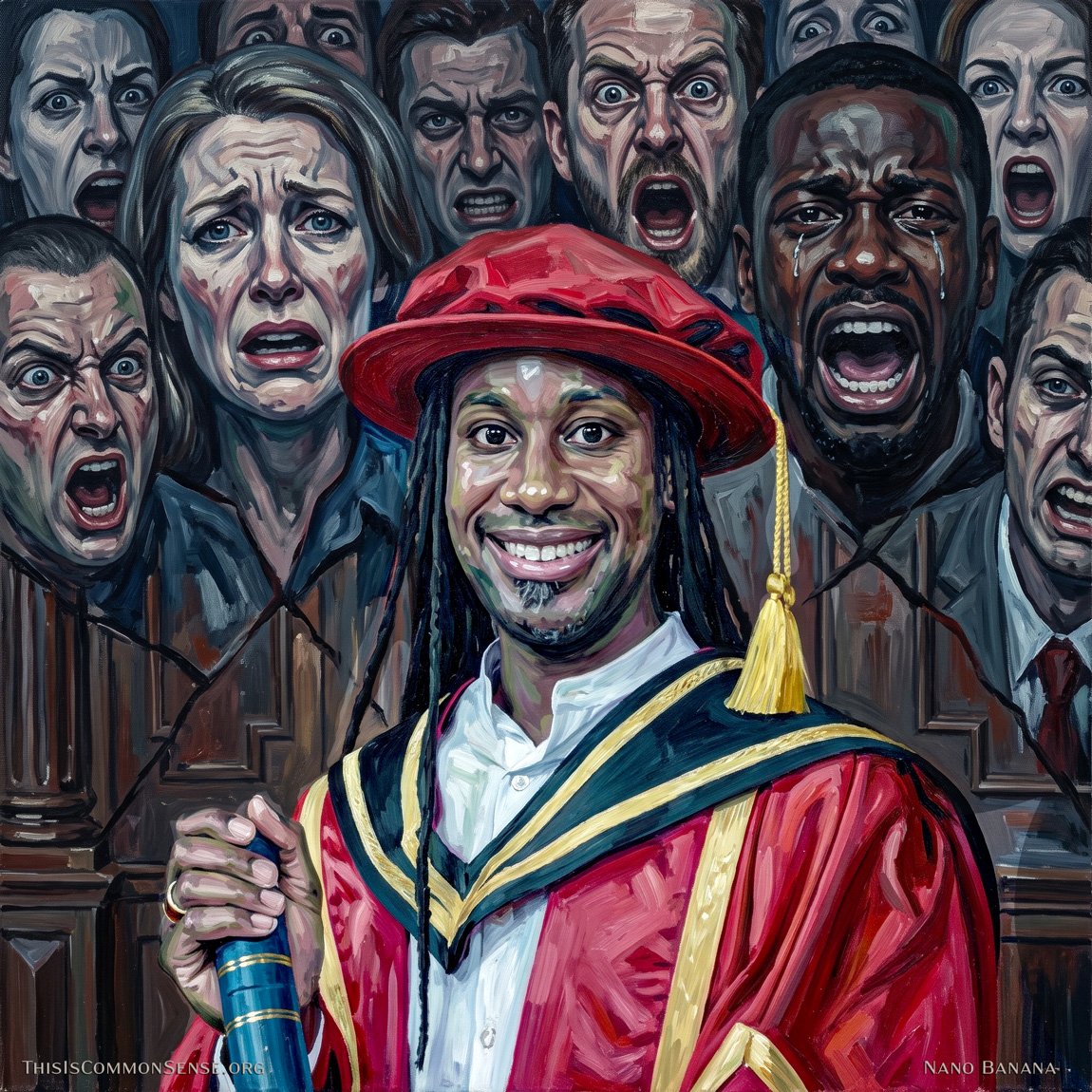
“Now is the time for all good men to come to the aid of their country” — or so typing manuals back in the 1970s had students peck out. Thankfully, the typewriter has been replaced, but that sentiment is ever so relevant today.

America is sick. Almost everyone agrees . . . still, we point our fingers in different directions.

This year, 2026, marks the 250th anniversary of the Declaration of Independence, the greatest political words ever written and the birth of this very consequential country in which we live.

“The American Revolution is the most important event since the birth of Christ,” documentary filmmaker Ken Burns contends, adding, “in all of world history.”

Yet, where’s the celebration? I mean, I see ads for “America 250” t-shirts on Facebook, but . . . the country is not coming together as one for a big event to honor and appreciate the United States of America, this experiment gone largely very, very right. 

For us and the world.

Old-timers like me remember the bicentennial in 1976, fifty years ago. It was YUGE! 

The whole country seemed to celebrate. Not because the nation was perfect and everyone agreed on everything — the civil rights movement was in progress, the Vietnam War barely over, a myriad of other festering issues divided us — but because folks perceived they had the ability to change it. 

And that America was worth the effort.

Let’s find ways to commemorate year 250 of this grand experiment. As corrupt and partisan as our politics has become, we still have the ability to make change. Peacefully. Democratically. 

And America is still very much worth the effort. 

This is Common Sense. I’m Paul Jacob.


PDF for printing

Illustration created with Nano Banana

See all recent commentary
(simplified and organized)
See recent popular posts

Categories
defense & war general freedom ideological culture Internet controversy national politics & policies

Deuce Bigelow, Political Philosopher

Americans have not endured a military draft since the 1970s. Our bodies and very lives aren’t conscript. Just our fortunes.

Not perfect, true, but as political trades go it’s better for equal freedom than slightly lower taxes and a return of the draft, which conscripts some* to benefit (the story runs) “all.”

The all-volunteer force has produced the world’s best military . . . without “slave” labor.

Comedian Rob Schneider thinks differently.  

“We must once again recommit ourselves to one Nation under God, indivisible,” he posted to X recently. “Therefore, we must restore the military draft for our Nation’s young people.

“Each and every American, at eighteen years of age, must serve two years of military service. They could also choose to serve part of that time overseas or in country in a volunteer capacity,” he went on.

“Unlike in today’s Universities, our young people will learn how truly great their country is and how unique and incredible are the Freedoms that this Nation bestows upon them.” But wouldn’t the best place to learn of American freedoms be living free in America? 

Other criticism leaned to mockery, such as the parody movie poster of Deuce Bigelow Joins the Army

Schneider later clarified that he aims for less military action: “A military with EVERY SEGMENT OF SOCIETY REPRESENTED would make the DEPLOYMENT of TROOPS and foreign wars LESS likely as there would be MORE accountability at the highest levels of power.”

This notion is, explains The Epoch Times, “part of a public appeal for Americans to return to traditional values.”

But surely the all-volunteer service is more traditional, the norm for most of our history, and, especially in the sense that freedom to join, or not, embodies liberty better than coercion does. 

This is Common Sense. I’m Paul Jacob.


* The all-volunteer force is admittedly not an exact replica of our society, representing “every segment.” It is better than that. Better educated. Better motivated. In better shape. Consider that the military cannot use at least 12 percent of the population for any purpose.


PDF for printing

Illustration created with Nano Banana

See all recent commentary
(simplified and organized)
See recent popular posts
Categories
ideological culture obituary political economy

The Bomb That Fizzled

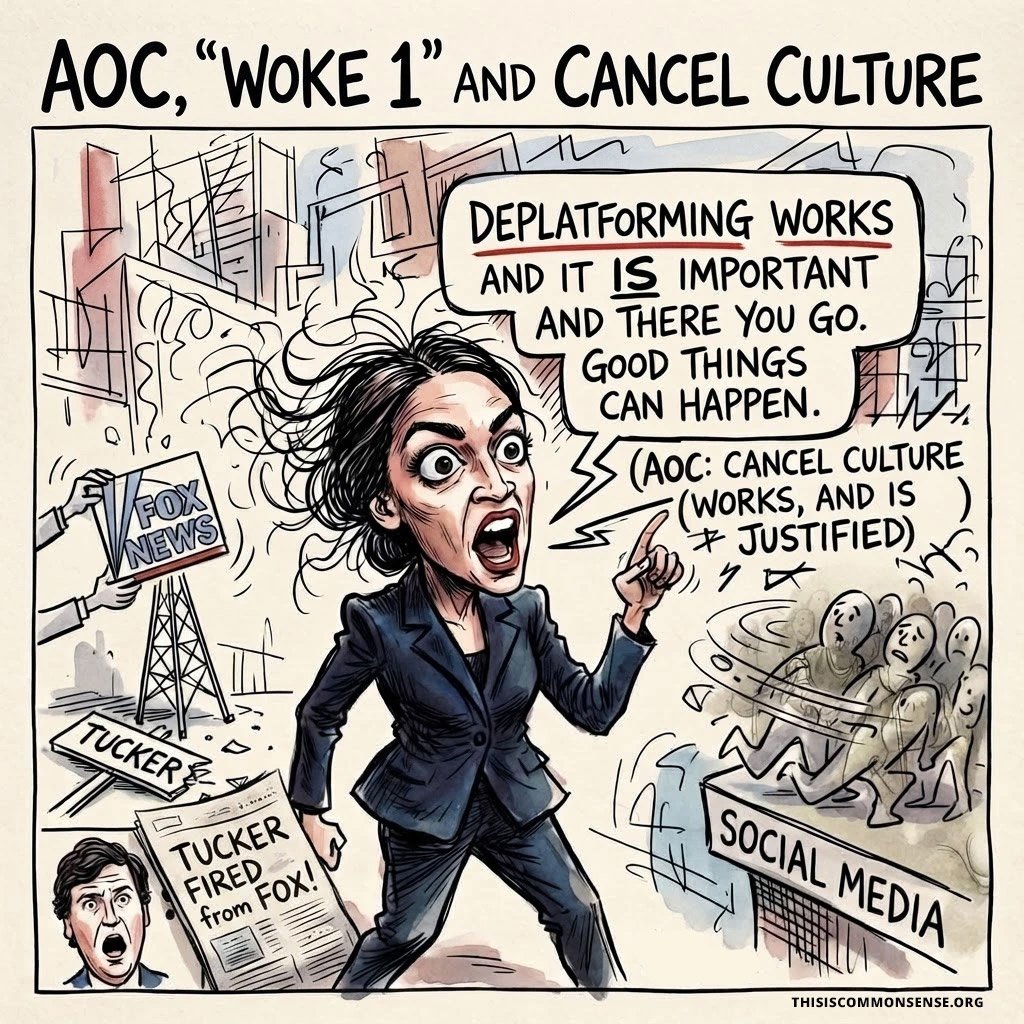
Paul Ehrlich was a biologist whose 1968 The Population Bomb went off when I was just a lad. He died last week at the ripe old age of 93. Professor Ehrlich warned of the dangers of overpopulation, proclaiming that in “the 1970s hundreds of millions of people will starve to death in spite of any crash programs embarked upon now.”

It didn’t happen.

Instead, for the first time in history, the percentage of the human population living in misery and dire poverty declined steadily.

But that did not mean his work was shelved as a bad theory, falsified by evidence.

Everywhere, when I was growing up, I witnessed a rising tide of anti-natalism, the doctrine that young adults shouldn’t have babies, or — if they did — should have only a few. Mankind was a cancer on the planet, we were told, and too many believed it.

Which affected breeding patterns.

And policy.

The current population reality is the opposite of what the Ehrlichs said it would be. All over the world, except for places in Africa, legacy populations are declining. In the United States, our population would be declining were it not for immigration. Elsewhere, the replication rate is plummeting — and it’s not just the West, but in China and Taiwan; both Koreas, as different as they are; and in Japan.

Without growing populations, our modern (if jury-rigged) social safety net pension systems are jeopardized, as is the possibility of finding caregivers to aging-and-dying populations.

We cannot blame it all on Ehrlich of course. There are many factors at work. But is it possible to be more wrong than he was? 

What should the young do now, to mark Ehrlich’s passing?

You could do worse than make some more babies.

This is Common Sense. I’m Paul Jacob.


PDF for printing

Illustration created with Nano Banana

See all recent commentary
(simplified and organized)
See recent popular posts

Categories
ideological culture subsidy

Ÿnsect Repellent

You vill eat ze bugs!

Sorry, Klaus. Not interested.

When the World Economic Forum (WEF) began trending a few years back, the world’s normal folk became somewhat alarmed at what we were hearing. (Notice how I include myself among “the normal”?) Witnessing a German player at the game of non-governmental organizations pitch “the Great Reset,” as WEF’s founder Klaus Schwab dubbed it, and boast about how he had snuck his acolytes into major governments across the world (especially in Justin Trudeau’s administration) was alarming enough. Seeing him dress up in Bond-villain garb and talk like a Hollywood caricature of a Nazi leader? Chilling. 

But perhaps worst of all: ze bugs.

Yes, he was trying to get us to eat insects. Great source of protein, he said; the food of the future, he said.

Looking the part, he inspired . . . revulsion, just as did the bugs he wanted us to consume. We were all ready to drop him into a remake of Soylent Green when his star faded; it had become clear that Americans, at least, were not copacetic with the creepy-crawly eatery plan.

And, as if to prove that Schwab’s Great Reset of our diet will not be driven by cartoonish elitists, Ÿnsect — Europe’s largest insect farm — has officially gone bankrupt.

The hundreds of millions in public and private funding, including nearly €200 million in taxpayer money from French and EU sources, could not stave off collapse. The mealworm producer, hailed as a sustainable protein pioneer for animal feed and pet food, entered judicial liquidation in December amid soaring costs, dismal revenue (just €656K in 2023 vs. €80M losses), and market rejection

Industrial-scale bug farming looks like a no-go.

Despite subsidies.

A win for civilization.

And this is Common Sense. I’m Paul Jacob.


PDF for printing

Illustration created with Nano Banana

See all recent commentary
(simplified and organized)
See recent popular posts

Categories
crime and punishment ideological culture Internet controversy

Run Rampant

We live in a great Age of Conspiracy Theories.

I’m not quite on board.

As the Internet grew up, with it came all the condemnations of conspiracy theories, run rampant. The Internet, we were told, was problematic in that not only was information readier at hand than ever before, but so was it easier to share and nurture all these goofy conspiracy theories.

You know: JFK was killed by someone other than Oswald, or also by others, in addition to Oswald. 

Or . . . UFOs are real, and the government is covering it up.

Or the Rothschilds are behind it all.

You know the kind of thing I’m talking about. 

Ick.

Yet: The government now admits that UFOs are real, implying that it was, ahem, lying in the past.

Further: As we uncover the grotesquerie in the Epstein Files, we learn that he proudly served Rothschild banking interests!

So let’s not get started on the JFK assassination.

One reason conspiracy theories are prominent is that we are uncovering so many conspiracies. Actual conspiracies. Like the Wuhan lab business, or the suppression of information about the mRNA “vaccines,” or . . . must we go on and on? 

I don’t like conspiracy theories. I said I’m not on board. We need to work towards a world not built for conspiracies. This means whittling down government, with its current vast powers to take and to “give.” And siphon off wealth at each step. While sidestepping transparency.

Ask yourself: Does our political-legal environment actually discourage conspiracies?

That question almost answers itself. 

This is Common Sense. I’m Paul Jacob.


PDF for printing

Illustration created with Nano Banana

See all recent commentary
(simplified and organized)
See recent popular posts

Categories
general freedom ideological culture

Winning Through Identification

Argentina’s libertarian president, Javier Milei, perceives that many political battles amount to a clash between producers and thieves. Between those who work for living (using what sociologist Franz Oppenheimer called the “economic means”) and those who steal for a living (using the “political means”).

Politics can’t always be reduced to this conflict, of course. But it can pretty often — certainly in a country where socialists have been pulverizing the economy.

Now, this knowledge is not kept by Milei as a dark secret, about which he would be embarrassed to be caught mentioning to a select few supporters.

Milei is not coy! That we learned during his campaign for president; and, no matter what his ups and downs in office, he still seems to be just as candid, just as willing to blast his opponents, to their faces, for —

Well: “Listen up, you ignorant fools! ‘Social justice’ is theft. It implies unequal treatment before the law and is preceded by theft. You bunch of thieves! Criminals!”

Also: “The world has only two kinds of people: those who live off what others produce — that is, the parasites, that is, you — and those who produce everything that is possible in modern life.

“The true battle of our time is cultural, philosophical, and moral. It is about choosing the system that lifted millions out of poverty. It is about ceasing to be an immature nation that squanders the future to distribute benefits in the present. . . .”

Probably even better in the original Spanish.

This is Common Sense. I’m Paul Jacob.


PDF for printing

Illustration created with Nano Banana

See all recent commentary
(simplified and organized)
See recent popular posts

Categories
ideological culture too much government

DC Stench No Longer Metaphorical

Matt Walsh says that “one of the worst ecological disasters in American history is currently unfolding. A river of sewage is flowing into the Potomac. When you dig into this story, and who is responsible for it, you start to see why the media doesn’t want to talk about it.”

He’s not wrong, the disaster began January 19th but we’ve heard little about it. On his podcast, No. 1736; Mr. Walsh goes all into a “Diversity, Equity and Inclusion” explanation.

According to The Daily Wire’s most socially conservative host, the responsible agencies are filled with hires based not on qualifications or competence or conscientiousness, but based on their color. 

He highlights, specifically, two individuals in the current muck: one, DC Water CEO David L. Gadis, partly responsible for the Flint, Michigan, water crisis, and the other, the current head of DC Water Board of Directors, Dr. Unique N. Morris-Hughes, a doctor in philosophy. Walsh regales us with her inanities and her over-spending on departmental entertainment junkets. 

While there may be a detectable odor to Walsh’s relentless critique of hiring blacks, specifically, under DEI, the odor from the Potomac, right now, is much less metaphorical.

In between retches, ask the question: Why would there be a general incompetence rising in public utilities now? 

Is it race as such? Of course not. 

Is it DEI putting race over competence? Maybe in part. 

But the general trend for a long time has been to put more and more domains of everyday life under direct government control. There’s a principle lost on the Mamdanis of this world: the more tasks set for government to govern, the less capable it becomes to manage even its core tasks. And, as that capacity declines, so goes even the will to bother trying.

Besides, if there is any apter metaphor for Washington, DC, than hundreds of millions of gallons of untreated sewage sloshing into the Potomac . . . I can’t think of it.

This is Common Sense. I’m Paul Jacob.


PDF for printing

Illustration created with Nano Banana

See all recent commentary
(simplified and organized)
See recent popular posts