Categories
election law initiative, referendum, and recall

Democracy, Democrats & the Constitution 

Do senior Democrats not understand how our government is designed?

“Today the Supreme Court of Virginia has chosen to put politics over the rule of law by issuing a ruling that overturns the April 21st special election on redistricting,” Virginia Attorney General Jay Jones said last week.

“What Jones didn’t say in his statement,” explained a Washington Post editorial, “is that he is the one who insisted the court wait until after the election to judge the merits of the challenge, over the objections of those who sued.”

“If the Virginia Supreme Court had legitimate concerns about this referendum, the time to stop it would have been before three million Virginians cast their ballots,” U.S. Senator Tim Kaine (D-Va.) declared. “But the Court let the process move forward, and Virginians sent a message loud and clear. . . .”

Come now, Senator, courts act only when a case comes before them that is ripe for adjudication. In my experience, courts rarely rule on the constitutionality of a ballot measure until after voters pass it. 

Moreover, under our system, when something violates the constitution it matters not at all whether it passed with 99.9 percent support or the slightest majority. For the record, the redistricting referendum passed “loud and clear” with 51.7 percent of the vote. That was after national Democratic groups splurged $64 million to drown out opponents. And with an “intentionally misleading” ballot title officially informing voters it would “restore fairness.”

Democratic House Minority Leader Hakeem Jeffries also entered the fray, arguing that the “decision to overturn an entire election is an unprecedented and undemocratic action that cannot stand.”

Hard to be wrong that many times in such a short sentence. The ruling will stand and is not “unprecedented”: it did what courts have always done. 

Moreover, the democratic vote on the referendum was set aside by the constraints of Virginia’s democratically enacted constitution.

This is Common Sense. I’m Paul Jacob.

Previously:

Un-Redistricting Virginia / April 23, 2026
(On a constitutional monkey wrench thrown into the Democratic Party’s latest scheme to out-trump Trump.)

Against Fairness? / April 2, 2026
(On a dishonest ballot title being foisted on Virginia voters.)

Immoderate Bullets / Oct. 6, 2025
(On the man who should most definitely not be attorney general.)


PDF for printing

Illustration created with Nano Banana

See all recent commentary
(simplified and organized)
See recent popular posts

Categories
initiative, referendum, and recall tax policy too much government

The New Property-Tax Revolts

Decades after a famous revolt by California homeowners led to the relief provided by Proposition 13, taxpayers acting to resist sky-high property taxes are making waves throughout the country.

Just a few of the many examples reported by The Epoch Times:

Ohio. The elderly couple who paid off the mortgage on their home long ago but cannot now afford the property taxes is one reason that people are signing a statewide petition to eliminate local property taxes. It will take about 413,000 signatures, collected by a July 1, 2026 deadline, for the measure to reach the November ballot.

Florida and Texas. Legislators in Florida and Texas hope to limit the “flexibility” that local governments enjoy in how they raise revenue.

Minnesota and North Dakota. Lawmakers are pushing a cap on property tax increases tied to inflation and population growth. Voters would have to agree to any change in the cap. Recent school-board driven increases of 8 or 9 percent would be limited to 3 or 4 percent in typical scenarios.

Montana. Lawmakers want a two-percent limit on tax hikes for “local government spending but not for schools, which consume about 55 percent of property tax revenues.” A fatal flaw? Public schools are better at bloating costs than improving education.

The author observes that 46 states and D.C. already impose some sort oflimits on local property tax increases — though “their designs and restrictiveness differ widely,” adds the Tax Foundation.

Let’s improve those designs and increase the restrictiveness ASAP.

This is Common Sense. I’m Paul Jacob.


PDF for printing

Illustration created with Nano Banana

See all recent commentary
(simplified and organized)
See recent popular posts
Categories
initiative, referendum, and recall partisanship

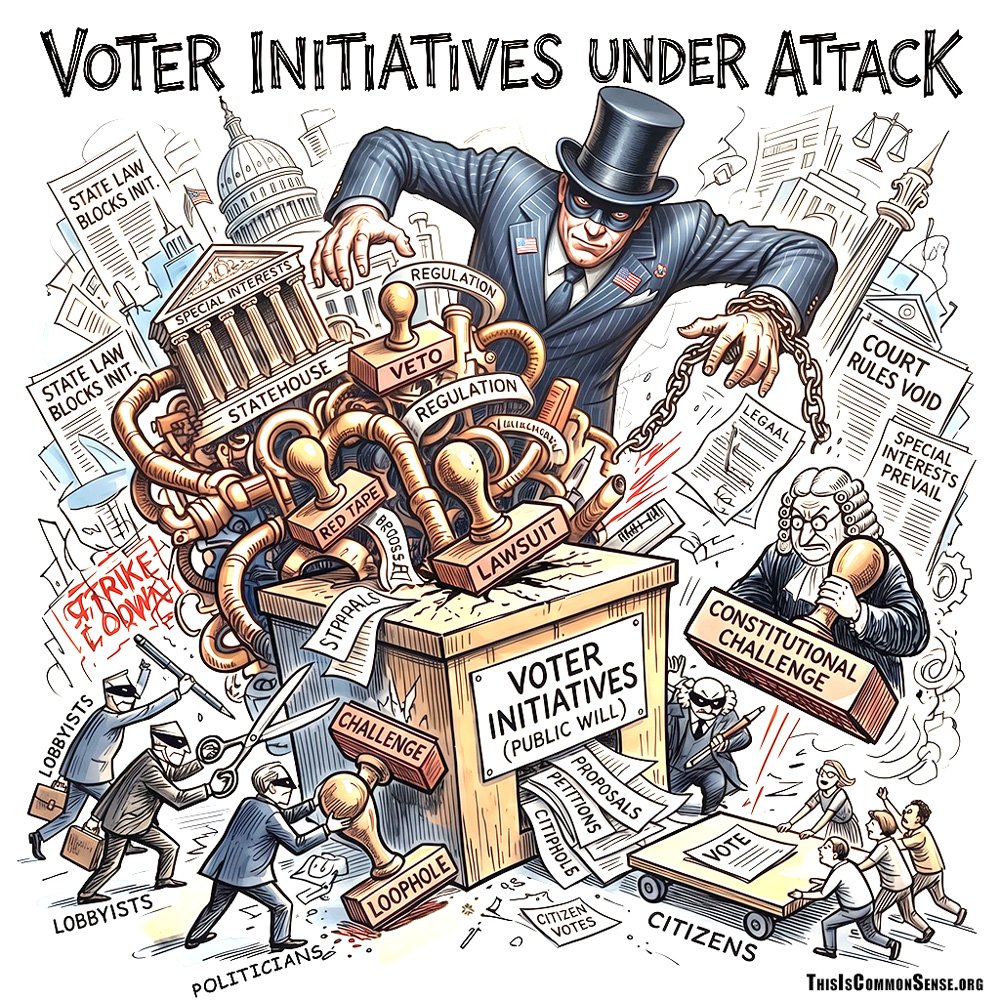
Gerrymandered Hypocrisy 

“Gerrymandering is detrimental to our democracy,” declared Virginia Governor Abigail Spanberger . . . back in 2019.

“Let voters decide, not politicians,” former President Barack Obama offered just last month. 

The problem? They’re correct!

And Republicans are now sharing the statements by these two high-ranking Democrats with Virginia voters. Why? They oppose the April 21 constitutional referendum that, if passed, would allow the legislature to gerrymander the state’s congressional district lines to likely turn the federal delegation from its current six- to five-seat Democratic majority into a ten to one Democratic majority.

How dare opponents repeat the precise words previously uttered by Spanberger and Obama as Virginians go to the polls!

WUSA-TV in Washington, D.C., headlined its report: “Anti-redistricting mailers in Virginia are misleading, critics warn.”

“This has been misconstrued,” explained Gaylene Kanoyton, the Political Action Chair for the Virginia NAACP. “This does not pertain to these unusual, unprecedented times that we are in right now.”

“It is true they made these statements years ago,” a fellow from my hometown was quoted, “but the situation has changed.”

“They don’t like it because we’re exposing their leaders for their hypocrisy,” argues former Republican Delegate A.C. Cordoza with Justice for Democracy PAC. 

Democrats can of course blame Republican gerrymandering efforts in other states to justify their own, but it is a race to the bottom for voters. 

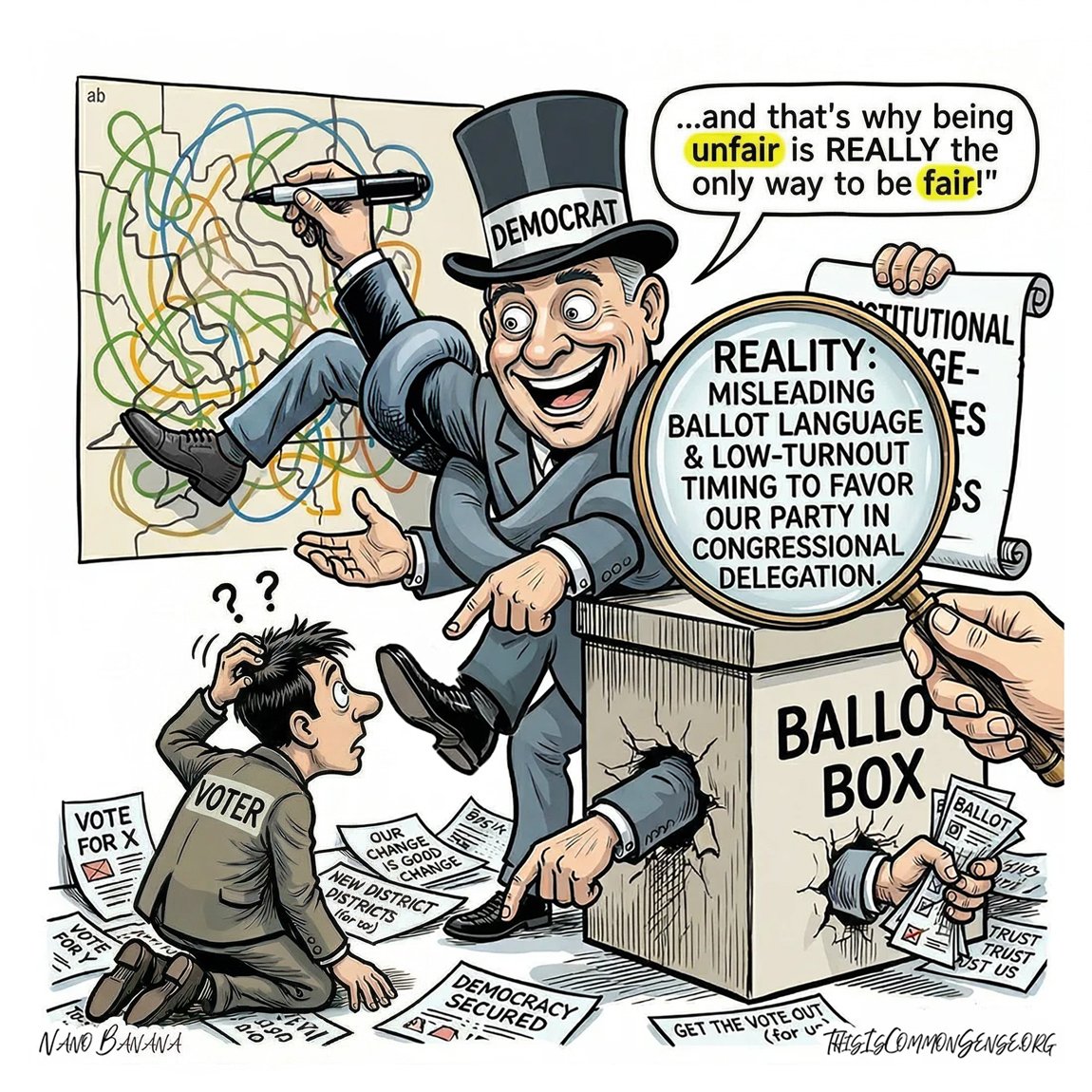
But, as I pointed out last week, Democrats deserve all the blame. The language on the ballot is completely slanted, telling voters the measure will “restore fairness.” This is so outrageous that even the liberal Washington Post editorialized last month that “Democratic politicians are presenting the proposed amendment to voters in the most brazenly dishonest way imaginable.”

Partisans will always be self-serving. But can’t they even try not to appear blatantly hypocritical?

This is Common Sense. I’m Paul Jacob.


PDF for printing

Illustration created with Nano Banana

See all recent commentary
(simplified and organized)
See recent popular posts

Categories
initiative, referendum, and recall partisanship

Against Fairness?

I’m against fairness?

Nah, it’s just Democrats who think that, because I won’t vote for their proposed constitutional amendment allowing the legislature to redraw my state’s congressional districts. 

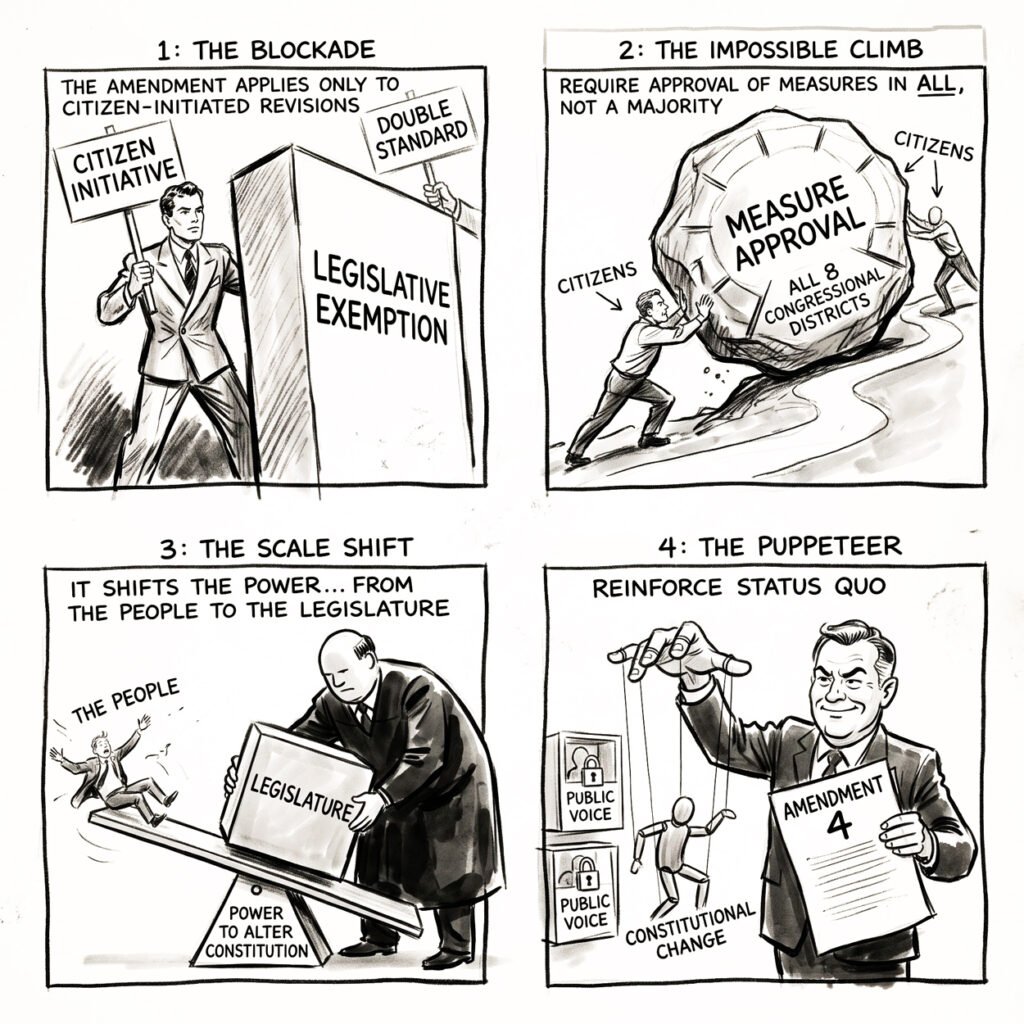
The official question on the April 21 ballot reads: “Should the Constitution of Virginia be amended to allow the General Assembly to temporarily adopt new congressional districts to restore fairness in the upcoming elections, while ensuring Virginia’s standard redistricting process resumes for all future redistricting after the 2030 census?”

What, exactly, is “fair” about this amendment? 

“If approved, Virginia’s 11 districts would likely go from six Democratic to five Republican leaning seats to 10 Democratic seats and one Republican seat,” explains WJLA, ABC’s Washington, D.C., affiliate. “The new map would draw heavily blue urban areas in Northern Virginia, with rural Republican areas far away.”

Democrat House Speaker Don Scott argues that “levels the playing field.” 

Well, it would be a fairer map if the commonwealth’s electorate were comprised of 90 percent Democrats and less than 10 percent Republican voters. Yet, in 2024, Democrat Kamala Harris garnered just 51 percent of Virginia’s vote for president. Even in last year’s blowout gubernatorial election, Democrat Abigail Spanberger won only 58 percent. During that campaign, Spanberger expressed skepticism of this district map . . . but then, as governor, signed on. 

Democrats, always selective in applying “fairness,” are outspending Republicans “by about 14 to 1 on advertising” and holding the vote for this constitutional question early, in April, with low voter turnout expected — for the first time in state history.

In the minds of Democrats, this maneuver is fair because President Trump has urged Republican states to engage is such partisan redistricting. That’s their case.

But arguments in favor of a measure do not belong in the wording voters see on their ballot as they make their decision. 

That’s unfair.

This is Common Sense. I’m Paul Jacob. 


Note: In the quoted ballot question, emphasis added.

PDF for printing

Illustration created with Nano Banana

See all recent commentary
(simplified and organized)
See recent popular posts
Categories
initiative, referendum, and recall international affairs

Alberta Shrugs?

Political dysfunction is not limited to the United States of America. 

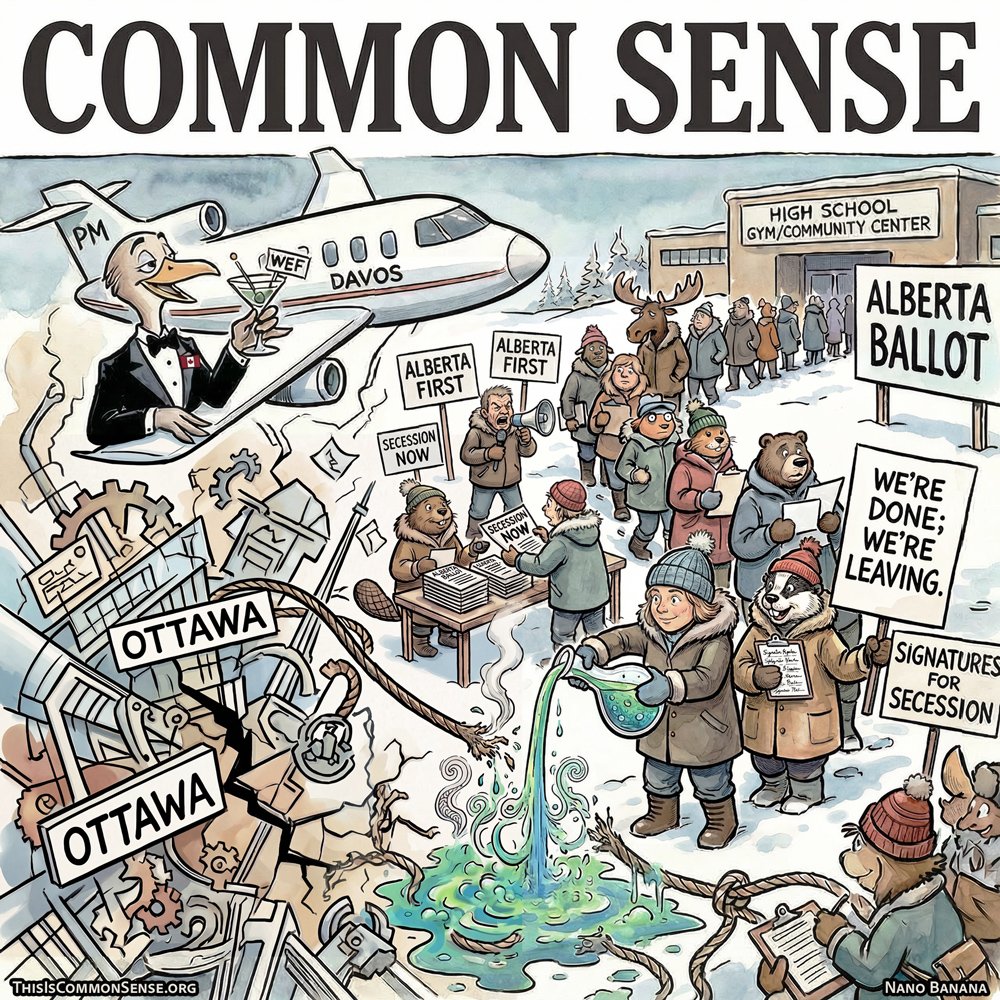
Take Canada. Things have gotten bad enough there that one province is taking measures to “dissolve the political bands which have connected them” with the folks running everything from Ottawa.

“While Canada’s new prime minister jets off to Davos to click glasses with his fellow globalists over at the World Economic Forum,” Dr. Steve Turley explained a few months ago, “back home, tens of thousands of Albertans are lining up in the freezing cold for a chance to vote their province out of the country. The length of the lines are astonishing. Thousands are showing up at high school gyms and community centers all across Alberta with one message: ‘We’re done; we’re leaving.”

Yesterday, this new Alberta First-like movement achieved a new milestone — or so says a “leading figure in the Alberta separatist movement,” according to Matthew Black of the Edmonton Journal.

The claim is that “separatist canvassers” have exceeded “the required 177,732 signatures and expect to far surpass that number before the May 2 deadline.”

Alberta’s secession is going to the ballot. 

Will the voters choose yes?

Secession is a messy, difficult business. But it’s easier in Canada than in, say, the United States (where it led to war). So we will see how the people of the province really feel about how horrific the government in Ottawa really is.

Just remember, this is not out of the blue or crazy or unthinkable even in the U.S. The more dysfunctional federal — “central” — governments get, the more they risk being abandoned by political entities “below” them.

You might think this would incentivize politicians to listen to constituents in the hinterlands, but . . .

This is Common Sense. I’m Paul Jacob.


PDF for printing

Illustration created with Nano Banana

See all recent commentary
(simplified and organized)
See recent popular posts
Categories
election law initiative, referendum, and recall local leaders

Obscenely Unacceptable

“F*ck this sh*t.”

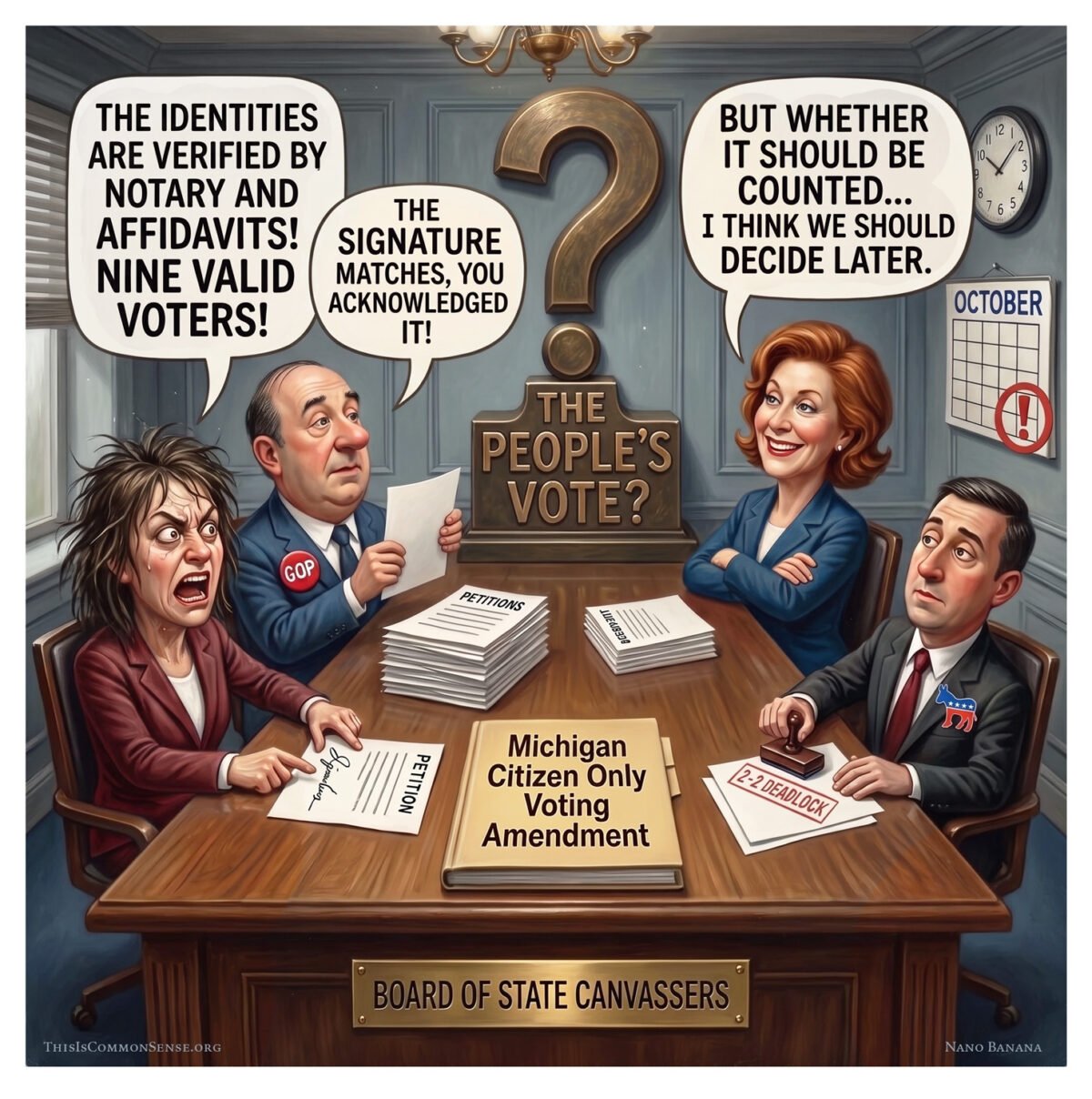
That’s how the erudite opponents of Michigan’s Citizen Only Voting Amendment responded to supporters submitting a petition with more than 750,000 voter signatures to place the measure on the November ballot. 

Sans the asterisks, actually, which I supplied.  

Back in 2022, these oppositionists, fraudulently calling themselves Voters Not Politicians (VNP), helped politicians weaken Michigan’s voter-enacted term limits. 

Now they’re fighting an initiative that I’m promoting, which would: (1) clarify that only U.S. citizens are eligible voters at the state and local level, (2) mandate that the Secretary of State check the voter rolls to ensure it contains only citizens, and (3) require photo ID to vote.

VNP argues this measure is “voter suppression,” after actively urging their liberal activists to “disrupt circulation” of our petition in order to suppress a vote on it. “If this campaign gets enough signatures to get their proposal on the ballot,” VNP acknowledged, “it’s likely to pass.”

Why might voters support the amendment? 

“In Michigan, there have been incidents where non-citizens have not only been allowed to register but then were able to cast ballots,” explained a recent Detroit News editorial. “While the number of incidents is few, that the loophole exists at all is unacceptable.”

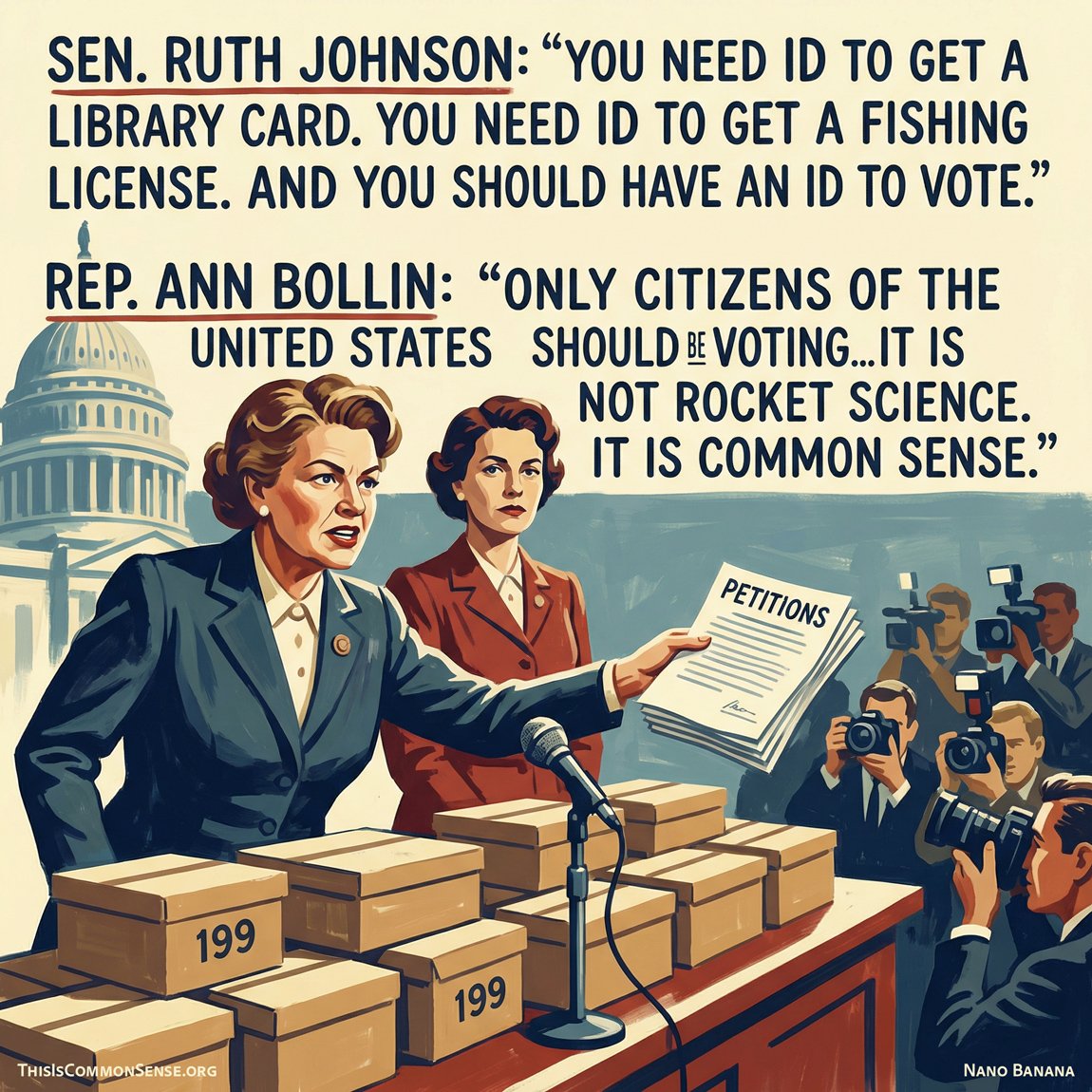
At a capitol news conference before delivering 199 boxes of petitions, Sen. Ruth Johnson, a former two-term Secretary of State, told reporters, “You need ID to get a library card to check out a book. You need ID to get a fishing license. And you should have an ID to vote.”

“Only citizens of the United States should be voting in our elections,” offered Rep. Ann Bollin, a former local election clerk. “It is not rocket science. It is common sense.”

This is [expletive deleted] Common Sense. I’m Paul Jacob. 


PDF for printing

Illustration created with Nano Banana

See all recent commentary
(simplified and organized)
See recent popular posts

Categories
crime and punishment initiative, referendum, and recall

Petition Cop Stop

“Petition fraud investigator hired by Arkansas secretary of state’s office,” headlined an article in the Arkansas Democrat-Gazette, “checks canvassers at church.”

Patrick Hall was the government agent who whipped out his badge on a couple of Arkansans. Why? They had been wantonly using their First Amendment rights to petition their government last week outside Little Rock’s Unitarian Universalist Church.

“I did feel a little bit intimidated,” volunteer petitioner Julie Taylor acknowledged, after being questioned and ID’d by Barney Fife — er, Mr. Hall.

Samantha Boyd, a spokesperson for the secretary of state’s office, confirmed that Hall had stopped the petition circulators, demanding and photographing their IDs.

“Our office would like to emphasize that no one is ever required to provide proof of identification or engage with our employees,” she said, defending his actions, “it is voluntary,”

She further explained that Hall’s was a “non-law enforcement position created to organize any reports of petition fraud.” So, why brandish the badge? And what reports did he hope to “organize” by playing cop?

Amusingly, one of Officer Hall’s questions regarded whether Taylor needed to check his ID to collect his signature on her two petitions. While a statute requiring petitioners to view the government ID of every would-be petition signer had passed Arkansas’s legislature, it was recently blocked by a federal judge because it “likely infringed on First Amendment rights.”

So, here is Secretary of State Cole Jester’s office using a pretend policeman to harass citizens engaged in First Amendment activity in order to push compliance with a law that has been enjoined for its obvious unconstitutionality.

One of the petitions Taylor was carrying “would give citizens a fundamental right to sign and circulate petitions,” and — as the organization that sponsored it (Protect AR Rights) puts it — “protect the process from irregular, unauthorized, or politically motivated interference.”

Viva la initiative!

This is Common Sense. I’m Paul Jacob.


PDF for printing

Illustration created with Nano Banana

See all recent commentary
(simplified and organized)
See recent popular posts
Categories
initiative, referendum, and recall local leaders

Deliciously Dead

The bill died. Had it lived, it would have — in the words of Tim Eyman — taken away Washington State voters’ “right to initiative, they would stop all dissent.” 

Who’s the “they”? Democrats running the State legislature, who had, Eyman says, been “pushing this thing really hard this session.”

But they gave up. The opposition to the bill was just too strong. Democrats let it die before the scheduled vote on the Senate floor. 

So what was wrong with the bill? 

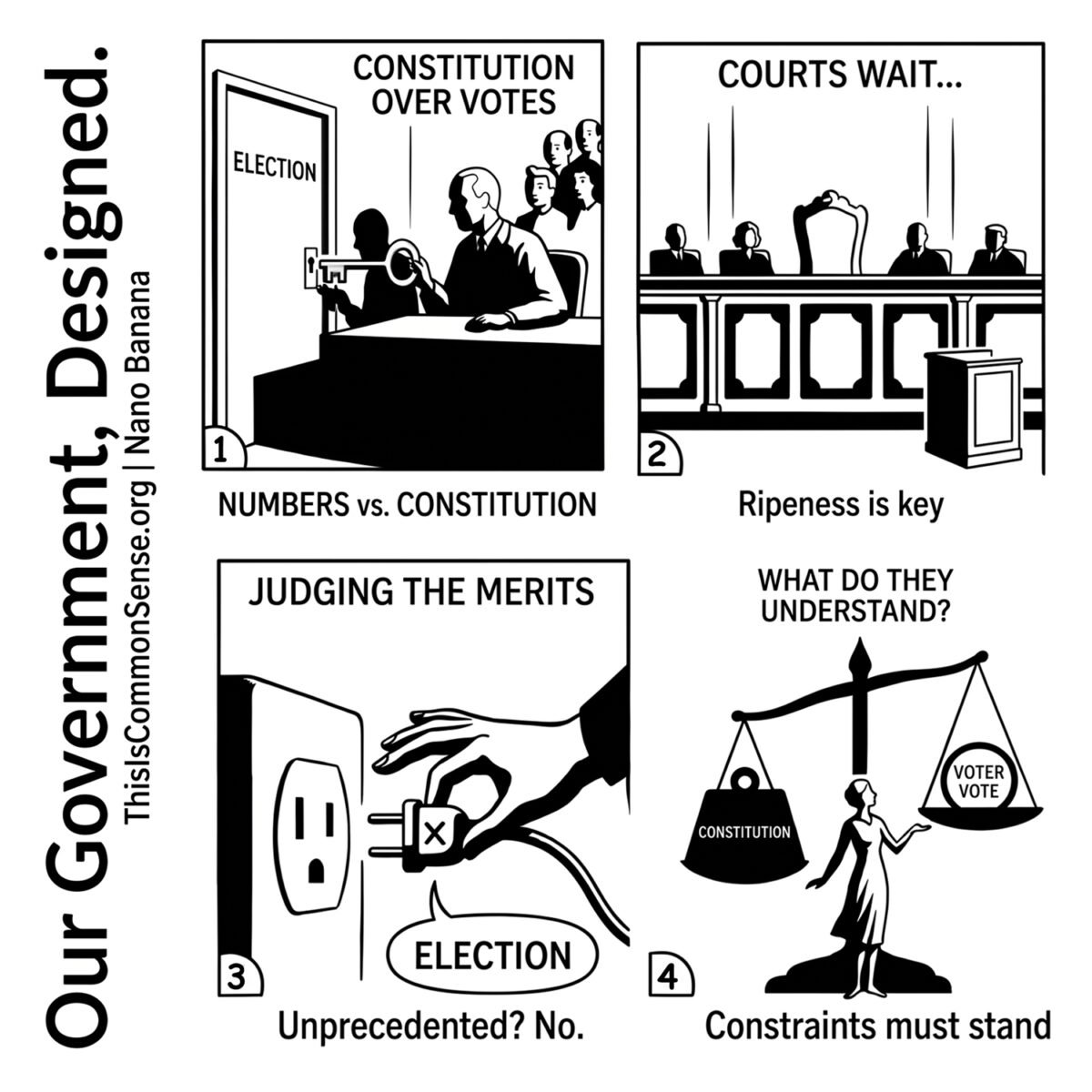
“SB 5973 would have required a minimum of 1,000 signatures to be submitted to the Secretary of State from those who support the measure, before the issue is given an official title and signature gathering can begin to ensure ‘viability’ of the issue,” explains Carleen Johnson of The Center Square. It would “also have banned the practice of paying signature gatherers for the number of signatures they acquire.”

It was, as opponents called it, an “initiative killer.” You can see why fighting the bill was so important. 

And remember, “initiative killers” are everywhere — at least everywhere initiative and referendum rights are in place. 

Politicians, who allegedly serve citizens, don’t like it when citizens work around their machinations. So they regularly throw up roadblocks to the initiative process — anything to make it harder for citizens to limit their incessant lust for more taxes, terms of office, etc.

Citizen activists all across the country have their work cut out for them. But, until the next major legislative attack (tomorrow): celebrate!

And don’t forget to thank Tim Eyman and other Washington activists for stepping up to defend everyone’s rights.

This is Common Sense. I’m Paul Jacob.


PDF for printing

Illustration created with Nano Banana

See all recent commentary
(simplified and organized)
See recent popular posts

Categories
initiative, referendum, and recall

Initiative Killers

“Almost nothing is more sacred for the voters,” says Sam Reed, former Secretary of State in Washington State, “than their right to petition to change laws or to refer laws to the voters.”

He reminded members of the Senate State Government and Elections Committee that “the initiative process is utilized by progressives, conservatives, and nonpartisan individuals. . . . For over 100 years, the initiative process has served our citizens well and any changes made to it must be justified.”

Reed argues that the changes in Senate Bill 5973 (as well as in House Bills HB 2599 and 2260) are in no way justified.

“The stated reason for this bill is to stop fraudulent or forged signatures from being counted. But that’s already being done. Besides substantial penalties deterring such actions, the Secretary of State is extremely diligent and reviews every petition sheet and every signature and any that are even remotely questionable are set aside and never counted.” This means that “all of SB 5973’s requirements will substantially burden the Secretary of State’s already overworked staff and the citizen signature gathering process without any added benefit.”

The bills add more requirements that end up being more burdensome on an already high-hurdled petitioning process.

“All aspects of the proposed bill (SB 5973 / HB 2599) impose severe restrictions, limitations, and onerous requirements on circulators and ballot measure campaigns,” adds attorney Nicholas Power, pointing out that the bill’s intent section “admits there hasn’t been any fraud for 12+ years.”

What’s really going on with these bills?

Politicians generally don’t like citizens creating laws any more than they like citizens limiting their terms in office. It really cramps their style.

So, they want to kill the initiative. Instead, let’s keep cramping their murderous style.

This is Common Sense. I’m Paul Jacob.


PDF for printing

Illustration created with Nano Banana

See all recent commentary
(simplified and organized)
See recent popular posts

Categories
initiative, referendum, and recall

A Place Without Hope?

“Don’t lose hope.”

That’s what Bonnie Miller, president of the League of Women Voters of Arkansas, told her fellow Arkansans after the state’s highest court overturned a 74-year precedent. The justices ruled that constitutional amendments passed by citizens’ initiative can be amended or repealed by legislators with a two-thirds vote of both chambers. 

Without the issue ever going back to voters.

Sure, this might seem to follow from a constitutional provision: “No measure approved by a vote of the people shall be amended or repealed by the General Assembly . . . except upon a yea and nay vote on roll call of two-thirds of all the members elected to each house of the General Assembly . . .”

But in 1951, the Arkansas Supreme Court declared it “inconceivable” that “the General Assembly could amend or repeal a constitutional amendment initiated by the people,” concluding that the term “measure” simply did not apply to a constitutional amendment. Today’s Supremes reversed this bedrock understanding, thereby empowering the legislature. (Note that the legislature is not seeking to overthrow their own constitutional amendments.)

For more than a decade, the Natural State’s solons have passed statute after statute — and even proposed several constitutional amendments — designed to destroy the citizen initiative process. Their attempts have been consistently defeated by voters at the polls. In addition, last month a federal judge finally struck down several burdensome restrictions that legislators had passed on petitioning.

Now there are also two ballot initiatives — one by Protect AR Rights and another by the League of Women Voters — petitioning for a vote next November to restore the state’s once fair and accessible ballot initiative process.

How long can politicians thwart the will of the people and get away with it? The people of Arkansas are finding out.

This is Common Sense. I’m Paul Jacob.


PDF for printing

Illustration created with Nano Banana

See all recent commentary
(simplified and organized)
See recent popular posts