
Categories
initiative, referendum, and recall tax policy too much government

The New Property-Tax Revolts

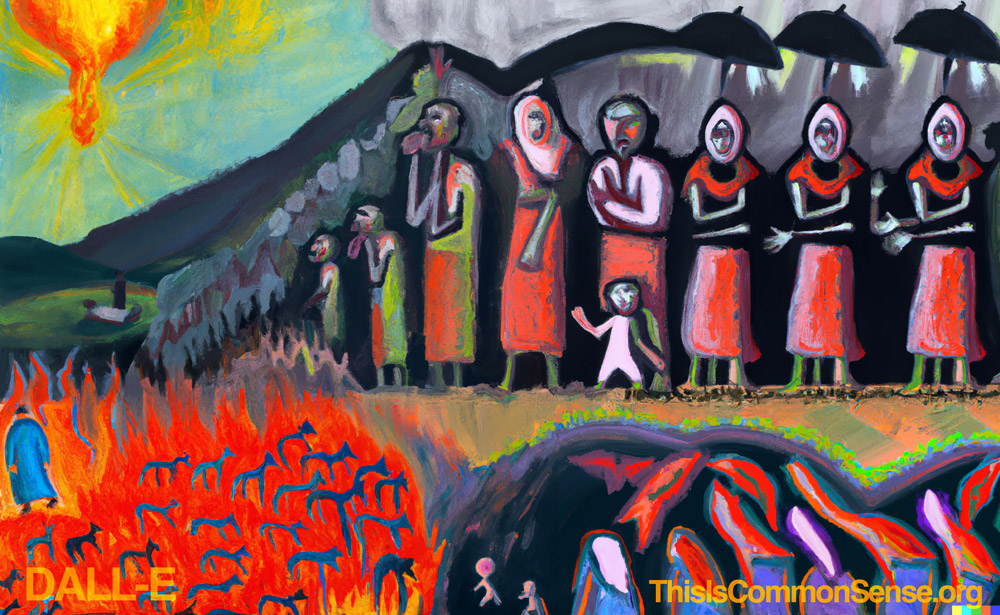
Decades after a famous revolt by California homeowners led to the relief provided by Proposition 13, taxpayers acting to resist sky-high property taxes are making waves throughout the country.

Just a few of the many examples reported by The Epoch Times:

Ohio. The elderly couple who paid off the mortgage on their home long ago but cannot now afford the property taxes is one reason that people are signing a statewide petition to eliminate local property taxes. It will take about 413,000 signatures, collected by a July 1, 2026 deadline, for the measure to reach the November ballot.

Florida and Texas. Legislators in Florida and Texas hope to limit the “flexibility” that local governments enjoy in how they raise revenue.

Minnesota and North Dakota. Lawmakers are pushing a cap on property tax increases tied to inflation and population growth. Voters would have to agree to any change in the cap. Recent school-board driven increases of 8 or 9 percent would be limited to 3 or 4 percent in typical scenarios.

Montana. Lawmakers want a two-percent limit on tax hikes for “local government spending but not for schools, which consume about 55 percent of property tax revenues.” A fatal flaw? Public schools are better at bloating costs than improving education.

The author observes that 46 states and D.C. already impose some sort oflimits on local property tax increases — though “their designs and restrictiveness differ widely,” adds the Tax Foundation.

Let’s improve those designs and increase the restrictiveness ASAP.

This is Common Sense. I’m Paul Jacob.


PDF for printing

Illustration created with Nano Banana

See all recent commentary
(simplified and organized)
See recent popular posts
Categories
First Amendment rights general freedom international affairs paternalism too much government

Deadly Dress Code

Iranian women are again out in the streets protesting the brutality of the regime.

We can only hope that their efforts will bear fruit — or, if we’re Elon Musk, we can also provide protesters with Internet service via Starlink satellite, now that the Iranian government has blocked the Internet in much of the country.

The immediate spark was the death of 22-year-old Mahsa Amini.

On September 13, Mahsa was arrested by Iran’s morality police for incorrectly wearing the hijab, the traditional head covering mandatory for Iranian women since 1979. Some of her hair showed.

According to witnesses, the police beat Mahsa in the police van; the police deny it.

Within hours of being detained, Mahsa was hospitalized and in a coma. She soon died. The police not very plausibly claimed that she had a heart attack. All a terrible coincidence. The family says that Mahsa had no health problems before being detained.

The immoral morality police were obeying the country’s new president, Ebrahim Raisi, who on August 15 decreed that the nation’s dress code be more strictly enforced.

The protests — in which women have been burning their hijabs, cutting their hair, and shouting “Death to the oppressor!” — are ongoing and nationwide, and have spread to other countries. 

At least thirty protesters have been killed.

In the words of the New Yorker’s Robin Wright, Mahsa’s death “lit the fuse of long-smoldering dissent in Iran,” and its people have taken to the streets before.

Godspeed this time.

This is Common Sense. I’m Paul Jacob.


PDF for printing

Illustration created with DALL-E

See all recent commentary
(simplified and organized)
See recent popular posts
Categories
crime and punishment

To Emancipate

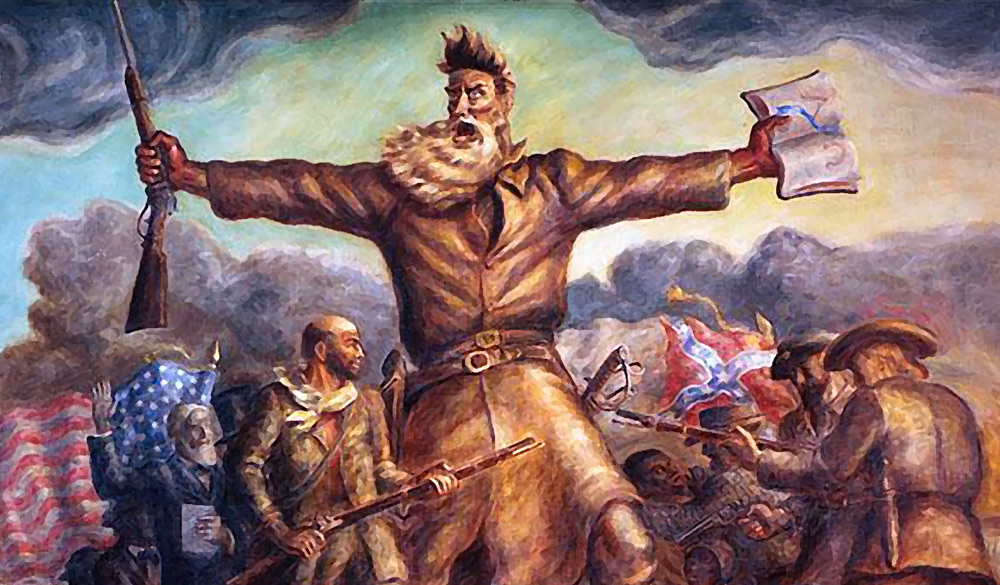
On this very day 162 years ago, federal troops re-captured the armory building at Harpers Ferry, Virginia, where John Brown and what was left of his raiders were holed up. 

Brown and 21 men — 14 white, seven black — had arrived on Oct. 16, 1859, to seize weapons to arm the slave revolt they attempted to spark. Even before federal troops arrived, townspeople and militiamen had trapped Brown.

Battling against the raiders, a Marine and four townspeople lost their lives, including the town’s mayor and a free African American. Ten of Brown’s men were killed, five escaped, and seven were captured, tried, convicted and executed, including Brown. Two enslaved African Americans who joined Brown also died in the fighting. 

Though the raid itself was a failure, it heralded that slavery could not stand.

“Until this blow was struck, the prospect for freedom was dim, shadowy and uncertain,” Frederick Douglass spoke decades after the Civil War ended. “The irrepressible conflict was one of words, votes and compromises.

“When John Brown stretched forth his arm the sky was cleared. . . . and the clash of arms was at hand.”

School kids learn that Brown was something of a madman, and indeed he was accused of atrocities in Kansas and elsewhere. But how long must a person allow a crime as serious as the enslavement of 4 million people to continue before taking up arms?

“It was his peculiar doctrine that a man has a perfect right to interfere by force with the slaveholder, in order to rescue the slave,” argued Henry David Thoreau in “A Plea for Captain Brown,” adding, “I agree with him.”

Peaceful democratic means are always preferred over violence. But had I been on John Brown’s jury, I would have voted to acquit.

This is Common Sense. I’m Paul Jacob.


PDF for printing

See all recent commentary
(simplified and organized)
See recent popular posts

Categories
ideological culture national politics & policies too much government

Tyrants Are Not Our Friends

Last month, an upset apple cart led to political revolution.

On December 17, Tunisian government agents tried to confiscate Mohamed Bouazizi’s livelihood. When he refused to hand over his produce, he was slapped by a female inspector and then beaten by two of her colleagues, who took his scale. When he went to the municipal building to get his property back, he was beaten again.

Later that day in the public square, Bouazizi doused himself with lighter fluid and set himself on fire. He died weeks later, but not before demonstrations erupted in his home town and spread throughout Tunisia.

Tunisians had long labored under the repressive dictatorship of Zine el-Abidine Ben Ali, who repressed both political speech and commerce. No longer. He’s been ousted.

So do our leaders celebrate with the Tunisian people? No. The New York Times reports that Ben Ali was “an important ally of the United States.” He’s now in exile in Saudi Arabia, another dictatorship allied with the United States.

Protest has spread further, most notably to Egypt, yet another repressive government supported by America’s State Department . . . and taxpayers.

Secretary of State Hillary Clinton reassures us that, “the Egyptian government is stable and is looking for ways to respond to the legitimate needs and interests of the Egyptian people.”

That response? To imprison and torture bloggers and opposition political leaders.

Our most effective aid to Africa would be to stop subsidizing repressive regimes and pretending that slavery is freedom.

This is Common Sense. I’m Paul Jacob.