Categories
election law initiative, referendum, and recall

Democracy, Democrats & the Constitution 

Do senior Democrats not understand how our government is designed?

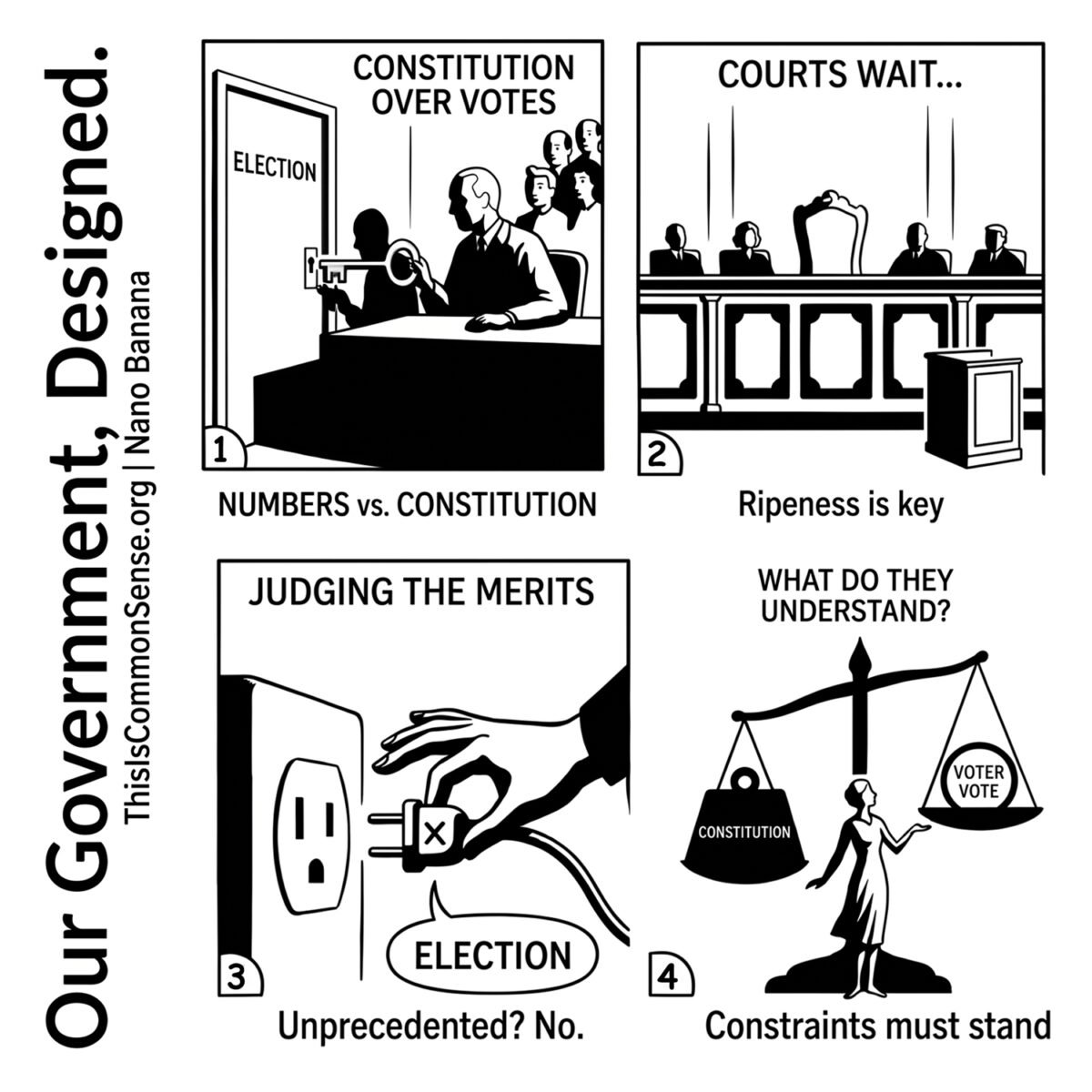
“Today the Supreme Court of Virginia has chosen to put politics over the rule of law by issuing a ruling that overturns the April 21st special election on redistricting,” Virginia Attorney General Jay Jones said last week.

“What Jones didn’t say in his statement,” explained a Washington Post editorial, “is that he is the one who insisted the court wait until after the election to judge the merits of the challenge, over the objections of those who sued.”

“If the Virginia Supreme Court had legitimate concerns about this referendum, the time to stop it would have been before three million Virginians cast their ballots,” U.S. Senator Tim Kaine (D-Va.) declared. “But the Court let the process move forward, and Virginians sent a message loud and clear. . . .”

Come now, Senator, courts act only when a case comes before them that is ripe for adjudication. In my experience, courts rarely rule on the constitutionality of a ballot measure until after voters pass it. 

Moreover, under our system, when something violates the constitution it matters not at all whether it passed with 99.9 percent support or the slightest majority. For the record, the redistricting referendum passed “loud and clear” with 51.7 percent of the vote. That was after national Democratic groups splurged $64 million to drown out opponents. And with an “intentionally misleading” ballot title officially informing voters it would “restore fairness.”

Democratic House Minority Leader Hakeem Jeffries also entered the fray, arguing that the “decision to overturn an entire election is an unprecedented and undemocratic action that cannot stand.”

Hard to be wrong that many times in such a short sentence. The ruling will stand and is not “unprecedented”: it did what courts have always done. 

Moreover, the democratic vote on the referendum was set aside by the constraints of Virginia’s democratically enacted constitution.

This is Common Sense. I’m Paul Jacob.

Previously:

Un-Redistricting Virginia / April 23, 2026
(On a constitutional monkey wrench thrown into the Democratic Party’s latest scheme to out-trump Trump.)

Against Fairness? / April 2, 2026
(On a dishonest ballot title being foisted on Virginia voters.)

Immoderate Bullets / Oct. 6, 2025
(On the man who should most definitely not be attorney general.)


PDF for printing

Illustration created with Nano Banana

See all recent commentary
(simplified and organized)
See recent popular posts

Categories
election law U.S. Constitution Voting

Expanding the Electorate

Who should vote? Ought we expand the electorate? 

To everyone . . . on the planet?

Do folks from other countries, who have come to America, legally or not, and reside in a community for 30 days, have a right to vote?

Well, they do under a crazy law in our nation’s capital. Even the ambassadors and embassy workers (and spies) that China and Russia send to represent their regimes, could, if they so desired, register and vote for the next mayor, city council-member and ballot measure in the federal capital . . . if those foreign nationals have been here (working for another country) for 30 days. 

The far-left-of-sanity Democrats on the D.C. City Council passed it — without a popular vote. 

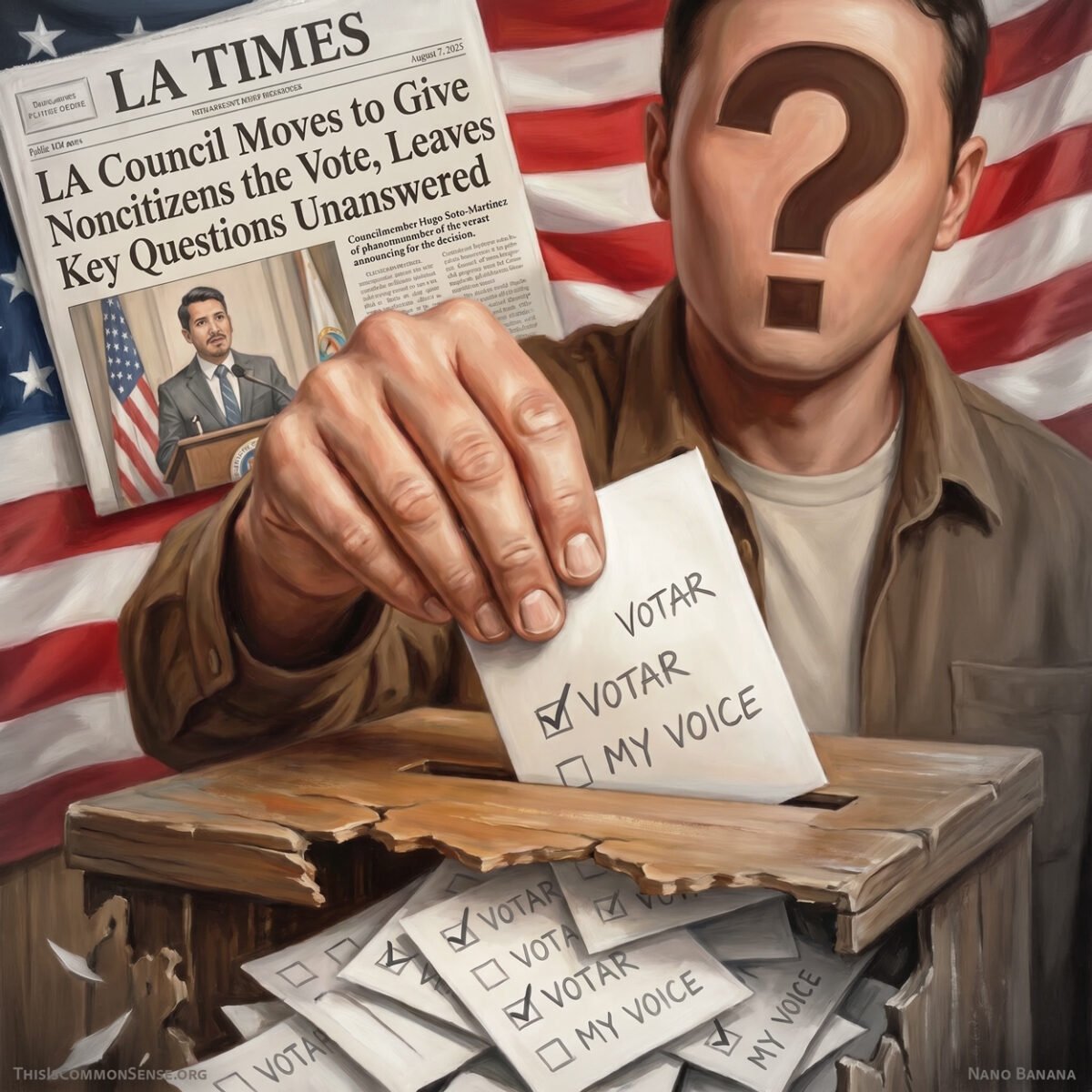
At least in Los Angeles there will be a public vote — should the push by Democratic Socialists of America-backed Democrats on that City Council advance a measure to allow noncitizens in L.A., legally or not, to vote in local elections. 

Citizenship seems a wiser qualifier at all levels of government.*

“Federal law prohibits noncitizens from voting in federal elections,” The Los Angeles Times reports. “However, states are allowed to set their own local and statewide election rules.”

Note that The Times does not inform readers that states, such as California, determine who is qualified to vote in federal elections in those states. Were California to allow noncitizens to vote in its state legislative elections — not too giant a leap from noncitizen voting in L.A. and San Francisco — those noncitizens would be legally qualified to vote for California’s representatives in Congress and the U.S. Senate. 

The U.S. Constitution’s “Qualifications Clause” is clear.

This state “loophole” is something worth closing through Florida Rep. Laurel Lee’s constitutional amendment

Locally, statewide, nationally: let the people decide.

This is Common Sense. I’m Paul Jacob. 


* I serve as chairman of Americans for Citizen Voting. We have worked to pass Citizen Only Voting constitutional amendments in 15 states and to place these measures on six more state ballots this November. We now ask Congress to consider and propose a federal constitutional amendment, HJR 152, the U.S. Citizens Vote Amendment.


PDF for printing

Illustration created with Grok Imagine

See all recent commentary
(simplified and organized)
See recent popular posts
Categories
election law litigation partisanship

Un-Redistricting Virginia

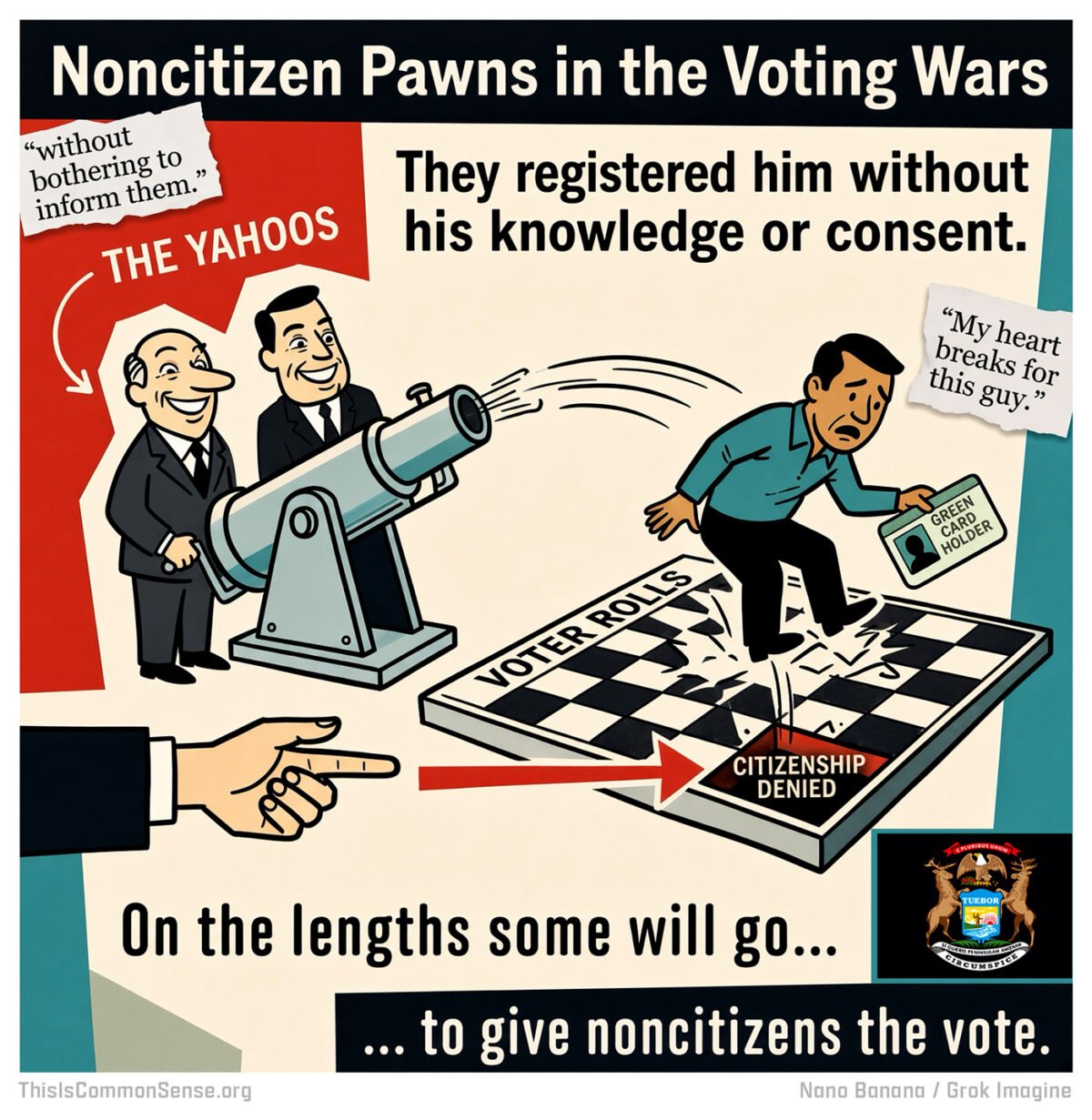
A circuit court has ruled that Virginia’s new voter-passed congressional map, gerrymandered to give Democrats in the state a prohibitive advantage in the next congressional election, is unconstitutional.

Judge Jack Hurley, of the Circuit Court of the Commonwealth of Virginia for the 29th Judicial Circuit, Tazewell County, denied a motion to stay his injunction blocking certification of the election using the new districts. Former Virginia attorney general Ken Cuccinelli reports that once a final order is drafted and entered, “it will be immediately appealed.”

If the rejiggering survives the challenge, it could be the factor that tips the balance in the House of Representatives toward the Democrats next November.

Cuccinelli, who is now national chairman of the Election Transparency Initiative, had been saying that passage of the gerrymander would not be the last word. In their rush to get the measure to voters and enacted before November 2026, lawmakers ignored sundry constitutional requirements.

The 2024 special session that took up the redistricting measure had been convened to legislate about the budget. “Its governing resolution limited the session’s scope. Expanding it to include a constitutional amendment on redistricting required a two-thirds vote that never occurred.”

Also, says Cuccinelli, the state constitution requires that “an election must intervene between first and second passage” of a proposed constitutional amendment. “Here, first passage occurred during an election cycle — not before an intervening one.”

Among other problems is the constitutional stipulation that “every electoral district shall be composed of contiguous and compact territory.” The proposed map violates this requirement “badly.”

When you’ve got to go, you’ve got to go, and this partisan map must go.

This is Common Sense. I’m Paul Jacob.


PDF for printing

Illustration created with Grok Imagine

See all recent commentary
(simplified and organized)
See recent popular posts
Categories
election law U.S. Constitution Voting

Noncitizen Voting Q&A

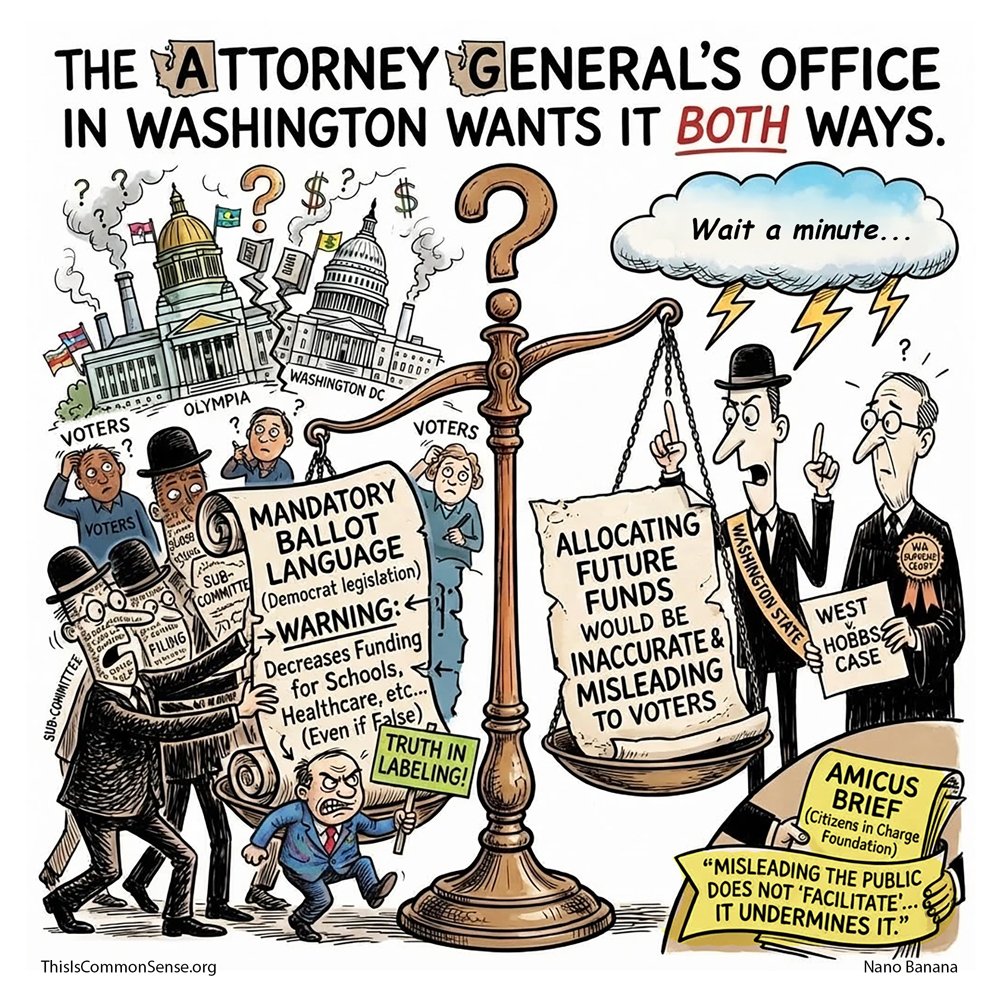
Question: What stops the California Assembly from allowing noncitizens to vote in federal elections?

Answer: Nothing. 

Noncitizens are now voting in two major California cities: San Francisco and Oakland. Legally. Including those in the country illegally.

And California courts have upheld the constitutionality, after San Francisco’s law was challenged. 

Voting in the Golden State doesn’t have to be limited to U.S. citizens.

So, it’s not all that far-fetched to think California’s legislature might one day pass a statute allowing noncitizens to vote in state legislative elections. Maybe in Maryland, too, where 16 cities now have legal and illegal aliens voting. Or Vermont, where a legislative supermajority overrode the governor to say yes to three cities giving the vote to noncitizens. Legislation has been introduced in both New York and Connecticut, in recent years, to give noncitizens the vote in those states’ legislative elections.  

“The Constitution is clear,” law professor Bradley Smith wrote Monday in The Wall Street Journal, “Under Article I and the 17th Amendment, any person who is allowed to vote in a state legislative election is automatically also allowed to vote for members of Congress.” 

In other words, the federal statute that purports to ban noncitizen voting in federal elections has a hole in it big enough to drive, say, the state of California through. 

“A federal statute can’t trump the Constitution’s explicit, exclusive grant of power to each state to determine who is eligible to vote,” explained the professor. 

. . . “even if the SAVE America Act were passed. . . .

“Although no state allows noncitizens to vote for its legislature,” Smith said, “that could change.” 

We need a constitutional amendment in this 250th year of our Republic because only citizens of the United States should vote in federal elections. Rep. Laurel Lee (R-Fla.) just introduced it.

This is Common Sense. I’m Paul Jacob. 


PDF for printing

Illustration created with Nano Banana

See all recent commentary
(simplified and organized)
See recent popular posts
Categories
election law initiative, referendum, and recall local leaders

Obscenely Unacceptable

“F*ck this sh*t.”

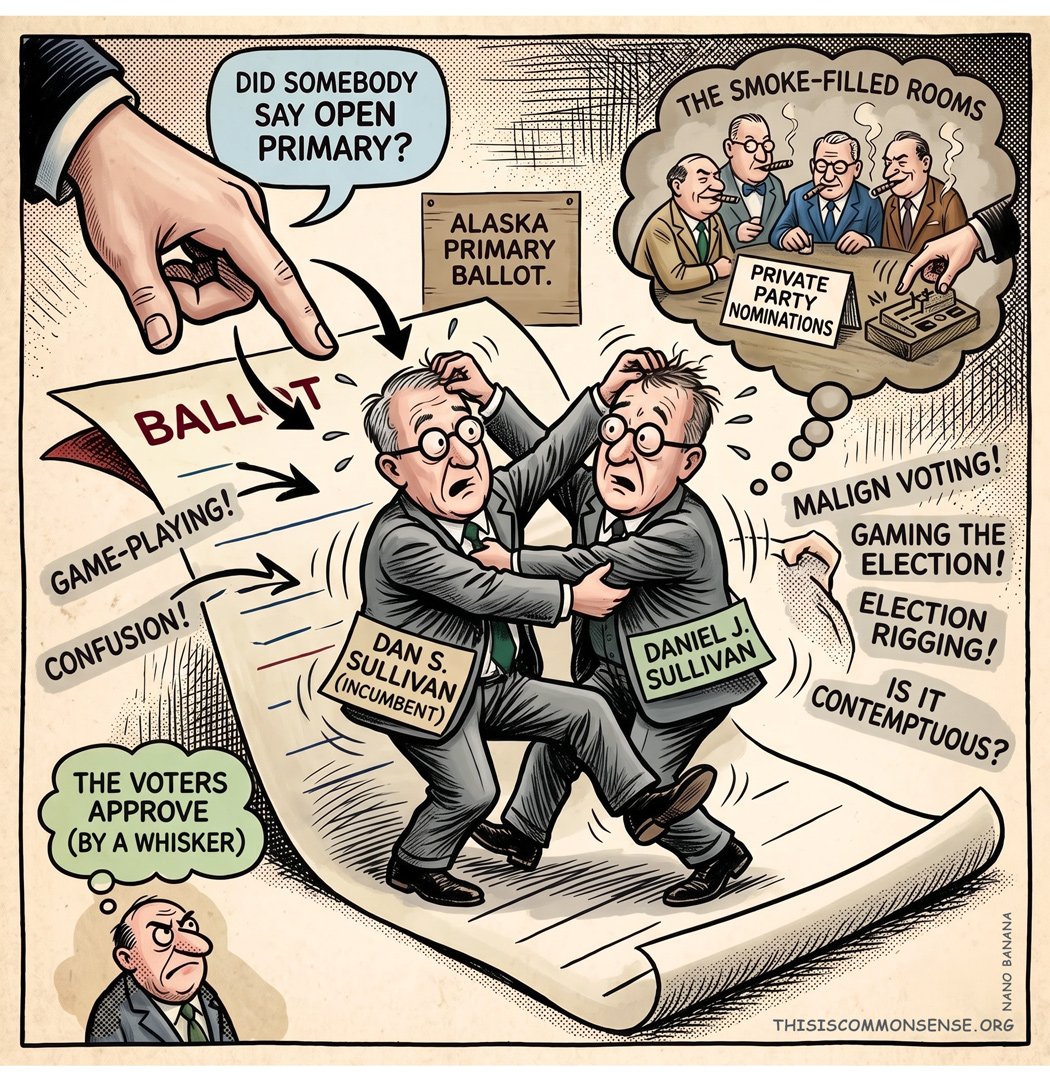
That’s how the erudite opponents of Michigan’s Citizen Only Voting Amendment responded to supporters submitting a petition with more than 750,000 voter signatures to place the measure on the November ballot. 

Sans the asterisks, actually, which I supplied.  

Back in 2022, these oppositionists, fraudulently calling themselves Voters Not Politicians (VNP), helped politicians weaken Michigan’s voter-enacted term limits. 

Now they’re fighting an initiative that I’m promoting, which would: (1) clarify that only U.S. citizens are eligible voters at the state and local level, (2) mandate that the Secretary of State check the voter rolls to ensure it contains only citizens, and (3) require photo ID to vote.

VNP argues this measure is “voter suppression,” after actively urging their liberal activists to “disrupt circulation” of our petition in order to suppress a vote on it. “If this campaign gets enough signatures to get their proposal on the ballot,” VNP acknowledged, “it’s likely to pass.”

Why might voters support the amendment? 

“In Michigan, there have been incidents where non-citizens have not only been allowed to register but then were able to cast ballots,” explained a recent Detroit News editorial. “While the number of incidents is few, that the loophole exists at all is unacceptable.”

At a capitol news conference before delivering 199 boxes of petitions, Sen. Ruth Johnson, a former two-term Secretary of State, told reporters, “You need ID to get a library card to check out a book. You need ID to get a fishing license. And you should have an ID to vote.”

“Only citizens of the United States should be voting in our elections,” offered Rep. Ann Bollin, a former local election clerk. “It is not rocket science. It is common sense.”

This is [expletive deleted] Common Sense. I’m Paul Jacob. 


PDF for printing

Illustration created with Nano Banana

See all recent commentary
(simplified and organized)
See recent popular posts
Categories
election law Voting

Logic Suppression

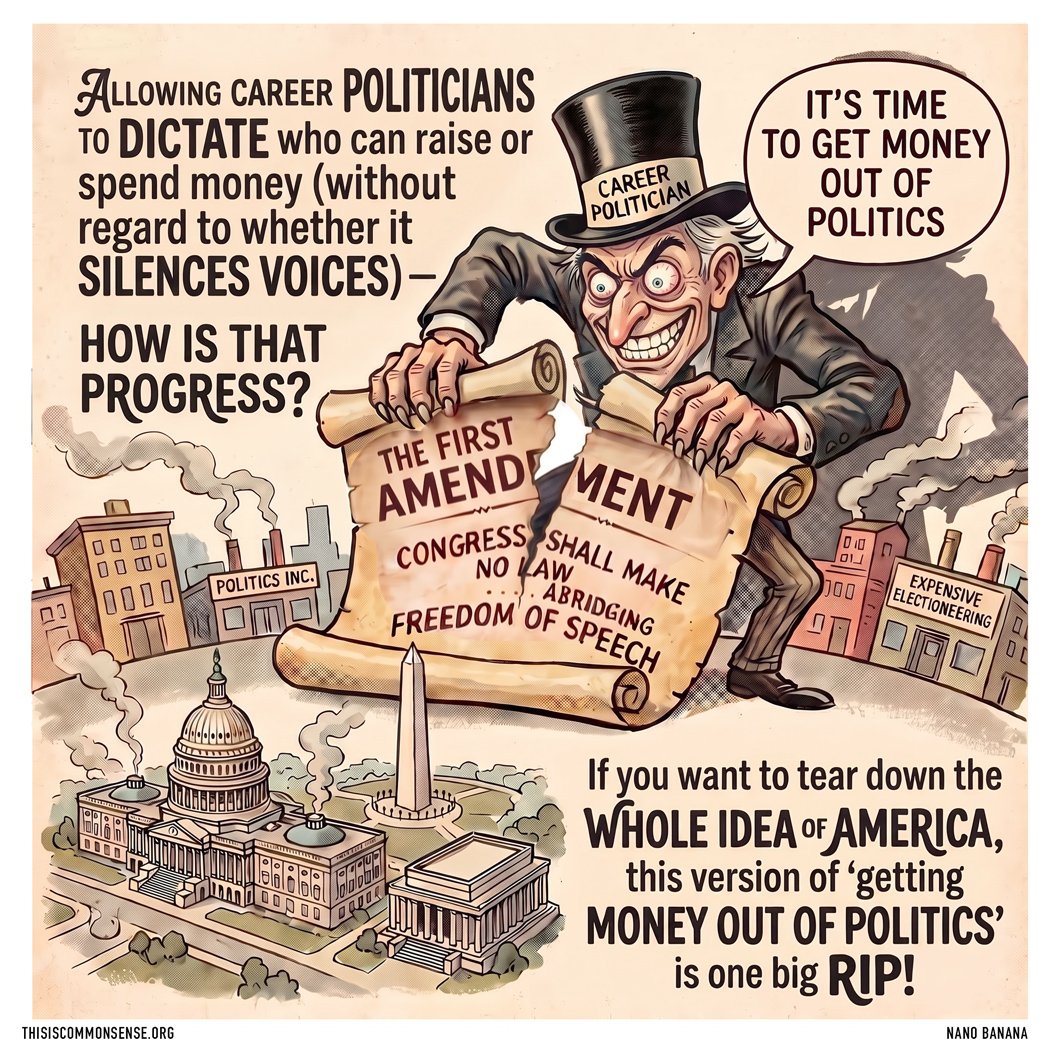
“In any other area of life — boarding a plane at DSM, picking up Cyclone tickets at will-call, or even buying Sudafed — showing a photo ID is a non-event,” Luke Martz writes in the Des Moines Register. “It is the baseline of participation in a modern society.”

The Republican political consultant, who has “served as an international election observer in Europe and the Middle East,” compares Iowa’s election system with “the mess currently unfolding in Minnesota,” where “Gov. Tim Walz signed a law authorizing illegal immigrants to obtain driver’s licenses.”

Mr. Martz points out the “logical fallacy,” which he says has “effectively undermined their own arguments against voter ID.” How so? “If activists believe requiring a document to drive is reasonable,” he argues, “then their claim that requiring a document to vote is a ‘racist barrier’ collapses.”

Indeed. He notes that the idea “that certain Iowans are somehow incapable of obtaining a free state ID” is precisely the “soft bigotry of low expectations,” highlighted by President George W. Bush decades ago.

Lastly, Martz addresses the “‘voter suppression’ narrative,” which “has always had one major flaw: reality.” 

Remember the hullabaloo over Georgia’s 2021 election law? Former President Sleepy Joe Biden called it “Jim Crow 2.0” and the politicians running Major League Baseball canceled the All-Star Game in Atlanta as punishment, only to see voter turnout in Georgia’s next election “more than 50% higher than in the previous midterm election of 2018.” 

Martz shares Iowa’s story, where “doomsayers predicted a collapse in participation” after passage of voter ID. “Instead, we saw the exact opposite. In 2018, the first general election with the law, Iowa saw its highest midterm turnout in decades. In 2020, we shattered records with over 1.7 million ballots cast.”

Let’s not suppress reality.

This is Common Sense. I’m Paul Jacob.


PDF for printing

Illustration created with Nano Banana

See all recent commentary
(simplified and organized)
See recent popular posts
Categories
election law national politics & policies

The Impossible Dream ID

The SAVE America Act, formerly known as the Safeguard American Voter Eligibility (SAVE) Act, may get a vote this week on the floor of the U.S. House.

I like the bill’s two key provisions: Voter ID and proof of citizenship.

But Senate Minority Leader Chuck Schumer (D-NY) has already announced the bill “dead on arrival,” even with House passage, as Democrats will filibuster to block a Senate vote. 

“According to an August 2025 Pew Poll, 95 percent of Republicans and 71 percent of Democrats favor voter ID,” reported CNBC. “A 2024 Gallup poll found that 84 percent of Americans support voter ID and 83 percent support proof of citizenship to register to vote.”

Sunday, on ABC’s This Week with[out] George Stephanopoulos, co-anchor Jonathan Karl detailed the public polling before asking Sen. Adam Schiff (D-Calif.): “What about the idea of voter I.D., a photo I.D. being required to vote?”

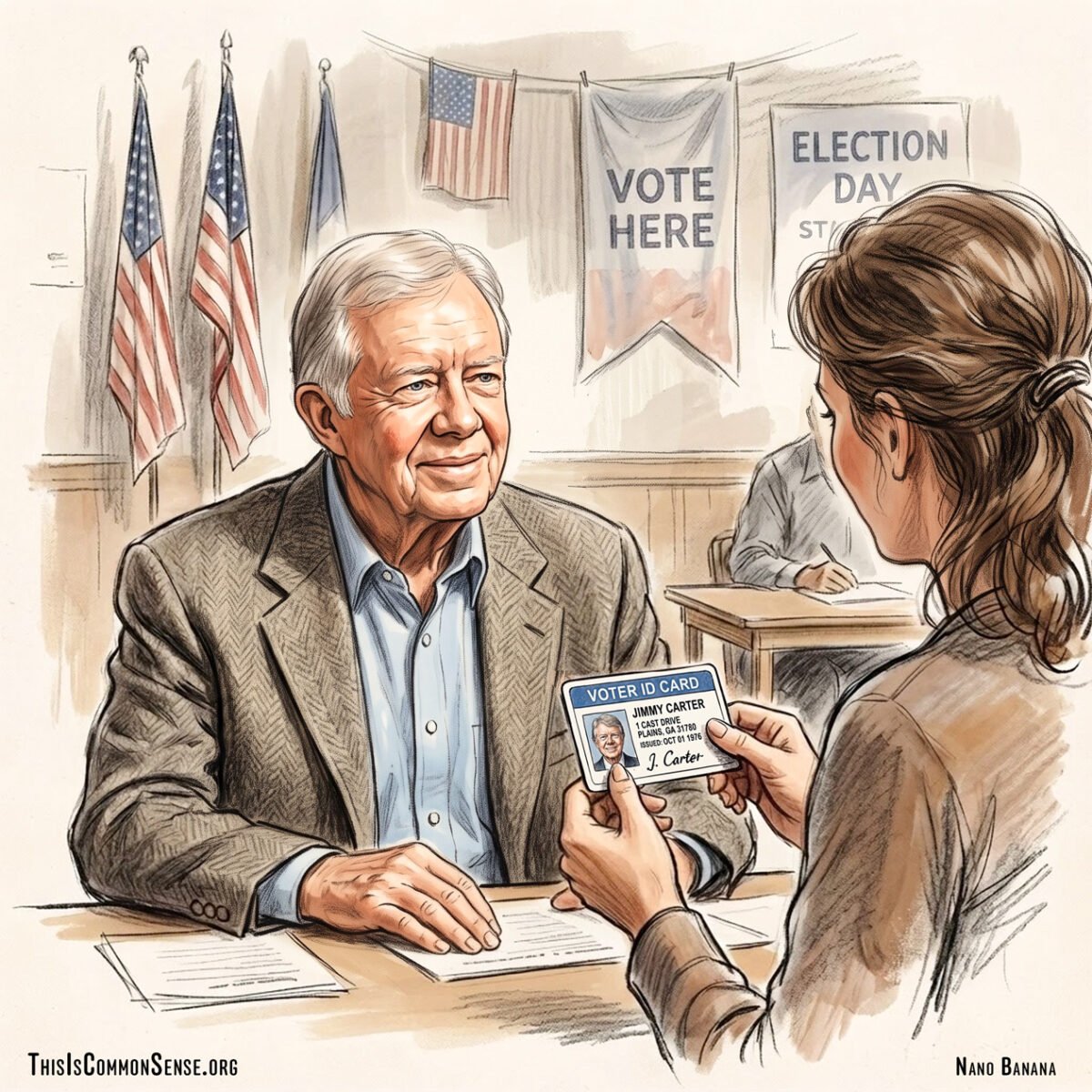
“It’s still going to be something that disenfranchises people,” replied Schiff, those “that don’t have the proper real I.D., driver’s license I.D., that don’t have the I.D. necessary to vote, even though they are citizens. This is another way to simply try to suppress the vote.”

Sen. Jon Ossoff (D-Ga.) opposes voter ID, too . . . yet he requires government-issued photo identification to attend his campaign events. 

Years back, then-Vice-President Kamala Harris warned that “in some people’s mind [voter ID] means you’re gonna have to Xerox or photocopy your ID to send it in to prove you are who you are. Well, there’re a whole lot of people, especially people who live in rural communities, who don’t — there’s no Kinko’s, there’s no Office Max near them. Of course, people have to prove who they are. But not in a way that makes it almost impossible for them to prove who they are.”

Seems Democrat leaders cannot imagine any possible system of checking ID or determining citizenship. Even though the rest of the democratic world does it without a hitch. 

This is Common Sense. I’m Paul Jacob.


* The key action is in the states, as this headline in Michigan last week attests: “While Washington Argues Over Proof-of-Citizenship Voting Rules, Michigan Grabs the Wheel.”

PDF for printing

Illustration created with Nano Banana

See all recent commentary
(simplified and organized)
See recent popular posts
Categories
election law partisanship

Values of the DFL

Republicans and Democrats in Minnesota held party caucuses last week, featuring straw polls in the governor’s race. Grassroots politics!

“Caucus attendees can also vote on potential changes to the party’s platform,” The Minnesota Reformer informed readers before the big night, reporting afterwards that caucusgoers “approved a bevy of resolutions to alter the DFL’s party platform, including abolishing U.S. Immigration and Customs Enforcement, defunding the Department of Homeland Security and assuring people have access to gender-affirming care.”

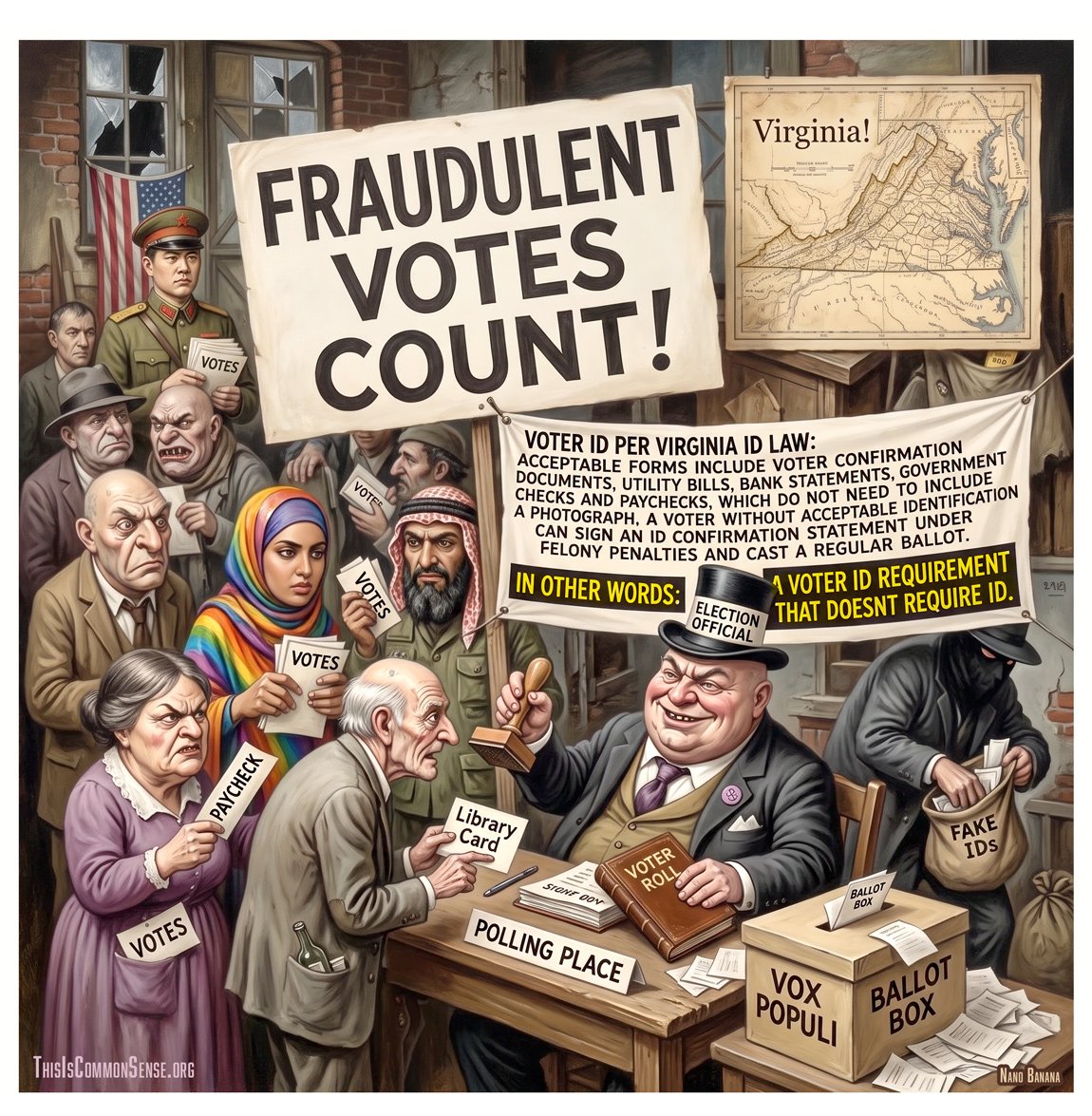
Then I discovered that Democrats — called the Democratic-Farmer-Labor Party (DFL) in Minnesota — allow noncitizens to participate and vote in their caucuses. 

Four years ago, a three-judge appeals court panel ruled that the “criminal penalties of Minnesota Statutes . . . which punish unlawful voting as a felony, do not apply to voting in precinct caucuses.” 

That led then-DFL Party Chair Ken Martin to announce: “Our party can finally live its values.” Responding to reporters, Martin had explained at the time that “we are governed under our own First Amendment freedom of association rights and we can determine whoever we want to participate in the party.”

Okay. “Immigrants who aren’t U.S. citizens can caucus and become convention delegates,” a change approved unanimously by the party’s executive committee, according to Minnesota Public Radio News.

“By opening the front door to historically excluded neighbors,” argued Emilia Gonzalez Avalos, a noncitizen union organizer from Mexico, the DFL is “making sure that those affected by the issues in our platforms have a say in the process and can grasp power to truly hold our own side accountable to our shared vision.” 

There are many things in my house, upon which I don’t let my neighbors vote. The DFL is free to do as it wishes in its own elections.* We are free to take note.

This is Common Sense. I’m Paul Jacob.


* This from the Minnesota Reformer is interesting: “As the Office of Secretary of State makes clear, these are party-run functions, but the results of the straw polls will be posted on the Secretary of State’s website.” If state law doesn’t apply because the parties are private associations, then why is the Secretary expending resources to report the votes? 

PDF for printing

Illustration created with Nano Banana

See all recent commentary
(simplified and organized)
See recent popular posts
Categories
election law national politics & policies U.S. Constitution

Federal Election Takeover?

“We should take over the voting, the voting in at least 15 places,” President Donald Trump declared on former FBI deputy director Dan Bongino’s new podcast. “The Republicans ought to nationalize the voting.”

That’s just what Democrats in the U.S. House attempted to do back in 2021 with their H.R. 1. I know well because I worked with a large coalition of groups and individuals to oppose that dishonestly labeled “For the People Act.” 

For the people who are Democratic Party hacks maybe.

A 2021 Heritage Foundation analysis argued the legislation would “Seize the authority of states to regulate voter registration and the voting process.”

“The Democratic bill is indeed sweeping,” PolitiFact informed at the time. “At 791 pages, the bill does everything from prohibiting states’ voter ID laws to breaking the gridlock of the Federal Election Commission by removing a member.”

Luckily, H.R. 1 did not pass the Senate. 

Have you ever noticed that in the tug of war between federal and state power, politicians of all stripes support the Constitution’s balance when it suits them and ignore it when it doesn’t?

Same goes for news media. The Washington Post falsely reported on Monday that by urging “Republican lawmakers” to act, the president was “claiming a power explicitly granted to states in the U.S. Constitution.” 

Well, Article 1, Section 4 of the U.S. Constitution does say “The Times, Places and Manner of holding Elections . . . shall be prescribed in each State by the Legislature thereof,” but it explicitly adds that “the Congress may at any time by Law make or alter such Regulations . . .”

Democracy dies in half-truths.  

This is Common Sense. I’m Paul Jacob.


PDF for printing

Illustration created by Nano Banana

See all recent commentary
(simplified and organized)
See recent popular posts
Categories
election law judiciary regulation U.S. Constitution

Fifty Years After Buckley

Congress began regulating campaign finances in the 1960s.

In 1976, the Supreme Court’s ruling in Buckley v. Valeo reined in such regulation . . . in part.

This month, at a symposium marking the 50th anniversary of the ruling, John Samples — a former Vice President at the Cato Institute and currently a Member of Meta’s Oversight Board — compared what happened after the 1976 ruling to what might have happened had the ruling been better or worse.

The alleged point of campaign finance regulation was to “level the playing field.” The actual point, Samples observed, has been to “protect the political status quo” by making it harder “to spend enough money to effectively challenge congressional incumbents.”

In Buckley, the court ruled that contribution limits were indeed valid (they aren’t) for the sake of combatting corruption or the “appearance of corruption.” But it also ruled that limits on campaign spending are limits on speech, hence invalid — thereby saving democracy, argued former Federal Election Commission chair Bradley Smith, in the Wall Street Journal a few weeks ago: “The Buckley court understood that effective political speech requires resources.”

The Court also upheld compulsory disclosure of donors and donations. This led to chronic calumniation of donors, helping to poison public discourse.

Samples suggeststhat a more libertarian Buckley might have enabled major reform, even perhaps privatizing of New Deal and Great Society spending programs in the 1980s.

On the other hand, had the decision been worse, “validating spending limits” as well, Congress would likely have continued to hobble challengers. And thus, perhaps, prevented the ascendancy of Ronald Reagan and the emergence of a GOP majority in the U.S. Senate.

Unwarranted restrictions on freedom of speech should be removed completely. Substantially removed is better than not at all, sure. But now let’s finish the job.

Something Brad Smith’s Institute for Free Speech works on every day.

This is Common Sense. I’m Paul Jacob.


PDF for printing

Illustration created with Nano Banana

See all recent commentary
(simplified and organized)
See recent popular posts