Categories
fraud ideological culture Internet controversy political economy

X Marks the Success

Yesterday, I defended the honor, so to speak, of Elon Musk against Eric Peters’s charge — published, on his website — that the high-tech magnate is a “grifter.”

I focused only on the free speech angle. But Mr. Peters (“the libertarian car guy”) didn’t limit himself to criticizing X. He also criticized Tesla, SpaceX and DOGE.

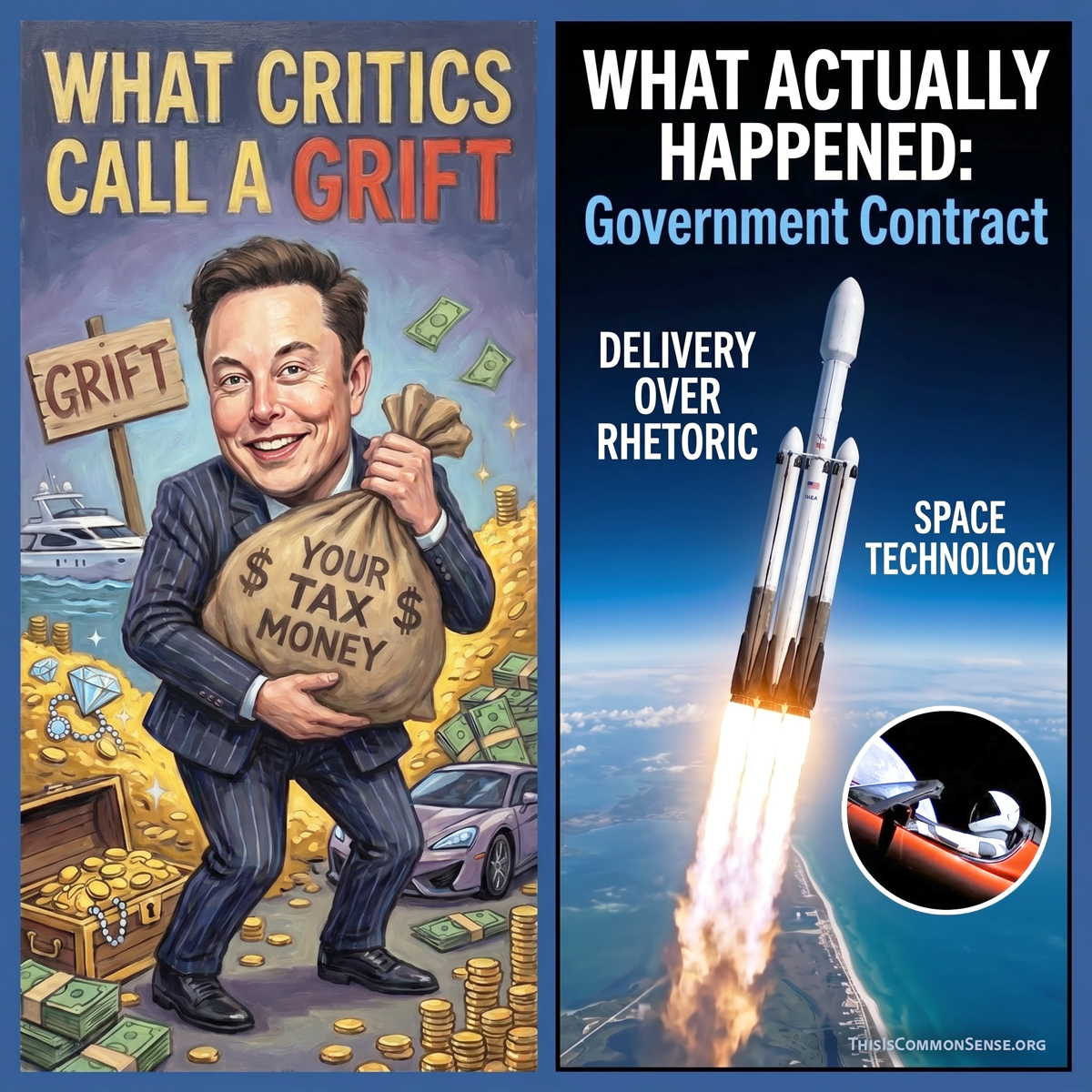
Musk, Peters notes, “has just become a trillionaire by dint of the IPO of his Space Xcrement grift.” Folks bought into SpaceX, he says, because “they believe there is a Tesla roadster in orbit around the Earth and that we’ll soon be able to buy tickets for a trip to Mars.”

Is Peters suggesting that Musk did not send a Tesla Roadster into space? Is this some new sort of (forgive me) “conspiracy theory”? Truth is, the Roadster orbits the Sun, coming back from beyond the Martian orbit.

What does he think is really going on here? What Musk’s investors “have bought into is the grift of government contracts,” he says, “which are paid for with dollars fleeced from the tax sheep. People who buy Space Xcrement stock can share in the grift, of course. But it does not change the nature of the grift.”

While the bulk (but definitely not the whole) of SpaceX’s clients are government agencies, most importantly NASA, remember something that one might forget while reading Peters’s fun rant: Musk is indeed putting objects into orbit, with new and astounding technology of amazing efficiency, and NASA has announced that SpaceX’s biggest and best will soon take astronauts back to the Moon.

As for Tesla, these cars are on the road. They work. I wouldn’t buy one, but I wouldn’t call it a grift a million times, or even once. And Musk himself has said he’d happily produce cars without the subsidies. But he continues to use the system set up for more than just him — the usual businessman rationale.

Criticizable? Yes. Wholly a grift? No.

And as for DOGE, it’s not as if Musk did not try. He just got little support from Congress . . . or the President. Too bad. Still not a grift.

This is Common Sense. I’m Paul Jacob.


PDF for printing

Illustration created with Grok and Nano Banana

See all recent commentary
(simplified and organized)
See recent popular posts

Categories
ideological culture Internet controversy political economy

A Quiz to Teach

I’m too old.

I’m too old, that is, to qualify as a contestant in the “million dollar question” drawing held, this summer, by the Foundation for Economic Education (FEE). To be eligible to win the million-buck prize (minus taxes!) one must be 18-35 years of age. (I’m a bit older than 35.) FEE is sponsoring this Million Dollar Contest Quiz as a way to promote the idea of a free society and its superiority to never-ending government regulation, taxation and subsidy.

What’s the question?

Nothing other than “what’s behind the affordability crisis?”

The answer, in short, is too much government.

But the quiz format helps explain that better.

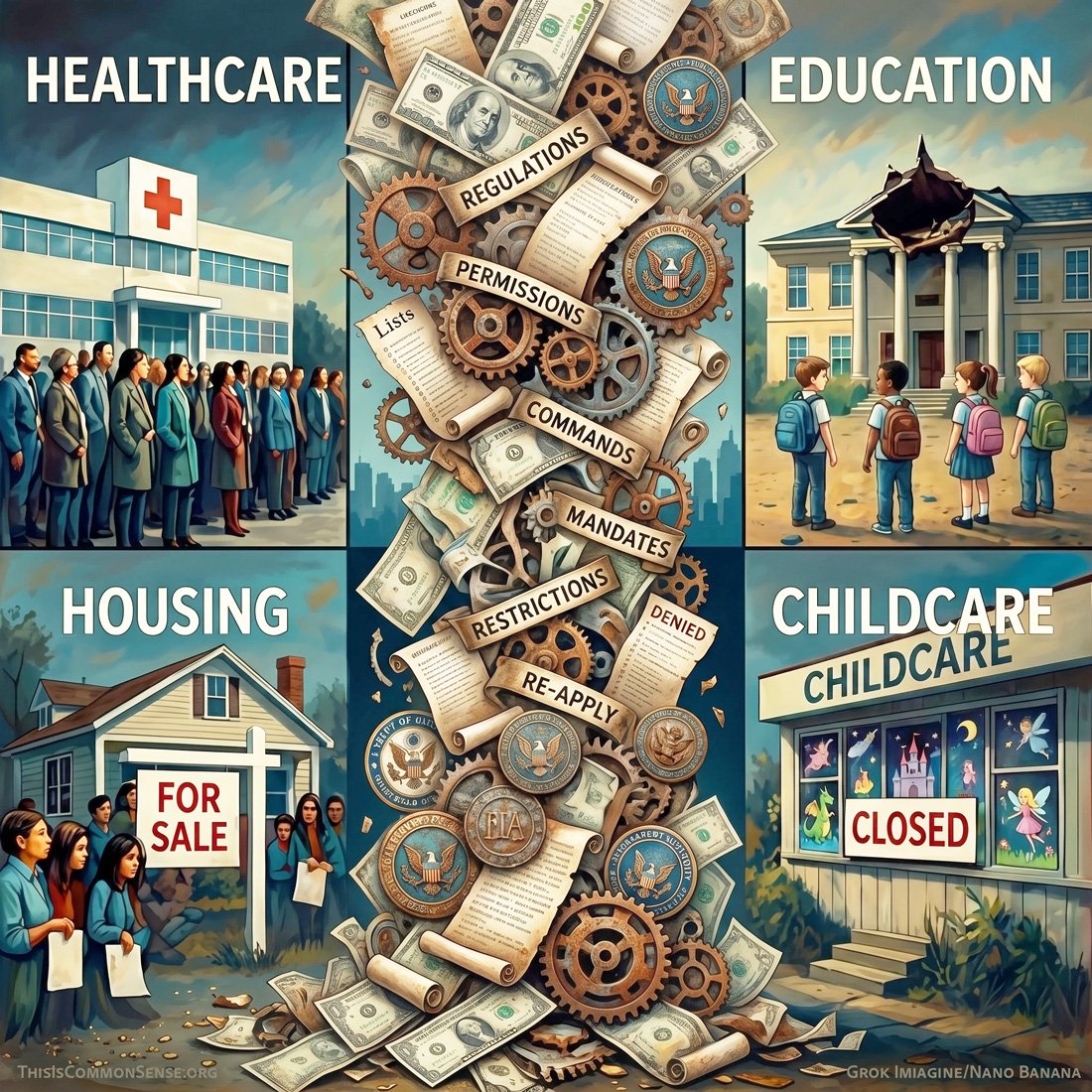
“Most people blame capitalism,” we read, “but the reality is different. Healthcare, education, housing, and childcare are some of the most heavily regulated, subsidized, and mandated sectors in the American economy. They aren’t free markets. They’re crippled capitalism; markets distorted by decades of government intervention until they can no longer deliver quality at a price people can afford.”

If you are old, like me, you have probably encountered this case before. (If you read this column, you most definitely have!) But young people? They’re not so lucky. Most have endured public schools and government-regulated and -subsidized universities and received, there, increasingly Marxist nonsense about how capitalism enslaves us all.

When capitalism — basically, free markets with markets in capital goods, making up what Ludwig von Mises called “mass production for the masses” — liberates

Who? Just white males?

No. Free markets liberate all peaceful people. As the quiz and its answers make clear.

So take the quiz. Learn something. But, if you’re over 35, pass it on to a young person!

This is Common Sense. I’m Paul Jacob.


PDF for printing

Illustration created with Grok Imagine Nano Banana

See all recent commentary
(simplified and organized)
See recent popular posts
Categories
inflation and inflationism national politics & policies political economy

Jump the Inflation

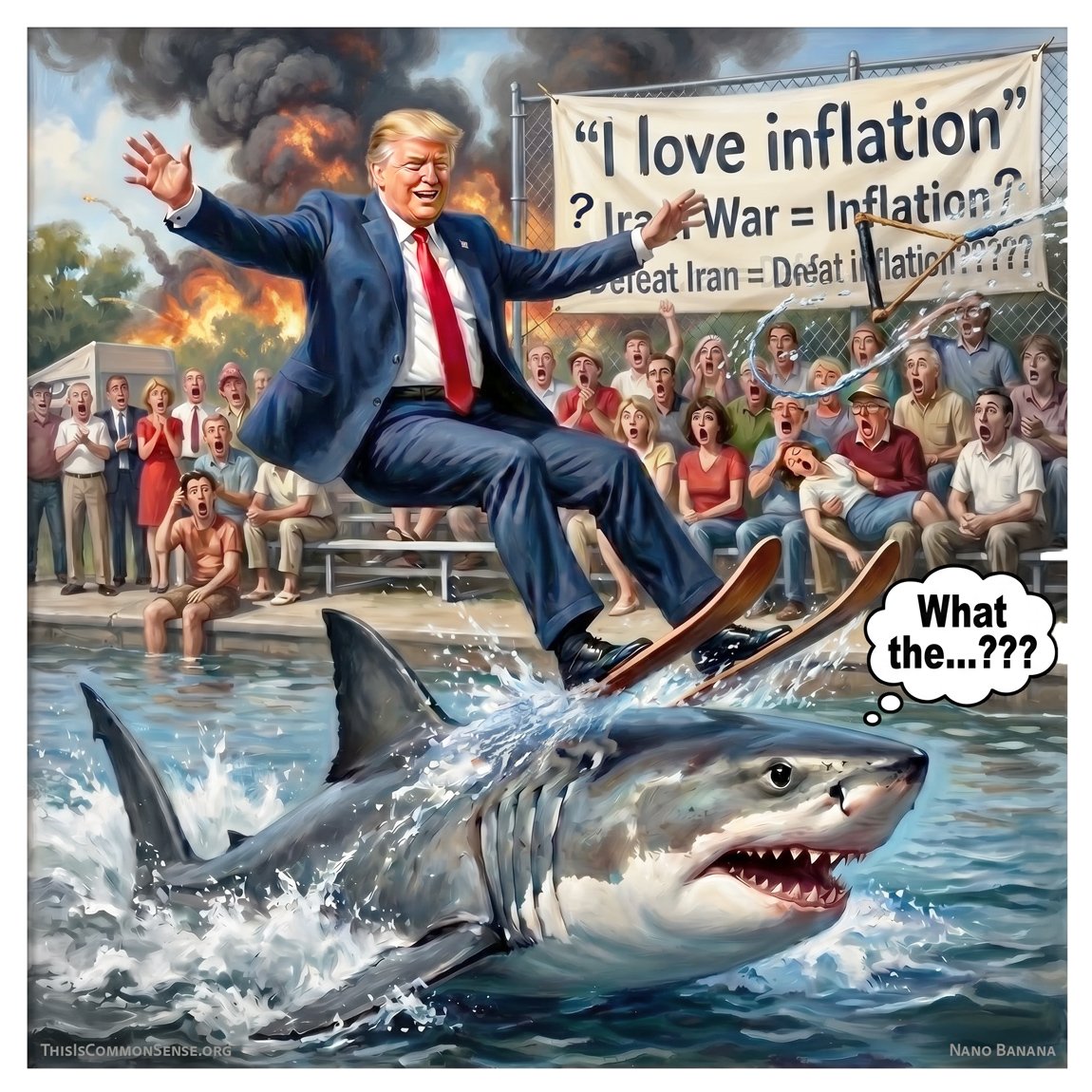
A term in pop culture analysis, now a bit passé, is worth reviving: “jump the shark.”

The term refers to the moment in the nostalgic TV show Happy Days when, running out of ideas, the writers cooked up something so out-there and silly that it’s cringe. (To use a more recent faddish term, now also passé.) An episode in the fifth season of the sitcom where the Fonz “jumped a shark” — in water skis. 

A spectacle so goofy that it can serve as a marker for any great moment when something really goes into steep decline.

The second Trump Administration has had many such moments, but are any as odd and stupid as the president’s recent remark about the Consumer Price Index?

Asked about the CPI having “jumped 4.2% over the last year,” according to Josh Boak’s June 10 AP article, the president replied, “You know what I really love? I love the inflation.”

The AP article quoted some Democratic politicians making hay of Trump’s quip, but then went on to Rep. Emilia Sykes (D-Ohio) pressing, in a hearing, Energy Secretary Chris Wright “whether he, too, loved inflation.”

‘I love ending Iran’s ability to have a nuclear weapon,’ Wright answered. He only conceded after being pressed: ‘No, I would prefer lower inflation.’”

What is Trump trying to communicate? The idea that when crude oil prices come down, inflation rate increases will level off too. And that’ll be good.

But that all depends on a cessation of the Iran conflict, which keeps dragging on with no end in sight.

Trump’s said dumb things. And funny things. But we who have been living in the Age of Inflation are . . . not amused. This response wasn’t funny and it wasn’t insightful. Or clever. Or worthy of the president’s past hits.

Donald Trump has jumped the shark.

This is Common Sense. I’m Paul Jacob.


PDF for printing

Illustration created with Nano Banana

See all recent commentary
(simplified and organized)
See recent popular posts
Categories
ideological culture political economy too much government

Super Under-Blown

Just 60 years ago, we were talking the end of ideology. Thirty years ago, we were talking about the end of socialism — and of history itself! — as capitalist democracies seemed triumphant after the fall of the USSR.

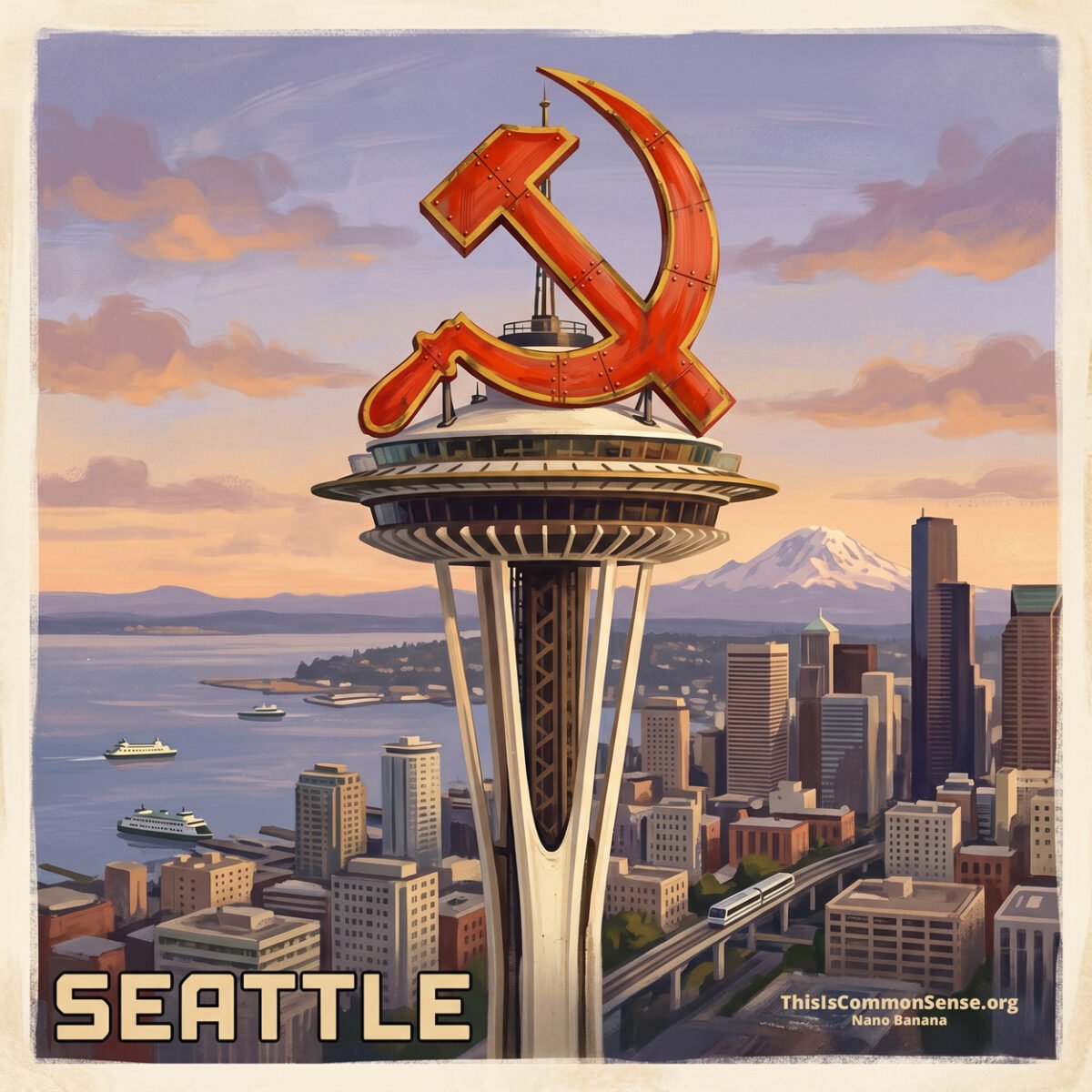
But here it’s A.D. 2026 and we have socialist mayors in New York and Seattle and . . . we don’t need to argue about definitions. They call themselves socialist.

While New York’s Mamdani has grabbed much of national attention, let’s not forget the Evergreen State’s Emerald City. Seattle Mayor Katie Wilson showed her defiance of economic common-sense in her defenses of many anti-business, anti-rich tax and regulation policies by her city and the state.

“I think the claims that millionaires are going to leave our state are,” she asserted, “like, super overblown.”

Her notion being that, since Washington State has a sales-tax-dominated “regressive tax system,” adding a progressive layer wouldn’t matter. New high-income-focused taxes would only make things better!

Not to those targeted by the tax, though. Not with socialists in charge. After all, she’s showing her true colors, taking photos with antifa terrorists, pooh-poohing welfare fraud (and refusing to investigate), expressing solidarity with Somali immigrants accused of fraud in Washington, and pushing for non-citizen voting.

Mayor Wilson’s response to those who have exited the soviet of Washington has been a chuckle, a wave, and a cheerful “bye.”

But then a major Democratic funder in the state, Nick Hannauer, wrote a think-piece for GeekWire suggesting that both the city, Seattle, and the state, Washington, were going too far. “Making the total tax burden here 5–10 times the alternatives isn’t progressivism; it’s stupidity.” The Daddy Warbucks, who’d promoted capital gains taxes and opposed Tim Eyman’s tax limitation measures, wants to put the brakes on Evergreen State spoliationplundering— noting that “virtually every wealthy friend I have has either left or is planning to.”

Seattlites and Washingtonians sure seem stuck with “the usual Socialist disease — they’ve run out of other people’s money.” For the “other people” are fleeing fast.

This is Common Sense. I’m Paul Jacob.


NOTE (first paragraph references): Daniel Bell, The End of Ideology (1960), Francis Fukuyama, The End of History and the Last Man (1992), and Robert Heilbroner, “The Triumph of Capitalism,”The New Yorker (January 23, 1989). Concluding allusion: Maggie Thatcher on socialism.

PDF for printing

Illustration created with Nano Banana

See all recent commentary
(simplified and organized)
See recent popular posts
Categories
ideological culture obituary political economy

The Bomb That Fizzled

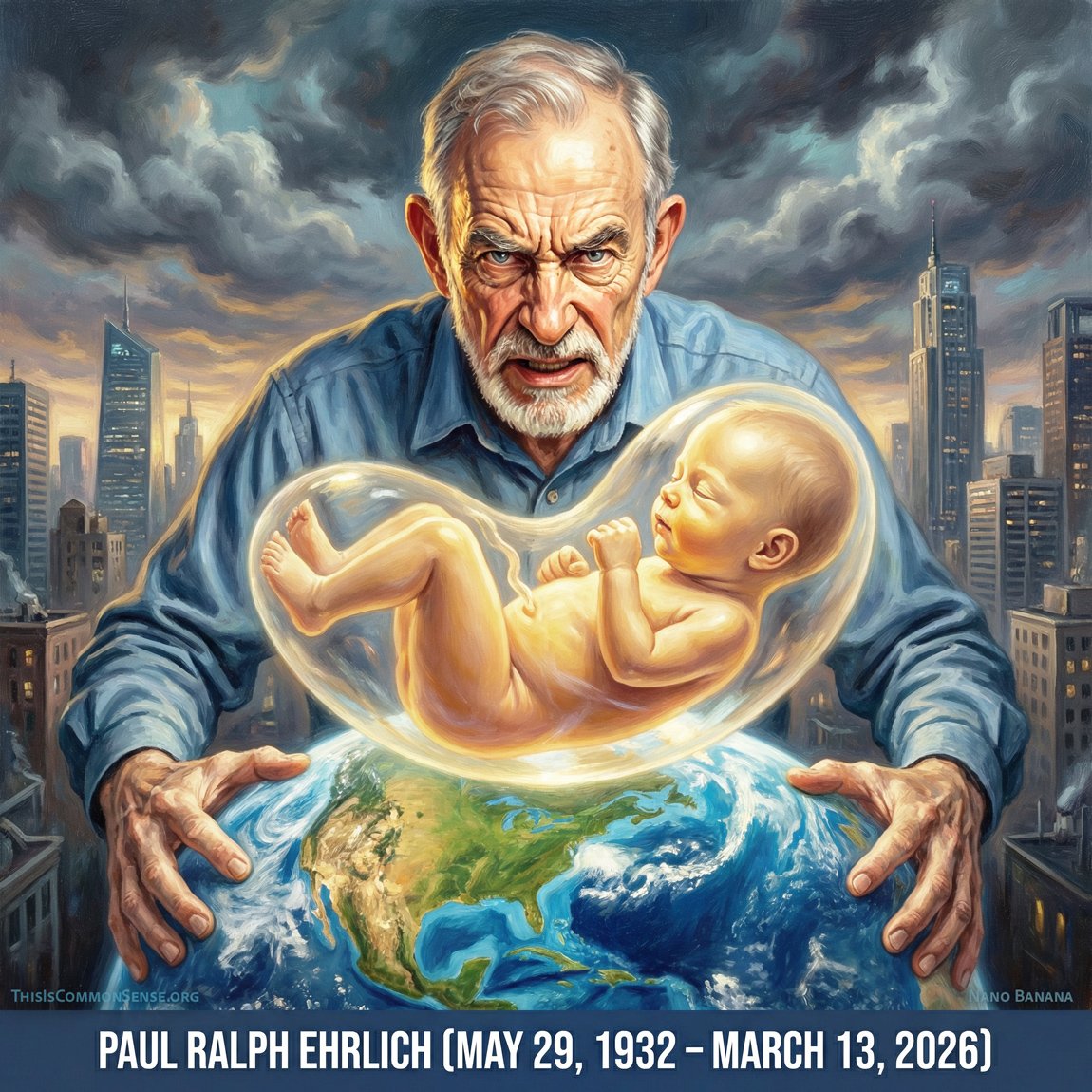
Paul Ehrlich was a biologist whose 1968 The Population Bomb went off when I was just a lad. He died last week at the ripe old age of 93. Professor Ehrlich warned of the dangers of overpopulation, proclaiming that in “the 1970s hundreds of millions of people will starve to death in spite of any crash programs embarked upon now.”

It didn’t happen.

Instead, for the first time in history, the percentage of the human population living in misery and dire poverty declined steadily.

But that did not mean his work was shelved as a bad theory, falsified by evidence.

Everywhere, when I was growing up, I witnessed a rising tide of anti-natalism, the doctrine that young adults shouldn’t have babies, or — if they did — should have only a few. Mankind was a cancer on the planet, we were told, and too many believed it.

Which affected breeding patterns.

And policy.

The current population reality is the opposite of what the Ehrlichs said it would be. All over the world, except for places in Africa, legacy populations are declining. In the United States, our population would be declining were it not for immigration. Elsewhere, the replication rate is plummeting — and it’s not just the West, but in China and Taiwan; both Koreas, as different as they are; and in Japan.

Without growing populations, our modern (if jury-rigged) social safety net pension systems are jeopardized, as is the possibility of finding caregivers to aging-and-dying populations.

We cannot blame it all on Ehrlich of course. There are many factors at work. But is it possible to be more wrong than he was? 

What should the young do now, to mark Ehrlich’s passing?

You could do worse than make some more babies.

This is Common Sense. I’m Paul Jacob.


PDF for printing

Illustration created with Nano Banana

See all recent commentary
(simplified and organized)
See recent popular posts
Categories
free trade & free markets national politics & policies political economy

Stupid About Greed

Tough times. You encounter a politician. He takes your side on an important issue. He speaks eloquently and with apparent sense. But then switch the subject and suddenly he blurts out such stupidities that you wonder about his sanity, the state of the nation’s education, the very meaning of life itself.

Well, not that last one.

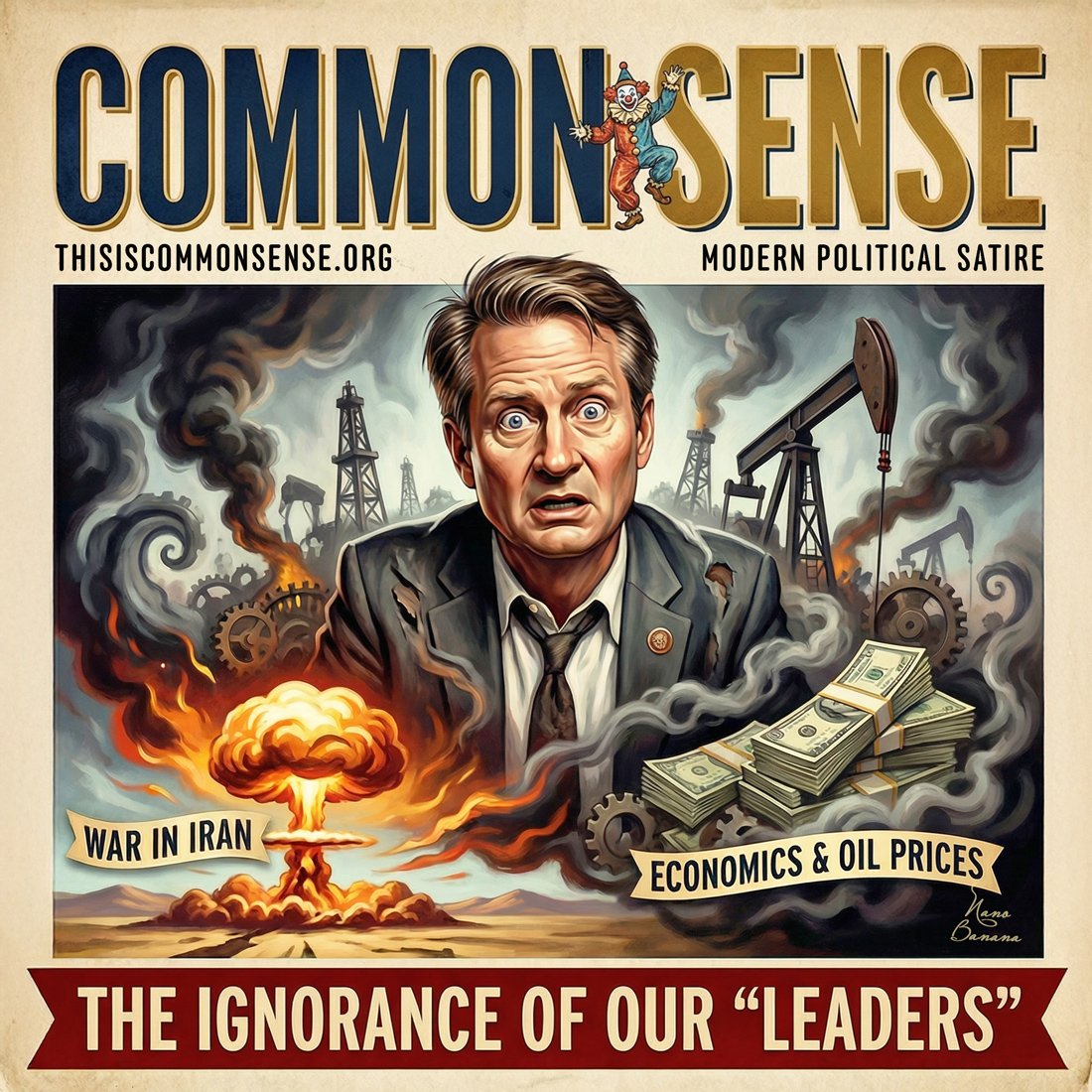
Let’s turn the page in our anti-hymnal to Representative Tim Burchett (R.-Tenn.). I’ve quoted him. He’s given off detectable glimmers of hope. Yet now he (in the words of an enthusiastic twitterer) “exposes the price of gas increasing in America has nothing to do with the Iran war.”

But what does he say?

“How much oil does America get from Iran? Zero.”

True enough. But so what? 

Our president’s un-declared war has resulted in conflagrations of oil wells and a cessation of petroleum transportation through the Strait of Hormuz. But while acid rain descends upon Iranians, it’s gas prices that concern Americans. And Burchett is disgusted.

“That’s how much this is a scam,” he said. “And these oil companies, shame on ’em. They’re using this opportunity to make record profits once again.”

We’ve heard this logic before. 

“It’s greed!”

No, it isn’t. Sure, I’m no economist — but I understand that the market for petroleum products is a worldwide one, and if supply collapses on the other side of the world, it’s going to affect prices over here. We may not buy from Iran, but folks elsewhere do, and when they cannot get what they need, they’ll go to competitors, and world prices will be bid up.

To avoid this natural process, we’d have to simultaneously decrease demand. And how would Burchett do that? 

The first casualty of a price hike is common sense.

Not here, though, for this is Common Sense. I’m Paul Jacob.


PDF for printing

Illustration created with Nano Banana

See all recent commentary
(simplified and organized)
See recent popular posts
Categories
political economy property rights regulation too much government

Too Damn High?

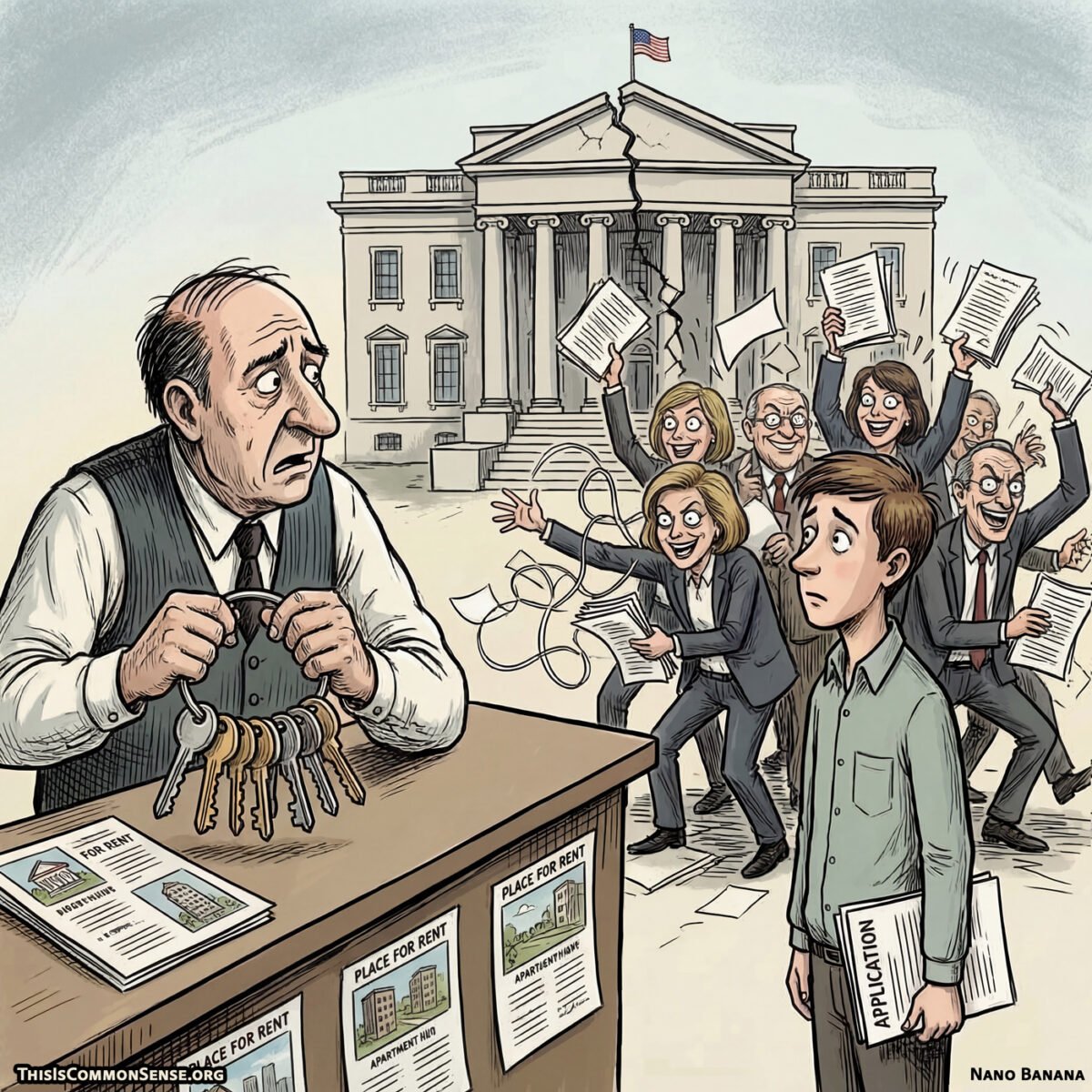
It’s getting tougher to rent a place to live.

Applications now often entail fearsomely intrusive scourings of financial history. And, writes Jeffrey Tucker, “if you are unbanked or missed a payment at some point, you can forget it.”

This is about more than digital intrusiveness or the end of privacy. It’s about aversion to risk. 

The aversion may have many causes. Tucker stresses a factor that’s pretty glaring once you think about it: the federal government’s assault on private property rights during the COVID-19 pandemic. Some tenants eagerly exploited a federally imposed moratorium on rent payment — plus ban on evictions — only finally stopped by a 5-4 decision by the Supreme Court. 

At the state level, evictions continued to be outlawed until 2022.

So property owners assume that they cannot at all count on government to be in their corner. If a tenant fails to pay rent, folks in government (who include the ones with guns) protect the person who cannot or will not pay his or her bills. 

The concern must be even more intense if an owner’s property is located in a town with a track record of demonizing landlords and in the process of launching further assaults on property rights. (Example: New York City, where high rents are now officially called rip-offs.)

Landlords want to avoid tenants who would use any law or bureaucratic tendency to rationalize skipping rent payment. Since owners can’t count on government to protect their property rights, they are becoming ultra-cautious. 

That is why conscientious prospective tenants who may have a blot or two in their financial history are paying the price.

This is Common Sense. I’m Paul Jacob.


PDF for printing

Illustration created with Nano Banana

See all recent commentary
(simplified and organized)
See recent popular posts
Categories
ideological culture political economy too much government

Capitalism’s Communism?

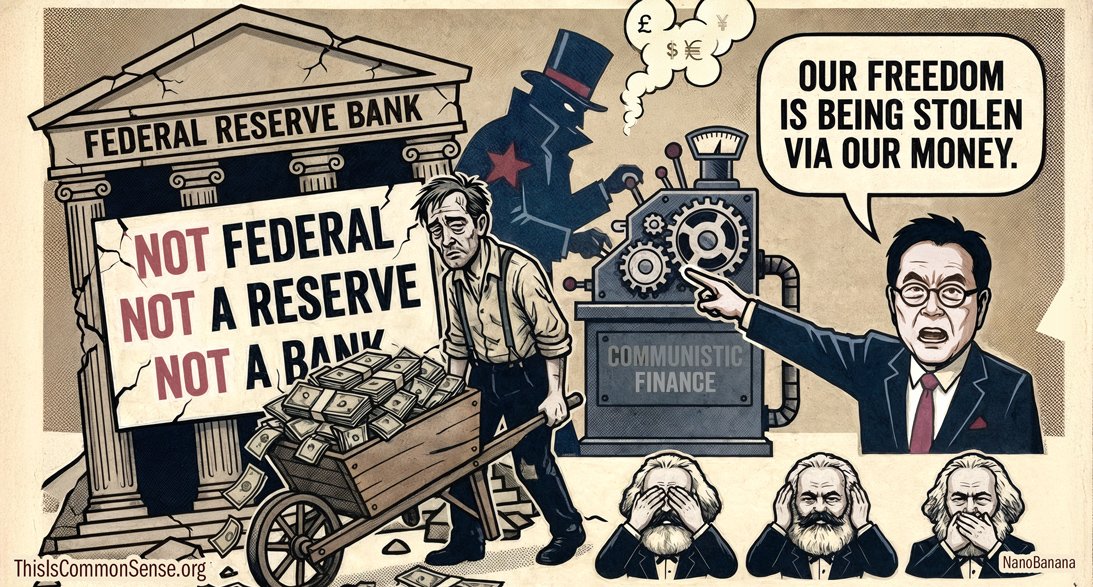
The problem is communism — in finance.

That’s the world according to Robert Kiyosaki, says an Epoch Times profile. “Kiyosaki described the U.S. Federal Reserve Bank — established in 1913 with a goal of stabilizing the nation’s monetary supply following years of extreme volatility, and preventing panic — as a Marxist organization,” Travis Gillmore writes.

“When the Fed came to America, it was the end of America,” states Kiyosaki, who co-authored a bestselling investment book, Rich Dad, Poor Dad, in 1997, “and our freedom is being stolen via our money.”

This is a familiar theme. Attacking crony capitalism as a massive swindle, and central banking as the lynchpin of bad government practices and general exploitation, that’s so basic to my view of “political economy” that I hardly bring it up anymore. It’s just so obvious.

But is our central bank communist

If you don’t like “communist” or “socialist” you can add the suffix -ic: communistic or socialistic.

“As most people know, there’s a big movement to end the Federal Reserve Bank, because it’s not federal, it’s not a reserve, and it’s not a bank,” adds Kiyosaki. 

“U.S. currency was once tradeable for silver or gold,” Gillmore’s article summarizes. “The Federal Reserve notes in circulation today, however, carry no guarantees, which results in significantly devalued currency. . . .

“Marxists want to destabilize society by ‘taking the currency,’ Kiyosaki said,” blaming this kleptocracy for the rising tide of homelessness along with other maladies.

The Epoch Times ends on a hopeful note, but does not quote recent tweets by Kiyosaki, warning us that the “biggest crash in history” is underway, predicting millions would “lose everything” while prepared investors (like himself) get richer.

All very familiar?

Sure.

But that does not mean there is no truth in it.

This is Common Sense. I’m Paul Jacob.


PDF for printing

Illustration created with Nano Banana and Firefly

See all recent commentary
(simplified and organized)
See recent popular posts
Categories
Accountability folly political economy

Green Goes Red

Well, at least they were earnest. Hopeful. Committed.

Swedes in the north part of their country channeled State pension funds — billions of kronor! — into climate-friendly projects.

Well, I’m not sure to what degree Swedish citizens were for this ideologically driven investment portfolio, but Swedish politicians sure were!

And now those investments appear iffy. “State pension fund AP2 had invested £117.7 million in Northvolt before its collapse,” explains GBN News, out of Great Britain. “It also holds £46.8 million in Stegra, plus a further £15.6 million exposure through its investment in Al Gore’s Just Climate fund.” And both Northvolt and Stegra — “once flagship companies of the energy transition,” as Blackout News puts it — teeter at the abyss of failure.

Northvolt was once Europe’s leading Great Green Hope, an electric vehicle battery company with a commitment to sustainability; in November it filed for bankruptcy protection.

Stegra was until recently seen as Sweden’s high-profile “green steel” leader, but now faces an £858 million funding gap.

There has been some shuffling of management, but even were the world’s most magical managers to pull these companies’ feet out of the fire — even if the endeavors can limp out of the current fire-sale conflagration — ask yourself: does it ever make sense to leave pension funds in the hands of zealots who seek to change the world for some utopian dream? 

It makes far more sense to let private equity fund risky projects, for private fund managers have more (voluntarily given funds) on the line.

Politicians, after all, are notoriously irresponsible — always willing to bet your future on their dreams.

This is Common Sense. I’m Paul Jacob.


PDF for printing

Illustration created with ChatGPT and NanoBanana

See all recent commentary
(simplified and organized)
See recent popular posts
Categories
international affairs political economy regulation

Rents After the Chainsaw

Argentina’s Ministry of Deregulation — yes, it now has one — reports that by June 2024, little more than half a year after chainsaw-wielding libertarian candidate Javier Milei won the presidential election, the housing market boomed . . . into a magnificent recovery.

Back in March, Reason magazine observed that listings on the Argentinian real-estate platform Zonaprop had increased from 5,500 before Milei’s deregulation “to 15,300 today, a staggering 180 percent rise.”

Why the big jump?

Strict national rent controls had been imposed in 2020, by the previous administration. When Milei lifted them, replacing them “with nothing,” tenants and landlords could then make whatever arrangements they could agree upon.

One method of evading the punishing controls had been switching to an Airbnb model of renting, with contracts renewable every three months. Such expedients were almost mandatory . . . given Argentina’s galloping inflation. But they introduced their own kinds of uncertainty.

Owners also took units off the market.

Annual rentals plummeted under this anti-market regime. In late 2023, Valentina Morales saw maybe “12 apartments advertised in the entire Palermo neighborhood,” a region with a population of almost 250,000.

Rents on the few apartments available with annual contracts skyrocketed. Tenancies were required by regulation to last for three years, with arbitrary and unrealistic caps on rent increases. And rent had to be paid only in pesos. But since inflation did not pause under the pre-Milei regime, owners were forced to guess how high inflation would go over the three years . . . and they charged accordingly.

Now? All such nonsense is gone.

This is Common Sense. I’m Paul Jacob.


PDF for printing

Illustration created with Krea and Firefly

See all recent commentary
(simplified and organized)
See recent popular posts