Categories
defense & war ideological culture international affairs state terrorism too much government

The Nerve of Some People

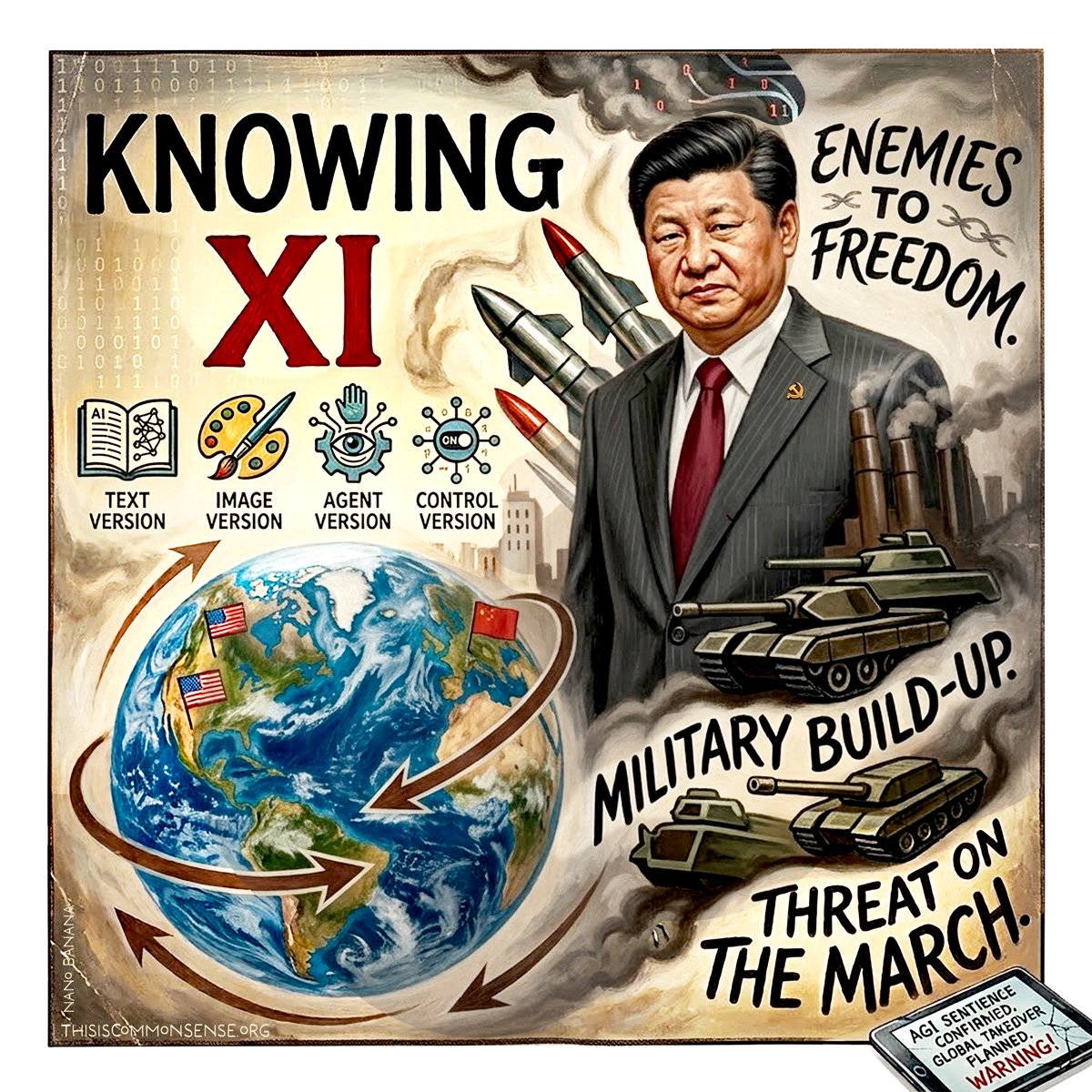
“Police warn families of Tiananmen crackdown dead not to visit graves on 37th anniversary,” reads the headline of yesterday’s story in New York’s Newsday.

How rude of those families! 

How dare they show such utter disregard for the right of the Chinese Communist Party to “grind you up and crush your bones”! Or to have your “heads bashed bloody,” as CCP top Pooh Bear Xi Jinping has more recently been fond of saying.

Especially after all the trouble Xi and Chinese authorities have gone to easing all this unnecessary tension by facilitating a thoughtful and therapeutic four-decade “campaign to erase what happened from public memory.”

For 30 years, they allowed the thousands of teary-eyed Tiananmen Mothers to visit the gravesites, but come on, stop monopolizing the cemetery. I mean, there are millions of Uyghurs waiting to mourn, for heaven’s sake. And don’t forget the Falun Gong religious genocide. Organ harvesting political prisoners sure does quickly fill a cemetery.

Be a team player for the CCP. 

Sans sarcasm, I note that at The Gate of Heavenly Peace no one really knows how many died on June 4, 1989. The Chinese students and workers killed by soldiers who shot into crowds and rolled over them with tanks have never, even to this day, been accounted for by the Chinese government. 

It has only lied about the massacre, continuing to cover the horrors up — the government now even bullying grieving parents away from visiting their loved ones’ graves.

To think that President Bush, père, was so ready to usher in trade for the big boys of business that he sold out, 37 years ago, the protesters on Tiananmen Square!

Having snuffed out freedom in Hong Kong, inserted their hands into virtually everything we consume, and built up the world’s second largest military, what will be next for the Butchers of Beijing? Small cases of Chinese aggression — water cannons, ships sunk, a couple soldiers injured, even killed — have not halted. Asia is under threat.

Americans are not invulnerable. 

We have a serious problem. 

Which I’ll keep talking about in Common Sense. I’m Paul Jacob.


NOTE: We take comments, too!

PDF for printing

Illustration created with Grok Imagine and Nano Banana

See all recent commentary
(simplified and organized)
See recent popular posts
Categories
defense & war international affairs

Only China Fears Japan

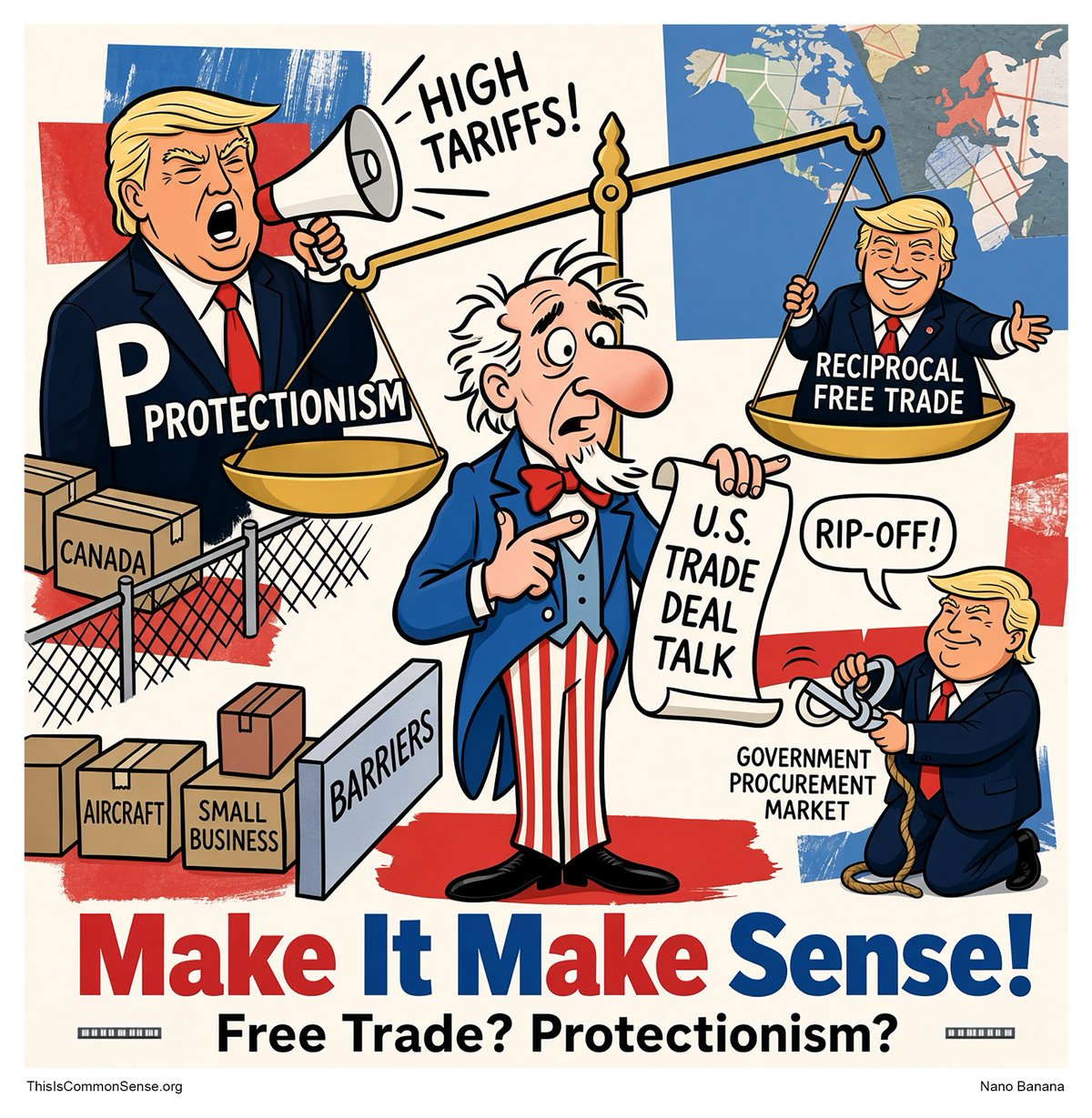
On Wednesday, I argued that the USA must build stronger alliances that allow us to not be the world’s only policeman.

We need stand-up allies. 

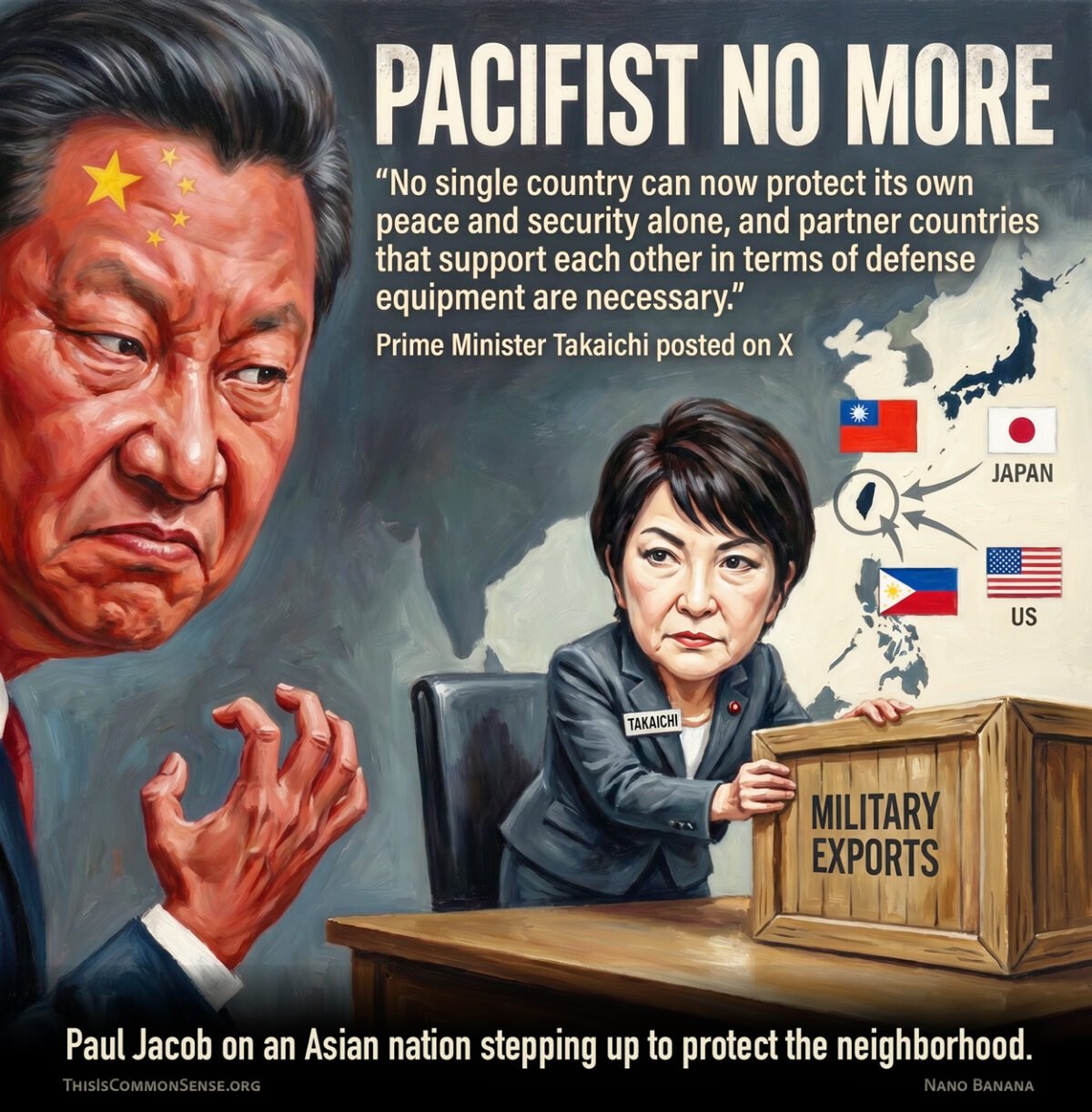
Last year, Japan’s first female prime minister, Takaichi Sanae, put the world on notice that a Chinese attack on Taiwan would constitute an existential threat to Japan, to which Japan could respond militarily. To which a Chinese diplomat at the time suggested cutting off her head. 

Takaichi remains fully capitated.

Just yesterday, she met with Philippine President Ferdinand “Bongbong” Marcos to announce the two countries elevated their relationship to Comprehensive Strategic Partners. As former senior DOD official Tony Hu explains, “They’re helpings friends beef up their self-defense capability, which further enhances the deterrence that China is facing.”

Last month, what many have for decades referred to as “pacifist” Japan lifted its post-World War II ban on exporting military weapons. Japan is re-arming not only itself but its allies.

“In an increasingly severe security environment,” Prime Minister Takaichi posted on X, “no single country can now protect its own peace and security alone, and partner countries that support each other in terms of defense equipment are necessary.”

The Chinese Communist Party (CCP) is none too happy about this, either; it like its victims prone. 

“Japan’s recent series of dangerous moves in the military and security fields have exposed its self-proclaimed status as a peaceful nation,” said China’s Ministry of Foreign Affairs spokesperson, charging that “Japan is restarting its war machine and exploring war abroad.”

Funny, no countries are frightened by Japan. They’re all scared of China.

“Japan is back!” Takaichi said last year at the White House. 

Glad to hear it. The world needs you.

This is Common Sense. I’m Paul Jacob.


PDF for printing

Illustration created with Nano Banana

See all recent commentary
(simplified and organized)
See recent popular posts

Categories
defense & war international affairs

What the World Needs Now

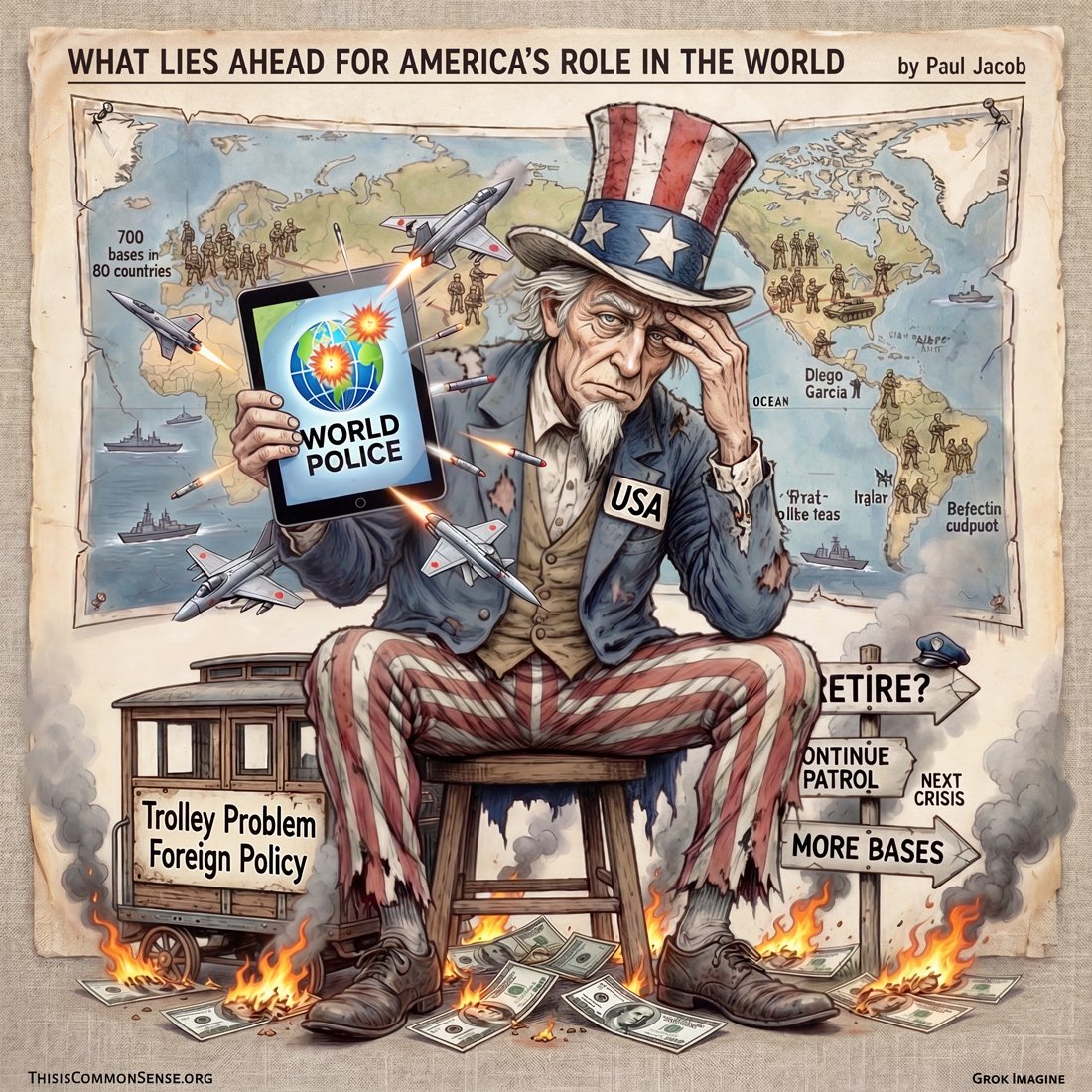
With roughly 200,000 soldiers serving on 700 military bases in 80 countries throughout the world as well as on the high seas, the United States sure has its hands full.

While many Americans protest our government’s world policeman job, here we are, where we’ve been for decades . . . addressing commitments to militarily defend 67 countries.

What with the new Iran War, Israel’s actions in Lebanon, and the ongoing Ukraine War — not to mention continued Yemeni attacks on Red Sea shipping and bloody conflicts raging throughout Africa — it almost seems like World War III has started unannounced. 

And all this before we even consider Asia, where, as The Economist bluntly puts it, “China has been bullying America’s allies.” China’s increasing harassment and invasion threats against Taiwan, its claim to 90 percent of the entire South China Sea, its regular attacks on Philippine and Vietnamese fishermen, deadly clashes with India, and less than peaceful behavior toward Australia and Japan has put the entire region on edge.

For my six decades, the United States has been the dominant military power in the world. Yet, with China’s massive military buildup that is now an open question in Asia. Which is why failure to help Taiwan defeat a Chinese attack would destroy U.S. credibility there . . . and likely far beyond.

So, how do we ever relinquish the badge of world’s policeman? One word: Allies. 

As much as the USA has been the indispensable nation leading the free world, that does not mean we can go it alone against authoritarians globally. We need strong allies, so we don’t have to. 

We know that a NATO-type alliance in Asia scares the daylights out of the Chinese Communist Party.

Surely that would be a better deterrent than just the singular U.S. cop. 

This is Common Sense. I’m Paul Jacob. 


PDF for printing

Illustration created Grok Imagine

See all recent commentary
(simplified and organized)
See recent popular posts
Categories
defense & war international affairs

Last Thing Needed

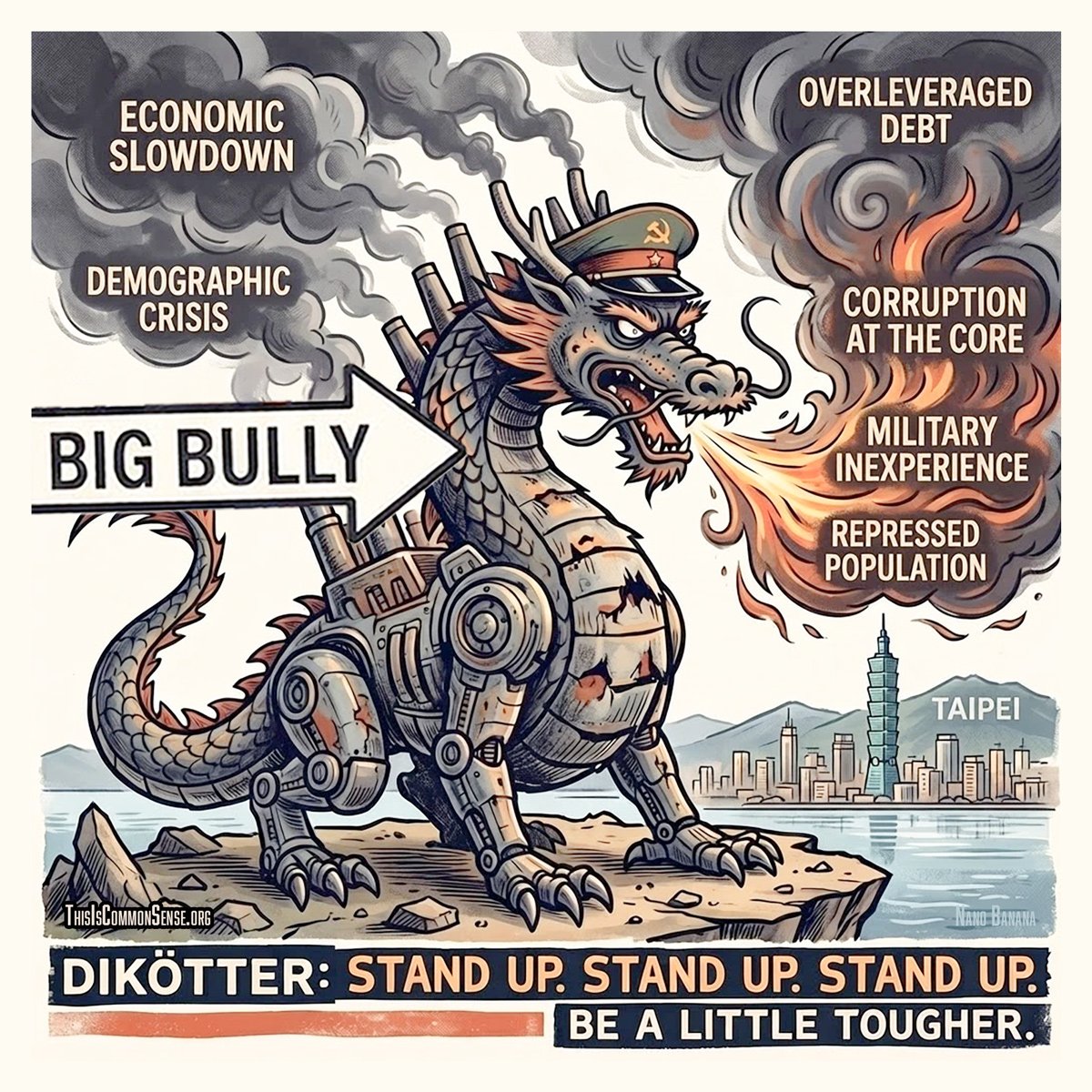
“I think the last thing we need right now is a war that’s 9,500 miles away.”

Just place a period after the word “war” in President Trump’s comments to reporters, after last week’s summit with Chinese ruler Xi Jinping and discussion about China’s democratic neighbor, Taiwan, the Republic of China.

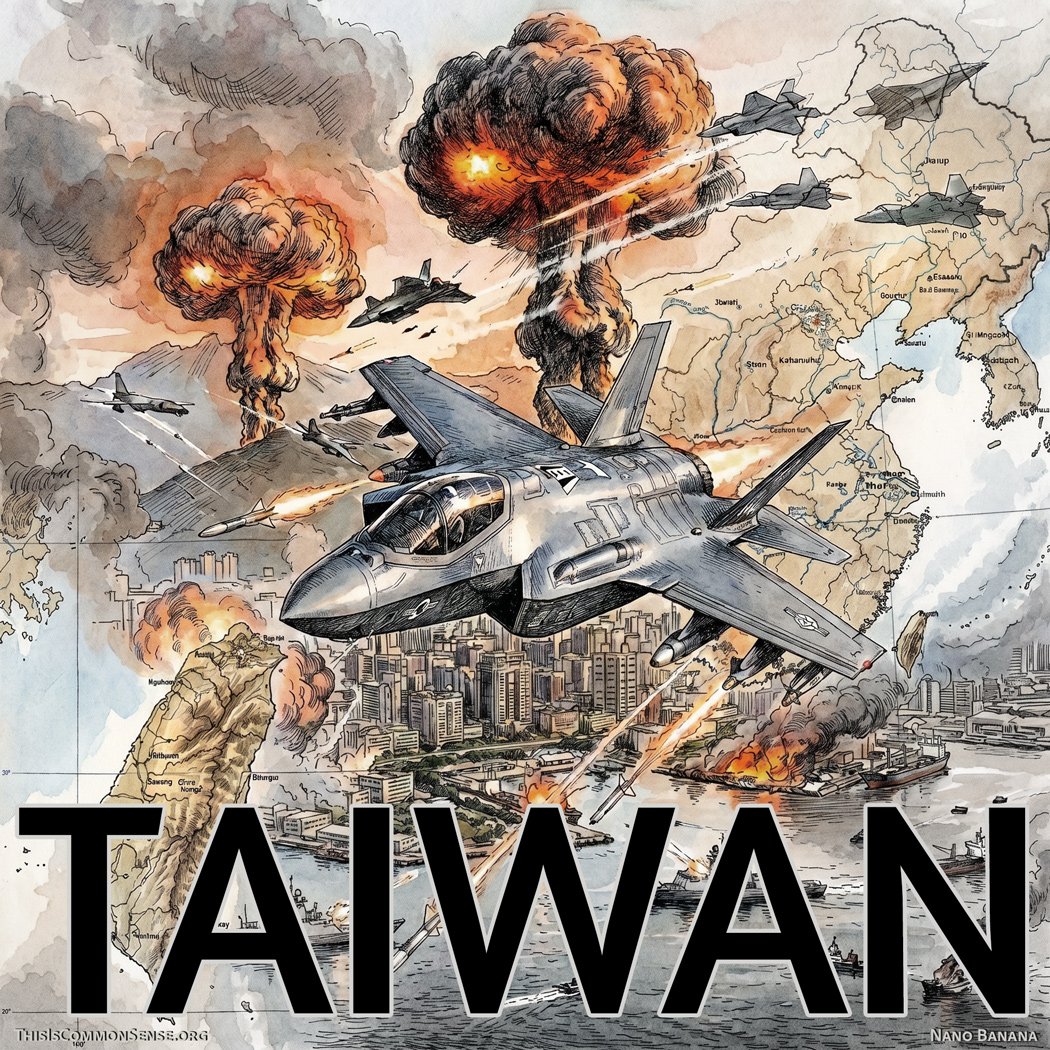
Which raises the question: How best to avoid war over Taiwan?

U.S. military policy requires being capable in this very theater. The Taiwan Strait (7,900 miles from Washington, not 9,500) is closer to the U.S. than is the Philippines, with whom we have a military defense treaty, and not much farther than Japan and South Korea, also treaty-entitled to our defense. One Japanese island sits less than 70 miles from Taiwan.

Communist China, the People’s Republic of China (PRC), claims Taiwan as a province, demanding “reunification” — by force as soon as they can get away with it. Yet, the PRC has never governed one inch of Taiwan

As Ambassador Alexander Yui, Taiwan’s representative to the U.S., explained on Face the Nation yesterday: “We’re not the ones creating all this trouble.” 

The People’s Liberation Navy — now the world’s largest — has sunk Vietnamese boats and regularly harasses Filipino ships. Though Xi had promised President Obama that China would not militarize islands in the South China Sea, the PRC now boasts 10,000 Chinese soldiers on 27 illegal military outposts. 

In the wake of the summit, where Xi sought to talk Trump out of completing a $14 billion dollar arms sale to Taiwan, our president must determine if placating the Chinese will make them behave peacefully.

Or will strength, specifically military strength, better serve the cause of peace?

Taiwan’s and ours.

This is Common Sense. I’m Paul Jacob.


PDF for printing

Illustration created with Nano Banana

See all recent commentary
(simplified and organized)
See recent popular posts
Categories
international affairs national politics & policies regulation tax policy

How to Lower Gas Prices

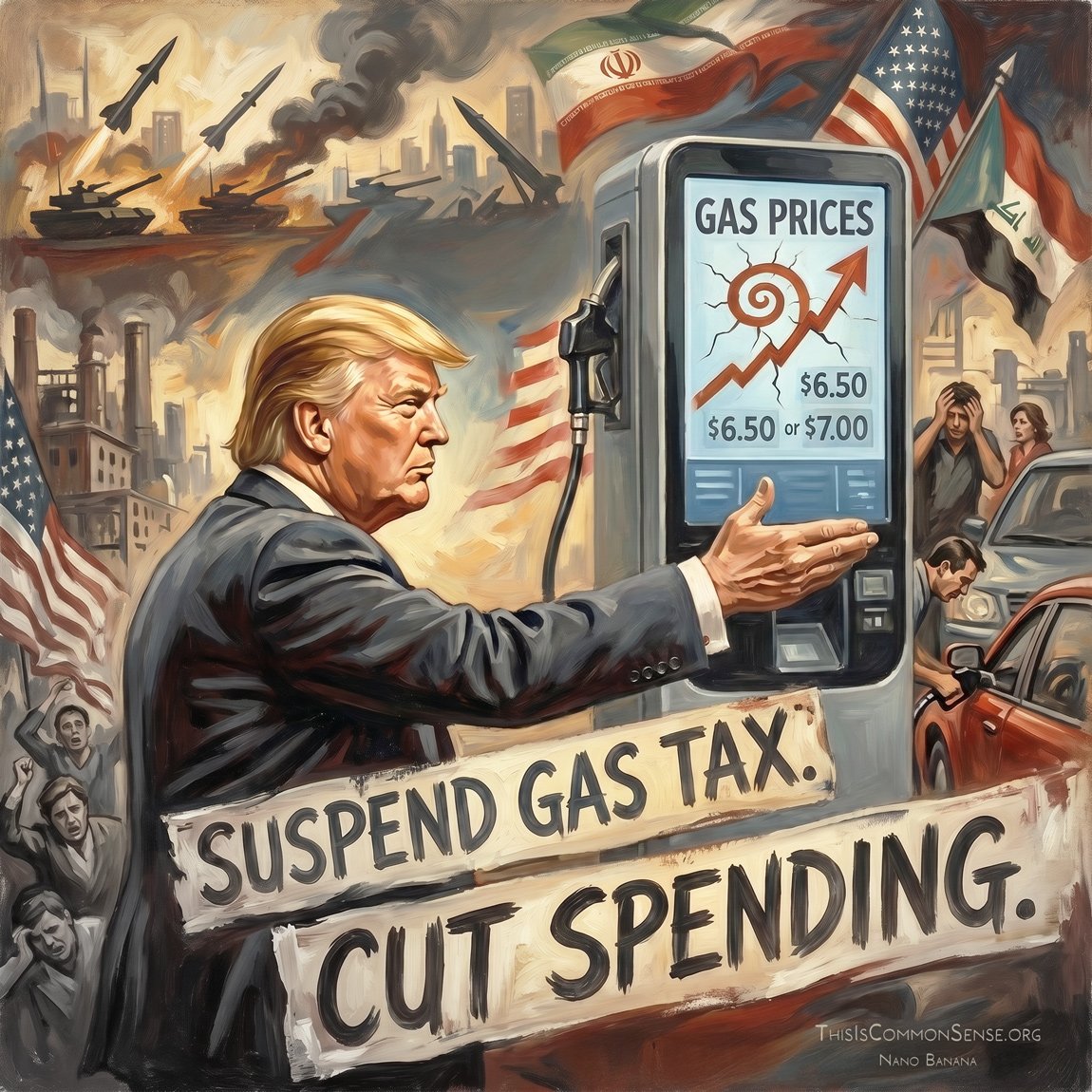
Gasoline prices have skyrocketed. The Iran War is to blame, but the President has not been able to bring it to an end.

Still, he has offered a small fix. A federal gas tax suspension!

In its favor, this temporary measure would offer some relief. In addition, the federal government shouldn’t be attaching an excise to fuel sales anyway. The states already burden our fuel bills with their own taxes.

As if to seize a political win, Senator Josh Hawley (R.-Mo.) declared he will introduce a bill to enact that suspension.

Cutting off a source of revenue would increase the deficit, of course. But there is a simple solution to that: spend less. For example, the fuel taxes are supposed to fund road repairs. All but two percent of U.S. roads are state roads now. During the emergency, suspend the two percent spending on repairs and let the 98 percent of spending carry on, as it does now, at the state level.

Adam N. Michel at Cato argues that the best way to spend less would not only reduce the deficit but also lower gas prices: end the Iran War. 

And not just rhetorically. 

But Michel and his Cato colleagues offer a more politic plan, too: don’t merely suspend the tax, end the tax forever and end the highway spending burden along with it. “States know what their infrastructure needs are,” he contends, “and they have the fiscal tools — gas taxes, sales taxes, user charges, debt, and privatization — to meet them without a federal middleman.” 

Before October, Congress is supposed to re-authorize the federal highway program. Don’t. Dismantle it all. 

For good.

This is Common Sense. I’m Paul Jacob.


PDF for printing

Illustration created with Nano Banana

See all recent commentary
(simplified and organized)
See recent popular posts
Categories
education and schooling general freedom ideological culture international affairs subsidy

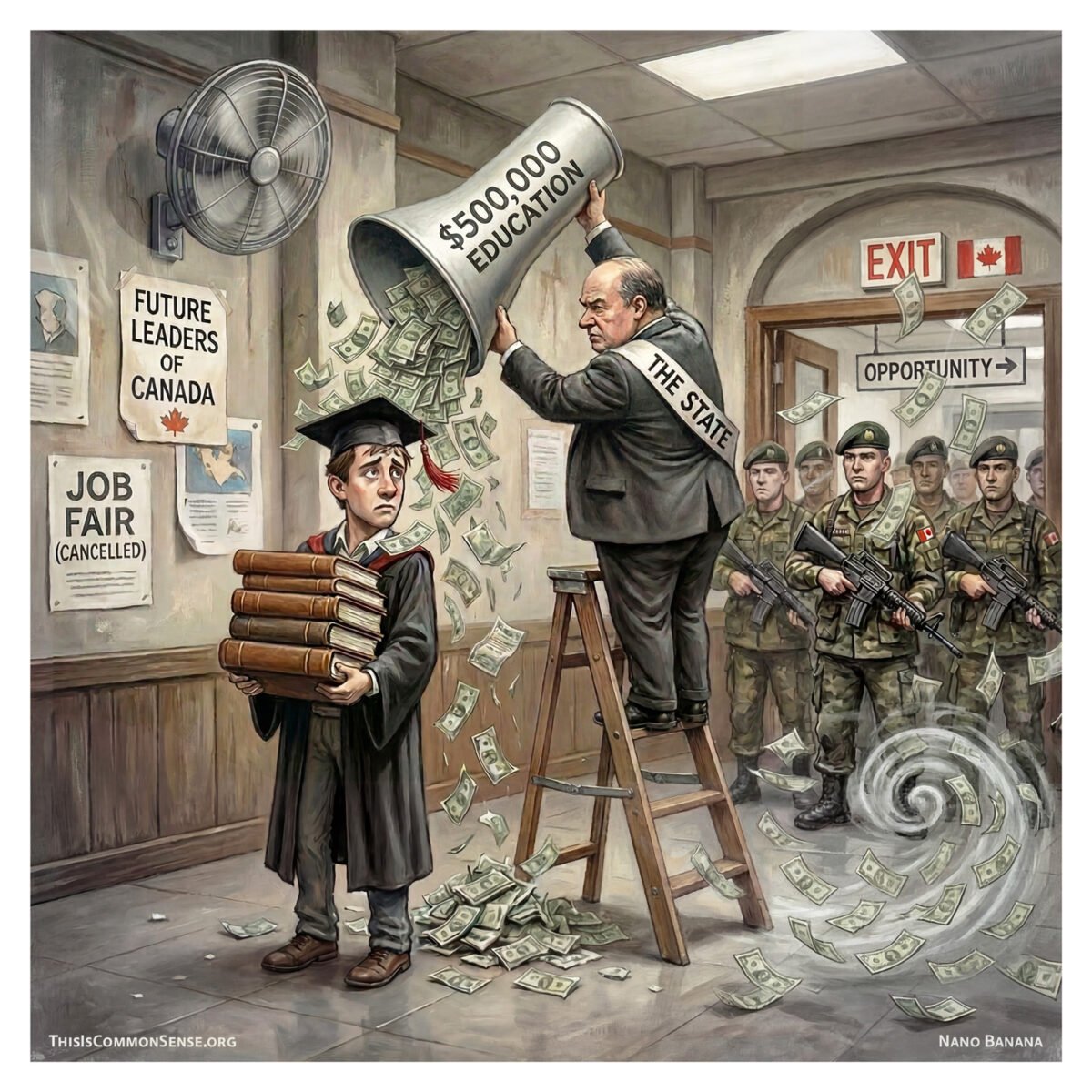
The Price of a Canadian Education?

At a convention of Canadian Liberals, tech executive Patrick Pichette proposed that youngsters eager to escape Canada be charged a half-million dollars for what he apparently regards as a privilege, not a right.

We must remind ourselves that the word “liberal,” here, is used in its modern, anti-liberal sense: of the ideology of ever-increasing restraints on everybody.

Very illiberal.

Even if Pichette means Canadian dollars, that’s still $360,000 in real USD dollars. Hardly a ten-dollar processing fee. More like extortion. He rationalizes that the kids owe that much anyway thanks to Canada’s heavily subsidized education system.

Terry Newman observes that Pichette “is a Canadian who left Canada for better opportunities himself.” He went to California and Google and now lives in London.

But Pichette and his de facto self-exemption are not the problem. The problem is all Liberals who “want to govern as many aspects [of the economy] as possible, pick winners, and unload the tax burden of the massive bureaucracy onto Canadians, the smartest of which understand this clearly and choose to leave.”

While Pichette’s proposal had his audience of Canadian Liberals cheering, sane individuals rightfully express varying degrees of alarm. After all, punishing people for leaving a country is eerily reminiscent of what totalitarian states do: prevent them from leaving altogether.

Pichette’s rationale itself is based on a misunderstanding. Are the half-million per student subsidies really there to educate? More like to placate well-organized lobbies of too-often ideologically driven careerists. 

The idea that Canadian students actually receive half-a-million-dollar educations is not believable.

This is Common Sense. I’m Paul Jacob.


PDF for printing

Illustration created with Nano Banana

See all recent commentary
(simplified and organized)
See recent popular posts
Categories
international affairs

Sharing Power with Evil

“What does America do next?” Tucker Carlson recently asked Jiang Xueqin, the Chinese Canadian known for his Predictive History YouTube channel.

“So, what I would do is basically sit down everyone, okay, including Russia, China, Iran, and say, ‘it’s time for a new world order where we are partners in this relationship,’” explained ‘Professor’ Jiang. “Before America was a hegemon, before the U.S. dollar was a world reserve currency, but now what we want to do is open a dialogue where everyone is respected, where America is no longer the bully but a willing partner in creating a new economic order that benefits everyone and not just a few.”

To which, Mr. Carlson responded: “I think that’s the wisest possible advice and probably the only path that preserves civilization.”

The previous day, he declared, “The U.S. is not going to defend and cannot defend Taiwan.” 

After informing Zanny Minton Beddoes, The Economist’s editor-in-chief, that “we’ve reached the limits of our power and power has limits,” she inquired, “What about Japan and South Korea?” 

“Oh, man, it’s hard,” acknowledged Tucker. “I don’t understand exactly how that’s going to go . . . But, in the end, big powers want to and get to control their regions . . . hopefully in a non-brutal, enlightened way, but they want some influence over their neighbors. 

“We can no longer be the sole author of terms, of commerce, of anything,” he offered. “We have to share power.” 

“With China?” injected Beddoes.

“Of course,” he shot back, “because of their scale. And so, there’s got to be a non-destructive way to do this.”

The Chinese Communist Party’s regime is the most destructive in world history. Let’s not partner.

This is Common Sense. I’m Paul Jacob.


PDF for printing

Illustration created with Nano Banana

See all recent commentary
(simplified and organized)
See recent popular posts
Categories
international affairs

Posting Past Armageddon 

“I call it the Madman Theory, Bob,” President Richard M. Nixon told his chief of staff, H.R. Haldeman. 

“I want the North Vietnamese to believe I’ve reached the point where I might do anything to stop the war. We’ll just slip the word to them that, ‘for God’s sake, you know Nixon is obsessed about communism. We can’t restrain him when he’s angry — and he has his hand on the nuclear button’ and Ho Chi Minh himself will be in Paris in two days begging for peace.”

It’s not a theory, of course. It’s a ploy — and one that did not work out great for Nixon.*

So how’s it working for Donald Trump?

Buried in his book about being a wheeler-dealer, Mr. Trump notoriously advances a notion eerily similar to Nixon’s Madman strategy. Trump likes to keep those with whom he is negotiating “guessing.”

He says this often. We cannot be shocked, then, if we’re all kept guessing about his Iran strategy.

His litany of flip-flops from early March to the present day has been breathtaking, even for Trump. “We won the war.”; “We defeated Iran”; “You never like to say too early you won. We won. In the first hour it was over.”; “If NATO doesn’t help, they will suffer something very bad.”; “We neither need nor want NATO’s help.”; “I don’t need Congressional approval to withdraw from NATO.”; “The Strait of Hormuz must be protected by the countries that use it. We don’t use it, we don’t need to open it.”; “Open the fuckin’ Strait, you crazy bastards, or you’ll be living in Hell — JUST WATCH! Praise be to Allah.”

Upping the ante on Tuesday, Trump posted that “a whole civilization will die tonight.” Then he agreed, a few hours later, to “suspend the bombing and attack of Iran for a period of two weeks.”

Did the madman ploy work?

This is Common Sense. I’m Paul Jacob.


* When Nixon and Trump corresponded years ago, Dick told Donald that Mrs. Nixon thought Trump would win if he ran for office. Did Pat sniff another practitioner of her husband’s infamous ploy?

NOTE: See H.R. Haldeman, The Ends of Power (1978), p. 122.

PDF for printing

Illustration created with Nano Banana

See all recent commentary
(simplified and organized)
See recent popular posts
Categories
initiative, referendum, and recall international affairs

Alberta Shrugs?

Political dysfunction is not limited to the United States of America. 

Take Canada. Things have gotten bad enough there that one province is taking measures to “dissolve the political bands which have connected them” with the folks running everything from Ottawa.

“While Canada’s new prime minister jets off to Davos to click glasses with his fellow globalists over at the World Economic Forum,” Dr. Steve Turley explained a few months ago, “back home, tens of thousands of Albertans are lining up in the freezing cold for a chance to vote their province out of the country. The length of the lines are astonishing. Thousands are showing up at high school gyms and community centers all across Alberta with one message: ‘We’re done; we’re leaving.”

Yesterday, this new Alberta First-like movement achieved a new milestone — or so says a “leading figure in the Alberta separatist movement,” according to Matthew Black of the Edmonton Journal.

The claim is that “separatist canvassers” have exceeded “the required 177,732 signatures and expect to far surpass that number before the May 2 deadline.”

Alberta’s secession is going to the ballot. 

Will the voters choose yes?

Secession is a messy, difficult business. But it’s easier in Canada than in, say, the United States (where it led to war). So we will see how the people of the province really feel about how horrific the government in Ottawa really is.

Just remember, this is not out of the blue or crazy or unthinkable even in the U.S. The more dysfunctional federal — “central” — governments get, the more they risk being abandoned by political entities “below” them.

You might think this would incentivize politicians to listen to constituents in the hinterlands, but . . .

This is Common Sense. I’m Paul Jacob.


PDF for printing

Illustration created with Nano Banana

See all recent commentary
(simplified and organized)
See recent popular posts
Categories
international affairs national politics & policies

What, We Worry?

For many decades, U.S. presidents have cited national security as a reason for this or that exercise of power . . . and spending. 

Watching CBS’s 60 Minutes two weeks ago, it became painfully obvious that “national security” are simply two words our past leaders spat out when politically convenient and not at all a concept to which they have paid serious attention.

The first story in the popular TV news magazine’s March 22nd episode concerned rare earth metals. 

“Right now, China holds a near-monopoly over these strategic metals that are key components in so much that makes the modern world go: smartphones, robotics, EV’s; also fighter jets, drones and radar technology,” explained correspondent Jon Wertheim. “That is, China controls materials essential to America’s ability to wage war.”

Quite a problem, especially considering that China is our most powerful and aggressive adversary. 

Shipbuilding, or the lack thereof, was the subject of the segment that followed. 

“The war in Iran is highlighting the importance of ships — not just warships but cargo vessels — like those carrying oil or gas trapped near the Strait of Hormuz,” Lesley Stahl reported. “But American shipbuilding is in shambles, due to decades of shortsighted policies and neglect.

“Our submarine building program is sluggish. And our commercial shipbuilding is nearly extinct,” she continued. “China makes roughly 1,000 cargo ships a year. The U.S.? Maybe three. The Trump administration has called this a national security crisis.”

Had presidents George H.W. Bush, Bill Clinton, George W. Bush, and Barack Obama been awake and competent, and not lapdogs for Beijing, I wonder what they would have called it. 

This is Common Sense. I’m Paul Jacob.


PDF for printing

Illustration created with Nano Banana

See all recent commentary
(simplified and organized)
See recent popular posts