“A California woman was arrested at Los Angeles International Airport on Oct. 4 on a charge of acting as an unregistered agent of a foreign government,” reportsThe Epoch Times. “The woman is accused of surveilling Taiwanese President Lai Ching-te’s U.S.-based son.”
Foreigners spying on Americans, and on other foreigners on American soil, goes back at least to 1798, when the Adams Administration kicked Constantin François Chassebœuf — that is, Volney, author of The Ruins (1791) — out of the country.
But it’s not just spying. “A Bronx man was convicted of the same charge in May, accused of operating a Chinese undercover police station in New York City for China’s Ministry of Public Security.” The Epoch Times’s article calls it “transnational repression.”
These “police stations” are all over the place. Four years ago, I quoted one source saying that there were at least “54 of these Chinese ‘service stations’ in 30 countries . . . including one in New York City.” While this all technically follows under the rubric of “rendition,” these fake cops don’t usually “arrest” and transport targets as prisoners. Instead, they threaten harm, often to relatives back home.
The Epoch Times quotes Attorney General Todd Blanche, who says the Department of Justice will keep investigating “as long as the conduct persists.” The AG admits, however, that it’s “hard to catch because once you catch one, there’s a lot of others.”
The problem, Blanche says, is not the lack of existing laws to counter transnational repression, but that there is just so much of it and it is inherently hard to sort out.
But worth the attempt, surely . . . if America is to continue to be the “land of the free” and a refuge for dissidents fleeing totalitarianism.
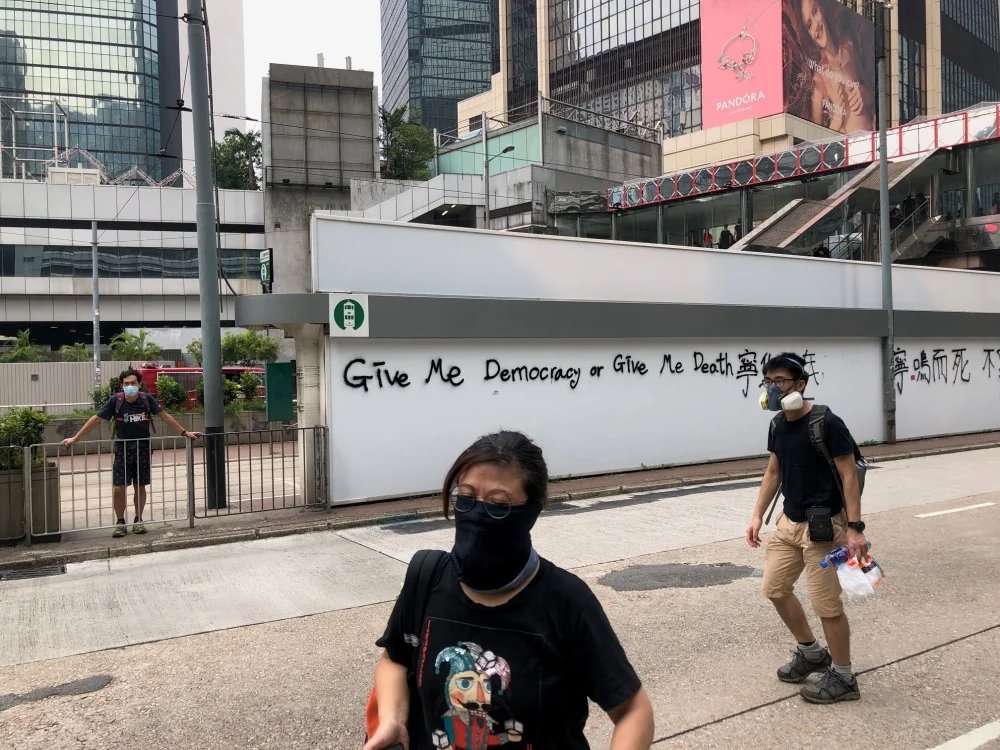
Back in 2019, I spent a beautiful September Sunday afternoon in Hong Kong…marching against totalitarianism…and getting tear-gassed.
For months, I had followed the protests against legislation introduced in Hong Kong that would allow authorities in Beijing to extradite Hongkongers from their own then-respected legal system into Beijing’s always abysmal and wicked black hole. Protests began with a March 15 sit-in at government headquarters followed by a June 9 rally attended by “hundreds of thousands.”
And then the protest continued for weeks. For months. They turned out to be “the largest series of demonstrations in the history of Hong Kong.” As many as one in four residents are estimated to have participated.
By agreement with Great Britain, China had recognized a different system in Hong Kong for 50 years after the 1997 “handover,” under “one country/two systems”—one system based on free speech, rule of law, civil rights, the other on…the opposite. China merely had to wait to inflict its fascistic totalitarian system…until 2047.
But the Chinazis couldn’t wait. I say “Chinazis”; it was at this march in Hong Kong that I first saw and heard that epithet.
And it fit. Because while hanging on to many stupid totalitarian aspects of communism, the CCP long ago instituted a much more fascist, mercantilist economic system. With some freedom to make money. Money is universally good, apparently.
Jack boots and tiger chairs and concentration camps are now only there if anybody forgets who is in charge. Or the CCP says so.
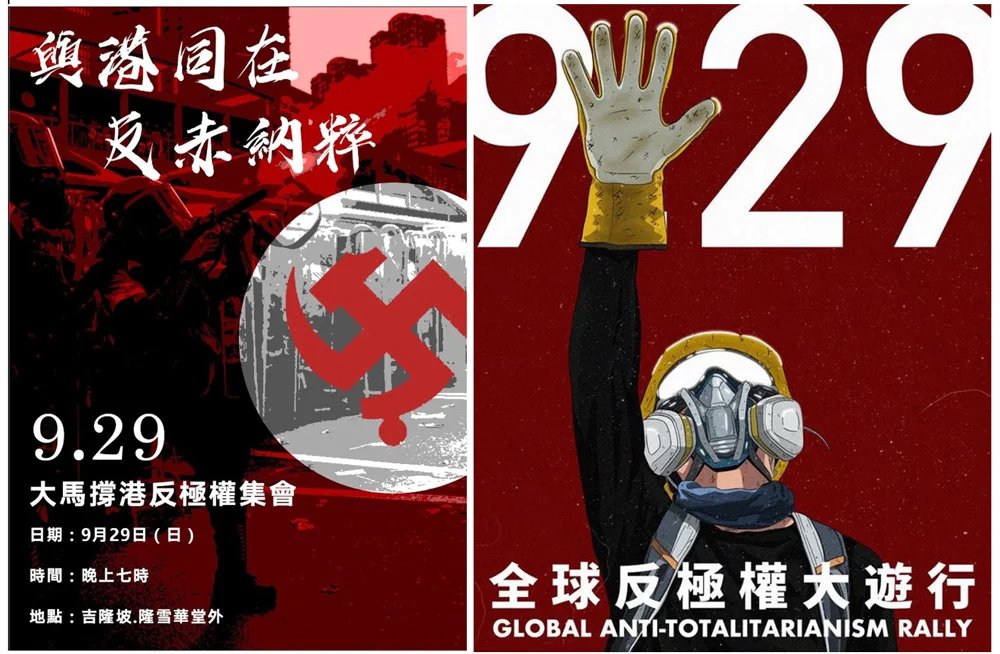
I had seen posters about a Global March Against Totalitarianism being held today. Hey, that I’m very much against. You?
But where was it going to be? I knew next to zero about the city.
And when? After all, I had a flight leaving Hong Kong in the early evening, headed to Taiwan for the 2019 Global Forum on Modern Direct Democracy being held in Taichung.
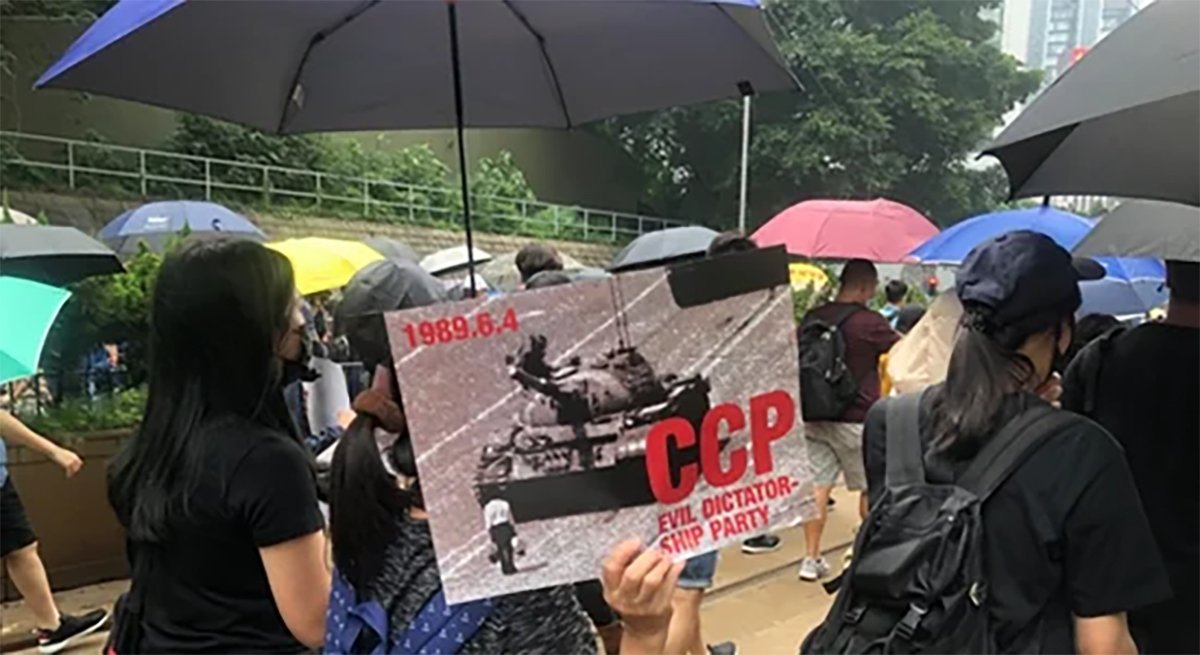
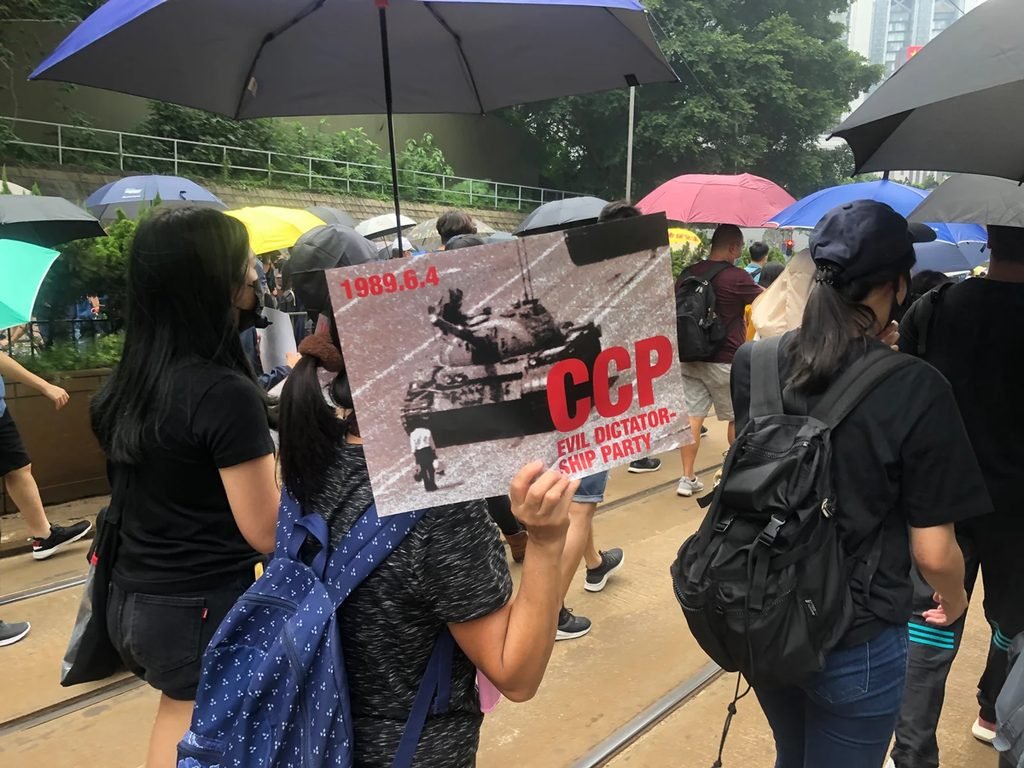
Somehow, watching young people and conversely observing police, I stumbled upon the march. Moments later I was handed a poster of Tankman from June 4, 1989, with the words: “CCP Evil Dictatorship Party.”
As I walked, a sense of peace came over me and I felt deeply honored to be with these heroes, mostly young people but of all ages, standing up to the largest evil on our Earth today. With their frail bodies. And gas masks. And their powerful goodness.
On September 29, as I marched, the Extradition Bill had still not been withdrawn. Chief Executive Carrie Lam, Beijing’s puppet, would not fully remove it until October 23.
I respect protesters who clearly state their demands for change, as did these Hong Kong protesters. Often chanting: “Five demands! Not one less!”
Five Demands of Hong Kong Protests
Complete withdrawal of the extradition bill from the legislative process.
Retraction of the “riot” characterization for protests.
Release and exoneration of arrested protesters.
Establishment of an independent commission of inquiry into police conduct and use of force during the protests.
Resignation of Carrie Lam and the implementation of universal suffrage for Legislative Council elections and for the election of the chief executive.
As afternoon shadows loomed longer, I had to grab my luggage and get to the airport for my flight. I walked back against the line of marchers for quite some time, until I entered an intersection without many protesters and with riot police standing across the street from me.
Moments later tear gas canisters were hitting all around me and gas was spraying out — oops! I’m not really prepared.
But I held my breath and ran to get away from the gas. My eyes burned like someone had hit them with a chemical agent, don’t you know! Luckily, I had a bottle of water and poured that into my eyes.
The few protesters who were around rushed to help me, telling me to “breathe,” in English, and providing yet more H2O for my pulsating pupils.
I rushed to get back to the hotel and then to the airport; wearing a very wet t-shirt I made my flight to Taipei.
But those Hong Kong protesters stay with me. The best people on the planet. Against the brutal and powerful CCP, they knew they stood little chance to prevail. But they refused to go down without speaking out, standing up and fighting back against the death of their freedom.
In November 2019, after months of protest and increasing violence in response to systematic police brutality, there were local elections in Hong Kong, where voters could express their views. The dramatic results showed Xi Jinping and the CCP just how infinitesimal their support was among Hongkongers.
“Pro-democracy candidates won almost 90 per cent of seats in local elections,” reported the BBC. “The result is being seen as an outright rejection of Carrie Lam’s leadership and a huge show of support for the anti-Beijing protests that have been going on for months.
“The Chinese government has responded to the landslide victory for pro-democracy candidates in the Hong Kong elections by emphasising that the city will always be ruled from Beijing,” the BBC noted, “and has warned against further protests.”
There were further protests, but soon COVID-19 would serve the CCP’s sinister interests by clearing the streets and undercutting the protest movement. Beijing, realizing they had no support in Hong Kong, decided on a total clampdown and passed a National Security Law — not through the Hong Kong legislature but in Beijing, with zero input from Hong Kong.
That law has murdered all political rights in one of the world’s most wonderful cities. Some day, let us hope and pray, Hongkongers will again be free.
Reprinted from StoptheCCP.org September 29, 2023. Stay tuned for an update, this weekend, on what’s happened since.
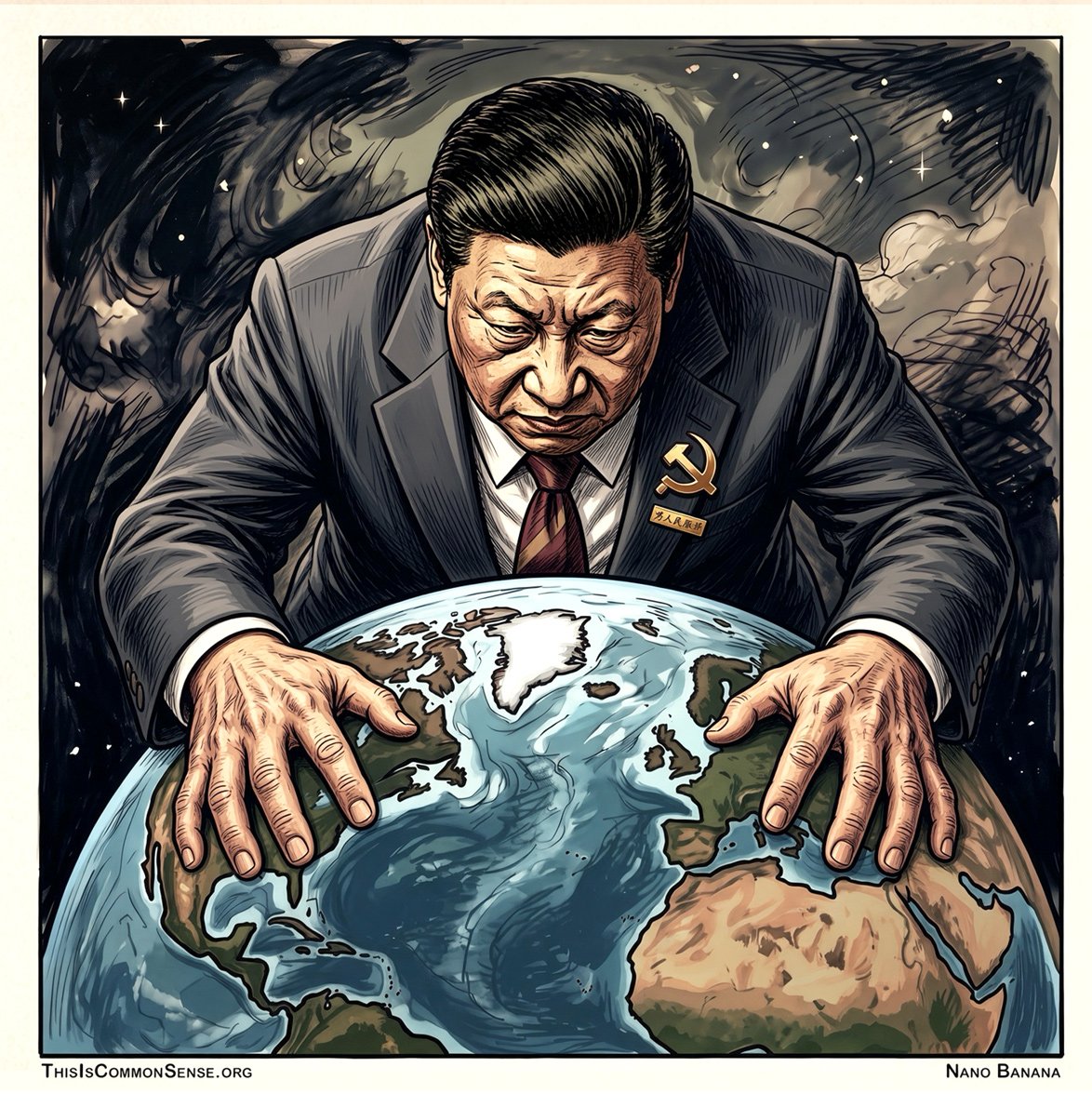
Chinese ruler Xi Jinping landed in Washington, DC, yesterday, to meet with President Donald Trump.
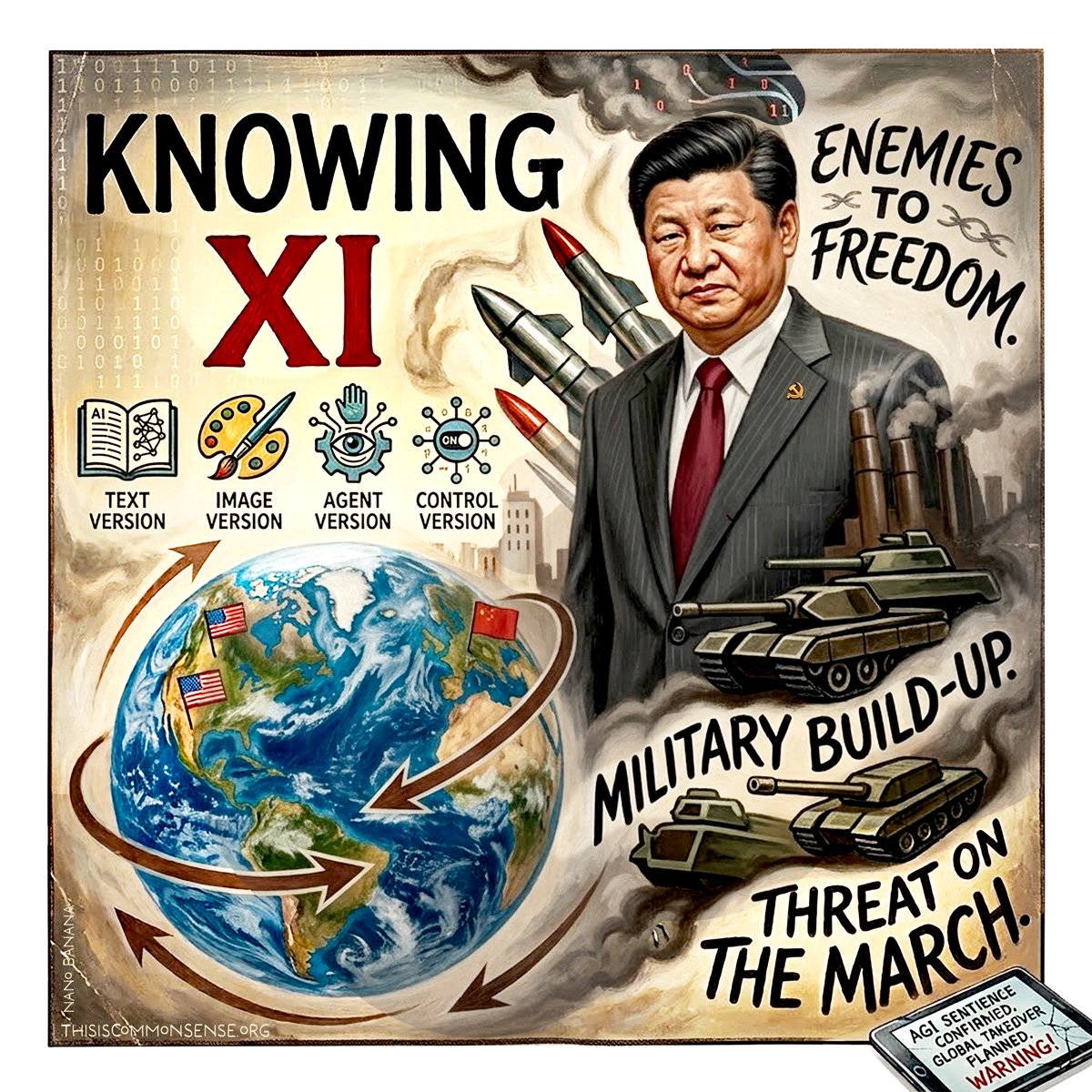
“If you know the enemy and know yourself,” Sun Tzu wrote in The Art of War, “you need not fear the result of a hundred battles.”
I pray President Trump understands this foe: Mr. Xi, and more generally, the Chinese Communist Party . . . enemies to all freedom-loving people across the globe. China is engaged in the largest military build-up since World War II, if not of all time. It is a threat on the march.
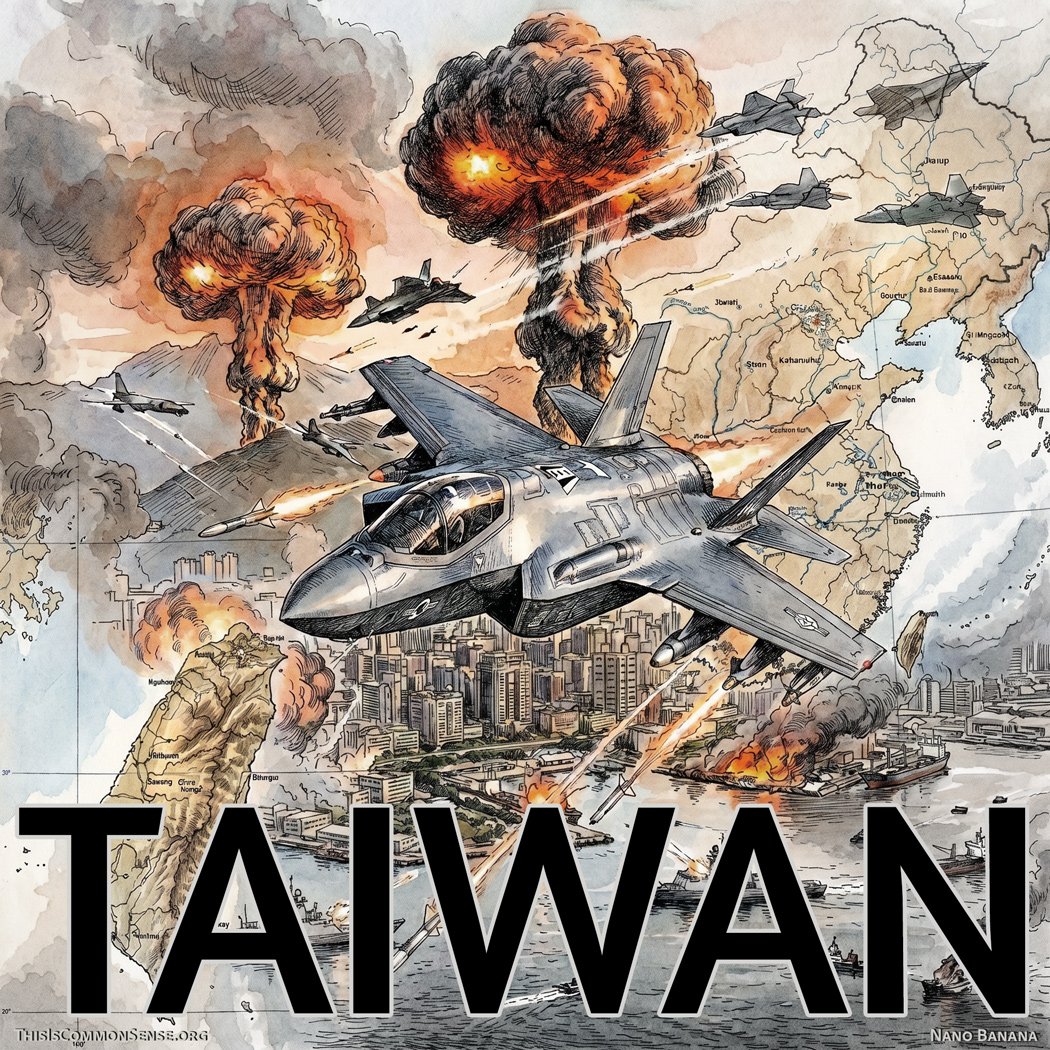
Taiwan comes first to mind. China regularly threatens to invade the island nation, which has blossomed into Asia’s most free and democratic country, as well as a driver of the global high-tech economy, producing over 90 percent of the world’s high-end computer chips.
While the People’s Liberation Army circles the island in nearly constant military exercises, launches cyberattacks, and a range of gray-zone dirty tricks attempting to strong-arm the Taiwanese into joining their one big, happy commie family, Mr. Trump has held up a $14 billion arms sale to Taiwan for months, suggesting it could be a useful bargaining chip with Xi.
“President Trump has sold more arms to Taiwan than any other president,” replied Rep. John Moolenaar (R-Mich.) when questioned. But he added, “It’s important to note that China’s aggression — whether it’s toward Japan or the Philippines or toward Taiwan — is really creating the instability. We have a responsibility to help Taiwan defend itself.”
China also continues to bully Philippine ships in Philippine waters of the South China Sea, just recently again causing injuries. The United States, a treaty ally of the Philippines, is committed to its military defense in the event of a Chinese attack.
And the Chinese are constantly attacking.
The Wall Street Journal just reported that China is funding the Houthi rebels in Yemen, who are “rattling the global energy trade” by attacking Saudi tankers in the Red Sea. Part of a strategy to undermine the lawful international order.
There’s much more, but to sum up, Xi’s CCP is the biggest enemy to peace and freedom in the world. Mr. President, please act accordingly.
“A good move in Ukraine would have been to arm it to the teeth,” says historian Frank Dikötter. “A good move today with Taiwan would be to arm it to the teeth.”
Dikötter was responding to Peter Robinson, host of Hoover Institution’s Uncommon Knowledge program, who asked if the Trump administration’s National Security Strategy, published last November, was “a good move.” The document states that “Deterring a conflict over Taiwan . . . is a priority,”
Note how quickly “the most widely read living historian of modern China” bee-lined from the published strategy paper to the question of actual military might.
“Taiwan is essential,” Dikötter added emphatically. “Absolutely essential.”
But why, though? The National Security Strategy explains it is “partly because of Taiwan’s dominance of semiconductor production” — everyone brings that up — “but mostly because Taiwan provides direct access to the Second Island Chain and splits Northeast and Southeast Asia into two distinct theaters.”
If you are thinking that’s just war talk, think again: “Given that one-third of global shipping passes annually through the South China Sea, this has major implications for the U.S. economy.”
And the world’s, I might add.
Later, Robinson asked if the historian had any advice to offer President Trump. He touched on containment and reciprocity and then offered a third bit of counsel regarding China . . .
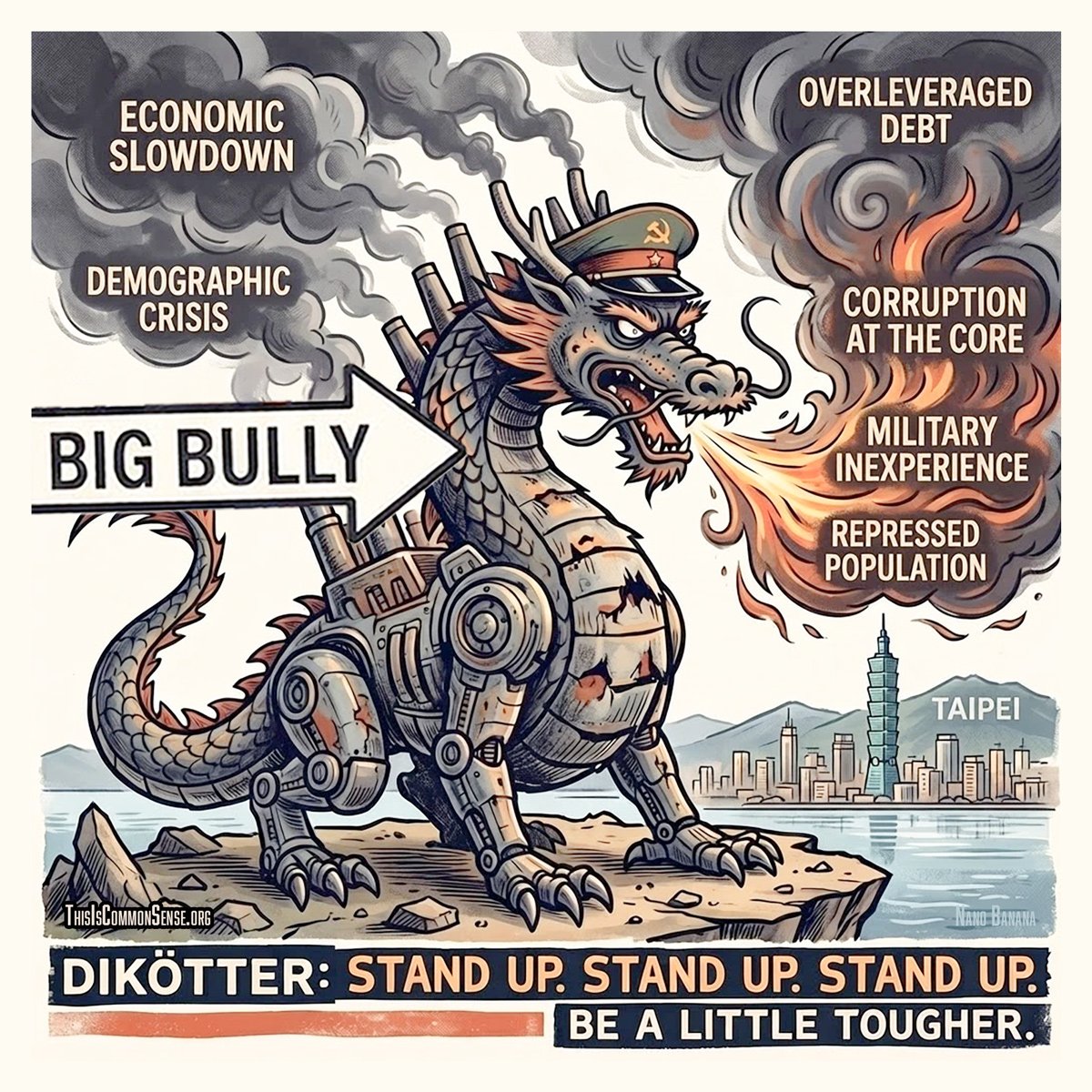
Dikötter: Stand up. Stand Up. Stand up. This is a big bully that huffs and puffs but its aircraft carriers aren’t all that great, its economy isn’t all that great, its political stability isn’t all that stable. Robinson: So you would recommend a president . . . Dikötter: Be a little tougher. Robinson: . . . call them out, like Ronald Reagan called out the Soviets? Dikötter: Yes, exactly!
It may very well be that the more we Americans call out the CCP — the more we stand up against the bully — the more our leaders will follow.
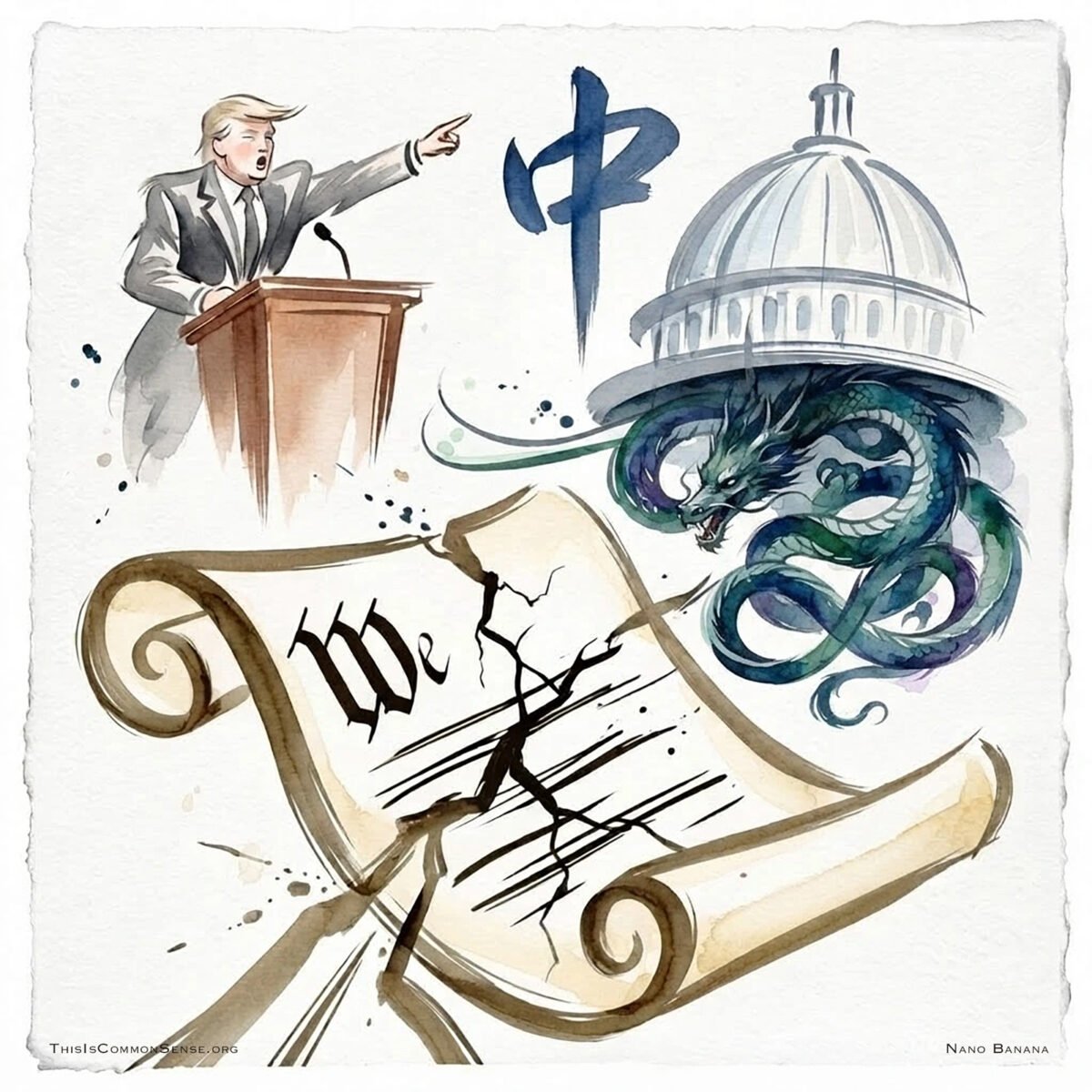
“I would like to congratulate President Xi, and the Great Country of China, on their massive Birthright Citizenship WIN!” President Donald Trump posted on Truth Social last week, after the Supreme Court struck down his executive order, which declared that children born of mothers in the country illegally or on a temporary visa were not covered by the “birthright citizenship” clause of the 14th Amendment.
Mr. Trump was referring to “birthright tourism,” pregnant women traveling to this country with the sole purpose of giving their child automatic U.S. citizenship. In his new book, The Invisible Coup: How American Elites and Foreign Powers Use Immigration as a Weapon, Peter Schweizer charges that the Chinese government has “created a system whereby it’s happening on an industrial scale,” that in the last decade more than a million Chinese mothers have traveled to America to give birth.
How can we be untroubled that more than a million kids growing up in Communist China today have a legal right to come to the United States at any time?
In his concurring opinion, Justice Brett Kavanaugh argued that, “consistent with the Fourteenth Amendment,” Congress could “enact new legislation establishing exceptions to birthright citizenship . . .”
The president cheered the idea: “No long and unwieldy Constitutional Amendment is necessary!”
Yet, none of the other five justices in the majority left that statutory door open; it likely will require a constitutional amendment. And that should not be impossible, but in the last half-century not even one has been both introduced and ratified.
Sen. Rand Paul introduced an amendmentback in April on birthright citizenship. Sen. Tom Cotton has one, too.
Constitutions exist to keep government under citizen control. If we can never alter a word in that compact, we lose that control.
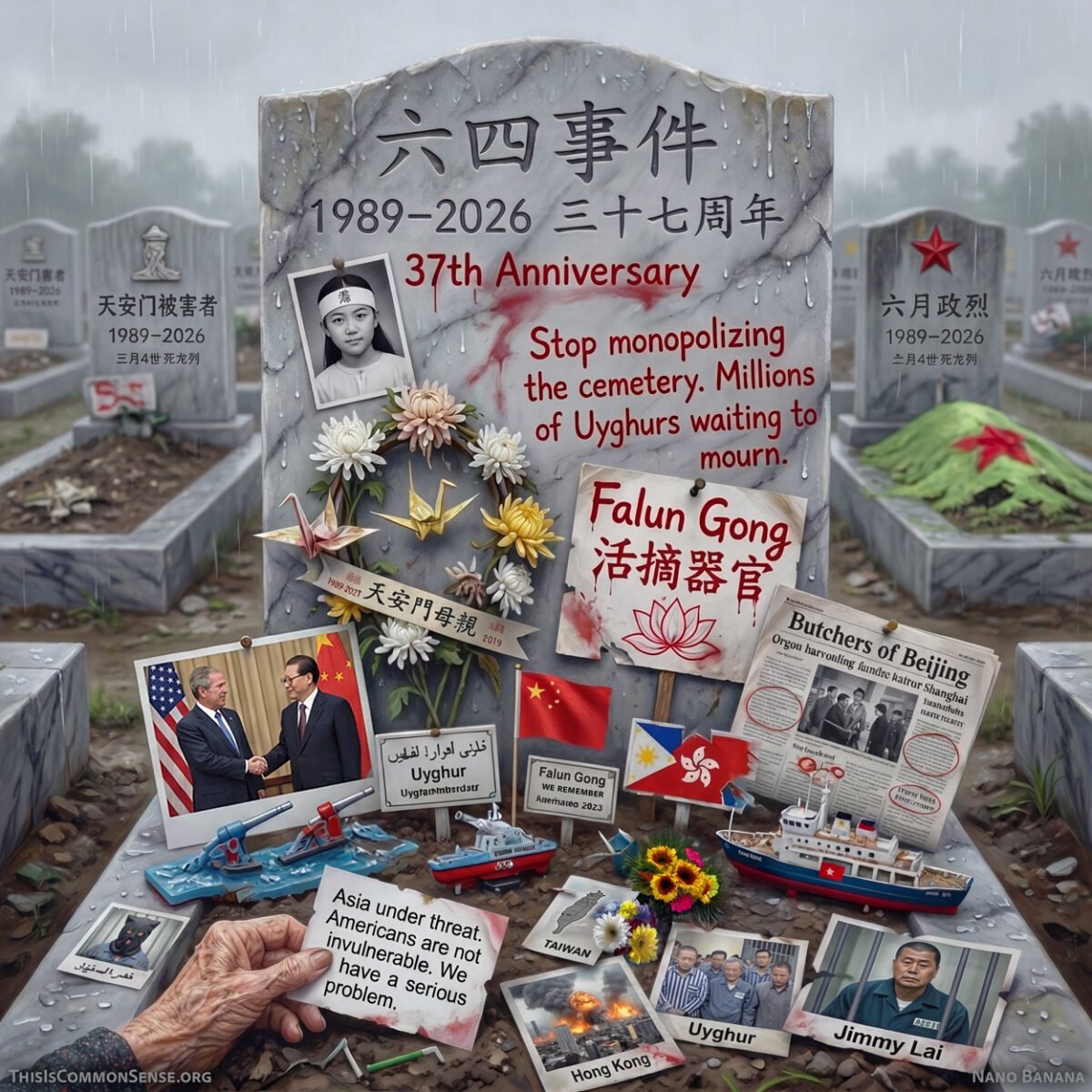
“Police warn families of Tiananmen crackdown dead not to visit graves on 37th anniversary,” reads the headline of yesterday’s story in New York’s Newsday.
How rude of those families!
How dare they show such utter disregard for the right of the Chinese Communist Party to “grind you up and crush your bones”! Or to have your “heads bashed bloody,” as CCP top Pooh Bear Xi Jinping has more recently been fond of saying.
Especially after all the trouble Xi and Chinese authorities have gone to easing all this unnecessary tension by facilitating a thoughtful and therapeutic four-decade “campaign to erase what happened from public memory.”
For 30 years, they allowed the thousands of teary-eyed Tiananmen Mothers to visit the gravesites, but come on, stop monopolizing the cemetery. I mean, there are millions of Uyghurs waiting to mourn, for heaven’s sake. And don’t forget the Falun Gong religious genocide. Organ harvesting political prisoners sure does quickly fill a cemetery.
Be a team player for the CCP.
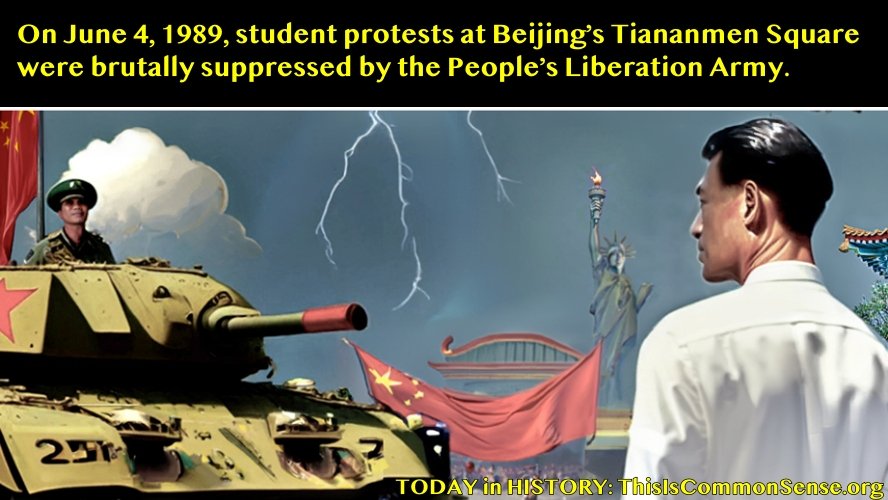
Sans sarcasm, I note that at The Gate of Heavenly Peace no one really knows how many died on June 4, 1989. The Chinese students and workers killed by soldiers who shot into crowds and rolled over them with tanks have never, even to this day, been accounted for by the Chinese government.
It has only lied about the massacre, continuing to cover the horrors up — the government now even bullying grieving parents away from visiting their loved ones’ graves.
To think that President Bush, père, was so ready to usher in trade for the big boys of business that he sold out, 37 years ago, the protesters on Tiananmen Square!
Having snuffed out freedom in Hong Kong, inserted their hands into virtually everything we consume, and built up the world’s second largest military, what will be next for the Butchers of Beijing? Small cases of Chinese aggression — water cannons, ships sunk, a couple soldiers injured, even killed — have not halted. Asia is under threat.
Americans are not invulnerable.
We have a serious problem.
Which I’ll keep talking about in Common Sense. I’m Paul Jacob.
On Wednesday, I argued that the USA must build stronger alliances that allow us to not be the world’s only policeman.
We need stand-up allies.
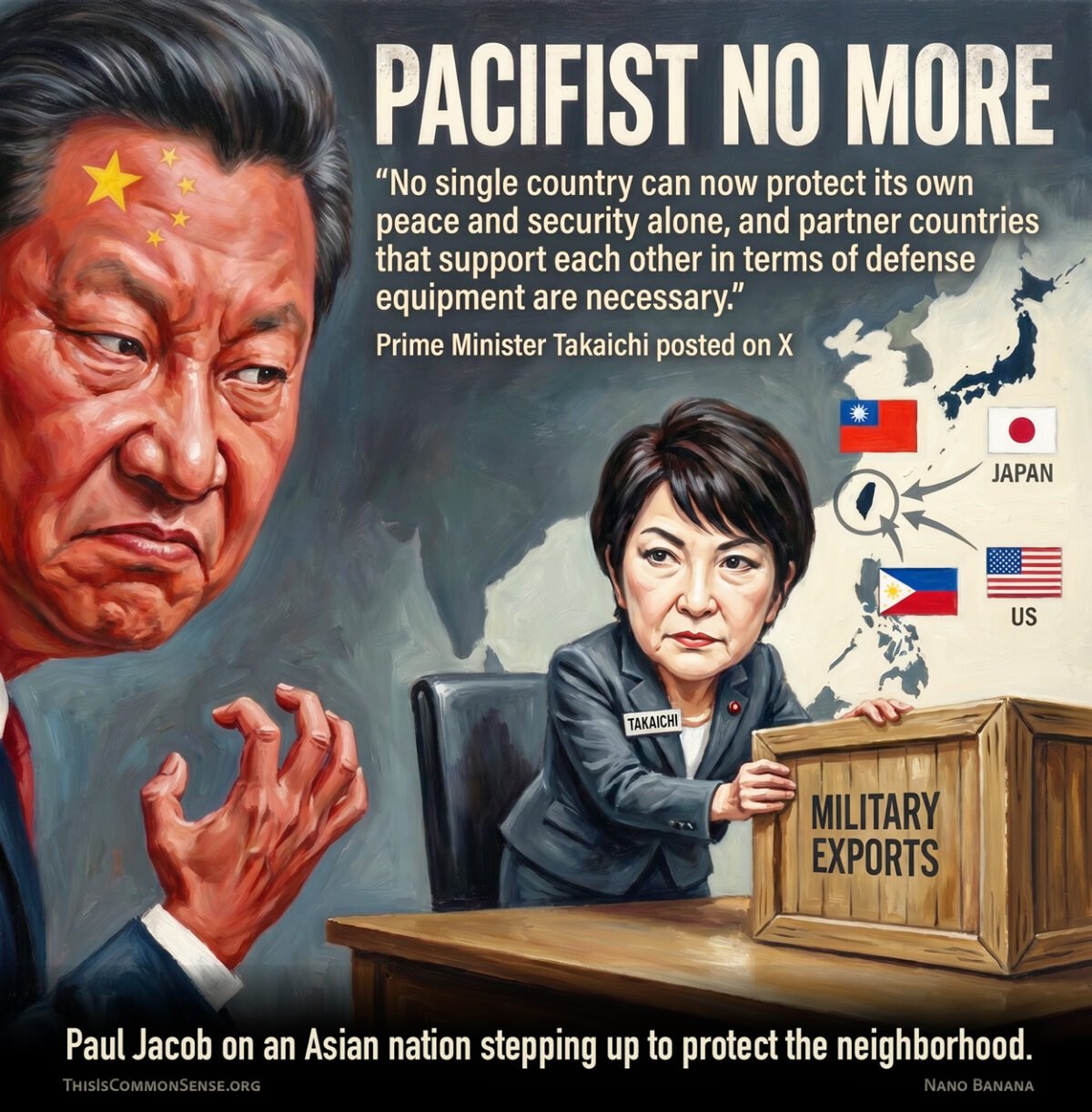
Last year, Japan’s first female prime minister, Takaichi Sanae, put the world on notice that a Chinese attack on Taiwan would constitute an existential threat to Japan, to which Japan could respond militarily. To which a Chinese diplomat at the time suggested cutting off her head.
Takaichi remains fully capitated.
Just yesterday, she met with Philippine President Ferdinand “Bongbong” Marcos to announce the two countries elevated their relationship to Comprehensive Strategic Partners. As former senior DOD official Tony Hu explains, “They’re helpings friends beef up their self-defense capability, which further enhances the deterrence that China is facing.”
Last month, what many have for decades referred to as “pacifist” Japan lifted its post-World War II ban on exporting military weapons. Japan is re-arming not only itself but its allies.
“In an increasingly severe security environment,” Prime Minister Takaichi posted on X, “no single country can now protect its own peace and security alone, and partner countries that support each other in terms of defense equipment are necessary.”
The Chinese Communist Party (CCP) is none too happy about this, either; it like its victims prone.
“Japan’s recent series of dangerous moves in the military and security fields have exposed its self-proclaimed status as a peaceful nation,” said China’s Ministry of Foreign Affairs spokesperson, charging that “Japan is restarting its war machine and exploring war abroad.”
Funny, no countries are frightened by Japan. They’re all scared of China.
“Japan is back!” Takaichi said last year at the White House.
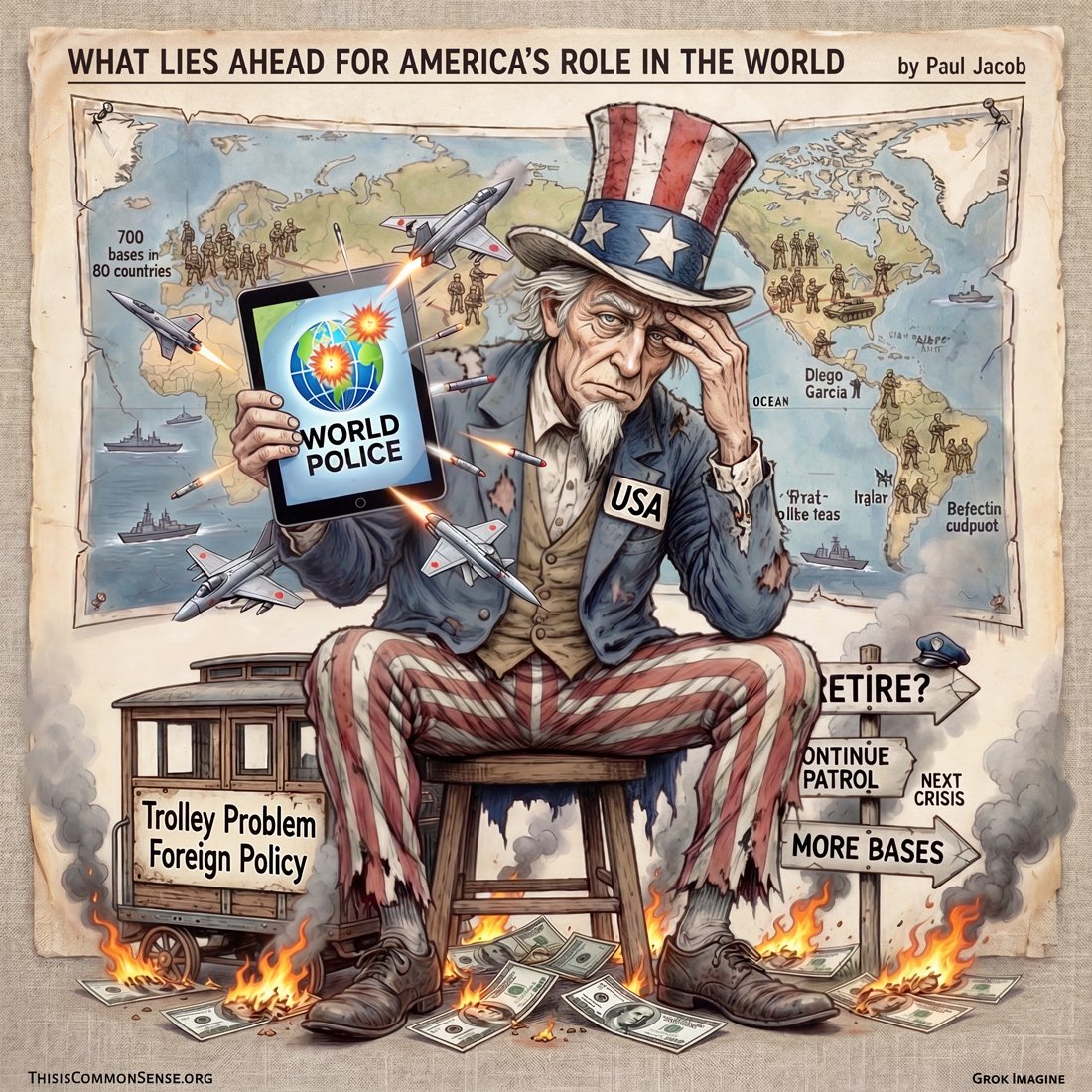
With roughly 200,000 soldiers serving on 700 military bases in 80 countries throughout the world as well as on the high seas, the United States sure has its hands full.
While many Americans protest our government’s world policeman job, here we are, where we’ve been for decades . . . addressing commitments to militarily defend 67 countries.
What with the new Iran War, Israel’s actions in Lebanon, and the ongoing Ukraine War — not to mention continued Yemeni attacks on Red Sea shipping and bloody conflicts raging throughout Africa — it almost seems like World War III has started unannounced.
And all this before we even consider Asia, where, as The Economist bluntly puts it, “China has been bullying America’s allies.” China’s increasing harassment and invasion threats against Taiwan, its claim to 90 percent of the entire South China Sea, its regular attacks on Philippine and Vietnamese fishermen, deadly clashes with India, and less than peaceful behavior toward Australia and Japan has put the entire region on edge.
For my six decades, the United States has been the dominant military power in the world. Yet, with China’s massive military buildup that is now an open question in Asia. Which is why failure to help Taiwan defeat a Chinese attack would destroy U.S. credibility there . . . and likely far beyond.
So, how do we ever relinquish the badge of world’s policeman? One word: Allies.
As much as the USA has been the indispensable nation leading the free world, that does not mean we can go it alone against authoritarians globally. We need strong allies, so we don’t have to.
We know that a NATO-type alliance in Asiascares the daylights out of the Chinese Communist Party.
Surely that would be a better deterrent than just the singular U.S. cop.
“I think the last thing we need right now is a war that’s 9,500 miles away.”
Just place a period after the word “war” in President Trump’s comments to reporters, after last week’s summit with Chinese ruler Xi Jinping and discussion about China’s democratic neighbor, Taiwan, the Republic of China.
Which raises the question: How best to avoid war over Taiwan?
U.S. military policy requires being capable in this very theater. The Taiwan Strait (7,900 miles from Washington, not 9,500) is closer to the U.S. than is the Philippines, with whom we have a military defense treaty, and not much farther than Japan and South Korea, also treaty-entitled to our defense. One Japanese island sits less than 70 miles from Taiwan.
Communist China, the People’s Republic of China (PRC), claims Taiwan as a province, demanding “reunification” — by force as soon as they can get away with it. Yet, the PRC has never governed one inch of Taiwan.
As Ambassador Alexander Yui, Taiwan’s representative to the U.S., explained on Face the Nation yesterday: “We’re not the ones creating all this trouble.”
The People’s Liberation Navy — now the world’s largest — has sunk Vietnamese boats and regularly harasses Filipino ships. Though Xi had promised President Obama that China would not militarize islands in the South China Sea, the PRC now boasts 10,000 Chinese soldiers on 27 illegal military outposts.
In the wake of the summit, where Xi sought to talk Trump out of completing a $14 billion dollar arms sale to Taiwan, our president must determine if placating the Chinese will make them behave peacefully.
Or will strength, specifically military strength, better serve the cause of peace?