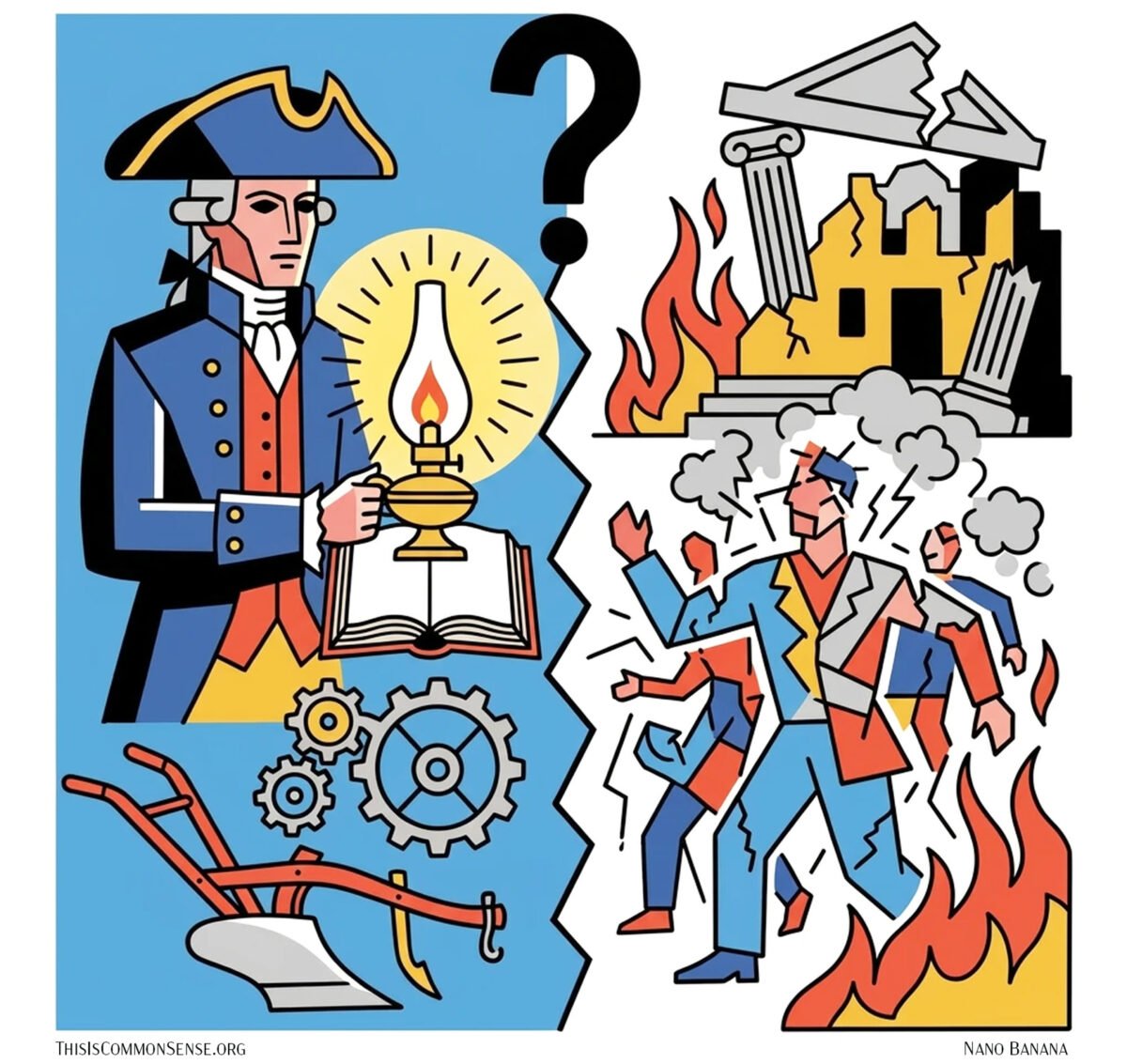
America’s founding fathers talked a lot about virtue. Freedom requires it; there can be no liberty without virtue, they said.
“Our Constitution was made only for a moral and religious People,” insisted John Adams. “It is wholly inadequate to the government of any other.”
“No government can continue good but under the people’s control,” Thomas Jefferson explained, declaring that the citizens’ must “be informed by education what is right and wrong; to be encouraged in virtuous habits and deterred from vice.”
It’s time to renew discussion, as rioting expands from Paris to Milan to . . . all over Europe. Here is one notion of a virtuous people: folks who, when they protest injustice or folly do not themselves foolishly commit injustice. Virtuous people do not run riot, wreak havoc, commit mayhem . . . just because they have grievances.
If they have complaints about farming regulation, or school funding, they do not burn down shops.
Or the Louvre.
Whatever “social justice” is, it too requires a virtuous population.
The fact that there is increased political violence suggests that some folks are not virtuous.
There’s this notion that in France, at least, violent protests are just a part of French culture. A culture warped by the disastrous French Revolution centuries ago? My bet is that, if we inquired deeper, we’d discover that this is not exactly so. That certain groups push violent protest every now and then for reasons of political goals that are not about either social justice or liberty.
We in America, who have been blessed with the freest society on the planet, are not quite as prone as Europeans to the vice of violent protest. But we are not immune, and we must start taking virtue — responsible self-government — seriously. Again.
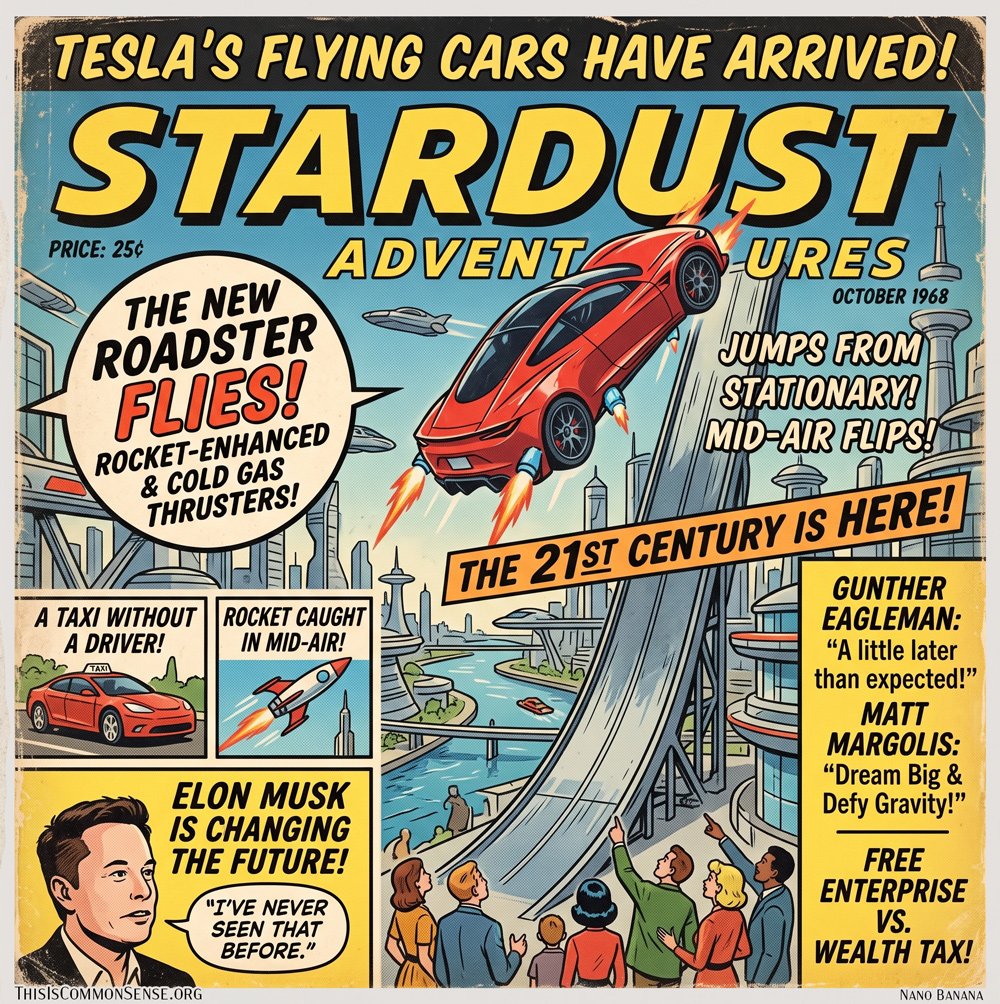
A little later than expected, flying cars have arrived.
Welcome to the 21st century.
A rockets-enhanced Roadster can zoom up a nearly vertical ramp and execute a flip in mid-air before landing. Also, “on cold gas thrusters,” the prototype can jump into the air from a stationary position on the ground, fly for a few seconds, and do a flip before landing.
Gunther Eagleman writes: “Two nights ago I saw a flying car. This morning I saw a taxi without a driver.” Earlier he had seen a rocket caught in mid-air. During floods in Texas, he’d used Starlink to connect to first responders. “Elon Musk is changing the future.”
Matt Margolis sees a lesson about free enterprise: “This is what happens when people are free to dream big and put their own talent and money behind those dreams. No government program or committee was ever going to build a car that defies gravity for the fun of it. It took an entrepreneur willing to chase an idea that sounded crazy even to him, and a team of engineers determined to prove it wasn’t.”
Says one X commentator: “Bernie Sanders says billionaires should not exist. . . . A flying car is what men do when they are free. A wealth tax is what politicians do to the men who built it. One of them needs the other to survive, and it isn’t Musk.”
“I’ve seen a lot of things,” Musk himself asserts. “But I’ve never seen that before.”
We, too, have seen a lot. And, if governments do not ruin everything, we should expect to see a lot more.
“The most magnificent speech in the last 50 years,” is how journalist and novelist Robert Bidinotto described U.S. Secretary of State Marco Rubio’s address last week from the Acropolis.
“Here, in Athens, we found the first full realization of all the essential traits that would come to define the West: fierce individuality and relentless ambition; daring exploration and invention; a yearning for discovery, for adventure, risk and glory,” Rubio told his audience.
“The ideal of many ideologies in our time has, frankly, become a world of perfect safety, devoid of risk or failure, with neither the glory of victory nor the shame of defeat,” he said, adding that “we preoccupy ourselves more with the comfort of the worst than the potential of the best. We hold the most exceptional things among us hostage to the average, the ordinary, the mediocre.”
The Secretary refreshingly sounds a bit like Ayn Rand.
“Over time, we in the West came to feel ashamed of the very things that made us exceptional. We felt embarrassed that our achievements set us apart from the rest of the world. Our prosperity somehow became a source of guilt. . . . we condemned our own history. And in too many places, we taught our children to be ashamed of the countries they would inherit.”
Of course, one of our central tenets is the right, even duty, to criticize our government. But only a woeful lack of historical perspective or a perverse ideological malice (or both) allows some to pretend that ripping apart our society is a thoughtful critique.
Europe, Rubio urged, must “awaken from its long slumber and rekindle the fire that was lit here millennia ago.”
So, too, should America.
We must stand up for our core values. Or watch them expire.
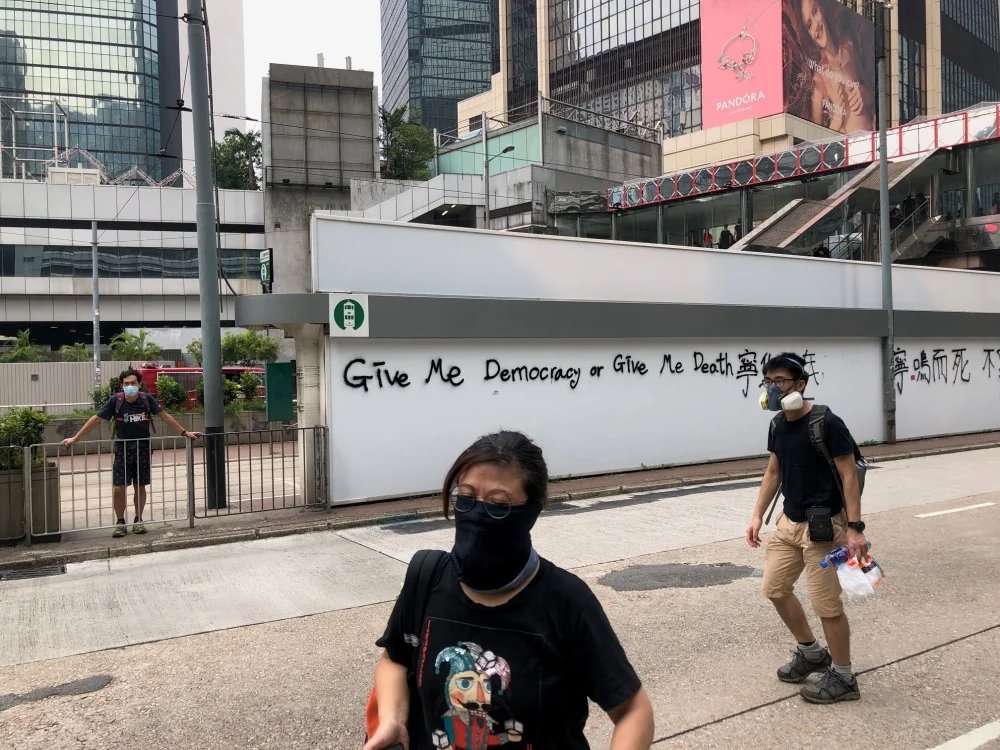
Back in 2019, I spent a beautiful September Sunday afternoon in Hong Kong…marching against totalitarianism…and getting tear-gassed.
For months, I had followed the protests against legislation introduced in Hong Kong that would allow authorities in Beijing to extradite Hongkongers from their own then-respected legal system into Beijing’s always abysmal and wicked black hole. Protests began with a March 15 sit-in at government headquarters followed by a June 9 rally attended by “hundreds of thousands.”
And then the protest continued for weeks. For months. They turned out to be “the largest series of demonstrations in the history of Hong Kong.” As many as one in four residents are estimated to have participated.
By agreement with Great Britain, China had recognized a different system in Hong Kong for 50 years after the 1997 “handover,” under “one country/two systems”—one system based on free speech, rule of law, civil rights, the other on…the opposite. China merely had to wait to inflict its fascistic totalitarian system…until 2047.
But the Chinazis couldn’t wait. I say “Chinazis”; it was at this march in Hong Kong that I first saw and heard that epithet.
And it fit. Because while hanging on to many stupid totalitarian aspects of communism, the CCP long ago instituted a much more fascist, mercantilist economic system. With some freedom to make money. Money is universally good, apparently.
Jack boots and tiger chairs and concentration camps are now only there if anybody forgets who is in charge. Or the CCP says so.
I had seen posters about a Global March Against Totalitarianism being held today. Hey, that I’m very much against. You?
But where was it going to be? I knew next to zero about the city.
And when? After all, I had a flight leaving Hong Kong in the early evening, headed to Taiwan for the 2019 Global Forum on Modern Direct Democracy being held in Taichung.
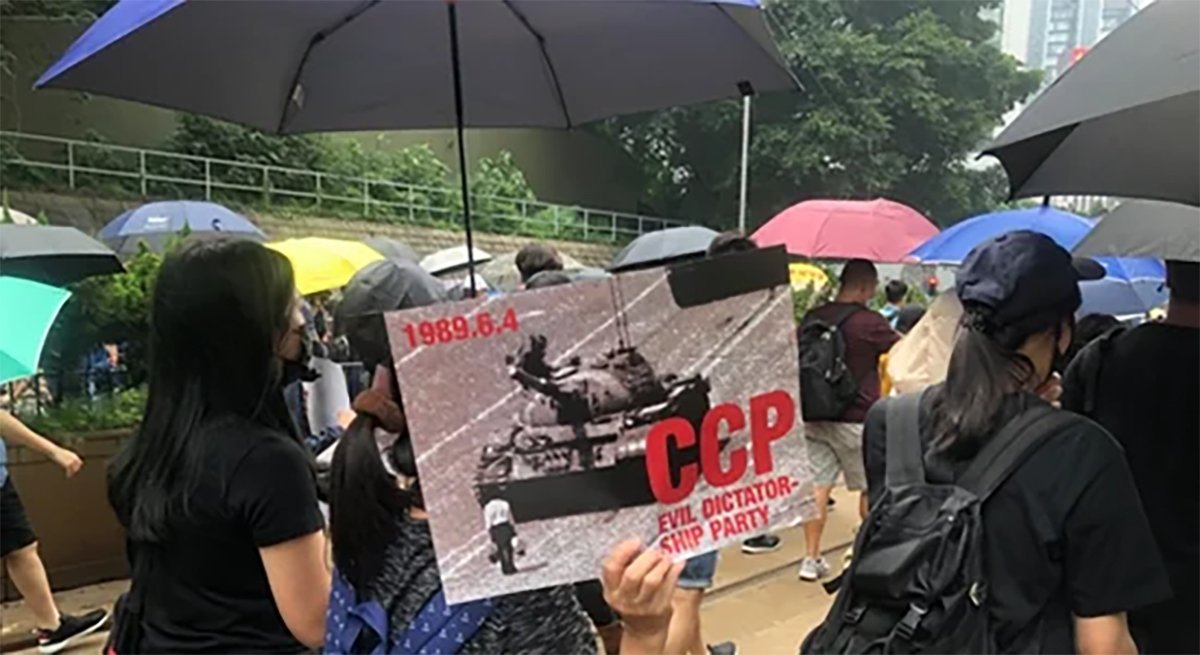
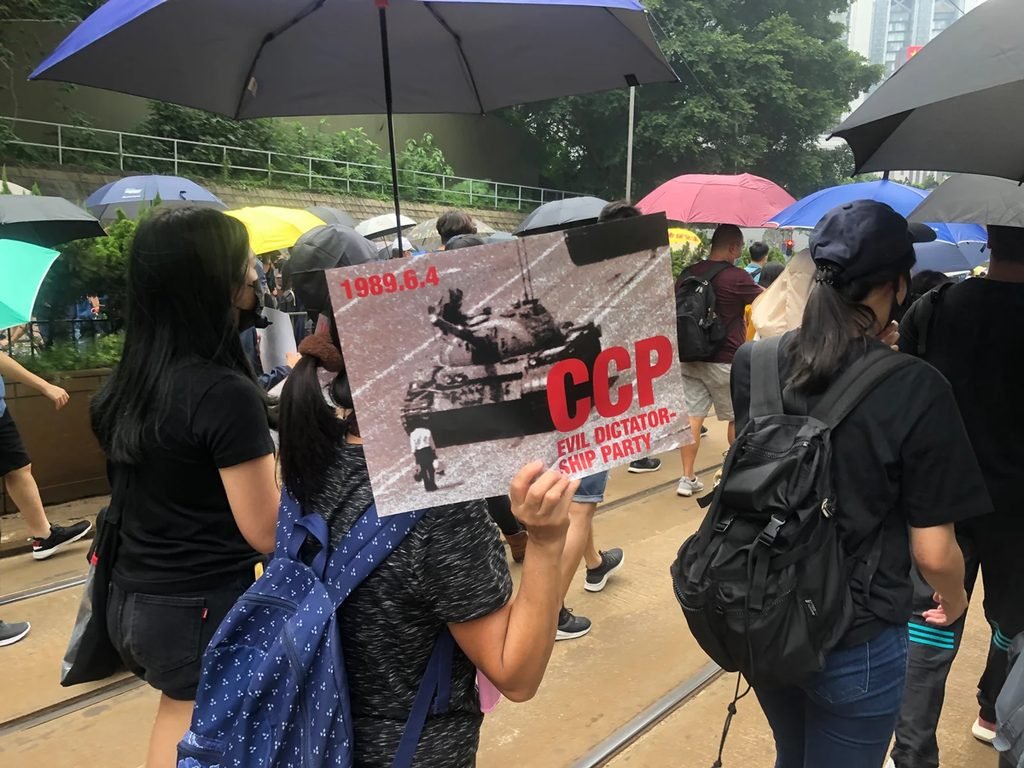
Somehow, watching young people and conversely observing police, I stumbled upon the march. Moments later I was handed a poster of Tankman from June 4, 1989, with the words: “CCP Evil Dictatorship Party.”
As I walked, a sense of peace came over me and I felt deeply honored to be with these heroes, mostly young people but of all ages, standing up to the largest evil on our Earth today. With their frail bodies. And gas masks. And their powerful goodness.
On September 29, as I marched, the Extradition Bill had still not been withdrawn. Chief Executive Carrie Lam, Beijing’s puppet, would not fully remove it until October 23.
I respect protesters who clearly state their demands for change, as did these Hong Kong protesters. Often chanting: “Five demands! Not one less!”
Five Demands of Hong Kong Protests
Complete withdrawal of the extradition bill from the legislative process.
Retraction of the “riot” characterization for protests.
Release and exoneration of arrested protesters.
Establishment of an independent commission of inquiry into police conduct and use of force during the protests.
Resignation of Carrie Lam and the implementation of universal suffrage for Legislative Council elections and for the election of the chief executive.
As afternoon shadows loomed longer, I had to grab my luggage and get to the airport for my flight. I walked back against the line of marchers for quite some time, until I entered an intersection without many protesters and with riot police standing across the street from me.
Moments later tear gas canisters were hitting all around me and gas was spraying out — oops! I’m not really prepared.
But I held my breath and ran to get away from the gas. My eyes burned like someone had hit them with a chemical agent, don’t you know! Luckily, I had a bottle of water and poured that into my eyes.
The few protesters who were around rushed to help me, telling me to “breathe,” in English, and providing yet more H2O for my pulsating pupils.
I rushed to get back to the hotel and then to the airport; wearing a very wet t-shirt I made my flight to Taipei.
But those Hong Kong protesters stay with me. The best people on the planet. Against the brutal and powerful CCP, they knew they stood little chance to prevail. But they refused to go down without speaking out, standing up and fighting back against the death of their freedom.
In November 2019, after months of protest and increasing violence in response to systematic police brutality, there were local elections in Hong Kong, where voters could express their views. The dramatic results showed Xi Jinping and the CCP just how infinitesimal their support was among Hongkongers.
“Pro-democracy candidates won almost 90 per cent of seats in local elections,” reported the BBC. “The result is being seen as an outright rejection of Carrie Lam’s leadership and a huge show of support for the anti-Beijing protests that have been going on for months.
“The Chinese government has responded to the landslide victory for pro-democracy candidates in the Hong Kong elections by emphasising that the city will always be ruled from Beijing,” the BBC noted, “and has warned against further protests.”
There were further protests, but soon COVID-19 would serve the CCP’s sinister interests by clearing the streets and undercutting the protest movement. Beijing, realizing they had no support in Hong Kong, decided on a total clampdown and passed a National Security Law — not through the Hong Kong legislature but in Beijing, with zero input from Hong Kong.
That law has murdered all political rights in one of the world’s most wonderful cities. Some day, let us hope and pray, Hongkongers will again be free.
Reprinted from StoptheCCP.org September 29, 2023. Stay tuned for an update, this weekend, on what’s happened since.
“Now it is our turn,” Vermont Sen. Bernie Sanders told the crowd gathered at the Lincoln Memorial, last Friday, celebrating the 63rd anniversary of Martin Luther King’s March on Washington speech.
Socialist Sanders was followed by New York Congresswoman Alexandria Ocasio-Cortez.
“We the people demand guaranteed healthcare for every American as a right and not a privilege,” insisted AOC.
“We the people of the United States of America demand that one job with no need for overtime,” she declared, “should be enough for our most basic needs.”
Then Ocasio-Cortez added, “Which also include rest.”
“Exactly,” remarkedFox News’ Brian Kilmeade, “We became number one in the world by resting and not working overtime.
“Right behind her is an army of socialist foot soldiers,” Kilmeade continued, “ready to work 30 hours and then take a break.”
That army is the Democratic Socialists of America — to which AOC had just re-upped her membership.
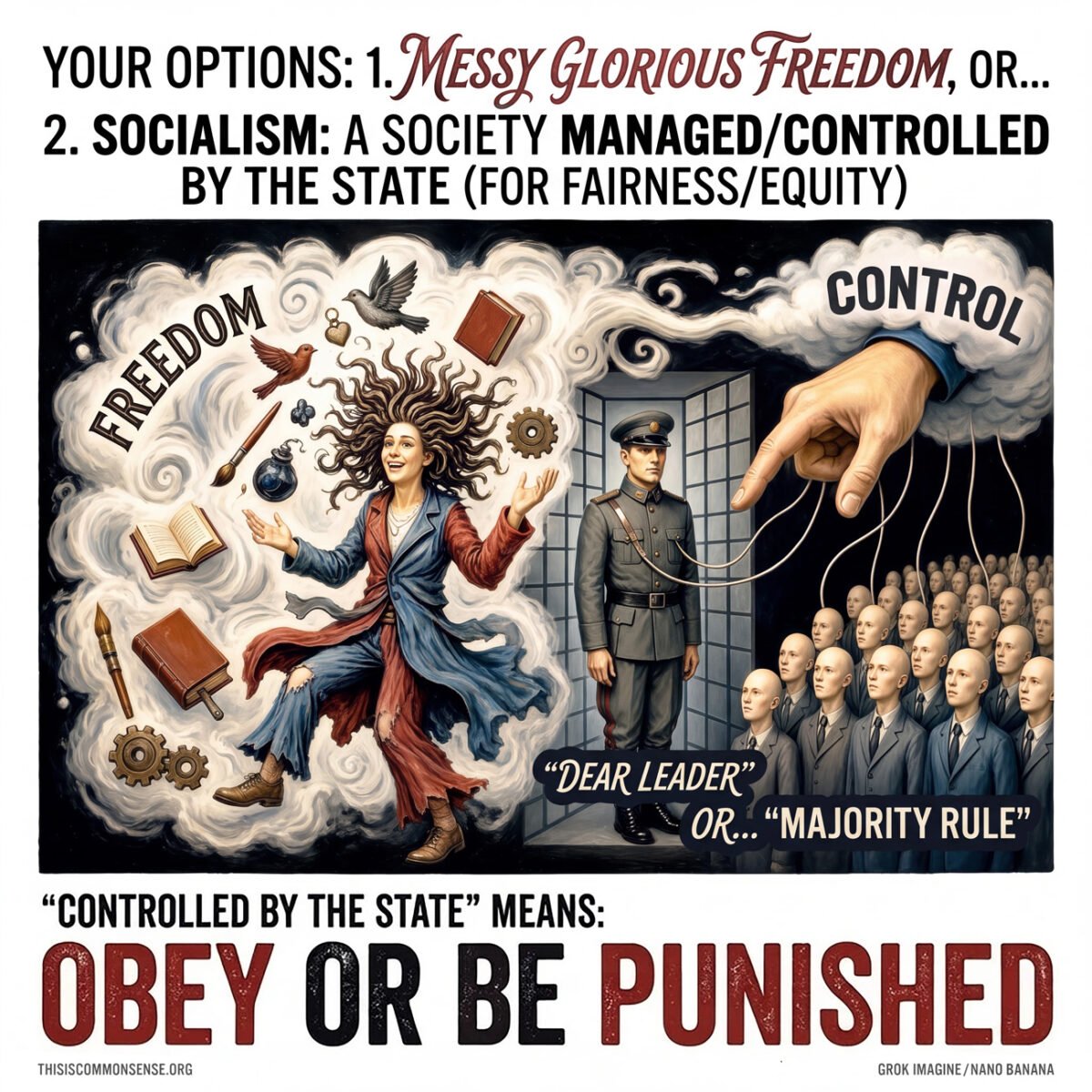
“Imagine taking a day off from work,” reads their program’s very first message, “in a future without capitalism.” You see, in that socialist utopia just around the corner, “You enjoy your work; it’s interesting to you” and “you would control your own labor” and it would never be “just a job to pay the bills.”
The promise of socialism fulfilled at last.
“Speaking of bills,” the DSA assures you won’t “really have them anymore.” And there will be “no debt”! Why, you won’t even “pay a mortgage or have a landlord, because comfortable housing is a human right.” Simple as that, plus, “Your retirement is publicly funded.”
Sure sounds like they’re going to take care of us real nice.
In a case with “serious repercussions,” insists journalist Brazilian-based American journalist Glenn Greenwald, a “U.S. federal judge concluded that an immigration record entered in the Customs and Border Protection system during the Biden administration was fraudulent.”
While the idea of fraudulent behavior in a government bureau will hardly shock you, this record was special. It was used to imprison a Brazilian official.
The official? Filipe Martins. He filed suit in the U.S., and as a result a truth came out. “The fraudulent record reflected a non-existent entry into the U.S. by the national security advisor to former President Jair Bolsonaro,” Greenwald explains. “The fabricated entry was then somehow obtained and used by a controversial Brazilian Supreme Court judge to imprison that national security official.”
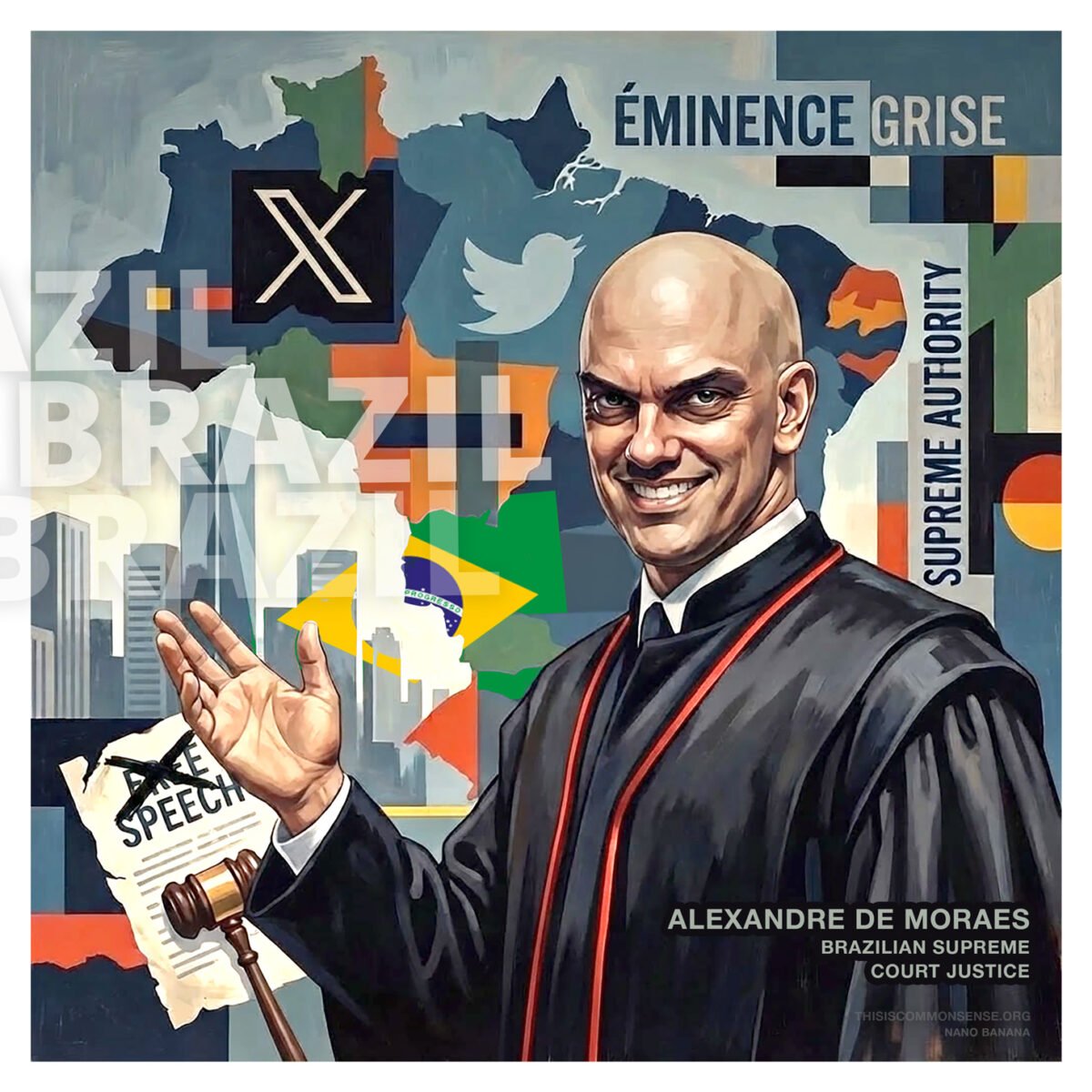
Behind all this lurks a rogue Brazilian Supreme Court Justice, Alexandre de Moraes. He’s Brazil’s éminence grise, exercising enormous power in his country far beyond his constitutional authority. He’s basically the country’s unacknowledged dictator. He hates free speech, as his run-ins with Twitter (X) and Elon Musk show.
Moraes was gung ho for tyranny during the Biden years, but is justice catching up with this “justice”? U.S. intelligence agencies appear to have secretly nurtured the rogue judge, but with the change of administrations has come an official antagonism.
Now ramped up by a federal judge in the current case — which is “increasingly suspect and bizarre,” as Greenwald notes. “The political implications are obvious: did Biden officials — overtly hostile to the Bolsonaro government and strongly supportive of Lula — deliberately manufacture an immigration record to permit Moraes to order this top-level Brazilian official imprisoned unjustly?”
Americans traditionally think that their government shouldn’t meddle in the internal affairs of foreign states. We certainly shouldn’t allow our government to work sub rosa against freedom around the world.
Is the Maryland Lottery and Gaming Control Agency’s cronyism really “a little too obvious,” as Reason magazine ironically argues?
Both the casino group’s model letter and the Maryland agency’s nearly identical letter to the Commodity Futures Trading Commission speak of “our grave concerns regarding the introduction of so-called ‘sport events’ contracts,” how citizens are being put “at risk” by enabling avoidance of state regulations, etc.
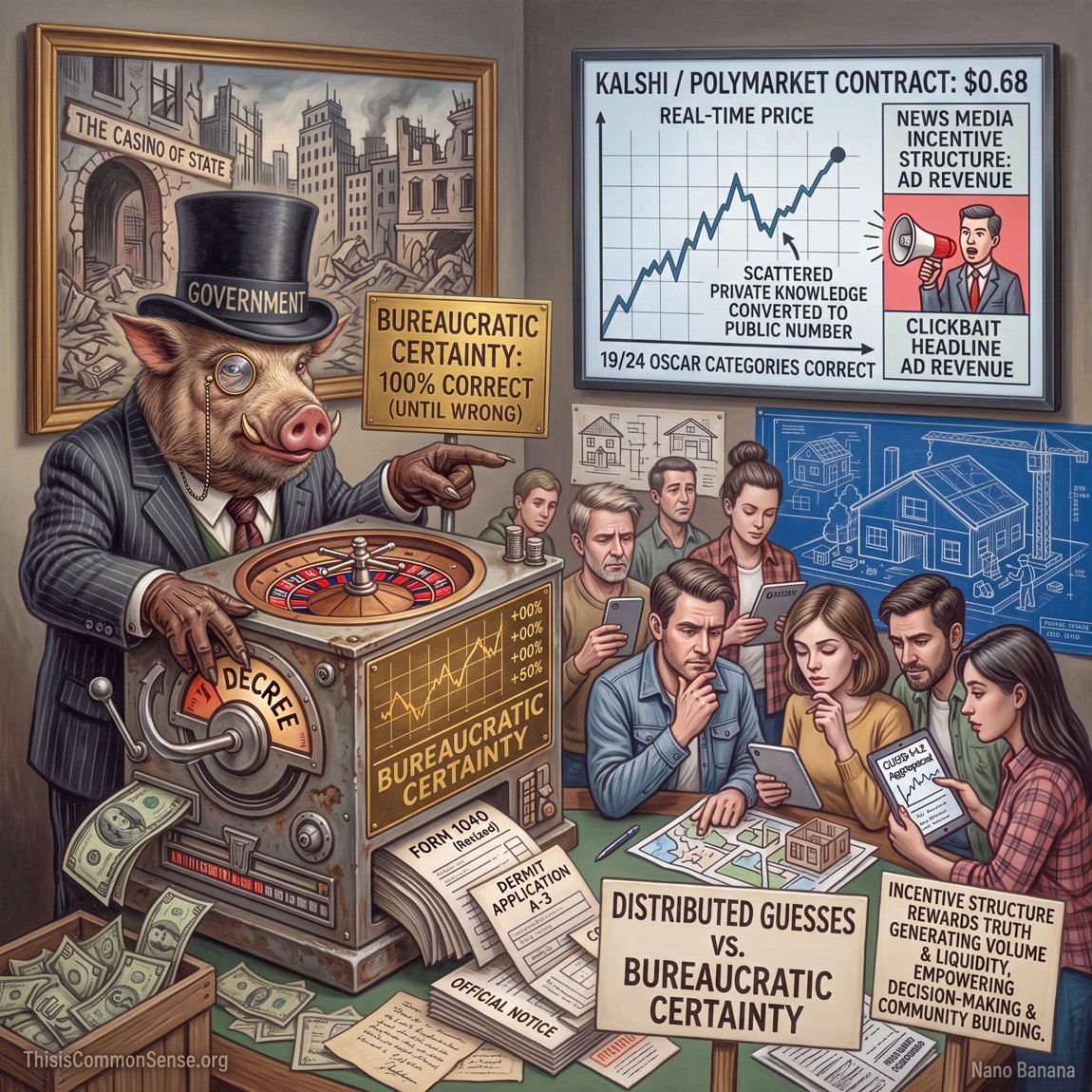
Casinos compete with online prediction markets. One way to compete is just to compete. If some of your casino customers are drifting to online betting, find ways to make the in-person experience more appealing. Improve advertising. Jigger the odds ever-so-slightly more in favor of players. Increase the dollar value of wins. Etc. We might call this the economic means of competition.
The other way to compete? Deploy the political means: cajole government to bludgeon competitors. Thus the American Gaming Association, which represents casinos, would like the federal government to do something to impede online prediction markets — the trading of contracts about what’s going to happen in sports and otherwise on platforms like Kalshi and Polymarket.
Sean Maloney, who heads the competing lobby group Coalition for Prediction Markets, explains how prediction-market betting differs from casino betting.
“[A casino] wins when you lose. A sportsbook will kick you off if you win too much. An exchange has no such incentive. It just takes a small fee, and two equally situated counterparties can trade. That’s why consumers prefer prediction markets.”
My prediction? Industry foes of market competition won’t be persuaded.
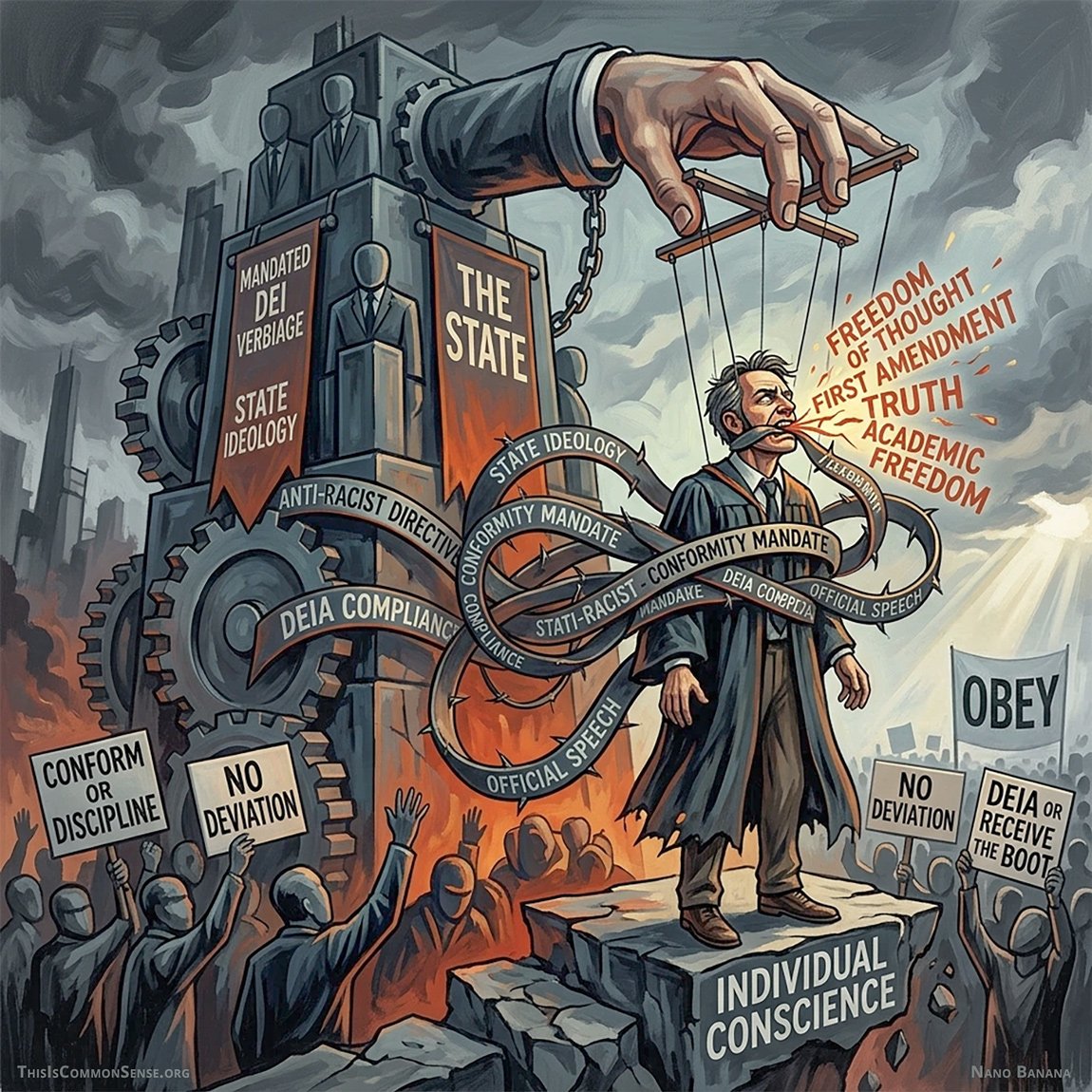
A professor at Bakersfield College, a community college in California, Johnson has for years been bucking a mandate that he parrot the state’s “DEI” and “anti-racist” ideology — well, DEIA now: “diversity, equity, inclusion, and accessibility” — lest he face disciplinary action or receive the boot.
Community colleges, remember, are creations of the state, and Professor Johnson was being forced, by state directive, to mouth specific bureaucratic verbiage as if he were a mere functionary under a central planning board.
Alan Gura, the Institute for Free Speech’s lead counsel in the case, observed that Johnson’s fight has been for the First Amendment right to speak his mind, which American professors should be able to take for granted.
The settlement with Kern Community College District includes payment of $150,000 for attorneys’ fees. But it’s not perfect.
A permanent injunction against harassing Johnson for speech “in the classroom, in his scholarship, or as a private citizen” covers only five years. Government defendants “typically resist injunctions that are open forever,” making time limits in such settlements common, Gura explained. And five years “more than covers Johnson’s anticipated remaining time” at the school.
Nor does the decision address “whether the laws were constitutional as applied to anyone else.” But, said Gura, “the legal principles adopted by the court are persuasive authority that could lead to relief for other professors. . . .
“It’s easy for Sacramento officials to pass insane regulations . . . in their academic fantasy woke universe. . . . Something else entirely for local districts to try to defend them in a real courtroom where the First Amendment matters.”
So this imperfect ruling paves the way for further vindications.
I’ve been a U.S. citizen for more than a quarter of the 250 years that there has been a United States.
Proud to be an American? Yes. Not because my country, or more specifically our government, has always been spectacular, or even in the right. I’ve taken a few lumps battling against the government.
More than “proud to be an American,” which was admittedly an accident of birth, I’m proud of America. Even with all its faults, this country has been the greatest force for good, for freedom, for peace, for human dignity in the entire history of the world.
Certainly, I get no personal credit for the revolution. I wasn’t around. I had no hand in writing the Declaration of Independence or the First Amendment. But I can recite parts.
And defend them against modern foes.
No blame goes to me for slavery — or any glory for ending it. Likewise, I didn’t storm the beaches of Normandy or plant the flag at Iwo Jima. I’m honored, however, to know men who did. Without those American kids, Europe and Asia would have been completely conquered by regimes of unspeakable evil.
Those GIs were billionaires . . . saving truly billions of lives, physically and spiritually.
We Americans — and the whole world — owe a grand debt to the ideals of the American Revolution and the blood and courage of Americans of yesteryear. One we can never fully repay.
But we can pay it forward. By fighting to keep the Republic alive and well.
I think we all sense that these current times are those “that try men’s souls.” There are internal forces ripping at the fabric of our culture as well as militarized authoritarian forces on the march abroad.
The first 250 years proved difficult; the next 250 may even be more so. But we say “The United States of America,” not “The United States of Easy.”
“How proud are you to be an American?” a new NBC News poll asked.
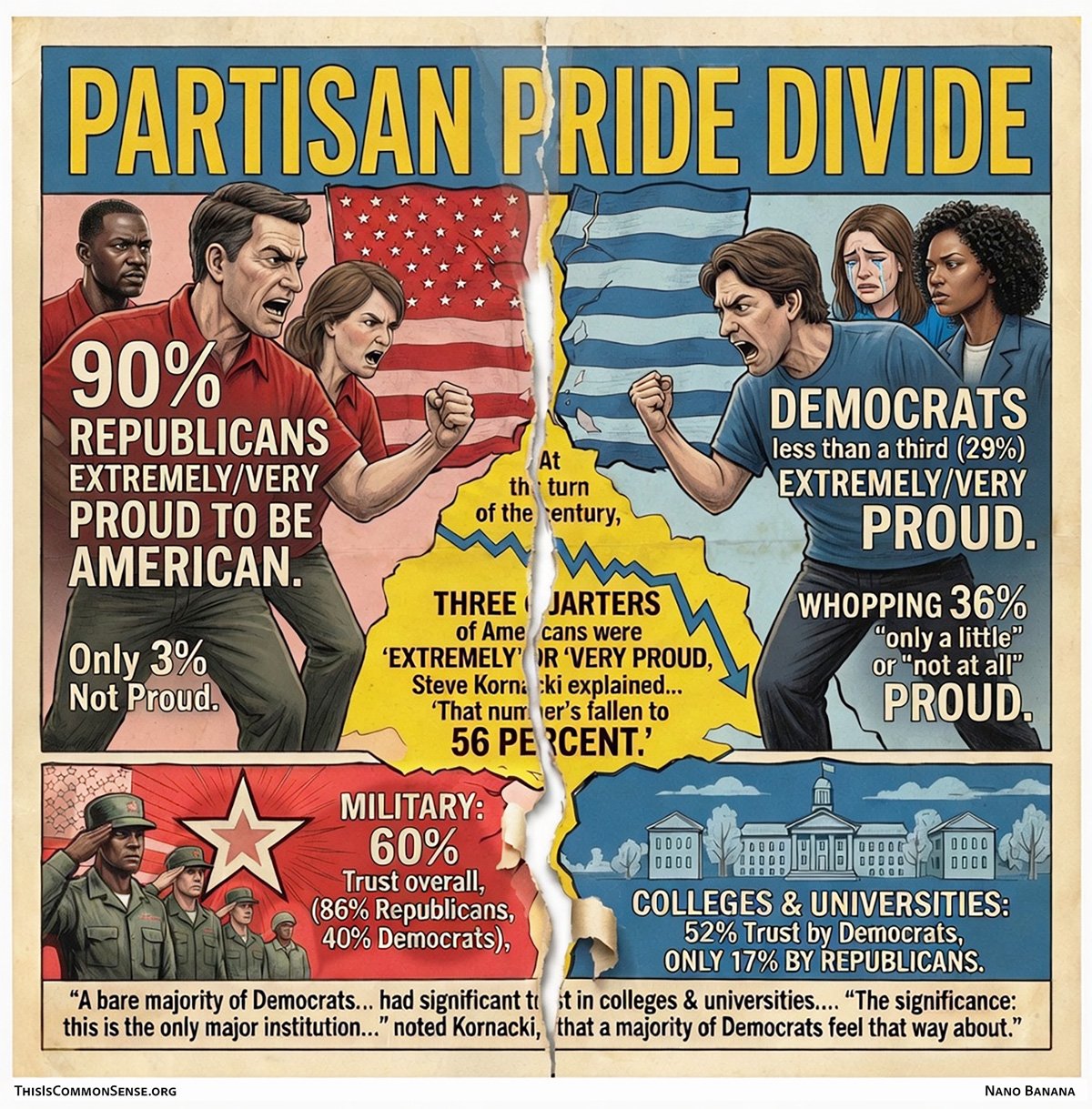
“At the turn of the century, three quarters of Americans were ‘extremely’ or ‘very proud,’” Steve Kornacki explained to Meet the Press host Kristen Welker yesterday. “That number’s fallen to 56 percent.”
It is a sizable drop, leading Kornacki to inquire, “What’s behind this?” before supplying an answer: “it’s partisan.”
Boy, is it. Fully 90 percent of Republicans are “extremely” or “very proud” to be Americans, with just a mere 3 percent “only a little” or “not at all” proud. Compare that to Democrats, less than a third (29%) of whom are “extremely” or “very proud” to be Americans with a whopping 36 percent “only a little” or “not at all” proud.
There is a significant divide between those 65 years old and older, 75 percent feeling pride, and the 18 to 34 age group, with only 36 percent feeling it. But those differences pale in comparison to party identification.
In analyzing the poll at NBCNews.com, Jonathan Allen points out that Americans “have little faith in their institutions.”
The military is the only institution mentioned in the survey that received overall majority support — 60 percent had a “great deal” or “quite a bit of trust,” including 86 percent of Republicans but only 40 percent of Democrats.
A bare majority of Democrats, 52 percent, had significant trust in colleges & universities, while only 17 percent of Republicans shared that trust. “The significance: this is the only major institution,” noted Kornacki, “that a majority of Democrats feel that way about.”
Institutions often disappoint and our government has done things for which the proper emotion is shame, not pride. But the principles of individual liberty, equality and justice, proclaimed here 250 years ago, have been, as Tom Paine predicted, “an asylum for mankind.”