Categories
initiative, referendum, and recall international affairs

Democracy Defending Democracy

This year’s most important election takes place tomorrow. 

On Saturday, in Taiwan — Asia’s most democratic nation — more than 20 percent of the country’s unicameral legislators serving in the Legislative Yuan will face the voters in a massive, multi-step, typhoon-size recall campaign. 

Coinciding with a real typhoon striking this island nation. 

Which could impact turnout. 

Which matters. 

To successfully oust each officeholder, both a majority of the turnout must agree as well as for that majority to equal 25 percent of all the registered voters in the district. 

“Supporters of the recall movement have portrayed their campaign as ‘anti-communist,’” reports CNN, “seeking to get rid of ‘pro-China’ opposition KMT lawmakers they perceive as collaborators of Beijing’s ruling Communist Party, which vows to ‘reunify’ Taiwan, by force if necessary.” 

Taiwan has divided government. President Lai Ching-te heads the Democratic Progressive Party (DPP), which does not desire reunification with Chinese Communist Party-ruled China, either by force or surrender, and has been working to improve Taiwan’s military posture. The 113-seat Legislative Yuan, controlled by a coalition between the Kuomintang (KMT) and the smaller Taiwan’s People Party (TPP), has “undermined democratic institutions and national security by obstructing Lai’s administration,” including “freezing defense spending” when China’s military threats are escalating.

The KMT has 24 legislators up for recall tomorrow and another seven in a recall election next month. Meanwhile, KMT efforts to respond by launching recalls against DPP lawmakers completely fizzled. 

Taiwanese billionaire Robert Tsao, a major backer of the recall effort, labeled the 31 KMT lawmakers being recalled “China’s ‘Trojan Horse’ in Taiwan.” 

A KMT official recently called the recall “totally unconstitutional and undemocratic.”

Really? The main point of democracy is to allow the peaceful removal of government officials.

This is Common Sense. I’m Paul Jacob.


PDF for printing

Illustration created with Krea and Firefly

See all recent commentary
(simplified and organized)
See recent popular posts
Categories
deficits and debt international affairs

Billions and Billions

While we were going about our business, and maybe even soaking in some summer sunshine, the “US National Debt,” as the federal government’s explicit financial obligation is called, passed the $37 trillion mark. 

As if to mark the occasion, the Chinese government unloaded a whopping eight billion, two hundred million dollars worth of U.S. Treasuries onto the market.

It’s a lot of money.

It’s a lot of debt.

And now China no longer holds it. 

Thus they are not quite as invested in our future.

Is that scary?

Well, everything about our federal debt load should scare us. If we are placid and unperturbed now, how many extra billions and trillions would it take to shake us?

If you are especially concerned about world stability, it might make sense to comfort you with this . . . interesting . . . piece of information: China still holds over $750 billion in United States debt.

A more important piece of information might be what the Chinese central bank has been replacing the U.S. debt with: gold.

Lots of gold.

About 200,000 kilograms of gold!

Nicholas Nassim Taleb, author of The Black Swan, insists that “a single asset has overtaken the US dollar’s position as the world’s de facto reserve currency.” That asset is gold.

We aren’t on the gold standard, but it looks like we may be falling backwards into something like one.

It makes me wonder if there is still gold in Fort Knox . . . and just how much. 

Mr. Trump

Congress? 

This is Common Sense. I’m Paul Jacob.


PDF for printing

Illustration created with Krea and Firefly

See all recent commentary
(simplified and organized)
See recent popular posts
Categories
defense & war international affairs

Still a Big Advantage

In all the talk of America First — and of the United States as the indispensable nation — we Americans sometimes forget this doesn’t mean “America Alone.” 

“Ultimately, a strong, resolute, and capable network of allies and partners is our key strategic advantage,” U.S. Secretary of Defense Pete Hegseth recently informed the Shangri-La Dialogue in Singapore. “China envies what we have together. And it sees what we can collectively bring to bear on defense.”

Hegseth was speaking directly to Indo-Pacific allies, whom he reminded: “it’s up to all of us to ensure that we live up to that potential by investing” to “quickly upgrade [our] own defenses.”

Our alliances of free nations in Europe and Asia constitute a huge edge against a bullying, totalitarian China.

My entire life, these past six decades, Big Daddy America was by far the biggest, best military on the block. Still is the best. But it’s no longer the biggest: China now has a bigger navy, much greater shipbuilding capacity, and many more soldiers in uniform. Technological and other strategic advantages have been diminished as well.

The defense secretary acknowledged that — after “a lot of ongoing conversations with our military leadership in the Indo-Pacific” — “there is something to be said for the fact that China calculates the possibility and does not appreciate the presence of other countries . . . as part of the dynamics or decision-making process, and, if that is reflected in their calculus, then that’s useful.”

We cannot afford to squander our “ally advantage.” We need each other.

This is Comon Sense. I’m Paul Jacob.


PDF for printing

Illustration created with Krea and Firefly

See all recent commentary
(simplified and organized)
See recent popular posts
Categories
Today

Remember June 4

On June 4, 1989, student protests at Beijing’s Tiananmen Square were brutally suppressed by the People’s Liberation Army.

See all recent commentary
(simplified and organized)
See recent popular posts

Categories
ideological culture international affairs

Triumph & Failure

“Shen Yun Performing Arts completed its 18th global tour earlier this month,” a May 24th press release informs, “a historic run of 799 shows in 199 cities in 26 countries in front of over a million people.

This notice, entitled “Triumphant 2025 Shen Yun Season Concludes,” may look like the usual glowing corporate self-congratulatory exercise in unwarranted hype. But it isn’t. “Shen Yun’s eight touring groups and hundreds of performers overcame tornadoes and fires as well as sabotage attempts from the Chinese Communist Party (CCP) and its allies. And yet, not a single performance was missed.”

That is an accomplishment, indeed, for the theater troupe did face back-room political pressure from that great foe of freedom, the CCP.

I had seen several news reports of their troubles. It took a court order, for example, to enforce a venue contract with South Korea’s Kangwon National University. University officials had “greenlit the New York classical Chinese dance company’s application to perform at its Baekryeong Art Center on April 1,” explains The Epoch Times, “only to walk back on the agreement after the Chinese embassy voiced a complaint.” 

The university “stated that its decision to cancel the show had to do with the public interests of the school,” of course. But while“escalating the matter into a ‘diplomatic issue’” obviously loomed large, the center also mentioned the danger from “the roughly 500 Chinese-national students studying at the center who it claimed could stage protests, potentially leading to clashes, should the performance go on as scheduled.”

The Shen Yun Performing Arts organization is made up of many artists who have fled communist China. The communists in China do not like defectors, and their reach is alarming.

Thankfully, in this case, the CCP failed.

This is Common Sense. I’m Paul Jacob.


PDF for printing

See all recent commentary
(simplified and organized)
See recent popular posts
Categories
international affairs public opinion

An Independent Nation

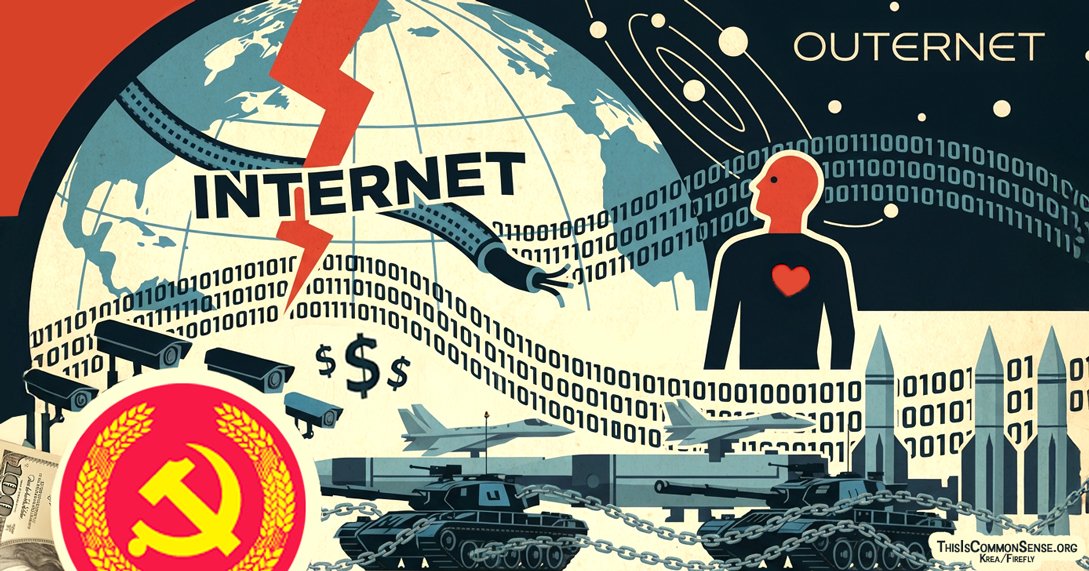
Our leaders have been surprisingly expressive in signaling U.S. military support for the defense of Taiwan. 

Ironic, considering that official U.S. policy is dubbed “strategic ambiguity,” meaning we don’t say one way or the other about our defensive intentions for helping the island nation against a regularly threatened and rehearsed-for Chinese invasion or naval blockade. 

Four separate times during his term, however, former President Joe Biden publicly pledged American military help to counter a People’s Republic of China assault on Taiwan. As for the Trump 2.0 Pentagon, weeks ago it leaked (or suffered a leak of) a global defense strategy memo that said preventing a PRC takeover of Taiwan was the “sole pacing scenario” engaging our armed forces. 

Surprising unanimity for the two parties in Washington. But has anyone asked what the American people think?

Well, Humanity for Freedom Foundation conducted a poll, released yesterday.*

Informed that “China claims Taiwan as its own territory,” 82 percent of respondents agreed that “Taiwan is an independent country.” Only 3 percent felt “Taiwan is part of China.”

A 58 percent majority favored full U.S. diplomatic recognition for Taiwan. When it comes to American military defense, a plurality of 39 percent wanted to continue the status quo of not saying (“strategic ambiguity”), while 32 percent of Americans preferred their government make a clear commitment to Taiwan. Only 2 percent supported ending arm sales and adopting a neutral stance.

The above results are thoroughly — and surprisingly — non-partisan, with arch conservatives and far-out progressives finding common ground to defend Asia’s freest society against the world’s most maniacal totalitarian state. 

Could the specter of a future dictated by the Chinese Communist Party be bringing the world closer together?

This is Common Sense. I’m Paul Jacob. 


* In full disclosure, I’m on HFF’s board of directors. As for the national poll, it had 800 respondents, giving the results a 3.5 percent margin of error with a 95 percent confidence level. Full results are here.

PDF for printing

Illustration created with Krea and Firefly

See all recent commentary
(simplified and organized)
See recent popular posts
Categories
defense & war international affairs

To Halve and Halve Not

“Why is Taiwan such a hot flash point?” 

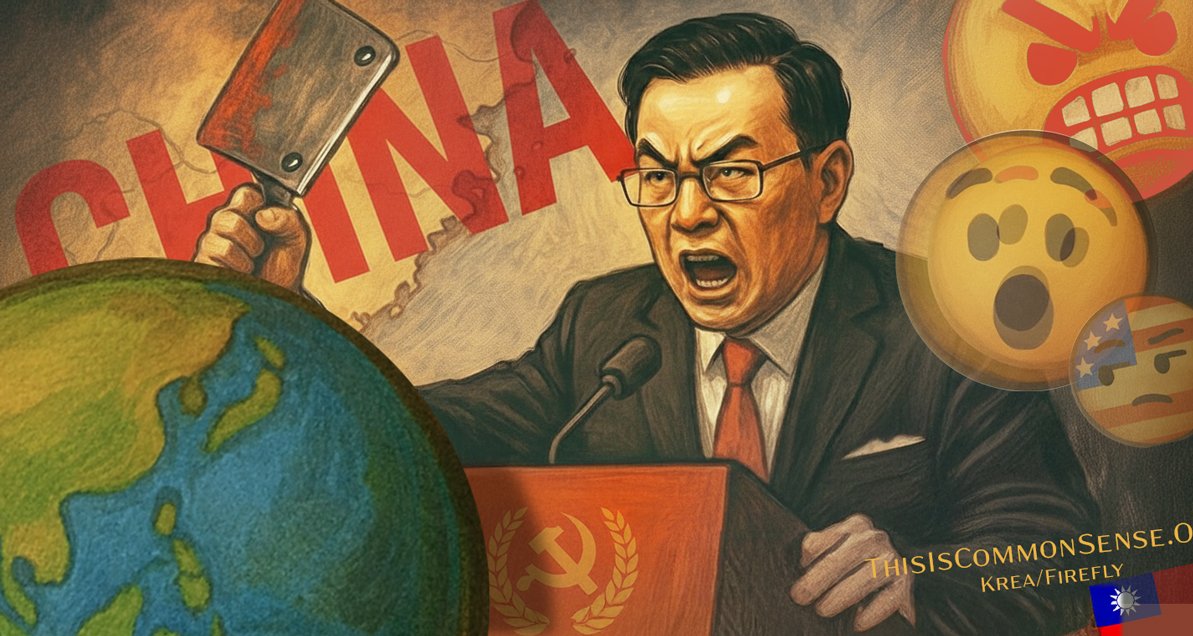
That’s what U.S. Senator Tom Cotton (R-Ark.) asked Admiral Samuel Paparo, head of the United States Indo-Pacific Command. “Why could it lead not only to a catastrophic war, but also global Great Depression? Why should Americans care about an island on the other side of the world?”

The admiral told the Senate Armed Services Committee that the senator’s “last point [was] quite salient. Many a research organization postulate that conflict in the western Pacific over the Taiwan question would result in a 25 percent GDP contraction in Asia and a knock-on effect of 10 to 12 percent GDP reduction in the United States of America, with unemployment spiking seven to 10 points above base and likely 500,000 excess deaths of despair above base as well.

“This is just the importance of the regional stability to the world economy and its effect on people’s lives,” added Paparo. “And this is a function of freedom of navigation; it’s a function of the world dependency on semiconductors.”

“And to be clear,” offered Sen. Cotton, “simply having the conflict over Taiwan which is such a center of gravity in the modern economy could lead to many of the consequences you just outlined.”

Paparo explained that “most of the things” he has “studied indicate that American intervention would halve that impact,” adding “a successful American intervention would. 

“Still a grave result,” Admiral Paparo acknowledged, “but half as grave, with savings of a lot of human misery.”

Let’s hope and pray and prepare militarily to deter Chinese aggression.

This is Common Sense. I’m Paul Jacob.


PDF for printing

Illustration created with Krea and Firefly

See all recent commentary
(simplified and organized)
See recent popular posts
Categories
budgets & spending cuts subsidy

Don’t Blame DOGE

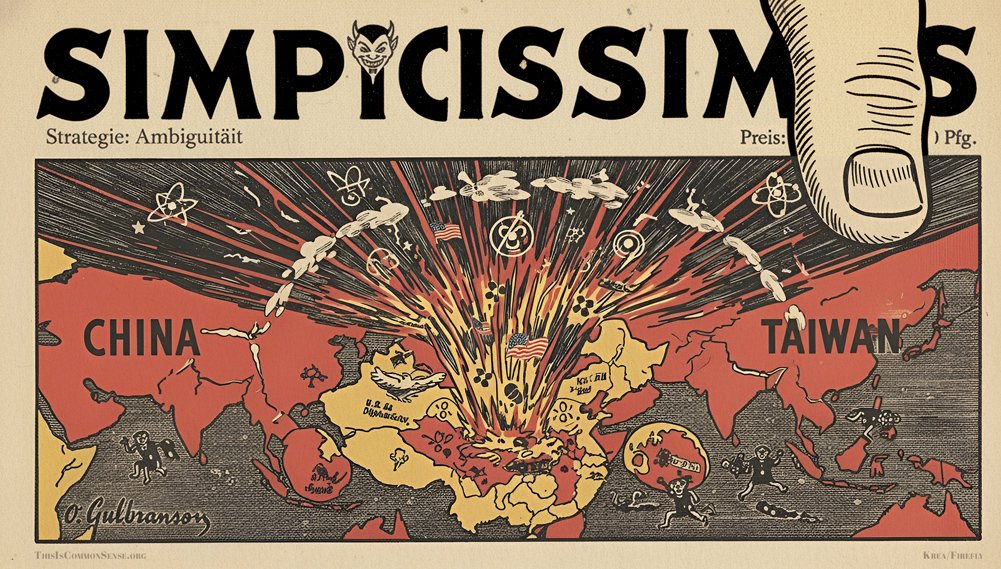
Sometime during the Trump administration’s fast and furious spending cuts and cancellations, the Rocky Mountain Institute lost millions in Biden-era federal climate-nonsense grants — cut not by DOGE but by the Department of Energy under Secretary Chris Wright.

Tears have been shed, garments rent: $5.3 million would have been used to retrofit a building to make it more green; $1.5 million would have funded research on the practicality of “electric vehicle carshare programs” and the “resilience” and “equity” of U.S. business models.

These initiatives are just the tip of the spear. RMI is also a good buddy of the Chinese government. RMI even has an office in Beijing.

As James Roth puts it over at our sister publication StoptheCCP.org, “Yes, RMI works with the communist government and proudly. It’s all over their website. It’s their specialty.”

Hold on, Roth. We must all try to understand that this is the kind of thing we must do if we wish to pretend to effectuate real global change in order to pretend to finetune world climate. If we let reality infect our thinking, what happens to mankind’s noble dream of instituting a globe-girdling weather-control machine while fatuously enabling the policies, conduct, and lies of tyrants? It would evaporate in the morning sun.

We’d be stuck with facts. 

We’d be stuck treating RMI as responsible for its actions, as U.S. Senator Ted Cruz did in a letter to the institute’s CEO in 2023, asking “whether RMI has ever received any funding from any entity or individual associated with the Chinese government. Please answer with a ‘yes’ or ‘no’. . . .”

There’s at least one such funder. RMI has gotten money from Energy Foundation China, which has CCP ties and is “run by former Chinese Communist Party officials.”

This is Common Sense. I’m Paul Jacob.


PDF for printing

Illustration created with Krea and Firefly

See all recent commentary
(simplified and organized)
See recent popular posts
Categories
international affairs political economy

Out of Poverty

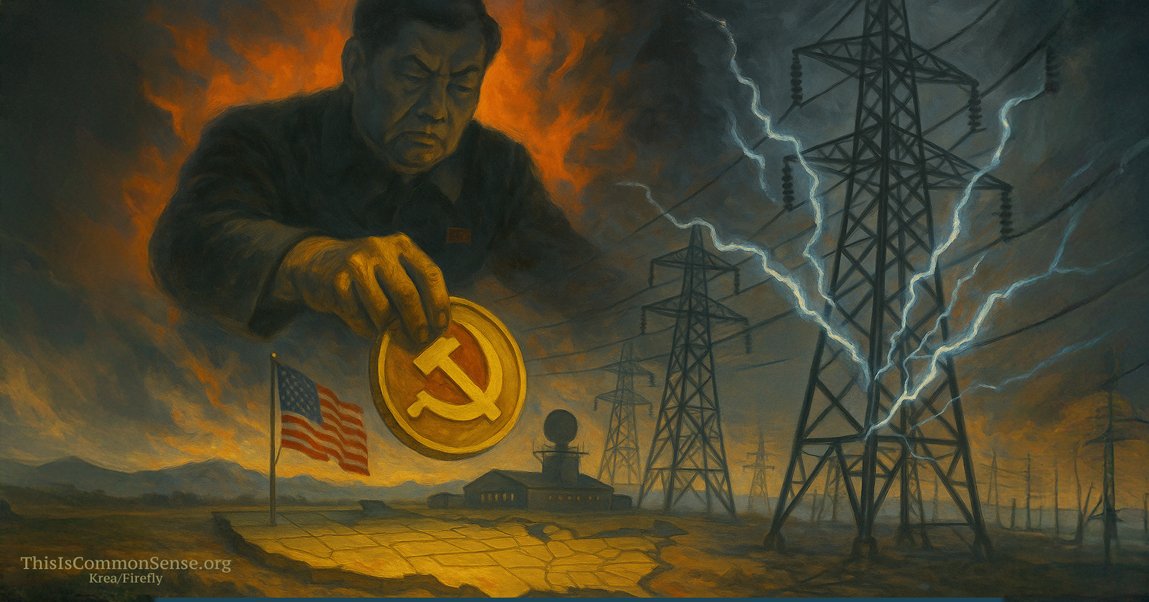
“So, who brought who out of poverty?” asks Frank Dikötter about China’s economic rise.

The Dutch historian and author of four excellent books on Chinese history — Mao’s Great Famine; The Tragedy of Liberation; The Cultural Revolution; and China After Mao — Dikötter recently spoke at length with Peter Robinson, host of the Hoover Institution’s “Uncommon Knowledge” podcast.

Calling it “conventional wisdom,” Robinson offers that “the number that I found over and over again was eight to 900 million people lifted out of poverty since Deng Xiaoping announce[d] his reforms in ’78.”

“That’s all propaganda,” declares Dr. Dikötter. “The people in the countryside have lifted themselves out of poverty.”

Even before Mao’s death in 1976, the Cultural Revolution ended and the “army, which was deployed in every farm, every factory, every office from 1968 onwards, that army goes back to the barracks and is purged in turn,” he explains. “People in the countryside realize there’s nobody there to supervise them. There’s nobody there to tell them, go and work in the collective fields.”

Mr. Robinson chimes in: “The boot is off their neck.”

“So,” Dikötter expounds “they start operating underground factories; they open black markets; they trade among themselves.”

Deng “merely [put] the stamp of approval on something that escapes them altogether, namely the drive of ordinary villagers to claim back the freedoms they had before 1949.

“Allow ordinary people to get on with it,” he says, “they will!

“But this is not a party,” concludes Dikötter, “that will allow ordinary people to get on with it.”

This is Common Sense. I’m Paul Jacob. 


PDF for printing

Illustration created with Krea and Firefly

See all recent commentary
(simplified and organized)
See recent popular posts

Categories
free trade & free markets international affairs

Sabotage or Neglect?

“It might not be sabotage,” says Member of Parliament Jonathan Reynolds. “It might be neglect.”

Reynolds serves as the United Kingdom’s Business Secretary. He’s talking about the behavior of Jungye, the Chinese owner of troubled British Steel. 

“The conscious decision not just to not order raw materials but to sell existing supplies of raw materials . . .” Reynolds fulminated, leading him to tell the BBC that “he doesn’t want any future Chinese involvement in British steel making.”

Over the weekend, the UK Government seized British Steel, with Reynolds explaining that “he was forced to seek emergency powers to prevent owners Jingye” from “shutting down its two blast furnaces, which would have ended primary steel production in the UK.”

“They wanted to close down steel production in Britain,” argues Nigel Farage, an MP and leader of Reform UK, “This is a big strategic decision by the CCP.”

Asked if he was accusing the Chinese owners of “lying about the numbers,” the fiery Farage replied, “Yes, absolutely,” adding, “Lying about everything.”

In a single day, Saturday, Parliament passed emergency legislation to facilitate the Business Secretary’s request. 

One opposition MP called it a “botched nationalization,” as the company is still in Chinese hands. It seems more a rescue attempt for Chinese owners who don’t want to be rescued. 

Takeaway? Maybe China isn’t such a great economic partner after all. 

Free countries are reluctantly rediscovering that we still live in a dangerous world, in which we better be able to protect ourselves and not depend on the sworn enemies of freedom. 

This is Common Sense. I’m Paul Jacob. 


PDF for printing

Illustration created with Krea and Firefly

See all recent commentary
(simplified and organized)
See recent popular posts