Categories
crime and punishment international affairs U.S. Constitution

The Dictator’s Arrest

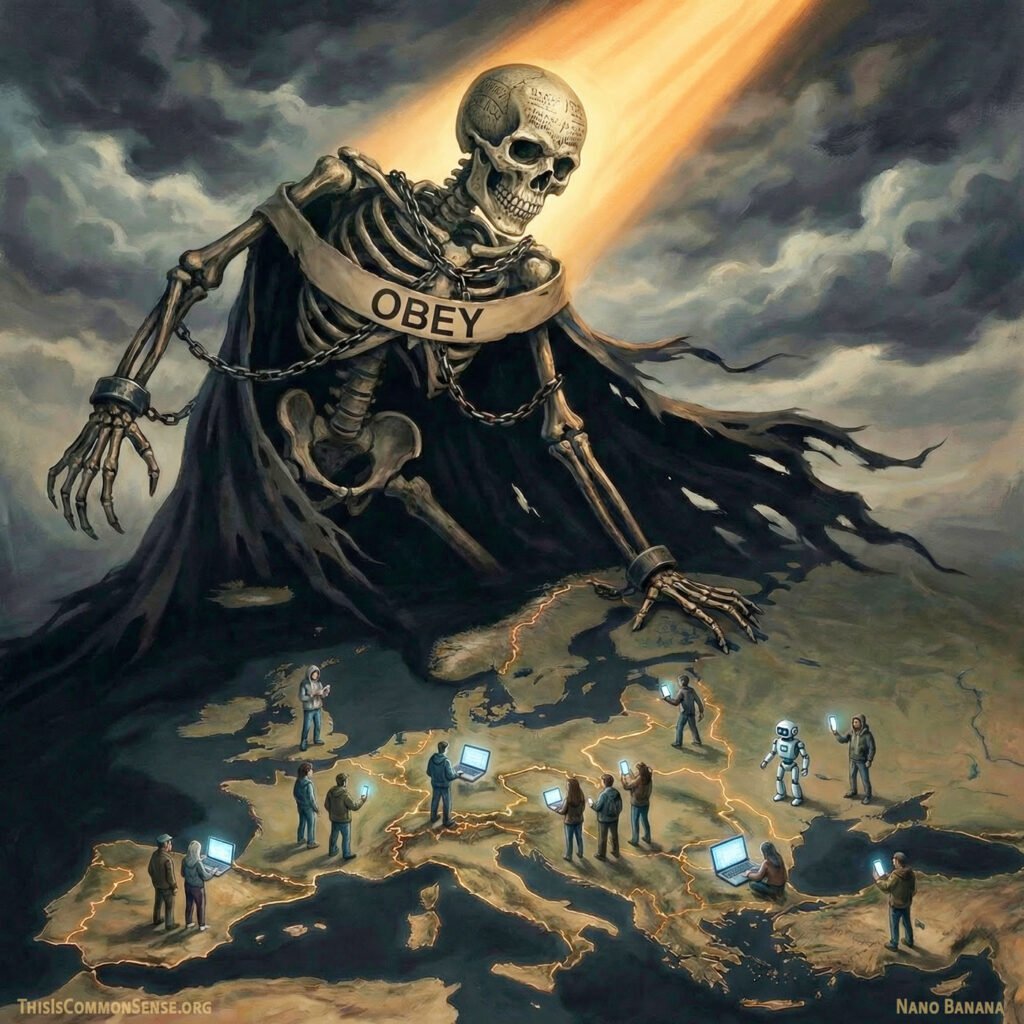
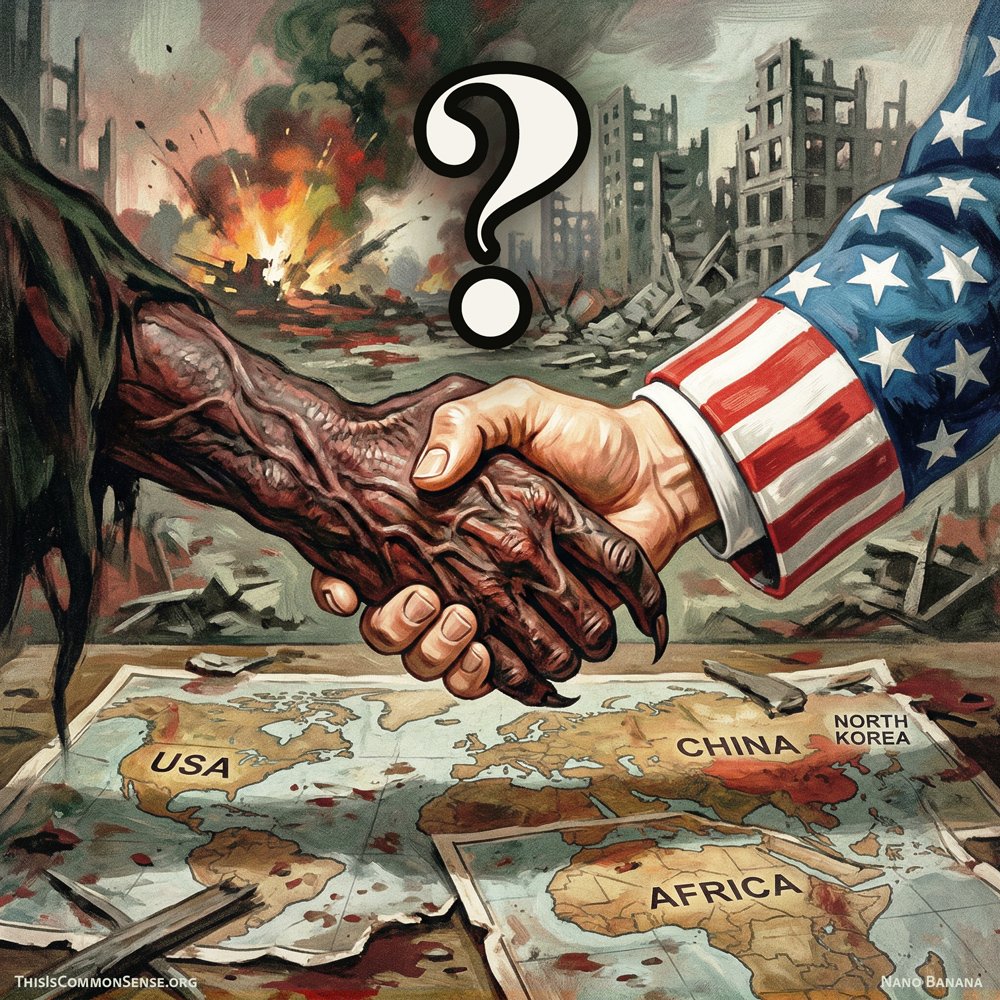
The U.S. military captured Venezuela’s dictator, Nicolás Maduro, and his wife, Cilia Flores, on Saturday; a lot of people who hate Donald Trump are complaining about the president’s decision to “arrest” the foreign head of state. 

Sure, it’s an act of war. 

Authorized by Congress? Not really, but that’s hardly unusual. 

There is that 2020 indictment, unsealed by the U.S. Department of Justice during Trump’s first term, accusing Maduro and senior Venezuelan officials of conspiring with Colombian guerrilla groups (like the FARC) to traffic massive quantities of cocaine into the United States. This was updated in a superseding indictment unsealed over the weekend, which added Maduro’s wife, son, and others as defendants.

Specifically, the charges are:

  • Narco-terrorism conspiracy.
  • Conspiracy to import cocaine. 
  • Possession of machine guns and destructive devices.
  • Conspiracy to possess machine guns and destructive devices.

Considering that Venezuela is a sovereign state and can have whatever drug policies or gun laws it wants, all this might seem a tad . . . ridiculous.

Most people, however, will likely be moved by two very different lines of thinking:

  • Maduro was an evil tyrant, and it’s good that his murderous regime has been (sorta) toppled; and
  • The operation was skillfully done, demonstrating U.S. military strength.

Is the effort coherent and compatible with other international military stances of the United States? Debatable.

How does it affect, say, the U.S. position on Taiwan? Will this encourage or discourage the People’s [sic] Republic [sic] of China?

One could argue both ways. As a successful demonstration of military might, it will likely dissuade the Chinazis. But if it turns world opinion against the U.S., the opposite will likely prove true.

Still, isn’t it hard to side with a dictator? I mean Maduro.

This is Common Sense. I’m Paul Jacob.


PDF for printing

Illustration created with Nano Banana

See all recent commentary
(simplified and organized)
See recent popular posts
Categories
First Amendment rights general freedom ideological culture international affairs regulation social media

U.S. Bans EU Censors

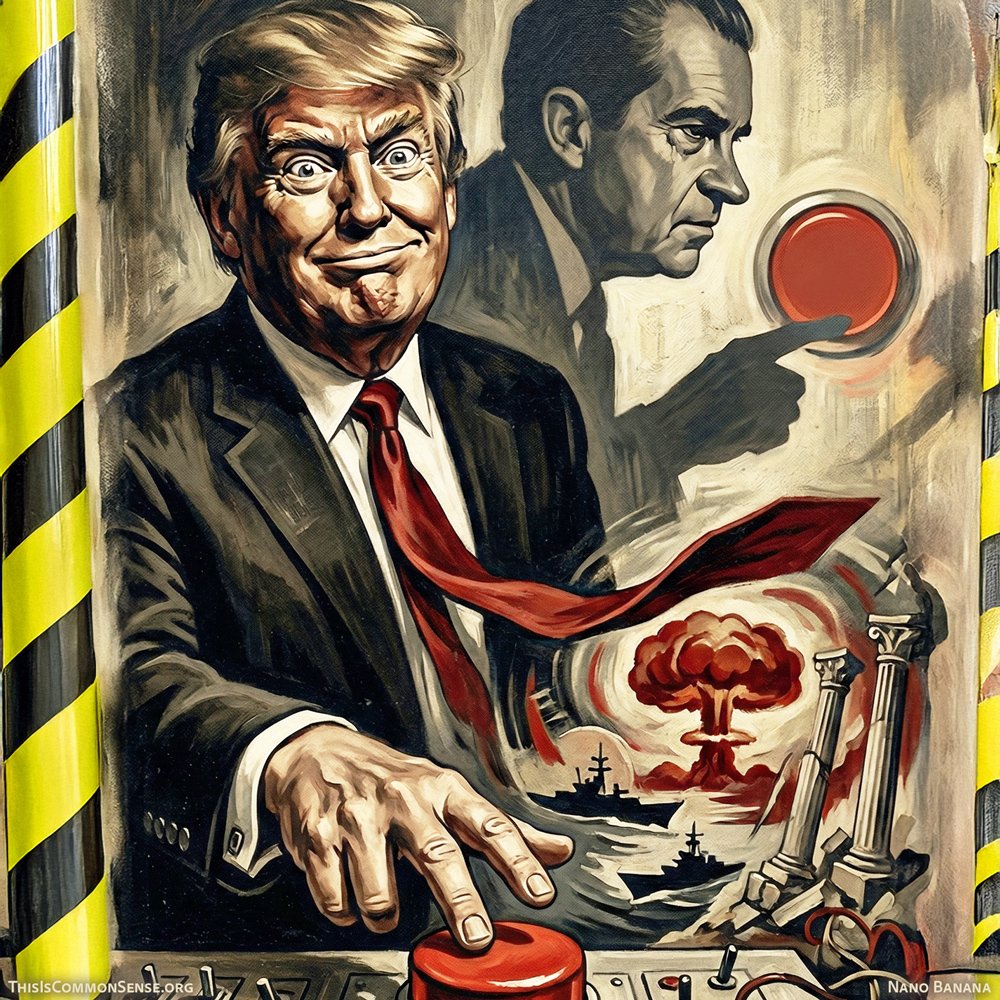
European leaders are condemning American use of visa bans to penalize European enemies of American freedom of speech.

Which is understandable, since the U.S. State Department more than merely condemned the European Union.

In the words of Marco Rubio, the five just-sanctioned persons “have led organized efforts to coerce American platforms to censor, demonetize, and suppress American viewpoints they oppose.”

Thierry Breton. Former EU commissioner and top proponent of the Digital Services Act, which seeks to force U.S. tech giants to “police illegal content more aggressively” or face big fines. “Illegal” here doesn’t mean speech deployed to commit bank robberies; it’s speech EU censors dislike.

Josephine Ballon and Anna-Lena von Hodenberg. Leaders of HateAid.

Clare Melford. Leader of Global Disinformation Index, which, the State Department observes, exhorts “censorship and blacklisting of American speech and press.”

Imran Ahmed. Leader of Center for Countering Digital Hate, described by Breitbart as the “deplatforming outfit which defined its central mission as ‘Kill Musk’s Twitter.’ ” CCDH also worked hard to get Breitbart and other sites blacklisted from social media.

Maybe none of these villains was planning a trip to the United States anytime soon.

And, doubtless, much more could be done to combat overseas attempts to censor Americans. But at least this much action against enemies of our First Amendment rights is warranted, even if mostly symbolic.

Just give us a little more time, European leaders. We’ll do more to oppose and thwart your obnoxious global censorship agenda. 

This is Common Sense. I’m Paul Jacob.


PDF for printing

Illustration created with Nano Banana

See all recent commentary
(simplified and organized)
See recent popular posts
Categories
international affairs regulation

Billionaire Baby Ploy

A Chinese billionaire tried. Give him that. But do we have to like what he was up to?

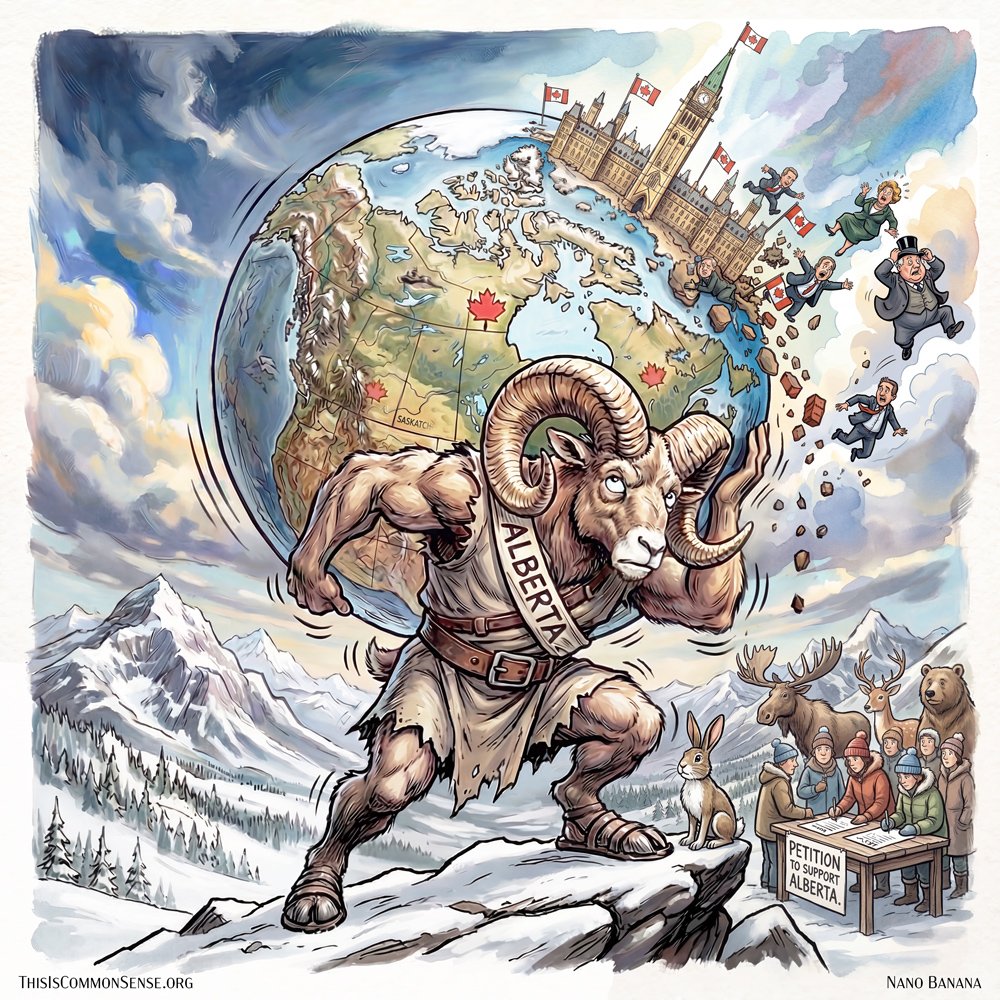
The trier in question is fantasy video-game mogul Xu Bo, and The Wall Street Journal reports that he is trying to gain a foothold in the United States in a somewhat novel way . . . for a rich man, anyway. 

He’s fathering children in America. Many children.

And by non-wives who are under surrogacy contracts to bear his children for him.

While domestic surrogacy is illegal in China, it’s not in the U.S. So, being a resourceful billionaire, and inspired by Elon Musk’s fathering of 14 known children, he took action.

A family court in California noticed. When it realized the man was petitioning for parental rights “to at least four unborn children,” explains the Journal, and “learned he had already fathered or was in the process of fathering at least eight more through surrogates, it raised alarm,” and his request was denied.

A “rare rebuke to a little-known trend in the largely unregulated U.S. surrogacy industry” — and it’s a trend that the Chinese super-wealthy are taking advantage of. 

What advantage? Birthright citizenship: “Babies born via surrogacy in the U.S. are U.S. citizens by virtue of the 14th Amendment.” 

This issue, which looms rather large as tens of millions flocked to America during the Biden years, is key. It allows for all sorts of abuse. 

Because the world has changed in 157 years.

Now that the “millionaires and billionaires” are horning in on the act, will Democrats re-think their commitment to birthright citizenship?

This is Common Sense. I’m Paul Jacob.


PDF for printing

Illustration created with Nano Banana

See all recent commentary
(simplified and organized)
See recent popular posts
Categories
First Amendment rights general freedom ideological culture international affairs Internet controversy

Constant Caved

Sometimes people suggest that the People’s Republic of China is no threat beyond its borders.

You can’t reach this doctrine based on a thorough canvass of the evidence. From China’s perspective, though, it is true insofar as the Chinese government treats its borders as encompassing the entire earth and perhaps even the moon.

What is also true, though, is that not every person or organization outside of China that advances China’s totalitarian agenda is being threatened by China.

For example: the company Constant, which operates the hosting service Vultr. Based in Florida (a U.S. state), Constant has willingly cooperated with Beijing’s censorship agenda as promoted by the China-based conglomerate Tencent.

Tencent owns the social media platform WeChat. As the Chinese Communist Party demands of all such platforms within China, WeChat censors discussion of topics that the CCP dislikes, e.g., Tiananmen Square or Xi Jinping pictured as Winnie the Pooh. 

An organization called GreatFire produces a Chinese-language website, freewechat.com, which archives many of the posts on taboo subjects that get censored on WeChat.

Since 2015, FreeWeChat had been hosted by Constant’s Vultr — until several months ago, when Vultr started receiving harrumphing letters from Tencent, demanding that it stop hosting FreeWeChat. Vultr obeyed; dropped FreeWeChat.

Which, fortunately, managed to transfer its site to another hosting service.

Tencent’s letters offered an array of specious claims that GreatFire refuted in detail. GreatFire’s attempts to communicate with inconstant Constant about the matter have had no effect. Nevertheless, FreeWeChat and its noble mission survive.

This is Common Sense. I’m Paul Jacob.


PDF for printing

Illustration created with Nano Banana and Firefly

See all recent commentary
(simplified and organized)
See recent popular posts
Categories
First Amendment rights international affairs social media

Don’t Pay, Don’t Play

The European Commission is fining the X platform 120 million euros (140 million dollars), for “transparency failures”: not sharing advertising and user data with the EU and not making it easy to censor account holders.

As Reclaim the Net reports, the European Union wants platforms to open themselves to what it calls “independent research.” In practice, this means that “academics and NGOs, often with pro-censorship political affiliations” get special access to the data, “exactly the kind of surveillance the [Digital Services Act] claims to prevent. . . . The EU is angry that X is not policing speech the way it wants.”

My advice to Elon Musk is to shut down X (formerly Twitter) throughout the EU. And refuse to pay the fine.

X’s departure from the EU wouldn’t need to be permanent. For the censors would then have not only X and its uncooperative CEO to contend with; suddenly, a pro-X lobby of millions of Twitterers would be putting pressure on the censors.

The chances of unilateral surrender by the EU? Pretty high. And that’s the only kind of surrender Musk should accept.

If he agrees to even a little EU repression in return for lifting of the fine, that could lead to a total loss for the freedom-of-speech side; the bureaucrats, spies, and busybodies would likely take that seemingly marginal concession and relentlessly work to enlarge it.

Accept only total victory. And be ready to again leave the EU the instant the EU-crats resume their attacks.

This is Common Sense. I’m Paul Jacob.


PDF for printing

Illustration created with NanoBanana and Firefly

See all recent commentary
(simplified and organized)
See recent popular posts

Categories
folly international affairs regulation

Denmark’s Cows Must Die

Sorry, cows. The planet comes first.

I don’t want to give the wrong impression. No order has been issued requiring Danish farmers to kill their cows. The state is merely requiring that they feed the cows poison.

The purpose of the wonder-additive, Bovaer, produced by a company called Elanco Animal Health, is to limit the methane that cows produce as they digest their food. Then, says Elanco, the amount of methane that the cows emit — by a method too indelicate to mention — will be reduced 30 percent. Elanco must have done some kind of testing to figure this out, I suppose.

What is the point, though? Why does anybody want to accomplish this?

Well, the central planners who mandate such things believe or say they believe that even a smidgen less methane in the air will enable them to fine-tune the global climate thus wise and so and thereby, something something something, a perfect optimization. Well, not perfectly perfect, not until all the bovines everywhere are gobbling Bovaer. Denmark is not the only country pushing the drug though.

Alas, some Danish farmers are being obstreperous, complaining that their cows are getting sick: lethargy, diarrhea, miscarriages, drops in milk production. Etc. Some are even dying as result of the additive.

It is sad. But I’d rather have a few dead cows than a dead planet with nonstop hurricanes and tornadoes. And that’s what’s gonna happen if we don’t find a way to inhibit the cows’ . . . methane emissions.

This is Common Sense!! I’m Paul Jacob.


PDF for printing

Illustration created with NanoBanana and Firefly

See all recent commentary
(simplified and organized)
See recent popular posts
Categories
defense & war international affairs Internet controversy

Outernet Integrity

The Internet is a global network. Update a website or type an email over here, in a jiffy it ends up over there, even if “there” is thousands of miles away.

Now, in cases where the connections of the interconnection get disrupted, the electrons (well, “packets”) are routinely diverted to a more stable path. This inherent path redundancy gives the Internet high fault tolerance — an impressive resilience against localized failures.

But not always. Certainly not if we’re talking about a major undersea data cable. Were such a cable accidentally severed — or deliberately severed, by a hostile power practicing for war, say, the People’s Republic of China — transmission of data between affected countries may stop dead until the cable can be fixed.

Declan Ganley wants to cure this particular vulnerability by building an alternative he calls the Outernet, a space-based version of the Internet that bypasses the earthbound network entirely. (Currently, even the satellite-ferried data of Starlink must pass through the terrestrial network.)

To kill Ganley’s vision, the Chinese Communist Party first tried to bribe him with a $7.5 billion offer of partnership; i.e., de facto control of the Outernet by the CCP. The Party’s emissary hinted that if Ganley declined, his company Rivada Networks would be plagued by lawfare.

Ganley declined, and Rivada got hit by the lawfare: “160 legal exchanges” and $36 million in legal fees over three years. Nevertheless, Rivada is on course to launch six hundred satellites in 2026.

Was Declan Ganley ever tempted?

No. “I have a soul to be accountable for,” he explains.

This is Common Sense. I’m Paul Jacob.


PDF for printing

Illustration created with Krea and Firefly

See all recent commentary
(simplified and organized)
See recent popular posts
Categories
international affairs political economy regulation

Rents After the Chainsaw

Argentina’s Ministry of Deregulation — yes, it now has one — reports that by June 2024, little more than half a year after chainsaw-wielding libertarian candidate Javier Milei won the presidential election, the housing market boomed . . . into a magnificent recovery.

Back in March, Reason magazine observed that listings on the Argentinian real-estate platform Zonaprop had increased from 5,500 before Milei’s deregulation “to 15,300 today, a staggering 180 percent rise.”

Why the big jump?

Strict national rent controls had been imposed in 2020, by the previous administration. When Milei lifted them, replacing them “with nothing,” tenants and landlords could then make whatever arrangements they could agree upon.

One method of evading the punishing controls had been switching to an Airbnb model of renting, with contracts renewable every three months. Such expedients were almost mandatory . . . given Argentina’s galloping inflation. But they introduced their own kinds of uncertainty.

Owners also took units off the market.

Annual rentals plummeted under this anti-market regime. In late 2023, Valentina Morales saw maybe “12 apartments advertised in the entire Palermo neighborhood,” a region with a population of almost 250,000.

Rents on the few apartments available with annual contracts skyrocketed. Tenancies were required by regulation to last for three years, with arbitrary and unrealistic caps on rent increases. And rent had to be paid only in pesos. But since inflation did not pause under the pre-Milei regime, owners were forced to guess how high inflation would go over the three years . . . and they charged accordingly.

Now? All such nonsense is gone.

This is Common Sense. I’m Paul Jacob.


PDF for printing

Illustration created with Krea and Firefly

See all recent commentary
(simplified and organized)
See recent popular posts
Categories
ideological culture international affairs national politics & policies too much government

This Is What Businessman Rule Looks Like

President Trump is doing something many of his supporters said they wanted him to do: act not like a normal politician but like a businessman, for Americans, as if we were stockholders in a for-profit company.

Bring in the dough. Efficiently.

“Saudi Crown Prince Pledges $1 Trillion Investment in US During Meeting with Trump,” an article at The Epoch Times tells us. The Saudi potentate is boosting, the story runs, an “investment partnership with the United States from $600 billion,” and the prince in question, Mohammed bin Salman — his reputation previously sullied by the part he played in the gruesome assassination of a journalist —  explains that the “investments will focus on what he described as ‘real opportunities’ in areas such as artificial intelligence and magnets.”

The article notes that the “Saudi Foreign Ministry said in a Nov. 17 post on X that the crown prince, widely known as MBS, would meet Trump ‘to discuss bilateral relations, ways to strengthen them across various fields, and issues of mutual interest.’”

Now, that latter discussion of diplomatic issues appears normal. That is, what we expect two heads of state to do when conferring.

But all this talk of extra investment? Micromanaging foreign investment within the United States?

That’s never been the recipe for republican governance and can so easily and quickly devolve into plutocratic socialism-for-the-rich. There’s no shouting “limited government” about what Trump boasts of regarding “the deals” he makes for the U.S. 

For “us.”

But it does fit what many had hoped he would be: a businessman taking charge of the corporation that is the unitary “United States.” A fix-it man for the federal Leviathan.

This is Common Sense. I’m Paul Jacob.


PDF for printing

Illustration created with Krea and Firefly

See all recent commentary
(simplified and organized)
See recent popular posts
Categories
defense & war international affairs Internet controversy

Decapitation Diplomacy

The Chinese Communist Party has presided — is presiding — over the largest peacetime military buildup in history. 

And China’s “wolf warrior” diplomats constantly reflect this fact.

Earlier this month, during a parliamentary session, Japan’s new Prime Minister Sanae Takaichi was pressed by an opposition lawmaker on scenarios that could trigger the clause in Japan’s constitution concerning “survival-threatening situations,” thus allowing collective self-defense. Takaichi explicitly stated that Chinese military action against Taiwan — such as a naval blockade, invasion, or interference with U.S. forces — could qualify. 

No “strategic ambiguity” there!

But as scandalous as Takaichi’s answers were to the Communist Party in China, it was the response of Xue Jian, consul general of the People’s Republic of China, in Osaka, Japan, that raised more than eyebrows: “I have no choice but to cut off that filthy head that barged in without hesitation — are you ready?” This was followed by a red emoji, an angry icon.

It has since been deleted.

Last Friday, lawmakers from both Takaichi’s party and Komeito (a centrist, socially conservative party) demanded Xue’s immediate recall; a petition with more than 50,000 signatures circulated online. 

But Takaichi herself is under pressure to apologize.

I agree with the Scribbler’s take over at StopTheCCP.org: “It would be disappointing if instead of ‘muddling through,’ the Japanese government as led by its new prime minister, Sanae Takaichi, submitted to China’s malicious demands and formally retracted her very reasonable statement about Taiwan.”

The only apologies should come from the CCP’s Osaka Decapitator.

This is Common Sense. I’m Paul Jacob.


PDF for printing

Illustration created with Krea and Firefly

See all recent commentary
(simplified and organized)
See recent popular posts