Categories
initiative, referendum, and recall international affairs

Democracy Defending Democracy

This year’s most important election takes place tomorrow. 

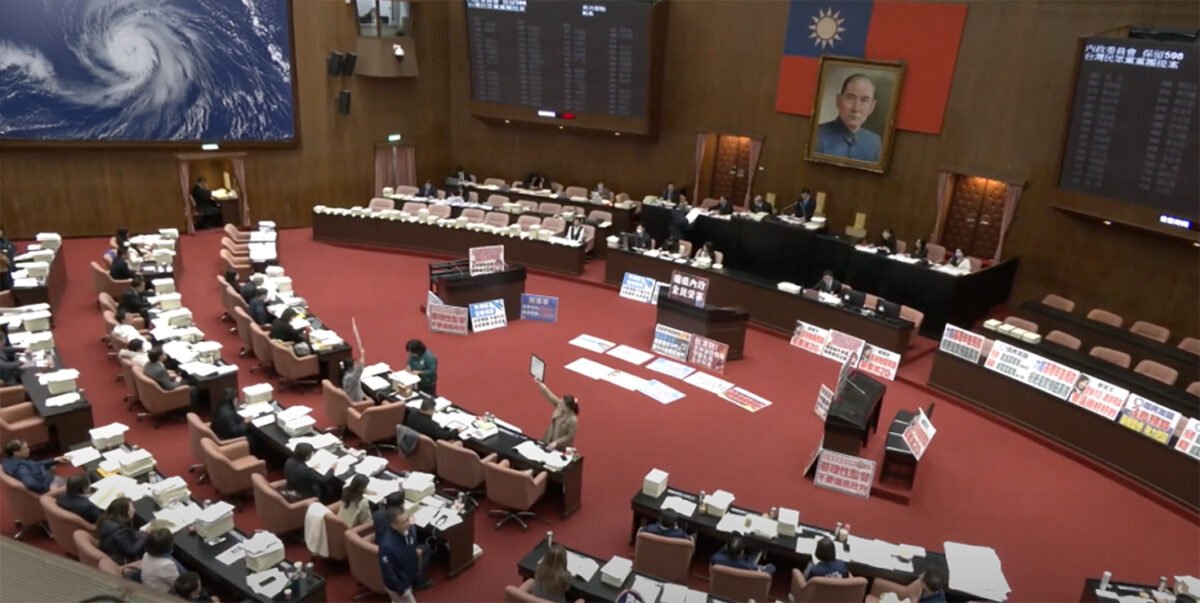
On Saturday, in Taiwan — Asia’s most democratic nation — more than 20 percent of the country’s unicameral legislators serving in the Legislative Yuan will face the voters in a massive, multi-step, typhoon-size recall campaign. 

Coinciding with a real typhoon striking this island nation. 

Which could impact turnout. 

Which matters. 

To successfully oust each officeholder, both a majority of the turnout must agree as well as for that majority to equal 25 percent of all the registered voters in the district. 

“Supporters of the recall movement have portrayed their campaign as ‘anti-communist,’” reports CNN, “seeking to get rid of ‘pro-China’ opposition KMT lawmakers they perceive as collaborators of Beijing’s ruling Communist Party, which vows to ‘reunify’ Taiwan, by force if necessary.” 

Taiwan has divided government. President Lai Ching-te heads the Democratic Progressive Party (DPP), which does not desire reunification with Chinese Communist Party-ruled China, either by force or surrender, and has been working to improve Taiwan’s military posture. The 113-seat Legislative Yuan, controlled by a coalition between the Kuomintang (KMT) and the smaller Taiwan’s People Party (TPP), has “undermined democratic institutions and national security by obstructing Lai’s administration,” including “freezing defense spending” when China’s military threats are escalating.

The KMT has 24 legislators up for recall tomorrow and another seven in a recall election next month. Meanwhile, KMT efforts to respond by launching recalls against DPP lawmakers completely fizzled. 

Taiwanese billionaire Robert Tsao, a major backer of the recall effort, labeled the 31 KMT lawmakers being recalled “China’s ‘Trojan Horse’ in Taiwan.” 

A KMT official recently called the recall “totally unconstitutional and undemocratic.”

Really? The main point of democracy is to allow the peaceful removal of government officials.

This is Common Sense. I’m Paul Jacob.


PDF for printing

Illustration created with Krea and Firefly

See all recent commentary
(simplified and organized)
See recent popular posts

Categories
initiative, referendum, and recall secession

Seceding from Chicago

Thirty-three rural Illinois counties have voted — count ’em, 33, with seven added just last November — to secede from their state.

Sort of.

The citizens of those counties have approved non-binding measures saying they wish to secede. In this case, the initiative and referendum process has been used as a form of petitioning.

They want a divorce. From Chicago and Cook County. 

The reasons? The age-old country-city divide: taxes, scope of government, a complete clash of values.

On the table are two counter-offers.

“Instead of seceding and forming a 51st state,” suggests Indiana’s Speaker of the House Todd Huston, “they should just join us.”

This is pretty much what the Oregon secessionists are trying to do with their “Greater Idaho,” as covered here in the past.

In February, the Indiana House passed a bill to create a bipartisan committee to explore the notion; it now heads to the Senate.

Indiana’s lieutenant governor said it would “Make Illinois Great Again.”

Illinois’s governor, on the other hand, dubbed it a “stunt.”

But District 109 State Representative Charlie Meier has taken those 33 expressions of extreme dissatisfaction seriously, offering an alternative: reconstruct the State Senate so that one senator would be elected from districts made up of three contiguous counties, rather than the cumbersome gerrymandered array that  has been legally challenged by Republicans — giving rural counties more say, more political oomph.

For that’s what it’s really about.

Note that two previous attempts to separate from Chicago and Cook County  — in 1925 and 1981 — hailed from the Windy City itself. 

Now it’s the rest of the state that wants out.

Interesting development in comparative power and grievance, no?

This is Common Sense. I’m Paul Jacob.


PDF for printing

Created with Krea and Firefly

See all recent commentary
(simplified and organized)
See recent popular posts

Categories
initiative, referendum, and recall Update

Measures for Measures

November 2024: There were 146 ballot measures certified for statewide ballots in 41 states. On the Fifth, “Election Day,” these measures were decided by voters. 

According to Ballotpedia, from “2010 to 2022, the average number of statewide ballot measures in an even-numbered year was 161,” making 2024 slightly below average — noting that Louisiana will decide four constitutional amendments on December 7, and five states decided nine measures earlier in the year, bringing the total for the year up to 159.

  • A record number of abortion-related measures were decided this year: eleven.
  • Drug-use policies were on state ballots, including for marijuana (recreational, three; medicinal, two) and psychedelics: six
  • Democratic processes were on state ballots, including both for and against ranked-choice voting: ten.
  • Democratic processes more specifically about voting were also on state ballots, including citizenship requirements (all passed) and voter i.d.: ten
  • Labor policies, including minimum wage policies, were on ballots as well: seven.
  • The number of education-related measures was the highest in in 18 years: twelve

Ballotpedia is a great resource, and if you are looking for good information about what people are voting for and against, ballotpedia.org should be your first resource.

Categories
initiative, referendum, and recall media and media people

Watch Out!

This week, a Google Alert brought a news article from Brady Today, a small-town publication in Brady, Texas. 

The story in the Brady newspaper is strikingly similar to one The Center Square had produced right after the election. Except that the ending — a statement from yours truly — was quite different. 

“Watch out in 2026,” The Center Square article quoted me from our press release. “We have people in another dozen states already anxious to pass these measures and clarify that only citizens can vote in their state and local elections.”

However, the Brady Today story quoted me quite differently. “In 2026, we need to be cautious. There are individuals in several more states who are eager to implement similar measures and ensure that only citizens have the right to vote in their state and local elections.”

Urge caution? Not me. Ever. 

And especially not after sweeping to wins in eight states, adding up to a 14-0 record on Citizen Only Voting Amendments in recent years.

Nolan Brown with Brady Today has me saying something I’ve never said. 

Dan McCaleb of The Center Sqare quoted me correctly. He did his job as a reporter. But Mr. Brown? He appears to have a different task in mind. 

I tried to contact both Brady Today’s management and Nolan Brown. James R. Griffin, III, who owns the small-town newspaper says he had shut down the website a year ago, only to discover (due to my phone call) that it has been revived online by an unknown entity — which has been using his name without permission on articles he did not write. And Mr. Brown? Unreachable.

The upshot is pretty clear: Don’t believe everything you read. 

This is Common Sense. I’m Paul Jacob.


PDF for printing

Illustration created with Midjourney

See all recent commentary
(simplified and organized)
See recent popular posts
Categories
initiative, referendum, and recall media and media people

The Hill as Hallucinogen

Americans for Citizen Voting had a super successful Election Day. I swear!

But you wouldn’t know it for the news coverage. 

Throughout 2023 and 2024, we worked to place constitutional amendments on the ballot in eight states, which, if passed, would specifically ban noncitizens from voting in state and local elections. Then, this November, every one of the measures swept to victory. By roughly a 2-1 margin in Idaho, Kentucky, Missouri, and Wisconsin; 3-1 in Iowa and North Carolina; 4-1 in Oklahoma; and by a whopping 6-1 margin in South Carolina. 

Of course, don’t be shocked if folks dispute my claims of victory. Especially if they read The Hill, which published two articles the day after the election declaring that Citizen Only Voting Amendments were defeated — in South Carolina and in Wisconsin.  

“Voters in Wisconsin have rejected a ballot measure amending the state’s constitution to explicitly prohibit foreign nationals from voting in any election in the state,” The Hill informed its audience. 

Even though 71 percent of Badger State voters actually pulled the lever for the constitutional amendment, not against it. 

“South Carolina defeats noncitizen voting ban,” boasted the headline on another Hill article. Since an incredible 86 percent of Palmetto State voters said yes to the amendment, how did The Hill manage to report that the referendum failed? The very opposite of the truth. 

Oh, The Hill was kind enough to take down their false news stories once alerted to them. But the paper refused to do what I asked: place a note on the corrected story acknowledging their mistake.

Readers who had seen the erroneous articles should be notified that they had been misinformed — and not left thinking they had been hallucinating.

This is Common Sense. I’m Paul Jacob.


PDF for printing

Illustration created with Midjourney and Firefly

See all recent commentary
(simplified and organized)
See recent popular posts

Categories
initiative, referendum, and recall

Exemplary Rejections

Lately, Americans have been distracted by a federal-level election. But we’ve also had important state-level matters to attend to during the recent election cycle, including some legislatively referred questions about citizen initiative rights.

In my experience, whenever many politicians push for a ballot measure in order to supposedly “fix” an already-established right of citizen initiative, the goal is usually to make it harder for people to get a question onto the ballot.

Three questions on state ballots this November exemplify the pattern. Fortunately, voters have rejected the sly politicians’ gambit in each case.

In Arizona, Proposition 136 would have let opponents of a ballot question force a doubt about its constitutionality to be adjudicated before the measure can be placed on the ballot. (Nothing prevents a measure from being challenged in court after passage.) Of course, sometimes litigation, whether sincere or not, can’t be entirely resolved before proposed urgent deadlines, like the deadline for submitting signatures to place a question on the ballot.

Arizona voters clobbered Prop 136 with about 64 percent of the vote.

In North Dakota, voters had to again defeat a lawmaker-referred measure to weaken citizen initiative rights. Among other arbitrary burdens, Measure 2 would have increased the number of signatures required to send a question to ballot.

Voters killed it by about 56 to 44 percent.

Lastly, Colorado’s Amendment K sought to impose an earlier deadline for submitting initiative signatures. This, too, voters declined by about a ten point margin.

Good results. Voters tend to see the elite’s designs and react appropriately.

This is Common Sense. I’m Paul Jacob.


PDF for printing

Illustration created with Midjourney and Firefly

See all recent commentary
(simplified and organized)
See recent popular posts

Categories
initiative, referendum, and recall national politics & policies

The Battle Ahead

Tonight — or hopefully sometime before Christmas — we will know who the next president of these United States shall be. 

I’m also anxious to find out who wins control of the U.S. Senate and House — and most excited to see the outcome of 11 statewide ballot measures that I’ve been engaged in — across ten states, including eight states with Citizen Only Voting Amendments on the ballot, most critically North Carolina and Wisconsin. 

But my elation in expectation on this fine day is greatly tempered by the sobering reality that awaits on Wednesday. No matter who wins . . . something approaching half the country will be deeply distraught. 

I’m tired of hearing that America is “over” — that this experiment in freedom and democracy has run its course and is destined to soon fail. But on Wednesday I’ll no doubt hear that chorus again from the losing side.

No one gets a prize for predicting America’s demise — only for preventing it. 

What worries me most, however, are the challenges Wednesday’s winner will face from a world at war in Europe and the Middle East, with conflict rapidly approaching in Asia. 

“World War III,” as columnist George Will wrote weeks ago, “has begun.”*

Yet, the election has been largely devoid of serious foreign policy discussion. “The U.S. presidential campaign is what reckless disregard looks like,” quipped Will. “Neither nominee has given any evidence of awareness of, let alone serious thinking about, the growing global conflagration.”

Whoever wins today (or whenever): Buckle your seatbelts. 

This is Common Sense. I’m Paul Jacob. 


* Mr. Will believes history will look back to mark the beginning of the Third World War with “Russia’s 2014 seizure of Crimea,” during the Obama administration. 

PDF for printing

Illustration created with Midjourney

See all recent commentary
(simplified and organized)
See recent popular posts

Categories
initiative, referendum, and recall Voting

No Argument

Vote For! Vote Against!

What else do you need to know?

Well, speaking just for myself, I prefer political ads that tell me at least something about an issue or a candidate prior to their exhortation to vote for or against him, her, or it. 

Messaging ought to at least suggest why to vote a certain way. 

And that’s what stuck out about an electronic billboard in North Carolina, which does absolutely nothing to persuade — zip, zilch, zero to answer the question why. 

It simply states, “VOTE AGAINST THE CONSTITUTIONAL AMENDMENT.” Next to those words is a picture of a ballot with the “Against” oval filled in — and circled, too, for good measure.

The instruction is quite clear, but, well, why? 

And what the heck is this even about?!

This billboard is paid for by NCAAT in Action — the AAT stands for Asian Americans Together. If one goes to the group’s website, one finds . . . nada. No information whatsoever about North Carolina’s Citizen Only Voting constitutional amendment, the only amendment on the ballot.* 

I harken back to Georgia and the 2021 joint statement by Asian Americans Advancing Justice-Atlanta and the Asian American Advocacy Fund, which seemed to subscribe to the notion that only citizens should vote but still “collectively condemn[ed] the statements made by Georgia’s Secretary of State . . . emphasizing that ‘only American citizens should vote in our elections in Georgia.’”

Confused? These Democrat front groups don’t make any case at all against the idea of reserving suffrage to citizens. Why? They have no credible argument. 

But they still want voters to defeat these measures.

The good news is that they don’t represent the vast majority of Asian Americans, who strongly favor only citizens voting.

This is Common Sense. I’m Paul Jacob. 


* In full disclosure, I serve as chairman of Americans for Citizen Voting


PDF for printing

See all recent commentary
(simplified and organized)
See recent popular posts
Categories
initiative, referendum, and recall judiciary term limits

A Second Life for Limits

Will the Supreme Court let states impose limits on the representatives and senators they send to Washington, D.C.?

Thanks to events in North Dakota, there’s a good chance this question is about to asked again

And get a different answer.

The first time was thirty years ago. The case: U.S. Term Limits v. Thornton.

In May 1995, the U.S. Supreme Court held, in a 5-4 decision, that states cannot impose restrictions like term limits on their congressional delegations.

But: “Nothing in the Constitution deprives the people of each State of the power to prescribe eligibility requirements for the candidates who seek to represent them in Congress,” observed Justice Clarence Thomas in his dissent. “And where the Constitution is silent, it raises no bar to action by the States or the people.”

Now 61 percent of North Dakota voters have passed a ballot measure to impose an age limit on their congressmen. The 1995 Supreme Court would have ruled it unconstitutional. The only justice serving on the high court then who is still there is Thomas.

Everybody thinks that North Dakota’s outlawing of ancient candidates will be challenged in court. In a June 17 podcast for U.S. Term Limits, its president, Philip Blumel, says that USTL would welcome such a challenge.

“Surely, U.S. Term Limits versus Thornton would be the basis” for the challenge and would thus “provide an opportunity for the U.S. Supreme Court to revisit the issue.”

Moreover, a case brought in federal court won’t necessarily take years to decide, because “sometimes the [Supreme Court] expedites election-related cases.”

Fingers crossed, everybody.

This is Common Sense. I’m Paul Jacob.


NOTE: Paul Jacob is a former president of U.S. Term Limits and continues to serve on its board of directors. Paul is currently the president of Liberty Initiative Fund, which made significant contributions to North Dakota’s age limits initiative.

PDF for printing

Illustration created with PicFinder and Firefly

See all recent commentary
(simplified and organized)
See recent popular posts

Categories
initiative, referendum, and recall local leaders nannyism regulation

Discrimination, California-Style

How far will a California lawmaker go to try reverse a validly enacted and also very good citizen initiative?

In 1996, California voters passed Proposition 209, the California Civil Rights Initiative, which prohibits the state government from imposing race-based, ethnicity-based, or sex-based preferences.

Prop 209 added a section to the California Constitution stating that the government “shall not discriminate against, or grant preferential treatment to, any individual or group on the basis of race, sex, color, ethnicity, or national origin in the operation of public employment, public education, or public contracting.”

In 2020, friends of racial discrimination tried to revive racial preferences through a referendum. But voters shot it down, even though proponents outspent opponents 14 to one.

Now California Assemblyman Corey Jackson wants to revive racial preferences another way. His bill, ACA7, would not touch the language of Proposition 209. But it would empower the governor to make exceptions. What exceptions? Any he wishes, as long as he spews the right rationalizations when he does so.

Law professor Gail Heriot, who has launched a change.org petition to oppose the measure, says that “ACA7’s proponents are hoping that voters will be fooled into thinking that it is just a small exception. In fact, it gives the governor enormous power to nullify Proposition 209.”

ACA7 has passed the House and now goes to the state senate, awaiting the magic of legislative action. Heriot says Californians should let their senators know where they stand on the bill. I don’t disagree.

This is Common Sense. I’m Paul Jacob.


PDF for printing

Illustration created with PicFinder and Firefly

See all recent commentary
(simplified and organized)
See recent popular posts