Categories
Accountability folly free trade & free markets local leaders moral hazard nannyism porkbarrel politics responsibility too much government

Small Target, Big Subsidy

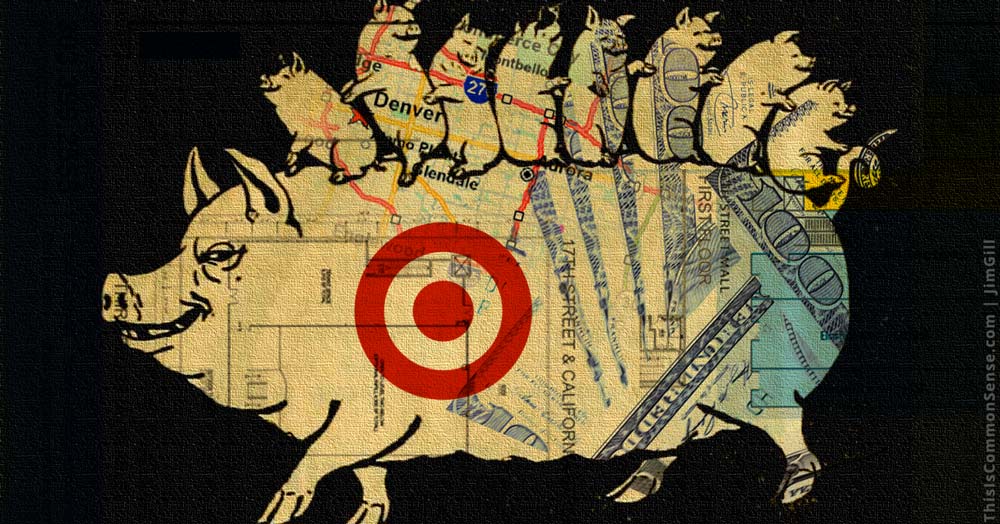
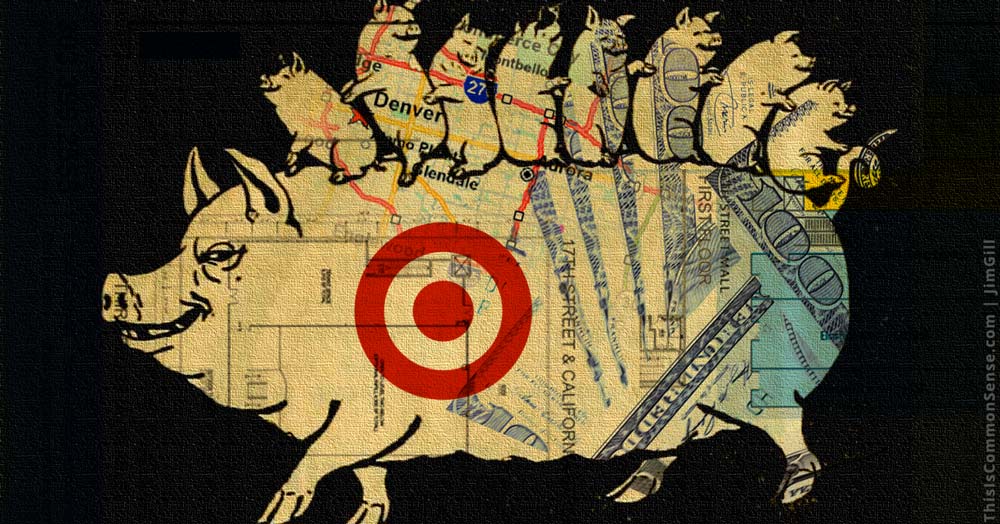
Something has gone wrong when, to get a tenant to move into an empty space in your prime-location building, you need a $4 million subsidy.

And when I say “prime location,” I’m not engaging in Trumpian over-statement. The downtown Denver, Colorado, property location sees over 35,000 pedestrians per day . . . and that’s with the primo slot empty.

But to get that slot filled, the owners have negotiated with the city government to nab a $2 million “incentive” to fix the place up for Target, which is thinking of leasing the location to put up a smaller-than-usual “flexible-format” store. Oh, and another $2 million for “operational” costs, which seems to be some kind of a loan to be paid back from taxes to be collected — and shared by the city for 20 years with the owners.

In other words, it’s the darnedest business deal you’ll ever see (and never get): up-front money not from a bank or investors, but from Denver’s city government “BIF” — Business Investment Fund — which is obviously part of a convoluted scheme fed by taxes and devised by . . . people I wouldn’t trust with my money.

Structuring deals like this is how modern cronies — er, cities — operate, I know. Am I alone in judging it corrupt on the surface and corrupting in the details?

If prime commercial property has gone unused for about a decade — as this three-storied mall space has — I’d think that maybe the owners have set the rents too high or the city has been a bit too greedy with taxes.

Or both.

This is Common Sense. I’m Paul Jacob.

Printable PDF


Categories
Accountability crime and punishment moral hazard nannyism national politics & policies property rights too much government U.S. Constitution

Watcha Gonna Do?

At a White House meeting last week between President Trump and law enforcement officials, a Texas sheriff raised a concern about legislation introduced by a state senator to require a conviction before police could take someone’s property.

Mr. Trump asked for that senator’s name, adding, “We’ll destroy his career.” The room erupted with laughter.

“That joke by President Trump,” Fox News’s Rick Schmitt said on Monday, “has the libertarian wing of the Republican Party raising their eyebrows, instead of laughing.”

Not to mention the civil libertarians in the Democratic Party and the Libertarian Party itself.

Civil asset forfeiture, as we’ve discussed, allows police to take people’s cash, cars, houses and other stuff without ever convicting anyone of a crime — or even bringing charges. The person must sue to regain their property.

Lawyers aren’t free.

Two bedrock principles are at stake:

  1. that innocent-until-proven-guilty thing, and
  2. Our right to property.

Since police departments can keep the proceeds of their seizures, they’re incentivized to take a break from protecting us — to, instead, rob us.

“Our country is founded on liberties,” offered Jeanne Zaino, a professor at Ionia College. “[G]overnmental overreach is not something that is natural for Republicans to embrace.”

Schmitt acknowledged that “Libertarians would hate this. They don’t want big government. But they don’t have a lot of pull.”

Libertarian-leaning Republicans like Sen. Rand Paul and Rep. Justin Amash are trying to end civil forfeiture, but the president will likely veto their legislation.*

Let’s not wait. Activists in three Michigan cities put the issue on last November’s ballot and won. You can, too.

This is Common Sense. I’m Paul Jacob.

 

* FoxNews.com reported that, “Trump signaled he would fight reforms in Congress, saying politicians could ‘get beat up really badly by the voters’ if they pursue laws to limit police authority.”


Printable PDF


Categories
Accountability government transparency insider corruption local leaders responsibility

Of Protests & Politicians

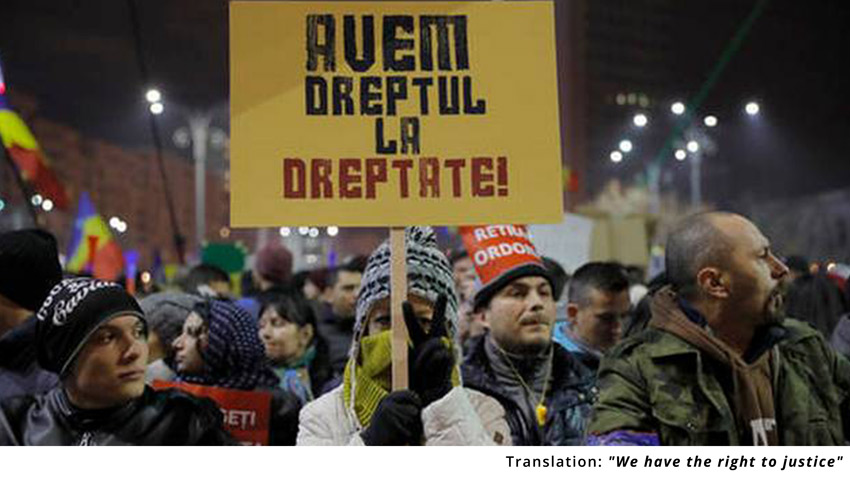
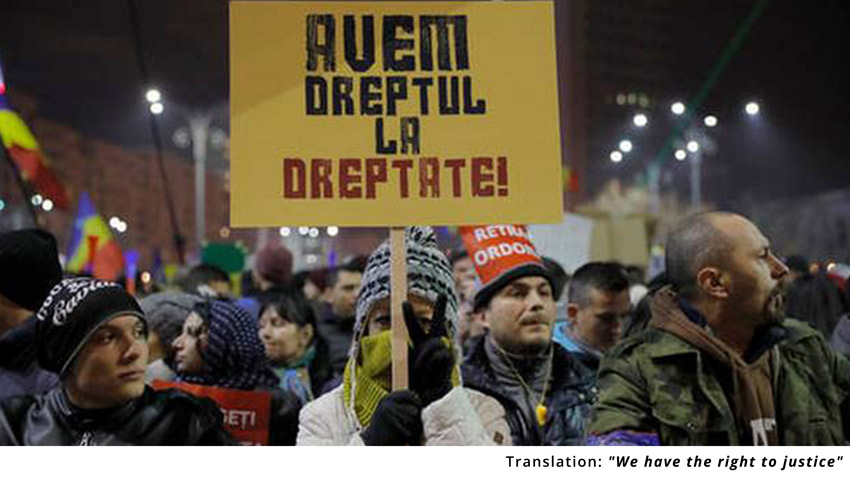
Last Friday, I applauded massive protests that erupted in Romania — over a since-rescinded governmental decree to decriminalize graft up to $47,000. On Sunday at Townhall, I wondered why there weren’t similar demonstrations against the corruption afflicting Prince George’s County, Maryland.

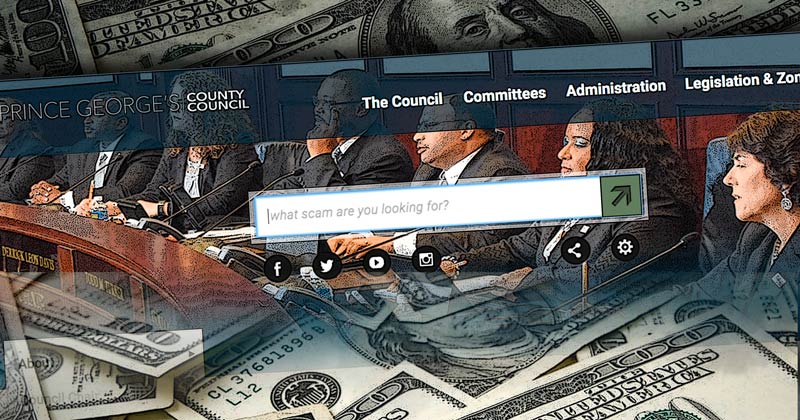
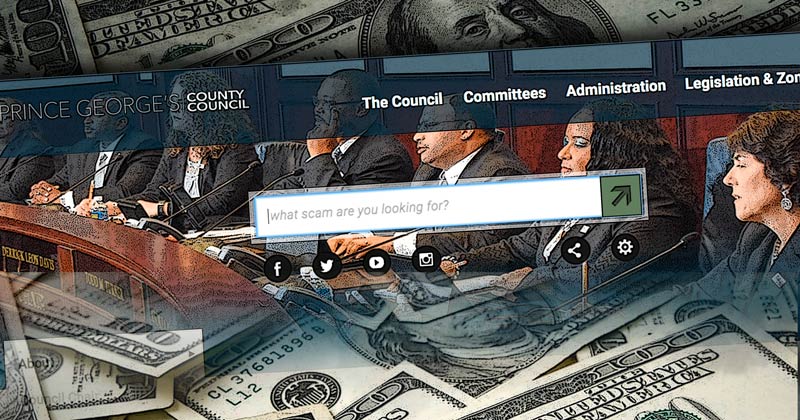
The county, bordering the nation’s capital, lavishes its nine council members with a take-home car or a $10,315 annual vehicle subsidy. The car allowance comes with free gas.*

These emoluments might have gone unnoticed had the politicians proven able to drive better than they govern. In the last five years, they racked-up 16 car accidents and 107 traffic violations.

Councilman Mel Franklin accounts for four crashes — three resulting in injuries to innocent motorists. The cost of totaled county vehicles, and fixing other people’s cars and bodies? Nearly $100,000.

Two months ago, Franklin slammed into a stopped vehicle at a red light. He claimed he was tired. True enough, if being tired of driving drunk counts. The police breathalyzer found him legally intoxicated.

Councilwoman Karen Toles racked up 47 tickets, including one for driving 105 mph on the Capital Beltway. Her excuse? She had been too busy applying make-up and sending emails on her cellphone to notice swerving across the multi-lane freeway at that speed — “executing,” she explained, her “duties as a public servant.”

An ongoing FBI probe has led to the indictment of two other county officials, a guilty plea by a state legislator and another legislator resigned awaiting indictment.**

Obviously, political corruption is not confined to other countries.

Just as obvious, providing top pay and benefits to politicians hardly guarantees the best and brightest.

This is Common Sense. I’m Paul Jacob.

 

* And these perks are on top of the councilors’ $114,000 part-time salary, healthcare, pension benefits, etc., etc., etc.
** Five ears ago, infamy found the county executive on a wiretap telling his wife to stuff $80,000 in bribe money into her bra.


Printable PDF


Categories
Accountability general freedom government transparency responsibility too much government

The Confidence Game

Romania’s parliament has confidence in . . . itself.

Sorta. A parliamentary no-confidence vote failed, despite 161 lawmakers voting for the resolution and only eight voting with the government.

Confused? The no-confidence measure failed because the Social Democrats, controlling nearly two-thirds of the 465 seats in parliament, abstained on the measure, which required a majority of parliament to vote affirmatively.

Not a very confident vote of confidence.

The vote came after eight days of protests in Bucharest, the capital, and around the country — the largest since the 1989 fall of communism. A quarter of a million people took to the streets of Bucharest last Sunday, and half a million nationwide.*

The protests came after last week’s late night corruption decree, issued “by the cabinet, without parliamentary debate,” as Reuters reported — and “designed to decriminalize a number of graft offences, cut prison terms for others and narrow the definition of conflict-of-interest.”

“The emergency ordinance . . . effectively decriminalized some forms of corruption if the amount involved was less than $47,000,” explained the New York Times, meaning amnesty for Liviu Dragnea, the head of the ruling Social Democrat Party, and dozens of other politicians convicted of graft and corruption.

The decree was hastily rescinded, but Romanians cannot trust their government.

“It’s too late,” one protester said. “Their credibility is zero.”

“This government has offered us a perfect demonstration of what it can do during its first 30 days in office,” another quipped. “Conclusion: they must leave.”

But Prime Minister Sorin Grindeanu told fellow legislators, “I do hope that as of today we get back to work.”

Unfortunately, that’s what Romanians fear.

This is Common sense. I’m Paul Jacob.


* The same ratio of protesters to population in the U.S. would mean eight million protesters nationally.


Printable PDF


Categories
Accountability folly general freedom ideological culture media and media people moral hazard national politics & policies too much government

Bring Back the Eunuchs?

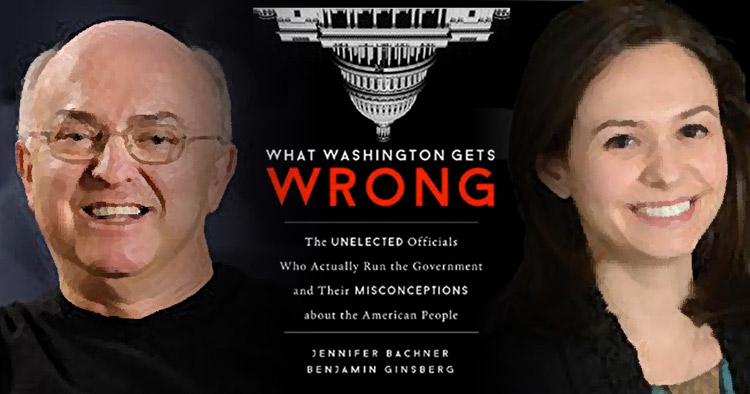
“Everybody knows that ordinary Americans are a bunch of idiots,” a Health and Human Services official told Benjamin Ginsberg. “Why do you need to do a survey to find that out?”

Actually, he was not surveying Americans for their IQs and knowledge levels. He was surveying Washington insiders. Like her.

She hadn’t been listening.

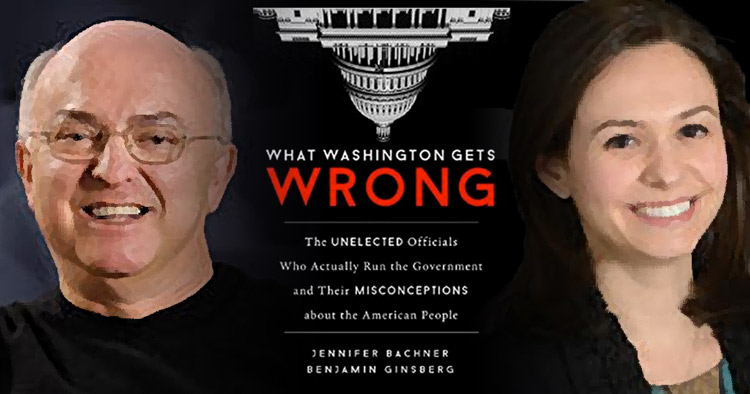
Ginsberg and co-author Jennifer Bachner have a new book out, What Washington Gets Wrong (2016). “We found that public officials,” Ginsberg told C-SPAN’s Brian Lamb last month, “the people who really govern this country . . . don’t think much of ordinary Americans.”

Surprise, surprise. This has been an “open secret” for some time. Washington insiders “are wealthier,” “better educated,” and “think ordinary Americans don’t really know very much.” More alarmingly, they think that the government should “not pay too much attention to what ordinary folks think.”

According to Ginsberg and Bachner, this has been a long time coming. Progressive Era reformers transformed government in an effort to make it less partisan.

They succeeded — only to make it less accountable and less . . . American.

In ancient times, great administrative states were run by eunuchs, men gelded to curb their appetites the better to serve their sovereigns (pharaohs; emperors; kings). Not their own interests.

Is it time to bring back the practice?

Just joking. Instead, Congress can tame the bureaucratic leviathan it has created by trimming its ranks and pulling back on pay and benefits until they’re more in line with the private sector.

Let’s hope the House’s recent passage* of the REINS Act, requiring congressional approval of major regulations, is a sign that Congress’s lackadaisical attitude about the bureaucracy is changing.

This is Common Sense. I’m Paul Jacob.
 

* Let’s hope the Senate follows suit.


Printable PDF


Categories
crime and punishment free trade & free markets general freedom meme moral hazard national politics & policies too much government

Which is more dangerous?

Corporations cannot and do not tax, conscript, and kill under claim of legal authority to do so.
Only governments do that. 

Click below for a high resolution version of the image:
corporations, government, power, danger, government vs. corporation, which is more dangerous, law, corruption, meme, illustration, Jim Gill, Paul Jacob, Common Sense
Categories
Accountability government transparency insider corruption local leaders moral hazard responsibility term limits

Politicians Bearing GIFs

Yesterday, we discovered that the biggest term limits opponent in Arkansas — former state senator Jon Woods — also allegedly led an elaborate legislative fraud scheme, whereby he and a state representative traded tax dollars for cash bribes.

For now, Woods is an unindicted co-conspirator. But last week, the representative involved pled guilty to a felony carrying a possible 20-year prison term and directly implicated Sen. Woods.

Woods’s alleged criminality involves the GIF program — General Improvement Funds. Legislators can personally direct GIF dollars to pet projects and favored cronies, taking political credit. The process is similar to congressional earmarks. And just as corrupting.

In an article entitled, “How a 1997 Power Grab is costing Arkansas taxpayers millions on pet projects,” the grassroots group Conduit for Action explains that the GIF rules changed just before our new millennium, when term limits first cleaned out the state House (1998). The old batch of legislators gave themselves unchecked control over this vote-buying slush fund.

And that is when even bigger corruption surfaced. “A Federal grand jury shook the Arkansas political establishment today with a long list of political corruption indictments that reaches to the apex of the state Legislature,” the New York Times reported in 1999.

Back then, Sen. Nick Wilson was Arkansas’s loudest term limits critic . . . until his three-decade-long career ended with a guilty plea to 133 counts of racketeering and other public corruption.

Interesting that top legislative enemies of term limits, both past and present, wear the Scarlet Letter “C” for corruption. Coincidence?

Term limits are no friend to corruption. And vice-versa.

This is Common Sense. I’m Paul Jacob.

Printable PDF

Arkansas, corruption, term limits, Jon Woods, GIF


Categories
Accountability government transparency initiative, referendum, and recall local leaders moral hazard

Rules for Rulers?

Politicians in Tampa, Florida, have forced citizens there to vote for term limits, and then vote to keep those term limits again and again — against attempts to repeal or weaken the limits. So I keep my eye out for news from the city.

Earlier this month, Mike Deeson, an investigative reporter with WTSP 10 News, Tampa Bay’s CBS affiliate, exposed Mayor Bob Buckhorn’s open violation of the city charter’s requirement that all department heads must be city residents. Buckhorn hired Sonja Little, now the city’s highest paid employee, to serve as his Chief Financial officer, and admits on camera that he promised her she would not have to move into the city.

“The question is,” the mayor explained, “do you want talent or do you really make the residency — she’s only about a mile away from the city border — the issue?” Buckhorn answers his own question, “I would rather have talent” . . . than follow the law.

In even slipperier fashion, Mayor Buckhorn has attempted to get around the clear, unequivocal wording in the charter by claiming Ms. Little has served as the “interim” Chief Financial officer for the last five years!

Reporter Deeson asks the operative question: “[I]f you’re going to ignore the residency requirement, what other parts of the charter should you just ignore?”

Deeson worries about provisions requiring competitive bidding, guarding against conflicts of interest and mandating term limits, which is “particularly problematic for a mayor who is in his second term and has to leave office when it’s over.”

On social media, Tampa residents are unloading on the mayor with numerous variants of: “This is truly what’s wrong with government.”

This is Common Sense. I’m Paul Jacob.

Printable PDF

Tampa, initiative, corruption, Mayor, Mike Deeson, Mayor Bob Buckhorn


Categories
Accountability free trade & free markets insider corruption media and media people national politics & policies porkbarrel politics

Crony Carrier

Sure, I’ve complained about the over-the-top anti-Trump bias of much of the mainstream media (which may actually have improved Trump’s public standing). But, today, I enthusiastically celebrate that supercilious slant.

Why? Because it means much of the media amazingly finds itself on the right side, panning the recent deal to save 1,000 jobs at the Carrier Corporation.

Saving jobs is good per se. We want jobs to stay here in America. But, at what price?

Thus far, the deal remains secret, but according to Politico, “The agreement reportedly includes $7 million in state tax breaks over ten years offered by the Indiana Economic Development Corporation, a quasi-public entity that doesn’t require legislative approval for its deals.”

“Quasi-public entities” always make me queasy.

“Can American companies now merely threaten to go to Mexico,” asks Chris Rossini in the Ron Paul Liberty Letter, “in order to get a sweetheart deal for themselves?”

This special arrangement’s costs are not merely monetary: Special deals for some companies at the expense of others undermine the whole concept of equality under the law.

File under: crony capitalism.

Even the socialists at The Nation say the agreement “epitomizes corporate socialism at the expense of American taxpayers.”

“I certainly think that, if President Obama had done something like this, conservatives would have been freaking out,” argues Reason’s Peter Suderman.

Many are. Well, maybe not exactly “freaking out” — but vocally opposing the idea of the not-quite-yet-president picking winners and losers in the marketplace.

Crony capitalism didn’t make America great. Our revolution’s justification prompts the antithesis.

This is Common Sense. I’m Paul Jacob.

PDF for printing

Carrier, crony, cronyism, Trump, corporate, illustration


Categories
Accountability free trade & free markets insider corruption national politics & policies responsibility

United States of Corruption

When Hillary Clinton assured her insider sponsors (as we learned through WikiLeaks) that there would be a crucial difference between what she tells the people and what her actual policies would be, she was not merely admitting to a private and a public face.

The President is legally, and by honor, bound to serve the American people, not Goldman-Sachs. What she was confessing to was more than the mere appearance of a conflict of interests.

She boasted a plan of betrayal.

In that light, President-elect Donald Trump’s international business deals seem . . . what? His first diplomatic meeting — with Japanese Prime Minister Shinzo Abe — included his daughter and partner-in-business Ivanka.

It seems to at least wander into conflict-of-interest territory, if not stake claim and hoist up a flag proclaiming Trumpistan America!

So I was very pleased, yesterday, when the President-elect vowed to step out from the running of his global business and branding empire.

Earlier, he had brushed off conflict-of-interest concerns, saying he could run his empire and . . . ours.

Apparently, his new White House appointees have convinced him that this business dealing while President was a huge problem. “I feel it is visually important,” he explained Wednesday morning, “as president, to in no way have a conflict of interest with my various businesses.”

Thanks, Steve Bannon?

Or, maybe, Mitt Romney, with whom he dined* the night before?

I hope Mr. Trump follows through with this, as well as distance himself from business partner Ivanka as unofficial policy advisor.

Americans did not reject Corrupt Hillary only to wind up with a Corrupt Trump set.

This is Common Sense. I’m Paul Jacob.

Printable PDF

Romney, Trump, crow, corruption, dinner, illustration