Categories
crime and punishment social media

Talking About Crime in DC

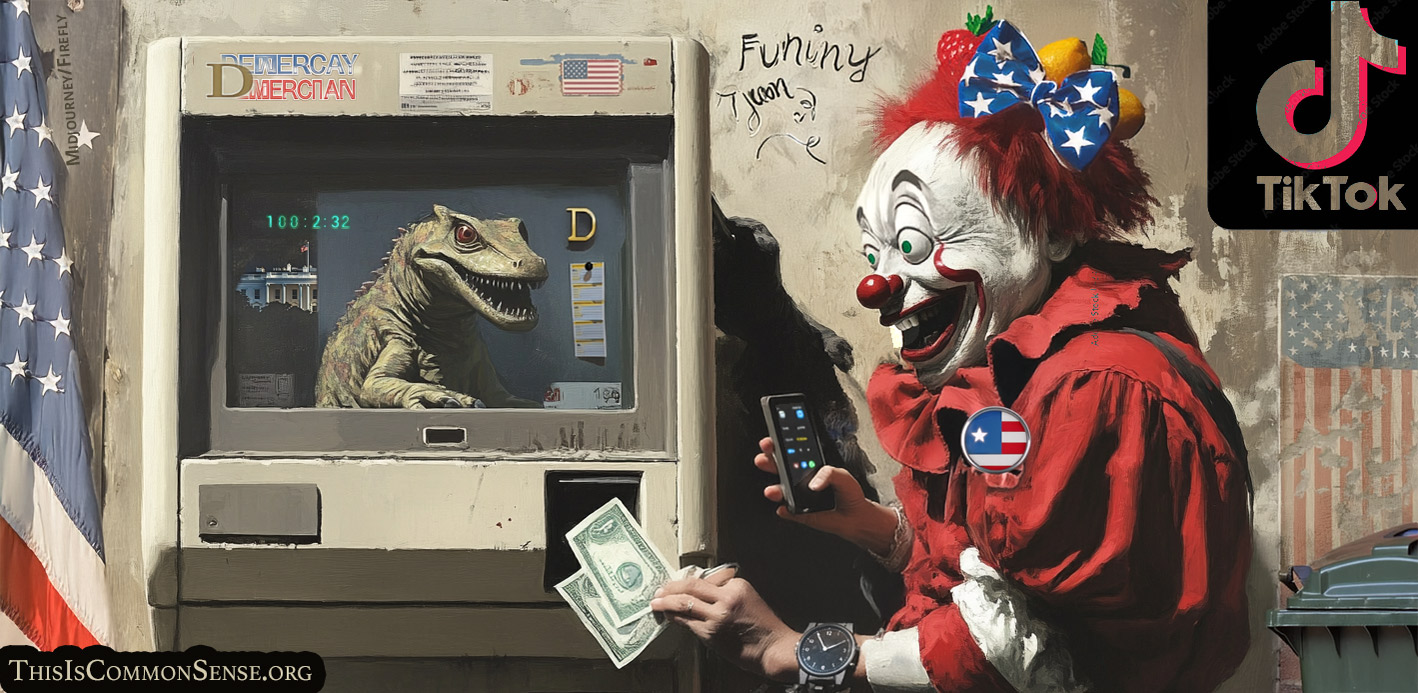
How bad is Washington’s crime problem? Well, that’s hard to know precisely, what with rampant fudging of crime statistics.

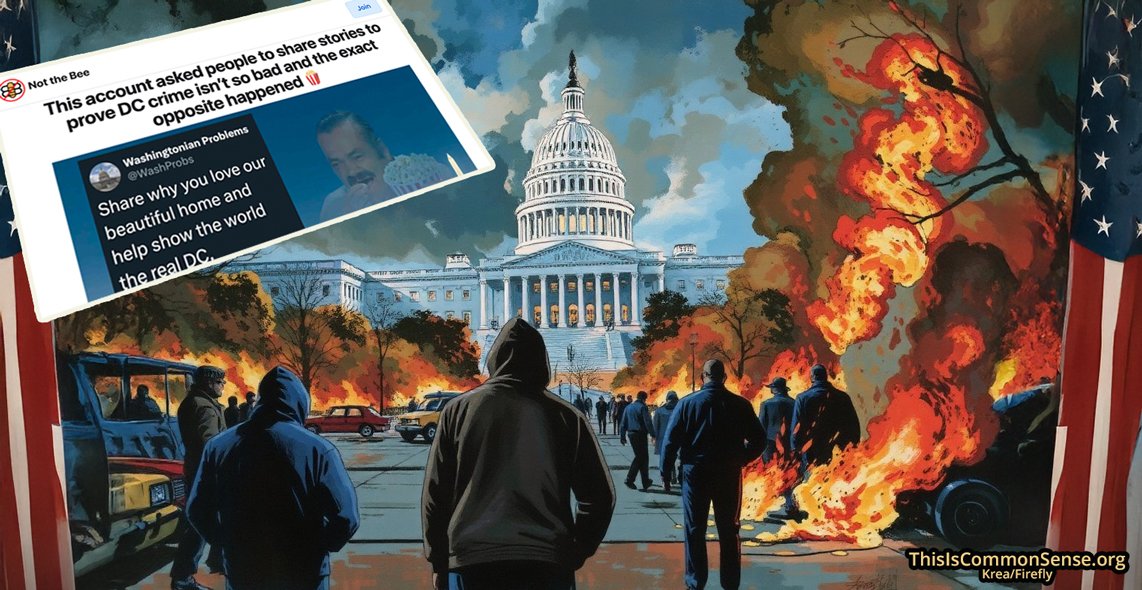
We get anecdotes. For example, via tweeted responses to an invitation by the X account Washingtonian Problems to “push back against the negative narrative about our city. Share why you love our beautiful home and help show the world the real DC.”

Whether the appeal was meant ironically, a possibility suggested by Not the Bee, I don’t know. But a good many reports of non-beauty ensued.

● “I was called into court to give a statement about a man who’d exposed himself to me on the metro. He had over 200 charges to date. Court was delayed four hours for him to ‘calm down’. . . . Once he had, she dismissed the new charges and let him go.”

● “Less than a mile from the Capitol, kids tried to steal my backpack. Punched, for no reason, by a guy on the Metro. . . . Cops recently showed me videos they can’t release. What’s happening out there is more insane than most imagine.”

● “I watched a man kick a plate-glass door in at a 7-Eleven. 911 kept me on hold for almost five minutes before telling me not to call back, it was a property crime.”

Then there’s the news-making disgruntled DoJ employee who threw a Subway sandwich at a Customs and Border Protection officer.

From these reports and plenty others I think we can conclude that yes, crime has been a problem in Washington DC.

As has law enforcement.

This is Common Sense. I’m Paul Jacob.


PDF for printing

Illustration created with Krea and Firefly

See all recent commentary
(simplified and organized)
See recent popular posts
Categories
First Amendment rights social media

Website Suppression

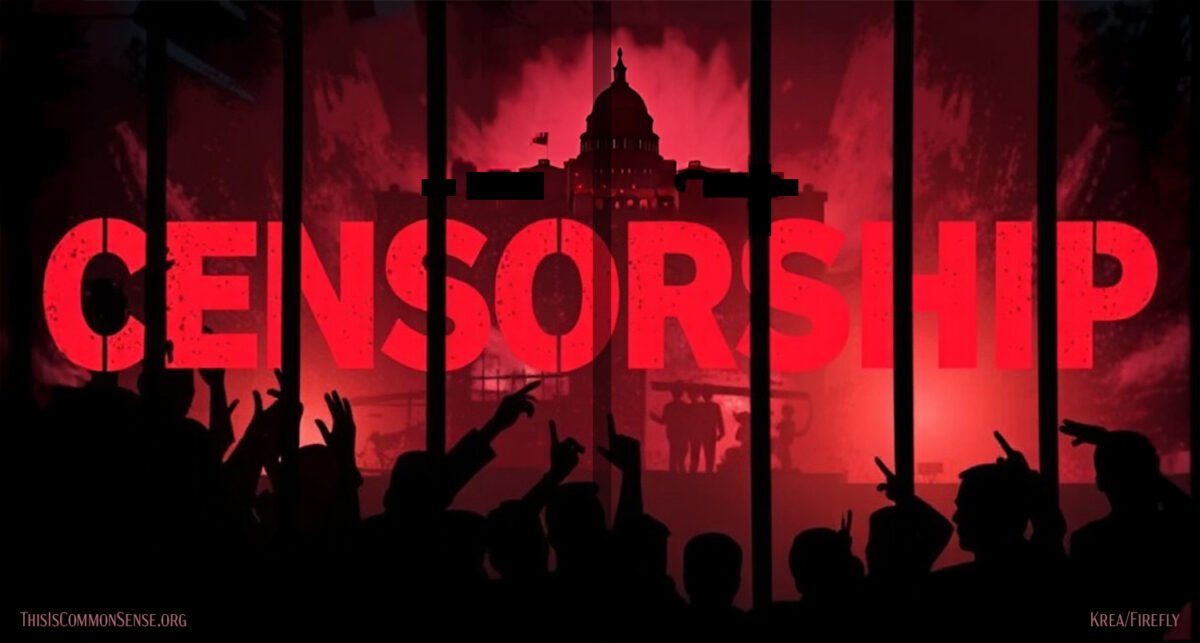
Censors are on the march . . . seemingly everywhere. Strike them down one place, they pop up three others. 

Or, in the U.S., two: the House and the Senate. 

“Earlier this year, U.S. Rep. Zoe Lofgren introduced a new pirate site blocking bill, titled the Foreign Anti-Digital Piracy Act,” we read at Torrent Freak, which goes on to tell us that, in late July, “a similar proposal was introduced by Senators Tillis, Coons, Blackburn, and Schiff. The bipartisan bill, titled Block Bad Electronic Art and Recording Distributors (Block BEARD), aims to introduce a legal mechanism for rightsholders to request site blocking orders.”

Ostensibly, the Block BEARD Act targets websites accused of harboring pirated materials.

But Reclaim the Net observes that the legislation would establish “a formal, court-approved process that could be used to make entire websites vanish from the American internet.” ISPs would have to obey orders to take down websites.

Once government has this new means of torpedoing websites, what counts as prohibition-worthy content could easily expand. The bill doesn’t require transparency, so the public would not have to be told what sites are being blocked.

Or why. 

Or for how long.

Reclaim the Net points to how easily the “takedown notice” provision of the 1998 Digital Millennium Copyright Act has been weaponized to censor content in the name of protecting copyright. Everyone from artists to political activists have had content scrubbed because of DMCA notices for work “that clearly falls under fair use, commentary, or criticism.”

Platforms eager to avoid liability delete content even when a DMCA claim is clearly illegitimate. Then publishers must engage in a time-consuming legal process to maybe obtain permission to restore the censored material.

If the Block BEARD Act is enacted, suddenly whole websites, not just individual pages, could be unjustly disappeared so skittish ISPs can avoid liability. Can we trust the U.S. government — and various disgruntled people — to possess that power?

This is Common Sense. I’m Paul Jacob.


PDF for printing

Illustration created with Krea and Firefly

See all recent commentary
(simplified and organized)
See recent popular posts
Categories
First Amendment rights international affairs Internet controversy social media

X Marks the Censor

The European Union’s censors are outraged that Elon Musk’s social media platform, Twitter-X, flouts their demands to gag users.

So they’re gearing up to fine X more than a billion dollars. The EU will also be demanding “product changes.”

Another EU investigation reported by The New York Times “is broader and . . . could lead to further penalties,” but amounts to the same thing: punishing Musk’s free-speech company for disobeying orders to prevent and punish speech.

All this is rationalized by a new EU law to compel social media platforms to police users. One would be hard put to find a clearer case of governmental censorship-by-delegation. It’s not even taking place behind closed doors, as was the case regarding the U.S. Government and Twitter before Mr. Musk bought the platform. 

These European censors brag about it.

X says it will do its best to “protect freedom of speech in Europe.”

If push comes to shove and EU goons do not back down, what X should do has been indicated by the smaller platforms social media platforms Gab and Kiwi Farms.

First, refuse to pay a penny of any imposed fine. 

Second, block access to X within the European Union, advising all account holders who try to log on why having an EU IP address is now a bad idea and why using a good virtual private network (VPN) to access X is now a good idea.

By disguising point of origin and encrypting traffic, a good VPN can help people living under tyrannical regimes like the European Union to evade censorship.

This is Common Sense. I’m Paul Jacob.


PDF for printing

Illustration created with Krea and Firefly

See all recent commentary
(simplified and organized)
See recent popular posts

Categories
First Amendment rights international affairs Internet controversy social media

Against British Censorship

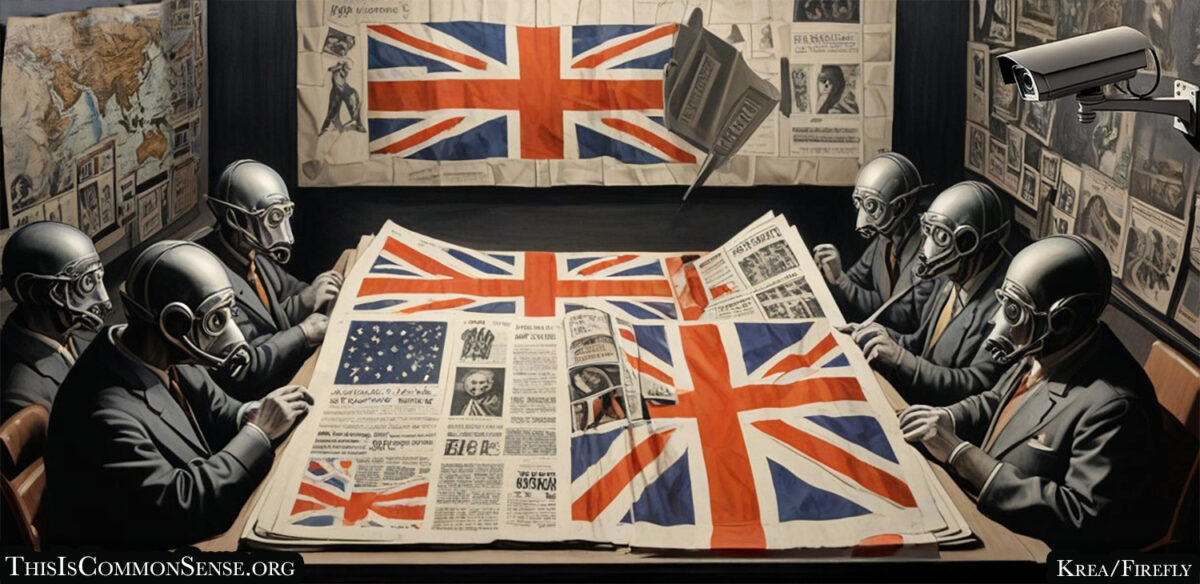
The dictates of the neo-redcoat British government, led by Prime Minister Keir Starmer, are out of control.

Starmer’s Labour government wants the whole world to obey its censorship demands. The latest is that its Office of Communications, called Ofcom, is threatening the American social media platforms Gab and Kiwi Farms with mega-steep fines for unwaveringly safeguarding the freedom of speech of users. 

Which of course Gab and Kiwi Farms have every right to do.

Ofcom says it’ll sock Gab with fines of up $23 million USD for refusing to censor its users per UK orders. 

“We will not pay one cent,” says Gab CEO Andrew Torba.

Gab is not only not cooperating with Ofconjob’s insanity, it has also reported the Starmer government to the U.S. Trade Representative and the U.S. Department of Justice in hopes that the U.S. government will retaliate against the United Kingdom for trying to gag social media in the United States.

Kiwi Farms, threatened with the same fine of up to 10 percent of worldwide revenue, is telling UK users who want to use the site to access it through a VPN or Tor in order to protect their online traffic and disguise which country they’re from. Otherwise, they’re out of luck.

Kiwi has also reported success in obtaining pro bono counsel for dealing with “the UK’s attempts to enforce its censorship regime in the United States.”

As the U.S. president famously said in Butler, Pennsylvania: “Fight! Fight! Fight!”

This is Common Sense. I’m Paul Jacob.


PDF for printing

Illustration created with Krea and Fireflly

See all recent commentary
(simplified and organized)
See recent popular posts
Categories
First Amendment rights Internet controversy social media too much government

When Is Censorship Not Censorship?

Mark Zuckerberg says Facebook is returning to its free speech roots.

Can we believe him?

While the restrictions on what you can talk about on Facebook are still pretty extensive, Zuckerberg’s outfit, Meta, is apparently ending the reign of “fact-checkers” on Facebook and Instagram, as well as the platforms’ collusion with federal government “fact-checkers.”

On Monday, I discussed the federal government’s screaming fits that led Facebook to ramp up “content moderation,” which I identified with a less euphemistic c-word. But that word choice remains controversial. For example, a “global network of fact-checking organizations,” the International Fact-Checking Network, which includes Agence France Presse, objects to Zuckerberg’s assumption that Meta helped impose censorship.

“This is false, and we want to set the record straight, both for today’s context and for the historical record,” announced IFCN. The Network then “warned of the potentially devastating impact if the group were to end its worldwide programs. . . .”

If censoring in obedience to government demands is not censorship, what could be? The article doesn’t explain. AFP and IFCN are simply saying that they don’t want freedom of speech; it’s dangerous.

Of course, free speech can have costs. 

But censorship does too: suppression of truth and impeding the means of learning truth. 

The article doesn’t report on the costs of suppressing facts about, say, COVID-19, vaccines, U.S. policy, UFOs, or Hunter Biden’s laptop.

AFP and IFCN simply assume that gatekeepers like themselves, with a vested interest in excluding divergent reports and viewpoints, must be allowed to keep excluding differing views and inconvenient facts from the “safe spaces” that apparently include all the very biggest spaces on the Internet.

This is Common Sense. I’m Paul Jacob.


PDF for printing

Illustration created with Flux and Fireflly

See all recent commentary
(simplified and organized)
See recent popular posts
Categories
First Amendment rights Internet controversy social media

The Defi(l)ers of the First Amendment

Early on, we carefully phrased our objections to the suppressions of dissident opinion on Facebook and Twitter and YouTube. 

We knew (because we had been making the distinction for years) that when companies and private parties engaged in discrimination on the basis of opinion, including “de-platforming” of opinion-mongers, these weren’t, at least on the face of it, First Amendment violations. The First Amendment’s guarantees of free speech apply to the federal government and, by the stretch of the 14th Amendment, to state and local governments.

These were corporations.

Sure, corporations thriving under government liability rules, and with sometimes-cushy contracts with government.

And social media companies’ actions were clearly partisan, obviously opposing Donald Trump. The dreaded Orange Man had used social media to get elected in 2016, running rings around the gatekeepers of Accepted Opinion; the ultra-partisan censorship a reaction.

Only with the release of the Twitter Files, after Elon Musk bought Twitter, did we get the crucial facts in the case: Agents of the U.S. government (many of them eerily in the Deep State nexus) pushed the censorship.

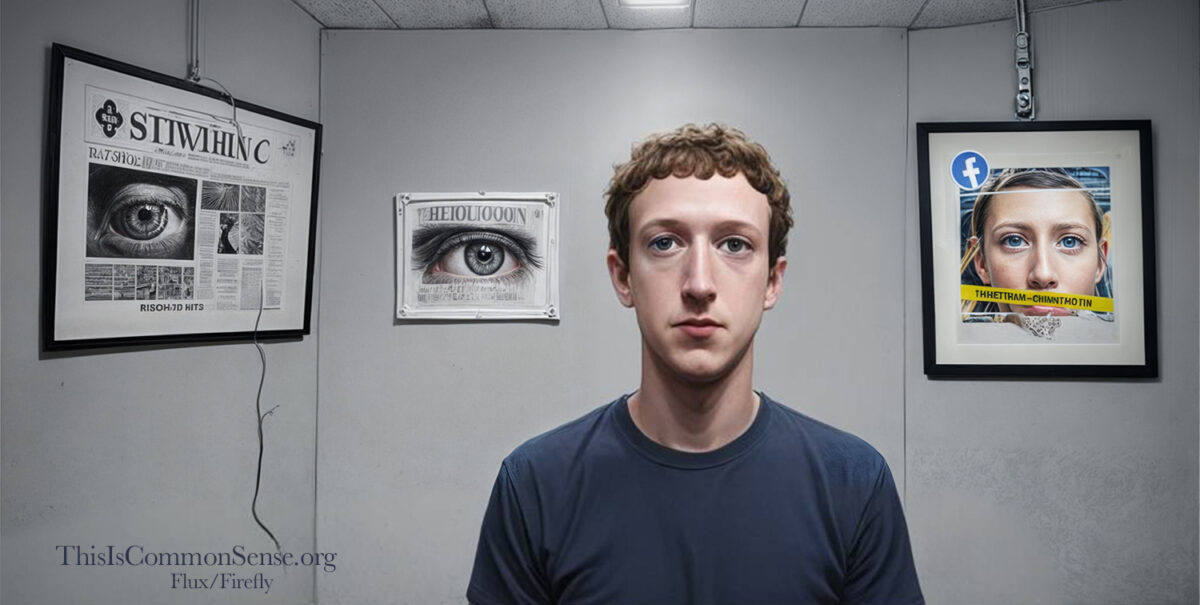
Now, with Mark Zuckerberg’s very recent and very public pulling back from the excesses of DEI as well as government-coerced content moderation, we’ve learned more of the manner of the duress in which his companies caved to censorship demands. Government agents called up Facebook managers and content moderators and screamed at them to suppress certain stories and “memes.”

The sharing of visual memes really, really bugged the Deep State, which was hell bent on delivering to everybody a jab in the muscle with gene therapeutics allegedly to “vaccinate” us against a disease that . . . well, their buddies in the Deep State helped China, it just so happened, create

Worldwide, millions died in a pandemic whose origin was actively covered up through violations of the First Amendment in America

Defend free speech to defend life itself. 

This is Common Sense. I’m Paul Jacob.


PDF for printing

Illustration created with Flux and Firefly

See all recent commentary
(simplified and organized)
See recent popular posts
Categories
crime and punishment national politics & policies social media

Morbid Meme Mania

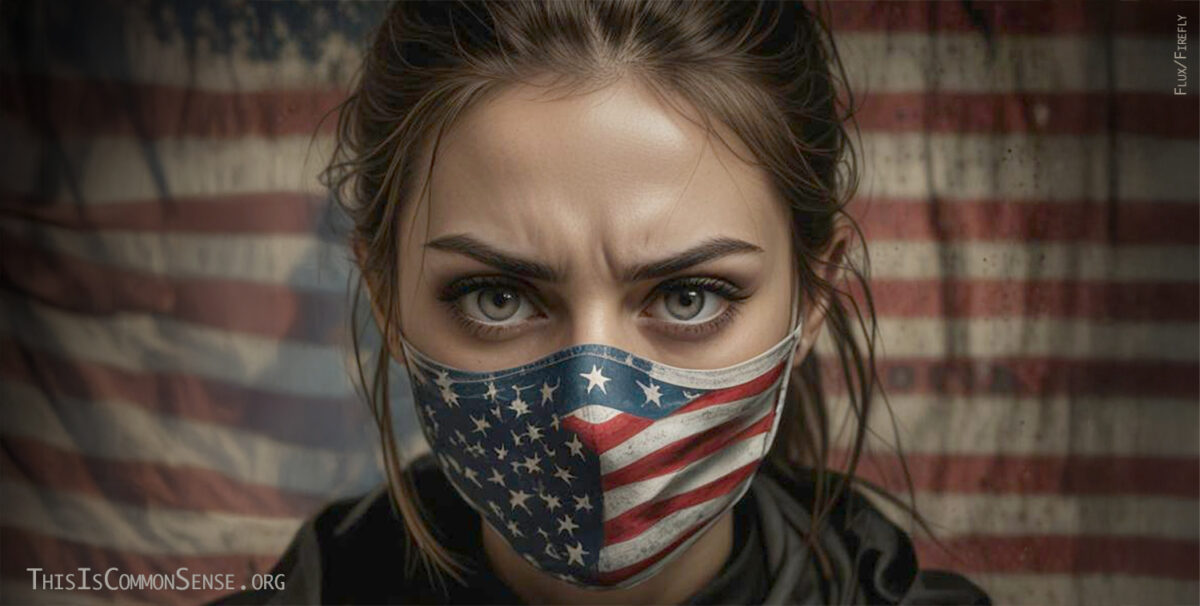
Last week’s murder — assassination — of UnitedHealthcare CEO Brian Thompson on the streets of Manhattan has inspired something more than a mere resurgence of gallows humor. The proliferation, online, of laughter emoji reactions to the story is unsettling, to say the least. 

Then there are the hardcore “memes” scorning Mr. Thompson’s medical insurance company and mocking his death — what are we supposed to make of it all?

Well, the virtuous response is to condemn the schadenfreude and mean-spiritedness.

But some of the jesting is indeed pointedly funny. 

“All jokes aside,” runs the best of them (from BlueSky, the left’s alternative to X), “it’s really fucked up to see so many people on here celebrating murder. No one here is the judge of who deserves to live or die. That’s the job of the AI algorithm the insurance company designed to maximize profits on your health and no one else.”

Which brings us to the nib of it. 

As the prospective Trump Administration puts its ducks in a row to hit the ground running in January, the “health issue” that RFKj and others have pointed to is the heavily regulated and subsidized food and drug industries, which are making us sick. The question of paying for medical care was supposed to have been solved by “Obamacare” a decade ago, but prices have only risen . . . and resentments along with them. 

The author of that BlueSky tweet and virtually all Democrats today, think the answer to the insanity of our government-regulated “private” health insurance system is full-bore socialized medicine.

Our money-grubbing leaders know that would be a disaster, but they have only kicked the chaos we’ve inherited from the terrible policy choices of yesteryear down the road.

I’m left with nothing funny to say about that.

This is Common Sense. I’m Paul Jacob.


Note: As this episode was put to bed, the biggest update to the story was the announcement of a suspect, or “person of interest”: Luigi Mangione. Make of that what you will.

PDF for printing

Illustration created with Flux and Firefly

See all recent commentary
(simplified and organized)
See recent popular posts
Categories
crime and punishment property rights social media too much government

The Squirrel vs. The State

“Squirrel!”

In an age of short attention spans and viral memecraft, the latest cultural moment regarding a squirrel could influence more minds about politics than all the quips, speeches and gaffes of Trump and Harris combined.

The news is not hard to understand. “Wild squirrel that was taken in by Mark Longo seven years ago was confiscated after conservation officials received reports of ‘potentially unsafe housing of wildlife,’” is how The Guardian put it on Halloween. 

“An orphaned squirrel that became a social media star called Peanut was euthanized after New York authorities seized the beloved pet after a raid on his caretaker’s home, authorities said,” was Saturday’s Guardian update.

After the six- (or ten-) officer raid and after the execution, the deluge: ire and satire flooded the meme-o-sphere.

Not a few governments enforce laws against taming wild animals. One concern is rabies, though the rabies danger of a squirrel rescued as a baby and raised indoors must be preciously close to ZERO. When individuals own tigers and other predators, the danger is obvious — but certainly P’nut was not such a concern.

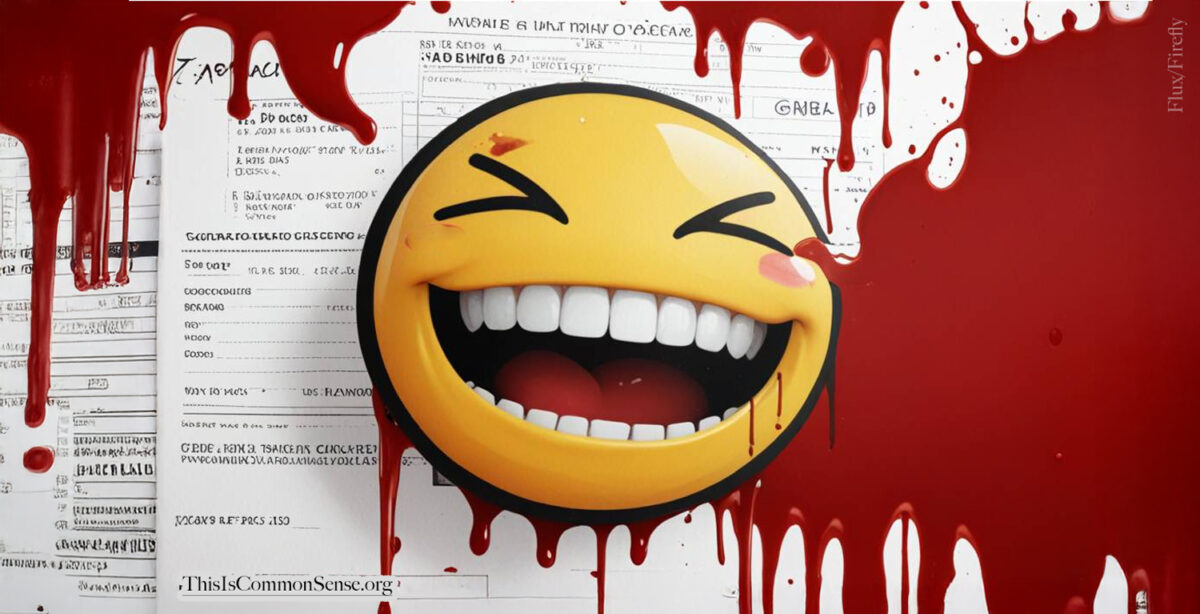
This is just the way the modern State operates: bureaucratically, with lumbering indifference to property rights (the squirrel was indeed owned, and housed privately), liberty (sans harm, the case to leave well enough alone is pretty clear), and common sense (Andy Griffith would not have put down the squirrel; he would have told Barney Fife to put down the revolver). 

How ridiculous and cruel government can be!

Maybe the last half dozen of undecided Americans will pull the lever, Tuesday, for less nonsensical government intrusion because of it.

It certainly doesn’t make the meddler class look good.

This is Common Sense. I’m Paul Jacob.


Note: We also mourn the passing of Fred the Raccoon, a fellow rescuee at P’Nut’s Freedom Farm, also confiscated and executed by the State of New York for the same trivial infraction of his owner: not licensed by the State.

PDF for printing

Illustration created with Midjourney and Firefly

See all recent commentary
(simplified and organized)
See recent popular posts
Categories
media and media people social media

TikTok Astroturf

According to sociologist Jacques Ellul, propaganda is not rhetoric; it’s not you and me expressing our opinions and trying to persuade others; it’s not our letters to editors of newspapers or the “memes” we share online. Propaganda is the coordination of many forms of social influence, of many media. States are usually involved, or political parties (wannabe states) or huge interest groups (which can be bigger than many states).

If, however, you secretly get paid to push a message in a specific way, you may be a propagandist.

Take TikTok.

This is the video-sharing social media site so popular with young people. It’s been controversial; I’ve discussed it before. But I’m no expert. Still, I was not surprised to learn that Democrats have been paying “social influencers” on that platform to serve up the Democratic Party line.

A TikToker named Madeline Pendleton made a video about how the Democrats offered “nearly $15,000” to talk about “how awesome the Democratic Party is.” She found the idea ridiculous, characterizing the offer as a way to distract attention from the party’s “genocide.” But she recognizes that it can be effective. Many of her “mutuals” on TikTok are indeed spouting the same lines that she was “pitched” by Democrats, and they did so within 48 hours of her receiving the offer.

She went on to say that she received two offers: one to make ongoing videos up to the election, and the other to scarify Heritage Foundation’s Project 2025, which she is no fan of, but thinks is not that big a deal.

“You guys should be aware that that when you see videos like that, the Democrats are actively paying people to talk about how awesome the Democrats are.”

Awesome propagandists, anyway.

This is Common Sense. I’m Paul Jacob.


PDF for printing

Illustration created with Midjourney and Firefly

See all recent commentary
(simplified and organized)
See recent popular posts
Categories
First Amendment rights media and media people political challengers social media

The Ignorance of Censorship

Why is Tim Walz, Harris’s running mate, governor of Minnesota right now?

Perhaps because government censors — functioning through agents like Mark Zuckerberg’s Facebook — made it harder to hear his opponent, Dr. Scott Jensen, during Walz’s 2022 re-election campaign.

A shift in a few percentage points would have tilted things in the challenger’s favor. But Jensen had made the government’s response to the pandemic — including the tyrannical policies of Walz’s state government — a central theme of his campaign.

And in those days (as in these), all-out censorship of various deviations from the government line was de rigueur. Disagreement about COVID-19, both the nature of the infection and the wisdom of the government’s response, was among the targets.

Jeffrey Tucker asks “Why Did Zuckerberg Choose Now to Confess” to the fact that Facebook had done so little, in Zuckerberg’s words, to resist repeated pressure “from the Biden administration, including the White House . . . to censor certain COVID-19 content”?

The answer to the uninteresting question “why now?” is standard CYApolitical calculus. In any case, the confession isn’t quite exhaustive; Zuckerberg doesn’t acknowledge the extent of the censorship. As Tucker notes, “every single opponent of the terrible policies was deplatformed at all levels.”

The single COVID-contrarian piece by Tucker himself that slipped through the social-media censorship net “by mistake” got an atypical tsunami of response. So what if Dr. Jensen’s message and arguments had not been perpetually smothered by government-pressured social-media companies?

Jensen may still have lost (Walz got 52 percent) but the point of elections goes further than a horse race. Where there is free speech, voters can learn something.

This is Common Sense. I’m Paul Jacob.


PDF for printing

Illustration created with PicFinder and Firefly

See all recent commentary
(simplified and organized)
See recent popular posts