Categories
Accountability folly free trade & free markets local leaders nannyism property rights responsibility too much government

How to Ruin a Thoroughfare

Cities require some planning. But the further beyond a certain minimum, the greater the ease with which a central planning authority can be captured — by zealots with more stars in their eyes than brains in their heads.

Portland, Oregon, is a case in point. Students from Portland State University had this brainchild: “Better Naito,” a project to transform SW Naito Parkway to “enhance the lives of pedestrians and bikers along the Waterfront,” as Jessica Miller of Cascade Policy Institute explains. Their notion was to reduce “car capacity from two lanes to one” during the peak season (actually more than half the year), opening up the cordoned-off lane to folks walking and riding bicycles.

I’m not kidding.

Though proponents of the program enthuse about the “positive feedback” from the public, they tend not to deal with complaints from adjacent business owners, who now “see fewer shoppers” and must accommodate “employees who experience longer commutes.”

Opponents are organizing. The Portland Business Alliance promotes its petition with a simple question: “How Exactly Is ‘Better Naito’ Better?

Portland is a prime example of the New Urbanism in action, which seems set on creating cramped places for people to live and discouraging folks from using their own cars. I’ve talked about this before, focusing on planning critic and Cato Senior Fellow Randal O’Toole. He has long been fighting the city planning cranks who appear dubious about their very job: providing roads and sewers and waterways that serve the all a city’s citizens, native, newcomer, and traveler alike.

My advice? Sign that petition, if you vote in Portland.

The rest of us better plan to take a hard look at our city planners.

This is Common Sense. I’m Paul Jacob.


PDF for printing


Categories
Accountability crime and punishment general freedom ideological culture moral hazard national politics & policies Regulating Protest responsibility U.S. Constitution

Saturday’s Violence

After delivering the final address at the Liberty International World Conference in Puerto Rico, Friday night, I learned that there had been violent clashes between white nationalists and counter-demonstrators in Charlottesville, Virginia.

A dozen people required medical treatment after being sprayed with mace.

Then, after traveling to the airport with new friends from Kazakhstan, China, and socialist-torn Venezuela, I began my eight-hour trek home. I had the subject for my weekend column, I decided: the lack of reports of even one arrest.

Last I checked, dousing folks with a chemical agent was a crime.

“Men in combat gear, some waring [sic] bicycle and motorcycle helmets and carrying clubs and sticks and makeshift shields,” the Washington Post reported as I landed for my connecting flight home, “fought each other on the downtown streets, with little police interference.”

By the time I touched down in Washington, DC, James Field had driven his car into a crowd of counter-protesters, killing Heather Heyer and seriously wounding many others. A searing and sobering event.

My column, mostly written in transit, focused on the police response to political violence. From Trump rallies last year to the events at UC-Berkeley that “shut down” planned speeches . . . to attacks on Charles Murray and others at Middlebury College . . . to this Saturday’s events in Charlottesville, policing has been tepid at best.

People have a right to speak, to assemble, to protest, to let out a primal political scream. Our governments must protect that right, without regard to viewpoint, by preventing and policing against acts of violence.

When violence succeeds without consequences — garnering tons of attention for its perpetrators — we are likely to see more violence.

Government is not doing job one.

This is Common Sense. I’m Paul Jacob.


PDF for printing


Categories
Accountability crime and punishment folly ideological culture moral hazard national politics & policies responsibility

Excepting Responsibility

Responsibility: demand it of others, expect it demanded of you.

So you might think that those who try to redress old grievances with compensatory (“reverse”) discrimination would be a bit more careful.

Yesterday I wrote about the bizarre Google Memo case, wherein an employee was fired for (basically) warning of a groupthink ideological monoculture at Google . . . thus proving him right.*

Last weekend I wrote about racial quotas in college entrance.

In both cases, there’s this idea that moderns in general and white males in particular must “accept responsibility” for the past.

And the evidence is undeniable: Our pale-faced ancestors — or more likely a very small percentage of other white people’s ancestors — held human beings in bondage. So, too, did almost all peoples around the world; slavery’s old. Here in these United States, after our bloodiest war, our forebears ended that ancient crime. Then there was another century of Jim Crow discrimination, with systemic violence committed against blacks in many areas of the country, often with government acquiescence or involvement.

Harvard and other educational institutions are trying to right those wrongs.

But there’s a problem: the principle behind their affirmative action schemes is lunatic: Each person of one race bears responsibility for the crimes committed by any person of that same race.

Far better is individual responsibility. Individuals have every right to compensation for any harm another has caused them, certainly. But folks have no right to create new harms against innocent people who happen merely to be of the same race or gender as those who have caused them past harm.

Justice is supposed to be blind, not crazy.

This is Common Sense. I’m Paul Jacob.

 

* The author, it is worth noting, addressed this monoculture in his title, “Google’s Ideological Echo Chamber.” I wonder if being proven right by one’s enemies compensates for job loss.


PDF for printing


Categories
crime and punishment general freedom local leaders moral hazard nannyism responsibility too much government

Decriminalizing Balloon Release

I’m sure I disagree with most of the policies California Governor Jerry Brown seeks to propose and impose. But let’s give credit where credit is due. He’s right that people should not be treated like criminals when in a burst of celebratory excess they commit the sin of unleashing helium balloons.

California lawmakers thought it would be smart to make criminals out of toddlers and other Snidely Whiplashes who “willfully release” helium balloons made of electrically conductive material.

The potential problem is real enough. When the balloons collide with power lines, they may cause power surges or brief power outages. Squirrels and birds can also cause power outages, and are far more likely to do so. Luckily, though, nobody (so far) has thought of prosecuting wayward warblers.

In vetoing the legislation to criminalize balloon release, Governor Brown said he didn’t believe “that expanded criminal liability is the best solution to the problem of electrically conductive balloons interfering with power lines. As I have said before, our Penal Code is already far too complex and unnecessarily proscriptive. Criminal penalties are not the solution to every problem.”

Correct.

Brown’s veto message may seem like simple common sense. But in an age in which kids can be suspended from school for doodling a gun or carrying a maple leaf, we have learned that rudimentary reasonableness is not necessarily standard operating procedure.

Hence, any instance of firmly refraining from lunacy must receive our heartfelt thanks and appreciation.

This is Common Sense. I’m Paul Jacob.


PDF for printing


Categories
Accountability education and schooling free trade & free markets general freedom local leaders national politics & policies responsibility too much government

SEZ Ed

The great barrier to educational advance in our time is the federal government. The second great barrier? Your state government. The third great barrier? Your local government.

Proposals to break up government-subsidized and -enforced school monopolies have ranged from tax credit proposals and voucher programs to charter schools and (the biggest success so far) home schooling.

But it may be time to advance something a little . . . more daring. Break the stranglehold of government on dysfunctional schooling.

How?

Apply the “free trade zone” (FTZ) idea to education.

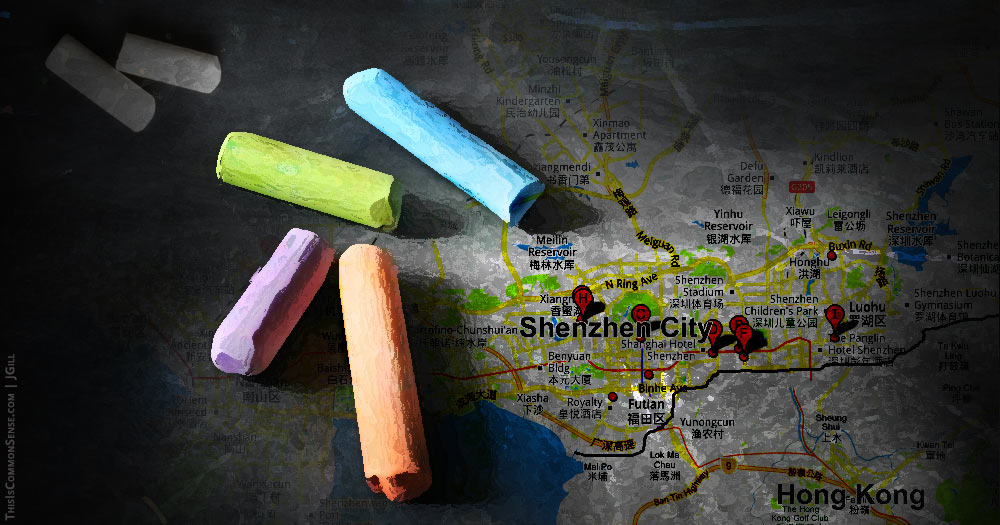
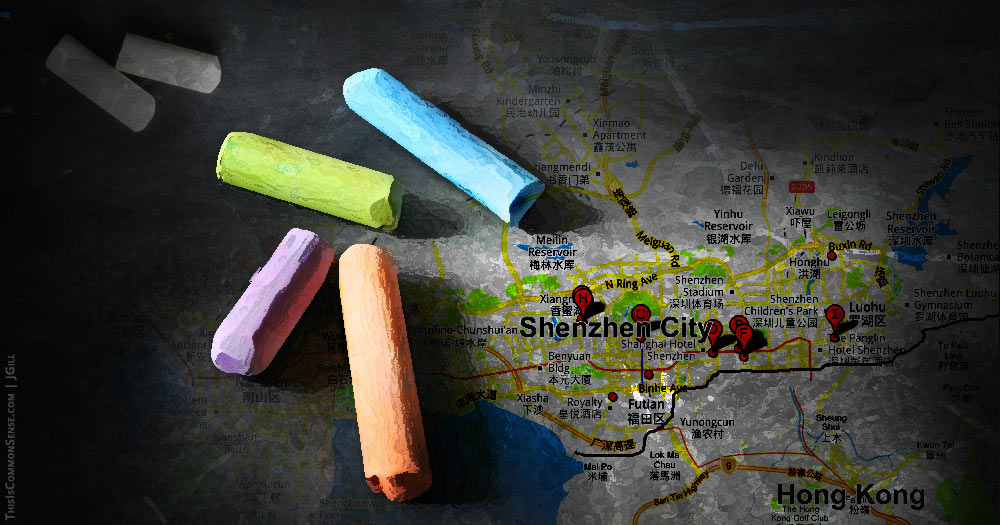
We remember the FTZ proposal because of its rise in popularity amongst academics and policy wonks in the 1980s and 1990s. But the notion is an old one. And in China, where they are called “special economic zones” (SEZs) — and it is this term that is catching on — they have been amazingly successful, the former fishing village of Shenzhen being the most obvious example.

What about America? Take a devastated region, like inner-city Chicago or Detroit,* and simply nullify the regulations and rules. (This probably would require federal enabling legislation on top of state leadership.) With the ensuing freedom and opportunity, entrepreneurs, established businesses and schools, teachers, community groups and activists could cook up new solutions to the oldest schooling problem there is:

actual education.

I’ve heard whispers of this Educational SEZ idea for some time now.

It is time for rational and quite public discussion.

And then the shouting.

This is Common Sense. I’m Paul Jacob.

 

* Of course, any area could work. The reason to focus on demonstrably failed educational regions is that such areas have lost hope, and thus the politically resistant are likely to give in and allow it.


Printable PDF


Categories
Accountability crime and punishment general freedom local leaders moral hazard nannyism national politics & policies privacy property rights responsibility too much government U.S. Constitution

The Minimal Use of a Finger

Drivers in Washington State have a new law to . . . swerve from?

“New distracted driving law starts Sunday, July 23,” the Washington State Department of Transportation (WSDOT) tweeted last week. “The law forbids,” Washingtonians were told,  “virtually all use of handheld gadgets such as phones, tablets, laptop computers and gaming devices while driving.”

The idea is to prevent accidents. Though distracted driving’s danger has been contested, texting while driving certainly seems a kind of crazy.  

Thankfully, it’s possible to talk “hands free.”

Which, it turns out, the new law does allow. Drivers may activate and de-activate hands-free devices (and apps) with the “minimal use of a finger.”

Eating and drinking while driving are also disallowed, but those are “secondary offenses,” which police are not allowed to pull you over for.

At this point, another meaning of “minimal use of a finger” may occur to some readers. What starts out as secondary offenses have been known to be upgraded, legally and practically, to primary offense status.

Does a shiver runs down your back?

Yet another rule! More fines!

More interactions with police.

And if all this doesn’t feel “police state-y” enough for you, there is argument in Seattle about whether pedestrians should be prohibited from “distracted walking.”

Yes, some are actually considering that.

I’m reminded of an argument against socialism: government-run enterprises tend to be run “ruthlessly and with special attention to prosecution (and overburdening) of the poor.” Why would anyone want such techniques writ society-wide, in every sector?

Meanwhile, we apparently must live and drive with more rules and more fines and more harassment.

This is Common Sense. I’m Paul Jacob.


Printable PDF


Categories
Accountability education and schooling folly responsibility

Only Make Believe

Problems can be solved. But for those lacking the merest clue how to solve a given problem . . . alternatives exist.

Books can be cooked to pretend the problem no longer exists. And perhaps to fool others.

A series of articles in the Washington Post highlights the effort to reduce the rate by which city schools suspend students for misbehavior. The good news? “D.C. Public Schools has reported a dramatic decline in suspensions at a time when school systems around the country have been under pressure to take a less punitive approach to discipline.”

Results? A whopping 40-percent decline.

The bad news?

A Post investigation found that “at least seven of the city’s 18 high schools have kicked students out of school for misbehaving without calling it a suspension and in some cases even marked them present.” In those schools, “most suspensions were not reported.”*

The Post further uncovered documentation showing that “DCPS officials knew students were being sent home without documentation at least as early as 2010.”

It brings to mind the recent scandal in Prince George’s County (Maryland) Public Schools, where a dramatic announcement that the county increased its student graduation rate faster than any other county . . . was followed by an investigation into grade tampering by school administration officials, which numerous teachers have alleged.

It is also reminscent of the systematic cheating on standardized tests in Atlanta — and across the nation.

Hiding the truth, cheating on tests, lying about results . . . not the actions of a system teaching kids a love of truth.

This is Common Sense. I’m Paul Jacob.

 

* Seven schools’ emails show that students spent a total of 406 days in suspension in January 2016. Officially recorded? Only 15 percent.


Printable PDF


Illustration based on a photo by Tod Baker

Categories
folly general freedom local leaders moral hazard national politics & policies responsibility

Syria & Sanity

President Trump has decided to end the CIA’s covert* program to arm and train moderate Syrian rebels battling the government of Bashar al-Assad,” the Washington Post first reported last week, immediately adding that it was “a move long sought by Russia.”

This insinuation that the policy change was simply a concession to Russia belies the recent history of U.S. involvement — and failure — in Syria.

President Barack Obama had intervened.

Very ineffectively.

“Calling” for regime change.

In 2012, Reuters disclosed that the president had signed “a secret* order authorizing U.S. support for rebels seeking to depose Syrian President Bashar al-Assad and his government.” In 2013, after accusing the Assad regime of using chemical weapons, Obama announced the U.S. would provide direct military aid to rebel groups.

But Obama’s execution seemed more designed to make it look like the U.S. was trying really hard than actually toppling Mr. Assad.**

This may have been a good thing, though, seeing that some of the best-organized rebel groups in Syria are aligned with al-Qaeda and ISIS.

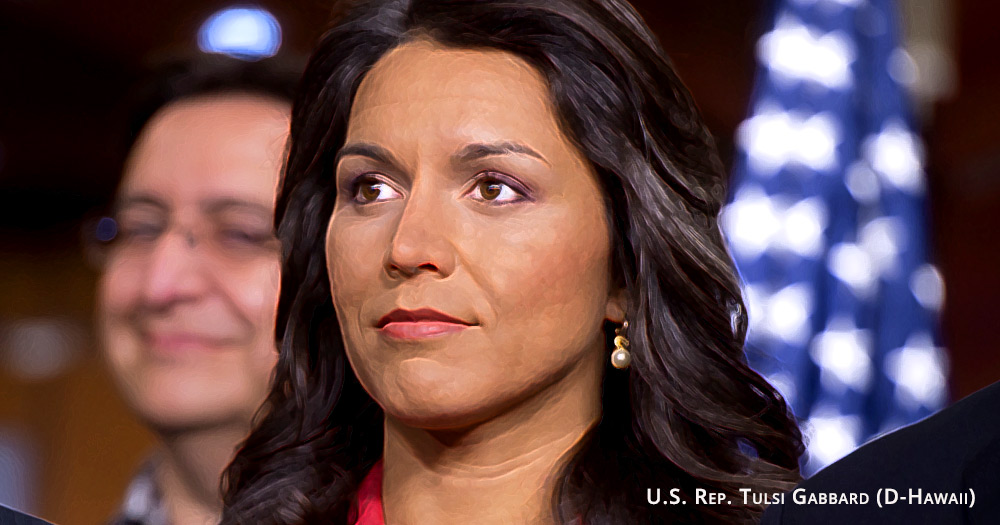
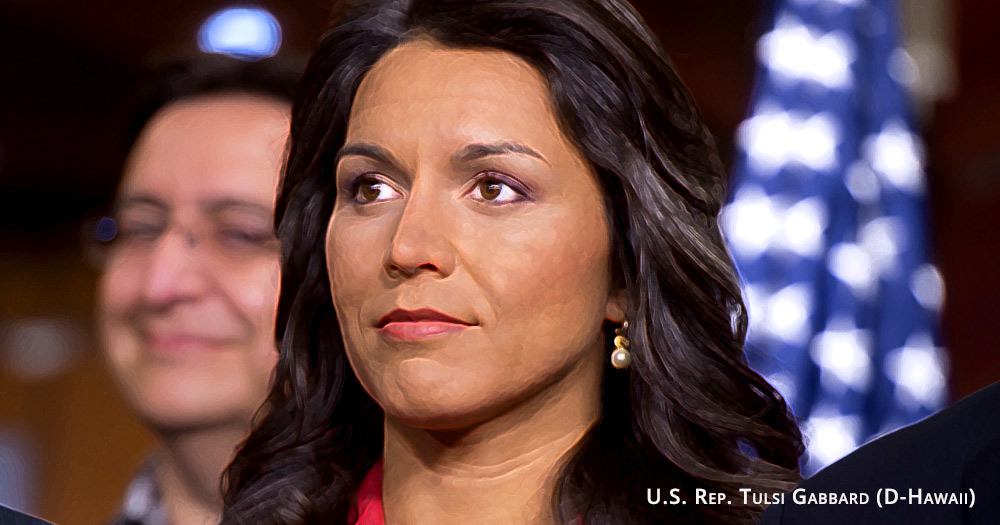
U.S. Rep. Tulsi Gabbard (D-Hawaii) has introduced “The Stop Arming Terrorists Act”*** to prevent American weaponry and material from being handed to terrorists. She cheered Trump’s move, explaining to Tucker Carlson on Fox News that “providing direct and indirect” aid to the “very same terrorist group that attacked us on 9/11” made no sense.

Also lacking in sense is the Obama Administrations claim that the congressional Authorization for the Use of Military Force, which specifically authorizes action against al-Qaeda, also covered the attack upon Assad’s regime. Surely arming rebel groups aligned with al-Qaeda couldn’t be justified under such an AUMF.

This is Common Sense. I’m Paul Jacob.
 

* It was not very covert. And not secret.

** In 2015, the Administration abandoned a separate $500 million program to put together a moderate rebel force opposed to both ISIS and the Syrian Government of Basher al-Assad after training only 4 or 5 soldiers. The BBC suggested much of the problem was indecisiveness, observing that, “US President Barack Obama never seemed to want a train-and-equip programme for Syrian rebels.”

*** The Senate bill is SB 532, introduced by Sen. Rand Paul (R-Ky).


Printable PDF


Categories
education and schooling free trade & free markets general freedom ideological culture media and media people national politics & policies privacy property rights responsibility too much government U.S. Constitution

According to Economics

“Everywhere you look, economics is despised,” writes Tom Woods in his Tuesday email letter.

You know what isn’t despised? A daily email letter.*

But I digress; back to economics.

“The gimme-free-stuff people hate it because they don’t like being told that there might be undesirable side effects from seizing other people’s things.”

Well, true enough. But turn it around: many people demand free stuff at least in part because they do not understand the bigger picture . . . which Mr. Woods ably provides in his daily podcast and on his weekly Contra Krugman podcast with economist Bob Murphy.

“Politicians hate it, because it imposes logical constraints on what political activity can accomplish.”

True, but, like many in the general public (from whence they come), politicians’ prior lack of economic knowledge also leads, in part, to their hubris.

“Even some folks in the business world hate it, because (1) they’d rather agitate for special privileges than hear the case for free markets, and (2) they’d rather have low interest rates than be warned about the causes of the business cycle.”

Yes, too true. But, again, business people are generally just people, most of whom haven’t even been exposed to something beyond boring and misleading textbook econ, if that. Mr. Woods knows that, since that’s what his mission is, exposing more folks to ideas beyond what he calls “the index card of allowable opinion.”

Well, I’m all about allowing the unallowable — if it’s right!

This is Common Sense. I’m Paul Jacob.
 

* Historian Woods is now doing what I’ve been doing since 1999, providing a daily common-sense thought that is short and easy-to-read and dropped into your email box every weekday. Mine goes up online at ThisIsCommonSense.com; I don’t see his on his website . . . but I do see a lot of books and podcasts!


Printable PDF


Categories
Accountability folly free trade & free markets general freedom moral hazard nannyism national politics & policies responsibility too much government U.S. Constitution

According to Logic

“Polling on every possible option confounds all logic,” or so writes Tiana Lowe about ObamaCare and its repeal, at National Review.

“Americans overwhelmingly dislike the individual mandate and prioritize lowering the cost of health care over all other health problems in the country,” Ms. Lowe elaborates, “but a majority of Americans do not want to roll back Obamacare’s guaranteed coverage of pre-existing conditions. Just a quarter of Americans are happy with Obamacare as-is, but a mere 12 percent favor the now-dead Senate health-care bill.”

Perceptively, she notes that the situation is as bad or worse for politicians, who want to “have their cake and eat it too.” The problem with politicians is pretty obvious: they lie because they are afraid of confronting the truth.

But it seems to me, on the evidence Lowe herself provides, Americans mostly have it right.

We want to lower costs of health care. Well, that should be the first priority. It should’ve been government’s highest priority, since government caused our predicament.

A huge supermajority is unhappy with ObamaCare, which makes sense. The Affordable Care Act is not affordable. But the Senate health-care bill was worse than ObamaCare, so folks were right to oppose it.

The only real issue? Many Americans don’t seem to understand that the “pre-existing coverage” mandate necessarily raises costs. Forcing insurance companies to pay for non-eventualities* requires them to pass those extras onto customers in general. Here is where leadership would be of help.

And where it has failed, our President most of all.

Lowe criticizes Trump for not pushing the Senate’s bill more effectively. I’m thankful for that.

This is Common Sense. I’m Paul Jacob.

 

* Insurers wager against unpredictable future illness or accident, not the sucker’s bet of paying for an existing predicament.


Printable PDF