Categories
Common Sense free trade & free markets government transparency insider corruption local leaders media and media people national politics & policies too much government

Never Trust a Politician

One of my more persistent critics on this site asked, last week, why I might believe anything the current president says — considering all the lies.

For reasons of decorum I won’t repeat his exact wording.

The odd thing about the comment was not the vulgarity, though (unfortunately). It was the idea that I was relying upon belief in Donald Trump’s veracity. The whole point of my commentary regarding Trump’s handling of trade and foreign policy was to read between some lines.

I try never to believe anything . . . er, everything . . . any politician says.

In Donald Trump’s case, though, there are lies and there are fictions and there are exaggerations. And corkers . . . and “negotiating gambits.” Separating the wheat from the chaff from the grindstone is not always easy.

Based not only on some of what he says, but also on results-thus-far from the EU negotiations, Trump’s idea of “fair trade” appears to be multilateral free trade. But he has chosen a bizarre method to get there: the threat of high-tariff protectionism — which in the past has led to multilateral protectionism, not free trade.

Trump sees everything as a contest. Trade isn’t a contest as such. It’s win-win. But trade negotiations are contests. And Trump’s game of chicken is dangerous.

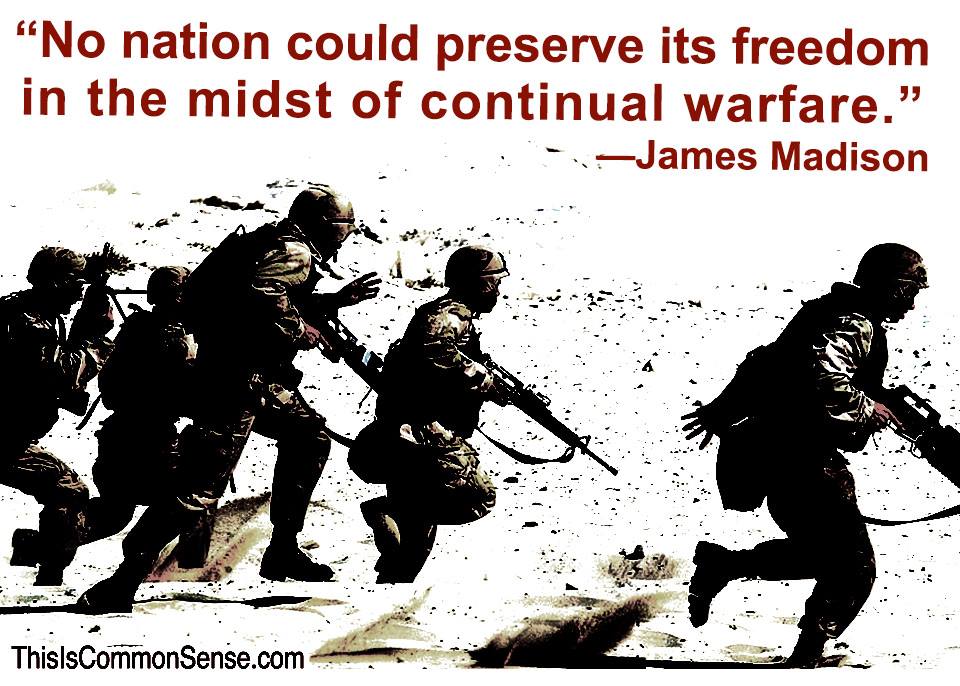
Regarding foreign policy generally, though, he seems to be playing a more familiar game: we can outspend everybody. The recent increase in Pentagon spending is bigger than Russia’s annual military budget!

So, who pays? Americans in

  1. higher taxes and 
  2. the consequences of massive debt, as well as in
  3. the higher prices from his tariffs.

That’s awfully daring of him. For us.

This is Common Sense. I’m Paul Jacob.


PDF for printing


Photo from Max Pixel


Categories
national politics & policies responsibility too much government

The Problem with Public Accounts

President Trump’s promise not to cut one dime from Social Security and Medicare doesn’t square with the fiscal cliff these programs are headed for. To save the system, benefits must be cut, taxes must be raised, or both.

Or else replace the system.

No wonder, then, that John Stossel insists we “Fix Social Security Before It Goes Broke,” and rescues a decades-old proposal: “private accounts,” which he says “would certainly pay retirees more than Social Security will ever pay.”

In Chile, where they have tried this, private accounts have worked out pretty well, contributing to the once-impoverished country’s rise to “the richest country in Latin America.” 

Had the United States adopted such a system, at Social Security’s inception, the amount of capital flowing into projects big and small would have not merely prevented the stagflation of the Seventies and brought us almost unimaginable wealth, it might have turned political eyes towards accountability, prudence and stability.

But, because Social Security was set up as a Pay As We Go system, we paid . . . and the money went.

It got so messed up that by the 1980s Ronald Reagan charged Alan Greenspan with “fixing” it. That “fix” mainly meant increasing taxation. The decades of revenue surge over outflow was spent by Congress for war and handouts. And now we’re reaching a repeat of the late 1970s’ Social Security insolvency.

Meanwhile, Chilean leftists “hold street protests against private accounts,” Stosssel reminds us. “They’re angry because capitalists get a slice of the pie.”

Back in the USA, Democrats demand that more benefits be wrung from Social Security. Are they dead set on proving why socialism doesn’t work?

This is Common Sense. I’m Paul Jacob.


PDF for printing


Categories
free trade & free markets government transparency media and media people national politics & policies too much government

Most Outrageous Negotiation Strategy Yet

The best defense of Donald Trump’s presidency, so far? He is smarter than the rest of us, and knows how to negotiate with bad guys and insider players. We have to discount what he is saying, the theory goes, because he is not telling truths . . . obviously. 

He is negotiating.

Take nothing at face value, including Trump’s professed beliefs.

Protectionism, for example. Trump has long been against NAFTA and the modern version of “free trade.”* But, as I noted in late July, Trump does not seem to be demanding managed trade, or high tariffs as a means to protect American producers, or even tariffs as a means to increase government revenue. He appears — at least some of the time — to be using tariffs as a way to bargain other countries to reduce their tariffs.

This method has not worked in the past.

But is Trump different enough a politician to pull off a “madman” strategy to get leaders in other countries to do the right thing and reduce their tariff and regulatory burdens on their own countries?

A long shot — and several sectors of American business are being hurt right now in this “negotiating” (threat) phase of Trump’s outrageous gambit.

Another area where one might express such hope for a master-negotiator president is in reining back the Pentagon. In the run-up to November 2016, Trump sure seemed defiant of the neo-conservative/neo-“liberal”/center-left establishment on foreign policy.

But now he just signed a huge increase in the Pentagon budget: an $82 billion increase.

Is Trump’s plan to bring big-spending military-industrial complex lobbyists to heal by first giving them what they want?

That. Won’t. Work. 

This is Common Sense. I’m Paul Jacob.


* Post-WWII trade policy has consistently defended treaty-based global trade, but with heavy elements of protective tariffs, regulations and subsidies, making the whole thing look less like Free Trade and more like Mis-Managed Trade.

PDF for printing


Categories
Accountability free trade & free markets general freedom ideological culture media and media people national politics & policies

Driven to Sanity

Having the federal government centrally plan the economy is “a huge waste of everyone’s time and resources” states an amazingly common-sensical Washington Post editorial.

“In a well-functioning modern economy, businesses are generally free to buy and sell the things they need, absent a compelling public need for government intervention,” the editors further expound.

Hmmm, a capitol-town rag that regularly extols the virtues of big government regulation of everything now notices the importance of freedom.

Of avoiding, especially, a system where bureaucrats and other government bullies micromanage commerce.

“Were we directed from Washington when to sow and when to reap,” Thomas Jefferson wrote long ago, “we should all want for bread.”

And aluminum.

“Worse,” the Post argues, the system “also politicizes — and, indeed, corrupts — economic life. Companies that feel threatened by any particular tariff exclusion request have the right to present their objections to the Commerce Department, meaning that each decision represents a high-stakes competition for federal favor between at least two companies with every incentive to influence it through lobbying, campaign contributions, you name it.”

Correct. It seems we may have Donald Trump to thank for opening the Post’s eyes. 

“[T]he way to get ahead in Mr. Trump’s economy,” those editors conclude, “is not making better products for the people, but making better connections in Washington.”

Tragically true.

But, sadly, true long before Mr. Trump entered the White House. No new powers have been given to Trump. 

Let’s drain the stinking Washington swamp. Let’s end the corrupting influence of a regulatory state run amok. Let’s limit the power of the people wielding political power.

How?

Free the markets!

This is Common Sense. I’m Paul Jacob.


PDF for printing


Categories
folly government transparency national politics & policies too much government

It’s Only Money

“If we can put a man on the moon,” went the old 1970s saw, we can do . . . well, fill in the blank.

Anything!

Man, can that “anything” get really expensive. And when promoters of big government drive the program, anything quickly serves as a first-stage rocket to everything.

During the 2016 campaign, a Democratic Party activist knocked on my door to express confidence that Democrats would provide greater healthcare benefits. “Can we afford that?” I asked.

The question caught her off-guard, but after reflecting on the affordability for a brief moment on my step, she decided, what the heck, surely the great “we” can swing it.

Vermont Senator Bernie Sanders, the conscience of the Democratic Party (that he refuses to join), likewise ponders healthcare. Sans cost, again, focusing exclusively on bestowing benefits. 

Sanders has introduced legislation mandating that the federal government provide Medicare for All.

Fortunately, the folks at the Mercatus Center at George Mason University are not so arithmetic-averse, calculating the price tag for the socialist senator’s bill to be a whopping $32.6 trillion (with a “t”) over ten years. 

In fiscal 2019, the U.S. Government plans to spend $4.4 trillion, borrowing a trillion dollars of that to keep the federal spigots spewing cash. So, Bernie suggests nearly doubling annual spending, placing a giant $3.3 trillion cherry on top of the current fiscal pig-out. 

And who in Washington has any credibility left to argue against the socialist urging evermore deficit spending on top of massive debt and gargantuan liabilities? 

President Trump? Republicans in Congress? The very architects of annual trillion-dollar deficits for the foreseeable future?

 That “lunacy” refers to the moon? Mere coincidence.

This is Common Sense. I’m Paul Jacob.


PDF for printing


Categories
Common Sense First Amendment rights national politics & policies Second Amendment rights

Free Designs

The relationship between the First and Second Amendments is closer than commonly believed.

This is especially clear in the 3D gun printing story, the subject of yesterday’s Common Sense, “Progressive Designs.” As I finished the copy, a news story broke: U.S. District Judge Robert Lasnik “muzzled Defense Distributed with a court order,” as Declan McCullagh puts it. 

And then, as McCullagh goes on, a mirror site appeared. Though Cody Wilson, the man behind Defense Distributed, immediately took his plans offline, “the Calguns Foundation, the Firearms Policy Coalition, and other civil rights groups” published plans for “AR-15, AR-10, Ruger 10-22, Beretta 92FS, and other firearms” on their sites.

This made my footnote especially relevant, for it was there that I noted that “plans like this have been available on the not-exactly-easy-to-access Dark Web for some time.” And now Cody Wilson’s precise “freely downloadable computer-aided design (CAD) files,” though “dark” on his site, are bright elsewhere.

McCullagh admits that though it is certainly “possible that Defense Distributed may lose this legal skirmish and be prevented from returning its instructions to the DEFCAD site,” since such plans are now everywhere, and not easily stoppable, constitutionally, the “Second Amendment, it turns out, is protected by the First.”

Which is, of course, natural enough — for the Second Amendment’s protections of self-defense has held power-lusting politicians at bay, keeping Americans freer than citizens anywhere else. What other country has better free speech protections?

All freedoms help each other, reinforce each other.

This is Common Sense. I’m Paul Jacob.


PDF for printing


Categories
Accountability First Amendment rights general freedom ideological culture media and media people moral hazard nannyism national politics & policies Regulating Protest too much government

Dbl Standard Destruction Co.

Addison Barnes has just won a court case against Liberty High School of Hillsboro, Oregon. The court ruled that the school acted wrongfully when, early this year, it suspended him for wearing a “disruptive” T-shirt heralding a “Donald J. Trump Border Wall Construction Co.” 

Addison was awarded $25,000 for legal expenses, and the school has apologized to him, sort of, for the suspension.

“I brought this case to stand up for myself and other students who might be afraid to express their right-of-center views,” Addison says. “Everyone knows that if a student wears an anti-Trump shirt to school, the teachers won’t think twice about it. But when I wore a pro-Trump shirt, I got suspended. That’s not right.”

No, it’s not.

The outcome is imperfect. The apology offered by Liberty High does not acknowledge the glaring injustice of the suspension. It simply asserts that the school got the “balancing act” wrong between making students feel welcome and making them feel safe. (Because it is “unsafe” per se for kids to peacefully express political disagreements?) Nor was the teacher who imposed the suspension obliged to apologize personally.

Ideally, all schools would be privately owned, privately run. Then they could openly promulgate whatever silly policies they wished about what students may display on T-shirts, if anything. Market pressures would tend to discourage indefensible rules. 

But today’s schooling system is not ideal.

Have you noticed?

Meantime, let’s hope that the court’s decision will discourage other schools from imposing similar double standards.

This is Common Sense. I’m Paul Jacob.


PDF for printing


Categories
Accountability free trade & free markets general freedom national politics & policies property rights responsibility too much government U.S. Constitution

The Trump Trade Enigma

President Donald J. Trump, former “reality TV” star, often seems merely to skirt reality.

“Our trade deficit ballooned to $817 billion,” President Trump exaggerated to the “men and women of U.S. Steel” last week. 

“Think of that. We lost $817 billion a year over the last number of years in trade,” he went on. 

“In other words, if we didn’t trade, we’d save a hell of a lot of money.”

This is the sort of dopey bunk a drunk at a bar might say, after the fourth shot had obliterated any remnant of economic understanding from his synapses.

But the president said this in Granite City, Illinois, in front of cameras, a live mic, and a cheering crowd.

And yet, as I wrote yesterday at Townhall, Donald Trump is now explicitly aiming at a worldwide free trade policy, negotiating to break down trade barriers and get rid of subsidies on . . . well, “non-automobile industrial goods.”

I’m almost afraid to ask him why not all industrial (and, for that matter, agricultural) products. Could one expect a coherent answer from someone who does not understand that an $817 billion “trade deficit” means that we, the consumers of the United States of America, got stuff from each billion spent? Each dollar?

And yet, if he pulls off worldwide free trade agreements — for whatever reason — he may almost be worth the attention that Bussa Krishna, of the southern state of Telangana, India, gives him.

The man set up a shrine to worship Donald Trump.

I will never do the same. But I’d tip my hat to almost anyone who fosters trade, and the peace and progress trade brings to the world.

This is Common Sense. I’m Paul Jacob.


PDF for printing


Categories
free trade & free markets national politics & policies responsibility too much government

Trump’s Biggest Secret?

“This trade war is cutting the legs out from under farmers,” says Senator Ben Sasse (R-Neb.), “and White House’s ‘plan’ is to spend $12 billion on gold crutches.”

Referring to Donald Trump’s tariff brinksmanship with China, Sasse is decrying Trump’s request to Congress for compensatory farm subsidies. Sasse insists that “America’s farmers don’t want to be paid to lose” — but regardless of what farmers want, we should want free trade.

Tariffs are taxes. Consumers ultimately pay for them all.

Trump’s requested “crutches” is just another example of a bad government program leading to another, “compensatory” bad government program.

Old story. Too familiar.

The senator is right to be alarmed by the Trump “administration’s tariffs and bailouts,” for the president is playing a most dangerous game. Trade wars are not mutually beneficial. Trade is.  

Of course, if the ultimate result is an end to all trade barriers — as Trump himself demanded regarding the EU — then . . . could it be worth it?

One thing’s for certain: the history of protectionist brinksmanship is not pretty. Sasse himself predicts that Trump’s tariff hikes “aren’t going to make America great again, they’re just going to make it 1929 again.”

Sasse is referring to the passing of the Smoot-Hawley Tariff Act of 1929, which led not only to a spooked Wall Street, but to bank failures and retaliatory protectionism from other countries. 

And a worldwide depression. And world war.

But is Trump really a secret free trader,* using tariffs in a game of chicken with trading partners?

This just in, from The Guardian:Trump and EU officials agree to work toward ‘zero tariff’ deal.”

Stay tuned.

This is Common Sense. I’m Paul Jacob.


* We could be forgiven for thinking him an old-fashioned protectionist, considering his repeated insistence that “Tariffs are the greatest!” But with Trump, maybe we should never take him literally.

PDF for printing


Photo by Carlos Martinez


Categories
Accountability crime and punishment folly free trade & free markets general freedom local leaders nannyism national politics & policies responsibility too much government

Kick the Addiction, Save Money

The political case for the War on Drugs has always been intuitive. “Drugs are bad” has trumped practical concerns. But the actual, responsible case for the political crusade has depended upon some concept of “social cost.”

Now that marijuana is being legalized state by state, the case against the greater War on Drugs is being taken seriously — enough to rethink all varieties of costs. Indeed, many now see the opioid epidemic as being driven, in part, by the War on Drugs, and not just as an excuse for a stronger crackdown.

Nevertheless, coming to some accounting — especially “social cost” accounting — remains difficult. This is especially true so long as its effects on freedom and the rule of law do not get figured in.

Somewhat surprisingly, even the budgetary effects of legalization have proven a bit tricky.

So it is welcome to read Harvard economist Jeffrey Miron’s study of marijuana legalization as it has occurred in the states of Washington, Oregon, and Colorado. He compares results of legalization with the predictions he had made eight years ago, in a previous Cato Institute study. It turns out that while tax revenues are far greater than expected, law enforcement costs have not gone down.

“Early experience suggests that governments will reallocate rather than reduce those expenditures,” Miron writes. “That reallocation may be beneficial, but it does not have a direct effect on the budget deficit.”

On a federal level, though, we might expect greater savings. How? We could shut down whole bureaus.

Yet, achieving such savings would require progress on Washington’s biggest addiction:  spending.

This is Common Sense. I’m Paul Jacob.


Studies cited:

Jeffrey Miron, “The Budgetary Effects of Ending Drug Prohibition,” Cato Tax & Budget Bulletin, Number 83, July 23, 2018.

Jeffrey A. Miron and Katherine Waldock, “The Budgetary Impact of Ending Drug Prohibition,” Cato Institute white paper, September 27, 2010.

PDF for printing