Categories
crime and punishment ideological culture national politics & policies

Our Leaders’ Favored Anarchy

“In a sane democracy,” I wrote this weekend at Townhall.com, “the side with the most violent nutcases loses.”

Too hopeful?

Independent video journalist Tim Pool made a similar point yesterday, covering Antifa versus Proud Boys fights in New York, as well as Antifa taking over the downtown streets of Portland, Oregon. He cautions those who defend themselves from going too far, for the media will simply make hay of violence against Antifa, ignoring Antifa provocations.

“Antifa are the ones who are showing up to marches that are peaceful and starting the violence — and then everyone complains there’s violence,” Mr. Pool explains.*

Reasonable question: who is encouraging leftist mobs?

Perhaps two former Obama Administration officials, Eric Holder and Hillary Clinton. 

“When they go low, we kick them,” Holder said last week. “That’s what the new Democratic Party is about.”

Mrs. Clinton insisted that “you cannot be civil with a political party that wants to destroy what you stand for.”

Michelle Obama provided a civilized correction: “Fear is not a proper motivator,” she said on the Today show. “Do you want them afraid of their neighbors? Do you want them angry? Do you want them vengeful?”

Journalist Sam Francis had a term for what seems to be on the rise: anarcho-tyranny. Government leaders let mob violence go unpunished, but crack down hard on peaceful citizens for infractions of onerous regulations. 

In Portland, this weekend, the mayor applauded a police decision to stand down, letting Antifa take over the streets.

And so the violence ramps up.

As the President likes to say: “Not good.”

This is Common Sense. I’m Paul Jacob.


* “Well, if Antifa doesn’t show up,” Pool went on, “I assure you, the Proud Boys and Patriot Prayer will walk in a big circle and then break up and go find beers somewhere.”

PDF for printing


Categories
crime and punishment media and media people moral hazard national politics & policies

Not an Accusation

Brett Kavanaugh’s weekend confirmation as an Associate Justice of the U.S. Supreme Court, by a 50-48 Senate vote, didn’t settle the allegations of his past sexual conduct in a judicial manner.

Wild disagreement remains.

Many on the Left continue to believe our newest justice repeatedly lied under oath, having abused at least three women when in high school and college. Many on the Right will view all “three” of these female accusers as political players or pawns, who probably should be punished in some way for lying about such a fine man.

While I doubt we can know for certain about a number of the accusations, there should be less doubt on the exact number of accusations. Which were not three but only two.

“I cannot specifically say that he [Brett Kavanaugh] was one of the ones who assaulted me,” Julie Swetnick told NBC News. But she went on to offer a maybe, a could have, some might haves, an I don’t know . . . and more, none of which amounted to an accusation. What she offered was a chain of suppositions: “Because if Brett Kavanaugh was one of those people that did this to me, there is no way in the world that he should go scot-free on this and that he should be on the Supreme Court. . . . If he does, I, uh — there’s no justice in the world.”

As long as this sort of nonsense is treated seriously in the media and among partisans, there can, indeed, be no justice in the world.

This is Common Sense. I’m Paul Jacob.


PDF for printing


Categories
free trade & free markets national politics & policies too much government

More of the Same?

For those who hated NAFTA, and have supported Donald Trump in his complaints about “the very bad deal” that the North American Free Trade Agreement [allegedly] has been, I ask: what was bad about NAFTA that isn’t in Donald Trump’s new version, the United States-Mexico-Canada Agreement?

Actual question. I am not in the least bit interested in gotchas, here. I am willing to celebrate USMCA when (a) I can make sense of it and (b) it proves not just more of the same.

The thing I liked best about NAFTA was that it had “Free Trade” in the title. I like free trade. Trade is good; freedom is good. It is not generally bad to trade with Mexico and Canada — for Mexicans, Canadians, and Americans. I simply have trouble believing that politicians and their aides (along with overly-friendly lobbyists) know better than market competition what the terms of those zillions of deals should be.

But I freely admit, what I didn’t like about NAFTA was that there was more “free trade” in the title than in the agreement itself.

NAFTA was managed trade. 

As far as I can make out, so is USMCA.

Oddly, I just heard two of the three Daily Wire guys* praising USMCA for setting quotas on how much of what can be produced where.

Quotas and mandates and the like are not free trade.

“Managed trade” is just another way of saying “protectionism.” Savvy politicians don’t even like calling it “managed trade.” They call it “fair trade.” 

Free trade is fair enough. Politicians’ “fair trade” isn’t free enough.

This is Common Sense. I’m Paul Jacob.


* Andrew Klavan and Michael Knowles, recent podcasts: dailywire.com.

PDF for printing


Illustration: Dutch free traders in Harbor Scene by Abraham Storck  (1644–1708)


Categories
government transparency ideological culture national politics & policies

Last Week’s Least Credible Answer

So, who was lying, last week, at America’s big show trial — er, Senate Judiciary Committee hearing?

Professor Christine Blasey Ford or Judge Brett Kavanaugh?

Many Americans took sides. I cannot. Both said believable as well as scarcely believable things, but I’m with that minority who admits not to know what to believe.

Except for one thing: I am pretty sure I know who told the biggest whopper.

Senator Dianne Feinstein.

Democratic senators, especially Kamala Harris (D-Calif.), repeatedly pressured Kavanaugh to himself demand an FBI investigation to clear his name. It all seemed Orwellian: to make the accused insist on an investigation into allegations he had denied. It was also odd, considering, as Kavanaugh reminded his inquisitors, that he had repeatedly accepted any investigation the committee desired.

They just wanted him to demand it.

All of which is nuts, since the Committee possesses subpeona power, and can do an investigation itself.

But the weirdest aspect? The FBI had already checked Kavanaugh’s background, had performed an official investigation. But since Senator Feinstein had not tipped the agency off to Professor Ford’s confidential accusation — had effectively sat on the letter — the FBI hadn’t covered that precise avenue of inquiry.

And then, after the hearings were nearly over . . . the leak. And the bouhaha.

When asked whether she leaked Ford’s epistle, Feinstein said No. When asked if her staff did, she said she . . . hadn’t asked them.

Oh, come on.

Not as believable as either Ford or Kavanaugh.

This is Common Sense. I’m Paul Jacob.


PDF for printing


Categories
general freedom ideological culture moral hazard nannyism national politics & policies too much government

An Evil Ism

With “democratic socialism” again on the rise, a refresher course in history seems apt: socialism has demonstrated the strong tendency to end up in totalitarian tyranny, poverty, and genocide.

As I mentioned on Monday, Reason’s Nick Gillespie suspects that this response is not very convincing to people tempted by socialism. But really, why not? What about a history of horror could be appealing?

Which is why the question “Do Socialists Mean Well?” as answered by Grant Babcock, might help. Babcock answers in the negative.* “Socialism is not ultimately an end but a means. And as a means, socialism is evil.”

With an evil means, one’s chosen end is irrelevant, because of other results. “If I told you I wanted to end homelessness, you might say I had good intentions,” Babcock explains. But if he confessed to seek that end “by conscripting the homeless into the army . . . [n]ot only should you say I have bad intentions, you shouldn’t give me any moral credit for saying I want to end homelessness.”

True. But Babcock has to engage in his extended argument about means because, for purposes of his essay, anyway, he began with the premise that while fascists are evil because they seek directly to harm some people, socialists do not.

Uh, really? Most socialists make much of taking from “the rich,” however they define the rich — as “the one percent” or “the privileged,” etc.

Call it expropriation; call it theft: that’s a lot of anger and ill will directed to one group of people.

In that way, the appeal of socialism is too much like the appeal of fascism.

This is Common Sense. I’m Paul Jacob.


* Babcock, by the way, denies the label “socialist” to social democrats who call themselves “democratic socialists” — by definition. On this matter, see “Bernie’s Slippery Definition of Democratic Socialism” and “Is Denmark Socialist?” on this site.

PDF for printing


Categories
general freedom national politics & policies term limits

Wise American Tradition

On Sunday, former Pres. Barack Obama acknowledged — in the breach — the “wise American tradition of ex-presidents gracefully exiting the political stage and making room for new voices and new ideas.” 

The former president’s talk at the University of Illinois made big news in large part because it was a direct attack on the current president.

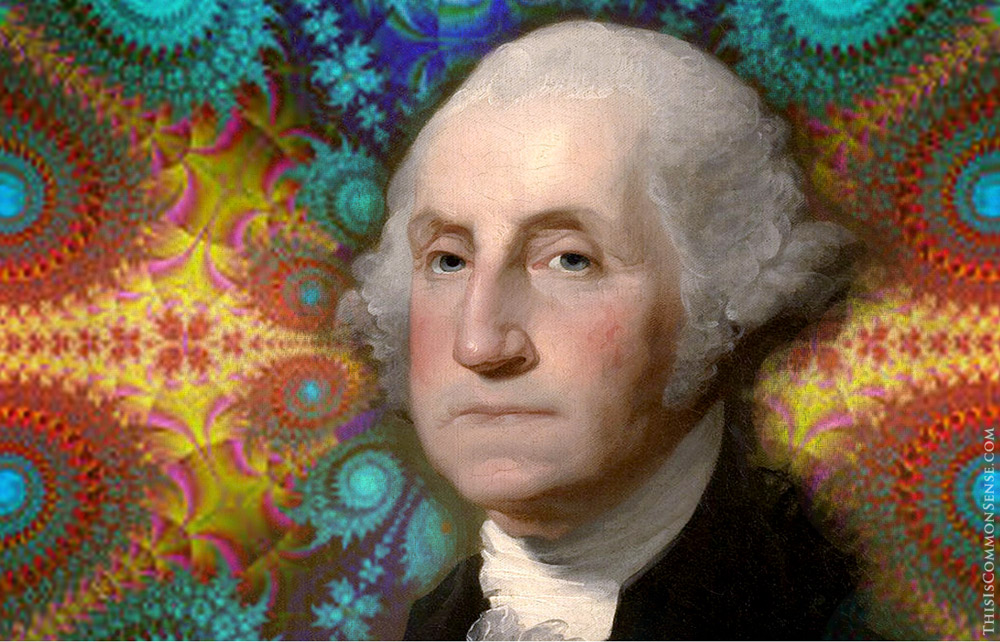
“We have our first president, George Washington, to thank for setting that example,” Mr. Obama explained to the students. “After he led the colonies to victory, as General Washington, there were no constraints on him, really. He was practically a god to those who had followed him into battle. There was no Constitution.  There were no democratic norms that guided what he should or could do. And he could have made himself all-powerful; he could have made himself potentially president for life. Instead, he resigned as commander-in-chief and moved back to his country estate.”

Noting that “six years later” Washington was elected president, Obama added, “But after two terms, he resigned again and rode off into the sunset.”

The two-term limit, constitutionally imposed on modern presidents, was established as a tradition when self-imposed by the man known as the father of our country.

“The point Washington made, the point that is essential to American democracy, is that in a government of, and by and for the people, there should be no permanent ruling class,” the former president concluded, “. . . only citizens, who through their elected and temporary representatives determine our course and determine our character.”

On that, Americans across the political spectrum can agree. 

It’s called term limits.

This is Common Sense. I’m Paul Jacob.


PDF for printing


Illustration: detail from “The Resignation of General Washington, December 23, 1783,” oil on canvas, by the American artist John Trumbull.


Categories
Accountability ideological culture moral hazard national politics & policies term limits

The Self-Neutered Congress

Last week, the Senate Judiciary Committee again demonstrated why Congress’s approval ratings bob about in our toilet bowls. Amid the spectacle of Judge Brett Kavanaugh’s confirmation hearings, one senator spoke not about judicial philosophy, but political reality.

“What’s the hysteria coming from?” asked Sen. Ben Sasse (R-Neb.), noting the circus-like atmosphere. His answer? The Supreme Court “is increasingly a substitute political battleground,” because “the Congress has decided to self-neuter.”

Blunt assessment.

“In our system, the legislative branch is supposed to be the center of our politics,” Sasse argued, adding dejectedly, “It’s not.”

Why not? 

“What we mostly do around this body is not pass laws,” he offered. “What we mostly do is decide to give permission to the secretary or administrator of bureaucracy X, Y, or Z to make law-like regulations.” 

“More and more legislative authority is delegated to the executive branch every year. Both parties do it,” explained the senator. “The legislature is impotent, the legislature is weak, and most people here want their jobs more than they really want to do legislative work . . .”

Sasse continued, “The real reason, at the end of the day, that this institution punts most of its power to executive branch agencies is because it’s a convenient way for legislators to be able to avoid taking responsibility for controversial and often unpopular decisions.”

Better to blame the bureaucracy.

“If your biggest long-term thought around here is about your own incumbency,” he said dismissively, “then actually giving your power away is a pretty good strategy.”

But “when Congress neuters itself,” warns the Cornhusker State solon, “it means the people are cut out of the process.”

A powerful case for term limits.

This is Common Sense. I’m Paul Jacob.


PDF for printing


Categories
folly ideological culture media and media people national politics & policies

Sometimes a Great Moment

“This is about the closest I’ll probably ever have in my life to an ‘I am Spartacus’ moment,” Corey Anthony Booker said, referring, during last week’s Senate hearings, to his “leakage” of confidential emails from Supreme Court nominee Brett Michael Kavanaugh.

How the mighty have fallen. Senator Booker, when mayor of Newark, seemed an up-and-comer.

Now? A down-and-goer?

“I come from a long line, as all of us do as Americans, of understanding what that kind of civil disobedience is, and I understand the consequences.” It was almost a Br’er Rabbit Briar Patch Moment, performatively suggesting, “whatever you do, don’t censure me.”*

The moment Senator Booker was referring to was from Stanley Kubrick’s Spartacus, where a group of slaves all claim to be Spartacus, the leader of the rebelling slaves. Booker mostly missed the point of a great movie scene. 

That wasn’t all he missed. The emails he leaked (a.) had in fact been previously released to the public; (b.) he knew this; and (c.) they somehow failed to provide that killer proof of Kavanaugh’s racist love of racial profiling.

Funny, in a cringe-inducing sort of way, as when someone tries to tell a mildly risqué joke at a church social . . . and flubs it.

Booker was not the only one to make a fool of himself at the Senate’s Supreme Court nomination hearings. Though Kavanaugh doesn’t seem so scary, Democrats have gone off the beam, even so far as to engage in ululations of protest.

Why?

I have several theories. But maybe it’s just that they are out of power.

It’s especially hard being out of power when power is what you are all about.

This is Common Sense. I’m Paul Jacob.


* Being seen as the underdog is so persuasive that some will put themselves under a dog.

PDF for printing


Categories
Accountability general freedom ideological culture national politics & policies Popular too much government

Pulling It Off

Give democratic socialism a chance? 

So says Dr. Cornel West, the “provocative democratic intellectual” who serves as one of eight honorary co-chairs of the Democratic Socialists of America. 

This accomplished Professor of the Practice of Public Philosophy at Harvard University, and Professor Emeritus at Princeton, explained to Fox News host Tucker Carlson that socialism’s “fundamental commitment is to the dignity of ordinary people and to make sure they can lead lives of decency.”

“What happened in Venezuela?” Carlson asked West. “They called that democratic socialism. But they don’t have toilet paper and it’s less equal than ever.”

“But part of the problem is though, brother,” the professor responded, “that any time there [have] been attempts by ordinary people to engage in self-determination, they can get crushed by external nations. Look at U.S. policies toward Venezuela [which have] been very, very ugly — Nicaragua in the same way.”

West offered nary a specific to his charge, but was handy stating his conclusion. “So, we have never had a chance to really pull it off,” the “it” being socialism. 

“So it’s only been a movement so far.”*

How convenient.

West implicitly acknowledges that those ruling Venezuela and Nicaragua are practicing socialism. But he won’t hold them or the -ism responsible for the economic collapse, the hunger, the exodus of millions of very desperate “ordinary” citizens, the arbitrary arrests, use of torture and murder of innocent citizens. 

Dr. West, a follow-up question: Just what specific U.S. policy triggered these socialists to murder and torture their own people?

This is Common Sense. I’m Paul Jacob.


* Dr. West also announced that socialism “is not an ‘ism,’ brother.” I think the professor needs to take a course in ism-ology.

PDF for printing


Photo by Gage Skidmore

Categories
ideological culture media and media people national politics & policies

Ooga Booga Time

Two tribes —

On the left, we see both iconoclasm (razing of Confederate memorial statuary) and a fixation on surface meaning (defending the actions of antifa by fixating on its name: “it just means ‘anti-fascism’!). 

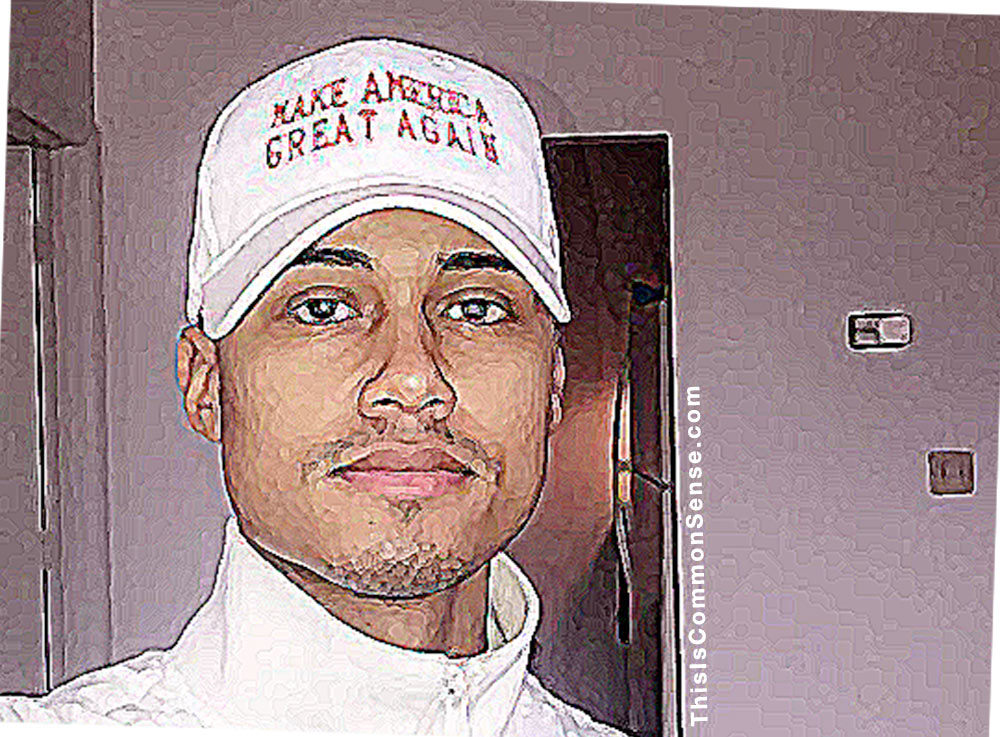
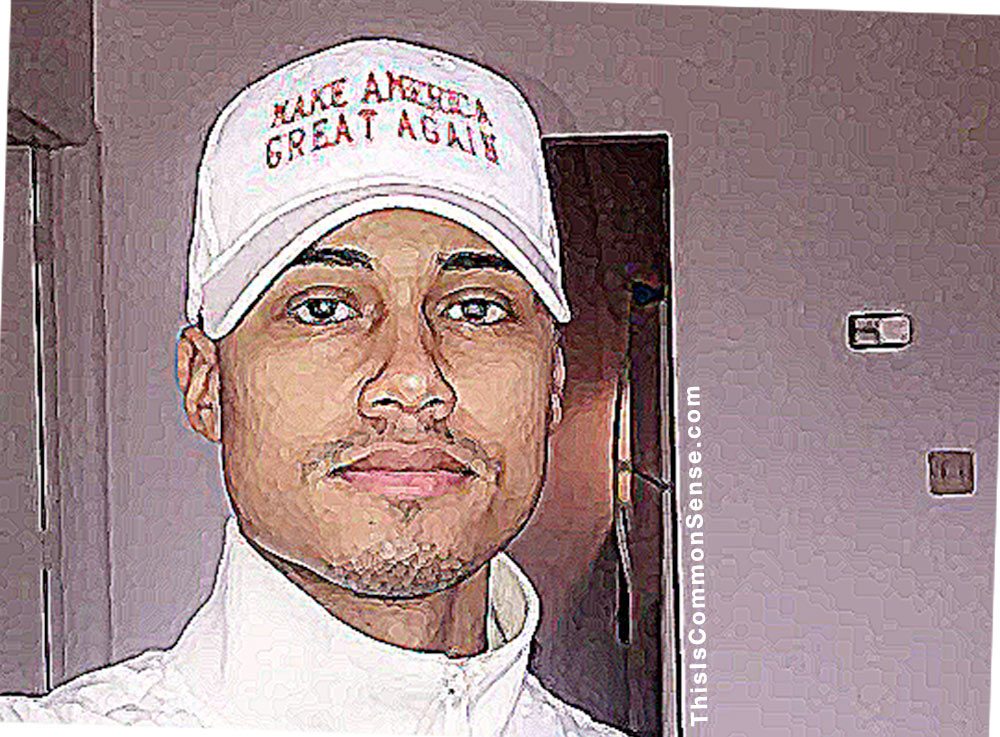
On the right, rallying around the flag and MAGA hats has reached fever heat.

— Welcome to Ooga Booga Time.

In other words: tribalism.

Consider the upcoming movie about Neil Armstrong, the first man on the Moon. The makers of this movie have made a point of not depicting the raising of the Stars and Stripes above the dust of Mare Tranquillitatis.

Why? Because, says the Canadian actor who plays the part of astronaut Armstrong, the filmmakers wished to present “Armstrong’s success as a ‘human achievement’ rather than a patriotic American victory.”

But it was, factually, very much a Cold War victory. 

What the filmmakers are doing is rewriting history to conform to their cosmopolitan, internationalist tribal mindset.* 

Nothing new, of course — Hollywood has been a propaganda mill for a very long time. Once it aligned itself with Washington, D.C. Not any more. 

Now, apparently, even depicting a central bit of traditional American symbolism in the history being filmed is so stylistically, ceremonially offensive that actors and directors and cinematographers avert . . . our eyes.

“One thing is needful,” philosopher Friedrich Nietzsche wrote. “To add style to one’s character.” Maybe. But when it comes to politics what we need — in Hollywood and Washington and Anytown, USA — is less attention to symbolism. To style.

And more on substance. And truth.

This is Common Sense. I’m Paul Jacob.


* And, perhaps, to appease the propaganda-minded censors of Chinese government. That’s Ben Shapiro’s take.

PDF for printing