Categories
Accountability government transparency incumbents initiative, referendum, and recall local leaders nannyism political challengers Regulating Protest term limits too much government

Strange It Is

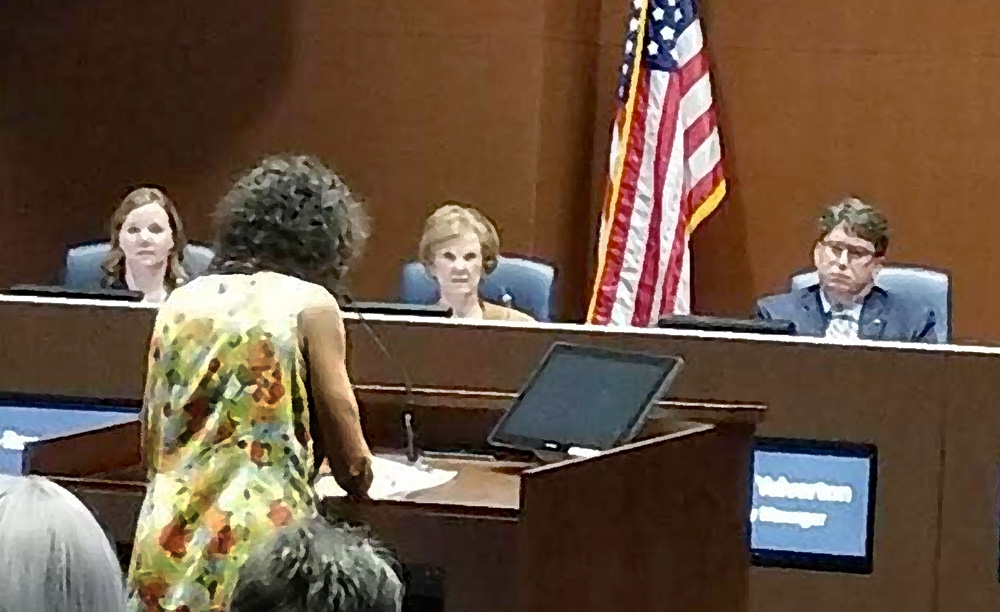
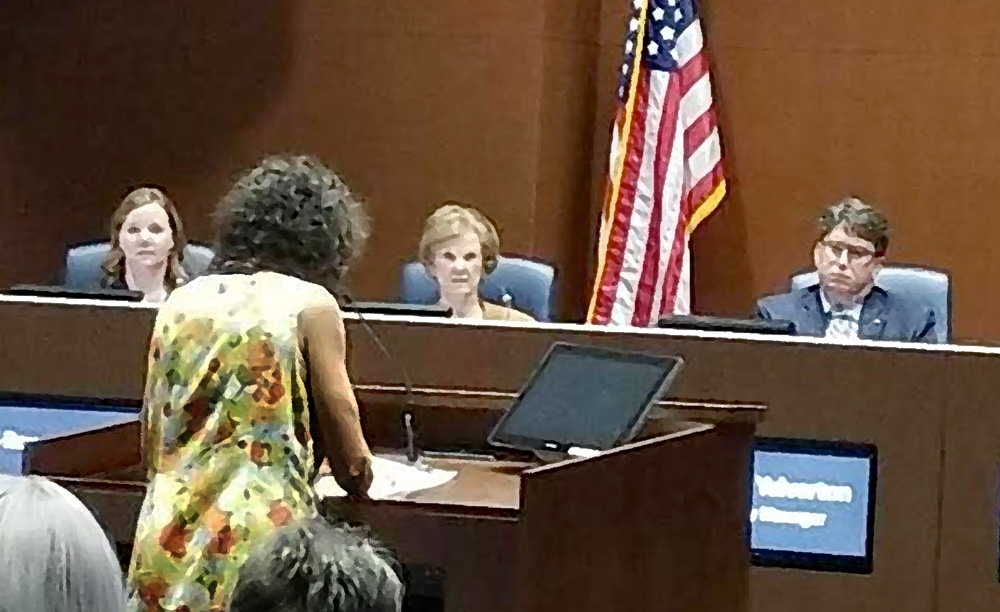
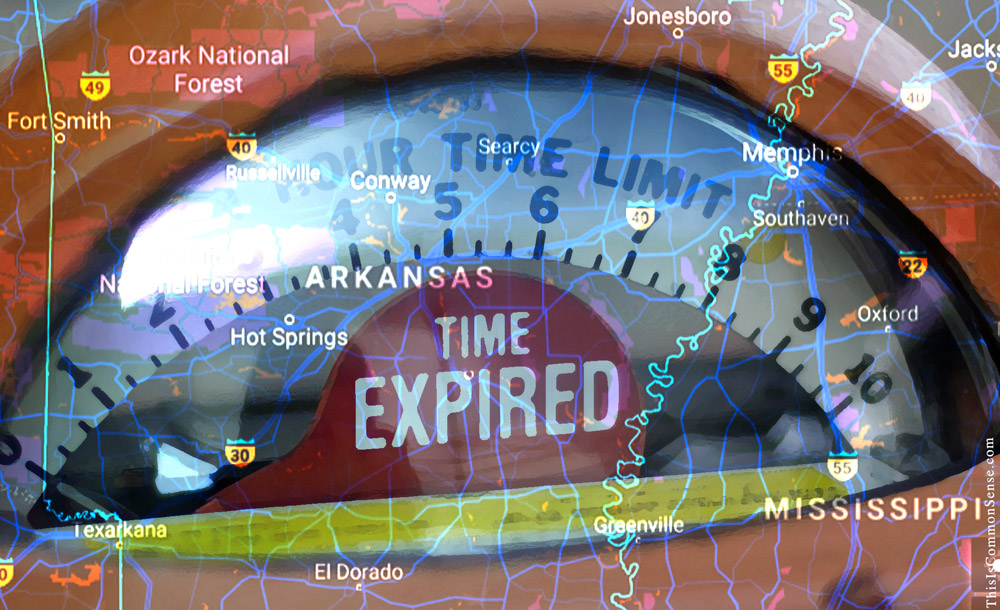
Strange for the Arlington, Texas, City Council to hold a meeting on a Sunday evening, much less one to “consider suspending the city charter.”

That is how the Fort Worth Star-Telegram reportedthe latest twist in the term limit controversy that has engulfed the city with a lawsuit and competing ballot proposals.”

Led by Zack Maxwell, citizens in this Fort Worth adjacent community of 400,000 gathered 11,000 voter signatures to place a term limits charter amendment on the November ballot. It would limit councilmembers to three two-year terms. It also figures in past service, so five of the eight current councilmembers would be blocked from seeking re-election in the coming two years.

With swift legislative prowess, the council responded, passing its own competing “term limits” measure, which incidentally allows them to stay 50 percent longer in office.

But there’s one problem: the council did not follow the law, which requires multiple readings, with one at a regular meeting. 

Actually, there’s a second problem: Mr. Maxwell challenged the council’s unlawful action in court. 

The court blocked the council’s measure. 

That left the council holding an unusual weekend meeting to suspend the rules and re-pass their fumbled alternative to the term limits voters really want. But news travels fast and city hall was “packed.” 

“You’re suspending the rules because your jobs are in jeopardy,” charged one man.

A woman told the council, “You guys should be absolutely embarrassed about this.”

“After hearing from dozens of angry residents,” the paper explained, “[t]he council voted unanimously to not suspend the rules, finally killing its own term limit proposal.”

Politicians doing the right thing . . . having exhausted every other possibility.

This is Common Sense. I’m Paul Jacob. 


PDF for printing


Photo from the Fort Worth Star-Telegram


Categories
Accountability incumbents initiative, referendum, and recall insider corruption local leaders political challengers term limits

Sneaky Lobbyists Prefer Sneakiness

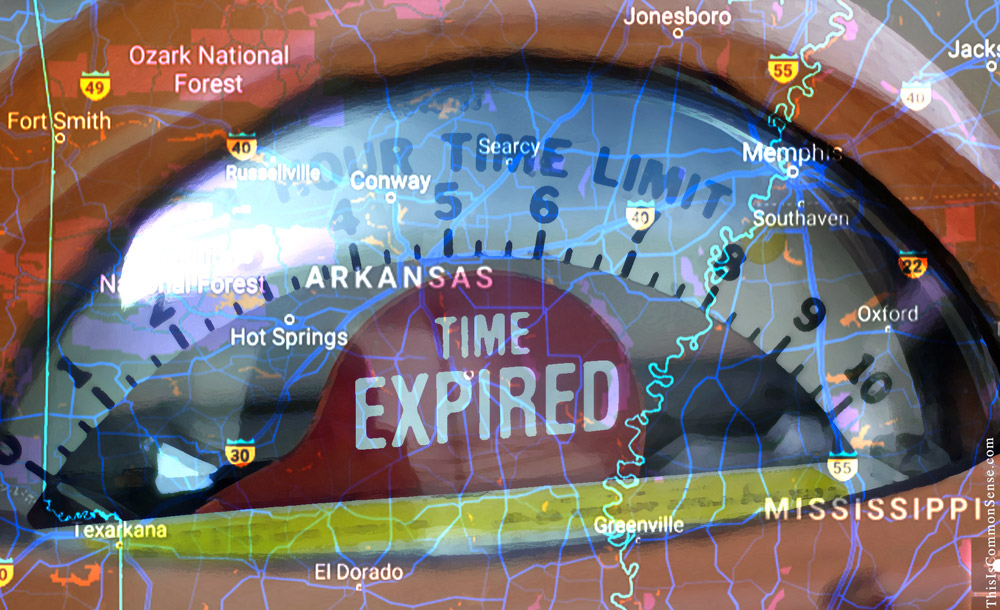
The Arkansas Chamber of Commerce’s CEO and chief lobbyist, Randy Zook and Kenneth Wall, have formed Arkansans for Common-Sense Term Limits. 

The Chamber has a burning hatred for term limits — Common-Sense or otherwise — just like every other lobbyist and special interest. But Zook and Hall are fibbing in their name because they realize that voters love term limits. 

The ballot committee’s stated purpose? To “advocate for the disqualification or defeat” of the Arkansas Term Limits Amendment, which citizens just petitioned onto the ballot, collecting 129,000 signatures.

Defeating such a popular ballot measure isn’t likely. Instead, these politically-experienced lobbyists are preparing to sue, hoping to disqualify valid voters’ signatures on some ginned-up technicality, feigning confusion over the clear ballot language — anything that might keep democracy from coming this November.*

At issue? The difference between real term limits and ridiculous ones.

That is, between term limits set by citizens and those set by legislators themselves. 

Currently, legislators can serve for 16 years in a single seat under the state’s “limits.” And because two-year Senate terms aren’t counted at all, senators can stay as long as 22 years. 

Legislators snuck this past voters in 2014 with a ballot title claiming only to “establish” term limits . . . amidst other lies. Politicians thereby turned Arkansas’s toughest-in-the-nation term-limit law into the nation’s very weakest — a significant 50 percent longer than limits in any other state.**

Unfazed by all the corruption in the Arkansas Legislature, Chamber lobbyists are focused on putting politicians in their pocket for as long as possible. 

But those pesky Arkansas voters are once again in the way.

This is Common Sense. I’m Paul Jacob.


* After recently threatening to challenge the signatures of another initiative petition, Zook had to admit that he was not aware of a single problem or deficiency in the petition. But he quickly added, “It’s a very complicated process.”

** Arkansas’s term limits were the same as Michigan’s until 2014, three terms, six years in the House and two-terms, eight-years in the Senate.

PDF for printing
 

Original photo by Jeff Kubina
 

Categories
Accountability crime and punishment moral hazard property rights U.S. Constitution

Forfeiting Common Sense

Is it okay to steal if you can get away with it?

A full answer would require a treatise. But most of us common-sensibly understand that evil does not magically become good when perpetrators are not stopped or punished. Thrasymachus was wrong to contend, in Plato’s Republic, that justice is merely the “interest of the stronger.”

When it comes to crimes like bank robberies, muggings and car jackings, we have no doubts about this. In such blatant cases, we suffer nothing like the legitimate confusion to which we may be prone regarding the exact border between adjacent parcels of land or the niceties of intellectual property law.

Well, somebody tell the New Hampshire state police.

Some of them apparently believe it’s okay to steal if you can evade laws against the stealing.

New Hampshire’s recent reform of civil forfeiture laws requires criminal conviction of a person before there can be any forfeiture of his property. But a loophole enabled officers to grab $46,000 of Edward Phipps’s money — from his car, stopped on the road — even though he was never accused of a crime. 

How?

It seems that if state cops collaborate with the feds, safeguards established to prevent such abuse can be evaded.

To retrieve even a little of his money ($7,000), Mr. Phipps was forced to relinquish all claim to the balance ($39,000). Even if lawmakers close the loophole, as they should, the robber-cops will probably get away with this particular larceny. 

They shouldn’t.

That’s injustice, not common sense.  I’m Paul Jacob.


PDF for printing


Photo Credit: N.H. State Police


Categories
Accountability free trade & free markets general freedom responsibility too much government

No Other Options?

Long I have criticized the Washington, DC, Metro — the transit authority in our nation’s imperial capital — most recently in March. But I am foursquare in support of the government body’s recent hazard warning: “Only take Metro if you have no other option.”

Good general principle.

But what’s the particular occasion? There will be “Major 24/7 Construction Activity” for 15 days in mid-August. The service is advising usage of buses and even freely-provided shuttle services to compensate for commuters stuck in the repairs.

Christian Britschgi, writing at Reason, actually dared ride one embattled line. He found what you might expect: a long history of lazy, perverse incompetence at Metro, bordering on corruption. When concrete started falling from the ceiling at one station in 2016, “an internal investigation . . . uncovered Metro safety inspectors at the station had taken to just cutting and pasting positive evaluations from prior year reports instead of actually checking for damage in some hard-to-reach areas of the station,” Britschgi explains

This is the kind of thing you expect to find in government. Why? Because we don’t allow government projects to go under, even after repeated and massive failures. Ignominy.

Should we be shocked, though? No. Spectacular non-success is close enough for government work. Markets work better because of important communication via profit and loss. Without that stick of loss, governments just take our taxes as their carrot. 

Not a whole lot rides on actually serving riders.

This is Common Sense. I’m Paul Jacob.


PDF for printing


Categories
Accountability free trade & free markets general freedom ideological culture media and media people national politics & policies

Driven to Sanity

Having the federal government centrally plan the economy is “a huge waste of everyone’s time and resources” states an amazingly common-sensical Washington Post editorial.

“In a well-functioning modern economy, businesses are generally free to buy and sell the things they need, absent a compelling public need for government intervention,” the editors further expound.

Hmmm, a capitol-town rag that regularly extols the virtues of big government regulation of everything now notices the importance of freedom.

Of avoiding, especially, a system where bureaucrats and other government bullies micromanage commerce.

“Were we directed from Washington when to sow and when to reap,” Thomas Jefferson wrote long ago, “we should all want for bread.”

And aluminum.

“Worse,” the Post argues, the system “also politicizes — and, indeed, corrupts — economic life. Companies that feel threatened by any particular tariff exclusion request have the right to present their objections to the Commerce Department, meaning that each decision represents a high-stakes competition for federal favor between at least two companies with every incentive to influence it through lobbying, campaign contributions, you name it.”

Correct. It seems we may have Donald Trump to thank for opening the Post’s eyes. 

“[T]he way to get ahead in Mr. Trump’s economy,” those editors conclude, “is not making better products for the people, but making better connections in Washington.”

Tragically true.

But, sadly, true long before Mr. Trump entered the White House. No new powers have been given to Trump. 

Let’s drain the stinking Washington swamp. Let’s end the corrupting influence of a regulatory state run amok. Let’s limit the power of the people wielding political power.

How?

Free the markets!

This is Common Sense. I’m Paul Jacob.


PDF for printing


Categories
Accountability general freedom ideological culture media and media people

Transcendent Gray Lady

How far are we away from a completely vindictive, murderous madness like The Terror of revolutionary France?

I know, almost no one is talking of guillotines. 

But a lot of people seem determined to destroy others’ lives publicly. We are all too familiar with Twitterstorms where worked-up outrage forces someone out of a job or a deal  — usually for making jokes.

But it’s not just jokes. Not long ago an actor got in trouble for Tweeting that commentator and Daily Wire host Ben Shapiro seems a nice, honest person on the right that a leftist might listen to. The actor was forced to recant, and then Shapiro himself publicly recanted from some past putatively “dumb” things he “did” or “said.” Or something.

Since we’re talking about Mr. Shapiro, his commentary on the Sarah Jeong case is not irrelevant. The New York Times hired Ms. Jeong despite her past racist tweets. 

Well, racist-against-whites. 

“By the rules of the left,” says Shapiro, “this person should now be excised from polite society.”

But the Times is keeping her.

Shapiro finds this “indicative” of more than just the Times. The left at large seems OK with anti-white racism but not anti-any-other-race.

It’s indicative of a lot more, though, not just racism and anti-racism and anti-anti-racism. 

Outrage and the Twittermob may be fun. But it’s time to stop.

Is the Times leading the way?

Only when the decrepit old rag defends someone not on its own ideological side. Transcending partisan mob mania means first transcending partisanship. 

This is Common Sense. I’m Paul Jacob.


PDF for printing


Categories
Accountability First Amendment rights general freedom ideological culture media and media people moral hazard nannyism national politics & policies Regulating Protest too much government

Dbl Standard Destruction Co.

Addison Barnes has just won a court case against Liberty High School of Hillsboro, Oregon. The court ruled that the school acted wrongfully when, early this year, it suspended him for wearing a “disruptive” T-shirt heralding a “Donald J. Trump Border Wall Construction Co.” 

Addison was awarded $25,000 for legal expenses, and the school has apologized to him, sort of, for the suspension.

“I brought this case to stand up for myself and other students who might be afraid to express their right-of-center views,” Addison says. “Everyone knows that if a student wears an anti-Trump shirt to school, the teachers won’t think twice about it. But when I wore a pro-Trump shirt, I got suspended. That’s not right.”

No, it’s not.

The outcome is imperfect. The apology offered by Liberty High does not acknowledge the glaring injustice of the suspension. It simply asserts that the school got the “balancing act” wrong between making students feel welcome and making them feel safe. (Because it is “unsafe” per se for kids to peacefully express political disagreements?) Nor was the teacher who imposed the suspension obliged to apologize personally.

Ideally, all schools would be privately owned, privately run. Then they could openly promulgate whatever silly policies they wished about what students may display on T-shirts, if anything. Market pressures would tend to discourage indefensible rules. 

But today’s schooling system is not ideal.

Have you noticed?

Meantime, let’s hope that the court’s decision will discourage other schools from imposing similar double standards.

This is Common Sense. I’m Paul Jacob.


PDF for printing


Categories
Accountability free trade & free markets general freedom national politics & policies property rights responsibility too much government U.S. Constitution

The Trump Trade Enigma

President Donald J. Trump, former “reality TV” star, often seems merely to skirt reality.

“Our trade deficit ballooned to $817 billion,” President Trump exaggerated to the “men and women of U.S. Steel” last week. 

“Think of that. We lost $817 billion a year over the last number of years in trade,” he went on. 

“In other words, if we didn’t trade, we’d save a hell of a lot of money.”

This is the sort of dopey bunk a drunk at a bar might say, after the fourth shot had obliterated any remnant of economic understanding from his synapses.

But the president said this in Granite City, Illinois, in front of cameras, a live mic, and a cheering crowd.

And yet, as I wrote yesterday at Townhall, Donald Trump is now explicitly aiming at a worldwide free trade policy, negotiating to break down trade barriers and get rid of subsidies on . . . well, “non-automobile industrial goods.”

I’m almost afraid to ask him why not all industrial (and, for that matter, agricultural) products. Could one expect a coherent answer from someone who does not understand that an $817 billion “trade deficit” means that we, the consumers of the United States of America, got stuff from each billion spent? Each dollar?

And yet, if he pulls off worldwide free trade agreements — for whatever reason — he may almost be worth the attention that Bussa Krishna, of the southern state of Telangana, India, gives him.

The man set up a shrine to worship Donald Trump.

I will never do the same. But I’d tip my hat to almost anyone who fosters trade, and the peace and progress trade brings to the world.

This is Common Sense. I’m Paul Jacob.


PDF for printing


Categories
Accountability general freedom ideological culture porkbarrel politics responsibility too much government

Ask the Next Question

Republicans are very reliable. When given our system’s “Mandate of Heaven” — majorities in both houses of Congress and the Presidency — they can be relied upon to do one thing: add debt by piling up huge deficits.

It happened under George W. Bush, and it is happening under Donald J. Trump: “The Trump administration expects annual budget deficits to rise nearly $100 billion more than previously forecast in each of the next three years,” the Wall Street Journal tells us, “pushing the federal deficit above $1 trillion starting next year.”

Republicans should ask themselves why. And while they ask themselves that, everyone else should ask the next question: why do politicians who say they want one thing so often deliver its opposite?

This is not a mere “right-wing” phenomenon. Leftists say they want “democratic socialism,” but, as Irving Kristol noted, at some point not far down their road to Utopia, “democratic socialists” must choose between democracy and socialism.* By promising everybody everything, too quickly everybody gets shanghaied into service to produce that “everything,” finding themselves conscripts in socialism’s army.

The equation of socialism with regimentation and general un-freedom has been clear for over a century, explained carefully by sociologists, economists and even politicians.* And yet, increasingly, today’s Democrats are embracing a philosophy with proven anti-democratic features.

Could some deep principle be at play?

Probably. It is built into the very nature of state governance, of politics itself. It may be why republics metamorphose into empires, conservatives go radical and liberals become serviles.

Which is why effective democracy requires limited government. To minimize that boomerang effect.

We might start by limiting spending.

This is Common Sense. I’m Paul Jacob.


* Herbert Spencer’s writings on socialism include The Man versus the State (1884) and Industrial Institutions (1896, Principles of Sociology, Vol. III, Part VIII); German politician Eugene Richter’s satire Pictures of the Socialist Future (1896) is well worth reading; and economist Yves Guyot preceded Ludwig von Mises’ classic Die Gemeinwirtschaft (1922, translated as Socialism: An Economic and Sociological Analysis, 1950) with several books, including The Tyranny of Socialism (1893) and Socialistic Fallacies (1910).

PDF for printing


Categories
Accountability folly free trade & free markets general freedom moral hazard property rights responsibility too much government

Poison Is Poisonous

Venezuela’s socialist economy has been collapsing.

No big mystery. If, out of hostility to capitalism, a society keeps destroying everything that production, trade, and prosperity depend upon, the economy suffers. The benefits of markets don’t flow no matter what.

One assault has taken the form of hyperinflation — runaway printing of currency, done in part to dissolve government debt. Many Venezuelans are resorting to barter. It’s easy to understand why.

Or is it? A Reuters reporter says that economists say that “the central bank [of Venezuela] has not printed bills fast enough to keep up with inflation, which . . . reached an annual rate of almost 25,000 percent in May.”

So go faster!?

Dude. Dude. The massive expansion of Venezuela’s money supply is what’s causing massive jumps in prices. Just like any other economic good, the medium of exchange is subject to the laws of supply and demand.

Other things being equal, enormously increasing a supply of a good will enormously lower its market value or price. Money, too, has a price — in terms of the non-monetary goods being bought. If the pre-hyperinflation price of a dollar in terms of bread is one loaf and the post-hyperinflation price is one bread crumb, you won’t reverse the decline by printing even more dollars or bolívars even faster.

If you’re ingesting poison, you can’t fight the effects by being poisoned more and harder. The very first thing to do is stop ingesting the poison.

This is Common Sense. I’m Paul Jacob.


PDF for printing