Categories
First Amendment rights ideological culture media and media people Regulating Protest

James Woods, Parody, and a Pillow

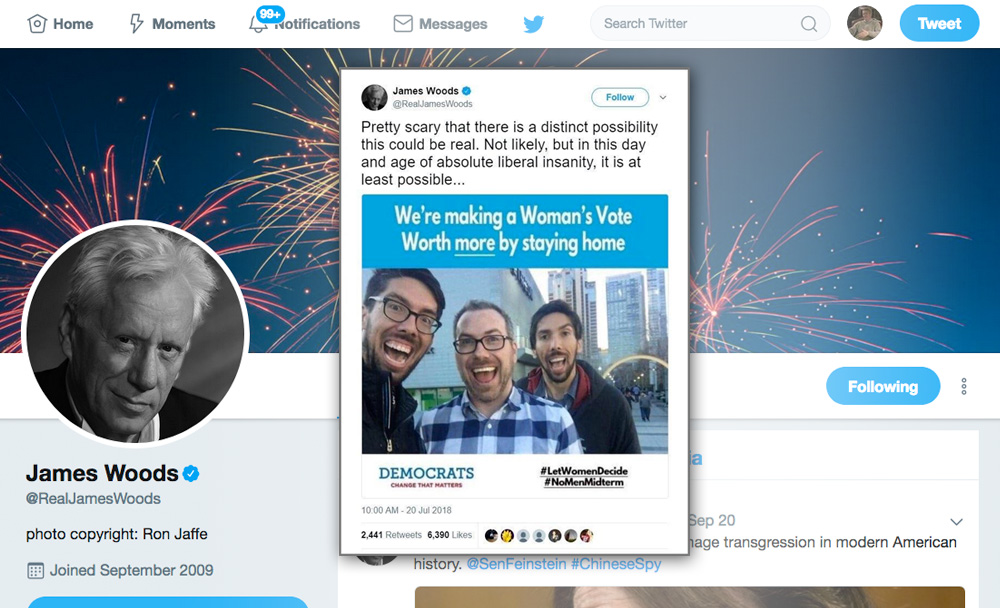
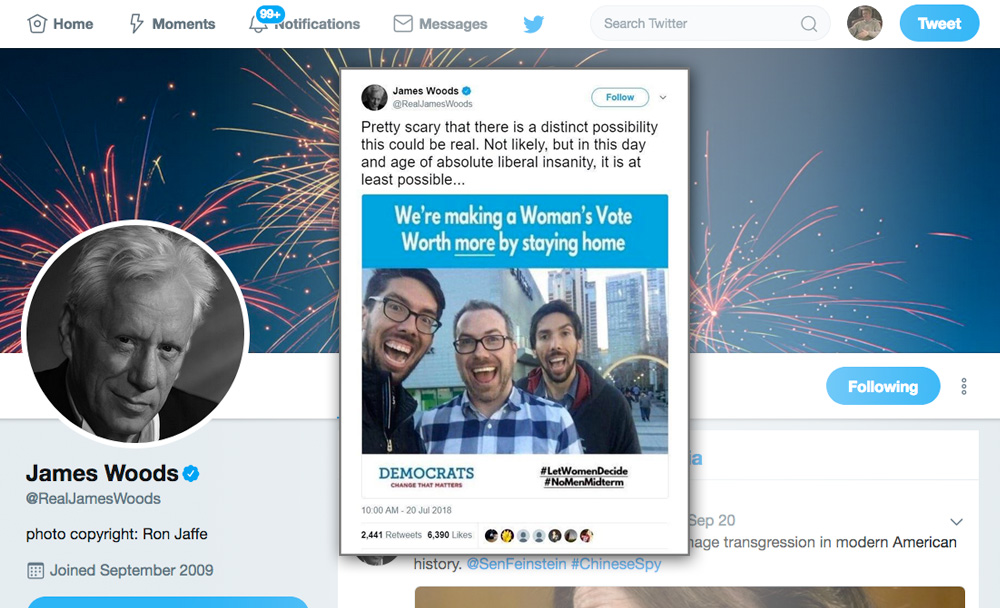
The beginning of the end of actor James Woods’s time on Twitter likely occurred on July 20, 2018.

Only recently discovering a tweet that he posted then, Twitter has locked Woods out of a forum where his right-leaning messages have been followed by 1,730,000 people.

His delinquent tweet forwarded an image of giddily grinning guys promising to abstain from voting so that a woman’s vote would be “worth more.” Woods tweeted: “Pretty scary that there is a distinct possibility this could be real. Not likely, but in this day and age of absolute liberal insanity, it is at least possible.”

Twitter told the actor that if he agreed to the deletion of this fake-news tweet — simple enough — it would let him tweet once again.

Woods refuses.

“Free speech is free speech — it’s not [Twitter CEO] Jack Dorsey’s version of free speech,” Woods says. “The irony is, Twitter accused me of affecting the political process, when in fact their banning of me is the truly egregious interference. . . . If you want to kill my free speech, man up and slit my throat with a knife, don’t smother me with a pillow.”

There’s lots more where that came from, but you get the idea. I don’t, um, strictly agree with everything Woods says here. But I can only applaud the spirit of his refusal to submit to Twitter’s arbitrary standards of acceptable speech.

Oh, and one other thing: somebody tell Twitter that parodies are inherently fake.

This is Common Sense. I’m Paul Jacob.
 

PDF for printing


Categories
Accountability folly free trade & free markets general freedom moral hazard property rights responsibility too much government

Poison Is Poisonous

Venezuela’s socialist economy has been collapsing.

No big mystery. If, out of hostility to capitalism, a society keeps destroying everything that production, trade, and prosperity depend upon, the economy suffers. The benefits of markets don’t flow no matter what.

One assault has taken the form of hyperinflation — runaway printing of currency, done in part to dissolve government debt. Many Venezuelans are resorting to barter. It’s easy to understand why.

Or is it? A Reuters reporter says that economists say that “the central bank [of Venezuela] has not printed bills fast enough to keep up with inflation, which . . . reached an annual rate of almost 25,000 percent in May.”

So go faster!?

Dude. Dude. The massive expansion of Venezuela’s money supply is what’s causing massive jumps in prices. Just like any other economic good, the medium of exchange is subject to the laws of supply and demand.

Other things being equal, enormously increasing a supply of a good will enormously lower its market value or price. Money, too, has a price — in terms of the non-monetary goods being bought. If the pre-hyperinflation price of a dollar in terms of bread is one loaf and the post-hyperinflation price is one bread crumb, you won’t reverse the decline by printing even more dollars or bolívars even faster.

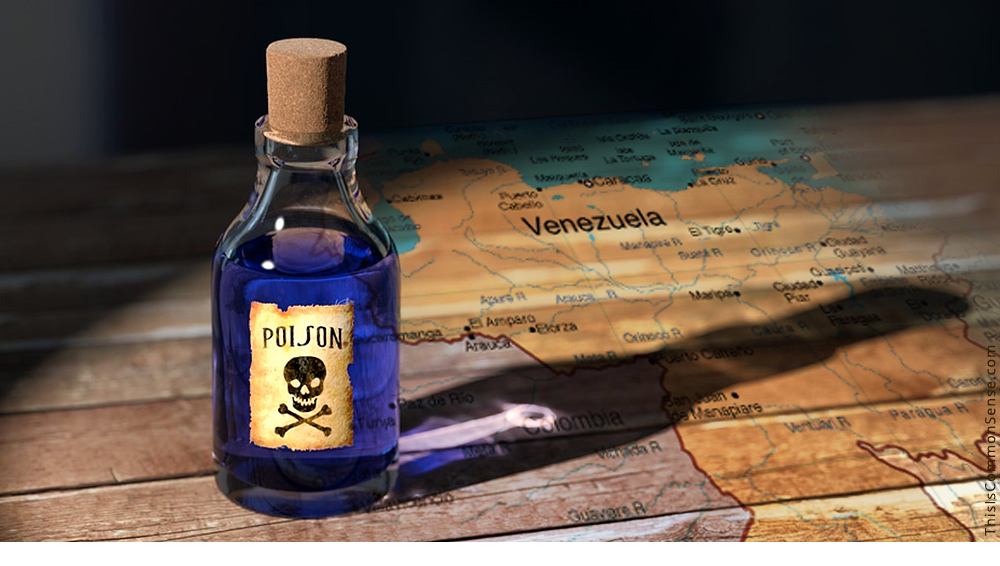
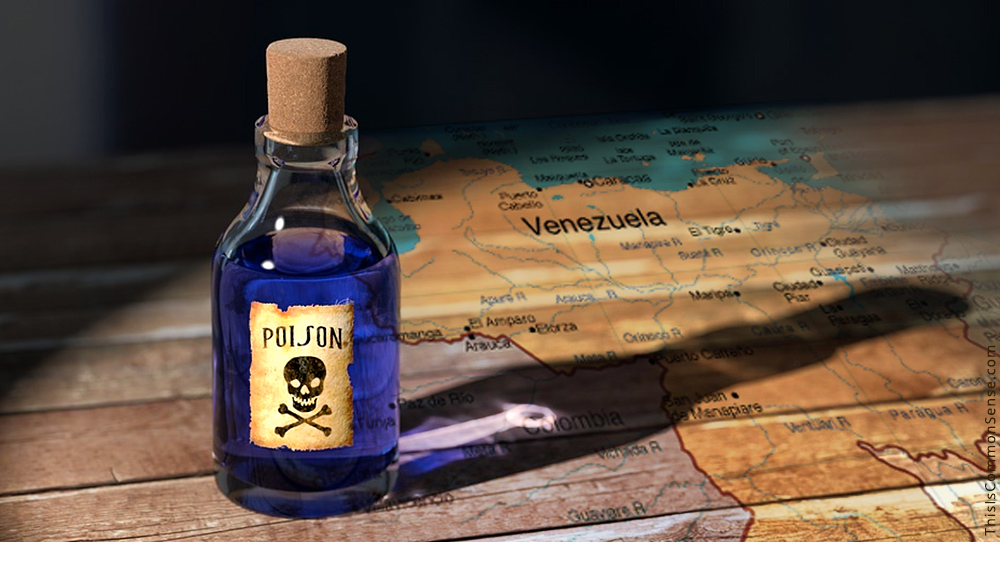
If you’re ingesting poison, you can’t fight the effects by being poisoned more and harder. The very first thing to do is stop ingesting the poison.

This is Common Sense. I’m Paul Jacob.


PDF for printing


Categories
Accountability crime and punishment folly free trade & free markets general freedom local leaders nannyism national politics & policies responsibility too much government

Kick the Addiction, Save Money

The political case for the War on Drugs has always been intuitive. “Drugs are bad” has trumped practical concerns. But the actual, responsible case for the political crusade has depended upon some concept of “social cost.”

Now that marijuana is being legalized state by state, the case against the greater War on Drugs is being taken seriously — enough to rethink all varieties of costs. Indeed, many now see the opioid epidemic as being driven, in part, by the War on Drugs, and not just as an excuse for a stronger crackdown.

Nevertheless, coming to some accounting — especially “social cost” accounting — remains difficult. This is especially true so long as its effects on freedom and the rule of law do not get figured in.

Somewhat surprisingly, even the budgetary effects of legalization have proven a bit tricky.

So it is welcome to read Harvard economist Jeffrey Miron’s study of marijuana legalization as it has occurred in the states of Washington, Oregon, and Colorado. He compares results of legalization with the predictions he had made eight years ago, in a previous Cato Institute study. It turns out that while tax revenues are far greater than expected, law enforcement costs have not gone down.

“Early experience suggests that governments will reallocate rather than reduce those expenditures,” Miron writes. “That reallocation may be beneficial, but it does not have a direct effect on the budget deficit.”

On a federal level, though, we might expect greater savings. How? We could shut down whole bureaus.

Yet, achieving such savings would require progress on Washington’s biggest addiction:  spending.

This is Common Sense. I’m Paul Jacob.


Studies cited:

Jeffrey Miron, “The Budgetary Effects of Ending Drug Prohibition,” Cato Tax & Budget Bulletin, Number 83, July 23, 2018.

Jeffrey A. Miron and Katherine Waldock, “The Budgetary Impact of Ending Drug Prohibition,” Cato Institute white paper, September 27, 2010.

PDF for printing


Categories
Accountability crime and punishment folly free trade & free markets general freedom moral hazard nannyism responsibility too much government

Taking a (Lemonade) Stand

When life hands you lemons. . . .

Once upon a time, putting up a summertime lemonade stand was the American way for kids to learn about hard work, good will, and entrepreneurship. Almost every kid had one, making some spendable profit selling the nectar.*

Some of the youngsters grew up to become Bill Gates and Steve Jobs and, well, lemonade’s one heck of a gateway drink.

But then, along came “progress” — that is, mandates and regulations slapped upon businesses. And the hordes of regulators required to enforce the morass of rules — “swarms of Officers.”

Soon lemonade stands were vanquished from our neighborhoods.

And America was made safe (at long last!) for . . . inane bureaucracy.

“Reports of kids’ lemonade stands being shut down for breaking local health or permitting laws have long left grown-ups feeling sour,” today’s Wall Street Journal informs. But the story also details how “a growing movement of adults is fighting back.”

So, when government policies hand you lemons, what do you do?

Make a map of all the lemonade stand clampdowns.

“I think the Constitution covers [lemonade stands] as written,” Dave Roland told the Journal, explaining the map he and his wife Jenifer have produced. “But if there’s any doubt about that, let’s get it fixed.” The Rolands run the Freedom Center in Missouri, but theirs is a regrettably national map.

Last month, the popular lemonade maker Country Time started “Legal-Ade,”  pledging to come to the defense of any kid “busted” for trafficking in lemonade.

Seriously.

“When life gives you arcane laws,” the company’s video says, “make lemonade.”

Taste the Common Sense. I’m Paul Jacob.


* The profit was made possible largely by pushing their costs off onto their parents. But isn’t that sorta what parents are for? And good lessons were still learned.

PDF for printing


Categories
meme

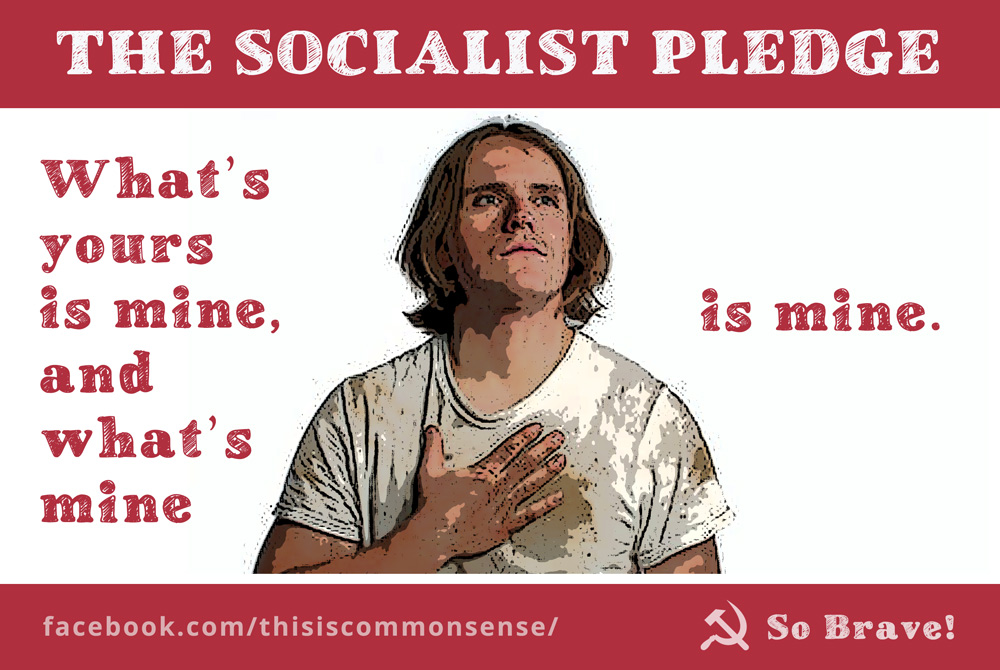
The Socialist Pledge

What’s yours is mine, and what’s mine. . .

is mine.

Categories
Accountability crime and punishment free trade & free markets general freedom media and media people moral hazard responsibility

Blame the App?

Who spreads “fake news”?

Gossips, politicians, publicity agents, Twitter eggs, partisan bloggers, lying news journalists?

Or . . . the medium of communication they use?

Do envelopes, stationery, telephones, email, and messaging apps have moral agency?

And who commits the crimes that news (true or false) is used to rationalize?

A New York Times story discusses “How WhatsApp Leads Mobs to Murder in India,” which is like saying that civilization, flying lessons and boarding passes “led” terrorists to 9/11.

The Times reports that fake news about children being kidnapped — dramatized by doctored video clips and forwarded via WhatsApp, a messaging app — provoked anger and fear in many Indians. Some were then willing to attack anyone who “seemed” about to kidnap children.

In recent months, dozens of people have been murdered for being in the wrong place at the wrong time.

Without social media and the mega-popular WhatsApp, the murders probably would not have happened, at least not the way they happened. That seems certain. But this doesn’t mean that without WhatsApp, nobody in India would spread false stories or assault innocent people.

Mob violence in the country antedates the Internet.

Perhaps a thousand material circumstances directly or indirectly enable any particular act of wrongdoing. But no such prerequisites “lead to” anything without individual choices.

If someone pretends it’s okay to kill innocent persons — or persons whose guilt or innocence he doesn’t care to know — he, the killer, is the guilty party. The telecommunications network or messenger app used to provide grist for excuse-making is innocent.

Apps don’t murder people. People murder people.

This is Common Sense. I’m Paul Jacob.


PDF for printing


Categories
Common Sense Popular

The Cattle Are Restless

“There is one law for man,” goes an ancient saying, “another for cattle.”

Moo.

Glenn Reynolds, writing in USA Today, sees this principle in operation now, where the ruling class gets away with a whole heckuva lot while the rest of us do not: “Freedom from consequences: It’s the defining consequence of our modern titles of nobility.”

Reynolds cites Charles W. Cooke for the “titles of nobility” angle. Cooke, who hails from Britain but was recently inducted into American citizenship, has objected to the “grotesque’ American tradition of continuing to use a person’s former title in government service long after the officeholder has left the post.

“Throughout the 2012 election, Mitt Romney was referred to as ‘Governor Romney,’ though he had not been in public office for six years,” Cooke wrote. “One can only ask, ‘Why?’ America being a nation of laws and not men, political power is not held in perpetuity, and there is supposed to be no permanent political class.”

“Americans do not have rulers, they have employees,” Cooke asserted.

If you are like me, you have probably made this point umpteen times in the last few decades.

Reynolds goes on to make the obvious corollary: our public servants do not behave like our “employees.” They behave like our rulers.

Their class privilege is now deep into our law — even if some doctrines, like absolute immunity, were just invented by judges to protect prosecutors and . . . judges.

Maybe the first step to upend this would be to balk at ceremony. Our exes Jimmy Carter, the two George Bushes, Bill Clinton and Barack Obama should not be addressed as “President X.”

“Mister” will do.

This is Common Sense. I’m Paul Jacob.


PDF for printing


Original photo by Beverly


Categories
Common Sense

The Not-Saint Timothy

Some people believe that aggression is physical force and nothing else. From this they derive the notion that only physical violence should be prosecuted — or, more generally, retaliated against with force.

But it is obvious that some invasions of private property or personal space, with malice and anger and alarming unhinged-ness, are aggressive.

And should be prosecuted in law.

Take the current case of Timothy Trybus, who is testing a further point of law that especially concerns those of us strongly motivated to focus on initiated force.*

“It is pretty clear,” writes Jacob Sullum in Reason, that the man “broke the law when he harassed Mia Irizarry for wearing a T-shirt featuring the Puerto Rican flag at a park in Chicago last month.”

Mr. Trybus was drunk, and he “got in her face,” so to speak, challenging her in a not-unusual nationalistic/pseudo-patriotic/jingoistic fashion that seems old-fashioned and up-to-date Trumpian:

  • “Why are you wearing that?”
  • “This is America!”
  • “If you’re an American citizen, you should not be wearing that shirt in America.”

Puerto Rico may not be a state, but . . . the proper reaction might have been to challenge the not-Saint Timothy to a bit of patriotic one-upmanship: “How can you be so un-American as to object to an American commonwealth flag?”

He’s now being prosecuted for a hate crime as well as assault. Though he may never have touched the woman, his aggressiveness is legally regarded as a threat of force.

Understandably. But if the hate crime thing sticks, will antifa and other obvious anti-American thugs be given that extra legal consideration in similar situations?

This is Common Sense. I’m Paul Jacob.



* Which, I confess, I like to think of as “all civilized people.” But I may be optimistic. Reducing violence is an almost universal desire, and the question of who started violence is nearly universal. But the focus is, well, in our times called “libertarian.”

PDF for printing


Photo from Max Pixel


Categories
Accountability general freedom government transparency incumbents insider corruption local leaders moral hazard national politics & policies term limits

“Dorky” Doesn’t Define It

“Term limits,” said Daniel McCarthy, editor of The Modern Age, in a recent podcast conversation with historian Tom Woods, “was one of the dorkiest ideas of the 1994 so-called Newt Gingrich revolution.”

He characterized it as not having really gone anywhere.

Huh?

Granted, Congress is still not term-limited. But Americans in 15 states — including California, Colorado, Florida, Michigan, and Ohio, and representing 37 percent of the nation’s population — do enjoy term-limited state legislatures.*

And it sure wasn’t Newt Gingrich’s idea. Gingrich opposed it.

McCarthy repeats the old chestnut that what term limitation “winds up doing is actually weakening Congress and congresspeople in particular — relative to their own staff, who stay in Congress and become sort of experts and learn how to manipulate their congressman, and also relative to the executive branch who have people rotate in from time to time.”

Nifty theory — one very popular with politicians, who know that voters fear unelected influences on legislation.

The reality, however, is that Congress, designed by the Constitution’s framers to be both most powerful and closest to the people‚ is, today, the weakest branch.

And legislators are not term limited.

Ditch the “manipulation theory”; adopt a “collaboration theory”: legislators with Methuselah-long careers learn, sans “rotation in office,” to feather their own nests and those of the interest groups that fund their re-elections (and insider trading schemes).

Term limits remain popular with normal Americans because voters intuitively grasp the reality of such everyday corruption, which is directly tied to Congress having sloughed off so much constitutional responsibility.

We need term limits to restore a Congress sold out by professional politicians.

This is Common Sense. I’m Paul Jacob.



* Nine of the ten largest cities in America likewise have termed-limited their elected officeholders. For more information, see the links to the column from which this episode of Common Sense is condensed.

PDF for printing


Categories
Accountability government transparency insider corruption local leaders media and media people nannyism national politics & policies political challengers Regulating Protest responsibility

Not Fine with Feinstein?

Could it be that Sen. Dianne Feinstein, Democrat of California, may not be liberal enough?

The San Francisco Democrat has ostensibly represented the Golden State in the United States Senate for the last 26 years. Before that, Feinstein spent eight years on San Francisco’s Board of Supervisors and then a decade as mayor.

Now, after 44 consecutive years as a public official, what does the 85-year-old Feinstein seek? More. That is, another six-year lease on her powerful perch in the U.S. Senate.

But the Executive Board of the California Democratic Party — Feinstein’s Party — just said, “No way!”

A whopping 65 percent of the 333-member board opted for State Sen. Kevin de León, a fellow Democrat seen as more “progressive.” Only seven percent supported endorsing Feinstein.

Keep in mind that Feinstein is already on the November ballot. She was the leading vote-getter in California’s primary last month. Yet, she received only 44 percent of the vote: a majority does favor someone else.

In February, 2,700 activists at the State Democratic Party Convention in San Diego voted 54 to 37 percent for State Sen. De León over U.S. Sen. Feinstein.

“Feinstein, who spends much of her time in Washington, has had a distant relationship with party activists for years,” noted the Los Angeles Times report.

Still, what Democratic Party activists want may not matter so much. Mrs. Feinstein enjoys tremendous name recognition and, according to the Times, has “$7 million in campaign cash socked away as of May, ten times what De León had.”

That money seems to be Sen. Feinstein’s real base of support.

This is Common Sense. I’m Paul Jacob.



PDF for printing