Categories
Accountability crime and punishment government transparency media and media people moral hazard national politics & policies Regulating Protest responsibility

The Deeply State

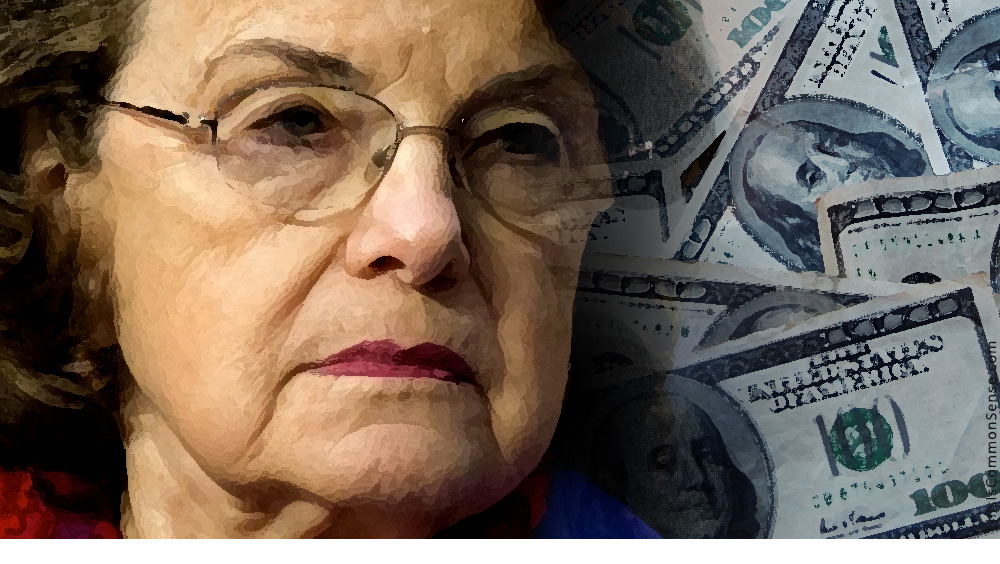
FBI agent Peter Strzok is offended.

Deeply.

He takes pains to clarify: he sent emails during the last presidential campaign expressing a willingness and readiness and commitment to preventing a Trump Presidency because he, Agent Strzok, is patriotic.

Deeply.

During yesterday’s contentious congressional interrogation, fielding questions regarding just how anti-Trump he was during the last presidential campaign, Peter Strzok denied that his obvious and admitted political bias affected his professional conduct.

“Like many people, I had and expressed personal political opinions during an extraordinary presidential election,” said Agent Strzok. “My opinions were expressed out of deep patriotism.”

But it wasn’t just a matter of expression, was it? One text message was an assurance that he would “stop” Trump’s election. When challenged on this, Strzok admitted that his memory was faulty.

Deeply?

“At no time, in any text,” Strzok said, decisively, “did those personal beliefs enter into the realm of any action I took.”

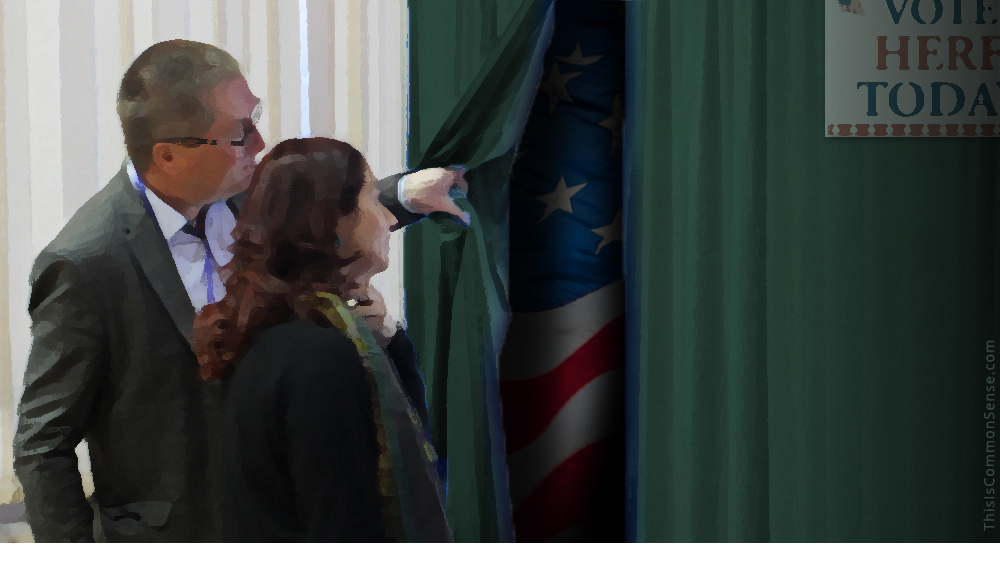
When a citizen expresses a credible threat to a president, federal agents investigate. His exchange with his “girlfriend,” Lisa Page, was not what we now call an “existential threat,” of course. Ms. Page had texted her worry about a Trump win: the man was “not ever going to become president, right? Right?!” Strzok’s reply was not vague: “No. No he won’t. We’ll stop it.” The threat is, at most, covert-political, back-room. FBI-ish. The couple were, after all, a part of an investigation into Donald Trump’s alleged Russian connection.

Though one could easily understand a married man assuring his inamorata simply to puff himself up in her eyes, this assurance sure looks different to our eyes — it cannot help but make us suspicious.

Deeply.  

This is Common Sense. I’m Paul Jacob.


PDF for printing


Categories
general freedom ideological culture insider corruption media and media people national politics & policies political challengers

Plantation Revolt

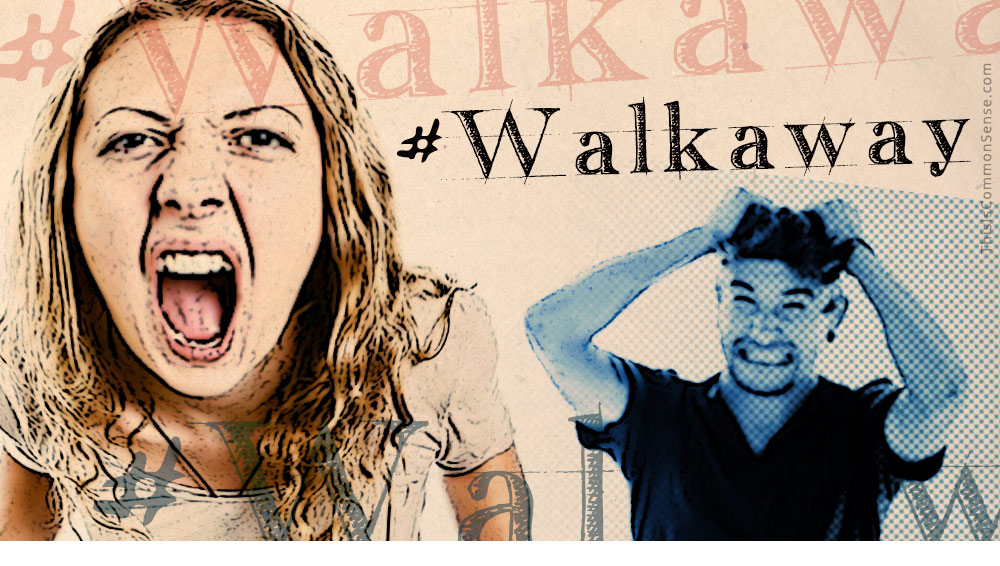
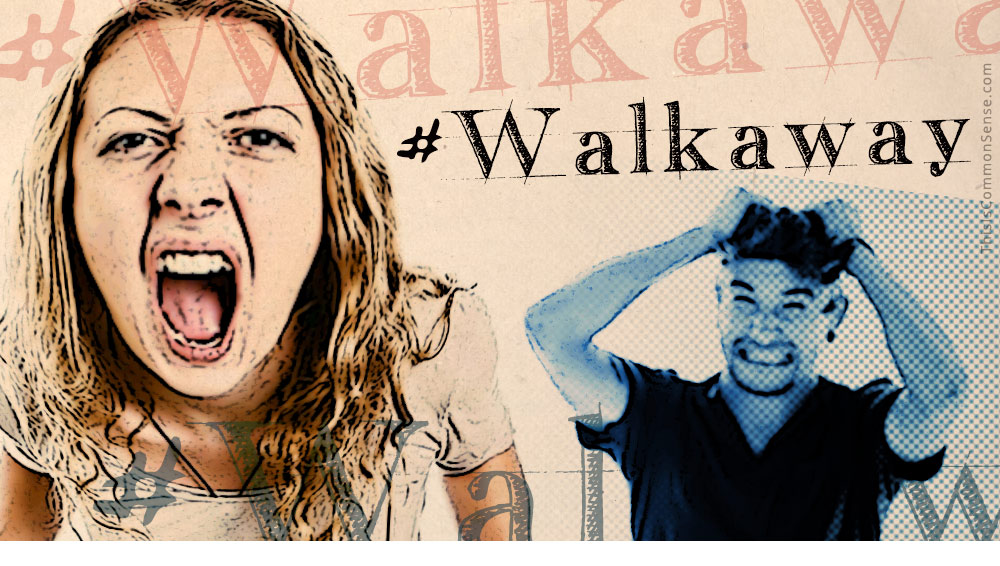
The #Walkaway movement started with Brendan Straka, who proclaimed that his tribe — the liberal Left — had become “intolerant, inflexible, illogical, hateful, misguided, ill-informed, un-American, hypocritical, menacing, callous, ignorant, narrow-minded, and, at times, blatantly fascistic.”

Mr. Straka’s beef — and the general tenor of the pile-on Twitterstorm — was not about Democratic Party policy, as Scott Adams noted. It was about the left-of-center movement’s rhetorical/propagandistic rut. Since the election of Donald Trump, Democrats had come to rely almost exclusively on the feeding of frenzy by psychological manipulation, by ginning up fear.

Straka’s appeal to “walk away” became a hit, especially amongst those “racial, sexual, and religious minorities in America” that he says the Democrats have treated as if they owned.

Yet the Washington Post pooh-poohs the trend as just a social media blip — over-hyped by the very nature of the medium itself.

Plausible?

David Catron says no. Before the #WalkAway movement, he writes in The American Spectator, African-American voters had already walked away from Hillary Clinton’s candidacy in enough numbers to allow Trump his victory. And this bodes badly for the Democratic Party, for, as Catron quotes YouTube sensation Candace Owens, “I’ve seen black liberals go conservative, but never seen a black conservative go liberal.”

It doesn’t take many defections, says Carton: “All that is needed is about 5 percent more African-Americans to vote Republican and another 5 to 10 percent to simply stay home.”

But be warned: wishful thinking and Straka’s litany of political vices — “groupthink, hypocrisy, division, stereotyping, resentment” — can overtake any movement pretty quickly.

Anti-leftists in general and Republicans in particular are not immune to mass mania and suicide-by-panic.

This is Common Sense. I’m Paul Jacob.


PDF for printing


Categories
Accountability folly general freedom government transparency initiative, referendum, and recall local leaders nannyism responsibility too much government

Minimum Sense

Suddenly, the Democrats who dominate the Washington, D.C., City Council seem unwilling to increase the minimum wage for tipped workers — despite their official support for legislative minimum wage rate increases.

And a vote of the citizens.

Initiative 77, which passed easily last month, requires restaurant employers to incrementally increase the “tipped wage” until rates “reach what will be the uniform minimum of $15 an hour by 2025.”

“Initiative 77 is something I believe will be very harmful to our restaurants and, more importantly, our restaurant workers,” argues Councilman Jack Evans, one of three council members pledging repeal.

A spokesperson for One Fair Wage DC, calling a repeal “deeply undemocratic,” notes that “D.C. voters don’t like it when Republicans in Congress do it, and we trust council will not stoop to that level.”

Yet it would not be “the first time the city’s lawmakers overturned a decision by the electorate,” the Washington Post reminds readers, citing “a decision in 2001 when the D.C. Council overturned term limits approved by voters.”*

I’m all for ballot measures to decide any issue the people have a right to decide . . . limited by all of our inalienable rights as individuals. Minimum wage laws constitute an abuse of our First Amendment right to association, which neither legislatures nor voters may legitimately abridge.

That the council doesn’t recognize this right of association, yet nonetheless thinks it should nullify a vote of the people tells you everything you need to know about the sorry state of representation.

This is Common Sense. I’m Paul Jacob.


* And even quoting moi on the incredible hypocrisy dating back 17 years: “If you’re in a city struggling to get representation in the first place, that’s a terrible signal to say that your own local officials don’t respect their own citizens.”


PDF for printing


Categories
Accountability ballot access folly general freedom ideological culture initiative, referendum, and recall media and media people national politics & policies political challengers responsibility U.S. Constitution

Should Non-Citizens Vote?

“A lot of people would like to say this is an immigration issue. It’s really not,” offered Gary Emineth, the head of North Dakotans for Citizen Voting and a candidate for state senator.  

“It’s really about preserving the right for U.S. citizens, and in our case, North Dakota residents, to only be the voters in all elections across the state of North Dakota,” added Emineth. “And that’s why we want it in the constitution.”

Turning in more than 35,000 voter signatures on petitions last Friday, Emineth and others placed a constitutional amendment on this November’s ballot that, if passed, would make voting the exclusive right of U.S. citizens in North Dakota.

Elsewhere in the country, Emineth points out, non-citizens are already voting — in Chicago and San Francisco, and in 11 cities across Maryland. Moreover, campaigns are underway across the country to give non-citizens the vote — in California, Connecticut, New York City, Boston and Montpelier, Vermont.

Opponents claim the North Dakota measure is completely unnecessary, as the state doesn’t currently allow non-citizens to cast a ballot, nor has any city yet attempted to allow non-citizens to vote. But Emineth’s goal is to keep it that way.

Moreover, University of North Dakota Law Professor Steven Morrison acknowledged to The Forum in Fargo that “the proposed amendment does clean up what could be a grammatical loophole since the word ‘every’ doesn’t conclusively exclude non-citizens from voting. . . .”

It is a very simple proposition: Do you want voting to be the exclusive right of U.S. citizens? Or should non-citizens be allowed to vote?

Coming to a ballot near and Fargo.*

This is Common Sense. I’m Paul Jacob.


* With some help from Liberty Initiative Fund.


PDF for printing


Categories
Accountability folly general freedom ideological culture media and media people moral hazard responsibility

Too Big for Breaches

“Any reporter who has covered Europe in the last decade has written a dozen articles or more,” The New York Times informs us, “about how one crisis or another has exposed the fundamental unsustainability of the European Union.”

I hadn’t noticed. Until recently, haven’t reporters and commentators been downplaying Europe’s looming crisis? But they cannot pretend “far right” separatist, decentralist and nationalist movements are marginal any longer, not after strong showings for Geert Wilders in The Netherlands and Marine Le Pen in France, and the Brexit vote.

Now everybody seems to be panicking.

Even the Times is half-predicting an end to what it calls the “European Experiment.”

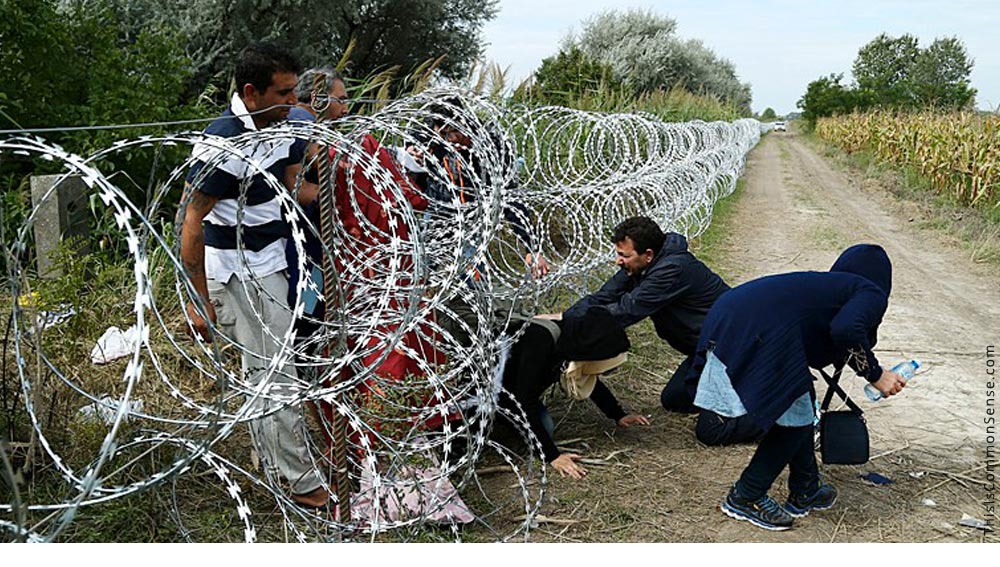
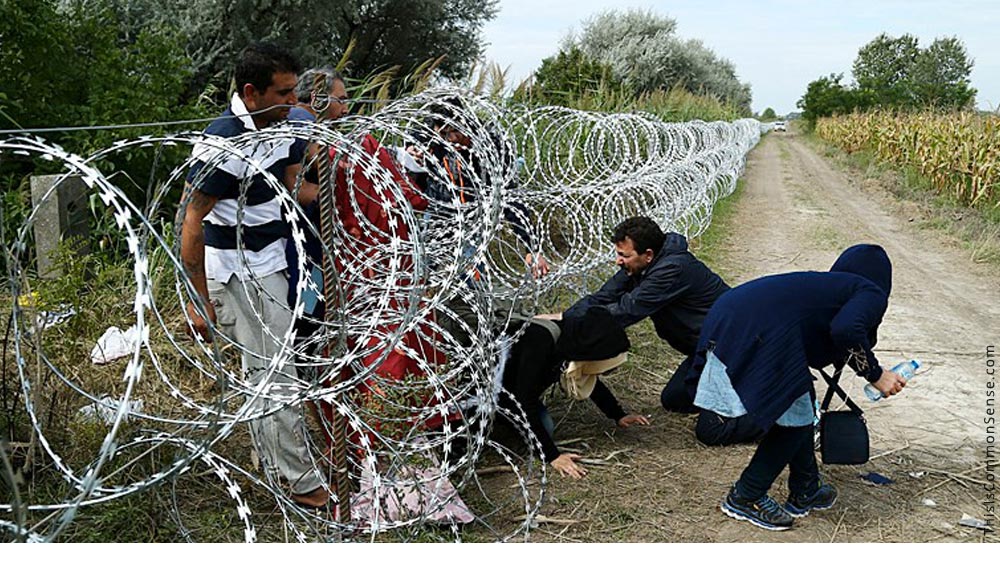
The Times identifies the tension as arising from “calls for keeping out secondary migrants and demands to keep internal European borders open. It’s a version of the contradiction within the European Union itself: between an open union and a collection of sovereign states.”

Beneath all the brouhaha about freedom of movement across breached borders lies the real contradiction: between massive welfare states on the one hand and, on the other, freedom of movement, speech and all the rest.*

When governments offer freebies, they entice people into un-productive or at least sub-productive lifestyles. Which is not sustainable, especially when extensive. How many productive people must support how many unproductive people?

Then throw those domestic programs open to millions of migrants who lack even rudimentary language and First World skills? That’s how states subsidize their societies’ destruction.

Europe’s governments are way too big for their border breaches.

If you want traditional freedoms, you have to pare down government.

This is Common Sense. I’m Paul Jacob.


*Between social democracy (socialism lite) and the old liberal order.


PDF for printing


Categories
Accountability crime and punishment folly free trade & free markets general freedom judiciary local leaders moral hazard nannyism Second Amendment rights too much government U.S. Constitution

Ought Implies Cantifornia

“Strip away the absurdity,” writes Scott Shackford at Reason, “and it’s essentially a very technical ruling.”

Shackford is explaining a bizarre recent judgment of the California Supreme Court.

Politicians in Sacramento had, years ago, passed a gun control measure requiring gun manufacturers to “implement microstamping technology that would imprint identifying information on bullets as they were shot from semi-automatic weapons.” In 2014, Smith & Wesson announced that it would pull some guns from the California market rather than comply. Why? The technology just wasn’t ready yet.*

Since California’s Civil Code contains a section reiterating an old commonsense principle to the effect that the “law never requires impossibilities,” the National Shooting Sports Foundation sued to block the law.

But the group just lost.

The Court did say it could protect citizens from punishment, but it refused to nullify the legislation on constitutional grounds.

Unanimously.

Why do this? Apparently to protect California politicians in their ongoing social engineering schemes.

The dollar costs of trying to comply with impossible demands are huge, of course. But the biggest costs may be more subtle.

In moral philosophy, it is a truism to say that “ought implies can.” In natural law as understood long ago, an impossible law was thought not a law at all, justifiably ignored by anyone and everyone.

In a just state, flouting of maddening regulations like California’s would lead not merely to the defense of the absurdly put-upon citizen — as this court ruling still allows — but also to the nixing of the “impossible” law.

This is Common Sense. I’m Paul Jacob.


* Shackford notes that “a cynic might theorize that this is the law’s actual intent.” I wouldn’t limit that suspicion to folks given to cynicism. Pragmatists and political scientists and almost anyone else would be placing bets on that, too.

PDF for printing


Categories
general freedom U.S. Constitution

Why We Fought

When I was young, we were instructed to revere the men dubbed by President Warren Harding as “the Founding Fathers.” Reverence has since gone out of fashion.

Even today’s freedom-minded often express a general iffiness about America’s separation from England.

Now, I’m so deep-seatedly anti-monarchical, so resolutely anti-royal that I tend to shake my head at this sort of stuff. Yet people I very much admire might be called Revolution Liberty Skeptics.

“Can anyone tell me why American independence was worth fighting for?” asks economist Bryan Caplan. He says “it’s hard to get a decent answer” on specific policies improved by the secession from the Empire, at least liberty-wise.

He speculates, for example, that separation “allowed American slavery to avoid earlier — and peaceful — abolition.”

Historian Jeffrey Rogers Hummel ably answers him, noting that before “the American Revolution, every New World colony, British or otherwise, legally sanctioned slavery, and nearly every colony counted enslaved people among its population. As late as 1770, nearly twice as many Africans were in bondage throughout the colony of New York as within Georgia, although slaves were a much larger percentage of Georgia’s population.” Vermont, which did not join the union until 1791, abolished slavery in 1777. By 1804, gradual emancipation had begun in all the remaining northern states that had not abolished slavery outright.*

Do we really think all this would’ve happened under British rule?

As Hummel reminds us, “emancipation had to start somewhere.”

It started in the country that put liberty up front.**

Scoffing at the Revolution now won’t put liberty further forward.

This is Common Sense. I’m Paul Jacob.


* New York’s gradualist plan declared all children of slaves born after July 4, 1799, to be free after ages 25 and 28 years, female and male, respectively.

** Hummel makes good points on other freedoms, too.


Categories
general freedom meme national politics & policies U.S. Constitution

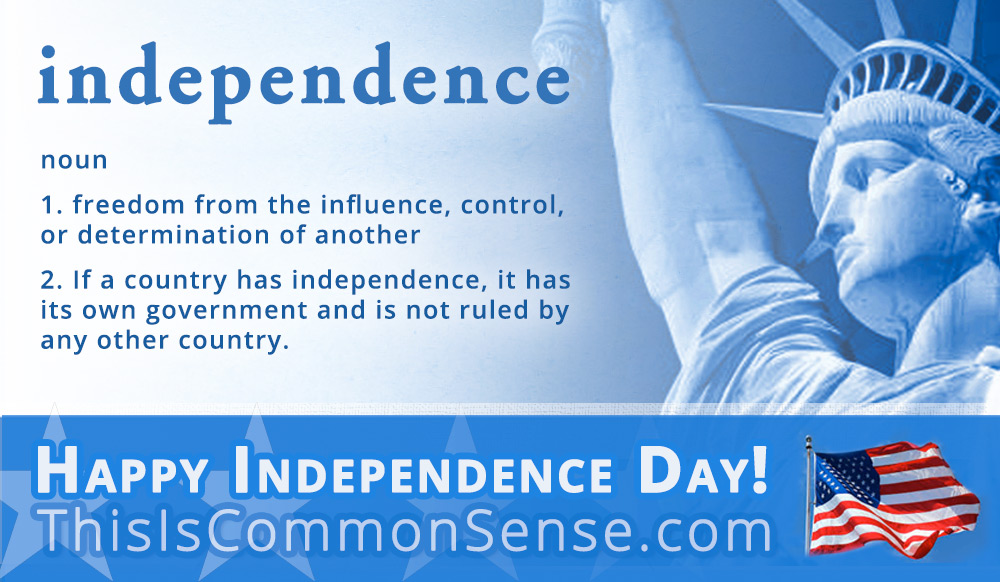
Independence Day

independence:

noun

1. freedom from the influence, control, or determination of another. If a country has independence, it has its own government and is not ruled by any other country.

2. If a country has independence, it has its own government and is not ruled by any other country.


Happy Independence Day!


Categories
Accountability First Amendment rights folly general freedom ideological culture media and media people moral hazard nannyism national politics & policies Regulating Protest too much government U.S. Constitution

Freedom “Weaponized”

Justice Elena Kagan has a way with words. The conservative majority on the court, she said after two recent rulings, is “weaponizing the First Amendment.”

What a phrase! But what does it mean?

“Conservative groups, borrowing and building on arguments developed by liberals,” explains The New York Times, “have used the First Amendment to justify unlimited campaign spending, discrimination against gay couples and attacks on the regulation of tobacco, pharmaceuticals and guns.”

First: if “liberals” now find themselves not supporting the idea of particular freedoms, or freedom in general, are they really “liberal”?

Second: “borrowing arguments” is what we expect to happen. Logic isn’t partisan.

Third: the point of the Bill of Rights is to “weaponize” the defense of freedom.

Remember, it is freedom of speech; freedom of the press; freedom of association; freedom of exercising one’s religion. The First Amendment weaponizes their defense by disallowing Congress from legislating against them.

Now, it has long been a “problem” that these listed freedoms blend together. They all work together or don’t work at all. And each points to freedom more broadly.

Kagan wants to read freedoms narrowly — though liberals historically have, indeed, read them broadly.

She’s objecting to two recent rulings. The first prohibits states from requiring pregnancy centers to talk up abortion options to their clients. An obvious free speech issue. The second prohibits governments from backing unions in their extraction of “agency fees” from non-members. An incontrovertible issue of freedom of association.

Kagan and The New York Times apparently think that “liberalism” means defending some freedoms in some contexts, but denying freedom in others.

This is Common Sense. I’m Paul Jacob.
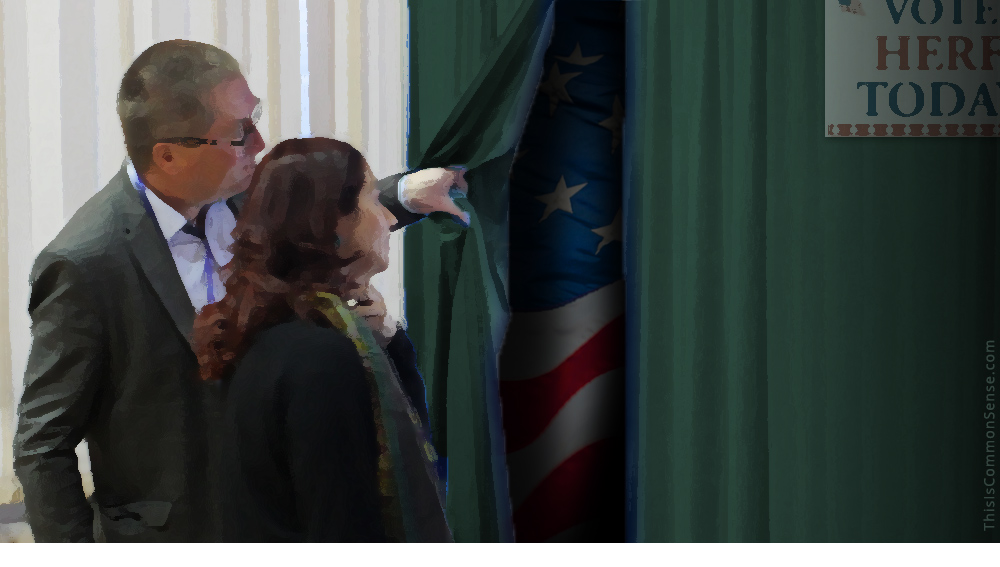


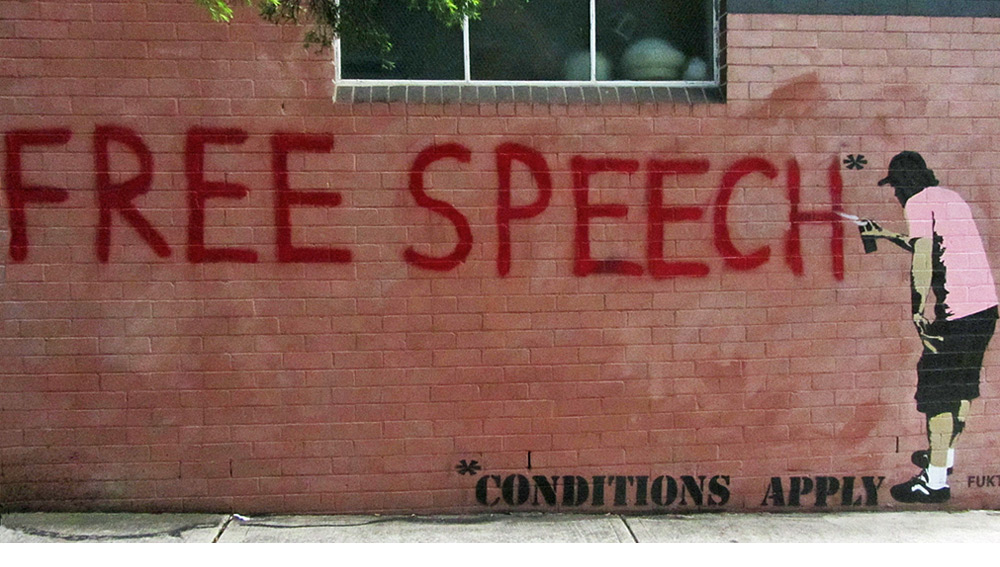
Illustration by Newtown grafitti


Categories
Accountability crime and punishment ideological culture media and media people moral hazard national politics & policies political challengers responsibility

Black Mask Terrorism

I was in Arkansas on Saturday when the downtown streets of Portland, Oregon, “exploded into its worst protest violence of the Trump era,” as The Guardian explains. “More than 150 supporters of the far-right Patriot Prayer group fought pitched street battles with scores of anti-fascist protesters. In total, nine people were arrested.”

Notice that “Patriot Prayer” — a group sponsored by a Republican Senatorial candidate, and which says it stands for free speech — was labeled “far right” while the “anti-fascist protesters” were not called “far left.”

Characteristically, The Guardian vagues it up. “Violence suddenly ‘erupted,’” noted a Romanian YouTuber of the British rag’s evasiveness. “Who started it? We don’t know.”

Well, from the videos I saw it looked like the “anti-fascists” started it. The “patriots” were marching down the street when a young man, with helmet and backpack, and a young women, dressed in black, marshaled antifa mobs towards the legal march, and then stones and bottles were thrown, and explosives, too . . . into the Patriot Prayer rally.

Note: the Patriot Prayer group had filed the paperwork for the march; antifa had not. The Portland police did not protect the licensed marchers, but did revoke their license, telling everyone to disperse (threatening “duress” to the non-compliant) after the violence broke out.

If you did not carefully look at more than one video, you might be confused. Indeed, not all videos showed the crucial break from peace to violence.

So, what other clues might one look for?

In old cowboy movies, whoever ganged up masked, and wore black, were usually the bad guys.

Antifa — thanks for providing the clues: masks, black fighting gear, and Luciferian handsigns.

This is Common Sense. I’m Paul Jacob.