Categories
First Amendment rights international affairs social media

Germany Versus X

The question is freedom of speech. Many German officials are opposed. Twitter‑X, or X, is in favor.

As Reclaim the Net summarizes the case, “German prosecutors are testing whether the reach of their censorship laws can outstrip the guardrails of international treaties.”

These prosecutors have been going after three X managers for alleged “obstruction of justice.” This obstruction consisted of refusing to immediately give prosecutors data on users who utter government-​disapproved speech.

The X managers have been adhering to the provisions of a bilateral treaty, the Mutual Legal Assistance Treaty, under which the German requests are to be reviewed in U.S. legal channels before X can be forced to comply. Which increases the chances that X will not be forced to comply.

The prosecutors regard the managers’ refusals as a form of criminal interference. The legal and constitutional issues are now being battled over in German courts.

This is the German government which has been in the news for raiding the homes of people who post sentiments online of which the government disapproves.

That X is not meekly obeying orders to violate the trust of account holders and turn over their private information has upset German advocates of censorship. One MP, Anna Lührmann of the Green Party, says that X’s resistance to censorship is a “scandal” that “goes against fair competition and puts our democracy at risk.”

I don’t think, though, that democracies fail to be robust as they become more like dictatorships. Germany has it all inverted.

This is Common Sense. I’m Paul Jacob.


PDF for printing

Illustration created with Krea and Firefly

See all recent commentary
(simplified and organized)
See recent popular posts
Categories
First Amendment rights international affairs national politics & policies

TikTok Smoke But No Gun?

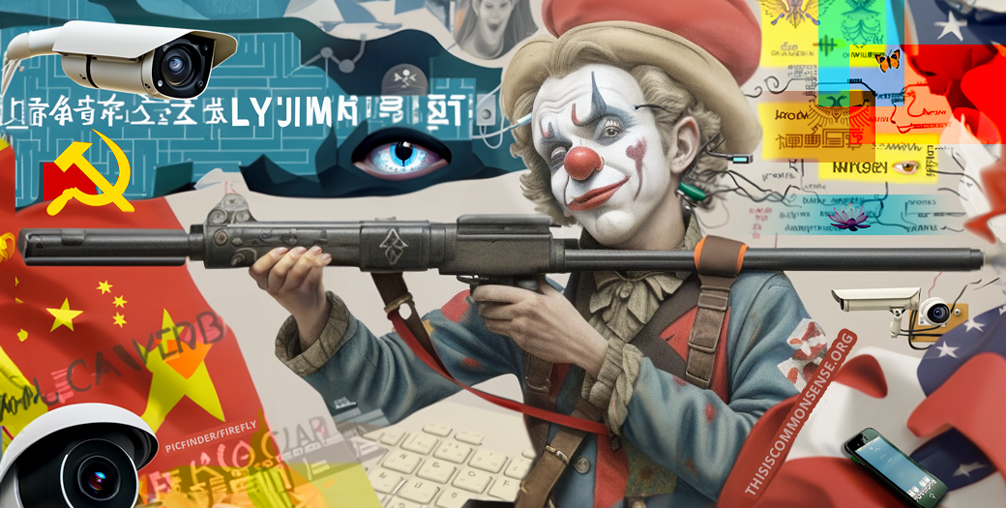
I’d like to ban the Communist Party — in China. But TikTok — here?

The app’s possible use as spyware and worse by Chinese Communist Party operatives should be investigated thoroughly.

“Lawmakers and regulators in the West have increasingly expressed concern that TikTok and its parent company, ByteDance, may put sensitive user data, like location information, into the hands of the Chinese government,” explains The New York Times. “They have pointed to laws that allow the Chinese government to secretly demand data from Chinese companies and citizens for intelligence-​gathering operations.”

This concerns me enough to not be on TikTok, but while we smell smoke, I see no smoking gun.

And banning Tik Tok has every appearance of doing what the CCP would do — and did with Facebook and YouTube and X (formerly known as Prince — er, Twitter). Not to mention being unconstitutional.

The TikTok ban that passed the House last week — with only 50 Democrats and 15 Republicans voting No — if passed by the Senate and signed by the President, would set up another level of surveillance and Internet control that would be used against American citizens beyond users of this social media video-​sharing platform.

It comes down to good ends not justifying evil means, in this case an all-​out government attack upon freedom of speech and press.

There are things the federal government could do — and already has done — to limit TikTok’s influence. Last year, the U.S. (along with Canada) banned it from all government devices. 

This didn’t even require an act of Congress. Arguably, Trump could have done this with Facebook and Twitter on federal government devices when it became clear that these platforms were being used to orchestrate partisan speech control.

And, of course, a general social cause against TikTok could be engaged without threat of force. Political leaders owe it to the people to speak out.

This is Common Sense. I’m Paul Jacob.


PDF for printing

Illustration created with PicFinder and Firefly

See all recent commentary
(simplified and organized)
See recent popular posts
Categories
First Amendment rights general freedom government transparency

The Censorship Industrial Complex

“Many people insist that governments aren’t involved in censorship,” tweeted Michael Shellenberger on Tuesday, “but they are. And now, a whistleblower has come forward with an explosive new trove of documents, rivaling or exceeding the Twitter Files and Facebook Files in scale and importance.”

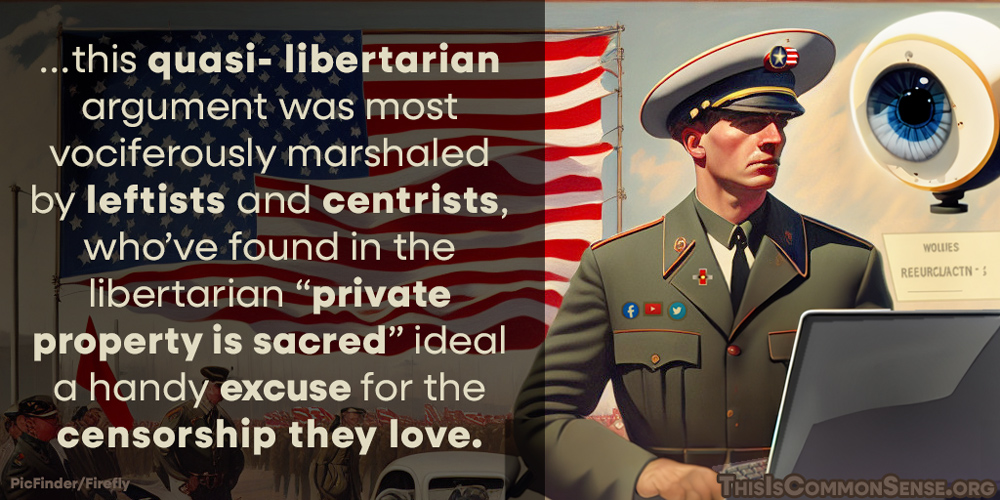
Because much of recent years’ censorship has occurred on corporate-​owned-​and-​run social media platforms, like YouTube, Facebook and Twitter (now X), some have claimed “it’s not censorship” and, because private, is immune to legal prosecution. This quasi-​libertarian argument was most vociferously marshaled by leftists and centrists, who’ve found in the libertarian “private property is sacred” ideal a handy excuse for the censorship they love.

They love it because of what they hate: Fox News, most specifically, and alternative media based on podcasting and vlogging platforms, more generally. These media outlets have bucked the foreign policy establishment as well as the new racism of Critical Race Theory, and official narratives about COVID. 

So they must be squelched — as “disinformation.”

This is all made more clear in what Shellenberger calls “The CTIL Files.” 

The leaked documents “describe the activities of an ‘anti-​disinformation’ group called the Cyber Threat Intelligence League,” which “officially began as the volunteer project of data scientists and defense and intelligence veterans but whose tactics over time appear to have been absorbed into multiple official projects, including those of the Department of Homeland Security.’’

While government operatives and contractors organized, at first, to avoid constitutional and legislative limitations to conducting propaganda and psychological warfare against Americans, the plan was, from the beginning (says the source), “to become part of the federal government.”

In the end, “the military and intelligence agencies” got involved, along with “civil society organizations and commercial media.” Methods used include burner phones, plausible deniability, and “sock puppet accounts and other offensive techniques.”

You can watch today’s hearing (10:00 AM EST) of the Select Subcommittee on the Weaponization of the Federal Government, featuring Shellenberger, Rupa Subramanya, and Matt Taibbi.

Tell me what you think.

This is Common Sense. I’m Paul Jacob.


PDF for printing

Illustration created with PicFinder and Firefly

See all recent commentary
(simplified and organized)
See recent popular posts
Categories
crime and punishment First Amendment rights social media

Big-​Gov-​Google-​Plex

A major presidential candidate is suing YouTube for censorship.

The candidate’s a Democrat.

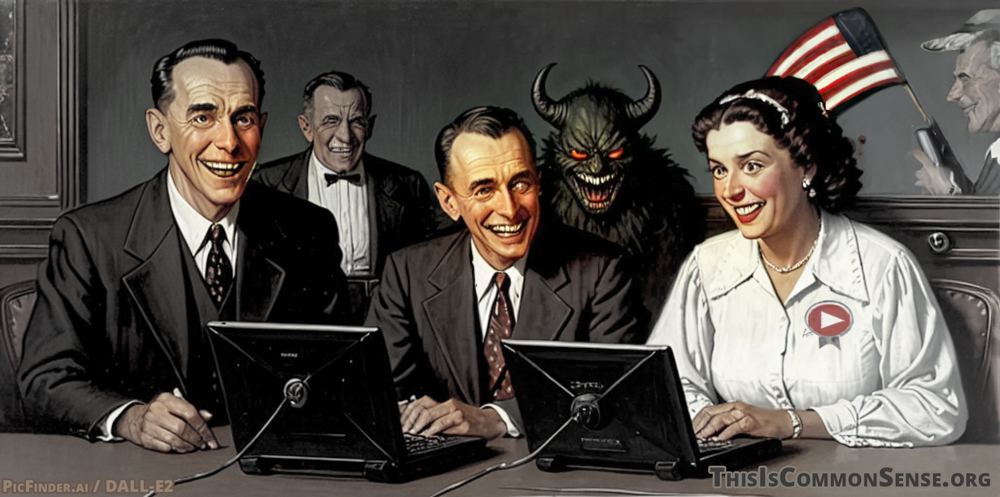
That’s right. Democrats can also be muzzled by social media companies … that is, by big corporations that obey the First Amendment-​violating instructions of government officials.

Democratic Presidential candidate Robert F. Kennedy, Jr., has filed a lawsuit against YouTube and its parent company, Google, for collaborating with the federal government to violate his free speech rights by removing various of his videos from YouTube.

Kennedy’s sins include openly disputing Official Government Doctrines about COVID-​19 and the pandemic. Doctrines espoused by, among others, the incumbent he is running against.

The title of the complaint names only “Google LLC” and “YouTube LLC.” But the document makes clear the originating role of the federal government in censoring Kennedy. The complaint is avowedly about “freedom of speech and the extraordinary steps the United States government has taken under the leadership of Joe Biden to silence people it does not want Americans to hear.”

YouTube’s conduct “may be fairly treated as that of government itself,” the filing explains. “For example, although it cited its own COVID vaccine misinformation policies when censoring Mr. Kennedy, the policies rely entirely on government officials to decide what information gets censored.”

The relief that Kennedy seeks includes restoration of the deleted videos and an order declaring Google’s speech-​banning misinformation policies to be “unconstitutional on their face.”

Kennedy wants to be able to state his views and distinguish them from the incumbent’s without being routinely censored by the Big-Gov-Google-plex.

Google and other social media companies must somehow be prevented from colluding with politicians and bureaucrats to interfere in the democracy they only pretend to support.

This is Common Sense. I’m Paul Jacob.


PDF for printing

Illustration created with PicFinder​.ai and DALL-E2

See all recent commentary
(simplified and organized)
See recent popular posts
Categories
First Amendment rights ideological culture too much government

The Way We Censor Now

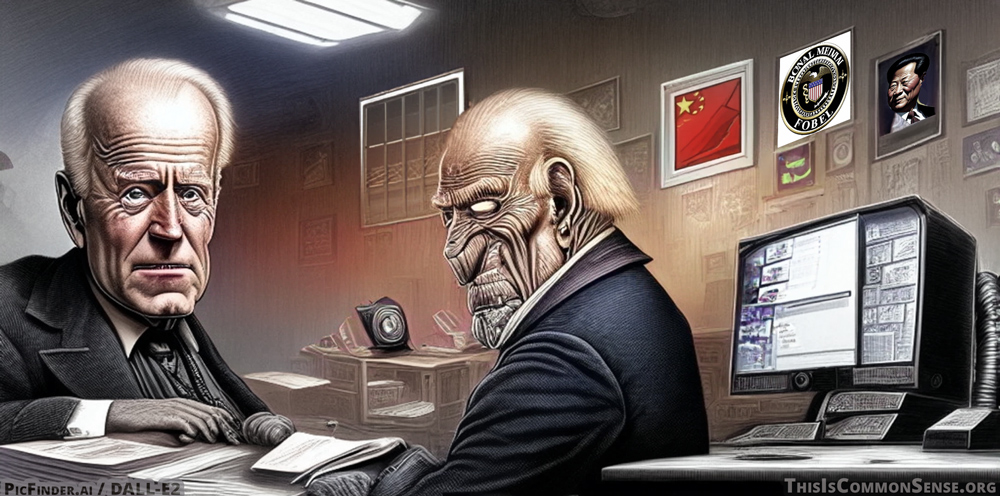
In China, the government now sells software to social media companies so they have the best real-​time idea of what the government currently does not want people to say. 

The companies then perform such obliging actions as removing posts and banning users.

The software serves as a self-​defense system — of the social media companies. You see, if the companies fail to sufficiently prevent government-​outlawed speech on their websites, they will be punished. Maybe ruinously. By the Chinese government.

So who is doing the censoring here? 

Obviously, the government.

In the U.S., the intimidatory relationship between government and social media firms is not quite so advanced or nearly so clear. But as we keep learning from documents extracted by litigation and subpoenas, for years now our federal government has been telling firms to censor things, and the firms have complied.

The latest example is that Facebook, which has always said that its content-​moderation policies are “independent,” obeyed White House demands to censor posts about the likelihood that the COVID-​19 virus originated in a Chinese lab, not in nature.

In a July 2021 email, Nick Clegg, a Facebook executive, asked whether anyone could “remind me why we were removing — rather than demoting/​labeling — claims that Covid is man-made.”

To which a VP in charge of content policy replied: “We were under pressure from the [Biden] administration and others to do more. We shouldn’t have done it.”

No matter how White House press secretaries or others try to dress it up, “private” censorship conducted in obedience to governmental requests is governmental censorship.

And is eerily close to the Chinese practice.

This is Common Sense. I’m Paul Jacob.


PDF for printing

Illustration created with PicFinder​.ai and DALL-​E2

See all recent commentary
(simplified and organized)
See recent popular posts
Categories
First Amendment rights media and media people social media

First Amendment: Irrelevant?

For at least three years, we have all suspected — well, known — that the federal government has been pressuring social-​media companies to censor speech that government officials dislike regarding the pandemic and other matters.

One clue: officials like Jennifer Psaki, White House press secretary from 2021 to 2022, forbiddingly and publicly demanded that social-​media firms do more to suppress disapproved speech.

Even so, many left-​wingers stressed that once allegedly open public forums like YouTube, Facebook, pre-​Musk Twitter et al. were private entities with every darn right to set standards for posting. 

Just market decisions, that’s all that was happening here!

Now that litigation has delivered so much evidence that government agencies have been colluding to censor, directly and chronically “working with” social-​media firms to suppress dissent, many on the left are not even pretending to favor protection of First Amendment rights to express speech they disagree with.

Jonathan Turley notes that according to The New York Times, a recent ruling temporarily enjoining the Biden Administration from colluding to censor would, by fostering open discourse, lamentably “curtail efforts to combat disinformation.”

Washington Post editors and others on the left “no longer deny censoring,” agrees Jeffrey Tucker. “Now they defend censorship as a policy in the national interest.… They don’t even pretend to have respect for the First Amendment that gave rise to the national media in the first place. They now seek a monopoly of opinion and interpretation.”

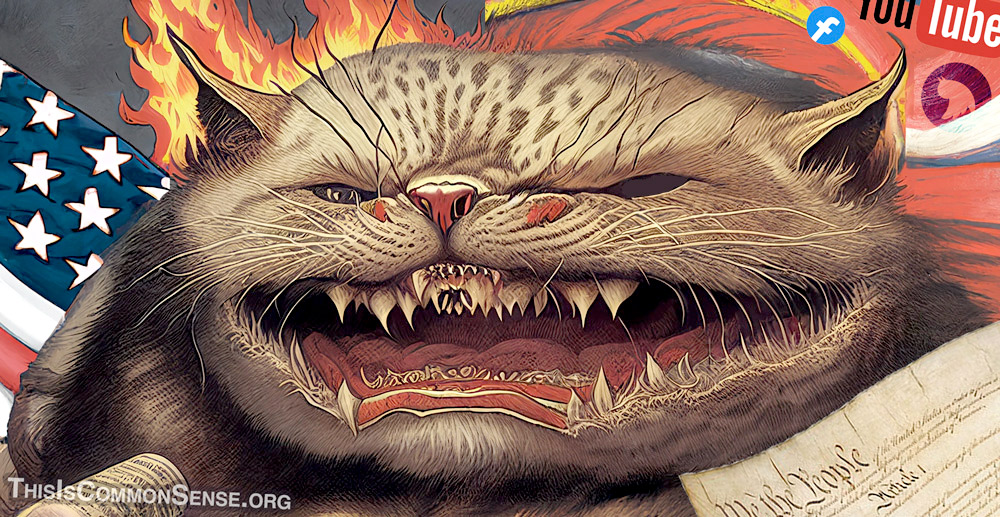
Yes. Cat’s out of the bag.

This is Common Sense. I’m Paul Jacob.


PDF for printing

Illustration created with PicFinder​.ai

See all recent commentary
(simplified and organized)
See recent popular posts
Categories
First Amendment rights judiciary social media

Censors Cancelled

The verb is “enjoin.”

In a July 4 preliminary injunction, Judge Terry Doughty has enjoined federal officials from communicating with social-​media companies except on matters pertaining to criminality or threats to national security.

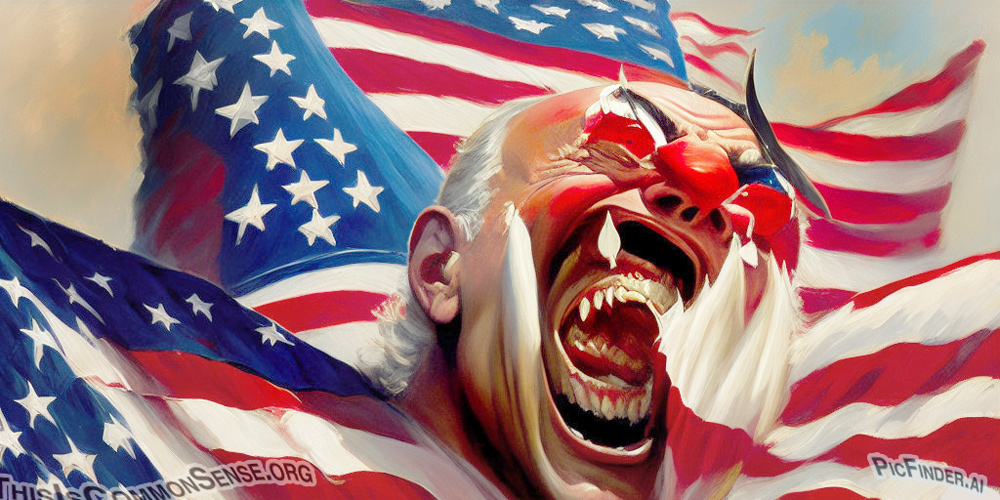
“The Plaintiffs are likely to succeed on the merits in establishing that the Government has used its power to silence the opposition,” explains Doughty. The government “seems to have assumed a role similar to an Orwellian ‘Ministry of Truth.’”

For a few years now, government officials have asked social-​media personnel to censor speech on topics like the pandemic, elections, and laptops dropped off by Hunter Biden, speech that officials want to suppress only because they disagree with it or find it inconvenient. Politically.

A lawsuit brought by Missouri and Louisiana argues that federal officials pressured and colluded with social-​media companies to block speech protected by the First Amendment.

Some critics of this and other lawsuits — and of more non-​formal objections to the government’s conduct — say that what has been exposed in documents brought to light during litigation, and in the Twitter files, cannot be called governmentally instigated censorship at all.

What’s really going on, they burble, is nothing more than persons working for the FBI, the CDC, the White House, and other such government-​force-​backed entities idly wondering — in incidental and nonbinding casual conversation, mind you — whether the social-​media company they’re just happening to hobnob with could come down like a ton of bricks on the accounts of persons saying things that government officials disapprove. No big deal.

Not the most plausible pseudo-​exculpation I’ve ever heard.

The relevant adjective? “Guilty.”

This is Common Sense. I’m Paul Jacob.


PDF for printing

Illustration created with PicFinder​.ai

See all recent commentary
(simplified and organized)
See recent popular posts
Categories
First Amendment rights ideological culture Internet controversy social media

Google Can’t Have That

Over the last several years, one has put one’s YouTube speech at risk by addressing such verboten or intermittently suppressed topics as pandemic policy, vaccine efficacy, origin of the COVID-​19 virus, “climate change” (are winter, summer, and all natural disasters really caused by carbon footprints? inquiring minds want to know!), 2020 election fraud, and whatever else inspires post-​Enlightenment institutional censors to clatter into action.

Because of the emails and other documents that have come to light in various lawsuits, we now know for sure that social-​media companies have not been censoring independently. 

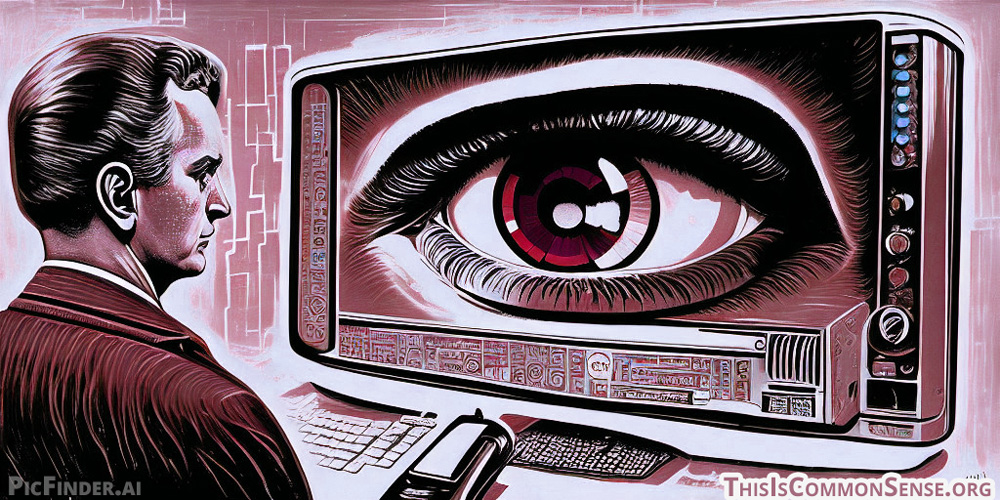
They’ve been in cahoots with government agencies — agencies eager to find corporate workarounds to the First Amendment.

A recent target of Google’s YouTube? Robert F. Kennedy, Jr.

Running for president as a Democrat in competition with the alleged incumbent, Joe Biden, this son of assassinated 1968 Democratic presidential candidate Bobby Kennedy is disturbing the serene pools of so-​called thought that constitute Acceptable Opinion and Settled Science.

I often disagree with Kennedy. But I feel that he isn’t just feeding me B.S.; he actually believes stuff. 

He may be mostly wrong, but I prefer that to mostly crooked.

Google has just deleted another Kennedy video, one in which he converses with Canadian psychologist Jordan Peterson about climate change, COVID-​19, and a possible link between exposure to chemicals and sexual dysphoria.

This last musing seems dubious. But, whatever, let the guy talk. Except — hold on — isn’t RFK Jr. causing Joe Biden a lot of political trouble?

Can’t have that. 

Or, anyway, Google can’t have that. 

Or whichever Biden administration officials are directing Google (or vice versa) can’t have that.

This is Common Sense. I’m Paul Jacob.


PDF for printing

Illustration created with PicFinder​.ai

See all recent commentary
(simplified and organized)
See recent popular posts
Categories
First Amendment rights free trade & free markets too much government

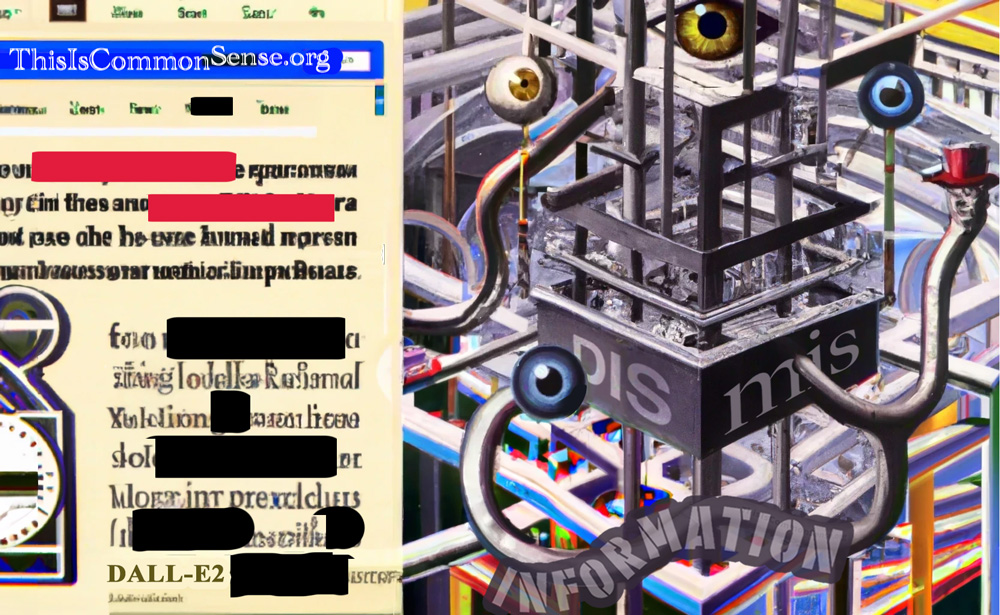
X Information

For well over a century, politicians have pushed Big Government/​Big Business partnerships. The policy, indeed, is as old as politics. While we who like free markets often like [some of] the products of today’s biggest businesses, we must recognize that much of what these corporations sell us comes with strings attached — as we’ve found out to our dismay in the corruption of major social media outfits; as proven by the attacks on our speech and to the undermining of free elections.

Before the #TwitterFiles revelations, Michael Rectenwald, author of The Google Archipelago and other books, wrote a commentary that appeared in the pre-​Christmas edition of The Epoch Times: “Who Really Owns Digital Tech?” In less than a thousand words, Rectenwald makes clear how deep governments have been involved in the tech space — particularly the Internet Space.

“Given the evidence of government start-​up funding,” Rectenwald reasons, “we may have to concede the argument that the internet might have developed differently, more slowly, or not at all if the Defense Department hadn’t been involved at the outset. Likely, what we know as the internet would have become a system of private networks” — and in this dispersed-​power system, free speech would not become a major issue, because not as easy a target.

As it is, however, “Twitter has operated as an instrument of the uniparty-​run state, squelching whatever the regime deems ‘misinformation’ and ‘disinformation,’” Rectenwald writes, giving us an ominous list of the topics of xinformation:

  • warfare
  • economics
  • pandemics
  • elections
  • climate change catastrophism
  • the Great Reset

There are big gains for … some. Big Biz/​Big Gov partnerships imply gains for both partners: business people gain access to governmental power and favors, and politicians and functionaries gain leverage to mold the citizenry. 

And that is where we have seen the partnership’s worst.

So far.

This is Common Sense. I’m Paul Jacob.


PDF for printing

Illustration created with DALL-​E2

See all recent commentary
(simplified and organized)
See recent popular posts
Categories
First Amendment rights free trade & free markets too much government

X Information (alternate illustration)

For well over a century, politicians have pushed Big Government/​Big Business partnerships. The policy, indeed, is as old as politics. While we who like free markets often like [some of] the products of today’s biggest businesses, we must recognize that much of what these corporations sell us comes with strings attached — as we’ve found out to our dismay in the corruption of major social media outfits; as proven by the attacks on our speech and to the undermining of free elections.

Before the #TwitterFiles revelations, Michael Rectenwald, author of The Google Archipelago and other books, wrote a commentary that appeared in the pre-​Christmas edition of The Epoch Times: “Who Really Owns Digital Tech?” In less than a thousand words, Rectenwald makes clear how deep governments have been involved in the tech space — particularly the Internet Space.

“Given the evidence of government start-​up funding,” Rectenwald reasons, “we may have to concede the argument that the internet might have developed differently, more slowly, or not at all if the Defense Department hadn’t been involved at the outset. Likely, what we know as the internet would have become a system of private networks” — and in this dispersed-​power system, free speech would not become a major issue, because not as easy a target.

As it is, however, “Twitter has operated as an instrument of the uniparty-​run state, squelching whatever the regime deems ‘misinformation’ and ‘disinformation,’” Rectenwald writes, giving us an ominous list of the topics of xinformation:

  • warfare
  • economics
  • pandemics
  • elections
  • climate change catastrophism
  • the Great Reset

There are big gains for … some. Big Biz/​Big Gov partnerships imply gains for both partners: business people gain access to governmental power and favors, and politicians and functionaries gain leverage to mold the citizenry. 

And that is where we have seen the partnership’s worst.

So far.

This is Common Sense. I’m Paul Jacob.


PDF for printing

Illustration created with DALL-​E2

See all recent commentary
(simplified and organized)
See recent popular posts