Categories
Accountability crime and punishment folly moral hazard nannyism national politics & policies Popular responsibility too much government U.S. Constitution

Where the Beef Is

In South Florida, two McDonald’s customers are suing the fast food behemoth for charging them for cheese they say they do not want.

“According to a class-action lawsuit filed in Fort Lauderdale federal court on May 8,” informs the Miami Herald, “Cynthia Kissner, of Broward County, and Leonard Werner, of Miami-Dade, say they have had to pay for cheese they don’t want on their Quarter Pounder sandwiches.”

Before you upchuck every last greasy, chemical-infused/extra-beef morsel of this story, let’s look at the facts:

The Quarter Pounder went national in 1973.

The fast-food franchise used to charge extra for the cheese.

But “at some point” the junk food purveyor stopped “separately displaying these products for purchase on menus.” These days, only the Quarter Pounder with Cheese and the Double Quarter Pounder with Cheese are listed.

McDonald’s joints in Florida, at least, provide no discount for removing the cheese.

Rip-off, say these two customers. How big? A $5 million injury!

That’s what they are suing for.

It’s mad. The lawsuit, that is. You are not entitled to set the pricing and menu policies of stores you do not own.

In a celebrated analysis of loyalty in markets, an economist revealed that consumers have a continuum of options, including “voice” and “exit.”

“Voice” is what you express when you argue your case in a family or a democracy — and fast food provisioners. Decent people will, if disgruntled, choose “exit,” driving down the street to a Wendy’s.

McDonald’s could rightly charge extra for withholding the cheese.

That it doesn’t do so? Chalk it up to savvy.

This is Common Sense. I’m Paul Jacob.



PDF for printing


Categories
Accountability crime and punishment education and schooling ideological culture national politics & policies responsibility Second Amendment rights

Cowards All Around

Just-retired Scot Peterson is a millionaire, thanks to the generous taxpayers of Broward County, Florida.

You know Peterson as the sheriff’s deputy assigned to protect students at Marjorie Stoneman Douglas High School, who, instead of entering the building where the shooter was mowing down 17 unarmed students and teachers, protected himself by waiting outside.

Peterson claimed “he remained outside the school because he didn’t know where the gunfire was coming from,” noted BuzzFeed. But “[r]adio transmissions from the day of the shooting have since contradicted Peterson’s defense . . .”

Following the cowardly non-performance of his duty, Peterson promptly retired and began drawing his pension. As the Sun Sentinel newspaper reported Tuesday, his monthly check is for $8,702.35 — an annual salary of $104,428.20.

Should the 55-year-old live to the age of 75, he’ll draw more than $2 million.

In fact, the cowardly Peterson is being further rewarded with a $2,550 annual raise — earning more in retirement than he was earning while actually working.

I use the word “earning” and the phrase “actually working” loosely.

Reacting to the news, the father of one of the murdered students called Peterson’s lavish pension “disgusting” and “outrageous.”

Recoil at the thought of this derelict policeman raking in such mega-moolah during decades of retirement — but that isn’t the only outrage.

How can Broward County afford to pay even their bravest police officers millions of dollars in retirement?

They can’t . . . for much longer.

Regardless, elected officials dare not do anything about it. They fear incurring the wrath of public employee unions . . . and risking their own pension windfalls.

This is Common Sense. I’m Paul Jacob.



PDF for printing


Categories
ballot access initiative, referendum, and recall local leaders political challengers Regulating Protest too much government

New-Fangled Vote Counting

Call me old-fashioned, but when you go to the pols to cast your vote on a ballot measure, your Yes vote should count for yes and your No vote for no.

And if you choose not to vote, your non-vote should count for neither yes nor no.

That’s just common sense. Right?

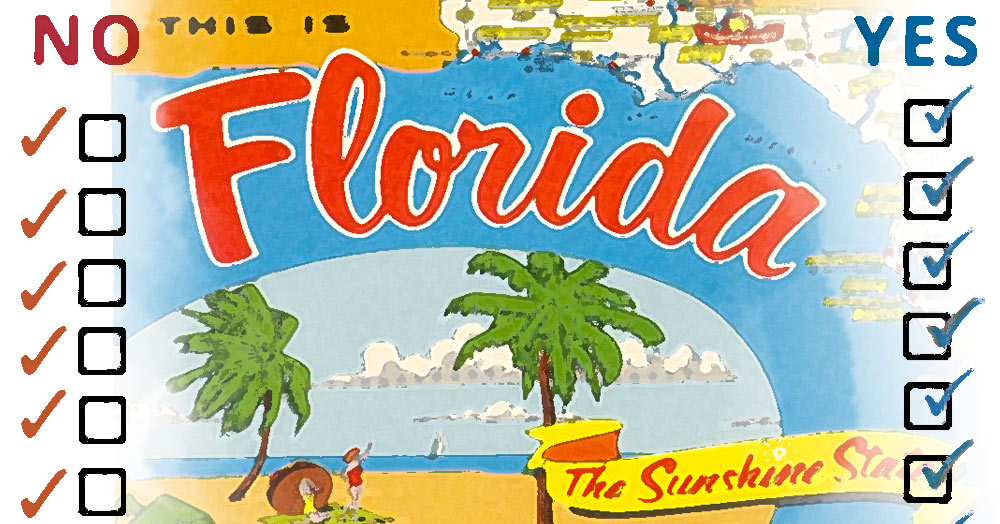
Well, meet its antithesis: Proposal 97, now being considered by Florida’s powerful Constitution Revision Commission (CRC).* Proposal 97 would count all those who do not cast a vote for or against a ballot measure as a No vote against it.

To pass a constitutional amendment in the Sunshine State already requires a supermajority vote of at least 60 percent of those who do cast a vote on the measure. Under Proposal 97, counting all those not voting on it as No votes, that percentage would necessarily go even higher. If 10 percent don’t vote, Yes would have to come in at 67 percent to win.

This is minority rule . . . with an extra perverse twist.

The supermajority requirement encourages big money interests to spend heavily against ballot initiatives — even when the issues have clear majority support — because if they can manage to lose by less than 20 points (60–40 percent), they win. Now all opponents need do is poison the water with the nastiest campaigning imaginable, causing more voters to throw up their hands or pinch their noses and avoid the issue . . .

. . . thus, being counted as voting No.

Don’t abstain. Stop Proposal 97. Tell them NO here.

This is Common Sense. I’m Paul Jacob.


* How powerful is the CRC? Every 20 years it meets with the awesome authority to refer constitutional amendments directly to the ballot — as many as it wishes and the amendments can be packaged to include several different subjects. No other state has a similar body. Of the 37 commission members, the governor appoints 15, the Senate president and the House speaker each appoint nine, the chief justice of the state supreme court appoints three and the attorney general is an automatic member.


PDF for printing


Categories
crime and punishment general freedom ideological culture media and media people moral hazard nannyism national politics & policies privacy responsibility Second Amendment rights too much government U.S. Constitution

He Applied Himself

“I need to make this count,” wrote a young man in Everett, Washington.

Unfortunately, it looks like he wasn’t attempting a big career-oriented project. He was planning a mass shooting.

“I need to get the biggest fatality number I possibly can,” is one of many damning journal passages the police have made public. Apparently he had settled on attacking the high school he attended. “I’ve been reviewing many mass shootings/bombings (and attempted bombings) I’m learning from past shooters/bombers mistakes.”

Ambition and rigor: missapplied.

Fortunately, his grandmother read his journal and discovered a rifle in his guitar case. She turned him into the police the Tuesday before the Florida shooting I wrote about last week. And maybe just in time.

Meanwhile, last week’s Parkland, Florida, shooting dominates the headlines. Fellow students and neighbors of the Florida shooting victims have ramped up their condemnations and demands — including at a horrorshow “town hall” on CNN.

Yet the nature of the difficulties in preventing such atrocities has become lost in the rhetoric and anger.*

In a free society, we cannot arrest people before they commit a crime. In the Everett case, officials were “lucky”: despite the young man’s lack of a criminal record, they were able to charge him with a burglary they allege he committed the day before arrest — and his extensive planning notes are being taken as evidence for intent. He’s also been charged with attempted murder.

We should be in inquiry mode, right now. It could be helpful to know the exact motivations for both the Florida shooter and the Everett wannabe — and similar cases.

This is Common Sense. I’m Paul Jacob.
 

* Law enforcement is tasked with uncovering spree shooting plots today — and to protect, too. But the armed, uniformed school resource officer at the Parkland high school failed to protect. He heard the gunshots but never entered the building, while the shooter killed 17 innocents.


PDF for printing


Categories
Accountability crime and punishment general freedom ideological culture media and media people moral hazard nannyism national politics & policies responsibility Second Amendment rights too much government U.S. Constitution

Killer Inlaudabilis

On the day that Alexander the Great was born, or so the ancients tell us, a man named Herostratus burned down one of the Seven Wonders of the World, the Temple of Artemis at Ephesus.

Why? Just for the infamy.

Which is why the Ephesians proscribed mention of the man’s name. That is called a damnatio.* Obviously, that damnatio didn’t stick, for we know his name now. How? Historian Theopompus recorded it for our . . . edification? Vilification?

I say we should follow Ephesian example and not mention by name the recent Florida school shooter/murderer of students. There should be a widespread damnatio in the press and blogosphere against the young man. Let’s not to give him his infamy, and not encourage copycats — nor in any way normalize his horrible act.

Is this a “solution” to the problem of school shootings? Probably not. But there may be none — at least nothing sure-fire.

Yes, a non-blundering FBI might’ve helped.** But virtue-signaling/grandstanding calls for unnamed gun control measures won’t. And treating “mental health” issues more “professionally,” particularly by easing up involuntary commitment law, is probably a recipe for putting away innocent and unpopular people.

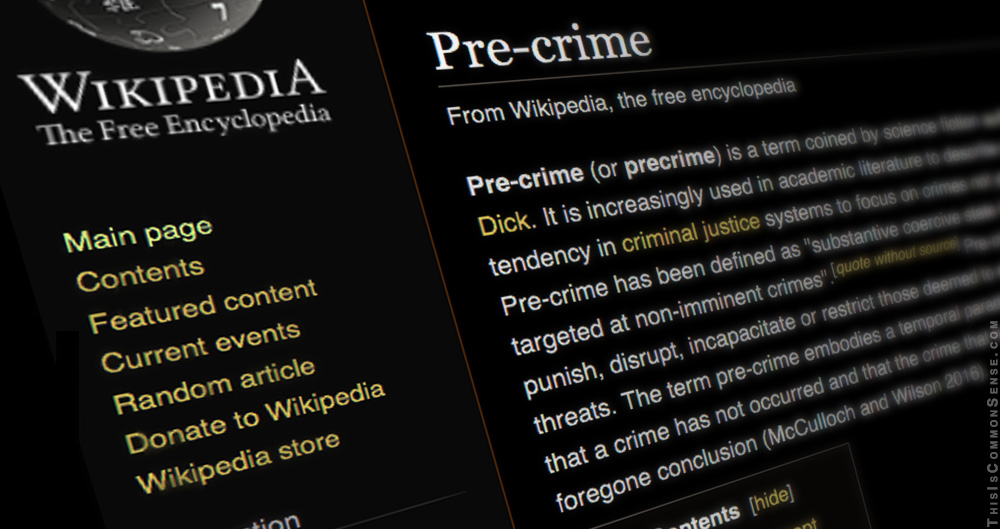
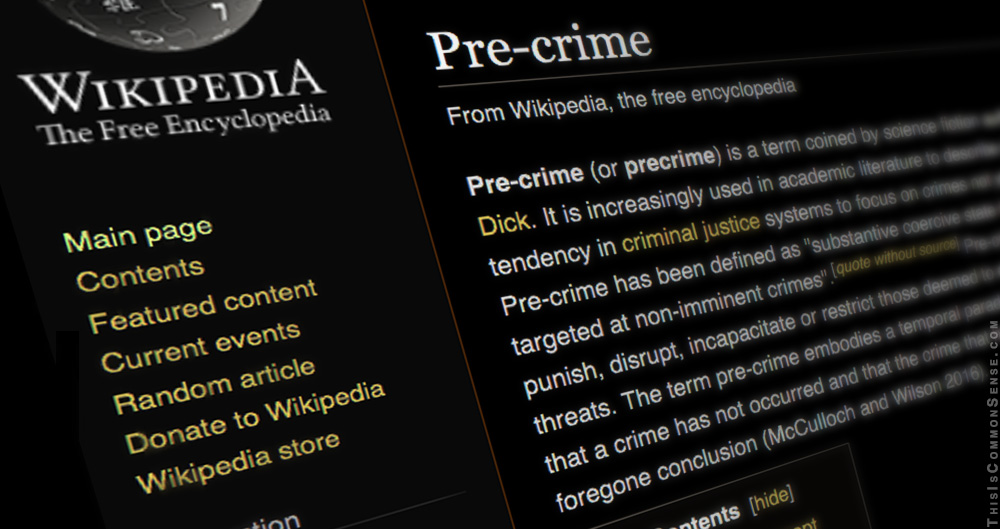
Pre-crime” is itself criminal.

So, what to do? Maybe it is this: “Notice those around you who seem isolated, and engage them,” as Robert Myers advises. It is loneliness, he argues, that “causes these shooters to lash out. People with solid connections to other people don’t indiscriminately fire guns at strangers.”

But that’s not an after-the-fact solution.

This is Common Sense. I’m Paul Jacob.
 

* FYI, the arsonist’s status as an unspeakable person was called inlaudabilis.

** As if to fit an established pattern, the FBI failed to take seriously enough an early citizen-initiated alert regarding the young man who went on to commit the mass shooting. Prophecy is a tough biz; it is no doubt easier to connect the dots looking back after the fact.


PDF for printing


Categories
Accountability crime and punishment First Amendment rights general freedom government transparency local leaders moral hazard Regulating Protest too much government U.S. Constitution

Lock Her Up

“Who Are We?” I asked Sunday at Townhall.com.

Today’s question: What have we come to?

Under a seemingly click-bait headline in The Atlantic, “Can Government Officials Have You Arrested for Speaking to Them?” Garrett Epps examines last week’s outrageous handcuffing and arrest of a Louisiana teacher, Deyshia Hargrave, for speech displeasing to the Vermilion Parish school board at a public meeting.

The elementary school teacher complained about a $30,000 raise the board was giving the superintendent, noting that teachers had not seen an increase in nearly a decade. After asserting that the raise would be “basically taken out of the pockets of teachers,” she was ruled out of order by the school board president and then asked to leave the premises. She calmly left the meeting room . . . only to be forced to the floor, handcuffed and arrested once in the hallway.

Police claimed the arrest was for “remaining after having been forbidden” and “resisting an officer.”

The school district announced it won’t press charges. Very funny. Anyone can see from the video that her treatment was excessive.

Next month, the U.S. Supreme Court will hear oral arguments in Lozman v. Riviera Beach, Florida, where an arrest was clearly retaliatory, but the city is newly claiming another violation it could have used to arrest Mr. Lozman.

Does this after-the-fact adding on of charges provide governments with an escape clause? As Epps argues, a Lozman decision “could either rein in, or embolden, the tiny-handed tyrants who rule county buildings and city halls around the country.”

If respectfully challenging our so-called public servants in meetings designed for that can lead to being arrested, handcuffed and dragged off, we no longer live in ‘the land of the free.’

This is Common Sense. I’m Paul Jacob.

PDF for printing


Categories
Accountability general freedom local leaders term limits too much government

Term Limits for the Memories

Opponents say term limits destroy “institutional knowledge.”

Imagine legislatures where unsophisticated solons blindly fashion public policies lacking any knowledge of the pluses or minuses of past legislation.

Well . . . actually that explanation bears a striking resemblance to the status quo in our career-dominated Congress. Who wants that?

Now comes an interesting real-world example of such institutional memory: term limits itself.

Back in 1991, residents of Jacksonville, Florida, petitioned a limit of two consecutive terms for city council members onto the ballot — after the city council voted not to place it before voters. When voters had their say, a very loud 82 percent endorsed term limits.

The Florida Times Union called it a “landslide decision.”

That was 26 years ago.* Last month, Councilman Matt Schellenberg proposed that the voter-enacted two-term limit should be replaced by a more politician-friendly three-term limit. He wants to stay in office for 12 years, rather than just eight.

“I think we restrict democracy when we put limits on us,” he declared. “I find the position of being on the council for 12 years is a perfect number . . .”

That’s when Councilman John Crescimbeni offered a dose of outside-the-institution memory, explaining that council members who voted against placing term limits on that 1991 ballot were run over.

“Six of the ten people who voted against [term limits] didn’t come back to office,” Crescimbeni warned. “If you want to push the green button tonight, I suspect that’s going to seal your fate.”

Suddenly, the city council decided to push off making any decision . . . until this week’s meeting. **

This is Common Sense. I’m Paul Jacob.
 

* A new poll commissioned by U.S. Term Limits shows  that Jacksonville voters oppose weakening their term limits law by a better than four-to-one margin.

** Your displeasure can be communicated to the Jacksonville council by calling (904) 630-1377.


Printable PDF


Illustration based on a photograph by Mark Bonica


Categories
Accountability responsibility

Algal Mess

Florida’s inland waters are clogging up with algae. You can now see the “algae bloom” from space.

What’s the big deal? Well, it stinks. “The blue-green algae, also known as cyanobacteria, contain toxins that are highly dangerous to humans,” explains Harry Sayer at the Orlando Weekly. “Ingestion may cause nausea, vomiting, and liver failure.” No wonder, then, that the State of Florida is in alarm mode, preparing to spend millions of dollars to fight it.

The problem is: fighting water plants is not easy.

Easy or no, it’s a crisis. Animals are “in distress, some are dying,” says a resident of a beach town to which the algal mess has spread. Tourism? Gone. Who wants to smell that mass of green gunk? Gov. Rick Scott has declared a state of emergency. Understandable.

Over at ClimateProgress, Samantha Page has found something else to attack:  “Climate Denier Marco Rubio Tries To Tackle Toxic Florida Algae, Is Baffled By Cause.” Now, Florida Senator Marco Rubio (R) is not a “climate denier” — a term of art that should make everyone, including environmentalists, cringe. He doesn’t deny the existence of climates. Or climate change. Page quotes him as being skeptical of the effectiveness of proposals to turn the direction of climate change around, back to its previous conditions, to which we have comfortably adapted.

Well, that’s his job.

Still, it is almost certain that increased CO2 in the atmosphere has aided algae growth here and elsewhere. It’s nature’s response. Algae converts the gas to biomass and oxygen.

But Page is also right: the state should look into industrial and agribiz pollution, too, as causes. That is, after all, a basic function of law and government.

This is Common Sense. I’m Paul Jacob.


Printable PDF

Florida, Algae, pollution, responsibility


Categories
free trade & free markets

Let Us Drive

How about letting us drive?

Who’s us? Passengers — taxi-ride buyers. Plus anyone else who participates in the market transactions that take us places.

Many Orlando, Florida cabbies are eager to work with the ride-sharing company that makes the smartphone app Uber. They’re tired of leasing cabs for $129 a day while scrambling for enough price-controlled fares to earn a decent living after paying that steep cost. Uber drivers provide their own car and let the firm’s technology connect them to customers. Uber gets 20 percent of fare revenue.

The politics are mostly hostile to the innovation in places like New York City where markets are mangled by super-high license fees and other regulations. The politics are also tough in Orlando, which has been cracking down on Uber drivers. But the mayor and Uber executives have been talking about a deal under which Uber could operate if it submits to . . . regulation. (Sigh.)

Cab companies in the City Beautiful expect to rapidly lose revenue if innovators like Uber and Lyft get to operate freely. But Orlando taxi drivers expect to gain.

“If you talk to 1,000 drivers,” says one, “950 will tell you they are going to Uber.” Says another: “Let Uber come here. It’s going to be good for the customer and the driver.”

Let them come. Also kill all regulations, including fare caps, that make it harder for cab companies to adapt. Let terms of trade be driven — regulated — by traders. Not by governments.

This is Common Sense. I’m Paul Jacob.

Categories
free trade & free markets

Legislator Knows Best?

In Florida, microbreweries are growing, creating customer demand, profits and new jobs. In 2007, there were only seven such craft breweries in the entire state; by year’s end, nearly 90 will be open for business.

Don’t worry, though, Sunshine State legislators are hard at work . . . getting in the way of work, snuffing out any whiff of economic success and the jobs that come with it.

Sen. Kelli Stargel’s Senate Bill 1714 just passed the Republican-dominated upper house. It slaps new regulations on brewers to the delight of beer distributors.

Sen. Jack Latvala dubbed SB-1714 “an attack on craft beer to protect distributors.”

“We’ve got this industry that’s growing,” noted an official with the Florida Brewers Guild. So, he wondered “why are we putting arbitrary restrictions on how they can grow and how their business model operates?”

“This bill is not going to limit their growth,” maintained Sen. Stargel. “We are not restricting one single craft brewer and we are not limiting what they can do. I know they don’t believe it.”

Yet, currently Florida’s craft breweries can sell as much of their beer as they want. Under the bill, they’re limited to 20 percent of total production. The remaining beer would have to be sold through — you guessed it! — a distributor.

“I know my kids don’t believe it when I tell them they can’t do something, but sometimes I know it is what’s best,” Stargel offered. “I believe this is what is best for their industry.”

Beer is a good business . . . that only politicians could screw up.

This is Common Sense. I’m Paul Jacob.