Categories
free trade & free markets regulation too much government

Thought Deserts

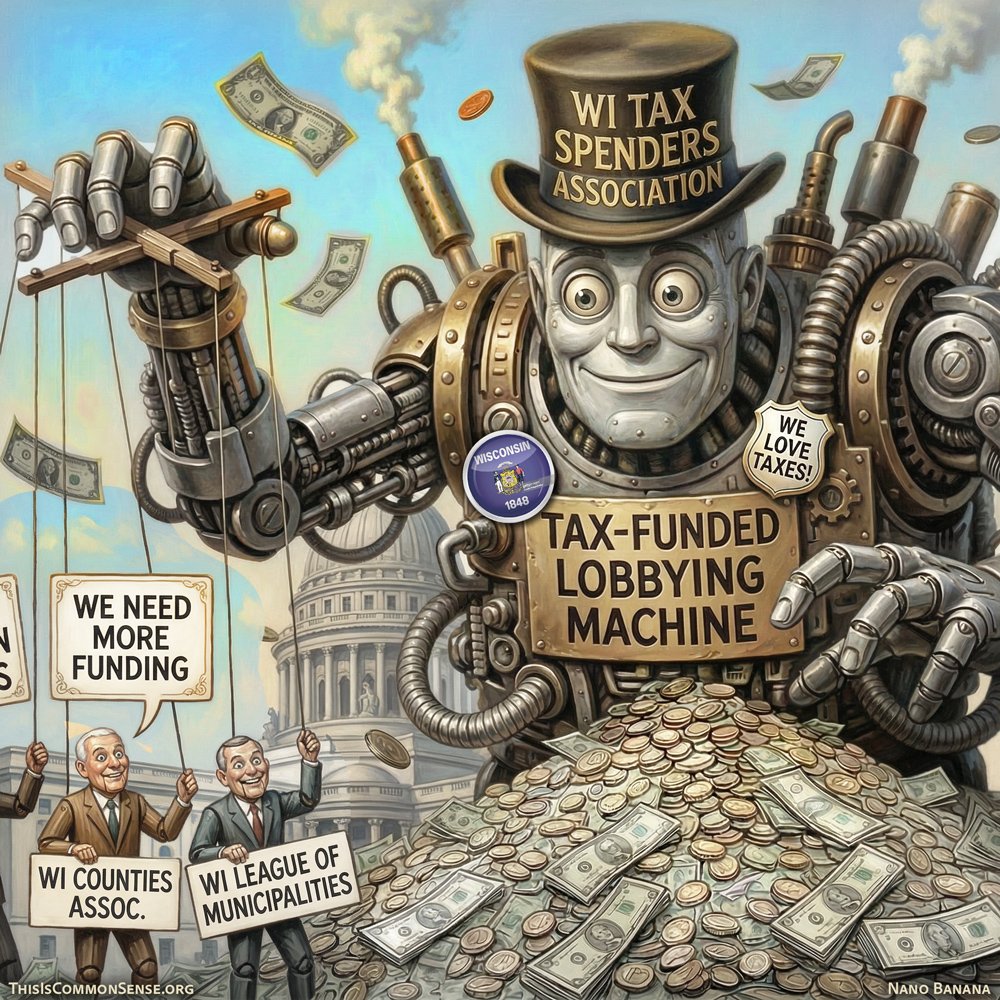
The U.S. is at war — a war that Trump had warned against; and UFOs/drones are again seen over New Jersey. But Senator Ben Ray Luján (D-N.M.) has something else on his mind, something a little closer to home: regulating grocery store pricing and marketing.

He has co-sponsored S. 3892, dubbed the “Stop Price Gouging in Grocery Stores Act of 2026.”

What is price gouging? Selling or offering items at a “grossly excessive price,” which the Federal Trade Commission is tasked with defining. But Luján’s real focus seems to be his distrust of surveillance in stores, which he fears will be used to adjust prices individually.

He somehow doesn’t mention why stores have increased surveillance of customers.

One word: thievery.

But Lujan isn’t alone, fecklessly fighting the food-market market. In Washington State and elsewhere, socialists and other politicians are trying to force grocers to stay open, even if their corporate owners have good reason to shut down a specific store. Seattle’s new mayor, Katie Wilson, says Seattle must not “allow giant grocery chains to stomp all over our communities, close stores at will, and leave behind food deserts.”

A south Tacoma neighborhood Safeway closed, so a state senator cooked up a bill to “give communities time to respond to grocery store closures.”

Truth is, of course, that grocery stores operate on slim margins. The more regulations piled on, and the more criminals you throw at them, the fewer groceries your community will have.

And the “liberals” who vote for such nonsense? They will not like the Mamdani stores they are left with — the subsidized product deserts that only now look good . . . 

In socialist dreams.

This is Common Sense. I’m Paul Jacob.


PDF for printing

Illustration created with Nano Banana

See all recent commentary
(simplified and organized)
See recent popular posts
Categories
privacy regulation too much government

All Your OS Are Belong to Us

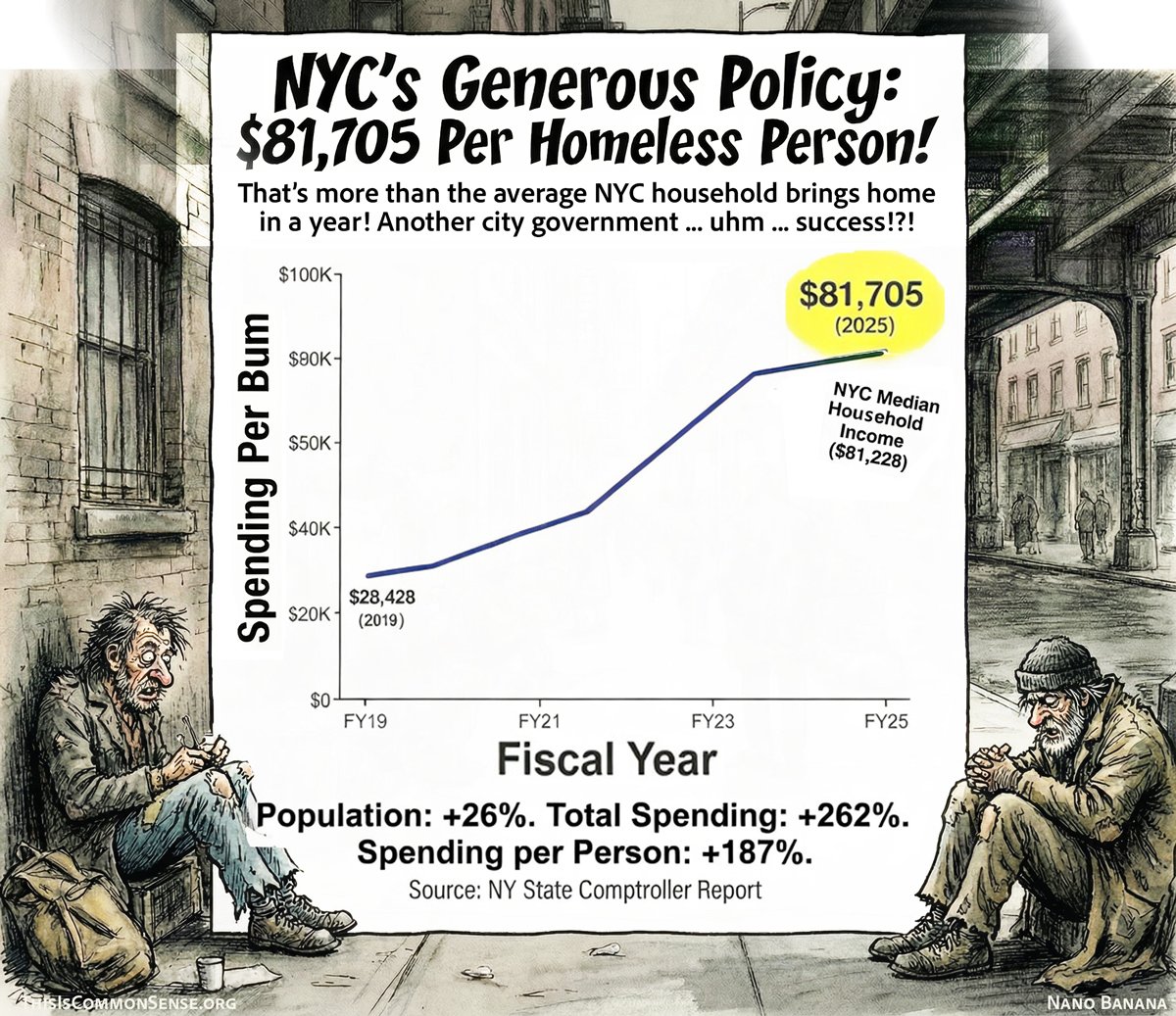
The always-wrong California legislature has unanimously passed — and the state’s always-wrong governor has signed — legislation to compel makers of computer operating systems to verify the owner’s age. The information from Linux, MacOS, Windows, iOS and Android would then be transmitted to the software (“apps”) running on each respective platform.

Reclaim the Net observes that in a “different timeline, wiring an age-surveillance layer into the boot sequence of every computing device in California is an idea that would have died in committee.”

AB1043 doesn’t require any upload of government ID or facial scan, just that the user report age when setting up the OS. I am not relieved.

All the shmexperts eager to erode our privacy say that requiring web surfers to type a number into a box to report age is insufficient. If California’s new law is allowed to stand, perhaps in part because it seems fairly innocuous — any plucky 12-year-old could type “89” when ordered to report age — would the politicians stop there?

Some kind of ID verification would be mandated sooner or later. Then use of fake IDs would lead to calls for biometric confirmation. Etc.

Reclaim the Net explains that Linux distributions don’t even have a way to comply with the silly California law. Decentralized Linux exists for people who don’t want to be surveilled when doing their computing, and “there’s no entity to mandate, no account system to modify, no API to build.”

These and many more objections appear to me to be just common sense — now illegal in California.

I’m Paul Jacob.


PDF for printing

Illustration created with Nano Banana

See all recent commentary
(simplified and organized)
See recent popular posts
Categories
defense & war privacy too much government

AI Within Limits

I’ve never consulted “Claude.” It’s an artificial intelligence (AI), and these things give me the creeps. But I must soldier on.

Anthropic, the maker of Claude, is in a special position: it’s currently the only frontier AI model cleared for use on classified U.S. military systems. But Anthropic limits use of Claude by the government: no mass domestic surveillance of U.S. citizens (such as tracking protesters or political opponents) and no development of fully autonomous weapons (where AI makes lethal decisions without human oversight).

Two cheers for Claude?

Regardless of your Huzzah level, being in a special position puts Anthropic in the crosshairs: The Pentagon demands unrestricted “all lawful use” access, rejecting any such safeguards or limits. 

According to Elizabeth Nolan Brown, writing in Reason, the “U.S. Department of Defense is in a standoff with artificial intelligence developer Anthropic over the company’s refusal” to play along with the federal government’s willingness to press beyond the limits of the Constitution. 

“This refusal hasn’t gone over well with the Trump administration,” explains Ms. Brown, going on to write that Secretary of War Pete“Hegseth has reportedly demanded that Anthropic remove its restrictions on certain military uses or else face consequences.”

In recent years we’ve witnessed too many companies complying with out-of-control government. And while it has become common to “lash out at big corporations, we should focus our anger on the actual root of these problems: the government,” the Reason article concludes. 

As it turned out in the social media de-platforming scandal, “the real enemy of civil liberties here is the government actors who are doing the bad deeds, demanding that tech companies go along with them. . . .” 

As our previous president used to say, “Don’t.”

This is Common Sense. I’m Paul Jacob.


PDF for printing

Illustration created with Nano Banana

See all recent commentary
(simplified and organized)
See recent popular posts
Categories
ideological culture too much government

DC Stench No Longer Metaphorical

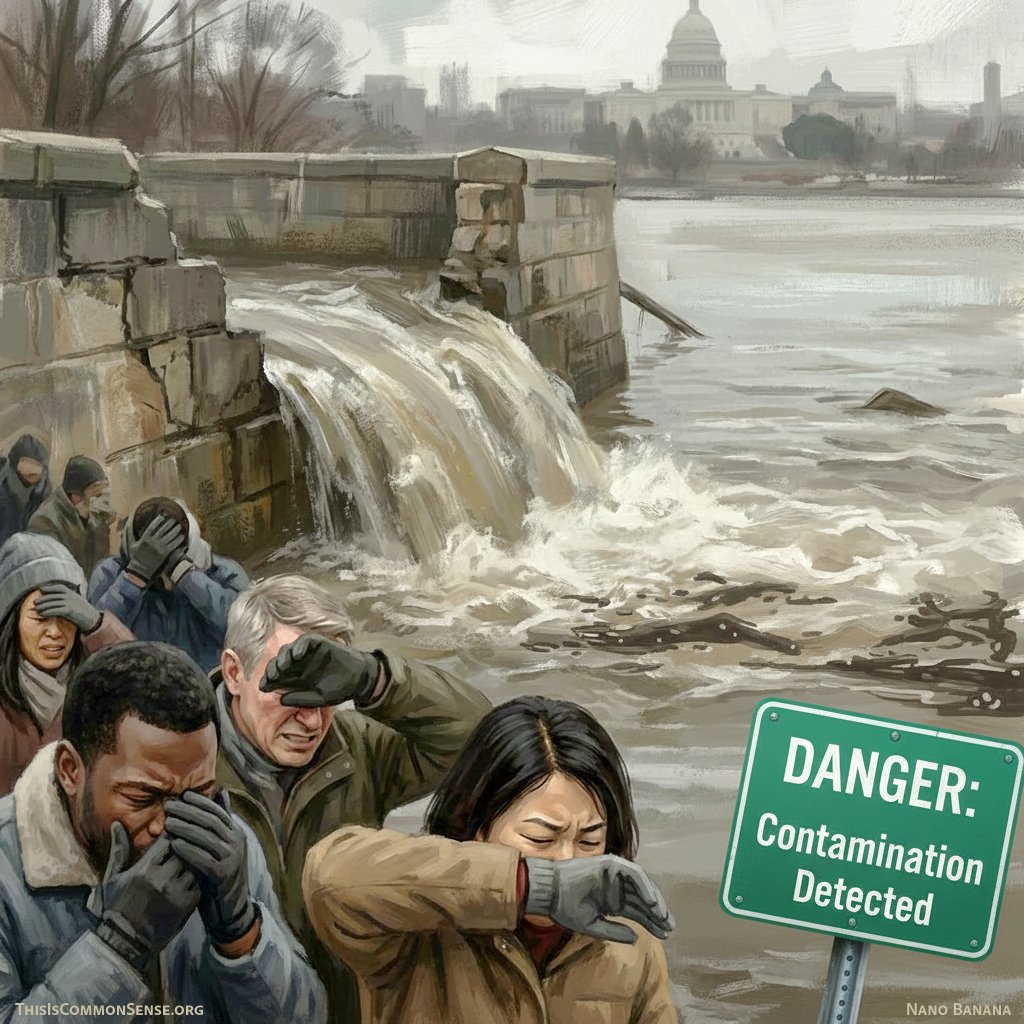
Matt Walsh says that “one of the worst ecological disasters in American history is currently unfolding. A river of sewage is flowing into the Potomac. When you dig into this story, and who is responsible for it, you start to see why the media doesn’t want to talk about it.”

He’s not wrong, the disaster began January 19th but we’ve heard little about it. On his podcast, No. 1736; Mr. Walsh goes all into a “Diversity, Equity and Inclusion” explanation.

According to The Daily Wire’s most socially conservative host, the responsible agencies are filled with hires based not on qualifications or competence or conscientiousness, but based on their color. 

He highlights, specifically, two individuals in the current muck: one, DC Water CEO David L. Gadis, partly responsible for the Flint, Michigan, water crisis, and the other, the current head of DC Water Board of Directors, Dr. Unique N. Morris-Hughes, a doctor in philosophy. Walsh regales us with her inanities and her over-spending on departmental entertainment junkets. 

While there may be a detectable odor to Walsh’s relentless critique of hiring blacks, specifically, under DEI, the odor from the Potomac, right now, is much less metaphorical.

In between retches, ask the question: Why would there be a general incompetence rising in public utilities now? 

Is it race as such? Of course not. 

Is it DEI putting race over competence? Maybe in part. 

But the general trend for a long time has been to put more and more domains of everyday life under direct government control. There’s a principle lost on the Mamdanis of this world: the more tasks set for government to govern, the less capable it becomes to manage even its core tasks. And, as that capacity declines, so goes even the will to bother trying.

Besides, if there is any apter metaphor for Washington, DC, than hundreds of millions of gallons of untreated sewage sloshing into the Potomac . . . I can’t think of it.

This is Common Sense. I’m Paul Jacob.


PDF for printing

Illustration created with Nano Banana

See all recent commentary
(simplified and organized)
See recent popular posts

Categories
free trade & free markets regulation too much government

Mamdani Attacks Workers

New York City Mayor Zohran Mamdani is going after gig workers. To do his dirty work, the mayor is using holdovers from the Biden administration (who oppose independent contractors), reports C. Jarrett Dieterle at Reason magazine.

The boss of New York City’s Department of Consumer and Work Protection is Sam Levine, who during his tenure at the Federal Trade Commission was a follower of anti-business FTC chair Lina Khan.

The “Deputy Mayor for Economic Justice,” one Julie Su, was Acting Secretary of Labor under Biden. She has warned delivery apps — the apps that make it easier for gig workers to get jobs and get paid — that they had better “comply with worker protections.”

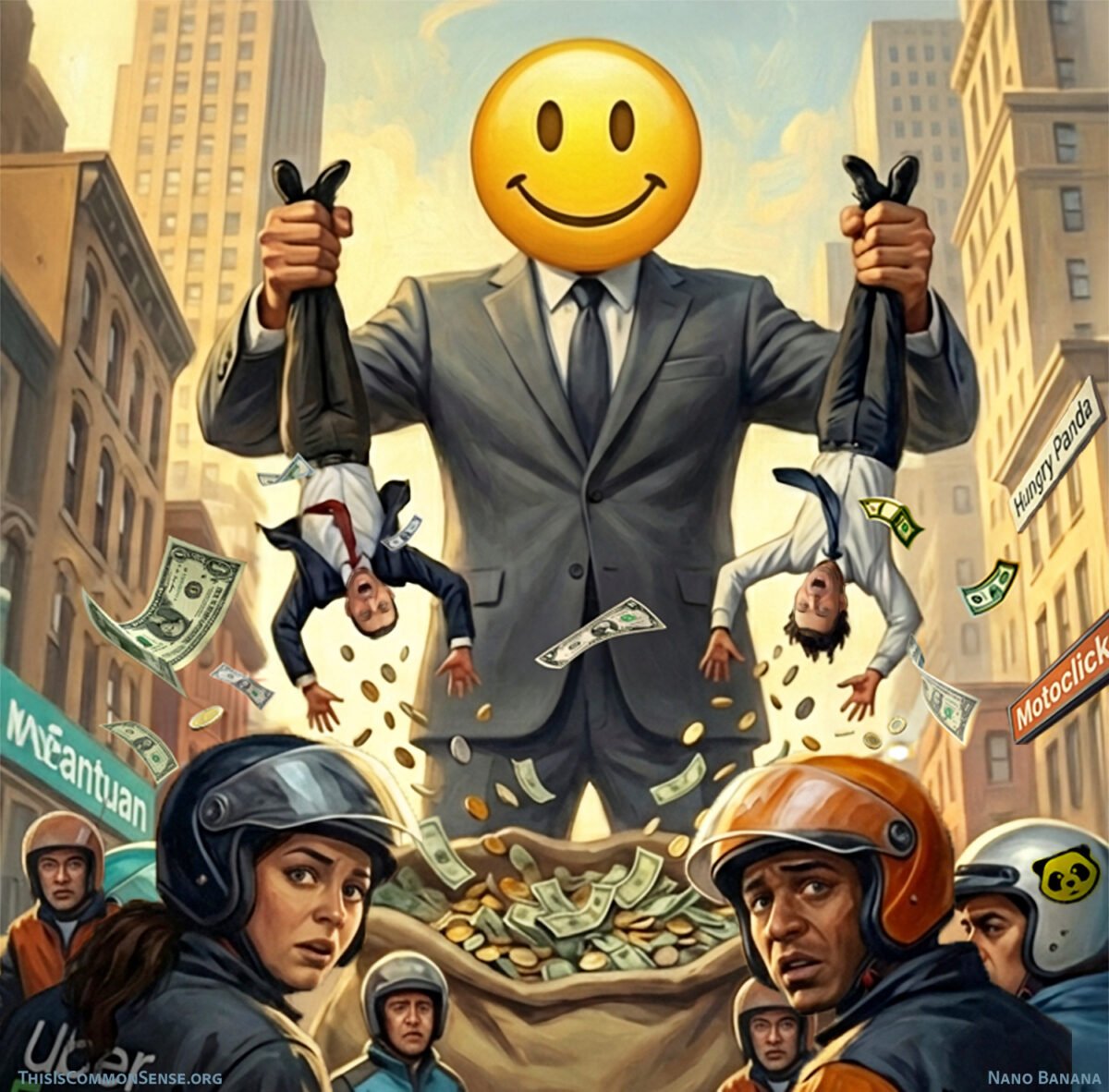
Su is suing delivery service Motoclick for “ignoring the minimum pay rate.” Also at issue are other sins that amount to contracting with independent contractors who, of course, use Motoclick’s app voluntarily and can stop whenever they find the terms not in their interest. She wants (a) millions in damages for the workers and (b) “to shut the company down completely.”

The Mamdani administration has also “settled with” such gig enablers as UberEats, Fantuan, and Hungry Panda for millions of dollars for not treating independent contractors as hourly workers.

Reason points out that Mamdani’s war on freelancers will be costly not only for gig workers and the companies that help them function but also for customers. “Just recently Instacart instituted a $5.99 regulatory response fee due to a recent extension of NYC’s minimum wage law to grocery deliverers.”

Who will be next to be pummeled by commie Mamdani?

This is Common Sense. I’m Paul Jacob.


PDF for printing

Illustration created with Nano Banana

See all recent commentary
(simplified and organized)
See recent popular posts
Categories
free trade & free markets regulation too much government

A Great Un-Finding

In 2009, President Obama and the EPA decided that the will-o’-the-wisp of fine-tuning the amount of greenhouse gases in the atmosphere fell under the agency’s purview. They introduced a not-so-thin wedge to pry open a vast new province of regulatory oppression.

Obama had sought congressional legislation, but Congress had balked. 

So he proceeded without any new laws; or rather, as so often happens, told an agency to issue new laws. (According to one explanation of the difference between laws and regulations, regulations are rules to implement laws. This doesn’t cover the case of regulations or “findings” that are tantamount to new laws although no elected representatives passed them.)

“Health” was at stake, the tyrants declared. 

The flourishing of industrial civilization, and thus of human beings, are also matters of health. But no matter.

One consequence of the EPA’s newfound authority was the issuance of other dire “rules,” like the Biden-era mandate that most American-made vehicles be electric by 2032.

Now things may change. 

Bigly. 

President Trump has ordered the EPA to un-find its 2009 “finding” that it has blanket authority to regulate human emission of greenhouse gases.

The change will be challenged in court. 

The Trump administration doubtless expects — perhaps even wants — the litigation. A favorable Supreme Court ruling would block the EPA from re-finding its finding during future administrations. Then legislation — actual, congressional — would be the only way to reimpose the craziness. 

A circumstance in which the people might have a say.

This is Common Sense. I’m Paul Jacob.


PDF for printing

Illustration created with Nano Banana

See all recent commentary
(simplified and organized)
See recent popular posts
Categories
folly too much government

Sir Surtax

When, one wonders, will politicians become less impressed with their wares and wiles?

The new New York mayor has taken city reins and unfurled his first major effort: begging for money.

Begging, that is, for it to be demanded from others.

“New York City Mayor Zohran Mamdani called on state lawmakers Wednesday to approve a 2 percent personal income tax increase on the city’s wealthiest residents,” writes Kimberly Hayek* for The Epoch Times, “as well as a hike in the corporate tax rate in a bid to close a multibillion-dollar budget gap.”

Though Mamdani proclaims a new era of city and state working together, there is nothing new in his pitches for more taxes to redistribute to various voters, rather than attempting to build (or restore) a good foundation for normal social and business life.

Ms. Hayek does her duty, though, telling the old, old story of class-envy politics. “Estimates suggested it” — a 2 percent surtax just for the “very” rich — “could create approximately $4 billion annually to support increased public services and affordability programs, as well as offset costs for broad social investments while not saddling middle- and low-income residents.” 

But that’s merely the politician’s “theory.”

In reality, writes Hayek, “France’s experiment with a similar surtax on high incomes underperformed revenue projections. It yielded €400 million in its first year against an expected 1.9 billion euros.”

Same-old story. Zohran Mamdani was never a breath of fresh air.

Just another old-timey demagogue.

Mamdani may never tire of his schtick, but when will New Yorkers wake up … and yawn?

This is Common Sense. I’m Paul Jacob.


* Great name, eh?

PDF for printing

Illustration created with Nano Banana

See all recent commentary
(simplified and organized)
See recent popular posts

Categories
crime and punishment fraud too much government

Oz in Fraudland

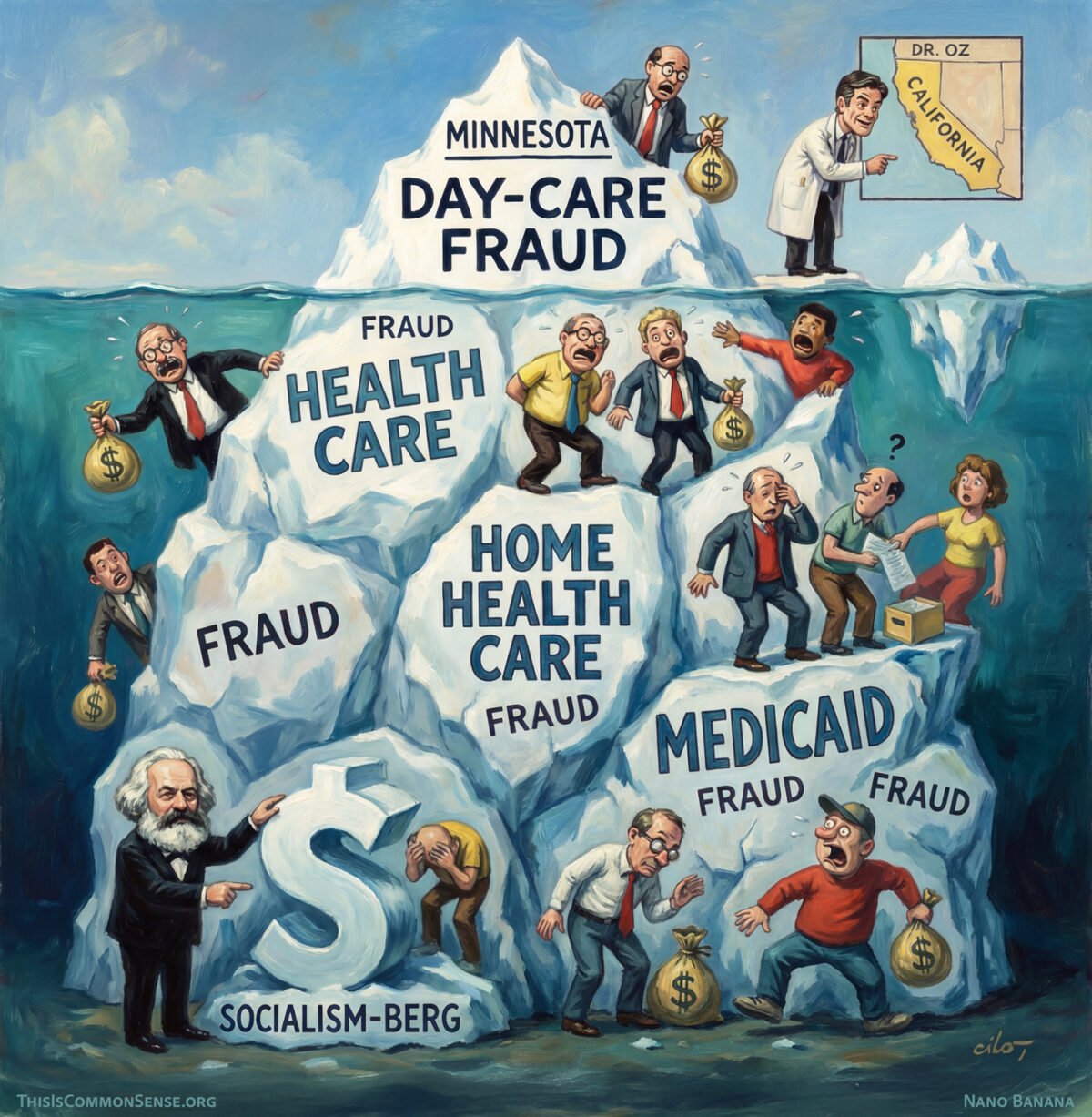
Ten days ago, I quoted Veronique de Rugy, warning that Minnesota’s day-care fraud scandal was “only the tip of the iceberg.” 

Beyond subsidized daycare? Health care, home health care, Medicaid. 

Fraud, fraud, fraud.

But it wasn’t just a lone Reason scholar saying it. “What we’re seeing in Minnesota … is dwarfed by what I saw in California,” The Epoch Times quotes Dr. Mehmet Oz, administrator of the Centers for Medicare and Medicaid Services. 

Minnesota, Dr. Oz said, “is just the tip of the iceberg.”

Just in California’s hospice and home health care, Oz figures, fraud rockets up to at least $4 billion.

Add a few billion here and there and soon you’re talking real money.

I titled my commentary quoting Ms. de Rugy “The Tip of the Socialism-berg.” Remember Mr. Socialism? Karl Marx? He introduced to the world a complicated, rather magical theory of exploitation in market society focusing on “surplus value.” While I have trouble making heads or tails of his theory — seems utterly nuts — I do know something about its origin. 

Marx nabbed it from classical liberal French scholars who preceded him. But they said the exploitation was through government mechanisms: it’s those who skim off of taxes who exploit the masses. 

Marx turned it upside down.

So let’s turn things right-side up: we all know that when it comes to policy, good intentions don’t make up for bad consequences. And those who de-fraud the taxpayers don’t have “good intentions.” 

They’re thieves. 

This is Common Sense. I’m Paul Jacob.


PDF for printing

Illustration created with Nano Banana

See all recent commentary
(simplified and organized)
See recent popular posts

Categories
ideological culture judiciary property rights too much government U.S. Constitution

Who’ll Oppose the Quasi-Commie?

Should we expect a four-year pitched battle?

I see one brewing between the new communist mayor of New York City and those judges who respect law and the U.S. Constitution.*

Some say that Zohran Mamdani, though on record admitting his goal of seizing the means of production, is technically not a communist. Well, if allowed to fully impose all he wants on New Yorkers, maybe that would amount to going straight to a fascist model of totalitarian governance — bypassing the Maoist-Stalinist stage.

Giving him the benefit of the doubt.

But we do know that Mamdani was quick to hire such advisors as housing czarina Cea Weaver, who has lamented home ownership as a “weapon of white supremacy” and declared property as such to be something regrettably long treated as “an individualized good” that now must be treated as a “collective good.”

If you don’t own your house as an individual and have a spare room (or half a room), and somebody needs a place to live, could a Mamdani-and-Weaver-run Big Apple compel you to give space to a stranger that you don’t want around? If property becomes a “collective good” and all must cuddle in the warm bosom of the state-managed collective, the answer must be: yes.

But New Yorkers may not be quite doomed.

Not, anyway, if there are enough judges like David Jones, who recently interfered with an attempt by the Mamdani administration to interfere in the sale of many rental properties owned by Pinnacle Group.

Mamdani’s office says they’ll keep trying. 

Of course they will.

This is Common Sense. I’m Paul Jacob.


* Or the New York State Constitution, for that matter: see §7 (a), which clearly states that “Private property shall not be taken for public use without just compensation.” 

PDF for printing

Illustration created with Nano Banana

See all recent commentary
(simplified and organized)
See recent popular posts
Categories
crime and punishment ideological culture subsidy too much government

Tip of the Socialism-berg 

“In 2024 alone, state Medicaid Fraud Control Units reported more than 1,151 convictions and more than $1.4 billion in civil and criminal recoveries,” writes Veronique de Rugy at Reason. “Federal enforcement recovers a tiny share of what is stolen. Fraud that goes undetected never appears in the data.”

And then she makes a claim that increasing numbers of astute observers make: “That’s only the tip of the iceberg.” She goes on to suggest that Medicare, the Supplemental Nutrition Assistance Program (SNAP), and “many other welfare programs” constitute a huge hunk of fraud.

The solution? “If we want less fraud,” she argues, “we need less government.”

Fraud and big government seem to go hand in hand. At least this kind of big government, which resembles the biggest kind of government imaginable. For taking wealth from many productive American citizens and giving it to a small but growing population of refugees from distant lands, that’s not necessarily fraud, I suppose, but it is something close to socialism.

We see in Venezuela just how devastating rule by thieving socialists can be. (Hugo Chavez nationalized oil industry infrastructure and then ran it into the ground.) In Minnesota and in other states of the union, we see a similar ethic. When done on a limited basis, we could call it “helping the poor,” the folks who just cannot produce what they need. That’s how transfer socialism was sold to us.

And they could say, truthfully, that’s not full socialism.

But extending the beneficiary class from our most needy friends and neighbors to the less-and-less needy, and then to waves of refugees from other countries, that’s a recipe for disaster. Like socialism when “full.”

How far should Americans go to help “others”? To our own ruin?

This is Common Sense. I’m Paul Jacob.


PDF for printing

Illustration created with Nano Banana

See all recent commentary
(simplified and organized)
See recent popular posts