Categories
free trade & free markets regulation too much government

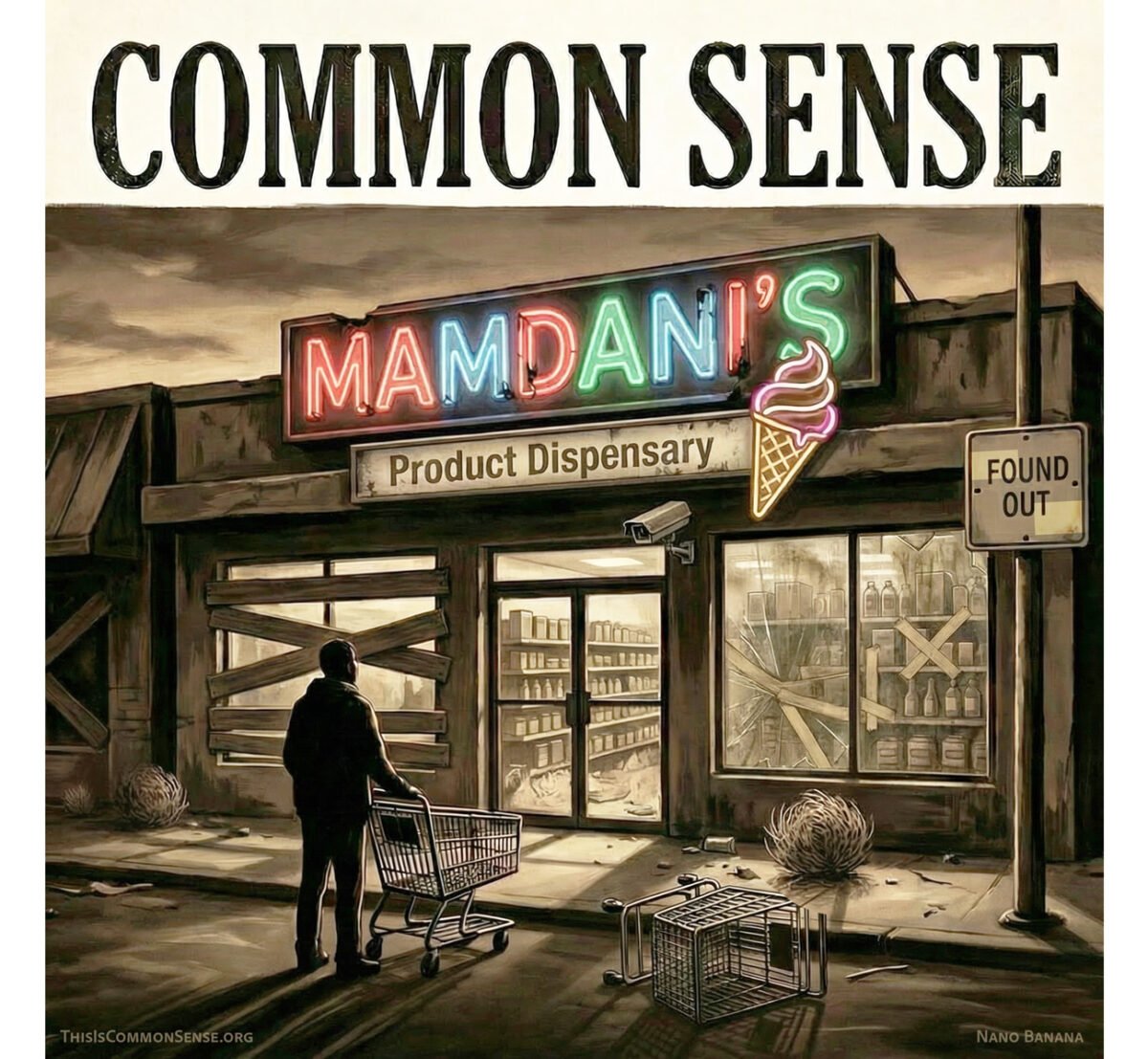
Mamdani Attacks Workers

New York City Mayor Zohran Mamdani is going after gig workers. To do his dirty work, the mayor is using holdovers from the Biden administration (who oppose independent contractors), reports C. Jarrett Dieterle at Reason magazine.

The boss of New York City’s Department of Consumer and Work Protection is Sam Levine, who during his tenure at the Federal Trade Commission was a follower of anti-business FTC chair Lina Khan.

The “Deputy Mayor for Economic Justice,” one Julie Su, was Acting Secretary of Labor under Biden. She has warned delivery apps — the apps that make it easier for gig workers to get jobs and get paid — that they had better “comply with worker protections.”

Su is suing delivery service Motoclick for “ignoring the minimum pay rate.” Also at issue are other sins that amount to contracting with independent contractors who, of course, use Motoclick’s app voluntarily and can stop whenever they find the terms not in their interest. She wants (a) millions in damages for the workers and (b) “to shut the company down completely.”

The Mamdani administration has also “settled with” such gig enablers as UberEats, Fantuan, and Hungry Panda for millions of dollars for not treating independent contractors as hourly workers.

Reason points out that Mamdani’s war on freelancers will be costly not only for gig workers and the companies that help them function but also for customers. “Just recently Instacart instituted a $5.99 regulatory response fee due to a recent extension of NYC’s minimum wage law to grocery deliverers.”

Who will be next to be pummeled by commie Mamdani?

This is Common Sense. I’m Paul Jacob.


PDF for printing

Illustration created with Nano Banana

See all recent commentary
(simplified and organized)
See recent popular posts

Categories
free trade & free markets regulation too much government

A Great Un-Finding

In 2009, President Obama and the EPA decided that the will-o’-the-wisp of fine-tuning the amount of greenhouse gases in the atmosphere fell under the agency’s purview. They introduced a not-so-thin wedge to pry open a vast new province of regulatory oppression.

Obama had sought congressional legislation, but Congress had balked. 

So he proceeded without any new laws; or rather, as so often happens, told an agency to issue new laws. (According to one explanation of the difference between laws and regulations, regulations are rules to implement laws. This doesn’t cover the case of regulations or “findings” that are tantamount to new laws although no elected representatives passed them.)

“Health” was at stake, the tyrants declared. 

The flourishing of industrial civilization, and thus of human beings, are also matters of health. But no matter.

One consequence of the EPA’s newfound authority was the issuance of other dire “rules,” like the Biden-era mandate that most American-made vehicles be electric by 2032.

Now things may change. 

Bigly. 

President Trump has ordered the EPA to un-find its 2009 “finding” that it has blanket authority to regulate human emission of greenhouse gases.

The change will be challenged in court. 

The Trump administration doubtless expects — perhaps even wants — the litigation. A favorable Supreme Court ruling would block the EPA from re-finding its finding during future administrations. Then legislation — actual, congressional — would be the only way to reimpose the craziness. 

A circumstance in which the people might have a say.

This is Common Sense. I’m Paul Jacob.


PDF for printing

Illustration created with Nano Banana

See all recent commentary
(simplified and organized)
See recent popular posts
Categories
folly too much government

Sir Surtax

When, one wonders, will politicians become less impressed with their wares and wiles?

The new New York mayor has taken city reins and unfurled his first major effort: begging for money.

Begging, that is, for it to be demanded from others.

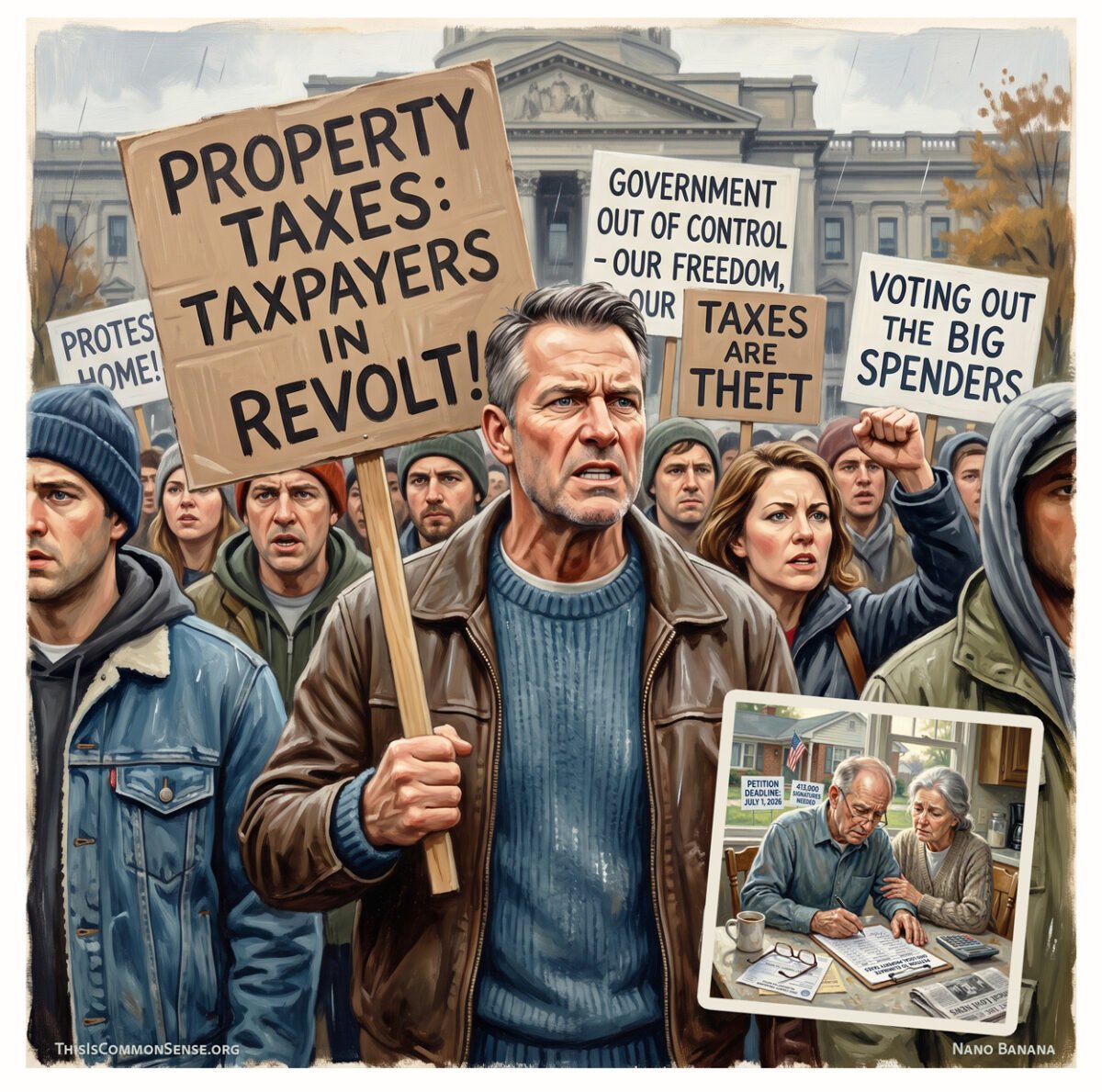
“New York City Mayor Zohran Mamdani called on state lawmakers Wednesday to approve a 2 percent personal income tax increase on the city’s wealthiest residents,” writes Kimberly Hayek* for The Epoch Times, “as well as a hike in the corporate tax rate in a bid to close a multibillion-dollar budget gap.”

Though Mamdani proclaims a new era of city and state working together, there is nothing new in his pitches for more taxes to redistribute to various voters, rather than attempting to build (or restore) a good foundation for normal social and business life.

Ms. Hayek does her duty, though, telling the old, old story of class-envy politics. “Estimates suggested it” — a 2 percent surtax just for the “very” rich — “could create approximately $4 billion annually to support increased public services and affordability programs, as well as offset costs for broad social investments while not saddling middle- and low-income residents.” 

But that’s merely the politician’s “theory.”

In reality, writes Hayek, “France’s experiment with a similar surtax on high incomes underperformed revenue projections. It yielded €400 million in its first year against an expected 1.9 billion euros.”

Same-old story. Zohran Mamdani was never a breath of fresh air.

Just another old-timey demagogue.

Mamdani may never tire of his schtick, but when will New Yorkers wake up … and yawn?

This is Common Sense. I’m Paul Jacob.


* Great name, eh?

PDF for printing

Illustration created with Nano Banana

See all recent commentary
(simplified and organized)
See recent popular posts

Categories
crime and punishment fraud too much government

Oz in Fraudland

Ten days ago, I quoted Veronique de Rugy, warning that Minnesota’s day-care fraud scandal was “only the tip of the iceberg.” 

Beyond subsidized daycare? Health care, home health care, Medicaid. 

Fraud, fraud, fraud.

But it wasn’t just a lone Reason scholar saying it. “What we’re seeing in Minnesota … is dwarfed by what I saw in California,” The Epoch Times quotes Dr. Mehmet Oz, administrator of the Centers for Medicare and Medicaid Services. 

Minnesota, Dr. Oz said, “is just the tip of the iceberg.”

Just in California’s hospice and home health care, Oz figures, fraud rockets up to at least $4 billion.

Add a few billion here and there and soon you’re talking real money.

I titled my commentary quoting Ms. de Rugy “The Tip of the Socialism-berg.” Remember Mr. Socialism? Karl Marx? He introduced to the world a complicated, rather magical theory of exploitation in market society focusing on “surplus value.” While I have trouble making heads or tails of his theory — seems utterly nuts — I do know something about its origin. 

Marx nabbed it from classical liberal French scholars who preceded him. But they said the exploitation was through government mechanisms: it’s those who skim off of taxes who exploit the masses. 

Marx turned it upside down.

So let’s turn things right-side up: we all know that when it comes to policy, good intentions don’t make up for bad consequences. And those who de-fraud the taxpayers don’t have “good intentions.” 

They’re thieves. 

This is Common Sense. I’m Paul Jacob.


PDF for printing

Illustration created with Nano Banana

See all recent commentary
(simplified and organized)
See recent popular posts

Categories
ideological culture judiciary property rights too much government U.S. Constitution

Who’ll Oppose the Quasi-Commie?

Should we expect a four-year pitched battle?

I see one brewing between the new communist mayor of New York City and those judges who respect law and the U.S. Constitution.*

Some say that Zohran Mamdani, though on record admitting his goal of seizing the means of production, is technically not a communist. Well, if allowed to fully impose all he wants on New Yorkers, maybe that would amount to going straight to a fascist model of totalitarian governance — bypassing the Maoist-Stalinist stage.

Giving him the benefit of the doubt.

But we do know that Mamdani was quick to hire such advisors as housing czarina Cea Weaver, who has lamented home ownership as a “weapon of white supremacy” and declared property as such to be something regrettably long treated as “an individualized good” that now must be treated as a “collective good.”

If you don’t own your house as an individual and have a spare room (or half a room), and somebody needs a place to live, could a Mamdani-and-Weaver-run Big Apple compel you to give space to a stranger that you don’t want around? If property becomes a “collective good” and all must cuddle in the warm bosom of the state-managed collective, the answer must be: yes.

But New Yorkers may not be quite doomed.

Not, anyway, if there are enough judges like David Jones, who recently interfered with an attempt by the Mamdani administration to interfere in the sale of many rental properties owned by Pinnacle Group.

Mamdani’s office says they’ll keep trying. 

Of course they will.

This is Common Sense. I’m Paul Jacob.


* Or the New York State Constitution, for that matter: see §7 (a), which clearly states that “Private property shall not be taken for public use without just compensation.” 

PDF for printing

Illustration created with Nano Banana

See all recent commentary
(simplified and organized)
See recent popular posts

Categories
crime and punishment ideological culture subsidy too much government

Tip of the Socialism-berg 

“In 2024 alone, state Medicaid Fraud Control Units reported more than 1,151 convictions and more than $1.4 billion in civil and criminal recoveries,” writes Veronique de Rugy at Reason. “Federal enforcement recovers a tiny share of what is stolen. Fraud that goes undetected never appears in the data.”

And then she makes a claim that increasing numbers of astute observers make: “That’s only the tip of the iceberg.” She goes on to suggest that Medicare, the Supplemental Nutrition Assistance Program (SNAP), and “many other welfare programs” constitute a huge hunk of fraud.

The solution? “If we want less fraud,” she argues, “we need less government.”

Fraud and big government seem to go hand in hand. At least this kind of big government, which resembles the biggest kind of government imaginable. For taking wealth from many productive American citizens and giving it to a small but growing population of refugees from distant lands, that’s not necessarily fraud, I suppose, but it is something close to socialism.

We see in Venezuela just how devastating rule by thieving socialists can be. (Hugo Chavez nationalized oil industry infrastructure and then ran it into the ground.) In Minnesota and in other states of the union, we see a similar ethic. When done on a limited basis, we could call it “helping the poor,” the folks who just cannot produce what they need. That’s how transfer socialism was sold to us.

And they could say, truthfully, that’s not full socialism.

But extending the beneficiary class from our most needy friends and neighbors to the less-and-less needy, and then to waves of refugees from other countries, that’s a recipe for disaster. Like socialism when “full.”

How far should Americans go to help “others”? To our own ruin?

This is Common Sense. I’m Paul Jacob.


PDF for printing

Illustration created with Nano Banana

See all recent commentary
(simplified and organized)
See recent popular posts
Categories
political economy property rights regulation too much government

Too Damn High?

It’s getting tougher to rent a place to live.

Applications now often entail fearsomely intrusive scourings of financial history. And, writes Jeffrey Tucker, “if you are unbanked or missed a payment at some point, you can forget it.”

This is about more than digital intrusiveness or the end of privacy. It’s about aversion to risk. 

The aversion may have many causes. Tucker stresses a factor that’s pretty glaring once you think about it: the federal government’s assault on private property rights during the COVID-19 pandemic. Some tenants eagerly exploited a federally imposed moratorium on rent payment — plus ban on evictions — only finally stopped by a 5-4 decision by the Supreme Court. 

At the state level, evictions continued to be outlawed until 2022.

So property owners assume that they cannot at all count on government to be in their corner. If a tenant fails to pay rent, folks in government (who include the ones with guns) protect the person who cannot or will not pay his or her bills. 

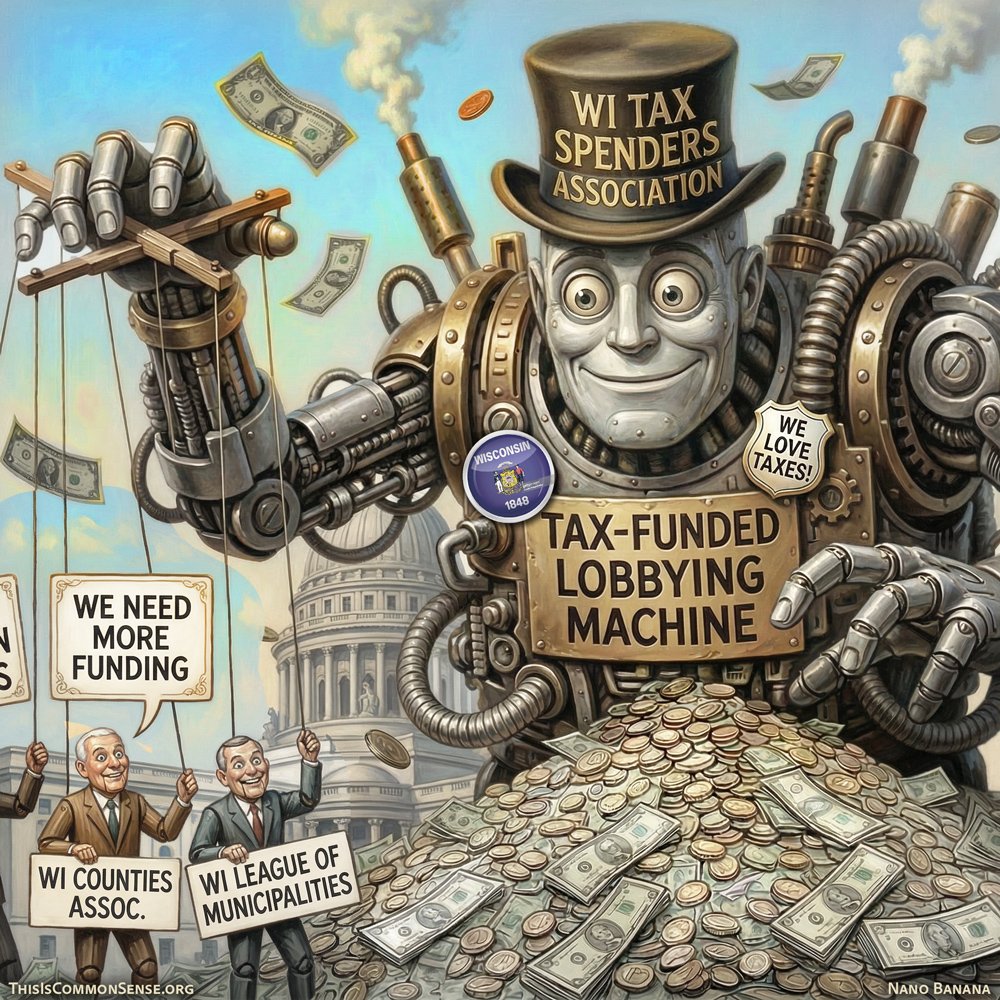
The concern must be even more intense if an owner’s property is located in a town with a track record of demonizing landlords and in the process of launching further assaults on property rights. (Example: New York City, where high rents are now officially called rip-offs.)

Landlords want to avoid tenants who would use any law or bureaucratic tendency to rationalize skipping rent payment. Since owners can’t count on government to protect their property rights, they are becoming ultra-cautious. 

That is why conscientious prospective tenants who may have a blot or two in their financial history are paying the price.

This is Common Sense. I’m Paul Jacob.


PDF for printing

Illustration created with Nano Banana

See all recent commentary
(simplified and organized)
See recent popular posts
Categories
budgets & spending cuts too much government

Everybody Pays–Nobody Wants

Senator Rand Paul has just issued The Festivus Report 2025, in part a laundry list of absurd government spending at your expense and mine — to buy things that nobody wants but all of us American taxpayers must pay for.

Well, not nobody-nobody: The recipients of the largesse? They’re the exception; they want it. But these exceptions can’t justify expenditures wholly unrelated to the proper government function of protecting life and liberty from foreign and domestic threats.

“Congress keeps shoveling money toward pet projects and special interests while hardworking Americans pay the price through inflation and crushing interest rates — even after President Trump took action to end most foreign aid programs,” says Paul.

Examples:

  • $5 million for cocaine for dogs.
  • $3.3 million to Northwestern University to fund “safe space ambassadors” and combat “systemic racism.”
  • $7.5 billion for an EV charger network that built just 68 charging stations throughout the country.
  • $244,252 for a Pakistan cartoon series about fighting “climate change.”
  • $2.8 million “for aborted fetal tissue to be implanted in humanized mice.”
  • $2 million for “gender-affirming care” and influence campaigns in Guatemala.
  • $200 billion to schools in pandemic-relief money “wasted on things like rooms at Caesars Palace, renting out MLB stadiums, and ice cream trucks.”
  • $22.6 billon on “things like furniture, car repairs and home down payments, as well as welfare for illegal immigrants.”
  • $700,000 to fuel anti-gas-stove propaganda.

And so much more. Take it all back, Santa!

This is Common Sense. I’m Paul Jacob.


PDF for printing

Illustration created with Nano Banana and Fireflly

See all recent commentary
(simplified and organized)
See recent popular posts

Categories
media and media people regulation too much government

Submit to Our Plans, Shivering Peasant

How to defuse resistance to tyranny: helpful information.

Colorado now mandates that emissions from burning natural gas be cut, over the next ten years, by 41 percent — the perfect percentage, elsewise it would’ve been rounded to 40. 

No more natural gas emissions at all by 2050. 

“News that Colorado has set hard target dates for an end to burning natural gas in our daily lives prompted many ‘wait, what?’ questions from Colorado Sun readers,” says Sun columnist Michael Booth. He is here to help.

Propane tanks? These may not be banned by the current law, but do try to convert to electrical appliances. (If the power goes out, Coloradans can always use some other electrical thing as backup. Think batteries, lots of batteries!)

Also, the “new rules are not aimed at homeowners,” Coloradans will be relieved to know. Just at utilities . . . which serve homeowners. “Under current rules, no one is showing up at your door to rip out a gas water heater against your will.” 

Those helpful government agents will show up at your utility’s door with a court order forcing your utility to rip up natural gas lines, instead.

What if the switchover happens too slowly for regulators? 

Column for another day.

Any advice on reversing the ban? 

Mr. Booth might protest that it’s not his job to lead any rebel alliance, only to give information on things. Oh, sure. Well, he might have offered info on how to contact Colorado state legislators and the governor’s office

Not for any purpose but just to keep readers well-informed.

This is Common Sense. I’m Paul Jacob.


PDF for printing

Illustration created with Nano Banana

See all recent commentary
(simplified and organized)
See recent popular posts
Categories
property rights regulation too much government

The Regulatory Flex

If you’re a homeowner devastated by wildfires, you may want to rebuild. Since you have also suffered a financial setback, especially if your property insurance was canceled just before the fire, you may also want to earn money by renting a part of your new home.

Such are the considerations that motivate some property owners devastated by last January’s conflagrations in California to want to build a duplex. 

So what’s the problem?

The governor is the problem.

That he’s listening to other property owners in your neighborhood — the Pacific Palisades — who dislike duplexes makes the problem worse. 

Your property is not their property, mind you. But they’re acting as if it were.

California Governor Gavin Newsom has issued an executive order letting cities ban duplex construction in neighborhoods affected by last January’s wildfires. A pro-development group called YIMBY Law was willing to refrain from filing a lawsuit if the governor issued a new order to let property owners build duplexes after a year had passed.

But Newsom won’t budge. So YIMBY Law is suing

A spokesman for the governor says that letting owners build duplexes (on their own property) amounts to an “attack” on the Pacific Palisades and an undermining of “local flexibility to rebuild.”

“Local,” here, seems to mean the sum total of all neighbors who are loath to allow you to enjoy the flexibility of building on your own property. 

But the individual and his rights are as local as it gets. 

And reducing options, as a prohibition on building duplexes where single-family homes once stood, is the very opposite of “flexibility.”

This is Common Sense. I’m Paul Jacob.


PDF for printing

Illustration created with Nano Banana

See all recent commentary
(simplified and organized)
See recent popular posts