
Categories
First Amendment rights media and media people national politics & policies too much government

Governing the News

“The Fairness Doctrine was controversial and led to lawsuits throughout the 1960s and ’70s that argued it infringed upon the freedom of the press,” explained FCC commissioner Ajit Pai for the Wall Street Journal, in an op-ed I quoted yesterday.

“The FCC finally stopped enforcing the policy in 1987, acknowledging that it did not serve the public interest. In 2011 the agency officially took it off the books. But the demise of the Fairness Doctrine has not deterred proponents of newsroom policing. . . .”

Thankfully, this is old news. The former FCC commissioner’spiece was actually published nearly twelve years ago. Mr. Pai has since moved on to the private sector, in April becoming President and CEO of CTIA, the wireless industry trade association.

We can breathe a sigh of relief. The FCC is not planning on regulating the news for biased content.

Well, supposedly, anyway. 

So why rehash an old issue — why revive something from the proverbial slush pile?

To compare and contrast. Bias is a continuing problem, but the biggest threat to news reporting and dissemination since that time has revealed itself in a very different form, not as “abridgments” to press freedoms but as secret government commands and direction.

Remember what we learned in the Trump-and-pandemic years?

During the recent pandemic, and the release of the Twitter Files, we learned of a massive effort of government and “ex-government” personnel directing social media outlets to platform-censor dissent, going so far as to squelch new sources . . . as happened regarding the New York Post Hunter Biden laptop story.

The FCC Fairness Doctrine was nothing compared to the meddling that has more recently occurred behind the scenes, but which we all experienced, on social media. It played a role in the election results favoring Biden in 2020, and in the dysfunctional, disastrous public health response to COVID-19. 

The FCC doesn’t handle that level of biased manipulation of news.

So who does?

This is Common Sense. I’m Paul Jacob.


PDF for printing

Illustration created with Nano Banana and ChatGPT

See all recent commentary
(simplified and organized)
See recent popular posts

Categories
First Amendment rights national politics & policies too much government

The FCC’s Press Bias Fix

You are operating a newsroom or, let’s say, a commentary room. Somebody accuses you of bias in how you decide what to publish.

You deflect: Of course different media organizations have different perspectives; each to its own. Sometimes, too, we choose what to run less rationally than the Platonic philosopher-journalist would demand.

Bias is everywhere, inevitable.

Which makes the only cure maximal freedom of speech and openness of discourse. The answer to deficient speech is better speech, not either direct or indirect government censorship.

Nevertheless, the FCC has proposed to “investigate” the selection process of newsrooms.

Any such investigation is necessarily biased from the get-go against freedom of speech and press. Even if it never gets to the regulation stage, the investigation itself constitutes interference. It is impossible for anyone being asked formal investigatory questions by the FCC to be unaware that the questioner has the power of government behind him.

How, for example, is a conscientious employee who respects the rights of his boss supposed to answer this loaded question: “Have you ever suggested coverage of what you consider a story with critical information for your customers that was rejected by management?”?

FCC commissioner Ajit Pai reports that this is one query being considered as part of a “Critical Information Needs” study to determine how stories are selected, “perceived bias,” and how responsive a newsroom is to “underserved populations.”

Pai, who opposes the project, says: “The government has no place pressuring media organizations into covering certain stories.”

Or not covering others.

This is Common Sense. I’m Paul Jacob.


PDF for printing

Illustration created with Nano Banana and Firefly

See all recent commentary
(simplified and organized)
See recent popular posts
Categories
ideological culture political economy too much government

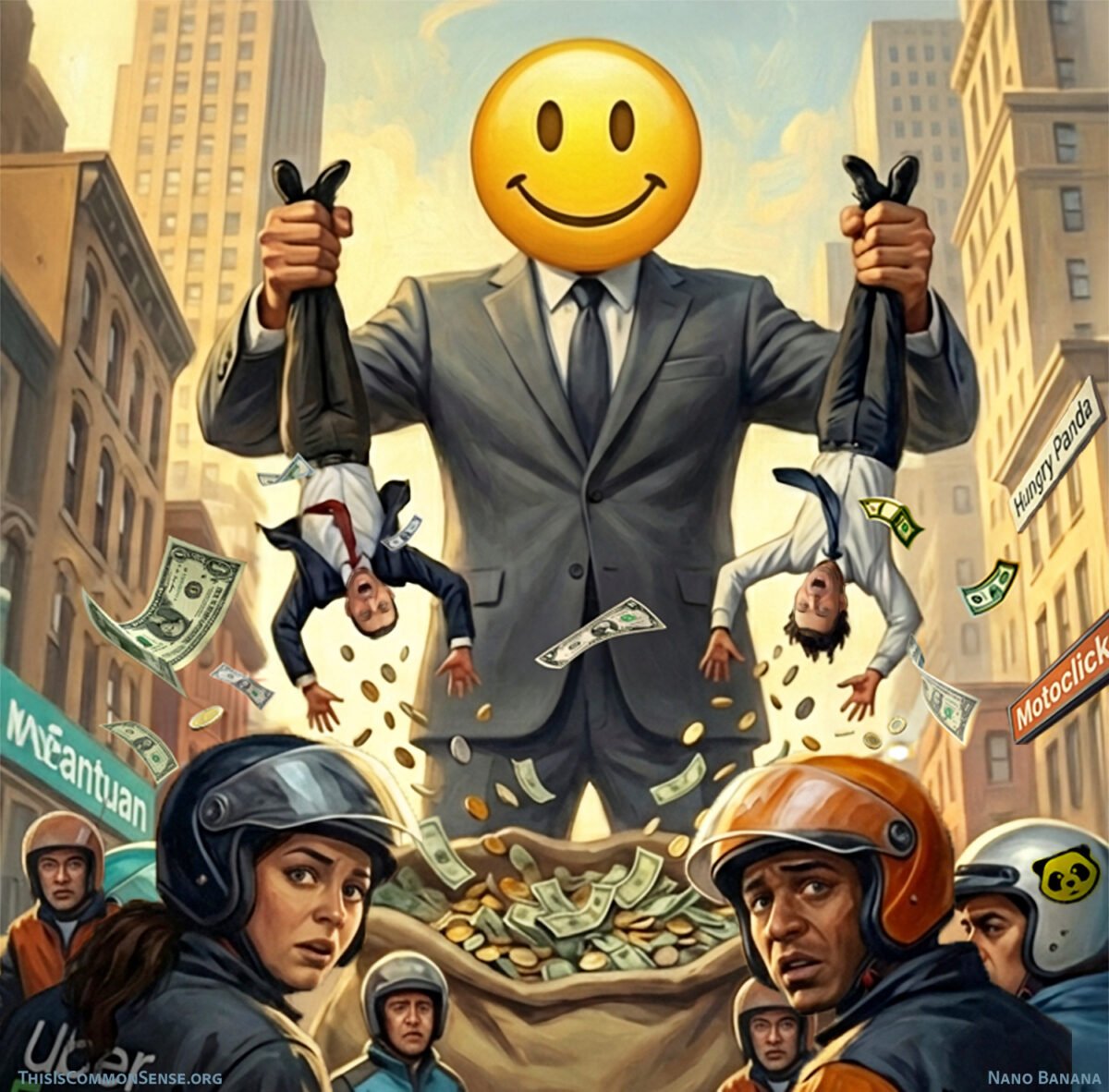
Capitalism’s Communism?

The problem is communism — in finance.

That’s the world according to Robert Kiyosaki, says an Epoch Times profile. “Kiyosaki described the U.S. Federal Reserve Bank — established in 1913 with a goal of stabilizing the nation’s monetary supply following years of extreme volatility, and preventing panic — as a Marxist organization,” Travis Gillmore writes.

“When the Fed came to America, it was the end of America,” states Kiyosaki, who co-authored a bestselling investment book, Rich Dad, Poor Dad, in 1997, “and our freedom is being stolen via our money.”

This is a familiar theme. Attacking crony capitalism as a massive swindle, and central banking as the lynchpin of bad government practices and general exploitation, that’s so basic to my view of “political economy” that I hardly bring it up anymore. It’s just so obvious.

But is our central bank communist

If you don’t like “communist” or “socialist” you can add the suffix -ic: communistic or socialistic.

“As most people know, there’s a big movement to end the Federal Reserve Bank, because it’s not federal, it’s not a reserve, and it’s not a bank,” adds Kiyosaki. 

“U.S. currency was once tradeable for silver or gold,” Gillmore’s article summarizes. “The Federal Reserve notes in circulation today, however, carry no guarantees, which results in significantly devalued currency. . . .

“Marxists want to destabilize society by ‘taking the currency,’ Kiyosaki said,” blaming this kleptocracy for the rising tide of homelessness along with other maladies.

The Epoch Times ends on a hopeful note, but does not quote recent tweets by Kiyosaki, warning us that the “biggest crash in history” is underway, predicting millions would “lose everything” while prepared investors (like himself) get richer.

All very familiar?

Sure.

But that does not mean there is no truth in it.

This is Common Sense. I’m Paul Jacob.


PDF for printing

Illustration created with Nano Banana and Firefly

See all recent commentary
(simplified and organized)
See recent popular posts

Categories
ideological culture public opinion too much government

Looking for Work

“Social sector” workers — described by Forbes as “nonprofit organizations and the social sector at-large” — have been losing jobs because of budget cuts and corruption cuts.

Many newly unemployed are unhappy about having to job-hunt. Some complain about having to take jobs from profit-making businesses. Others lament sparse communication from prospective employers.

“When asked about barriers to finding employment, 85% of respondents cited lack of employer response as their primary challenge,” Aparna Rae’s not-very-shocking-at-all Forbes article elaborates. “The irony is stark: a sector built on human dignity subjects job seekers to dehumanizing ‘digital hiring mazes’ where qualified candidates are ghosted after final-round interviews. The disconnect between mission and practice erodes the sector’s moral authority.”

Wow. Dehumanizing to have to . . . look for work (or customers)? Worse because your last job was all about dignity — unlike all those grubby profit-sector jobs or, for that matter, jobs with nonprofits that rely only on voluntary private donations?

“I want to be seen and recognized as a human,” explains one representative job seeker. “The lack of communication and impersonal nature of the hiring process is demoralizing and makes job seekers feel devalued.”

Job hunting can be tough. It’d be nicer if qualified candidates who have been considered but lose out to other qualified candidates were always notified. Sure. But how does failure to do so represent a “disconnect” between mission and practice, and how does it “erode the [nonprofits’] moral authority”?

Job seekers might feel less demoralized if they didn’t take the impersonal aspects of the search so personally.

This is Common Sense. I’m Paul Jacob.


PDF for printing

Illustration created with NanoBanana and Firefly

See all recent commentary
(simplified and organized)
See recent popular posts

Categories
ideological culture international affairs national politics & policies too much government

This Is What Businessman Rule Looks Like

President Trump is doing something many of his supporters said they wanted him to do: act not like a normal politician but like a businessman, for Americans, as if we were stockholders in a for-profit company.

Bring in the dough. Efficiently.

“Saudi Crown Prince Pledges $1 Trillion Investment in US During Meeting with Trump,” an article at The Epoch Times tells us. The Saudi potentate is boosting, the story runs, an “investment partnership with the United States from $600 billion,” and the prince in question, Mohammed bin Salman — his reputation previously sullied by the part he played in the gruesome assassination of a journalist —  explains that the “investments will focus on what he described as ‘real opportunities’ in areas such as artificial intelligence and magnets.”

The article notes that the “Saudi Foreign Ministry said in a Nov. 17 post on X that the crown prince, widely known as MBS, would meet Trump ‘to discuss bilateral relations, ways to strengthen them across various fields, and issues of mutual interest.’”

Now, that latter discussion of diplomatic issues appears normal. That is, what we expect two heads of state to do when conferring.

But all this talk of extra investment? Micromanaging foreign investment within the United States?

That’s never been the recipe for republican governance and can so easily and quickly devolve into plutocratic socialism-for-the-rich. There’s no shouting “limited government” about what Trump boasts of regarding “the deals” he makes for the U.S. 

For “us.”

But it does fit what many had hoped he would be: a businessman taking charge of the corporation that is the unitary “United States.” A fix-it man for the federal Leviathan.

This is Common Sense. I’m Paul Jacob.


PDF for printing

Illustration created with Krea and Firefly

See all recent commentary
(simplified and organized)
See recent popular posts
Categories
ideological culture too much government

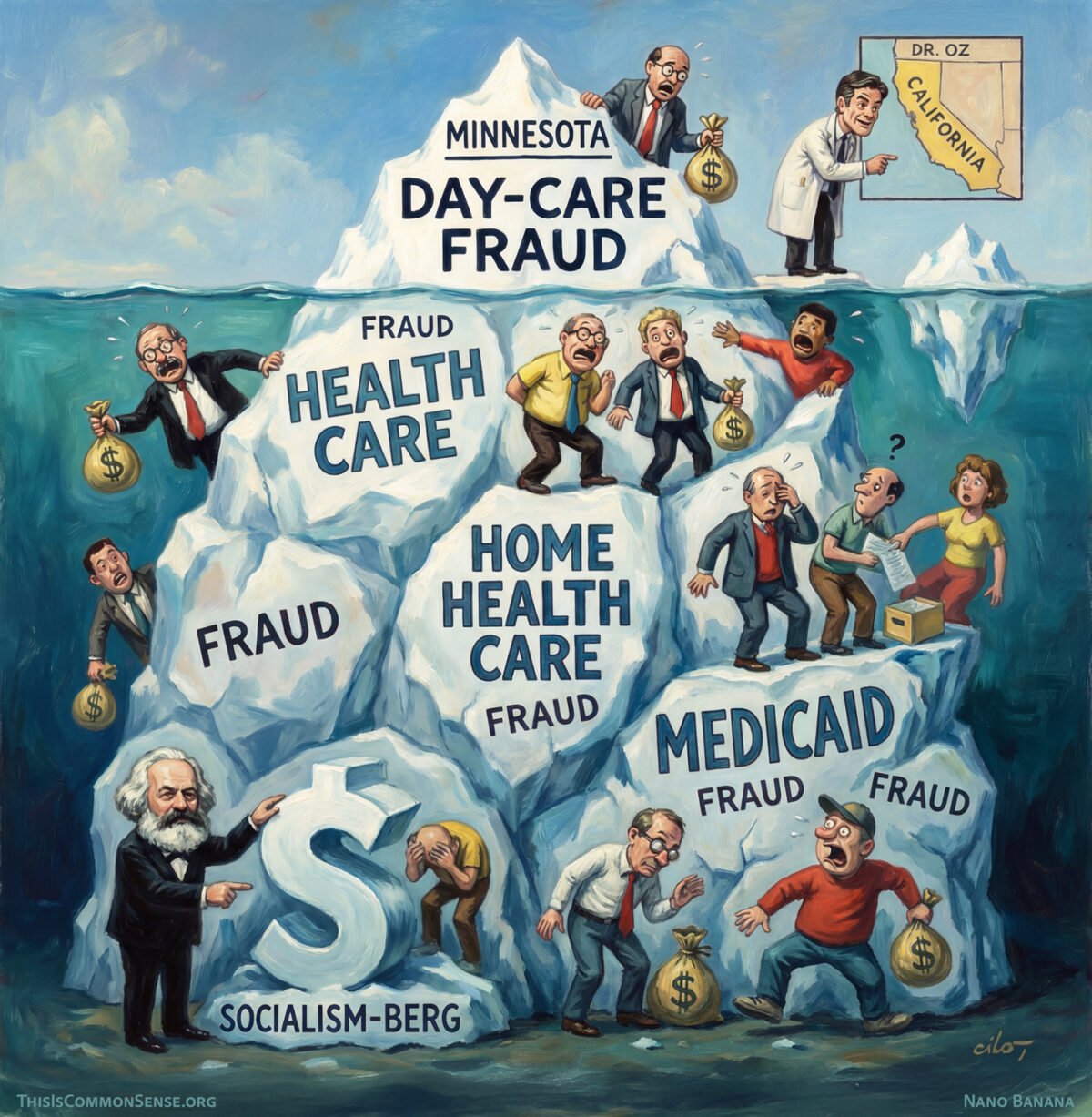
Memo to Mamdani Voters

New York City is expensive. Housing is expensive, often prohibitively so. The city has crime problems. Other problems.

Answers: Unshackle the housing market? Slash regulations and taxes? Make it easier to catch and punish bad guys? No. Prevent builders from supplying more and cheaper housing. Further hobble the police. Etc. Pro-Hamas socialist Zohran Mamdani has a slew of such pseudo-solutions. 

And has a large following.

In New York’s mayoral race, decided Tuesday, the Republican candidate was excluded by the city’s heavily Democratic tilt. The incumbent mayor was also nonviable. Scandal-plagued former Governor Cuomo was the main alternative to a reputedly charming Mamdani now claiming a mandate to rob the rich.

Song Ying is a 72-year-old New Yorker who escaped the Chinese communists in 1976. She “swam for eight hours from Shenzhen, then a small fishing village, to Hong Kong,” explains  The New York Times in a report on the growing generational divide among Chinese immigrants regarding the prospect of a socialist city. Song is dismayed by the strong support among young New Yorkers for Mamdani. She says — and knows — that socialism doesn’t work.

The Times belittles her concerns, stressing that Mao’s China is not the vision that Mamdani is selling. Yet upon winning, the mayor-elect asserted that his administration would prove that “no problem [is] too large for government to solve and no concern too small for it to care about.” Sounds like a government without limits.

Mamdani will not fix things. He offers as solutions more of the policies that caused current problems: more regulations; more taxes; more spending; more government in power and scope.

If a boulder is tumbling right toward you, demanding more and heavier boulders won’t stop you from being crushed.

This is Common Sense. I’m Paul Jacob.


PDF for printing

Illustration created with Krea and Firefly

See all recent commentary
(simplified and organized)
See recent popular posts
Categories
folly too much government

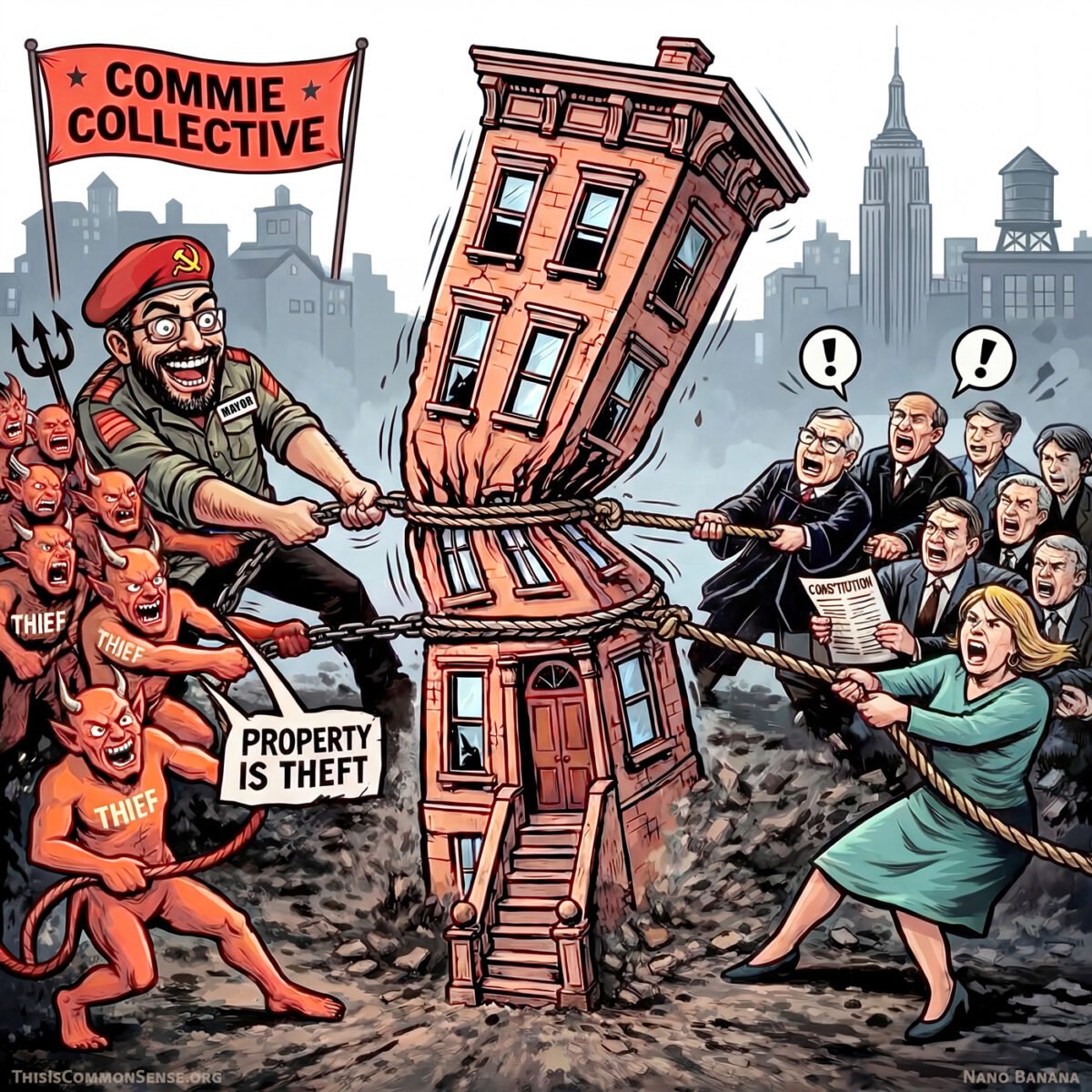
How Socialists Learn

Not all socialists in mayoral runs won on Tuesday.

Sure, socialist/communist Zohran Mamdani is now Mayor Elect of New York, but Omar Fateh lost to the incumbent mayor of Minneapolis on a second counting of the city’s ranked choice vote system. The latter is a victory for old-fashioned city politics, but what is the former?

Mamdani obviously wants to take from the rich and give to the poor, with a lot of government workers shuffling the money in between rich benefactors and poor dependents. Running grocery stores, of all things: Mamdani seeks to bring the efficiency of the DMV to the food industry. 

But just how much harm can he do? 

He still has to balance city budgets, and if he wants to spend billions, he has to “raise” billions in revenue. He cannot simply spend money he’s created — Mamdani doesn’t control the money supply. After all, socialism doesn’t create wealth ex nihilo.

Further, he will face opposition on his many pipe dreams. Since he has almost no work experience, and none managing anything, he may also prove to be way over his head.

Worst case? If he pushes his dream earnestly and effectually in the Big Apple, the rich and industrious will flee. (A possibility so likely that it is worth stating multiple times: when fools vote socialist, the wise vote with their feet.) Mamdani may usher in Atlas Shrugged faster than any pro-capitalist political party ever could.

Which, though disastrous for the poor, might prove educational.

This is Common Sense. I’m Paul Jacob.


PDF for printing

Illustration created with Krea and Firefly

See all recent commentary
(simplified and organized)
See recent popular posts
Categories
too much government

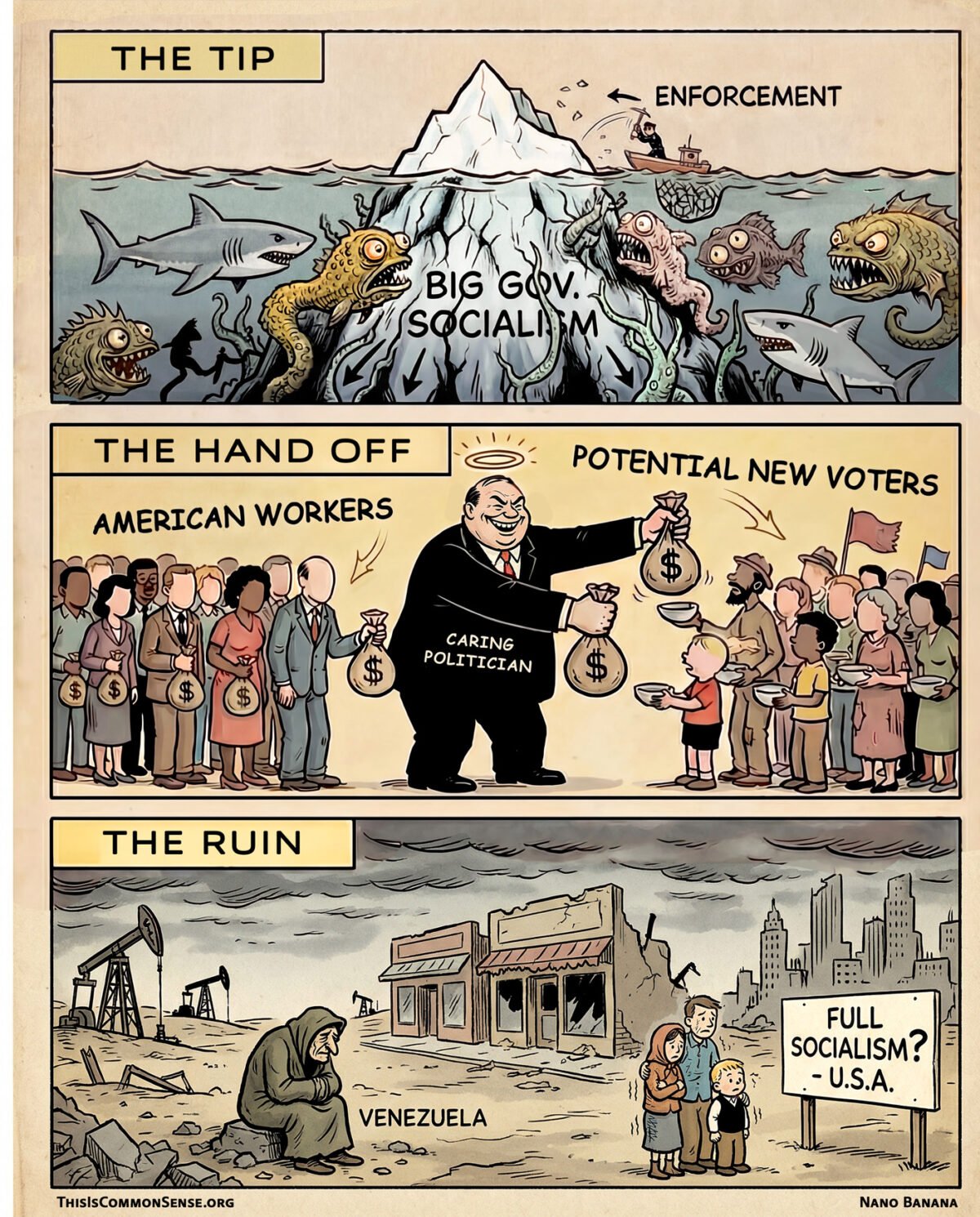
Escape from New York

People in New York City with any money and property are unhappy about the prospect of a communist mayor. They apparently see the potential of the government taking much more of their money less a politician’s promise and more a revolutionary threat.

While Zohran Mamdani might lose, it’s not looking that way. (Note the standing of his chief competitor.) Therefore, many homeowners are fleeing, without waiting for Election Day.

One destination is next-door Connecticut, site of a failed revolt in 1991 against the enactment of a state income tax. New Yorkers reasonably suppose that the taxes imposed by a Mayor Mamdani would prove worse than that — and worse than New Yorkers’ already-heavy tax burden.

Escapees are also worried about crime.

Mamdani could do much unilaterally but would need the cooperation of the state legislature and governor or the city council to impose the tax hikes he’s dreaming about. Still, these entities hardly serve as bulwarks of limited government.

We know that New Yorkers are lurching to Connecticut because, as the New York Post reports, a “bidding war frenzy and soaring prices” have hit the state’s housing market.

According to real-estate agents there, the frenzy resembles that of early pandemic times. Properties are being scooped up within days. Deals are cash on the barrelhead, even for multi-million-dollar homes. Sale prices are much higher than expected.

And the bidders are coming “out of New York City,” the agents say. Prospective buyers have been “mentioning concerns about the mayoral election. . . .”

Good news, for a while, for Connecticut home sellers and their real-estate agents. Bad news for everybody else, soon enough.

This is Common Sense. I’m Paul Jacob.


PDF for printing

Illustration created with Krea and Fireflly

See all recent commentary
(simplified and organized)
See recent popular posts

Categories
Accountability budgets & spending cuts national politics & policies too much government

Blame Rand Paul?

“The Republican plan adds about $2 trillion to the debt,” Senator Rand Paul explained at the beginning of the month, referring to the Continuing Resolution (CR) which remains, to this day, unresolved. “I’m opposed to deficit spending,” he added, insisting that he would “vote for something with less deficit, but not a $2 trillion deficit.”

Most of the shutdown screaming blames President Donald Trump, but Trump’s a big advocate for the CR. Trouble is, it requires a 60 percent Yea vote in the Senate. All but three Democrats voting Nay ensure that the CR will continue to fail.

So, Sen. Paul’s continuing Nay vote isn’t the cause really; a switch on his part wouldn’t allow the bill to pass. The folks worried about losing their SNAP benefits (just about the only Americans not in government who’ve noticed the shutdown) shouldn’t blame anyone other than those nay-saying Democrats.

From the beginning, Paul has noted a different irony — his alignment with the bulk of Democrats in opposing the CR. He’s against its continuation of old spending expectations; Democrats, on the other hand, demand even more, especially securing the renewal of Obamacare subsidies.

While the CR failed a 13th time, yesterday, Rep. Rosa DeLauro (D-Ct.) said that lawmakers had set aside a USDA contingency fund “for exactly these kinds of purposes” — that is, to fund SNAP during the shutdown. The White House insists it lacks legal authorization for this, and, besides, November’s food subsidy requires $9 billion, and the fund falls short by four.

It appears that the tens of millions who may not get their EBT cards filled at the beginning of November remain unaware of what the battle is really about.

But they may be getting a clue: it’s not about them.

This is Common Sense. I’m Paul Jacob.


PDF for printing

Illustration created with Krea and Firefly

See all recent commentary
(simplified and organized)
See recent popular posts

Categories
ideological culture too much government

Too Big for the Hermit Kingdom

North Koreans endure one of the least fun-loving, most sensuality-repressing regimes on the planet.

Normally, government officials in the Hermit Kingdom strictly enforce all manner of regimentation and self-deprivation, at least for those being ruled. If you’re a happy citizen in North Korea, check the map. You are not in North Korea.

There may be light at the end of the tunnel, though. Kim Jong-un’s administration has put out an all-points edict, also all-areolas, ordering North Koreans to be on the lookout for women with un-socialist breasts. 

The precipitant is an “ongoing show trial of two women in their 20s accused of undergoing breast enhancement operations by a backstreet surgeon.”

As you know, every socialist breast is the product of the forces of dialectical materialism, in consequence of which such bosoms, albeit firm and loyal to the supreme leader, are often Marxist-Leninist to a fault. Normally, then, we expect collectivist cleavage to be immune to capitalist leering as well as any other such “rotten capitalist act.”

Now, however, North Korea has turned a corner in its attitude toward mammary glands. Everyone is being ordered to stare at women well below eye level, especially any that might have benefited from augmentation in violation of Das Kapital.

While this new all-eyes alert may sound like a recreational activity for most men, it won’t be fun for the women who get dragged off to hospitals to be medically examined to determine whether their breasts are entirely for real or have been corrupted by “bourgeois customs.” 

But North Korea isn’t supposed to be fun.

This is Common Sense. I’m Paul Jacob.


PDF for printing

Illustration created with Krea and Firefly

See all recent commentary
(simplified and organized)
See recent popular posts