Categories
initiative, referendum, and recall national politics & policies term limits

Electing a Better Way

For the seventh time in the last 22 years, the Metro Nashville Council put a measure on the ballot to weaken or abolish their own term limits. And for the seventh time voters said no. 

Term limits were under attack elsewhere in Tennessee — along with Ranked Choice Voting. The Memphis City Council foisted three dubiously worded ballot questions on voters. The measure to weaken the council’s limits, neglected to explain that to voters. The other two misleading measures sought to repeal or block Ranked Choice Voting from going to effect.

Voters put down all three. 

Speaking of Ranked Choice Voting (RCV), after several squeaker U.S. Senate races, perhaps Republicans and Democrats will reconsider the reform. 

The Arizona race is still too close to call. Republican Martha McSally leads with 49.3 percent of the vote against Democrat Kyrsten Sinema with 48.4 percent. But Angela Green, the Green Party candidate, took 2.2 percent of the vote. Sinema used to be a Green Party activist, so it’s not unreasonable to think those folks would have preferred her to the Republican.

In Montana, incumbent Democrat Jon Tester has won. He garnered 49.6 percent of the vote, while Republican challenger Matt Rosendale received 47.5 percent and Libertarian Rick Breckenridge racked up 2.9 percent, more than the margin of difference. 

Last week, the Libertarian seemingly endorsed Rosendale. “I am here today to support Matt and his candidacy,” Breckenridge told reporters. “And endorse him in his continuing effort to be the front man in the cause of liberty.”

Using RCV, voters can rank their choices and, were their first choice eliminated, their votes would go to their second choice until some candidate achieves an actual majority.

Thus ending “spoilers” — and giving voters more say-so.

This is Common Sense. I’m Paul Jacob.



PDF for printing


Categories
Common Sense

The Kettering Hope

Maybe President-​Elect Donald Trump can whip Washington into shape. We can hope. And help. Especially on congressional term limits.

But remember: local political fiefdoms can oppress as harshly as the Feds. So … who is whipping your town into shape?

Well, welcome to Kettering, Ohio.

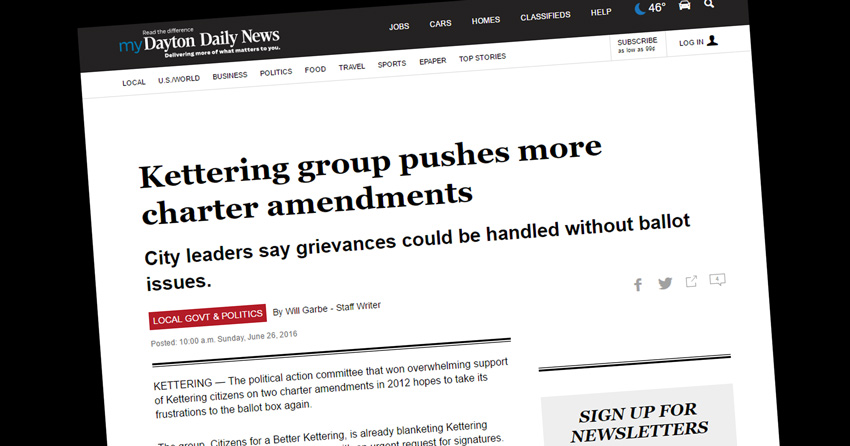
Just months ago, Kettering’s powers-​that-​be placed a new charter amendment on the ballot to weaken term limits. And one citizen, Ron Alban, wasn’t amused. He and two other longtime residents formed Citizens for a Better Kettering (CBK), but not merely to fight the attack on term limits. They also petitioned five new reforms onto the city ballot.

I met this busy activist back in January, while he was working to place an ethics reform measure on the Ohio ballot — before being blocked by the state ballot board. In 2012, Ron had organized a petition drive to put a pay cut and council term limits on Kettering’s ballot. Both passed.

Ron’s CBK measures were: to protect citizen input at council meetings; to require greater transparency on city salaries; to hold elections for council vacancies; to strengthen citizens’ ability to enforce charter provisions; and banning the city council from proposing future charter amendments dealing with term limits, council pay and the citizen ballot initiative process.

On Tuesday, the anti-​term limits charter amendment failed.

And all five reform amendments passed overwhelmingly.

Alban and CBK aren’t as media savvy as Mr. Trump, or as wealthy. But their incredible success is a bright beacon of hope.

Most cities in this country have a petition process whereby thoughtful, hardworking citizens can change their local world. Most of us can do what Citizens for a Better Kettering just did.

This is Common Sense. I’m Paul Jacob.

Printable PDF

Kettering, Ohio, reforms, initiatives, illustration


Categories
Accountability Common Sense general freedom ideological culture initiative, referendum, and recall insider corruption media and media people moral hazard nannyism national politics & policies political challengers responsibility too much government U.S. Constitution

America After November

Yesterday, I bemoaned the disaster that is this year’s presidential race. But big whup. As the LifeLock commercial rightly asks, “Why monitor a problem if you don’t fix it?”

Hillary Clinton or Donald Trump will be the next president. That means we have our work cut out for us. And we can’t wait for the 2020 presidential race to fix the problem. We must immediately assert citizen power to create an effective check on government-gone-wild.

So, what to do?

First, let’s admit that fixing Washington isn’t easy. We must fight the Feds through national organizations, of course, but we actually gain greater leverage by working closer to home — at local and state levels.

We need to elect mayors, governors, legislators and councilmembers in 2017 and 2018, men and women who will fight for free markets and against cronyism. And stand up to the federal government.

And where we have the power of ballot initiatives and recall, let’s use it.

By Inauguration Day, we can be changing the conversation in most of the top 25 media markets. How? By petitioning the right issues onto the ballot. By April and May, voters in those cities and counties can directly enact those reforms. Next November, Ohio and Washington state voters can weigh in with ballot initiatives.

Sadly, tragically, it’s too late to stop campaign 2016’s tornado from doing damage. The next disaster of an administration is on its way. But we can create a competing agenda to the Hillary Clinton or the Donald Trump agenda.

A pro-​liberty agenda. Starting now.

This is Common Sense. I’m Paul Jacob.

Printable PDF

activism, politics, elections, initiatives, president, Trump, Clinton, meme, illustration


Original (cc) photo by Niklas Hellerstedt on Flickr

Categories
Accountability initiative, referendum, and recall insider corruption responsibility

Four Powers on the Chopping Block

A group of Ohio citizens isn’t leaving the maintenance of ethical standards in government to the politicians. Smart. Forming a political committee, “Ethics First — You Decide Ohio,” the group filed an initiative to amend the state constitution unsurprisingly called, “Ethics First.”

What does the ballot measure do?

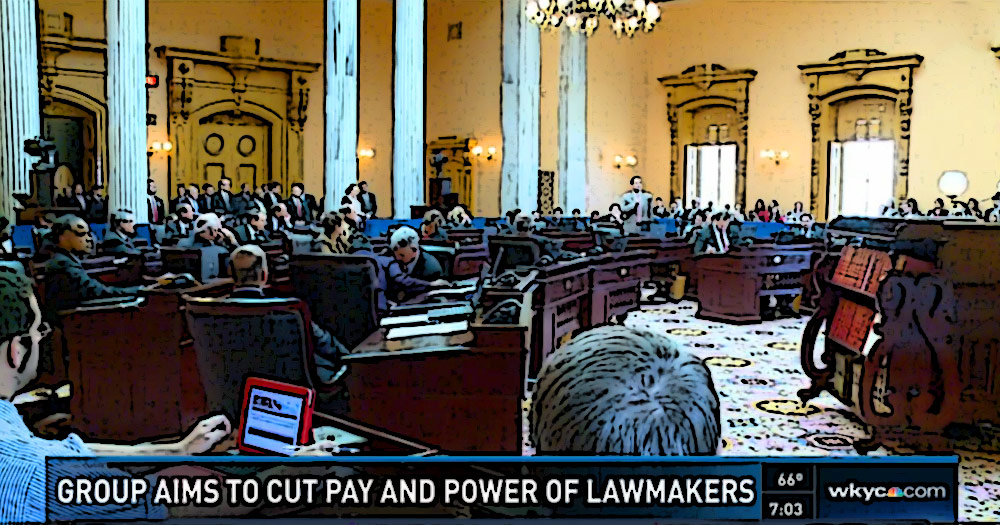
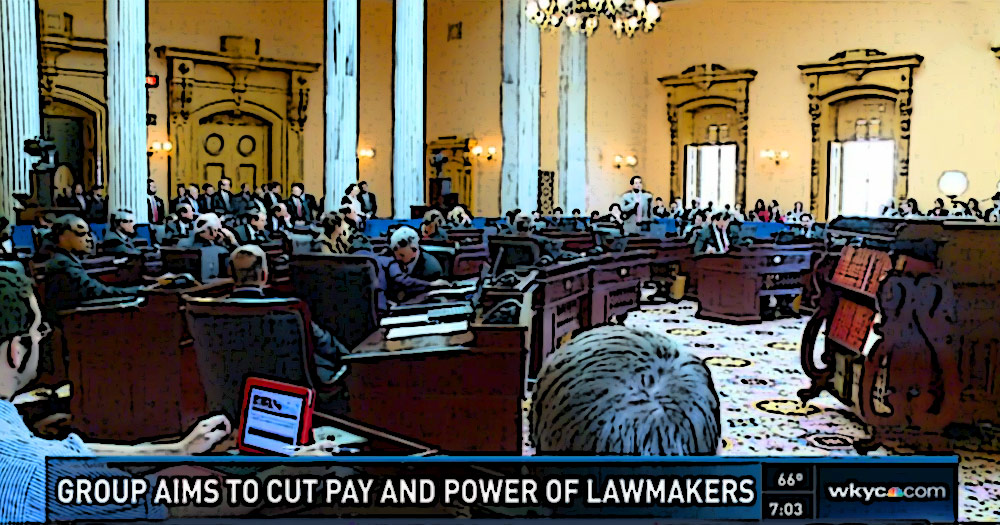
“Ethics proposal would cut state lawmaker’s pay and power,” said the segment on Cleveland’s NBC affiliate, WKYC-​TV 3.

The initiative limits base pay for the state’s part-​time legislators to the median household income of full-​time Ohioans. Because Ohio is one of only six states in which legislators pay themselves more than median household income, the measure, if in effect today, would mandate cutting legislators’ base pay from $60,584 annually to $49,644.

“The purpose is not to cut their pay,” explained spokesman Jack Boyle. “The purpose is to make their pay related to what happens to all of us in Ohio. If we’re doing well, their pay will go up. If not, it will go down.”

What legislative “power” will be cut?

The amendment takes away four powers:

  1. The power of legislators to exempt themselves from laws and taxes other Ohioans must follow and pay,
  2. The currently unlimited power of legislators to raise their own pay,
  3. The power to be a paid lobbyist before the legislature within two years of leaving office as a state legislator, and
  4. The power of legislators to destroy legislative records, including electronic records, within four years.

All the other powers of the legislature remain completely intact.

How would you vote: Yes or No?

This is Common Sense. I’m Paul Jacob.


Printable PDF

Ohio, initiative, lawmakers, congress, pay,


Common Sense Needs Your Help!

Also, please consider showing your appreciation by dropping something in our tip jar  (this link will take you to the Citizens in Charge donation page… and your contribution will go to the support of the Common Sense website). Maintaining this site takes time and money.

Your help in spreading the message of common sense and liberty is very much appreciated!


Categories
Accountability general freedom government transparency initiative, referendum, and recall Regulating Protest responsibility too much government

Fake Emergencies & Genuine Democracy

Legislators aren’t honest.

Or maybe in Colorado and Oregon they just don’t understand the meaning of words … like “safety” and “emergency.” (Heck, there was once a politician unsure of what the meaning of the word “is” is.)

“The state constitution gives Coloradans the power to challenge news laws through citizen initiative,” explains the Independence Institute’s Mike Krause in a recent Freedom Minute video.

In order to force a popular vote, the referendum process requires citizens to submit petitions before the “effective date” of the new law. If a law is deemed truly “vital to public peace, health and safety,” however, the legislature may add what’s known as a “safety clause.” That puts the law into immediate effect … thereby blocking the people’s referendum power to petition that new law to the ballot.

Krause discloses that a majority of 2015 bills passed in Colorado contained so-​called safety clauses — 68 percent in the Senate and 55 percent in the House.

In Oregon, the tactic is referred to as an “emergency clause.” There, too, most bills are passed as emergencies to block any citizen response.

Tired of legislators using fake emergencies to disenfranchise voters, attorney Eric Winters drafted an initiative mandating a two-​thirds vote of both House and Senate for legislation with an emergency clause. Now a grassroots coalition has formed to petition his “No More Fake Emergencies Act” onto the ballot.

Last year, The Oregonian warned that by “abusing the emergency clause” and “attacking the prerogatives of voters,” legislators were inviting “a backlash.”

Taking the initiative, citizens will stop fake emergencies with genuine democracy.

This is Common Sense. I’m Paul Jacob.


Printable PDF

initiative, legislature, Colorado, Oregon, emergency, emergency clause


Categories
Accountability Common Sense initiative, referendum, and recall tax policy

Evergreen Eyman

“Initiative 1366 is blackmail,” one plaintiff charged.

No; it’s just political hardball.

Washington State voters have cast their ballots five times (by initiative measure) to require a two-​thirds vote of both houses of the state legislature, or a vote of the people, to increase taxes.

Though the rule is neither hard to understand nor difficult to implement, legislators have repeatedly overruled the people they supposedly serve, overturning the measure and then, finally, suing to overturn the repeatedly re-​enacted two-​thirds requirement.

The Washington Supreme Court ruled that only through a constitutional amendment could citizens place upon their representatives the two-​thirds mandate. And — you guessed it — the state’s initiative process doesn’t permit constitutional amendments, only statutes.

As I reported back in June, Tim Eyman and Voters Want More Choices haven’t skipped a beat. Their grassroots army collected over 335,000 voter signatures to place a new initiative on the ballot. This measure would cut a penny from the state sales tax unless legislators propose an amendment to the state constitution establishing the rule that taxes can only be raised via a two-​thirds legislative vote or a popular vote.

The day after the signatures were verified and the measure placed on the ballot, a group of legislators and various special interests sued to block the measure from going to a vote. Last Friday, the court declared that Initiative 1366 would remain on the ballot for voters to decide.

So, whether “blackmail” or ingenious hardball, it looks like voters will have a chance to send a very direct message to their representatives: Do what the people want or else.

This is Common Sense. I’m Paul Jacob.

Printable PDF

Stubborn Beast


Categories
Common Sense initiative, referendum, and recall too much government

Rich Mischief

The SFGate​.com headline was clear: “State ballot initiative fee raised to $2,000 to prevent mischief.”

It just wasn’t accurate.

Assembly Bill 1100, introduced by Assemblyman Evan Low (D‑Campbell), passed by Democrats in the legislature and signed by Gov. Jerry Brown, doesn’t do anything to address “mischief.” Which, incidentally, abounds in California government — especially in the legislature.

The new law raises the cost for citizens to file a ballot initiative from $200 to $2,000. Now, if the mischief-​maker has $2,000 to spend, this new law accomplishes … nothing.

Only five of the 26 states with initiative and/​or referendum charge citizens any filing fee. California’s is now the highest by far.

“There are some lunatics out there and for $200 we encourage them to put measures on the ballot that say we should put a gun to the head of someone who is gay or lesbian, bisexual or transgender,” argued Sen. Mark Leno (D‑San Francisco). AB1100 was about “clearing out what’s nonsense.”

The senator was referring to an initiative filed by an Orange County attorney, called the “Sodomite Suppression Act,” which, if passed, would establish the death penalty for homosexual conduct.

“This reform is overdue,” argued Assemblyman Low, calling it “a threshold for reasonableness.”

Reasonableness? Those with $2,000 are more reasonable than those with just $200?

The anti-​gay measure was a stunt. No signatures were collected. It wasn’t going to be on any ballot. Still, the Attorney General went to court to have it declared unconstitutional. Case closed.

So, why pass AB1100?

To make it harder for voters to go around legislators via the ballot initiative. Just more mischief.

This is Common Sense. I’m Paul Jacob.

Printable PDF

Government Scold, collage, montage, Paul Jacob, Jim Gill


Categories
Accountability initiative, referendum, and recall responsibility

Gold Medal Worthy

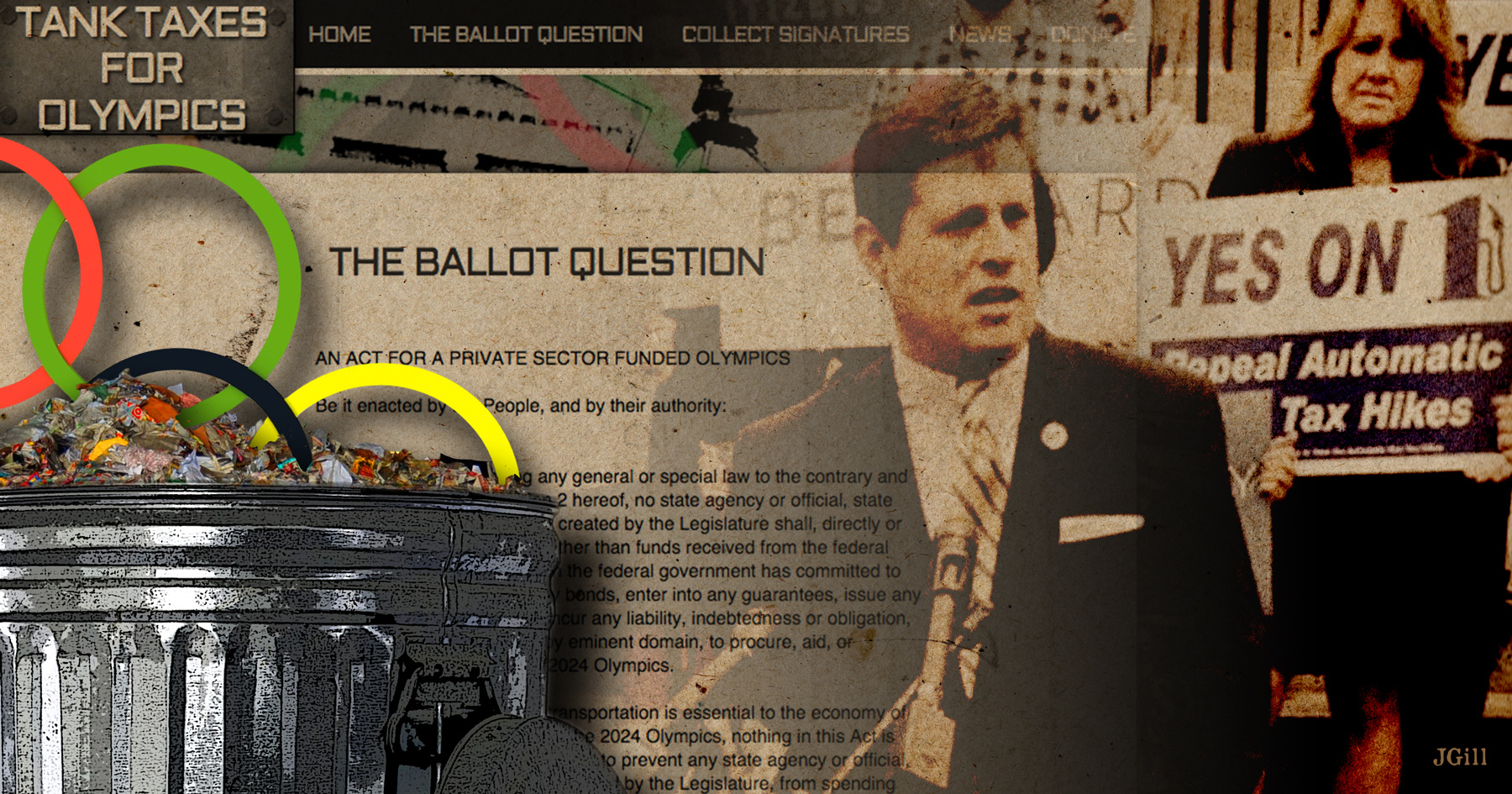
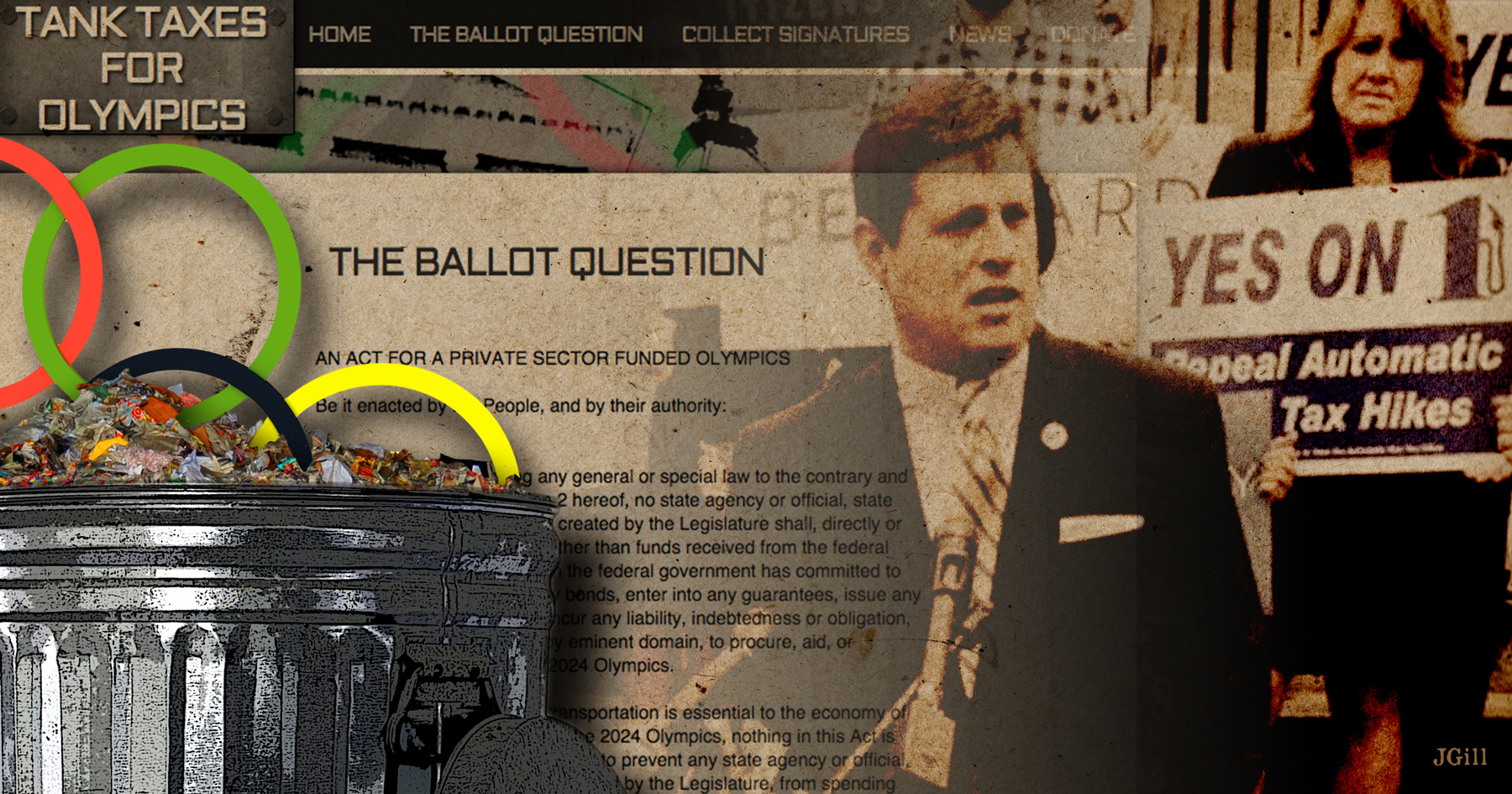
The 2024 Summer Olympics will not be held in Boston.

Beantown abandoned its bid to host the games after Mayor Marty Walsh refused to sign a contract that would have left the city responsible for billions in possible cost overruns.

Did I say possible?

Call it seemingly inevitable.

“I cannot commit to putting the taxpayers at risk,” declared Walsh.

People throughout the Bay State can now rest easy — no tax hike or debt burden to build expensive infrastructure … and produce bigger traffic jams. Of course, polls had long shown voters opposed to the idea. But that doesn’t matter to career politicians. Nor to the mayor — until recently.

Mayor Walsh’s deep concern for taxpayers notwithstanding, citizen activism made the difference. A month ago, the Yes on 1 committee joined together with Evan Falchuk, chairman of Citizens for a Say, in supporting a ballot measure to prohibit spending any tax dollars on the Olympics.

Last year, I worked with Yes on 1 — led by Steve Aylward, Rep. Geoff Diehl, Marty Lamb and Rep. Shaunna O’Connell — to pass Question 1, ending automatic gas tax increases in Massachusetts. Olympic officials had been assured a ballot measure was unlikely to get in the way; then came the Yes on 1 folks with the know-​how to petition just such a measure onto the ballot.

Walsh claimed this opposition had nothing to do with his decision, calling them “about ten people on Twitter and a couple people out there who are constantly feeding the drumbeat.”

Dancing to a different drummer, Mr. Mayor.

Bostonians can thank the state’s ballot initiative process, which provides a way for the people to be heard. And, of course, citizen leaders who take the initiative.

This is Common Sense. I’m Paul Jacob.


Printable PDF

Yes On 1


Categories
ballot access initiative, referendum, and recall

Finished Business

The civil war is over!

I mean Nebraska’s civil war, a 23-​year schism between its unicameral legislature and what’s known as the state’s “second house” — that is, the people, acting through the initiative and referendum process, often checking the power of the first house.

Hero of the day? State Senator Mike Groene of North Platte, who championed Legislative Bill 367. Kudos also to the 42 – 0 vote of the Nebraska Legislature that enacted the measure, as well as to Governor Pete Ricketts for signing it into law.

Groene, who has been politically active for years with the Western Nebraska Taxpayers Association, got into office as a result of term limits. His LB 367 reverses the state’s seven-​year ban on paying petition circulators according to the number of signatures they gather. He convincingly argued that the ban had “really broken the back of people trying to take part in their government through the petition process.”

“It’s time for this body to call a truce,” Groene told fellow lawmakers, declaring that since term limits were first passed, citizens and their representatives had been locked in a “civil war.”

During that war, State Sen. Diane Schimek, a 20-​year legislator about to be term-​limited, successfully pushed legislation to restrict citizen petitions. Part of her measure was struck down as unconstitutional in Citizens in Charge v. Gale.  Now the rest has been unanimously repealed by the state legislature.

Sen. Paul Schumacher of Columbus favored Groene’s bill, saying that legislators could use a more viable initiative check on their power. The unicameral’s attacks on citizen petitions were, he said, “reflective of a government that was afraid of its people.”

Now it’s peacetime in Nebraska.

This is Common Sense. I’m Paul Jacob.


Printable PDF

Nebraska Win


Categories
Accountability ballot access Common Sense First Amendment rights general freedom initiative, referendum, and recall

Really Protecting Our Rights

Incentives matter. Which is why Ohioans have much to celebrate
this week
.

Federal District Judge Michael Watson turned his previous temporary injunction against enforcement of Senate Bill 47 into a permanent injunction. That statue outlawed non-​residents from helping Buckeye State residents by gathering petition signatures for an initiative or referendum.

The case is Citizens in Charge v. Husted. Citizens in Charge — where I work — protects initiative rights. Jon Husted is the Ohio Secretary of State.

But Judge Watson went further, declaring Sec. Husted’s office liable for damages to one of our co-​plaintiffs, Cincinnati for Pension Reform. The judge found that “a reasonable official would have understood that enforcement of the residency requirement would violate plaintiffs’ First Amendment right to engage in political speech.”

Public officials have what’s known as “qualified immunity,” which protects them from liability when acting in good faith. A spokesman for Husted offered a defense: they were acting “on the assumption that the law is constitutional.”

“Some qualified-​immunity cases are difficult,” countered election-​law expert Daniel Tokaji. “Not this one.”

Ohio’s residency law was ruled unconstitutional in 2008, after Ralph Nader’s presidential campaign sued. In 2009, the previous secretary of state officially acknowledged the law unenforceable regarding all petitions. Yet, seeking to block citizen petitions, legislators passed it again, and Husted was quick to enforce.

Maurice Thompson of the 1851 Center for Constitutional Law, our attorney, cheered the “deterrence” this decision provides.

“If public officials from the governor down through the police know that they will be liable for enforcing an unconstitutional law,” he explained, “they are far more likely to take Ohioans’ constitutional rights seriously.”

This is Common Sense. I’m Paul Jacob.


Printable PDF