Categories
folly free trade & free markets general freedom moral hazard national politics & policies tax policy too much government

Whose Side Are They On?

Excuse me if I drive over familiar roadways. But we are witnessing one of the great revolutions in human cooperation.

And our governments and politicians are working mightily to block traffic.

I refer, of course, to Uber and Lyft and the like.

The innovation that these companies bring to market? Enabling everyday drivers to leverage their personal investment in a capital good — a car or SUV — to make extra bucks (or even a living) while efficiently serving people who want rides.

Ride-hailing apps on smart-phones provide more security and consumer guidance than the old taxi services ever bothered to even try. The elaborate online rating system, where drivers rate riders and vice versa, provides a new market in information that outstrips government “regulation” as a consumer defense system.

And consumers get better rides, cheaper.

The Uberization of ride sharing competes directly with taxis, of course, and that’s a problem . . . for taxi companies. And the politicians who have regulated them for years. This regulation never was about consumer protection, but politicians just feathered their own nests with campaign contributions through crony capitalism, helping some taxi services at the expense of others.

And customers.

The latest idiocy hails from Massachusetts, which has enacted a 20¢ per trip tax on all ride-sharing apps, with 5¢ of each charge slated for subsidizing the old, established taxi services.

Taxachusetts’s Republican governor, Charlie Baker, has been sucked in to the government racket, choosing to support old cronies rather than customers.

Still, it could have been worse. The advocates of the tax had initially demanded Uber be banned.

This is Common Sense. I’m Paul Jacob.


Printable PDF

Uber, Lyft, Taxi, protection, tax, crony, cronyism, illustration


Illustration based on original cc photo by GörlitzPhotography on Flickr


Categories
Common Sense general freedom ideological culture national politics & policies political challengers responsibility too much government

United We Disagree

This election year? Anger and angst permeate the electorate.

We are united only in frustration. Which leads to some mutual distrust.

Not good.

Neither the Republican nominee, Donald Trump, nor the Democratic nominee, Hillary Clinton, will receive my vote. But that doesn’t mean I don’t respect people who will vote for one or the other.

My father, whom I respected more than anyone else — and who passed away months ago — was a big Trump enthusiast. Not that he liked Trump’s demeanor; he didn’t. But he believed Trump was the only person who would shake up a completely corrupt Washington.

Some friends and loved ones simply have different political views or a different perspective on Mr. Trump or Mrs. Clinton.

“We’ve got the fate of the U.S. in our hands,” wrote a longtime Common Sense email subscriber yesterday, irritated that I was treating Trump’s “sins” as on par with Hillary’s corruption. He asked to cancel his subscription.

What could I say? Well, that’s exactly what I said: “Sorry to see you go.” And I urged that we not “part ways.”

All’s well that ends well: He emailed back and “re-enlisted.” Not only did that make my day, but he illuminated the biggest danger in this crazy election: allowing ourselves to become divided.

Those of us who understand the gift of liberty, who demand honest government and free markets, must hang together or, as Ben Franklin quipped, “we will all hang separately.”

Disagree and debate, of course — but as friends and neighbors and fellow patriots we must realize that no matter who becomes the next president, the future of freedom in America will depend on us working together to hold them to account.

This is Common Sense. I’m Paul Jacob.


Printable PDF

Ben Franklin, Donald Trump, disagreement, anger, fighting, politics


Categories
Accountability media and media people moral hazard nannyism national politics & policies responsibility too much government U.S. Constitution

Too Dangerous x 2

“If he governs consistent with some of the things he’s said as a candidate, I would be very frightened,” former CIA Director Michael Hayden says about Donald Trump.

These are the words that begin an ominous television spot from Hillary Clinton’s presidential campaign. The advertisement concludes that Mr. Trump is “too dangerous.”

Hayden was director of the National Security Administration under President George W. Bush, before becoming the Principal Deputy Director of National Intelligence, and then moving to head the Central Intelligence Agency. He served at the CIA for only a few weeks into President Obama’s first term, but obviously Mrs. Clinton wouldn’t broadcast his negative view of Trump before millions of us in TV Land if she didn’t respect Mr. Hayden’s opinion.

Funny, yesterday on John Catsimatidis’s New York City radio program, Hayden declared, “I’m uncomfortable with the nominee of both of the major political parties.”

“John, a lot of my friends are saying that’s nice, Hayden, but you have to vote for one of them,” the former top spy offered, “but I’m not so sure I do.”

He doesn’t. Libertarian Party nominee Gary Johnson will be on all 50 state ballots and Green Party standard-bearer Jill Stein will be on most. And there are others.

“Somebody is going to win, but . . . I’m hoping they don’t think they’re sweeping into office with some powerful mandate,” Hayden continued. “And for people like me . . . to vote for some other choice, might deny them that sense of mandate, which would make, I think, things even worse.”

I’m no fan of Mr. Hayden, but regarding this? I agree.

This is Common Sense. I’m Paul Jacob.


Printable PDF

CIA, Director, Michael Hayden, Donald Trump, danger, Libertarian, Gary Johnson, illustration


Photo of Michael Hayden Credit: TechCrunch on Flickr (CC License)


Categories
media and media people national politics & policies political challengers

The New Centrism?

Have you noticed that CNN has been offering multiple “town hall” presentations of the Libertarian and Green Party presidential candidates?

I think this is not only great for the Libertarians and the Greens, but also good for the country — and I hope it proves good for CNN.

When the Cable News Network started, it was the only player in its league. Then Fox News pulled away its right-leaning viewers. MSNBC followed, offering a safe space for the far left. And there remains the center-left of the rest of major media.

So CNN has to distinguish itself. Why not appeal to those left . . . out of the political process?

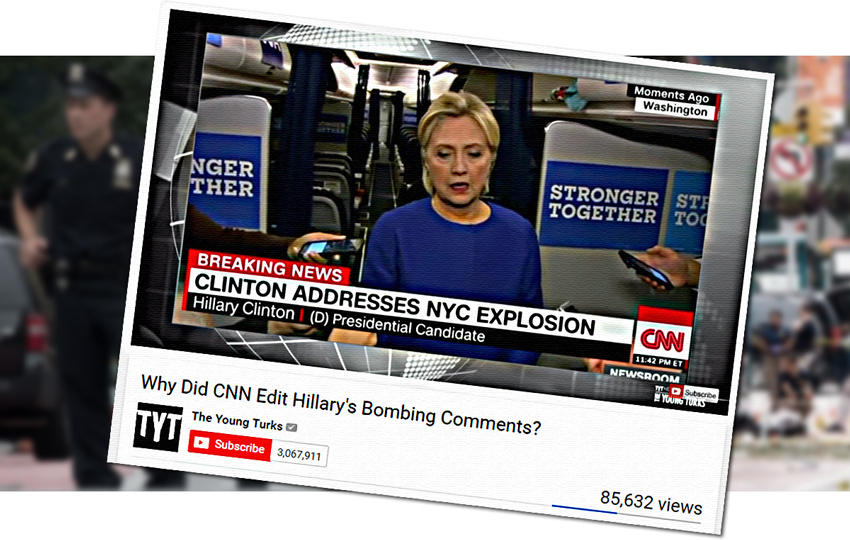
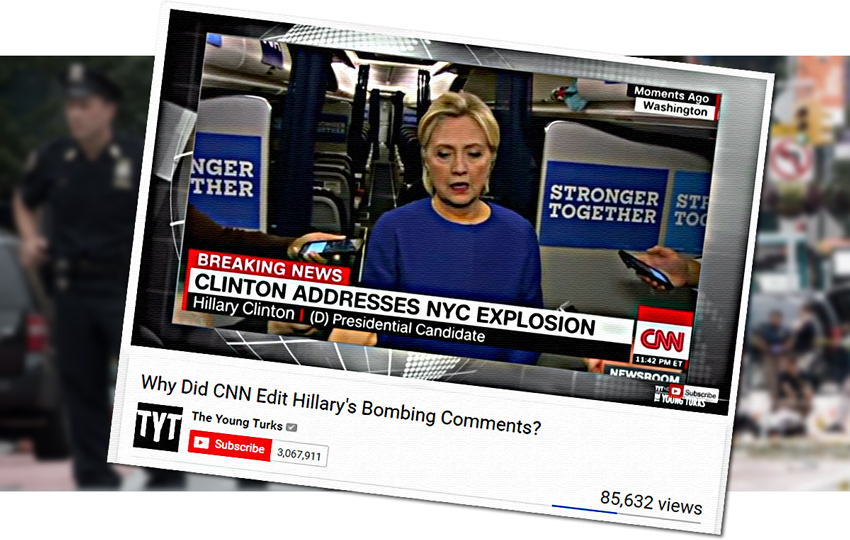
By opening up to libertarians and radical environmentalists, CNN may bring in more viewers. And temper its well-known bias.

With the libertarians, though, CNN may really be just appealing to the new center.

Which is now libertarian . . . -ish.

Surely, with Trump harrumphing from the apparent “right” and Hillary Clinton dominating the neo-con left — and Dr. Jill Stein trying to soak up the far left — moderates need a voice.

And with moderate libertarian Gov. Gary Johnson and libertarian-leaning centrist Gov. Bill Weld, there does exist a reprieve from the scary extremes. Surprised? Well, that is precisely the case Johnson and Weld make. They pitch themselves, as Walter Olson perceptively argues in Reason, as “the ‘sane’ choice, the ‘responsible’ and ‘adult’ ticket . . . campaigning not on fear and anger but on a positive message of problem-solving.”

More of that, please.

This is Common Sense. I’m Paul Jacob.


Printable PDF

CNN, debates, town hall, libertarian, green, Gary Johnson, Jill Stein, centrism, illustration


Categories
Accountability initiative, referendum, and recall nannyism national politics & policies responsibility too much government

Governments Against the People

Is it odd to see government employees and politicians — public servants — hold onto particular laws with a death grip?

Maybe not. In Texas, municipal government employees have been working mightily to prevent citizens from repealing local ordinances. According to a report by WOAI News Radio, the Texas “State Senate Intergovernmental Relations Committee on Monday heard horror story after horror story from citizen groups which have tried to circulate petitions calling for repeal of local ordinances.”

It’s not shocking, I suppose, since those laws may give politicians and bureaucrats more power. And perhaps there’s pride of authorship.

But, despite any merit (or demerit) these laws may possess, public servants are still public servants, which means: serve the public.

Which means: uphold democratic processes.

Government is all about processes, really. This shouldn’t be too hard.

Which is why there’s no excuse for what has been going on:

  • “municipal governments . . . employ ‘tricks’ and intimidation in an attempt to halt citizen petition drives”;
  • they cite “bogus city ‘statutes’ which invalidate signatures”; and
  • “will claim that more signatures are required than the citizens group has managed to collect.”

Basically, these government bodies are setting unreasonably high and arbitrary hurdles for petitions to get on the ballot — such as requiring “birth dates and Social Security numbers” of signers.

That often does the trick. One would have to be very careless to put one’s Social Security number onto a public document — one that anyone could see. And photograph.

For later nefarious use.

The fact that these government tactics are all illegal justifies the Senate committee probe into the malfeasance — and demands action.

This is Common Sense. I’m Paul Jacob.


PDF for printing

deathgrip, death grip, democracy, bureaucracy, change, politics, illustration


Categories
Accountability ideological culture media and media people moral hazard national politics & policies political challengers Popular

Smash the Duopoly

When Donald Trump called our country’s electoral process a “rigged system,” he was not wrong. The system is a legally secured duopoly.

I’ve discussed a number of the elements of this system previously. But one I may not have explored enough is the Commission on Presidential Debates (CPD).

The League of Women Voters sponsored the first televised presidential debates in 1952, and from 1976 till 1988 ran a “tight ship,” as How Things Work puts it. After the League refused to cooperate with the bullying major parties, the CPD was established by former R and D bigwigs aiming to fully accommodate the major party candidates.

And no one else.

The CPD calls itself “non-partisan,” but that’s a misnomer. It is a bipartisan commission, as everyone who knows its history knows. The commission raised the bar on minor party candidates to polling 15 percent in a number of polls.

Recently, we’ve been hearing that the commission is preparing a third place on stage, for Libertarian candidate Gov. Gary Johnson. But he still hasn’t quite yet hit the prescribed percentage, though he has met the most important qualification: he is the only minor party candidate likely to be on all state ballots.

And now there’s a kicker. According to Brian Doherty, historian extraordinaire of Reason, “The Socially Liberal and Fiscally Conservative PAC (Solifico) [yesterday] morning sent a letter to Janet Brown, executive director of the [CPD], threatening to send the IRS after them over their policy of not allowing all legitimate candidates for president in their debates.”

The case looks solid.

And could secure for Johnson a podium at the debates.

This is Common Sense. I’m Paul Jacob.   


Printable PDF

presidential, debates, duopoly, two party, illustration


Categories
Accountability ideological culture media and media people national politics & policies

The False Fairness of Bias

“If the disgusting and corrupt media covered me honestly,” Donald Trump tweeted on Saturday, “I would be beating Hillary by 20%.”

Argue the percentage, sure, but acknowledge the obvious bias.

Asked by MediaBuzz host, Howard Kurtz, about a “tilt against Donald Trump,” Larry Sabato, the director of the Center for Politics at the University of Virginia, replied, “I don’t think there’s any question about that.”

“But look,” continued Sabato, “there was a media tilt against Mitt Romney. There was a media tilt against John McCain. There was a media tilt against George W. Bush. It has more to do with party and personal characteristics of journalists than anything else.”

The bias is as old as it is obvious, “but of course I’ve never seen anything like this level of vitriol,” Kurtz clarified.

Kurtz noted a front-page New York Times column by Jim Rutenberg, which argued that reporters who believe Trump is “potentially dangerous” must “throw out the textbook American journalism has been using” and become “oppositional” — regardless of the fact that the stance “threatens to throw the advantage to his news conference-averse opponent . . . who should draw plenty more tough-minded coverage herself.”

According to Rutenberg, an unbalanced approach during the campaign’s homestretch would help remedy the $2 billion in free coverage the media gave Trump during the primaries.

Notice that the anti-Trump bias now helps the Democrat, whereas the pro-Trump bias previously helped the GOP nominate a candidate likely to lose to the Democrat.

Perhaps there’s a method to such media madness.

This is Common Sense. I’m Paul Jacob.


Printable PDF

media bias, Donald Trump, illustration, collage


Categories
Accountability folly general freedom ideological culture meme moral hazard nannyism national politics & policies

Two Headed Beast

More War, More Cronyism, More Corporate Give-Aways, More CrowdedPrisons, More Taxes, More Regulations, More Drug War, More PoliceMilitarization and Civil Rights Violations, More Assaults on Free Speech, More Economic Bungling, More Debt, More Control, More Corruption.

Hillary Clinton, Donald Trump, Godzilla, beast, business as usual, presidential, meme, illustration, collage


Categories
Accountability moral hazard nannyism national politics & policies responsibility too much government

Population to Government, “Hello”

Government “central planning”? I’m against it.

But it’s socialism, fascism, and allied isms that I oppose. I’m not against “government planning.”

We could use some.

Take population. When government sets up complicated institutions, like Social Security or Medicare, those institutions must match the general trend of the number and make-up of those served.

Or else fail spectacularly.

But as everyone knows, Social Security was set up when the population was growing, and expected to continue . . . at a positive rate. The whole logic of the system depended on population growth.

What if populations shrink?

The Center for Disease Control and Prevention (CDC) now reports that the general U.S. “fertility rate has dropped back to its all time low of 62.5 children per 1,000 American women ages 15 to 44 years,” informs science writer Ronald Bailey.

The “total fertility” rate is now “1.84 children over the course of an American woman’s lifetime.”

A steady-state population replacement rate is thought to be 2.1 children per woman.

Trouble is, if your main institutions depend on population growth, and instead, population declines, things are liable to go catawampus.

No wonder European nations, which are undergoing even more startling negative population growth, flirt with allowing huge influxes of hard-to-assimilate refugees. At the back of governmental minds may be: how do we keep going?

Some of today’s social anxiety may have to do with this shift in population growth, and government strategy.

Before politicians try to plan a whole industry — like, say, “single-payer” medical services — maybe they should learn how to arrange the existing government, to accommodate the direction society demonstrably wants to go.

This is Common Sense. I’m Paul is Jacob.


Printable PDF

population, government planning, social security, ponzi, illustration


Categories
meme nannyism national politics & policies

Robert A. Heinlein on Political Labels

“Political tags such as royalist, communist, democrat, populist, fascist, liberal, conservative, and so forth are never basic criteria. The human race divides politically into those who want people to be controlled and those who have no such desire.”

–Robert A. Heinlein


presidential, election, control, government, Heinlein, meme, illustration