Categories
ideological culture national politics & policies Second Amendment rights

Second Amendment People

Donald Trump states things in a manner simultaneously ambiguous and incendiary.

Of course, he has help from the media, the Clinton camp and other embittered opponents, all elated to act as firestorm propellants . . . through as many 24-hour news cycles as possible.

At a rally this week, Trump claimed that a President Hillary Clinton would appoint justices to the Supreme Court committed to undermining our individual right to bear arms. “If she gets to pick her judges, nothing you can do folks,” he told the crowd, before adding, off-the-cuff, “Although the Second Amendment people — maybe there is, I don’t know.”

The Clinton campaign and much of the media (but I repeat myself) immediately took this as a clear call to Second Amendment activists to . . . well, summarily execute Mrs. Clinton.

A leap? As Hillary would say, “Let’s unpack this.”

Would Mrs. Clinton curtail gun rights as Trump charges? She recently told Fox News that she would not choose justices seeking to overturn the High Court ruling in the Heller case, which interpreted the Second Amendment as guaranteeing an individual gun right.

Do I trust her? Stop laughing and read on.

Was the Donald attempting to incite violence against Hillary? No.

But what should be the people’s response were a future president or court to declare our right to defend ourselves null and void?

Remember, musket-armed American patriots met the British redcoats at Lexington and Concord for the shot heard ’round the world. Why? Specifically to stop the Brits from rendering the colonists defenseless by confiscating their arms and ammunition.

The implication? Clear.

So, with a chill down the back of our necks, let’s hone and redouble our peaceful support for our most basic right, self-defense.

This is Common Sense. I’m Paul Jacob.

Printable PDF

Donald Trump, 2nd Amendment, gun rights, Hillary Clinton, assasination


Categories
Accountability general freedom moral hazard nannyism national politics & policies too much government

Politicians Must Suffer

Politicians make us suffer. Isn’t turnabout fair play?

No. Two wrongs don’t make a right. And equal suffering is not a worthwhile goal.

Nonetheless, politicians do indeed need to “suffer” — by which I mean to bear a serious and sobering cost for their service in pubic office, to view their relationship with power through the lens of sacrifice . . . not as cashing-in.

Like every other decent person, I’ve always been offended by midnight pay raises and the myriad sneaky, sleazy ways that our so-called servants enrich themselves at our expense. But, until recently, I considered politicians being over-compensated as a symptom of the problem and not a big problem in and of itself.

Now I’m convinced that lavish pay, pensions and other benefits for city councilmen, state legislators and congressmen constitute a serious problem. It breeds bad behavior when politicians line their own pockets — and laugh their way into retirement.

But even without the tricks, when our representatives receive too many treats for their, ahem, “service,” they tend not to serve us very well.

Some contend that compensation must be “competitive” to attract the best and the brightest. But with rare exceptions, we’re not getting those folks to run for office. Instead of enticing successful people or those committed enough to public service to accept less lucrative pay, we’re getting folks who see public office as their path to success — personal financial success.

One cannot serve two masters. If our representatives are in it for their own benefits, as opposed to making a sacrifice for the greater good . . . well, we wind up with government like we have now.

This is Common Sense. I’m Paul Jacob.

Printable PDF

politicians, public servants, service,


Categories
crime and punishment general freedom national politics & policies too much government

Loose Cannon as Prez

“If I order the killing of someone,” Philippines President Rodrigo Duterte said last Friday, “you cannot arrest me: I have immunity.”

Yikes. Nearly everything negative imputed, perhaps dubiously, to Donald Trump applies double to Duterte, without a hint of dubiety.

Ordering killings with impunity? Only the U.S. president can do that.

The former mayor of Davao City was in the news during his presidential bid, for his ultra-Trumpian outbursts, saying daring, ugly, even wicked things.

Most scandalous was his remark about a young woman who was gang raped in his home town. It was “only a tragedy,” as Breitbart.com phrases it, “because he himself did not get to have sex with her first.”

Vile, yes; downright evil.

And terrifying coming from a politician entrust with protecting his countrywomen’s rights.

But then, Duterte is clear: he doesn’t care about human rights.

In his ruthless war on drugs, he’s instructed drug-warrior police to shoot first, ask questions later. The nation’s “narco-mayors” (politicians who cooperate with drug dealers) are begging for protection, leniency, anything. If those mayors have armed defenders, Duterte threatens to have the Air Force bomb them.

The American ambassador to the Philippines has publicly censured Duterte, but not (that I’m aware of, anyway) for humans rights violations, but for Candidate Duterte’s earlier rape comment. Duterte struck back calling the ambassador names and claiming his public condemnation was out of line, undiplomatic.

True enough.

I guess that’s why Secretary of State John Kerry just “inked a deal,” says Breitbart, sending $32 million to support Duterte’s war on drugs.

Duterte’s response? “[L]et’s insult them again so these fools try to make amends again.”

Fools, indeed.

This is Common Sense. I’m Paul Jacob.  

Printable PDF

Rodrigo Duterte, Philippines, President


Categories
Accountability government transparency national politics & policies responsibility too much government

One at a Time

A new procedural reform is in the offing.

And just because it is “procedural” doesn’t mean it’s insignificant.

Or boring.

Remember, how something gets done determines, in part, what gets done. The checks and balances that were written into our Constitution are there to regulate the how of government, the better to limit the what.

But it’s obvious our federal government is out of control, and in need of some additional . . . controls.

Sen. Rand Paul and Rep. Mia Love have introduced just such legislation. It’s not a constitutional limitation, but a legislative change of procedure. The title of their bills pretty much explains the idea: the “One Subject at a Time Act,” initialized as OSTA.

I first heard rumblings about it from Rand Paul; then, just last week, Mia Love sent out her press release, ballyhooing the House version of OSTA, H.R. 4335.

Rand’s Senate version is S. 1572, and was introduced a little over a year ago.

The idea is not new. I’ve talked about it before. You probably have, too. Anyone with sense realizes that the congressional habit of adding unimportant, controversial programs to unrelated but necessary, uncontroversial bills, is a leading cause of government growth.

And one reason why Congress is so roundly detested.

OSTA, by forcing Congress to deal with subjects one bill at a time, might even save Congress from itself.

The bill is still looking for sponsors. You can help by putting your representative’s and senators’ feet to the fire.

This is Common Sense. I’m Paul Jacob.

Printable PDF

Mia Love, Rand Paul, congress, bills


Categories
general freedom moral hazard national politics & policies responsibility

The Russians Are Coming

There’s no accounting for taste, especially regarding humor.

For instance, the 1966 film “The Russians Are Coming, the Russians Are Coming” is, to me, a classic. And I think Donald Trump’s recent sarcasm — “Russia, if you’re listening, I hope you’re able to find the 30,000 emails that are missing.” — was funny.

And surprisingly appropriate to the situation.

Did the Russians give WikiLeaks the hacked DNC emails? We don’t know.

Was Trump malevolently, traitorously standing in the middle of Fifth Avenue inviting a foreign adversary to criminally cyber-attack his political opponent, as hyped? No.

Still, I’m not copasetic with Trump’s apparent buddy-fest with Russian President — and thug — Vladimir Putin. Yet, Trump is hardly the first American politician to act the fool before Putin.

Republican President George W. Bush bizarrely claimed to have looked into Putin’s soul. It was cloudy that day.

Secretary of State Hillary Clinton jetted over to the Kremlin with a silly “Reset” button. Still, friendly Russian interests have been financially generous to the Clintons.

Russia bailed out President Obama (and Assad) after Syria crossed Obama’s apparently evanescent red line. Recall that open microphone that caught Obama telling outgoing Russian President Dmitry Medvedev to let Putin know, “After my election, I have more flexibility.”

Vladimir Putin must wonder how his Soviet forebears could have possibly lost the Cold War to a country led by such ninnies.

In 2012, Republican Mitt Romney called Russia our number one geopolitical foe . . . only to be ridiculed by Obama and mocked in the media. “The 1980s are now calling to ask for their foreign policy back,” scoffed a contemptuous Obama. Current Secretary of State John Kerry called it a “preposterous notion.”

Since then, Russia has annexed Crimea, made war in eastern Ukraine and occasionally bombed U.S. forces in Syria.

The Baltic nations, some of which have significant Russian minorities, understandably feel threatened. America has pledged to militarily defend these tiny countries bordering Russia.

But no discussion of that on the campaign trail.

This is Common Sense. I’m Paul Jacob.

Printable PDF

Russia, Putin, Trump, horseback, illustration


Categories
education and schooling folly free trade & free markets general freedom ideological culture national politics & policies responsibility too much government

Miseducated and Unemployed

The persistence of the issue of raising the minimum wage is an indictment of public education, for at least two reasons:

  1. It shows that “our” schools are not teaching basic economics. Generally, those who think minimum wages help the poor do not understand what wages are (price of labor), why they are paid (worker productivity bolstering the bottom line) and what a minimum wage law is (a prohibition on contracting for work below the arbitrary government-prescribed rate).
  2. It shows that schools aren’t preparing the young for real-world activity. Wages track productivity. If disturbingly large numbers of people are affected by the minimum, that means they haven’t been adequately trained in the skills they need.

Bernie Sanders wanted a 15-buck minimum. Hillary went on record supporting a 12-buck rate. Donald Trump would prefer that the minimum wage regulations be enacted by the states, though he says a hike to ten dollars per hour would really help the less fortunate.

It wouldn’t.

That is the tacit theme in a Wall Street Journal piece on the recent minimum wage rate hikes in 14 American cities, including the nation’s capital. A classic, succinct article on BET makes the point even more stark: a duo of economists from Trinity University “report that when a state, or the federal government, increases the minimum wage, Black teens are more likely to be laid off. The duo analyzed 600,000 data points, which the Employment Policies Institute says included ‘a robust sample of minority young adults unprecedented in previous studies on the minimum wage.’”

Just as theory predicts.

Could it be that politicians promise a raise because they believe government-schooled Americans too miseducated to know better?

This is Common Sense. I’m Paul Jacob.


Printable PDF

minimum wage, illustration, money, economics


Categories
ideological culture national politics & policies political challengers

Libertarianish, Democratish?

With the two most disliked and distrusted politicians in American history snatching the two major party presidential nominations, lots of voters — free-market conservatives, libertarians, liberals concerned about civil liberties and war, moderates, decency advocates — are looking for an alternative.

The Libertarian Party, our age’s perennial “third party” on state ballots, has a golden opportunity.

Perhaps that’s why delegates to 2016’s Libertarian Party nominating convention chose two two-termed former Republican governors to take up the freedom banner: New Mexico’s Gary Johnson and Massachusetts’s Bill Weld.

Both are nice men. They are the most accomplished and credentialed politicians in the race — more than Hillary Clinton; far more than Donald Trump. They don’t seem radical or threatening.

But that might be a problem. They are too nice. They are not threatening enough.

I’m not suggesting they threaten anyone, but in ideological terms they often appear more as moderates than as libertarians, as Ilya Shapiro noticed last week when he asked the pointed question, “Is Johnson-Weld a Libertarian Ticket?

The Johnson-Weld take, economist Mark Thornton noted, is more libertarianish than libertarian: the pair are “fiscally conservative and socially liberal for Republicans which is great, but they fall short of Libertarian.”

This isn’t exactly a shock. Anyone who watched the bizarre CNN town hall with Johnson and Weld will remember that odd moment when Johnson called Democrat Hillary Clinton “a wonderful public servant” and Weld dubbed her a “lifelong friend.”

No need to attack Mrs. Clinton personally, of course, but when a Libertarian cannot find one discouraging word about what a President Hillary would mean, it seems they want to appear Democratish.

And not libertarian.

Well, it’s a strategy. But it won’t appeal to #NeverHillary voters, or impress many #NeverTrumpers, either.

This is Common Sense. I’m Paul Jacob.   


Printable PDF

Gary Johnson, Weld, Libertarian, moderates, presidential, election, illustration


Categories
Accountability government transparency ideological culture media and media people moral hazard nannyism national politics & policies political challengers porkbarrel politics responsibility Second Amendment rights too much government U.S. Constitution

The Clinton Chasm

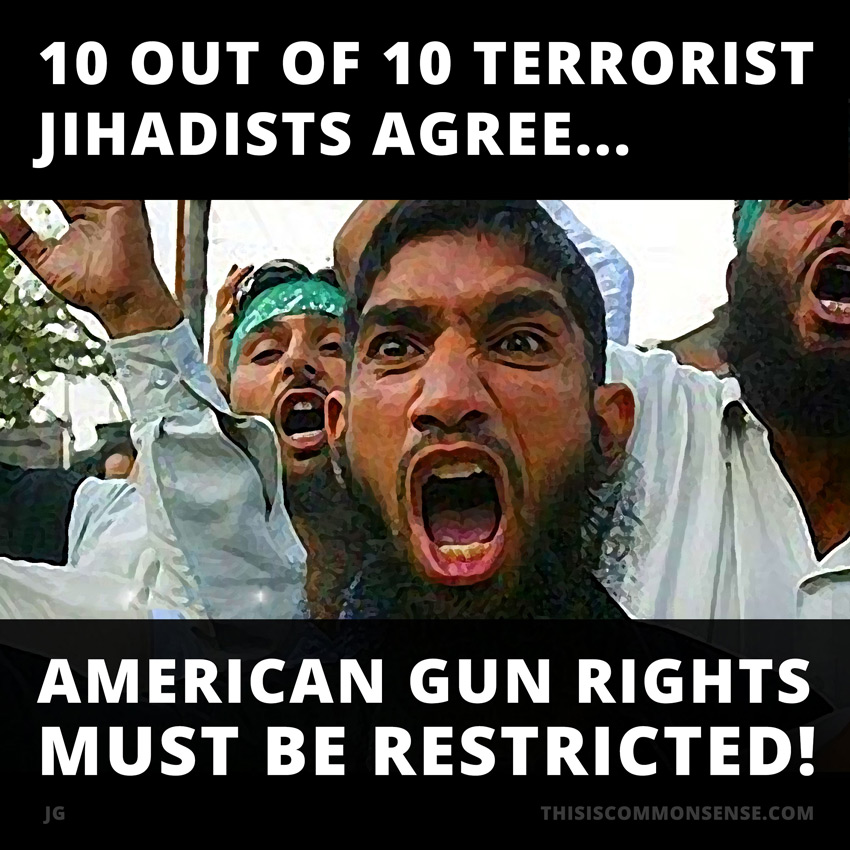
Hillary Clinton is roundly disliked by millions of outsiders, but admired by hundreds of politicians and activists. What sets her apart?

She listens.

Well, that’s Ezra Klein’s take in “Understanding Hillary,” an almost-believable piece of apologetics courtesy of Vox.

He calls Hillary’s problem “The Gap,” though “Vast Chasm” is more like it.

There’s a huge difference between how the public sees her — “Polls show most Americans doubt her basic honesty” — and how her fellow insiders feel about her. “She inspires a rare loyalty in ex-staff,” Klein informs us, “and an unusual protectiveness even among former foes.”

Klein emphasizes Mrs. Clinton’s capacity to talk naturally and listen carefully, when dealing one-on-one with insiders and constituents, and in small groups. “She gets things done,” he asserts, though I think what he really means is she moves her agenda forward. Actual accomplishments? Open to dispute.

On the crucial issue of trust, Klein buys into what Hillary is selling. She says people doubt her because she’s been so often attacked.

I don’t know about you, but I doubt her because . . . well, cattle futures, for starters. Her ridiculous “vast right-wing conspiracy” dodge to all those rich 1990s scandals: the blue dress, President Bill losing his law license, even the crony takeover of the White House travel office. Hillary has led the way more recently with the Benghazi “video” lie and her private server and email scandal. Plus, witness the ongoing conflict presented by the Clinton Foundation raking in millions from unsavory foreign sources..

Klein, on the other hand, argues that the media is against her.

This is Common Sense. I’m Paul Jacob.

Printable PDF

Hillary Clinton, trust, lie, truthful, Ezra Klein, illustration, VOX


Categories
general freedom national politics & policies political challengers too much government U.S. Constitution

Is That a Constitution in Your Pocket?

“We were blessed to raise our three sons in a nation where they were free to be themselves and follow their dreams.”

Those eloquent words came from the lips of Khizr Khan, the Pakistani immigrant who spoke at the Democratic National Convention last week about losing his son, Capt. Humayun Khan, to a suicide bomber in Iraq.

Describing his family “as patriotic American Muslims with undivided loyalty to our country,” and charging that, “Trump consistently smears the character of Muslims.” Khan asked Donald J. Trump a great question: “Have you even read the U.S. Constitution?”

Then, reaching into his suit pocket, Khan pulled out a copy, adding, “I will gladly lend you my copy.”

Yesterday at Townhall, I declared Khan my Person of the Week. Not just because Mr. Khan is fond of handing out pocket-sized copies of the U.S. Constitution and told the New York Times that his “real hero” is Thomas Jefferson, but because he asked a great question.

Let’s ask all the candidates. That question, for sure, and three additional ones:

  1. Do you favor repealing parts of the First Amendment to allow incumbent congressmen to regulate their own campaigns and their opponents’ in regard to raising and spending money?
  2. In the Heller case, the Supreme Court ruled that the Second Amendment provides individuals a “right to bear arms” — will you appoint justices who agree or disagree with Heller?
  3. As president, will you issue an executive order instructing all federal agencies and police agents to cease any use of civil asset forfeiture?

I’ve got more questions. I bet you do, too.

This is Common Sense. I’m Paul Jacob.

Printable PDF

Khizr Khan, Pakistan, Democrat, convention, Democratic, Donald Trump, illustration


Categories
Accountability crime and punishment moral hazard national politics & policies responsibility

Freddie’s Dead

Marilyn Mosley is frustrated. This State’s Attorney in Baltimore, Maryland, angrily dropped charges against the remaining three police officers not already acquitted in the death of Freddie Gray, who died from injuries sustained while in police custody.

Clearly, Mosley lacked the evidence to convict these officers of murder, manslaughter, false arrest, etc. Were the charges politically motivated, as police allege? Or did police impede her investigation, as she charges?

I don’t know. But here’s what we do know:

Upon sighting police April 12th of last year, Gray ran but was apprehended. Police confiscated a knife, which was perfectly legal to carry. Then police called for a van, and video captured police dragging 25-year-old Freddie Gray, screaming in agony, to that van.

Police transported him on a very circuitous route “downtown” that ended up at the hospital, after police discovered during a stop that he wasn’t breathing. A week later Freddie died.

The cause of death was a spinal injury.

The video suggests impairment before the travel therapy administered by police, though the injury could have been worsened in transit. Gray wasn’t wearing a safety belt. In fact, the medical examiner ruled it a homicide based on his not being belted in.

Whether the spinal injury was a freak accident, caused by police misconduct or, as alleged, Gray was trying to injury himself to seek damages, the medical evidence shows no serious bruises or broken bones — just the spinal injury.

We don’t know what happened.

What we do know is that a man was taken into police custody without any legitimate charge, not treated or attended to as he should have been, and he’s dead.

There’s no victory or vindication here for police.

This is Common Sense. I’m Paul Jacob.
 

AND ANOTHER THING: To what degree is Freddie Gray a casualty of the war of drugs? Back in June, defense attorneys for the police released an email that Prosecutor Mosley’s office had sent to police asking for an “enhanced” police presence to combat drug dealing in the area Freddie Gray was arrested. That was three weeks prior to his arrest.


Printable PDF

Freddie Gray, police brutality, misconduct, Baltimore, illustration