Categories
Accountability media and media people national politics & policies U.S. Constitution

Jokesters in Power

Ronald Reagan was known to make a jest or two. After being shot, he joked with his surgeons about their partisanship. In front of a hot mic, he shocked the media by saying he had “signed legislation to outlaw Russia forever,” and that bombing would begin “in five minutes.”

The down-homey half-quips of George W. Bush turned malaprop into something almost endearing — to some. And Barack Obama’s appearances on talk shows were often well-crafted comedy routines.

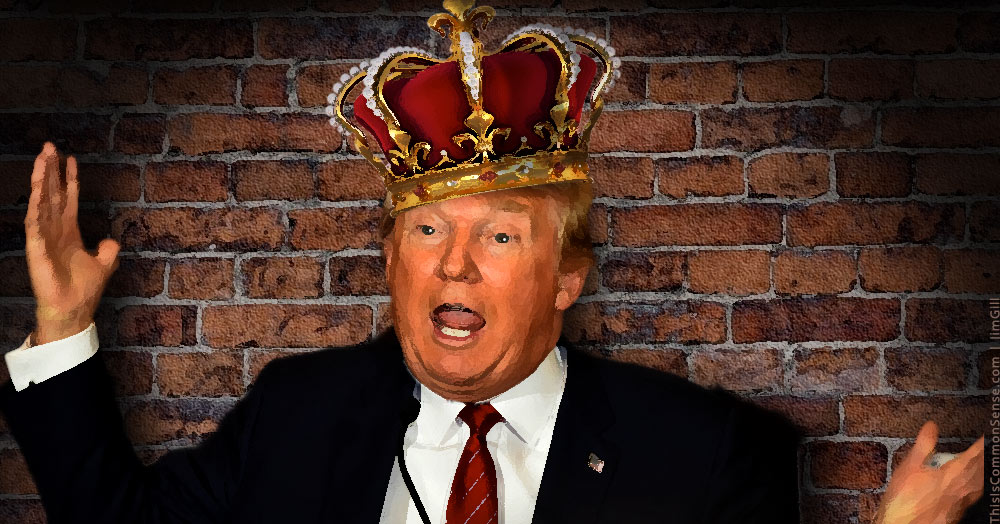
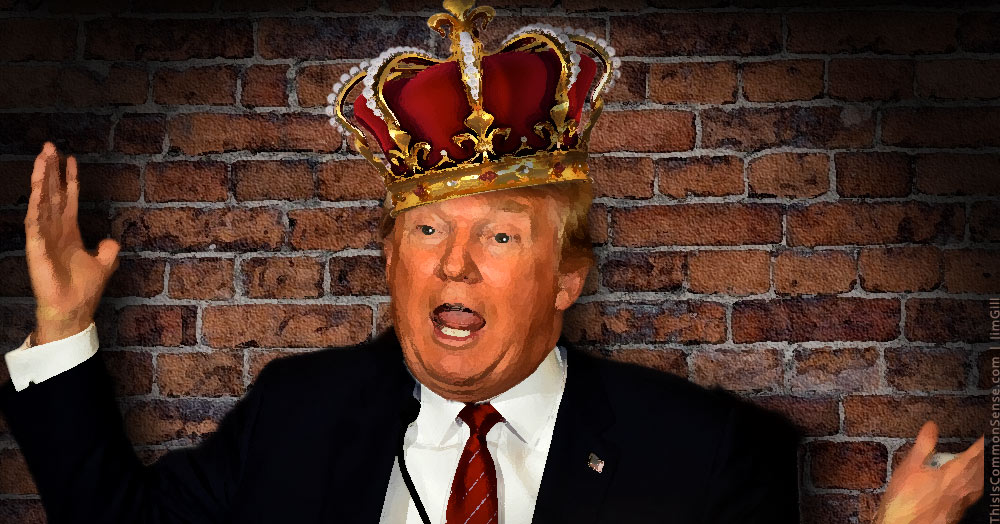
So, let’s not take President Donald Trump’s recent quip in honor of China’s President Xi Jingping too seriously.

Let’s not freak out just yet.

Sure, he seemed to favor Xi’s moves to remove the constitutional term limits placed upon him. But, not reported in much of the coverage, was the tone.

Trump was joking.

“He’s now president for life. President for life. No, he’s great,” Trump said. “And look, he was able to do that. I think it’s great. Maybe we’ll have to give that a shot some day.”

That is supposed to be funny. Trump does have good comic timing and delivery. Hillary Clinton not so much.* That may be one of the reasons he squeaked into the White House.

But to take it all seriously for a moment. What Trump is talking about is basically an elected king. Which is precisely what Alexander Hamilton first pitched in Philadelphia, so long ago. It was struck down — along with most of his nationalist agendaby the convention. But he did “give it a shot.”

And was it entirely unrelated that Thomas Jefferson’s first Vice President later gave Hamilton a shot?

Too soon?

This is Common Sense. I’m Paul Jacob.


* Just compare how Barack Obama killed with UFO material, and how Hillary seemed to be several degrees too clumsy at it.


PDF for printing


Categories
Accountability crime and punishment general freedom ideological culture judiciary media and media people moral hazard national politics & policies Regulating Protest too much government

Post Blindfold

While the Supreme Court heard oral argument, Monday, in Janus v. American Federation of State, County and Municipal Employees (AFSCME), the court of public opinion focused not so much on the constitutionality of the law in question, i.e. justice, but instead on the partisan impact of the decision, i.e. politics.

A Washington Post editorial advances the notion that the court was presented “with two questions. The first is the legal issue . . .” and the second “implicit” question is “how the court should conduct judicial review in a deeply polarized society.”

Plaintiff Mark Janus and his legal team are seeking an “extraordinary remedy in the context of the Supreme Court’s tumultuous recent history,” claims the Post.

But that history is not Mr. Janus’s.

Or the union’s.

Or even U.S. labor relations’.

The editors are talking about Washington’s bitter 2016 political fight.

What does political polarization have to do with the facts or law of this case? Nothing. Except . . . what’s in peril is a system whereby government workers who do not wish to join a union are nonetheless forced to pay union dues.

So, if the Court nixes current law, AFSCME might wind up with fewer dues paying members . . . meaning less money for AFSCME’s political pet, the Democratic Party.

And Democrats — now stuck with a conservative replacement for the late Justice Scalia — are left only with Obama’s pronouncement: “Elections have consequences.”

And, embarrassingly, the Post’s bizarre case for “steering the court modestly down the middle of the road.”

A lady, blindfolded, holding scales and a sword symbolizes justice. That blindfold is not to avoid reading the law; it represents the imperative to ignore politics.

This is Common Sense. I’m Paul Jacob.


PDF for printing


Categories
crime and punishment government transparency media and media people moral hazard national politics & policies too much government

Why Paranoia

Goofy conspiracy theories? Worth a chuckle, maybe. But not when they are about live, blood-running-in-the-street topics. Then, cries Kevin Williamson of National Review, “shame.”

Paranoia-spinners “have failed to learn the sad lesson of Hillary Rodham Clinton,” Williamson warns. “When people have come to assume that every other word out of your mouth is a lie, it becomes very difficult to tell the truth effectively.”

Well, yes. But that cuts every which way, no?

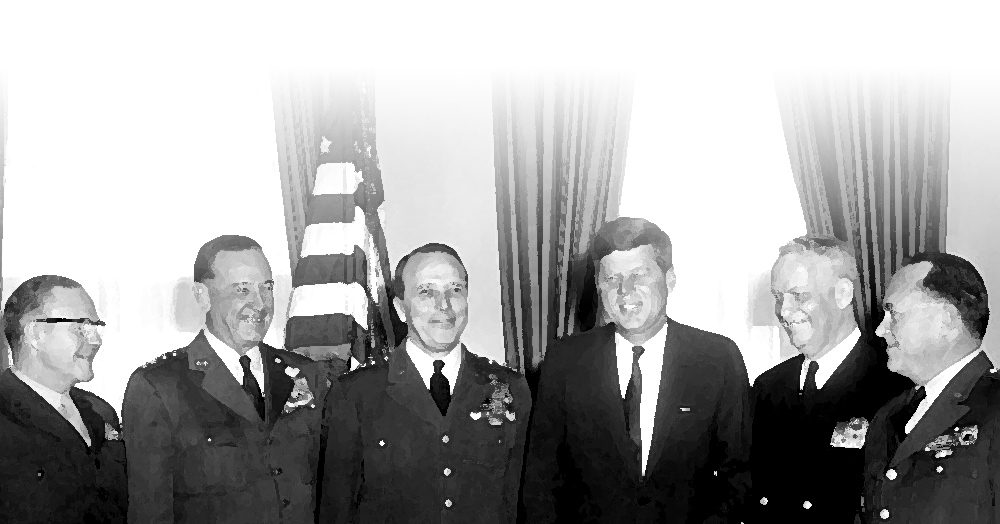
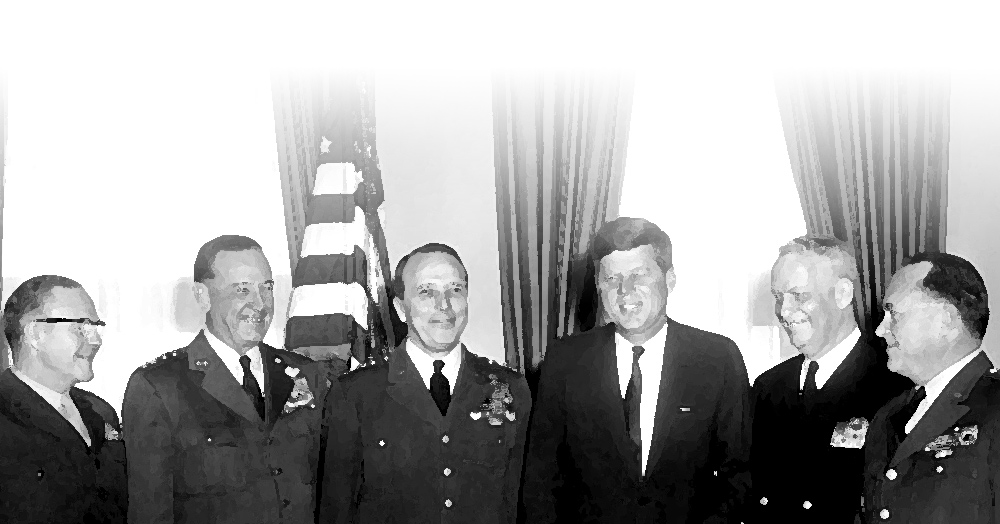
Apropos of this, comedian Dave Smith, on his most recent Part of the Problem podcast, brought up Operation Northwoods, an early-’60s clandestine false flag proposal.

“The operation proposed creating public support for a war against Cuba by blaming it for terrorist acts that would actually be perpetrated by the U.S. Government,” Wikipedia summarizes. “To this end, Operation Northwoods proposals recommended hijackings and bombings followed by the introduction of phony evidence that would implicate the Cuban government.”

This outrageous moral horror was actually signed off on by “responsible” people . . . such as the Joint Chiefs of Staff.*

“Why do these conspiracy theories persist?” Dave Smith considers, referring to the trying-too-hard conspiracy conjectures such as the now-infamous “crisis actor” hoopla. “Well, there’s . . . these conspiracies that are absolutely real — and you guys [in the media] have no interest in talking about them. And the only people who do talk about them are people like Alex Jones.”

Seeing governments lie and cover up the truth, while media too often turn blind eyes, everyday concerned folks are obviously more open to conspiracy theories.

Everyone should remember that it is the truth that will set you free.

This is Common Sense. I’m Paul Jacob.


* It was signed by Chairman Lyman Lemnitzer and sent to the Secretary of Defense. President John F. Kennedy nixed it in 1962, and it was never implemented, thank goodness.


PDF for printing


Categories
Accountability crime and punishment general freedom ideological culture media and media people nannyism national politics & policies responsibility Second Amendment rights too much government U.S. Constitution

Self-Defense, Implausible?

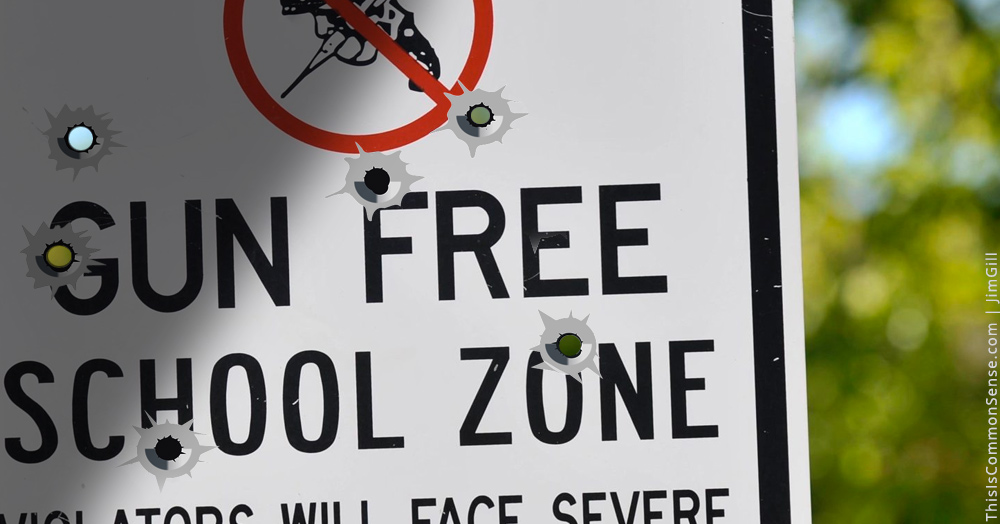
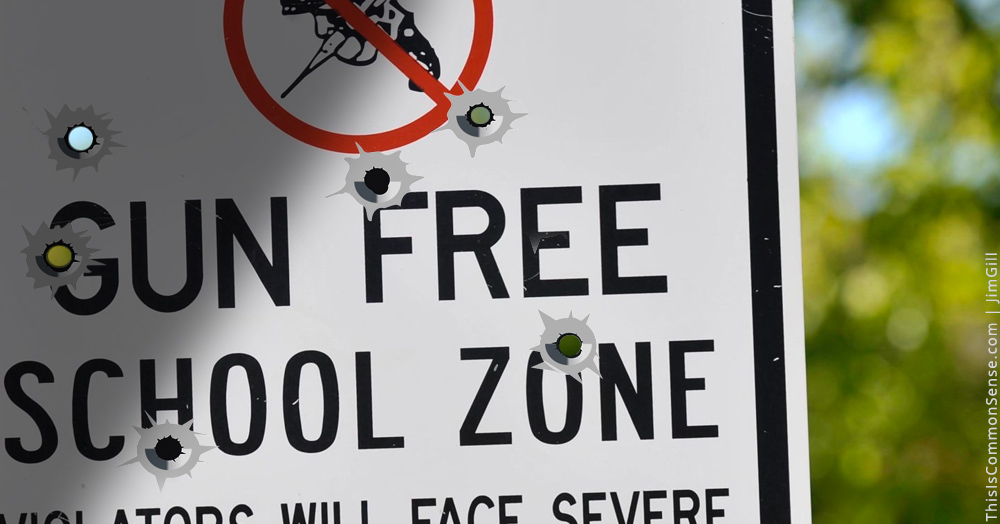
Don’t take a GUN-FREE ZONE sign to a gun fight.

Whenever there’s a horrific incident of mass murder, advocates of citizen disarmament blame the right to protect oneself against armed attackers. The thinking seems to be that if we make it illegal for all civilians to have guns, bad guys willing to kill people will also refrain from using guns as they try to kill people.

This is implausible.

And if you do not see its implausibility immediately regarding firearms, consider drugs. Not taking them, but the war on same. Drugs didn’t vanish upon prohibition. Neither would guns if prohibited.

President Trump argues that students would be safer were schools a harder target. Why not arm well-trained teachers? “If you had a teacher who was adept with the firearm, they could end the attack very quickly.” He’s right.

Not a new idea, of course. It’s been argued, for example, by the NRA, whose chairman says that the way to stop a bad guy with a gun is with a good guy with a gun.

This idea is being practiced right now — in Israel.

As Tzvi Lev argues at the Arutz Sheva 7 site, Israel proves the NRA’s point.

Even Israel — where Arab communities are “rife with illegal weapons” despite their illegality — has not always been quick to recognize that it’s better to have lots of armed civilians when terrorists start shooting at civilians. But after terrorists attacked a school in 1974, the government began arming and training teachers — somehow failing to defer to the terrorists’ preference for gun-free zones.

In both of the only-two school shootings in Israel since then, teachers killed the attackers.

This is Common Sense. I’m Paul Jacob.


PDF for printing


Categories
crime and punishment general freedom ideological culture media and media people moral hazard nannyism national politics & policies privacy responsibility Second Amendment rights too much government U.S. Constitution

He Applied Himself

“I need to make this count,” wrote a young man in Everett, Washington.

Unfortunately, it looks like he wasn’t attempting a big career-oriented project. He was planning a mass shooting.

“I need to get the biggest fatality number I possibly can,” is one of many damning journal passages the police have made public. Apparently he had settled on attacking the high school he attended. “I’ve been reviewing many mass shootings/bombings (and attempted bombings) I’m learning from past shooters/bombers mistakes.”

Ambition and rigor: missapplied.

Fortunately, his grandmother read his journal and discovered a rifle in his guitar case. She turned him into the police the Tuesday before the Florida shooting I wrote about last week. And maybe just in time.

Meanwhile, last week’s Parkland, Florida, shooting dominates the headlines. Fellow students and neighbors of the Florida shooting victims have ramped up their condemnations and demands — including at a horrorshow “town hall” on CNN.

Yet the nature of the difficulties in preventing such atrocities has become lost in the rhetoric and anger.*

In a free society, we cannot arrest people before they commit a crime. In the Everett case, officials were “lucky”: despite the young man’s lack of a criminal record, they were able to charge him with a burglary they allege he committed the day before arrest — and his extensive planning notes are being taken as evidence for intent. He’s also been charged with attempted murder.

We should be in inquiry mode, right now. It could be helpful to know the exact motivations for both the Florida shooter and the Everett wannabe — and similar cases.

This is Common Sense. I’m Paul Jacob.


* Law enforcement is tasked with uncovering spree shooting plots today — and to protect, too. But the armed, uniformed school resource officer at the Parkland high school failed to protect. He heard the gunshots but never entered the building, while the shooter killed 17 innocents.


PDF for printing


Categories
Accountability crime and punishment general freedom ideological culture media and media people moral hazard nannyism national politics & policies responsibility Second Amendment rights too much government U.S. Constitution

Killer Inlaudabilis

On the day that Alexander the Great was born, or so the ancients tell us, a man named Herostratus burned down one of the Seven Wonders of the World, the Temple of Artemis at Ephesus.

Why? Just for the infamy.

Which is why the Ephesians proscribed mention of the man’s name. That is called a damnatio.* Obviously, that damnatio didn’t stick, for we know his name now. How? Historian Theopompus recorded it for our . . . edification? Vilification?

I say we should follow Ephesian example and not mention by name the recent Florida school shooter/murderer of students. There should be a widespread damnatio in the press and blogosphere against the young man. Let’s not to give him his infamy, and not encourage copycats — nor in any way normalize his horrible act.

Is this a “solution” to the problem of school shootings? Probably not. But there may be none — at least nothing sure-fire.

Yes, a non-blundering FBI might’ve helped.** But virtue-signaling/grandstanding calls for unnamed gun control measures won’t. And treating “mental health” issues more “professionally,” particularly by easing up involuntary commitment law, is probably a recipe for putting away innocent and unpopular people.

Pre-crime” is itself criminal.

So, what to do? Maybe it is this: “Notice those around you who seem isolated, and engage them,” as Robert Myers advises. It is loneliness, he argues, that “causes these shooters to lash out. People with solid connections to other people don’t indiscriminately fire guns at strangers.”

But that’s not an after-the-fact solution.

This is Common Sense. I’m Paul Jacob.


* FYI, the arsonist’s status as an unspeakable person was called inlaudabilis.

** As if to fit an established pattern, the FBI failed to take seriously enough an early citizen-initiated alert regarding the young man who went on to commit the mass shooting. Prophecy is a tough biz; it is no doubt easier to connect the dots looking back after the fact.


PDF for printing


Categories
Accountability general freedom ideological culture media and media people national politics & policies political challengers porkbarrel politics Regulating Protest responsibility tax policy too much government

“Our Agenda Was Common Sense”

The Republican Party doesn’t need to bury the corpse. Its victim has been assimilated, like the Borg did with alien peoples in the Star Trek universe, or maybe it was just soaked up as if the GOP were a giant fungus amongus.

So, what’s dead? The Tea Party, which was killed by partisanship, says Matt Kibbe, President and Chief Community Organizer at Free the People. He admits that the movement’s obituary has been written many times, but, he argues, “this time is different. Republicans, now controlling both the legislative and executive branches, jammed through a ‘CRomnibus’ spending bill that strips any last vestiges of spending restraint from the budget process.”

Kibbe identifies the Tea Party’s central theme simply: “Our agenda was common sense: We demanded that Washington politicians stop spending our money like it was theirs, and keep out of our health care. But in Washington, common sense is often seen as radical.”

This, he insists, was not a partisan movement.

But only Republicans played to it. Kibbe calls Sarah Palin a “political huckster” who “helped hijack our purpose,” and fingers Mitt Romney as the man who scuttled Tea Party “political momentum” in 2012. “And then Donald Trump split the Tea Party right down the middle, and that was the end.”

Nail in the coffin? The recent budget deal.

Kibbe signs the autopsy, but assures us: “American principles of individual freedom, fiscal responsibility, and constitutionally limited government, are all still very much alive.”

I sure hope so. But it takes more than a handful of Freedom Caucus members on Capitol Hill to realize it in practice.

Like a new citizen movement.

This is Common Sense. I’m Paul Jacob.


PDF for printing


Categories
Accountability folly general freedom government transparency ideological culture media and media people moral hazard nannyism national politics & policies too much government

Threat Assessment

Don’t drink transmission fluid. Or perform a swan dive off the Empire State Building. Or munch on a Tide Pod.

Be cautious, in other words, of the advice offered in “Boycott the Republican Party,” the Atlantic opinion piece authored by Jonathan Rauch and Benjamin Wittes, both scholars at the Brookings Institution. Their erudite suggestion? Conservatives should “vote mindlessly and mechanically against Republicans at every opportunity, until the party either rights itself or implodes (very preferably the former).”

My Sunday column at Townhall.com, “Friendly Suicide Advice for the GOP,” reviewed their proposal and analysis. “[H]orrified” by President Trump, they see congressional Republicans as enablers of his “existential” threat “to American democracy.”

Big government has long frightened me, so I’m certainly not suggesting anyone relax just now. I do wonder, however, why these writers and others in the media have been so blasé to past presidential usurpations (noted in the column) with life-and-death implications.

Rauch and Wittes go so far as to reassuringly explain that “the Democratic Party is not a threat to our democratic order.”

Really?

In 2016, every single Democratic Party U.S. Senator voted to partially repeal the First Amendment of the Constitution. The Democrats’ proposal would have largely ended the prohibition that “Congress shall make no law . . . abridging the freedom of speech,” replacing it with “Congress and the States may regulate and set reasonable limits on the raising and spending of money by candidates and others to influence elections.”

In our present “democratic order,” the Constitution recognizes the primary importance of walling off political speech from regulation by these very politicians. The Democrats seek to repeal that order . . . that freedom . . . that criticism.

This is Common Sense. I’m Paul Jacob.


PDF for printing


Categories
general freedom individual achievement media and media people national politics & policies responsibility

Red Roadster Rides Outer Space

On Tuesday, SpaceX launched one of the largest rockets ever, the Falcon Heavy. Because it is still experimental, it didn’t carry up an expensive satellite. Too early for that. Instead, it has sent up a Tesla Roadster.

And it’s not aiming for orbit . . . around Earth.

It’s aiming for, well, “a precessing Earth-Mars elliptical orbit around the sun.”

All the while playing the late David Bowie’s “Space Oddity.”

This is all very bizarre, of course. But SpaceX is headed by Elon Musk, who is one of those daring people who do daring things. The very fact that he kept finding funding (no small amount of it from taxpayers, sadly) for Tesla Motors (which he also founded), while failing to make a profit, is a tribute to . . . something.

Sending Musk’s personal car into space — to circuit Sol for a billion years — is, the visionary says, at least not boring. (Musk, perhaps not coincidentally for that word choice, also founded the Boring Company.) The Roadster, “piloted” by a dummy “Starman,” is an upgrade with flair.

But who is he playing to? The masses of auto buffs? Stargazers? Science fiction fans?*

Maybe the mad-scientist/eccentric-mogul is playing for bureaucrats, Capitol Hill staffers, and politicians. For, by one estimate, his companies have received $4.9 billion in government subsidies.

So, think of what’s going into orbit as just another part of the skyrocketing — spacerocketing — federal debt.

This is Common Sense. I’m Paul Jacob.


* The odd payload choice might make sense in sci-fi context, for, in the early days of science fiction, one idea often mentioned was to literally send a bomb to the Moon: an explosion, after all, could be seen, in early Space Age days, with old technology right here from Planet Earth surface. This was the case in the boys’ book The Rocket’s Shadow as imagined in 1947.


PDF for printing


Categories
Accountability crime and punishment folly government transparency ideological culture media and media people national politics & policies U.S. Constitution

Defiance?

“Once the party of law and order,” screamed the Washington Post’s top-of-the-front-page Sunday headline, “Republicans are now challenging it.”

The story’s lede: “Republican leaders’ open defiance last week of the FBI over the release of a hotly disputed memo revealed how the GOP, which has long positioned itself as the party of law and order, has become an adversary of federal law enforcement as the party continues its quest to protect President Trump from the Russia investigation.”

Huh?

Defiance,* by definition, is “bold disobedience.” But the Constitution tasks Congress with control (by oversight and purse string) of the Federal Bureau of Investigation and the Department of Justice. Because subservient, it is the FBI and DoJ that can disobey. Not Congress.

While some Republicans seemingly switched sides on the appropriateness of criticizing the FBI over the Nunes memo release — congratulations are in order! — the same point, reversed, can be made (even humorously) about some on the Left now condemning such criticism.

Criticizing the government — including law enforcement agencies — has always been as American as apple pie.

The Post supports an ever-increasing role for the federal government, favoring Democrats. But now, Trump Derangement Syndrome has apparently pushed the company-town paper over the edge . . . to Media Madness (the title of Howard Kurtz’s new book, which the paper sophomorically savaged).

How ridiculous to characterize Republicans as enemies of “federal law enforcement” because they believe some within the FBI acted improperly, perhaps unlawfully.**

The Post should remember that its journalistic street cred didn’t come from reporting partisan spin as fact, but from what some saw as “defying” the president and publishing “national secrets” in search of the truth

This is Common Sense. I’m Paul Jacob.


* The Post wasn’t alone. Politico echoed the message in its story, “GOP defies FBI, releases secret Russia memo to partisan fury,” and so did other media outlets.

** Moreover, Republican leaders have been clear that the memo does not impact Special Counsel Robert Mueller’s investigation.


PDF for printing