Categories
First Amendment rights general freedom ideological culture international affairs

Which National Church?

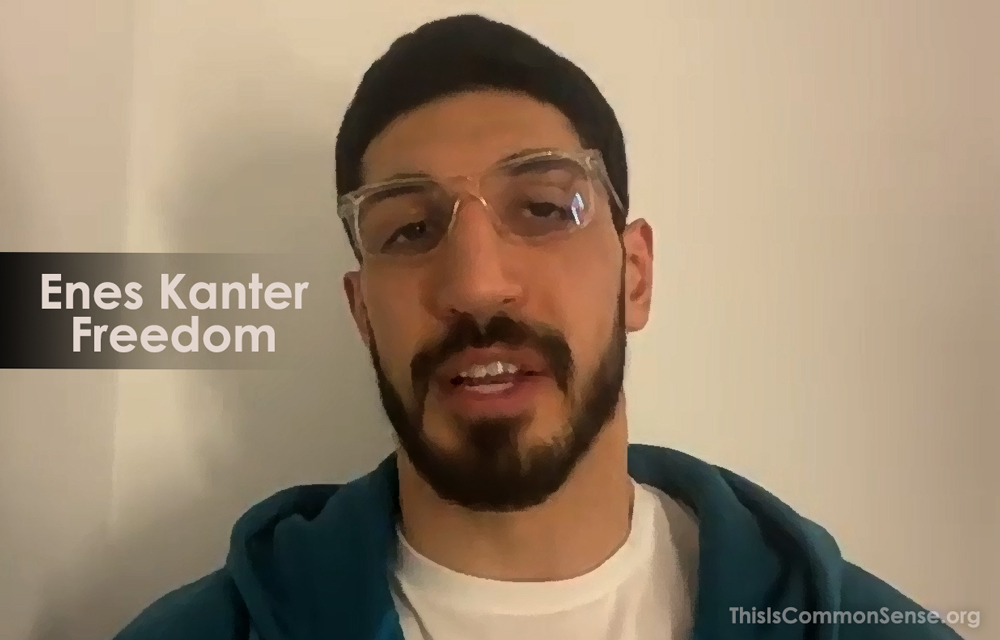
Juhana Pohjola, writes Joy Pullmann in The Federalist, may be “the first in the post-Soviet Union West to be brought up on criminal charges for preaching the Christian message as it has been established for thousands of years.”

While it may seem strange that Bishop Pohjola’s being prosecuted for saying Christian things — considering that he heads the Evangelical Lutheran Mission Diocese of Finland, and the Lutheran Church is the country’s state church — the truth is that Finland is majority nonbeliever, now, and the actual state religion might best be called Wokianity. 

That is why he’s being prosecuted.

And he’s not alone. 

Former Minister of the Interior and current Member of Parliament Päivi Räsänen also faces charges: “The medical doctor, mother of five, and grandmother of seven is accused of having engaged in ‘hate speech’ for publicly voicing her opinion on marriage and human sexuality in a 2004 pamphlet, for comments made on a 2019 radio show, and a tweet directed at her church leadership.” 

That last is a quotation from the ADF International, which describes itself as “a faith-based legal advocacy organization that protects fundamental freedoms and promotes the inherent dignity of all people.” The tweet quoted a Bible verse.

At issue is protecting “government-privileged identity groups,” in this case LGBTQ folks, from “centuries-old Christian teachings about sex” that “incite hatred.” 

A sign of the times: Finland, which used to be very liberal, is now merely “progressive” — making the assault on Christian beliefs for being un-woke completely unsurprising.

And worth noting here in America. For this sort of attack on free speech and freedom of religion is obviously what many on the left wish to implement.

It’s Wokianity versus Christianity . . . those with political powerful against the most basic rights of the First Amendment.

This is Common Sense. I’m Paul Jacob.


PDF for printing

See all recent commentary
(simplified and organized)
See recent popular posts
Categories
First Amendment rights international affairs

Disney’s Memory Hole

China’s leaders fear Winnie the Pooh.

And The Simpsons.

The totalitarian regime’s opponents liken Xi Jinping, the latest Dear Leader, to Winnie the Pooh — due to an obvious resemblance. So Xi’s government works hard to expunge Winnie images.

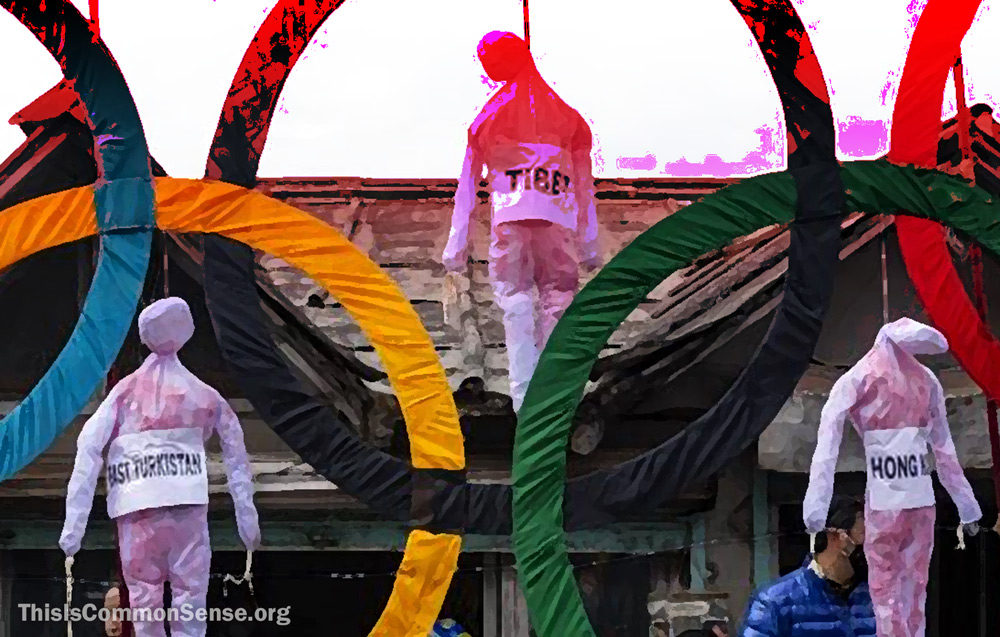
The Chinazis also want everyone in China and Hong Kong (not to mention across the universe) to forget the Tiananmen Square massacre of 1989, when hundreds or thousands of people demanding democratic reform were killed. 

The Walt Disney Company is eager to cooperate with this besieging of memory.

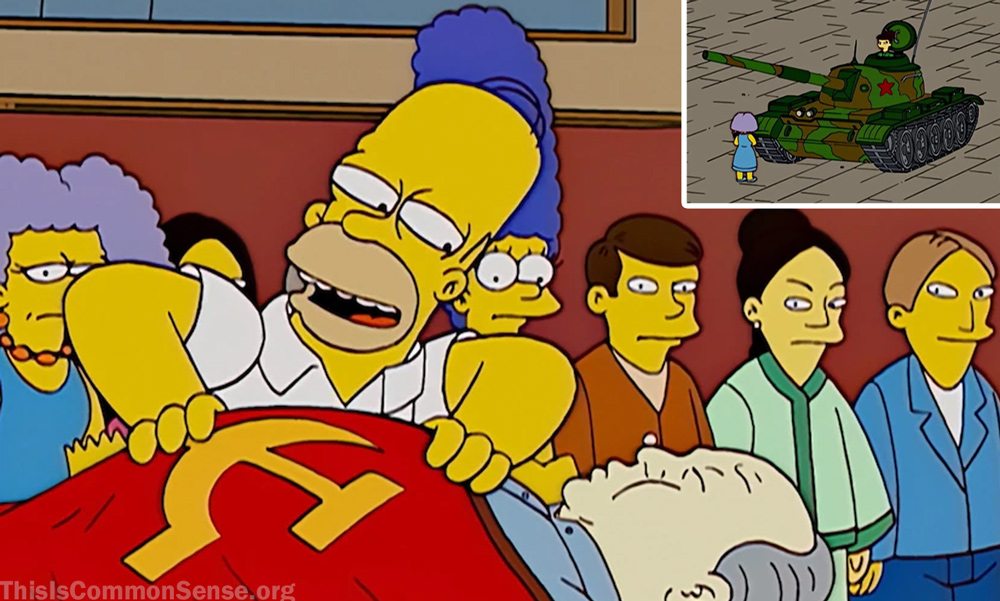
The Simpsons is part of its new streaming service in Hong Kong, where citizens have been losing the last remnants of political freedom permitted under the two-systems agreement of 1997. Whether preemptively or in compliance with instruction from the Chinese government, Disney has deleted a certain episode from the series’ archive available to Hong Kongers.

In the memory-holed episode, “Goo Goo Gai Pain,” Homer, presiding over the corpse of Mao, opines that Mao is “like a little angel that killed fifty million people.”

Another character has a stare-down with a tank, recalling the briefly effective “tank man” confrontation with a row of tanks in that fateful June of 1989.

The episode also satirizes the Chinazi determination to erase all discussion of Tiananmen. For instance, the Simpsons see a sign at Tiananmen Square announcing “on this site, in 1989, nothing happened.”

Instead of appeasing Xi’s government, what should Disney do? 

What anybody who is paid to help repress a people and blank out the past: Stop doing that. 

Forfeit the money. 

Stand up for human rights. 

Or lose them.

This is Common Sense. I’m Paul Jacob.


PDF for printing

See all recent commentary
(simplified and organized)
See recent popular posts
Categories
initiative, referendum, and recall international affairs social media

Somebody . . . to Squelch

I AM . . . somebody!

. . . with an officially “restricted” Facebook account.

I’d like to thank my family and friends for always believing in me — even many decades ago when it was unclear if I had what it takes to even get arrested. And now, after repeated validation per that previous metric, comes my crowning Internet-era achievement: running afoul of the information-squelching policy of massive Meta censorship. 

I’m deeply humbled by the recognition. 

“Your post didn’t follow our Community Standards” was all the information provided. It flagged a post of nearly a month earlier.

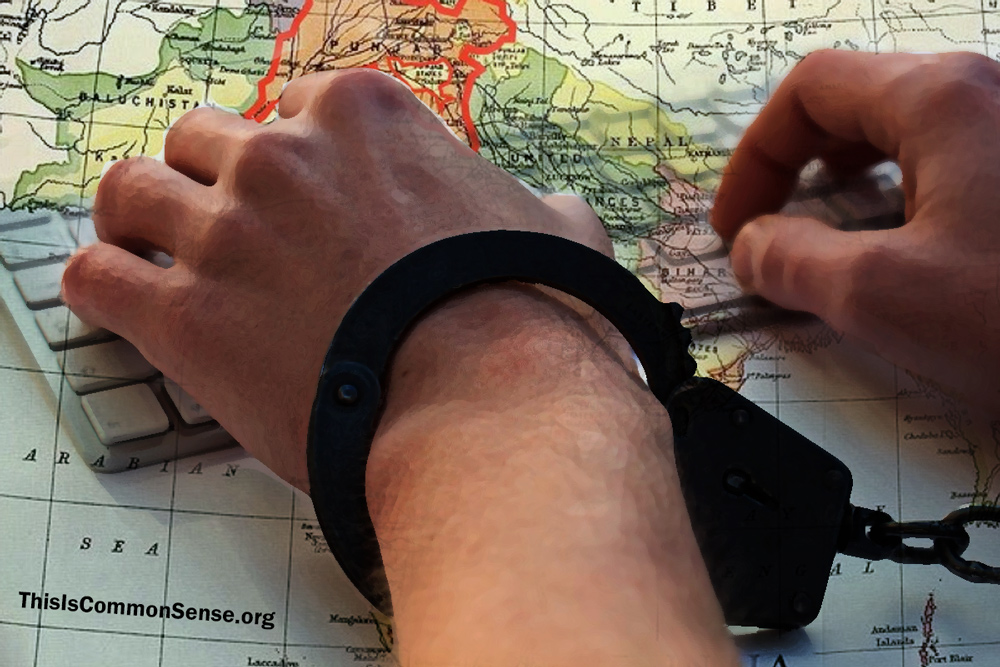
“Tomorrow is the big day for the first city — London — to take part in the Punjab Referendum organized by Sikhs for Justice,” my October 30th post read. “It will be a long day . . . but so glad to be part of the international commission advising on best practices, monitoring the actual voting and issuing a report.” Five photos of a meeting and a handout promoting the referendum adorned the post. 

An “Account Restricted” label appeared on my homepage with the note: “Only you can see this.” 

The ban stops me from personally “going live” or “advertising” for 30 days. Two things I don’t do. 

But let’s not allow the absurdity of it all to mask what’s happening: Voices that do not fit the official government-induced corporate narrative are harassed and silenced in a major avenue for communication. 

The too-often-violent situation in the Punjab region of India, what many Sikhs call “Khalistan,” is tense. The non-binding, non-governmental referendum I posted about has been outlawed by India’s government. 

Blocking and punishing posts that speak truthfully about a democratic approach to that ugly division hardly solves the problem.

It works in this case (and others) to prevent a peaceful resolution.

This is Common Sense. I’m Paul Jacob.


PDF for printing

See all recent commentary
(simplified and organized)
See recent popular posts
Categories
international affairs

Play with Fire?

Weeks ago, the U.S. military confirmed that China tested a hypersonic missile last summer capable of speeding around the globe with a nuclear payload. 

Top generals called it “a Sputnik moment.”

Speaking of Sputnik, on Monday the Russians blew up one of their own orbiting satellites with a missile test that reportedly sprayed dangerous debris into the orbital path of the international space station.

On Monday evening, President Joe Biden and Chinese President Xi Jinping held an hours-long virtual summit to discuss issues between the two countries.

“Their relationship had become so toxic and so dysfunctional,” BBC’s China correspondent Stephen McDonnell wrote, “that these video discussions have been, in part, an attempt to ensure that competition between China and the US didn’t drift into armed conflict due to a misunderstanding at a global hotspot.”

“Competition”? 

“Drift” into a shooting war? 

Caused by “misunderstanding”?

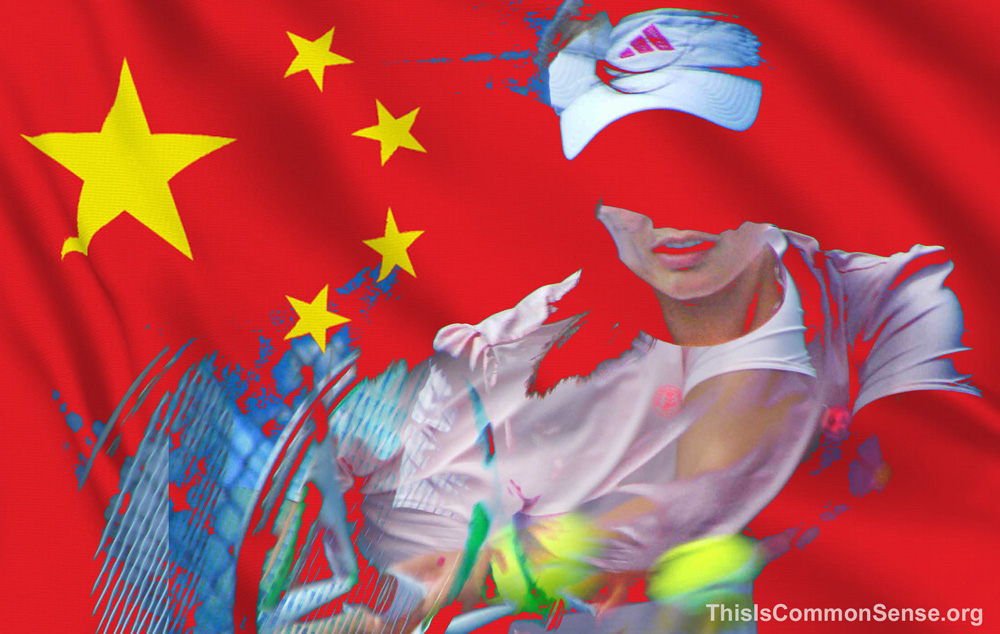
Stop the silly pretense. China’s building and militarizing islands in the South China Sea, its bullying of numerous neighboring countries, its threats of a military invasion against free, democratic Taiwan and its genocidal oppression of the Uighurs, etc., have nothing to do with drifting, are not a big misunderstanding, nor the result of normal economic competition.

The Chinazis are dangerous. 

Most endangered? 

Taiwan — which, in contorted diplomatic double-speak, the U.S. has sorta pledged to defend.

“President Xi warned President Biden,” CBS News explained, that “U.S. support for Taiwan would be like playing with fire.”

Let’s not “play” with fire. Sure. But while Biden’s response that Taiwan is “independent” and “makes its own decisions” is right and true, it is still hardly above the level of smoke signal. 

More’s needed. 

Like what?

Actual defense.

This is Common Sense. I’m Paul Jacob.


PDF for printing

See all recent commentary
(simplified and organized)
See recent popular posts

Categories
general freedom international affairs national politics & policies

Taiwan in Two Words

“Two words from Taiwan’s leader threaten to upend U.S.-China ties,” headlined The Japan Times’ story.

Weeks ago, China’s totalitarian leader Xi Jinping mentioned his itch for peaceful “reunification” with Taiwan.* Or else. No pause in his warplanes crossing into Taiwan’s air defense identification zone, nor withdrawal of the continual threat of military invasion. 

Taiwanese President Tsai Ing-wen offered that the two countries were “not subordinate” to each other — which deeply hurt Xi’s feelings because . . . well, his Chinazis have their hearts set on subordinating Taiwan. In fact, the only thing preventing that deadly, freedom-suffocating Sino-subordination is the united weight — military and economic — of allied countries.

Japan, for instance. And the European Union, too — which just voted to deepen ties to Taiwan, ignoring Beijing’s demand to shun the island nation. 

At a CNN “town hall” last week, President Joe Biden vowed the U.S. would defend Taiwan against a Chinese attack. Diplomatic folk tried to walk that back to “strategic ambiguity,” but billions of Asians heard him say it.  

“To whom does Taiwan belong?” asked Pat Buchanan earlier this year, in a column trudging through 70 years of weaselly-worded communiqués and diplomatic understandings.

But comedian John Oliver counters that “people who aren’t Taiwanese making decisions for Taiwan is a bit f***ing played out, historically.”

“So maybe the best thing we can do is move past talking about Taiwan like it’s some kind of poker chip in a never-ending game of us versus them,” he concluded on his HBO show Last Week Tonight. “Because the fact is Taiwan is not a plucky bulwark against the Red Menace, nor is it some island-sized Viagra to rejuvenate the Chinese nation. Taiwan is 23 million people who, in the face of considerable odds, have built a free democratic society and very much deserve the right to decide their own future in any way that they deem fit.”

Let’s call it: Not subordinate.

This is Common Sense. I’m Paul Jacob.


* Since Taiwan has never been a part of the People’s Republic of China, there can be no prefix “re” in the threatened unification — by missiles and machine guns. 

PDF for printing

See all recent commentary
(simplified and organized)
See recent popular posts
Categories
international affairs social media

China Cord Not Quite Cut

Is it good news?

LinkedIn recently announced that it’s ending the current form of its service in China, citing the “challenging” environment.

“While we’ve found success in helping Chinese members find jobs . . . we have not found [the same] success in the more social aspects of sharing and staying informed. We’re also facing a significantly more challenging operating environment . . .”

Part of the problem has been China’s unremitting censorship. Which was not openly discussed in the LinkedIn post, of course.

Another part has been the Microsoft-owned firm’s willingness, as the price of doing business in China, to do the Chinazi government’s bidding in censoring dictatorship-disfavored posts. Also not openly discussed.

So now LinkedIn will replace the full LinkedIn experience with an app for China-based users that is a “standalone jobs application.”

Whether this means that LinkedIn will no longer censor Chinese LinkedIn users remains to be seen. For example, China is likely to demand censorship of a user if it sees a disapproved organization mentioned in a job posting.

At that point, will LinkedIn leave China entirely? 

Given the Chinese government’s history, why wait?

Meanwhile, Microsoft’s Bing search engine continues to operate in China and to censor results at the behest of the Chinese government.

That public opinion has swayed Microsoft and LinkedIn to the extent that they will no longer abet China’s censorship of social media is good. But still doing business with CCP-controlled China is fraught with danger. Why? Because China is fraught with tyranny.

This is Common Sense. I’m Paul Jacob.


PDF for printing

See all recent commentary
(simplified and organized)
See recent popular posts
Categories
international affairs

Strait Democracy

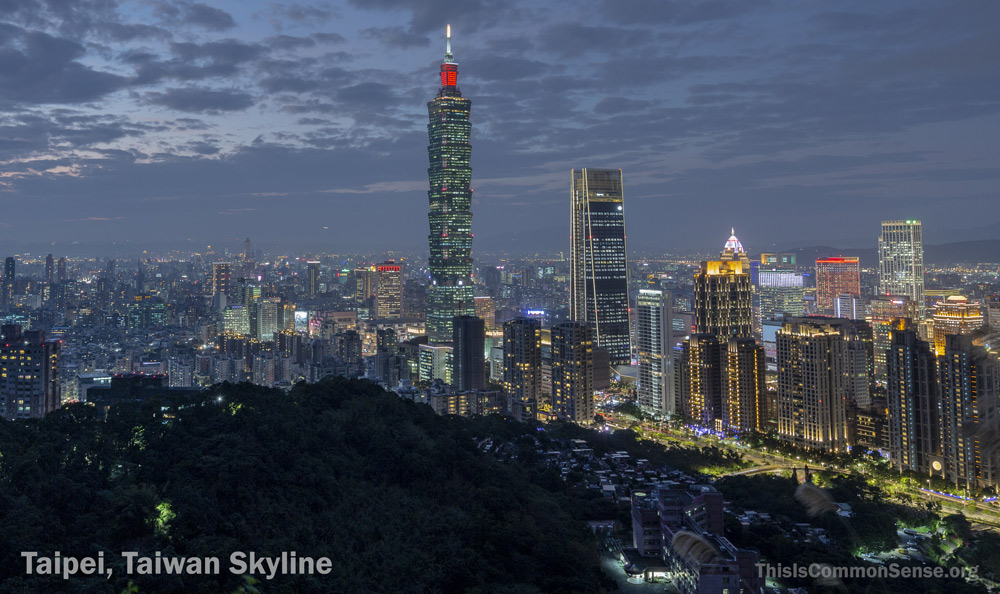
“China vows ‘peaceful reunification’ with Taiwan,” was The New York Post’s takeaway from Chinese ruler Xi Jinping’s speech at the Great Hall of the People in Beijing over the weekend.

What fantabulous news! Peace for our time . . . in Asia. 

That same message was echoed by The Washington Post, which also noted that Xi’s statement comes “days after sending a surge of warplanes near the island.”

With China’s massive military build-up, ongoing threats to attack, invasion drills around Taiwan, not to mention flying squadrons of warplanes across the Taiwan Strait and into the island nation’s air defense identification zone — 150 such incursions last week — tensions have escalated to a fever pitch. 

“We are very concerned,” warned Taiwan’s Foreign Minister Joseph Wu, “that China is going to launch a war against Taiwan at some point.” 

Thank goodness, then, that at this scary moment, our Fourth Estate can herald Xi’s promise of peace!

The only problem? 

The Chinese dictator gave no such assurance. 

Xi merely stated a preference for Taiwan’s peaceful surrender to his one-country, one-system totalitarianism — over having to snuff out Taiwan’s freedom by missile attack and invasion, murdering millions. Which the genocidal autocrat is still threatening to do whenever the opportunity presents.

Cancel the parade. 

Still, if Xi’s rhetoric constitutes “a more conciliatory approach” from Beijing, chock it up to free countries finally waking up and pushing back against the Chinazis. 

Taiwanese President Tsai Ing-wen, noting her nation’s position “on the front lines of democracy and freedom,” focused on the fight against Chinese “coercion.” As she eloquently wrote in Foreign Affairs: “[T]he future of Taiwan is to be decided by the Taiwanese through democratic means.” 

Provided there is the military might to deter Chinese aggression.

This is Common Sense. I’m Paul Jacob.


PDF for printing

See all recent commentary
(simplified and organized)
See recent popular posts

Categories
international affairs responsibility

The War Presidents’ Debacle

President Biden yesterday called the now somewhat* completed withdrawal of U.S., Afghan and coalition soldiers and civilians an “extraordinary success,” arguing that “no nation has ever done anything like it in all of history.”

There were a reported 120,000 people airlifted out, but with 13 U.S. soldiers killed in last week’s suicide attack at the Kabul airport, along with three British nationals and more than 160 Afghans — let’s cancel any victory lap.

Still, I’m more with Mr. Biden than with Senate Minority Leader Mitch McConnell, who made the case on Fox News Sunday with Chris Wallace that the occupation of Afghanistan was a complete success, making the pull-out (now over) a horrendous policy mistake. 

McConnell’s case for a never-ending “Mission Accomplished” understates the costs in blood and treasure — by trillions of dollars, in part. Just like you would expect of a deficit-and-debt plotter.

“America’s longest war has been by any measure a costly failure,” argues David Rothkopf in The Atlantic, adding that “Joe Biden doesn’t ‘own’ the mayhem on the ground right now.” Instead, Rothkopf blames “20 years of bad decisions by U.S. political and military leaders.”

Rothkopf errs in letting Joe “The Buck Stops Here” Biden and the generals off the hook for the withdrawal. And gifting the enemy with a vast and sophisticated arsenal.

All four Afghanistan War presidents deserve blame, along with the war establishment, in government and out.

Remember: wars that cannot be won even with military victory on the battlefield should not be fought.

This is Common Sense. I’m Paul Jacob.


* The Biden Administration continues to pledge they’ll work to get Americans left in Afghanistan out. However, in an ABC News interview a little more than a week ago, Biden had committed that, “If there’s American citizens left, we’re going to stay until we get them all out.” 

PDF for printing

See all recent commentary
(simplified and organized)
See recent popular posts
Categories
folly international affairs

Done to the Dogs

It shouldn’t have happened.

Shire councils should not be killing dogs “to prevent volunteers at a Cobar-based animal shelter from travelling to pick up the animals.”

But that’s what happened. The Bourke Shire Council in the New South Wales region of Australia shot and killed several dogs, including a new mother, that were about to be picked up and taken to an animal shelter.

An Office of Local Government reported that the council did this “to protect its employees and community, including vulnerable Aboriginal populations, from the risk of COVID-19 transmission.”

We all know that shelters sometimes put down animals when the shelter cannot find a home for them.

This wasn’t that. The council’s action wasn’t a reluctant last resort. It was a first resort.

It was, the argument runs, about preventing volunteers from going from here to there in the ordinary course of their work, work that has not been discontinued for the duration of the pandemic.

The council’s action is an example of what happens when fear displaces common sense. The thwarted shelter volunteers, who love animals and volunteer precisely to prevent needless killing, are distressed. The Sydney Morning Herald reports that they had safety measures in place to deal with the pandemic while getting the dogs.

This isn’t the worst kind of thing going on in this world, obviously.

But you don’t have to be an animal rights activist to be appalled by the viciousness of the conduct. 

And it does serve as a marker for the callousness and crazed panic of politicians in the current crisis. What else might they do?

This is Common Sense. I’m Paul Jacob.


PDF for printing

shelter dog

See all recent commentary
(simplified and organized)
See recent popular posts
Categories
international affairs privacy too much government

Privacy with Chinese Characteristics

Governments must appear, at least some of the time, to be riding a silver stallion to rescue The People. All government rests on a kind of consent: not legal; not democratic; instead, the accommodation of the many to the few — to accept being ruled. This has been known since David Hume.

So when governments pretend to be more democratic, more contractual, than they actually are, it’s to maintain and increase power.

Take China.

In a fascinating report by Liz Wolfe, we learn that the Chinese Communist Party (CCP) is establishing new rules regulating corporations’ use of their customers’ data: “the Personal Information Protection Law (PIPL), necessarily weakens big tech companies, forcing onerous regulations that they will now have to comply with.”

This may sound all very consumer- and citizen-oriented. But Ms. Wolfe not only notes that the regulations are burdensome, she observes that while China’s corporations will soon be prevented from doing things big tech companies routinely do in the West, the Chinese will pointedly not be protected from data collection by the government

Which is vast. 

Intrusive.

Often malign.

“Protection of consumer data, while fine and good, means nothing,” she writes, “if there’s no true rule of law binding governments to privacy-protecting standards as well.”

Almost certainly China is trying to prevent in China what happened in America: the creation of powerful countervailing organizations competing with the government in one of the oldest activities of government: suppression of opinion to leverage power and revolutionize the State, changing policy from outside formal power centers.

Our social media — and other major tech corporations — have plied their incredible access to information to mold popular opinion for political and ideological purposes.

The CCP will not put up with that. 

This is Common Sense. I’m Paul Jacob.


image credit

See all recent commentary
(simplified and organized)
See recent popular posts