Categories
Accountability general freedom government transparency incumbents initiative, referendum, and recall local leaders political challengers

Initiative Surplus?

Only nine out of 50 states can pay their bills and meet their obligations; 41 cannot, barring major tax increases or spending cuts.

That’s what we learn in last month’s “Financial State of the States” report from Truth in Accounting (TIA).

Alaska is in the best shape, “with $11 billion in assets to pay future bills”; New Jersey’s in the worst, needing “to come up with $208 billion in order to meet its promised obligations.”

Sheila Weinberg, TIA’s founder, works hard to counter governments’ creative accounting. It’s trickery, really, which “would be considered criminal for private sector corporations.” One gimmick is “promising to pay employee benefits in the future, but not fully funding the benefits programs as they rack up obligations.”*

Thankfully, TIA’s financial analysis includes items such as already-made pension and healthcare commitments.

Now, let’s expand the analysis, collating these findings to separate between initiative and non-initiative states**:

  • Seven of the nine states with a “taxpayer surplus” — where government can pay its bills and meet its obligations — have the ballot initiative process.
  • The 23 initiative states comprise 46 percent of the states. Yet, initiative states comprise a whopping 78 percent of financially healthy states.
  • Of the 20 states carrying a larger-than-average taxpayer burden, 15 states (75 percent) lack the initiative process.

Granted, this represents a correlation between states with citizen-initiated ballot measures and healthier fiscal policy, not necessarily causation. Still, I’m not surprised states where citizens have more say so are better governed.

This is Common Sense. I’m Paul Jacob.


* “This short term fix allows governments to artificially ‘balance their budgets’ by not counting certain obligations as official debt.”

** There are 23 initiative states and 27 non-initiative states. Two referendum-only states— Maryland and New Mexico — are considered non-initiative states, and so is Illinois. Illinois is considered a non-initiative state, because its ballot initiative process is so severely restricted as to be non-existent. Only one measure has ever appeared on the ballot.


PDF for printing


Categories
Accountability crime and punishment government transparency insider corruption local leaders moral hazard porkbarrel politics

Interfering With a Sweet Racket?

One way for governments and enterprises to save money is to contract out some or all of their services. Towns, cities, counties, states — even the federal government — engage in such practices all the time.

It is really just outsourcing, as business lingo dubs it.* But, like any system for shifting responsibility away from direct management, it can be corrupted.

As Seattle citizens now learn, courtesy of Seattle Times reporters Mike Carter and Steve Miletich.

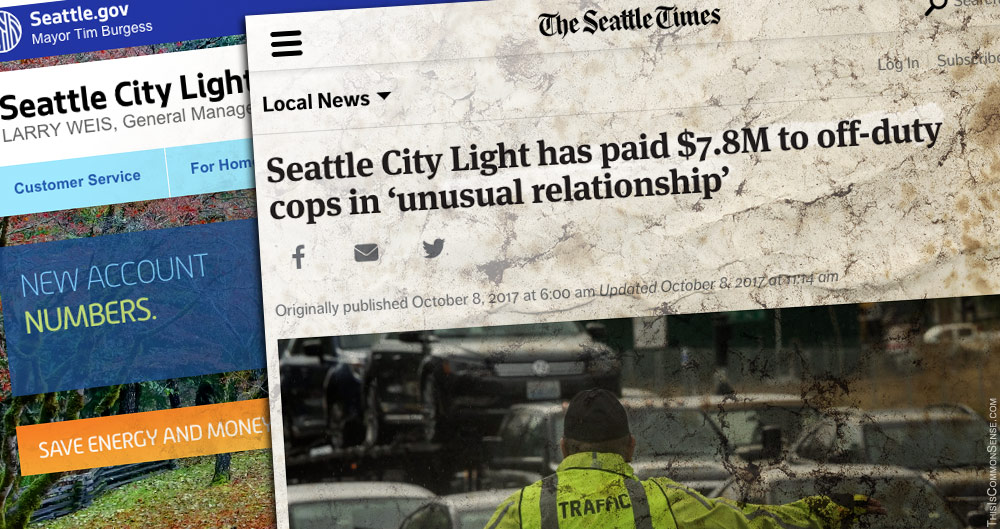
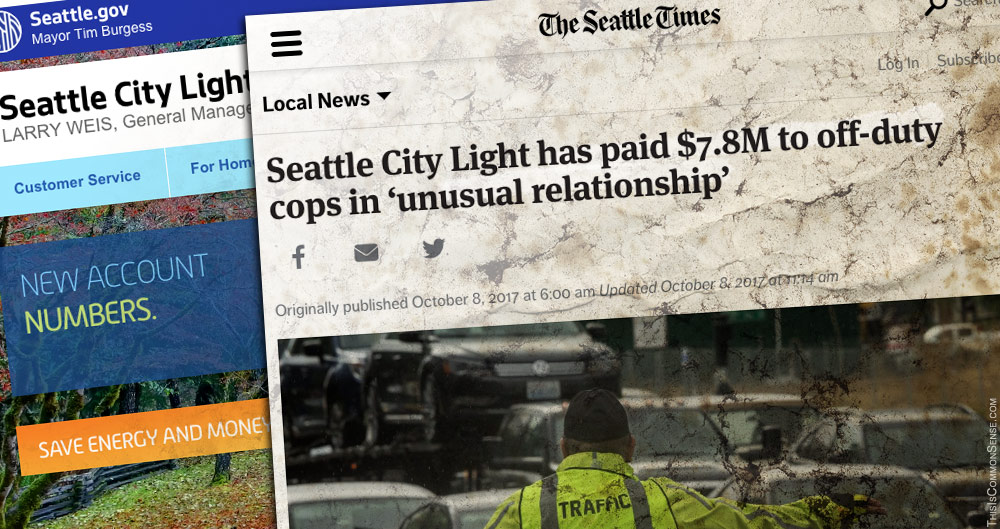
It appears that Seattle City Light, the public utility providing electricity to the city, has been contracting exclusively with Seattle’s Finest Security & Traffic Control. For a half a decade. Despite there being direct competition from another firm.

The utility paid “more than $7.8 million over the past five years to provide off-duty police officers for traffic control or security work,” the Times tells us.

The whole story came to light (no pun intended) when a new outfit offering similar services, but based on “gig economy” principles, sought to enter the market. Seattle’s Finest challenged the firm’s licensing, and, allegedly, directed abuse at the firm’s chief executive officer.

A Seattle detective off-handedly described the dominance of Seattle’s Finest “in organized-crime terms — using the word ‘mafia’ — and said nobody would be allowed to interfere with it.”

The FBI has now been called in.

Usually, local government may seem rather humdrum. But a lot of money can go through powerful, privileged hands. Things can get exciting. Terms like “murky” and “intimidation” abound.

Is this a surprise?

Remember: power corrupts; local power corrupts locally.

Right there where we live.

This is Common Sense. I’m Paul Jacob.


* An economist, R. H. Coase, got a Nobel Prize in no small part for explaining why this sort of contract can work better than establishing a complete firm-employee wage system.


PDF for printing


Categories
Accountability ballot access general freedom government transparency ideological culture initiative, referendum, and recall insider corruption local leaders national politics & policies property rights Regulating Protest responsibility too much government U.S. Constitution

The Great Faction

Politics isn’t a pretty business.

Frédéric Bastiat called the beast it serves “that great fiction” not because it doesn’t exist — intrusive state power sure persists — but rather because what it promises cannot really happen: “everyone living at the expense of everyone else.”

What can we do? How do we counteract a game that is rigged to increase the insanity, not reduce it?

Last week I indicated one thing a minor party with that goal in mind could do: use its power of spoiling elections to change major party behavior, and thus give citizens a fighting chance to restrain governmental metastasis.

Cancer.

I also suggested “blackmailing” the major parties into setting up a system of voting that . . . ends the power to blackmail! I believe that system — ranked choice voting — holds many positives, not the least of which is ending strategic voting, wherein voters are tempted to “falsify” their own preferences and support candidates they might dislike. This is as corrupting to the citizenry as the Great Fiction itself.

Let’s hope a savvy minor party leverages the major parties, gaining reforms to improve the system. Regardless, we can all — independently — push two other limits on political power:

  1. term limits at all levels, and
  2. initiative and referendum rights in all the states, not just the 26 that have it now.

Initiative and referendum rights would give ordinary citizens the leverage to possibly restrain the mad rush to live at each others’ expense. With the initiative, citizens can gain term limits, which produce more competitive legislative elections and lead to fewer legislators captured by the interests loitering in the capitol.

This is Common Sense. I’m Paul Jacob.


PDF for printing


Categories
Accountability crime and punishment government transparency moral hazard responsibility too much government

Half a Win Is Better than None

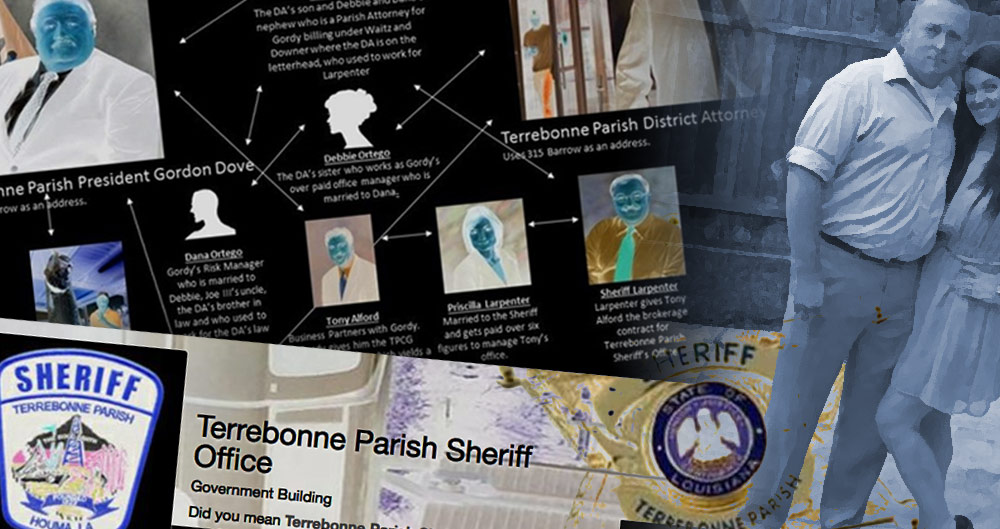
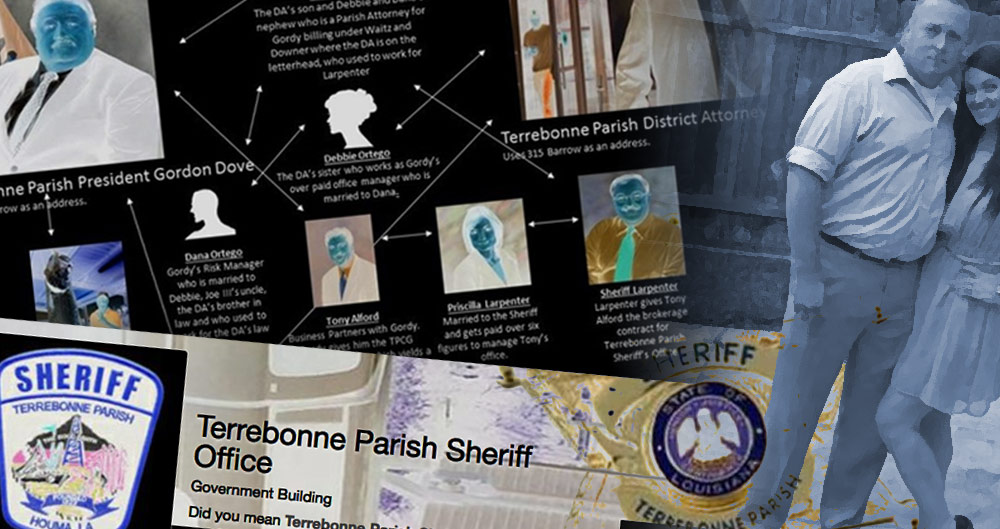
Jennifer Anderson criticized her local sheriff. Her family’s home was raided in 2016 by the sheriff as a result.

Terrebonne Parish Sheriff Jerry Larpenter’s reaction to criticism was ugly and unconscionable, but it hasn’t been allowed to stand. On the other hand, the sheriff hasn’t been adequately punished, either.

Jennifer Anderson’s pseudonymous blog ExposeDAT criticized various public figures in Terrebonne Parish, Louisiana, including with respect to the business relationships between Larpenter and others. Bridling at the criticism — which had to do with assessment of publicly available facts — the sheriff submitted warrants to Facebook and AT&T to track down the identity of the blogger. Then he sent men to raid the Andersons’ home and grab computers and cell phones.

The Andersons fought back, suing in federal court. They wanted the raid and seizure and search of their private stuff to be declared unconstitutional.

Finally, this September, the Andersons reached an undisclosed settlement with Larpenter out of court. According to its terms, the Andersons aren’t allowed to discuss it any detail. But their attorney says the settlement is “a victory for citizens’ right to be critical of their elected officials without fear of retribution.” U.S. District Court Judge Lance Africk has said that “Jennifer Anderson’s speech [in her blog] falls squarely within the four corners of the First Amendment.”

All that’s fine, but why hasn’t this sheriff also at least been kicked out of his job for his blatant abuse of power?

This is Common Sense. I’m Paul Jacob.


PDF for printing


Categories
Accountability general freedom government transparency media and media people nannyism national politics & policies responsibility too much government

Ad Budget Slashed

Republican politicians, who had been running since 2010 on killing ObamaCare, did not. Not when they had a chance. Despite dominating Congress, they failed, because

  1. they opted for a goofy way to do it (the House’s AHCA plan being a terrible mess, probably worse than the monster it was trying to replace) and
  2. partly because the libertarians — along with a few “liberal” Republicans — blocked it in the Senate.

But that’s the olds; here’s the news: the Trump Administration has cut back ObamaCare’s advertising budget.

Progress?

I’m not sure. Maybe. Probably not.

The facts: ObamaCare outreach has been cut by 90 percent, and outsourcing grants to groups engaging in sign-up efforts have been cut by 40 percent:

The Trump administration downplayed the impact of boosted ad spending, noting that during 2017 open enrollment there was a decline of 5 percent in overall sign-ups. It also saw a 42 percent decline in first-time enrollment and enrollment of people who pay their premiums decline by 500,000 people.

So, it seems natural to respond to a perceived decline in “demand” with a reduction in “supply” — or any attempt to drum up more “customers” for subsidized policies.

Also natural is the partisan fall-out, with Democrats crying “foul” over the decided lack of support for their program. As Peter Suderman noted over at Reason, ObamaCare became partisan because it started out partisan.

But it was always — from conception in the Heritage Foundation braintrust* to its current choking gasps — an unworkable monstrosity.

And folks of all parties — and none — should be able to understand that.

This is Common Sense. I’m Paul Jacob.


* Note: the Heritage folks not unreasonably distance themselves from their past association with some of ObamaCare’s core notions, and others are skeptical of the distancing.


PDF for printing


Categories
Accountability crime and punishment government transparency initiative, referendum, and recall

Left Wondering Why

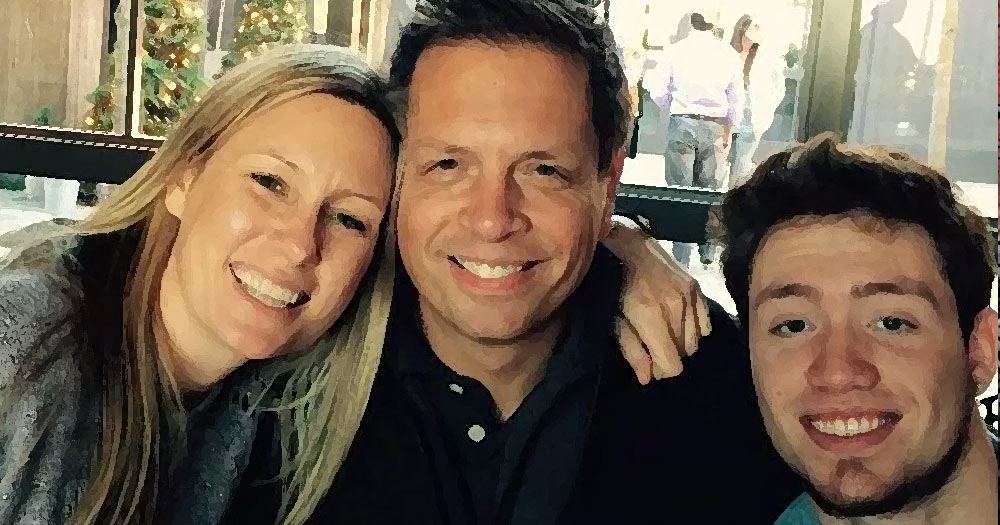
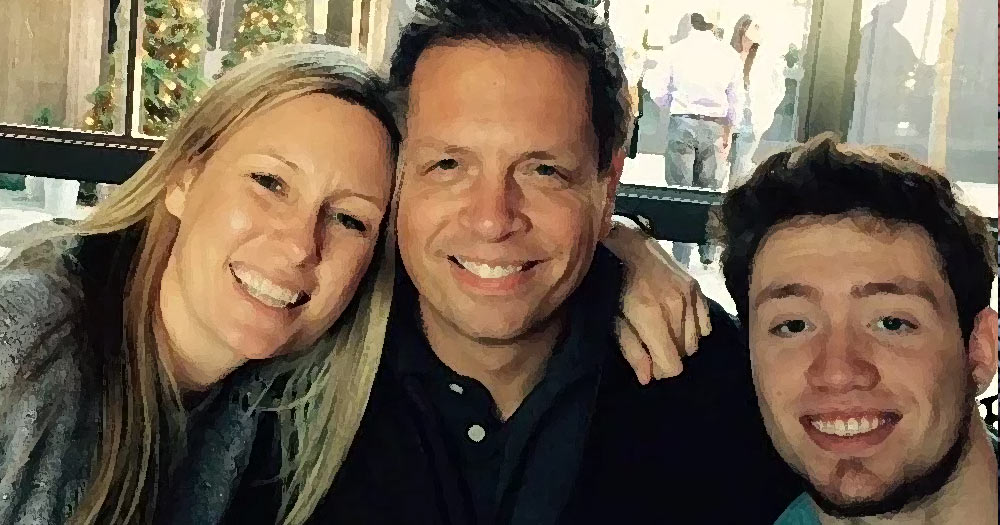
In Minneapolis’s Fulton neighborhood a makeshift memorial has sprung up. Amidst flowers, a handwritten sign reads, “Why did you shoot and kill our neighbor?”

Police have yet to offer public comment on the police shooting of Justine Damond, the Australian woman killed in the alley behind her home last Saturday night.

“Sadly, her family and I have been provided with almost no additional information from law enforcement,” Justine’s fiancé, Don Damond,* told reporters, “regarding what happened after police arrived.”

The Minnesota Bureau of Criminal Apprehension has launched an investigation, but not yet interviewed the two officers at the scene, the only known witnesses. The officers had been responding to Justine’s 911 call reporting what sounded like a sexual assault.

No gun was found on Justine; a woman in her pajamas otherwise doesn’t seem very threatening.

Local media identified Mohammed Noor, a Somali-American, as the police officer who fired the bullet that killed Damond. Noor has been on the force since March 2015 and has two previous complaints pending.

Most frustrating, the Washington Post reports that “the officers’ body cameras were not turned on” and . . . “It’s not clear why . . .”

Cameras do not work when turned off; public anger and angst are not ameliorated when we cannot see the body cam footage.

That’s why, back in April, we worked to pass a ballot initiative in Ferguson, Missouri: (a) mandating that police must actually turn on the body cameras they were “using” (after similar incidents, wherein Ferguson police claimed their cameras hadn’t been activated) and (b) setting rules for public access to the video.

The people of Minneapolis, likewise, deserve a more professional police force. Making that happen means taking the initiative: citizens reforming criminal justice policies at the ballot box.

This is Common Sense. I’m Paul Jacob.


* Justine had already taken her fiancé’s last name, even though they were set to marry next month. Her legal name remains Justine Ruszczyk.


Printable PDF


Categories
Accountability crime and punishment government transparency moral hazard national politics & policies property rights responsibility too much government U.S. Constitution

The Police State Is in Sessions

U.S. Attorney General Jeff Sessions threatens to make himself one of the biggest threats to your liberty.*

President Donald Trump’s pick for Attorney General just promised to encourage police departments to seize the personal property (cars, houses, cash) of criminal suspects.

The practice is called asset forfeiture. It comes in two forms, criminal and civil. Compelling objections have been raised against civil forfeiture, which accounts for nearly 90 percent of all forfeitures. Abuse is rampant in cities, counties and states around the country, routinely used against people who have not even been charged, much less prosecuted and convicted. (Often not really even suspected of criminality.)

“No criminal should be allowed to keep the proceeds of their crime,” he told conference attendees in Minneapolis, Minnesota, on Monday.** But how can our top federal law enforcement officer ignore the profound difference between a suspect and a criminal?

No one is a criminal, before the law, until proved in court. Taking away property to make it harder for suspects to defend themselves — which is what RICO laws and other Drug War reforms intended to do — is obviously contrary to the letter of the Fourth and Fifth Amendments as well as the spirit of the U.S. Constitution.

Sessions announced he’ll soon offer a “new directive on asset forfeiture — especially for drug traffickers.” Unless he clearly indicates that it will only be used against the property of persons legally convicted of crimes, Sessions will be merely making charges of an “American Police State” stick.

America’s top lawman argues completely contrary to American principles of justice.

This is Common Sense. I’m Paul Jacob.


* Bigger than Eric Holder was. Bigger than Loretta Lynch.

** Sessions also went on to say that “sharing with our partners” — local police departments around the nation — is a good thing. This is, systemically, the most dangerous aspect of it all, for it encourages police departments to take things for their own benefit.


Printable PDF


Categories
Accountability crime and punishment government transparency media and media people national politics & policies responsibility

A Handy Evasion

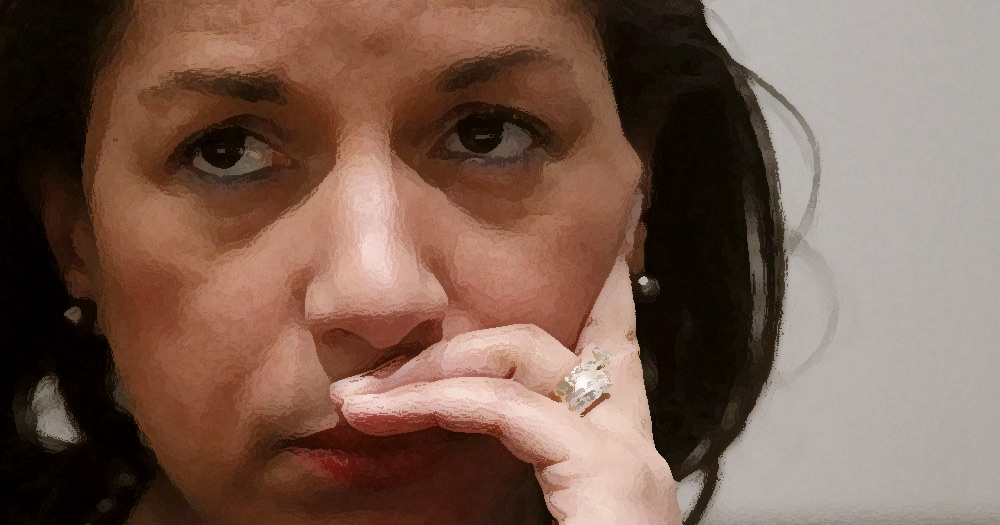
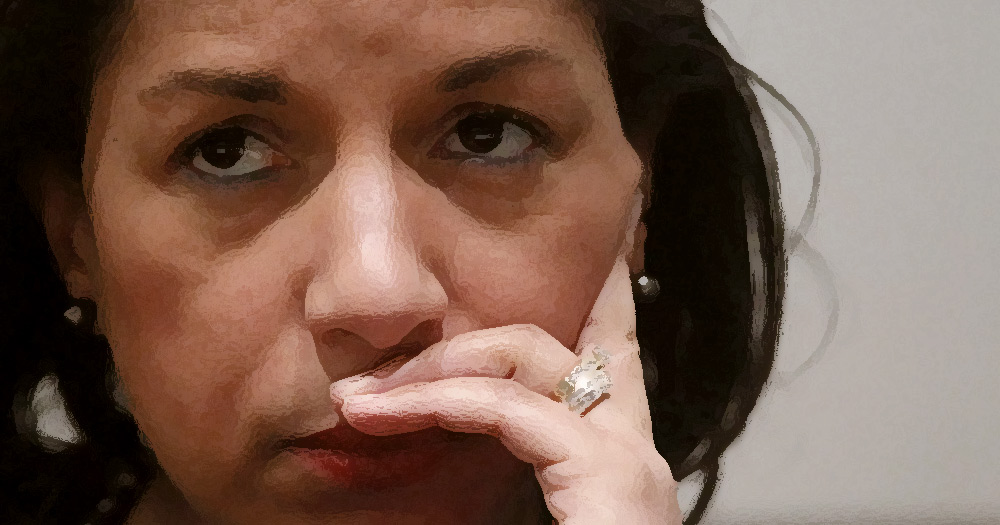
Susan Rice, National Security Advisor in President Barack Obama’s administration (2013 – 2017), is being picked on, she speculates, for reasons pertaining to her race and gender.

Handy evasion.

At issue is not her infamous prevarication in the Benghazi affair. We are used to being lied to about foreign policy, so that was barely a shock.

What is news now? The Trump-Russia story.

Background: Ever since her defeat to Donald Trump, former Secretary of State Hillary Clinton has provided the very model of how to deflect attention from one’s own defects. She’s blamed FBI Director James Comey, the vast right wing conspiracy, and, of course, Russia.*

Amusingly, the Russia biz still boils down to how Russian hackers, apparently directed from high in the hierarchy of the Eastern warlord state, illegally liberated information from private servers. Those revealed emails showed Mrs. Clinton and her campaign in a negative light. Excuse-makers call this “hacking the election.”**

It turns out, the biggest crimes committed during the campaign, and somewhat regarding Russia, were engaged in by the Obama Administration, perhaps especially by Rice herself. She is accused of illegally surveilling the Trump campaign and those around it by “unmasking” their identities in the course of surveillance reports, which are legally required to be anonymous . . . when catching in the net folks tangential to the target.

The law requires FISA court go-aheads for such identifications. And the Obama administration was roundly reprimanded by a FISA court for not following protocols.

In any case, the idea that only women and African-Americans are hounded by opposition parties and the press does not hold up to scrutiny.

Nixon, anyone?

This is Common Sense. I’m Paul Jacob.


* Her team has also blamed President Barack Obama

** A private server was hacked, not an election.


Printable PDF


Categories
Accountability crime and punishment government transparency moral hazard national politics & policies U.S. Constitution

Feckless, Indeed

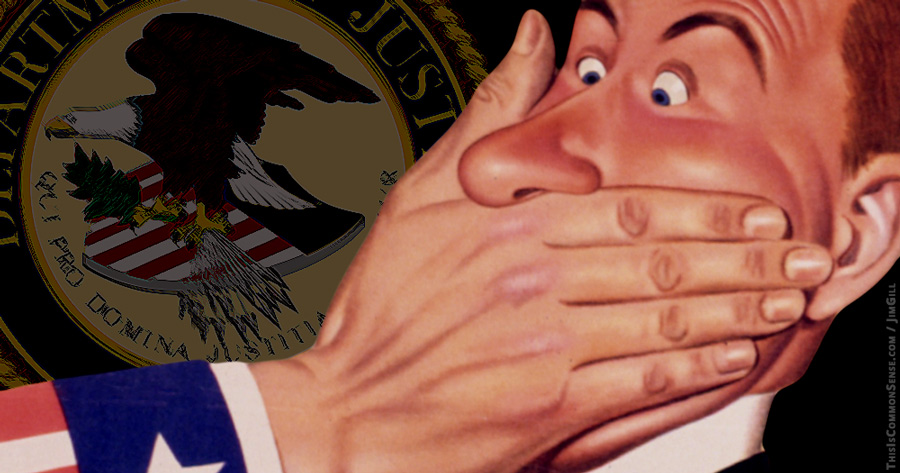
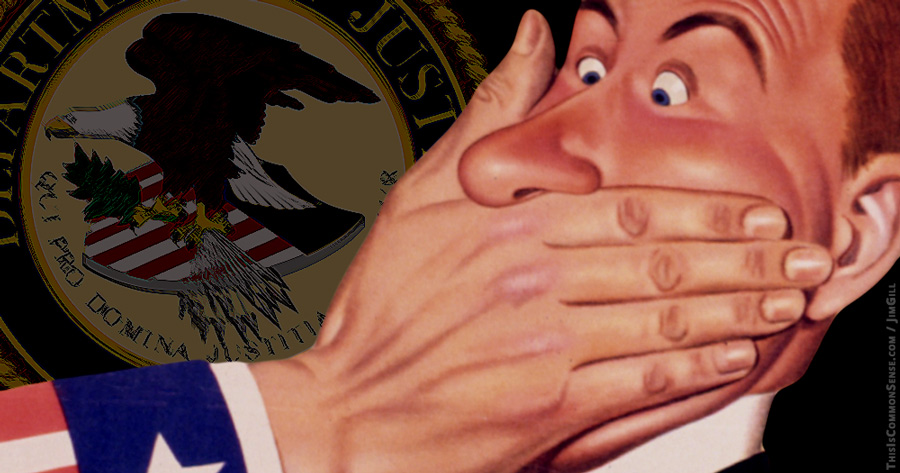
Last night, House Oversight Committee Chairman Jason Chaffetz (R-Utah) appeared on Fox News’ Tucker Carlson Tonight, where Chaffetz was asked how he would know if the Justice Department fully complied with subpoenas issued by his committee for documents.

“Look, we have a storied and horrific background on this,” explained the Utah representative, retiring after this, his fifth term in Congress. “You can go from everything from Fast and Furious to the Benghazi investigation, email, IRS, anything pretty much over the last eight years, which I’ve served in Congress, and I don’t believe we ever got a full production out of the Department of Justice or the State Department.”*

“I can issue a subpoena unilaterally. It’s part of my constitutional responsibility to provide that check and balance,” argued Chaffetz. “But that subpoena is only as strong as its ability to be enforced.”

Problem? Enforcement requires Congress to work through the DOJ, part of the executive branch. Tricky . . . when the Department of Justice** itself is being subpoenaed.

“You’ve seen, for instance, Judicial Watch,” Rep. Chaffetz noted. “Tom Fitton has much more power using a Freedom of Information Act, because he can get to the courts and the courts can force them.”

“The Department of Justice is afraid of a court; they’re not afraid of Congress.”

He added, “And we don’t use the power of our purse; we don’t beat it over their head and we don’t enforce it. And so it’s somewhat feckless, and it’s very frustrating as somebody who is chairman of the oversight committee.”

“Congress should have an expedited way to get to the courts to enforce those subpoenas,” Chaffetz offered.

Why, then, doesn’t Congress enact such a process?

This is Common Sense. I’m Paul Jacob.


* “And that continues, by the way,” Chaffetz added. “One of my frustrations, with all due respect to the Trump administration, is that they have not loosened up the documents that we have been requesting for years.”

** Or, for that matter, any another executive branch agency.


Printable PDF


Categories
Accountability government transparency incumbents local leaders national politics & policies responsibility

A+ in Arrogance

The folks in Congress represent ‘We, the People’ . . . well, theoretically, at least. They’re supposed to work for us. We are their bosses. We pay their salary.

But not U.S. Rep. Markwayne Mullin, the third-term Republican from the rural Second District of Oklahoma. At two recent town hall meetings, the former professional mixed martial arts fighter responded to comments that the people pay his salary and health insurance with a sort of verbal karate-chop.*

“You say you pay for me to do this. Bullcrap,” he aggressively retorted. “I pay for myself. I paid enough taxes before I got there and continue to through my company to pay my own salary. This is a service. No one here pays me to go.”

Mullin’s taxpayer-funded PR professional, Amy Lawrence, was nice enough to explain the prickly, arrogant ranting of her boss, noting that, “Like all business owners, Congressman Mullin pays his taxes, which contribute to congressional salaries.”

Which means — yes sirree! — that of course his constituents pay his salary, when they also “contribute” their taxes. The fact that Rep. Mullin pays taxes, too, doesn’t change that fact.

And, though Mullin claims being a member of Congress is not how he makes “his living,” he does, nonetheless, deposit into his bank account a not inconsequential $174,000 a year in congressional salary.

Moreover, as a member of Congress, Mullin also gets to flout the Obamacare law with a special health insurance deal.

A town hall set for Tahlequah was canceled . . . for security reasons.

This is Common Sense. I’m Paul Jacob.


* His comments in Jay, Oklahoma, are available here; his Okemah comments, here. An entire hour video of his Okemah remarks are here (the portion about his pay begins at 24:48).


Printable PDF

Rep. Markwayne Mullin, Oklahoma, salary, congressional, pay, representation, representative