Categories
Accountability free trade & free markets general freedom national politics & policies tax policy

Death and . . .

It’s a sure thing — that most folks will like President Trump’s tax cuts. Though we don’t yet know all the details.

When it comes to taxes, less is more

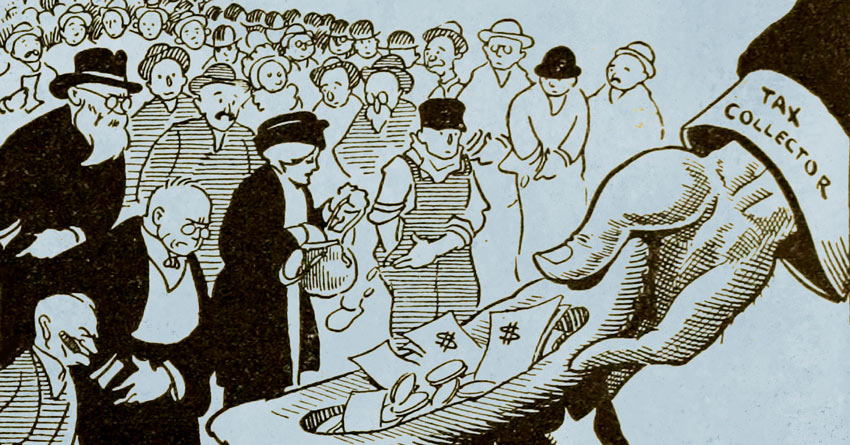
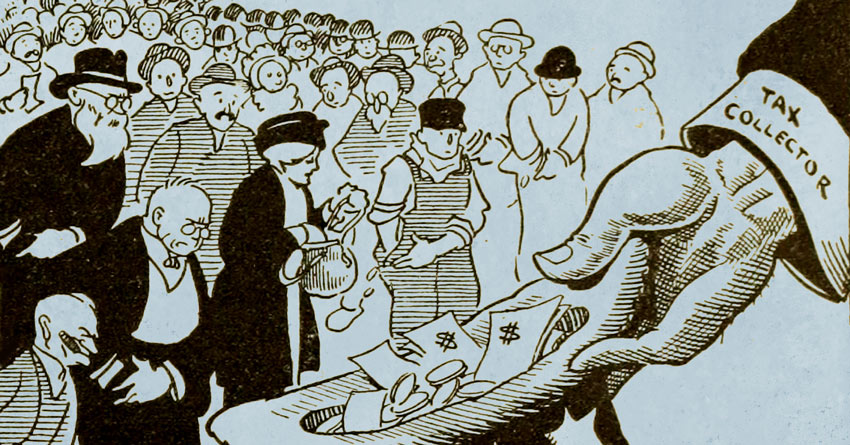
That is, if you’re paying taxes. It is no great mystery that people like it when their own taxes are reduced.

But what about reducing other people’s taxes?

“The core economic case for tax cuts is that they reduce the obstacles to creative and productive activities,” economist Don Boudreaux explained yesterday at the Café Hayek blog.

Cutting the corporate tax rate — which even former President Bill Clinton supported during last year’s campaign — won’t immediately appear in people’s paychecks, but can stimulate economic growth helping everyone. Recent experiences in both Britain and Canada bear this out.

Cutting taxes, of which “the rich” pay more, can also spur growth.

Yet, these ideas do not dominate popular discussions of tax cuts. Boudreaux lamented media reporting that treats any tax reduction as simply a “‘gift’ to high-income earners,” dubbing the coverage: “Biased. Benighted. Blind.”

“Suppose that freedom of the press were reported in the same way as . . . a ‘giveaway to the press’?” he asked. “Most people, of course, do not own newspapers or other media outlets.”

Boudreaux concluded, “When the press is free, the chief beneficiaries are the general public.”

Freedom — of both the press and to keep more of the fruits of our labors — helps the common man. As well as the uncommon man. A tax cut for me helps me directly, and you indirectly. And vice versa. Just as a free press is great for those in journalism as well as those of us not in journalism.

That is not blind, but eyes open; not benighted, but enlightened; not biased, but . . .

. . . Common Sense. I’m Paul Jacob. 


Printable PDF


Categories
folly general freedom ideological culture responsibility too much government U.S. Constitution

UN-appealing

Like E.F. Hutton, when the United Nations’ Office of the High Commissioner for Human Rights “Special Rapporteur on the right of everyone to the enjoyment of the highest attainable standard of physical and mental health” talks, people listen.

In disbelief, perhaps. Or amusement. But they listen. Well, at least Washington Post columnist Dana Milbank does, anyway.

Unfortunately, Milbank couldn’t get Dainius Puras — the Lithuanian doctor serving as the U.N.’s Special Rapporteur on the right of everyone to blah, blah, blah — to talk. Milbank did, however, uncover an “urgent appeal” sent by Puras to the U.S. State Department, with instructions to pass it along to congressional leaders.

Puras won’t discuss his confidential February letter until June, when “it becomes public at the next session of the Human Rights Council.” But the “leaked” letter announces the U.N. has launched an investigation to determine whether repealing the Affordable Care Act (Obamacare) violates international law.*

“The letter urges that ‘all necessary interim measures be taken to prevent the alleged violations’” Milbank further explains, “and asks that, if the ‘allegations’ proved correct, there be ‘adequate measure . . . to guarantee the accountability of any person responsible.’”

Should Congress repeal Obamacare, will U.N. troops occupy Washington, arresting congressmen for voting against its mandate?

The international body has no way “to impose its will,” Milbank acknowledges, seeming to wish it did and complaining that folks just “scoff at lectures from U.N. bureaucrats.”**

Taking solace, Milbank declares: “[T]he U.N. letter is at least a bit of moral support for those defending Obamacare.”

Moral support? From the U.N.? Now, you’re pulling my leg.

This is Common Sense. I’m Paul Jacob.


* Along with other U.N. gobbledygook, the letter cites Article 25 of the Universal Declaration of Human Rights, which proclaims, “Everyone has the right to a standard of living adequate for the health and well-being of himself and of his family” etc. etc. Standard U.N. speak: flowery, vague and unenforceable.

** People throughout the world and across the political spectrum — from the UK’s Daniel Hannan to Chelsea Clinton — scoff at the U.N. for being incompetent and corrupt. Not to mention thoroughly socialist.


Printable PDF


Categories
general freedom media and media people responsibility

Less Innocent Times?

Many years ago, waiting for coffee at a vendor in front of the Washington Post building and across the street from my U.S. Term Limits office, I often exchanged friendly banter with the Posts Dan Balz.

Coffee in hand last Sunday, I read Balz’s column, “A scholar asks, ‘Can democracy survive the Internet?’”

In more innocent times, the rise of the Internet was seen by many people as a boon to democracy,” Balz began, adding that “the Web broadened the flow of information, introduced new voices into the political debates, empowered citizens and even provided a powerful fundraising tool for some lesser-known candidates such as Barack Obama and Bernie Sanders.”

Obama, Sanders . . . all to the good!

“Now, in what are clearly less innocent times, the Internet is viewed as a far less benign force,” he continues, next to a picture of President Donald Trump’s Twitter feed.  “It can be a haven for spreading fake news and rewarding the harshest and most divisive of political rhetoric.”

Mr. Balz’s time continuum is faulty. The “innocent times” when Bernie Sanders used the Internet to raise money were the same “clearly less innocent” times when voters elected President Trump.

“Neither the legacy media nor the established political parties,” Balz bemoans, “exercise the power they once had as referees.”

Nathaniel Persily, the scholar cited by our legacy-media columnist, shares Balz’s anti-Trump bias. But he makes an important point, writing that the Trump campaign “could only be successful because established institutions — especially the mainstream media and political party organizations — had already lost most of their power.”

People voted against the less-than-innocent political (and media) establishment.

This is Common Sense. I’m Paul Jacob.


Printable PDF


Illustration based on original artwork by PRO With Associates


Categories
general freedom local leaders national politics & policies political challengers U.S. Constitution

Wag that Tail, Dog

Last November, Maine voters passed a ballot measure, Question 5, to begin electing their federal representatives to Congress, and their governor and state legislators, using Ranked Choice Voting. This selection mechanism allows voters to rank their choices, thereby removing the “spoiler effect” that often pushes citizens to support the lesser of two popular evils.*

Last month, Maine’s State Senate submitted advisory questions to the Maine Supreme Court about the new law’s constitutionality.

It is indeed constitutional. “Those who argue that ranked-choice voting conflicts with the Constitution,” explained Marshall Tinkle** in the Bangor News, “seem to be reading things into it that simply are not in the text.”

Last week, the Maine Supreme Court heard oral arguments. Justices Donald Alexander and Joseph Jabar seemed concerned about ranked-choice voting making it easier to vote for the person and not the party.

That’s not unconstitutional. But is it somehow bad?

“We are going to have a lot of people abandoning the political parties if ranked-choice voting remains,” argued Alexander. Or perhaps the parties might better serve voters?

The attorney representing the Committee for Ranked Choice Voting, James Kilbreth, reminded the justices that the voters have spoken, and as to the resistance by legislators in implementing their will, he remarked, “This is the tail-wagging-the-dog kind of problem.”

The courtroom broke out in laughter when Chief Justice Leigh Saufley responded, “Mr. Kilbreth, it’s a fairly large tail.”

I’m a big fan of ranked choice voting***, but the court’s decision is not about the policy. It’s about whether the dog (the people) will wag the tail (the legislators) or vice-versa.

This is Common Sense. I’m Paul Jacob.


* Portland, the state’s largest city, has used ranked choice voting since 2011.

** And Tinkle should know, since he “wrote the book” on the subject — the reference book, The Maine Constitution.

*** I serve on the Board of Directors of FairVote, an organization that promotes ranked choice voting and other methods to make every person’s vote count.


Printable PDF


Categories
Accountability general freedom local leaders moral hazard national politics & policies property rights responsibility too much government U.S. Constitution

A Bad Haircut

Eric Boehm over at Reason excoriated Idaho Gov. Butch Otter for giving libertarians “the double bird salute.” Boehm wondered if the governor, in vetoing two bills earlier this month, had been merely “trying to make libertarians mad.”

That’s not exactly fair.

The two blocked bills, one reforming unjust civil asset forfeiture and the other easing pernicious regulation of cosmetology, did certainly appeal to libertarians. But they also appealed to conservatives and liberals. And both passed with bipartisan support.

House Bill 139 would have reduced the number of training hours for a cosmetology license and allowed folks to fix hair at special events like weddings without a license, etc. “The fact that many lawmakers, Republicans and Democrats, liberals, moderates and conservatives, are working together to advance legislation in the interest of economic opportunity and prosperity,” argued Wayne Hoffman of the Idaho Freedom Foundation, “is a thing of beauty for a profession that’s all about beauty.”

But beauty is in the eye of the beholder. Those who run cosmetology schools probably like more mandated hours and folks in the profession might wish for less competition. Governor Otter said as much, complaining that HB 139 was written “without input from interested parties or due regard for the health, safety and welfare of the public.”

Just how dangerous is a bad haircut?

Putting safety in context, Hoffman explained that the current mandated hours of training for a cosmetology license “is more than is required to become an EMT in Idaho.”

Gov. Otter vetoed HB 202, the civil asset forfeiture reform, at the behest of “law enforcement” — the very interested parties who gain from taking people’s stuff without bothering to charge or convict them of a crime.

That makes no sense . . . according to Common Sense. I’m Paul Jacob.


Printable PDF


Categories
Accountability general freedom moral hazard responsibility term limits

Trouble Over Term Limits

Americans are hardly alone in strongly supporting term limits. All over the world, people who care about limited government also care about limited terms for officials wielding government power.

Especially the people of Paraguay, who remember all too well the dictatorship of General Alfredo Stroessner. He seized power in 1954, securing it with fraudulent elections and the arrest, torture and murder of thousands of political opponents, until being removed by a 1989 military coup.

After that ugly 35-year episode, strict term limits were established in the Paraguayan Constitution: one five-year term for the president — no re-election possible.

Fast-forward to the last few weeks, when the country’s Senate violated its own rules by holding a secret session — of which even the head of the Senate was unaware — and approved a constitutional amendment allowing re-election of the president. Under Paraguay’s constitution, amendments can be enacted by the House and Senate — without a vote of the people.

Before the House could vote, however, protests erupted against the deeply unpopular term limits change. (A recent poll showed 77 percent of Paraguayans opposed the amendment.) Angry crowds battled police on the streets of Asunción, the capital, after trashing and setting fires in the National Congress building. Meanwhile, police killed one demonstrator when they attacked the Liberal Party headquarters, prompting Pope Francis to urge dialogue in this 90 percent Roman Catholic country.

Yesterday, President Horacio Cartes announced he would not seek re-election in 2018, whether the constitution is changed or not.

The head of Cartes’s Colorado Party, which was associated with Stroessner decades ago, told Reuters that any change is now “practically impossible.”

This is Common Sense. I’m Paul Jacob.


Printable PDF


Categories
general freedom Regulating Protest too much government

Democracy More Dead

“Turkey’s democracy died today,” CNN headlined its report on yesterday’s national constitutional referendum. The measure contained 18 significant changes designed to further empower the country’s already seemingly all-powerful President Recep Tayyip Erdogan.

CNN is behind the times. Turkey hasn’t been a real democracy for some time.

Even before last summer’s coup attempt, as Newsweek informed, President Erdogan launched “attacks on Turkish demonstrators, the press, the Turkish judiciary and police officials launching corruption investigation against him.”

Post-coup, the gloves really came off. Erdogan declared a state of emergency, firing or suspending over 125,000 government workers and arresting more than 40,000 citizens, including more than 100 journalists.

Freedom of the press no longer exists.

Considering the tight media controls, the barring of many opposition events and violent attacks on those campaigning against the change, “Many analysts were surprised by the close result,” noted the New York Times. The referendum passed only 51 to 49 percent, losing in the three largest cities: Istanbul, Ankara and Izmir.

Authorities changed the rules after voting had begun, sparking demands for a partial recount; accusations of election fraud abound. Nonetheless, President Erdogan has declared victory. The outcome is unlikely to be overturned.

Now, he’ll be able to appoint (without any legislative branch check) a majority of the nation’s highest court. He will also be able to issue decrees, previously forbidden.

Another huge change is re-setting the term limits clock. Now Erdogan may remain in power until 2029.

Before our eyes, Turkey has become an authoritarian nightmare. Such a regime cannot be counted as an ally. Yet, with the close vote, don’t count the Turkish people out.

This is Common Sense. I’m Paul Jacob.


Printable PDF


Categories
free trade & free markets general freedom ideological culture moral hazard nannyism national politics & policies responsibility too much government

Escape from New York

“New York City is a walled maximum security prison,” exclaimed posters for Escape from New York (1981, R). “Breaking out is impossible.”

Now, as part of new legislation giving “free college” to New Yorkers, politicians take the same high concept from the film and extend it to the entire state.  

What, you ask, does Escape from New York have to do with free college?

First, it’s not actually free college, but only free tuition for state and city colleges.* And note that tuition costs currently run less than half the price tag of room-and-board, books and fees. Moreover, the freebie is only for students whose parents earn less than $100,000 annually, beginning in Fall 2017. In 2018, the threshold jumps to $110,000 and to $125,000 in 2018.*

Gov. Andrew Cuomo, a likely 2020 Democratic Party presidential candidate, pushed the idea of bestowing free tuition in his State of the State address months ago. He also brought in Vermont Senator Bernie Sanders, who dangled free college during the 2016 campaign and has now introduced legislation in Congress.

But the Empire State Legislature amended the bill. Knowing full well the economic climate created by their previous policies, these venerable solons feared New Yorkers might take the free tuition, earn a degree and quickly move.

To someplace with jobs, perhaps.

So, the legislation requires student recipients of the free money to remain in the state – not escape – for as many years as they received the free moolah.

How will they keep graduates from leaving? Well, the movie trailer hyped that, “The bridges are mined. The rivers are patrolled.”

And those who leave also must pay back the tuition as a loan.

If caught.

This is Common Sense. I’m Paul Jacob. 


* There’s also a subsidy program for those attending private institutions of higher learning, if those colleges match the $3,000 the State puts up.

** New York state ranks 16th in median household income, at $60,850 in 2014. Therefore, the cap will deny this benefit to quite a few upper middle class and wealthier families.


Printable PDF


Categories
Accountability crime and punishment free trade & free markets general freedom initiative, referendum, and recall moral hazard nannyism national politics & policies property rights

Good and Bad News

On the issue of “civil asset forfeiture” — police seizing property from folks merely on suspicion, without a criminal conviction — there is good news.

In Idaho, House Bill 202a just passed both legislative chambers overwhelmingly. “Among other changes, HB 202a would no longer allow civil forfeiture of the vehicle of a person who merely possessed a controlled substance,” explained a Spokesman Review report, “without using the vehicle in connection with trafficking offenses or obtaining it with drug-trafficking proceeds. . . .” It also puts off the table “property that’s merely in proximity to illegal drugs” and the mere possession of cash.*

Legislation is moving forward in Arizona, too. House Bill 2477 passed to the Senate Judiciary Committee last week — which unanimously cleared it despite what the Arizona Republic calledstrong opposition from . . . primarily people representing law-enforcement and prosecutors’ groups that benefit from the funds.”

The bill heightens the standard of proof required for making seizures stick from “preponderance of the evidence” to “clear and convincing evidence.” HB 2477 also increases reporting requirements, and creates a process police must follow to spend seized funds.

Unfortunately, there is also bad news.

Even with the new Idaho law and the enaction of the Arizona legislation, police in both states will continue to take people’s stuff without a criminal conviction. The level of abuse would be diminished, but not ended.

Citizens in both states can and should use the ballot initiative process to end this injustice. In total.

We must restore the bedrock principle of innocent-until-proven-guilty.

This is Common Sense. I’m Paul Jacob.


* Other provisions include a court determination on “whether a property seizure is proportionate to the crime alleged,” absolving “innocent owners from having to pay the state’s costs associated with an attempted seizure,” and some required record-keeping.


Printable PDF


Categories
Accountability crime and punishment folly general freedom government transparency moral hazard national politics & policies too much government U.S. Constitution

Public Record

Police departments nationwide have begun to outfit their on-duty officers with body cameras. These small recording devices make great sense, so we can better judge police encounters.

And it turns out that not only do police behave better when wearing body cameras, so do the citizens with whom they interact.*

Yet, cameras aren’t magic. They do not work when turned off. And video recorded by police offers little value when tampered with or deleted.

On Monday, the Washington Post ran an in-depth feature about the 2014 fatal shooting of 19-year-old Mary Hawkes by Albuquerque, New Mexico, police, who pursued her for allegedly stealing a truck.

The Post explained that her case “has become a cautionary tale about the potential of new technology to obscure rather than illuminate, especially in situations when police control what is recorded and shown to the public,” raising concern “about whether a nationwide rollout of body cameras is fulfilling promises of greater accountability.”

Six police officers huddled in close proximity to the deadly incident — all wearing body cameras. The officer who shot Ms. Hawkes, however, had his turned off. Footage from three others “showed signs of alterations and a deletion.”

A federal investigation is underway.**

It is now obvious that cameras alone won’t suffice. Rules must require that the cameras be turned on — with consequences for non-compliance. The public needs access to the footage, too.

The Police Cameras for Ferguson initiative*** on the ballot April 4th does exactly that. We need similar legislation in Albuquerque and everywhere else.

This is Common Sense. I’m Paul Jacob.


* See Barak Ariel, William A. Farrar, Alex Sutherland, “The Effect of Police Body-Worn Cameras on Use of Force and Citizens’ Complaints Against the Police: A Randomized Controlled Trial,” Journal of Quantitative Criminology (September 2015, Volume 31, Issue 3), pp 509–535; reportage on this study can be found here.

** The probe has already revealed that a former Albuquerque police employee has declared, in an affidavit, “it was routine for officials to delete, alter or refuse to release footage because of ‘political calculations.’”

*** Your support is still desperately needed to educate voters in Ferguson, Missouri, about the Police Camera ballot measure. Please help today.


Printable PDF