Categories
general freedom ideological culture initiative, referendum, and recall national politics & policies responsibility too much government

Adios, California?

Californians account for more than one of every ten Americans.

For now.

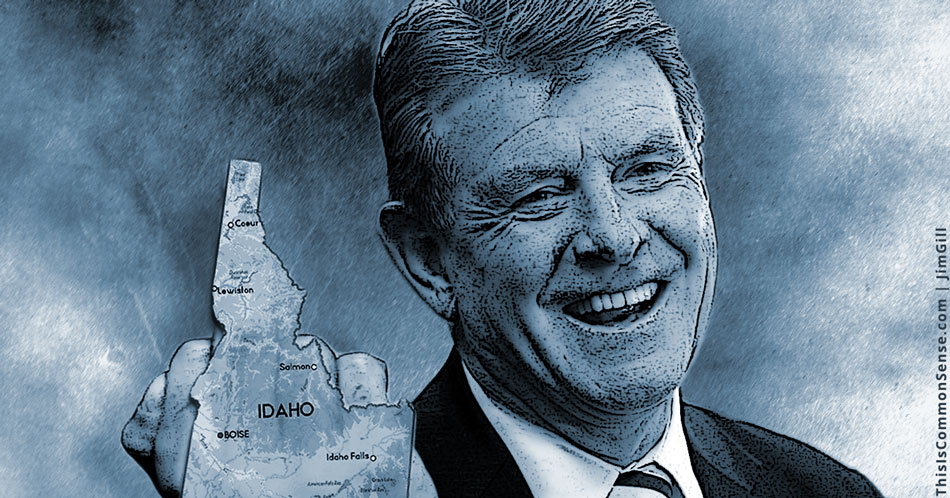
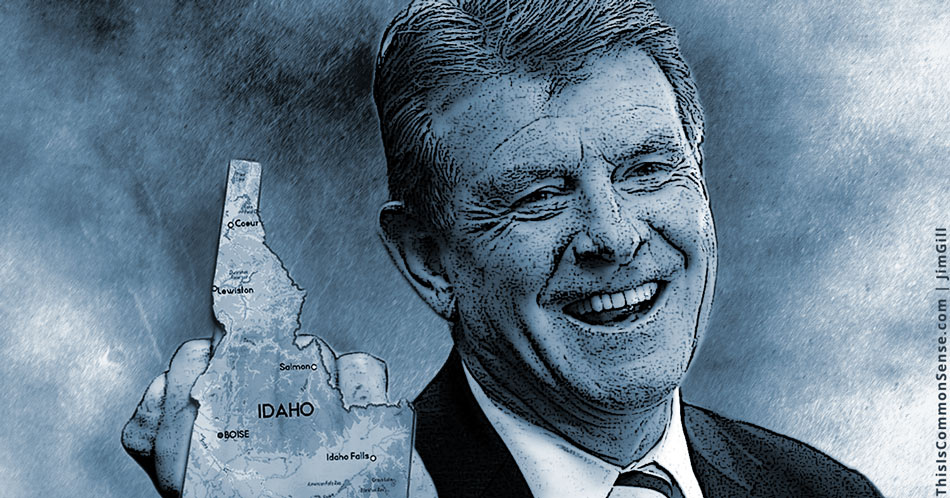
Three years ago, an initiative sought to split the mega-state up. Had that measure succeeded, the U.S. Congress would have decided whether to permit the Golden State to become six separate states — with ten more U.S. Senators.

Now, a group called “Yes California” is petitioning for a 2018 ballot measure on leaving these United States altogether: Secession. “California could do more good as an independent country than it is able to do as just a U.S. state,” says its website.

Supporters argued in a recent Washington Post feature that California “subsidizes other states at a loss.” Indeed, it’s one of 14 states that get less money back from the federal government than paid in taxes.

And there’s Trump. Opposition to the president is palpable. California provided Hillary Clinton with a 4.3 million popular vote margin over Republican Donald Trump, 1.5 million more than her national margin.

“It’s understandable why the election of an evil white supremacist swindler as president,” wrote Zócalo Public Square’s Joe Mathews in the Fresno Bee, “has given the idea of California independence such currency.” Nonetheless, he opposes #CalExit as divisive and “not very Californian.”

Nationally, for partisan reasons, Republicans may cheer it, while Democrats shudder.

Me? I’m for self-determination.

But, remember: Northern Californians have been agitating to secede from the state since 1941. Those desires are picking up steam — especially with trepidation over whether the Oroville dam will hold. Folks feel unrepresented in the state capitol.*

And they are. Already 21 of the 23 northernmost counties have made declarations to form the State of Jefferson.

Let Californians decide . . . county by county.

This is Common Sense. I’m Paul Jacob.
 

* Note that Trump won by a landslide in the counties that would comprise Jefferson, our would-be 51st state.


Printable PDF


Categories
general freedom individual achievement responsibility

Freedom’s Friends

Yesterday marked a solemn anniversary. Seventy-four years ago — on Feb. 22, 1943 — three German students at the University of Munich were tried for treason by the Nazis, convicted and then executed via the guillotine, all in one day.

Days earlier, Hans Scholl and his sister Sophie had been caught distributing a leaflet at the university, which read: “In the name of German youth, we demand restitution by Adolf Hitler’s state of our personal freedom, the most precious treasure we have, out of which he has swindled us in the most miserable way.”

Hans had in his pocket a draft of another leaflet, in Christoph Probst’s handwriting. That seventh leaflet, never distributed, led to Christoph’s arrest and execution, along with Hans and Sophie.

The three were part of a small group of students who wrote and distributed leaflets under the name The White Rose — a symbol of purity standing against the monstrous evil of the Third Reich. The leaflets decried the crimes of National Socialism, including the mass murder of Jews, and urged Germans to rise up.

Three more members were later executed: Willi Graf, Alex Schmorell and Professor Kurt Huber. Another eleven were imprisoned.

Their resistance was ultimately futile, unsuccessful . . . but not pointless. They would not remain cogs in the killing machine that had taken the most advanced society in the world to the depths of depravity. They took a stand against what George Orwell later characterized as “a boot stamping on a human face, forever.”

Let’s remember, and say, “Never again.” And have the courage to make those words true.

This is Common Sense. I’m Paul Jacob.

N.B. For an excellent account of The White Rose, consult the aptly titled A Noble Treason, by Richard Hanser. See also Jacob Hornberger’s The White Rose — A Lesson in Dissent. The Orwell quotation is from the dystopian novel 1984.


Printable PDF

Categories
Accountability general freedom government transparency responsibility too much government

The Confidence Game

Romania’s parliament has confidence in . . . itself.

Sorta. A parliamentary no-confidence vote failed, despite 161 lawmakers voting for the resolution and only eight voting with the government.

Confused? The no-confidence measure failed because the Social Democrats, controlling nearly two-thirds of the 465 seats in parliament, abstained on the measure, which required a majority of parliament to vote affirmatively.

Not a very confident vote of confidence.

The vote came after eight days of protests in Bucharest, the capital, and around the country — the largest since the 1989 fall of communism. A quarter of a million people took to the streets of Bucharest last Sunday, and half a million nationwide.*

The protests came after last week’s late night corruption decree, issued “by the cabinet, without parliamentary debate,” as Reuters reported — and “designed to decriminalize a number of graft offences, cut prison terms for others and narrow the definition of conflict-of-interest.”

“The emergency ordinance . . . effectively decriminalized some forms of corruption if the amount involved was less than $47,000,” explained the New York Times, meaning amnesty for Liviu Dragnea, the head of the ruling Social Democrat Party, and dozens of other politicians convicted of graft and corruption.

The decree was hastily rescinded, but Romanians cannot trust their government.

“It’s too late,” one protester said. “Their credibility is zero.”

“This government has offered us a perfect demonstration of what it can do during its first 30 days in office,” another quipped. “Conclusion: they must leave.”

But Prime Minister Sorin Grindeanu told fellow legislators, “I do hope that as of today we get back to work.”

Unfortunately, that’s what Romanians fear.

This is Common sense. I’m Paul Jacob.


* The same ratio of protesters to population in the U.S. would mean eight million protesters nationally.


Printable PDF


Categories
crime and punishment First Amendment rights general freedom ideological culture media and media people national politics & policies responsibility

The Silence of Violence

“The Free Speech Movement is dead.”

So said the Berkeley College Republicans after violence Wednesday night forced cancelation of a sold-out speech by Milo Yiannopoulos, the Greek-born British author, now a senior editor at Breitbart News. The reference, of course, is to the University of California’s history as a haven for free expression dating back to the 1960s.

Protests of the event gave way to

  • people beaten up on the streets,
  • rocks and bricks and Molotov cocktails hurled at police,
  • a young woman with a “Make America Great Again” parody hat pepper-sprayed in the face,
  • fires set, windows smashed at the Martin Luther King Jr. Student Union, along with
  • an estimated $100,000 of property damage.

Yet only one arrest was made Wednesday night, and two on Thursday, when a man in a suit wearing a Trump hat apparently triggered two guys to jump out of their car and assault him.*

CNN dubbed the “inflammatory” Yiannopoulos a “professional provocateur.” He has also been labeled a racist, which he denies, and a homophobe, even though he’s gay. Pushing the envelope against political correctness, for his part, Milo calls “college campuses . . . cancerous and toxic to free expression.”

Regardless of label, Yiannopoulos’s right to speak and the right of others to listen are constitutionally protected. And violence to block a peacefully expressed point of view is never justified.

Asked about the tactics used, one unnamed young protestor** explained, “Although, you know, it could get violent or whatever, with the fire, that’s what caused Milo to leave. We succeeded.”

The young woman added, “And next is Trump.”

Either we defend civilization against speech-squelching violence, or inherit an ugly silence.

This is Common Sense. I’m Paul Jacob.


*More arrests may be forthcoming. The Washington Post reported that, “University police rescued many people in the crowd who were being attacked, trapped or injured . . . and are collecting video to try to identify suspects.”

** The woman was part of the ominously-named group By Any Means Necessary.


Printable PDF


Categories
Accountability free trade & free markets general freedom government transparency nannyism national politics & policies responsibility too much government

Sledgehammer to a Bureaucracy

The media hysterically pushes the line that the new Trump administration is so much “in chaos” it even frightens seasoned (salt-and-pepper?) heads in the Republican Party. But perhaps folks at the Environmental Protection Agency have more reason to panic.

“It looks like the EPA will be the agency hardest hit by the Trump sledgehammer,” writes Julie Kelly over at National Review.

Ms. Kelly offers striking reasons to hit the agency hard, quoting from Steve Malloy, the author of Scare Pollution: Why and How to Fix the EPA. “I can think of no agency that has done more pointless harm to the U.S. economy than the EPA — all based on junk science, if not out-and-out science fraud.” Malloy looks forward to the new president’s promised rethink and restructuring of the agency.

Just how bad is it?

Environmentalists often cry foul over any corporate funding of ecological research. But if one worries about money influencing results, the case against grants funded by regulatory agencies for regulatory purposes is even stronger.

Especially when the agency is run by ideologues.

Trump’s transition team seeks to make all the EPA’s relevant data public, for peer and public review, and would really like to curtail the agency’s research funding entirely.

Pipe dream? Better than the recent nightmare: “For eight years,” writes Kelly, “President Obama used the agency as his de facto enforcer of environmental policies he couldn’t pass in Congress even when it was controlled by his own party.”

The EPA needs to be checked. And balanced. And more.

This is Common Sense. I’m Paul Jacob.


Printable PDF


Categories
folly general freedom moral hazard national politics & policies responsibility U.S. Constitution

Deplorable Distrust?

The United States is no longer a “full-fledged democracy.”

According to a New York Post story, our union is, instead, a “flawed democracy.”

Hmmm. Where to begin?

Despite the article’s featured photo of President Trump, the downgrading of America’s democratic status occurred prior to the billionaire’s swearing-in.

Technically, of course, the United States is not now nor has ever been a full-fledged (much less a flawed) democracy. We live in a republic . . . if we can keep it.

As is often the case, folks use the term “democracy” not to indicate it as a form of government — a pure democracy — but as a shorthand for a country with democratic elections, where “basic political freedoms and civil liberties are respected,” and with “an independent judiciary.”

An organization associated with The Economist, the Economist Intelligence Unit (EIU), has for a decade been rating the world’s countries based on numerous political factors. For the first time, this year, the United States has dropped out of the top tier and into the second, joining the likes of Botswana, Ghana and India.

“The U.S. is the second-highest ranking flawed democracy,” the Post noted, “coming in right behind Japan and tying with Italy.” Norway garnered first place among the 19 “full-fledged democracies,” including most Western European countries.

Why was the U.S. downgraded? The EIU report explained the lower score “was caused by the same factors that led Mr. Trump to the White House: a continued erosion of trust in government and elected officials.”

So, if the American people simply placed their heads in the sand, blindly trusting politicians, we’d be “full-fledged,” eh?

Full-fledged fools fiddling away our freedom, that is.

This is Common Sense. I’m Paul Jacob.


Printable PDF


Categories
ballot access folly general freedom government transparency national politics & policies political challengers

Trumping Popular Vote?

A friend, who loves to talk football, sometimes boasts that his team “crushed” the other team, gaining more yards and rolling up more first downs, before dejectedly acknowledging that his team didn’t score as many points as its opponent. They lost.

When a Democrat gloats that Donald Trump lost the popular vote, I am reminded of my friend’s funny football foible.

It helps to gain yards in football, sure, just as it helps to gain votes in a presidential contest. But you win a game by putting the most points on the scoreboard, just as you’re elected president by winning a majority in the Electoral College.

Going forward, we can discuss whether a state’s votes should be awarded proportionally or winner-take-all and whether national popular vote should instead be the metric for victory. But the 2016 rules were the rules.

“I would’ve won the popular vote if I was campaigning for the popular vote,” President Trump told ABC News anchor David Muir this week. “I would’ve gone to California, where I didn’t go at all.”

Still, Mr. Trump should appreciate that not only didn’t he garner a majority, he lost by 3 million votes to Hillary Clinton, who was well short of a majority, herself.

Trump continues to claim “a massive landslide” in the Electoral College. He may have “shocked the world,” but in 58 presidential elections thus far, 45 winners gained a greater percentage in the Electoral College.

Again this week, Pres. Trump repeated his belief that “millions of illegal votes” prevented him from winning the popular vote. Specific evidence? None. But he wants an investigation.

This could be a long four years.

This is Common Sense. I’m Paul Jacob.


Printable PDF


Categories
Accountability folly general freedom ideological culture media and media people moral hazard national politics & policies too much government

Bring Back the Eunuchs?

“Everybody knows that ordinary Americans are a bunch of idiots,” a Health and Human Services official told Benjamin Ginsberg. “Why do you need to do a survey to find that out?”

Actually, he was not surveying Americans for their IQs and knowledge levels. He was surveying Washington insiders. Like her.

She hadn’t been listening.

Ginsberg and co-author Jennifer Bachner have a new book out, What Washington Gets Wrong (2016). “We found that public officials,” Ginsberg told C-SPAN’s Brian Lamb last month, “the people who really govern this country . . . don’t think much of ordinary Americans.”

Surprise, surprise. This has been an “open secret” for some time. Washington insiders “are wealthier,” “better educated,” and “think ordinary Americans don’t really know very much.” More alarmingly, they think that the government should “not pay too much attention to what ordinary folks think.”

According to Ginsberg and Bachner, this has been a long time coming. Progressive Era reformers transformed government in an effort to make it less partisan.

They succeeded — only to make it less accountable and less . . . American.

In ancient times, great administrative states were run by eunuchs, men gelded to curb their appetites the better to serve their sovereigns (pharaohs; emperors; kings). Not their own interests.

Is it time to bring back the practice?

Just joking. Instead, Congress can tame the bureaucratic leviathan it has created by trimming its ranks and pulling back on pay and benefits until they’re more in line with the private sector.

Let’s hope the House’s recent passage* of the REINS Act, requiring congressional approval of major regulations, is a sign that Congress’s lackadaisical attitude about the bureaucracy is changing.

This is Common Sense. I’m Paul Jacob.


* Let’s hope the Senate follows suit.


Printable PDF


Categories
Accountability general freedom ideological culture media and media people moral hazard national politics & policies

Don’t Trump the Gun

The 2016 presidential election will go down in history as a doozy. The Trump win was a surprise, even shocking many of his supporters. But the most obvious lesson we learned pertains to the modal Obama-Hillary voter.

Well, make that lessons. Plural.

  1. Today’s most vocal Democrats don’t seem to understand democracy. The “deal” of our democratic republic, as I learned in Civics and “on the streets,” is that you do your best for your party, candidate, or policy, and accept the results . . . until the next election. Whiners, rioters and Hollywood actors (to place them in descending order of tolerability) would serve their cause better by remembering this.
  2. It has become commonplace, now, to make sweeping judgments about one’s opponents based on little or no information. Or erroneous info. On no basis whatsoever, nearly every lefty YouTuber and street shouter I have seen yammers on about how anti-gay Trump is. Truth is? No president has ever entered the White House more pro-gay than Donald J. Trump.
  3. Actual policy issues mean too little to too many. What does matter? Style. Obama has “good style.” Bush had “dumb style.” Trump has “evil style.” Substance? Results?

Blankout.

Tomorrow the President-elect becomes President. And Resident of 1600 Pennsylvania Avenue*. As skeptical as some of us may be (myself included), we owe it to ourselves, our neighbors, and the country — perhaps the world — to give the president a chance. At least, take a deep breath and let him make a mistake before pouncing.

Meanwhile, let’s also stop denigrating half the country — that is, those who voted for Trump. Consider their alternative.

This is Common Sense. I’m Paul Jacob.


* Part-time? Will he really spend a lot of time in Trump Tower?


Printable PDF

Trump, president, inauguration, democracy, election, protest


Categories
Accountability folly free trade & free markets general freedom moral hazard

Oil’s Bad that Ends Bad

Sometimes socialism seems reasonable.

Emphasis on “seems.”

Take natural resource socialism. Ores and oil are “just there in the ground” and “belong to everybody.” So it “just makes sense” that “the people” should “own” the mining and drilling and refining industries, and run these operations to share the profits to help “everybody,” not just a few.

The Mexican government bought into this back in 1938, when it nationalized the U.S.- and Dutch-based oil companies. Today, the industry is under-capitalized, its equipment old and inefficient. Mexico itself is a mess. The government is corrupt and the people far poorer than would have been the case had they not bought into the nationalization mania.

The cause of the problems should not be in dispute. “By cutting off Mexican oil exploration from foreign investment and foreign know-how,” Ryan McMaken writes in an interesting analysis, “the Mexican state has only succeeding in making the Mexican oil industry less efficient, and less capable of taking advantage of the natural resources in Mexico.”

Which is why the government has been making tentative “liberalization” moves, de-monopolizing Pemex, the government’s oil outfit.

Unfortunately, though the damage done by bad government policy and monopolistic privilege is everywhere to see, many people (especially intellectuals) in Mexico blame “neo-liberalism” and non-existent “free markets” for rising prices and the specter of economic collapse.

Once bitten by the natural resource socialism bug, it’s apparently easy to dismiss evidence. Or the common-sense notion that government over-reach has made the mess they now struggle with.

This is Common Sense. I’m Paul Jacob.


Printable PDF

Mexico, oil, nationalize, socialism, neoliberalism