Categories
free trade & free markets general freedom national politics & policies

Subminimal Morality

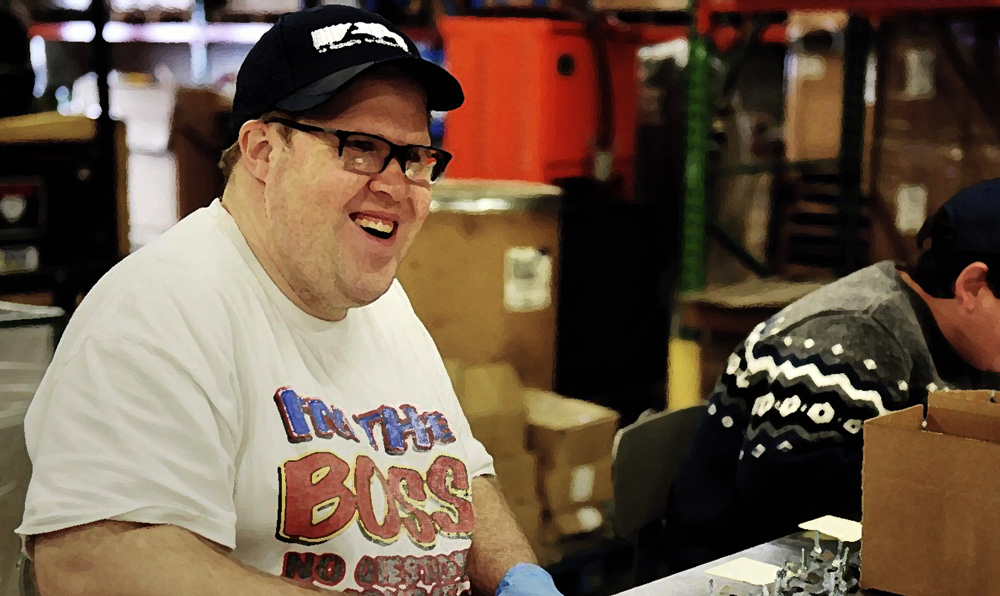
He’s been at the job fourteen years. Congress may kill it.

Matt Thibodeau has disabilities that severely limit how productive he can be and thus how much he can contribute to the bottom line of his employer, Associated Production Services.

Under a longstanding exception to the federal minimum wage, Matt is paid $3.40 an hour for tasks like shrink-wrapping and assembling packages. The rate makes his employment feasible. (The current federal minimum is $7.25.)

Some congressmen want to scrap this exception to the mandatory minimum, calling it unfair and “out of date.”

“I felt like they were being targeted because they couldn’t speak for themselves,” says Matt’s mom, “and so that made us parents even more determined to speak for them.”

What’s out of date, or was never justified to begin with, is Congress’s federal minimum wage regulation.

Any mandatory minimum wage discourages employers from hiring persons not yet productive enough to justify the cost of being employed at the dictated minimum. It prevents low-skilled workers — on the outs of the economy — from getting a foot in the door.

Some employees initially paid only a few dollars an hour will soon improve their productivity and earn a higher wage. Others, like Matt, simply cannot advance further but can provide steady, conscientious labor within the compass of their abilities.

That’s fine. Each party to such an arrangement benefits. And his work enables Matt to be productive and valued, which is tremendously important to him. 

As it is important to all of us.

This is Common Sense. I’m Paul Jacob.


PDF for printing

See all recent commentary
(simplified and organized)
See recent popular posts

Categories
free trade & free markets national politics & policies

First, Fire All the Freelancers

Congress is about to make the lives of an awful lot of people an awful lot harder.

So what else is new?

But the legislation in play does seem new — in suddenness and scope. 

It would impose massive newfangled regimentation on how we make a living. And it would kill the livelihoods of millions of people.

I refer to people who do gigs and freelance assignments for a living. One might ask why Democrats have it in for this kind of worker. Is it to appease unions? Is it the result of the same ideological forces that drove Karl Marx to despise the professional classes, needing to turn everyone into a prole? 

After all, this anti-freelancer agenda is not new. Similar legislation, called AB5, was tried a few years ago in California, instituted at the behest of activists eager to reduce competition with union work and remove chances for non-9-to-5 ways of making a living.

The premier target was ride-share companies Uber and Lyft. But many were caught in the net. AB5 created havoc throughout the state. Even socialist freelancers hated its mass murder of options and opportunity.

AB5-style congressional legislation to outlaw gig or freelance work except under very restricted circumstances is now being discussed in the U.S. Senate after having passed the U.S. House. It would also give unions many ugly new weapons to use to impose themselves on employees and employers.

In California, AB5 was mostly repealed by a citizen initiative.

Will there be a national citizen initiative to also promptly repeal the Protecting the Right to Organize Act? Unlikely, since Americans currently lack the right to enact national citizen initiatives.

This is Common Sense. I’m Paul Jacob.


PDF for printing

See all recent commentary
(simplified and organized)
See recent popular posts

Categories
free trade & free markets international affairs

Embargo Socialism?

As the people of Cuba have revolted, this month, taking to the streets in huge marches, complete with waving of American flags, leftists in America — who love socialism and hate the Stars and Stripes — have been put in an awkward position. 

The Biden administration, in its continual prostration before progressives, initially attributed Cuban unrest to lack of COVID vaccine access. But then leftists began blaming the United States’ embargo for that and for Cuba’s sorry economic mess, blaming the U.S. as the cause of Cuban misery. 

Not Cuba’s Castro communist government! 

The problem is U.S. foreign policy, or so the memes assert. Some claim that the embargo amounts to a blockade of all international trade with Cuba.

Is this true?

“Embargo is the official term used by the U.S. government to describe the sanctions on Cuba,” Politifact explains. “While the nuances in the U.S. embargo can make it difficult for foreign companies to trade with the country, there is no evidence that they can’t,” concluding with “We rate this claim False.”

Indeed, other popular memes show that the U.S. is the only country on the planet not trading with the communist-run tyranny due south of Florida.

More interesting is the clarification of the embargo by Senator Marco Rubio. “There’s only two embargoes, here: the embargo against government-owned companies and the embargo that the Cuban regime imposes on its own people.”

It is entirely legal for Cubans and Americans to trade, says Florida’s senior U.S. senator. But the Cuban tyranny won’t let them.

All my life the U.S. has been engaged in an embargo against Cuban socialism. Against slavery. Against a government at war with its people. 

It has not yet “worked,” but I know why Cubans wave American flags.

This is Common Sense. I’m Paul Jacob.


PDF for printing

See all recent commentary
(simplified and organized)
See recent popular posts

Categories
free trade & free markets national politics & policies subsidy

Unemployed or Misemployed?

“Now Hiring” signs are up everywhere, especially on the windows of restaurants and other retail businesses.

But those signs aren’t disappearing.

Lots of jobs are left open.

No takers.

Week after week.

The job recovery that President Joseph Robinette Biden Jr. says he has placed his fabled “laser-like focus” upon, has been disappointing, to use the words of Washington Post columnist Catherine Rampell.

Oops, make that “extremely disappointing.”

“Economists and analysts had been expecting around a million jobs to be added on net in April,” Rampell wrote last week, “given the rising share of vaccinated Americans and relaxation of restrictions on business. Instead, employers created a measly 266,000 positions, the Bureau of Labor Statistics reported Friday. Job growth for March was revised downward, too.”

This didn’t come out of nowhere, as another Washington Post columnist made clear a few weeks ago. “Many employers, especially restaurants and small retail businesses, are having a hard time finding workers,” explained Henry Olsen. “This is likely the result of trends in covid-19 vaccinations and the generous unemployment benefits that were expanded due to the pandemic.”

Normally when talking about employment and unemployment, we are tempted to put on our economist caps and talk about supply and demand, marginal productivity, monetary policy, etc. But most commentators seem to be honing in on the ultra-obvious: pay people to stay home, they tend to stay home.

Indeed, thinking of the generous unemployment benefits which the U.S. Congress has bestowed upon the country as “stimulus,” we should realize that paying people to stay at home is like hiring them for the cushiest job imaginable. No worker shortage, as many suggest, but malinvestment in the wrong “jobs.”

And thus the opposite of “stimulus.”

This is Common Sense. I’m Paul Jacob.


PDF for printing

Photo by greychr

See all recent commentary
(simplified and organized)
See recent popular posts

Categories
free trade & free markets general freedom international affairs too much government

From Socialism to Fascism

Democratic socialism might seem all fun and games . . . right up until one is forced to choose between democracy and socialism. Those countries that choose the latter, like Venezuela, lose both prosperity and democracy, and then things get really bad.

But what happens when such a society’s dictator wises up?

“Bankrupted by Socialism, Venezuela Cedes Control of Companies,” Fabiola Zerba reports for Bloomberg. “Saddled with hundreds of failed state companies in an economy barreling over a cliff, the Venezuelan government is abandoning socialist doctrine by offloading key enterprises to private investors, offering profit in exchange for a share of revenue or products.” 

If that last sounds like less than full privatization, and unnecessarily cumbersome, it is. “Dozens of chemical plants, coffee processors, grain silos and hotels confiscated over the past two decades have been transferred — but not sold — to private operators in so-called strategic alliances. . . .”

“Strategic alliances” sounds ominously . . . fascistic.

This is not gratuitous, for, as Peter Drucker explained, “Fascism is the stage reached after communism has proved an illusion.” And it is definitely not directly towards “free markets” that Venezuela now moves. Dictators and ruling juntas don’t like free markets. It makes them less integral to the wealth extraction process. 

And wealth, in their view, needs to be extracted!

It gives meaning to their lives.

Jon Miltimore, in an article at FEE, also uses the f-word, and quotes my friend Sheldon Richman’s definition: fascism, noun : “socialism with a capitalist veneer.”

Really moving beyond 20th century mistakes would entail reviving actual free markets. Not “so-called strategic alliances.”

This is Common Sense. I’m Paul Jacob.


PDF for printing

See all recent commentary
(simplified and organized)
See recent popular posts

Categories
free trade & free markets

Meritocracy a Myth?

COVID and the pandemic panic have not been kind to small businesses, but some entrepreneurs have skyrocketed their wealth. Months ago, CNBC’s Gary Cohn waxed enthusiastic for “the banner year for newly minted American billionaires,” citing among reasons to celebrate “the possibility that it can happen to other people. . . .”

Reporting on three new billionaires from Doordash and “the winner of the week, Brian Chesky, AirBNB CEO,” CNBC’s Robert Frank said the recent uptick was “really inspirational no matter what your point of view.”

Wrong, says Kyle Kulinksi, a thoroughly unimpressed progressive podcaster, dissing the segment as “everything that’s terrible about CNBC in one clip.”

Now, I can imagine worrying about the context of celebrating a few folks’ success while so many others have been hit hard by bad policy and a virus, all the while big business (especially banks) have been subsidized with “stimulus.” But, Mr. Kulinski explains, “the main problem” is that CNBC’s encomiasts “clearly believe in the myth of meritocracy.”

Kulinski then yammers on about hard-working folks who got nowhere in life working three jobs. “The idea that the reason why these people are getting wealthy is because they’ve just worked harder than anybody else — that’s provably not true.” 

And then proceeds not to prove it.

Kulinski errs in focusing on “working hard” in sheer physical and time-suck terms. But to the extent we have a meritorious meritocracy, the merit rests on what CNBC’s Cohn called “work hard and have a great idea.” Emphasize the “and” — remembering that “great ideas” are those that extend value to others via trade. 

Value isn’t measured in BTU’s and time-clock ticks. 

Kulinski should have noticed the big truth about these gig economy billionaires: they have allowed normal people to take their investments in household production — their homes and their cars — and turn them into capital goods for services on the open market.

They created new markets . . . wherein all participants gain.

That is progress.

But not, apparently, “progressive.”

This is Common Sense. I’m Paul Jacob. 


PDF for printing

See all recent commentary
(simplified and organized)
See recent popular posts
Categories
free trade & free markets too much government

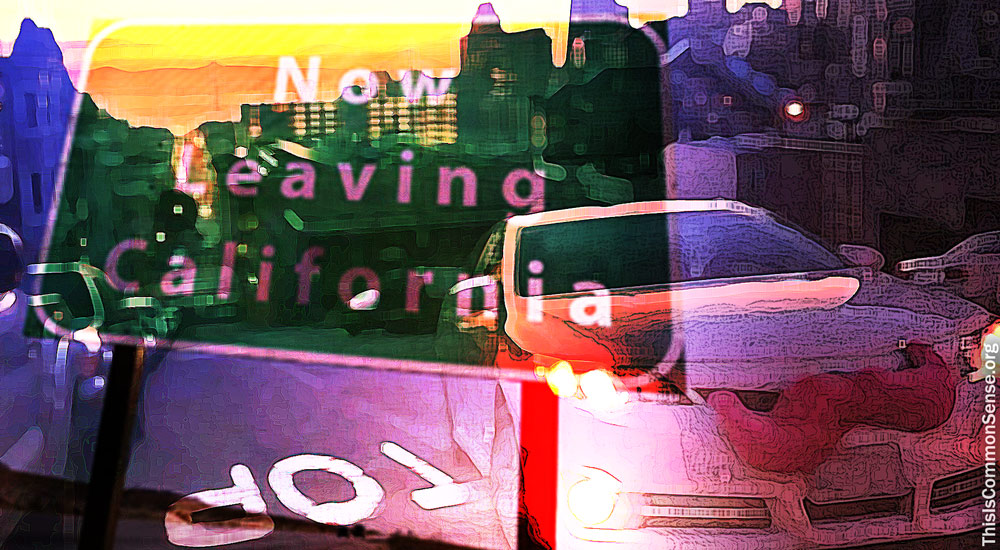
Leave California

Should Uber and Lyft abandon California? 

At issue is the anti-freelancer statute AB 5, passed last year in the Golden State, which outlaws independent contractors in many industries.

Including the wildly successful ride-sharing business.

Horrified, threatened, Uber and Lyft have declared their willingness to suspend operations in California if they are forced to reclassify independent contractors as employees. 

You see, wage and salary contracts are heavily regulated already, and switching from independent contractors to employees means drivers would be entitled to expensive benefits. 

Which would upset the gig economy business model.

A model Democrats hate. This assault on independent contractors is something that Democratic presidential candidate Joseph Biden wants to impose nationwide. 

The Democrat-controlled U.S. House passed such legislation in February.

For now, a court order has given the companies a temporary reprieve from another court’s order mandating compliance. 

Maybe the dueling decrees will end well for the ride-sharing companies, allowing them to function. Maybe not. There’s also a citizen initiative in the mix. Proposition 22 on the fall ballot would substantially modify AB5 to make it possible for at least some freelancers to do their jobs in the state of nearly 40 million people.

On the other hand, should California officials succeed in imposing their mandate on the ride-sharing firms, Uber and Lyft should follow through on their threat and leave.

The consequences of such attacks on the market should be made as plain as possible as rapidly as possible so that as many people as possible can make the connection between cause and effect.

This is Common Sense. I’m Paul Jacob.


PDF for printing

See all recent commentary
(simplified and organized)
See recent popular posts

Categories
free trade & free markets national politics & policies

President Goes Postal?

A bullying bull in a China shop?

“President Donald Trump is taking another swipe at China,” Jen Kirby wrote for Vox back in 2018, “by ripping up an international treaty that’s more than a century old.”

We’re talking about the Universal Postal Union — or UPU. “At 144 years old, the UPU is one of the oldest intergovernmental agencies,” she explained. 

“The organization made possible the international mail system,” offered Washington-based attorney and UPU expert Jim Campbell. 

Wellesley College Professor Craig Murphy, “an international organizations expert,” called Trump’s threat “absurd.”

“It makes the international postal system run smoothly,” explained Kirby, “it’s the reason why you can get a package from South Africa or a postcard from your aunt on vacation in Bali.”

So why gum up the efficient delivery of letters and packages?

“Trump does have a legitimate gripe,” Kirby abruptly changed tone, “and administrations going back to Ronald Reagan have voiced similar complaints about the UPU.” 

But did nothing about it.

“Countries like China that were developing nations in 1969 . . . still pay the U.S. Postal Service a pittance to deliver mail,” Foreign Policy’s Keith Johnson clarifies, which “means that Chinese firms had a tiny edge in shipping goods to the U.S. market — making the Postal Service pick up much of the tab for actually delivering the package, even while costing U.S. firms potential sales.”

“Tiny edge”

Bull.

“[I]t’s actually cheaper to ship some products from certain places overseas to the US,” Kirby acknowledged, “than it is to deliver something between New York and Kansas.”

The gripe? 

The “disproportionately dramatic response . . . reveals the White House’s obsession with what it sees as China’s unfair advantage in global trade.”

Yet, this is an unfair advantage. 

Er, well . . . was

This is Common Sense. I’m Paul Jacob.


PDF for printing

See all recent commentary
(simplified and organized)
See recent popular posts

Categories
free trade & free markets too much government

Viral Michigan

Michigan is a state divided.

While Gov. Gretchen Whitmer (D) has become a veritable dictator, in her stated desire to curb the contagion, the infection and death rate in the U.P. (which stands for “Upper Peninsula”) would look like a success story . . . were anyone to believe that her policies deserved credit.

But to some extent, “social distancing” is just society-as-usual for rural Yoopers.

Whitmer’s stay-at-home orders are the most restrictive of any of our states. All public gatherings are shut down, as are most stores and shops, though lottery sales are still allowed. And enforcement has not been slack, as Reason informs us: “Police stopped landscaper Brandon Hawley for carrying on with his business, although he lives in the northern city of Alpena, which confirmed its first COVID-19 case on Saturday.”

Not on board with every one of the governor’s executive orders are four sheriffs in westside counties of the main part of the state. They have proclaimed they will not be enforcing every single one of her edicts. “While we understand her desire to protect the public,” they wrote in a joint statement, “we question some restrictions that she has imposed as overstepping her executive authority.”

And Michiganders have started to rebel, with the state experiencing our nation’s largest protests.

So far.

Recognizing that the state has the third highest coronavirus death count, though most are in the southeastern part of the state, does this menace justify the governor’s restrictive measures?

Well, that will be an ongoing debate in Michigan — as elsewhere.*

The perception of costs will grow rapidly as negative results from the shut-down become more numerous and more obvious.

This is Common Sense. I’m Paul Jacob.


* The most startling report shows the virus forming the same pattern of contagion and lethality everywhere, regardless of “mitigation” measures (as Dr Anthony Fauci dubbed them), i.e. shut-down or no shut-down. Meanwhile, a few contrasts: the 2017-2018 flu season was quite bad, with 80,000 deaths, including “high severity across age groups”; the U.S. coronavirus death count hasn’t hit half that yet, which is worth keeping in mind as projections of the contagion’s extent and death rate plummet in most models.

Gretchen Whitmer, pandemic, corona virus, covid, epidemic,

See all recent commentary
(simplified and organized)
See recent popular posts
Categories
free trade & free markets national politics & policies political economy

Cure and Consequences

From the beginning of the panic-induced shutdown of much of what we call “the economy,” many of us were wondering if the cure might not become worse than the coronavirus disease.

The ramifications of the near-total curtailment of the production, processing and movement of goods and services? Potentially disastrous.

The notion that politicians and bureaucrats inhabit that sweet spot which allows them to distinguish “essential” from “non-essential” work activities? Dubious at best. 

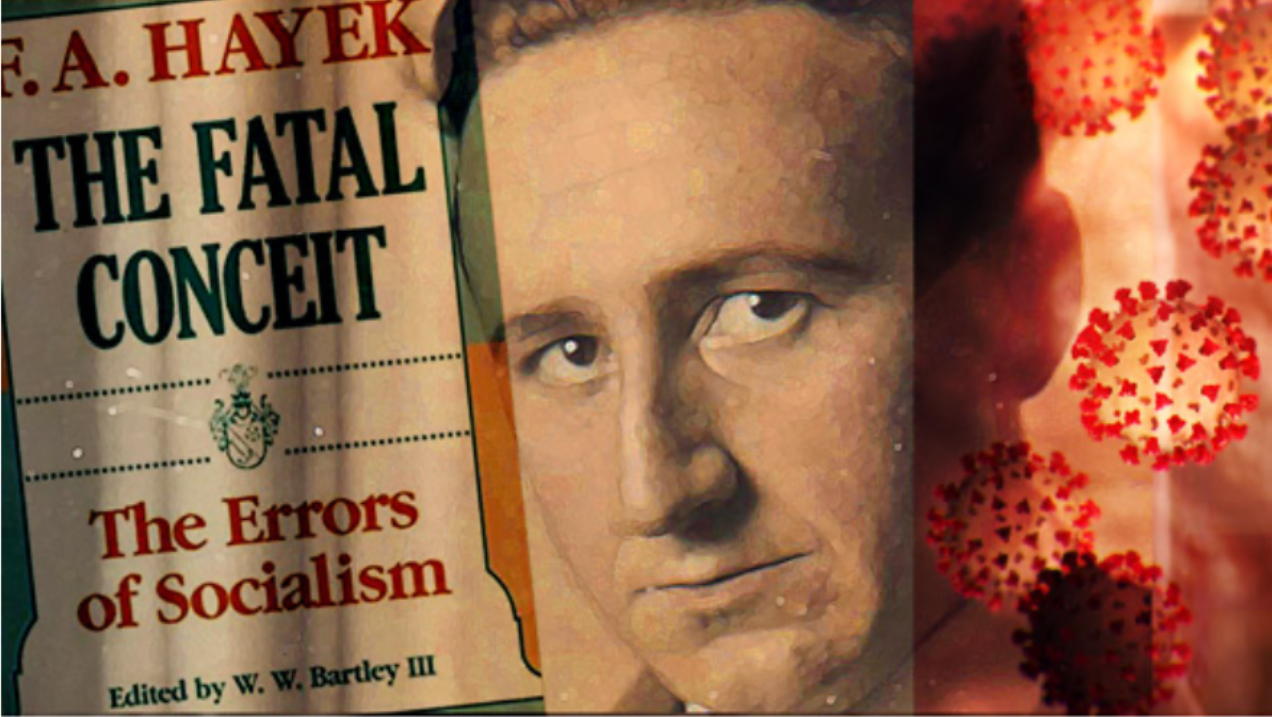
It smacks of what F.A. Hayek called “the fatal conceit” and “the pretense of knowledge.” The consequences of the shutdown have from the first suggested a tragedy in the making.

On Tuesday, The Washington Examiner’s Emma Colton reported on a tweet: “Kentucky Rep. Thomas Massie warned that the United States could face food shortages due to the ‘brittle’ supply chain, bankrupting farmers and forcing them to euthanize livestock.”

Massie does not mince words: “We are weeks, not months, away from farmers euthanizing animals that would have been sold for meat/food. Also, fruits and vegetables are going to rot in the fields.”

The late psychiatrist Thomas Szasz liked to use a word applicable here: iatrogenic. Doctor-caused.

The insistence that President Trump follow every jot and tittle of advice from Dr. Anthony Fauci and the federal medical establishment may provide an object lesson on why we must not trust “doctors” and “scientists” to make policy alone.

They specialize.

And our commercial society (as Adam Smith called “the economy”) is the very opposite: a veritable cosmos of human interaction.

Which makes the politicization of medical doctoring potentially quite fatal, as Rep. Massie warns.

Just ask anyone who’s lived through Communism’s command economy.

This is Common Sense. I’m Paul Jacob.


See all recent commentary
(simplified and organized)
See recent popular posts