Categories
crime and punishment First Amendment rights general freedom

The FBI Is Misinformed

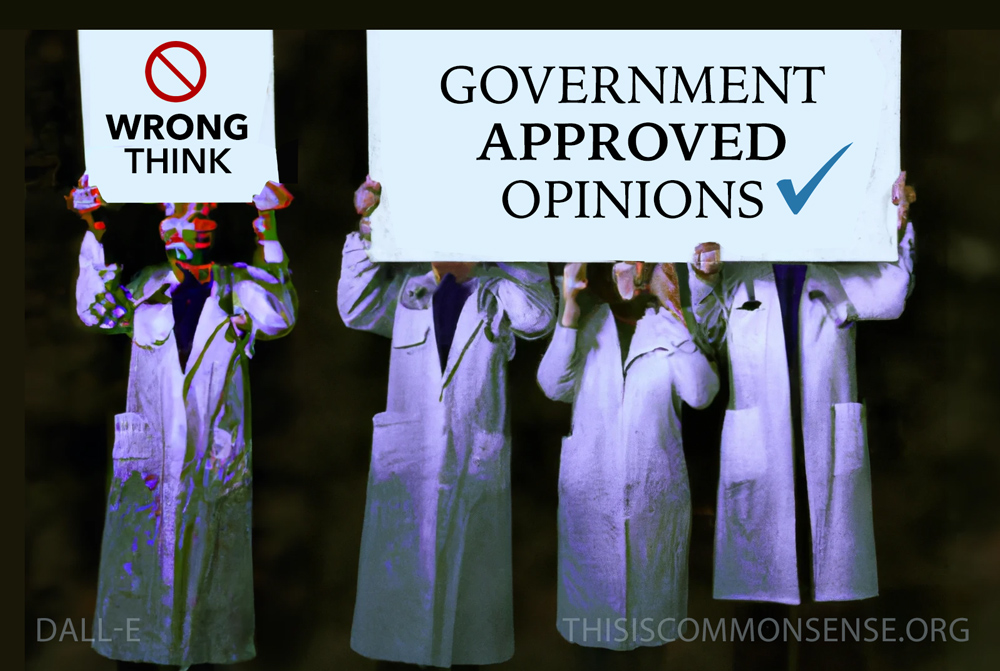
The FBI is misinformed if it thinks that prosecuting persons who misinform solely for misinforming is consistent with freedom of speech.

The utterance of false statements, whether unknowingly or willfully, is nothing new in human history. And such utterances are impossible to avoid in any kind of discourse — for example, political debates — in which people disagree with each other about facts as well as values.

Indeed, one often hears both true things and false things. We must evaluate claims as best we can, using observation, logic, common sense and so forth.

But, somehow, the FBI has decided that “misinformation” and “disinformation,” chronic in campaign ads, political pronouncements, and domestic quarrels, are a crime when communicated in the context of an election.

An FBI document leaked to Project Veritas wants to explain “What Are Election Crimes.” This document lumps misleading speech with such actual crimes as electoral fraud and intimidation of voters.

Robert Spencer has questions about this assumption for the FBI’s, ahem, Election Crimes Coordinator, Lindsay Capodilupo. For example, how does the FBI determine what is and is not misinformation? Will there be an appeals process given the fact that certain notorious so-called “misinformation” — like the once-upon-a-time contested claim that Hunter Biden’s laptop is indeed Hunter Biden’s laptop — has turned out to be true information?

And — most important — how can wrongspeak as such be classified as any kind of crime in light of the First Amendment?

Stay tuned for the FBI’s answers. But not with bated breath, okay?

This is Common Sense. I’m Paul Jacob.


PDF for printing

Illustration created with DALL-E

See all recent commentary
(simplified and organized)
See recent popular posts
Categories
First Amendment rights government transparency

Cough It All Up

The state attorneys general of Missouri and Louisiana sued the Biden administration for censorship. Thanks to the lawsuit, we’re learning more and more about how federal officials have pressed Big Tech social media companies to muzzle users who dissent from the Official Narrative about the pandemic.

Much of the evidence coughed up as a result of the litigation has taken the form of email exchanges. An official might email a social-media rep something like: “We find this post disturbing. Can you do something about? Like maybe censor it?” The rep might double-quick reply: “Done! Anything else I can do today to secretly help the government circumvent the First Amendment?”

Certain officials have been particularly central in the saga, including eight persons that a judge is now letting plaintiffs depose: Anthony Fauci, former press secretary Jennifer Psaki, FBI agent Elvis Chan, Surgeon General Vivek Murthy, Carol Crawford of the CDC, Daniel Kimmage of the State Department, and a couple of others.

During her tenure Psaki spoke openly about the Biden administration’s demand for more censorship of “misinformation,” which is the new code word for disagreement. So it’ll be hard to deny that she said that stuff.

Crawford is in charge of the CDC’s digital media activities, activities that included regular meetings with staff of social-media companies.

Among other subjects, plaintiffs will be asking Anthony Fauci about an email exchange with Francis Collins discussing a “takedown” of the Great Barrington Declaration, which opposed lockdown policies.

I’m all ears.

This is Common Sense. I’m Paul Jacob.


PDF for printing

Illustration created with DALL-E

See all recent commentary
(simplified and organized)
See recent popular posts
Categories
First Amendment rights general freedom government transparency political challengers

Pro Bono No Bueno

The twisty highways and byways of campaign finance regulation bring us to another strange pass.

The Texas Ethics Commission is considering whether to effectively ban pro bono legal work for candidates. The method? Mandate that such work be regarded as an in-kind contribution subject to campaign finance regulations. 

David Keating, president of the Institute for Free Speech, observes that most candidates “can’t afford to hire counsel and spend probably hundreds of thousands of dollars challenging the constitutionality of a law where the opinion may not come out until after the election. . . . Basically, the opinion would slam the courthouse door shut to candidates and most political committees.”

Campaign finance regulation has always meant curtailing speech and the activities that enable it and flow from it. This latest regulatory prospect is more of the same. As long as campaign finance regulation exists, there will always be obnoxious new ways to use it to hamper speech and action.

The commissioners, apparently seeing some merit in the pro-pro bono argument and therefore judging the issue at least worth mulling, have deferred their decision. It would have been far better to simply accept Keating’s objections and put an end to the proposed new crackdown then and there.

Meanwhile, Texans — especially potential candidates — must sit on the edge of their seats until the commission decides whether to make it prohibitively expensive to fend off unconstitutional assaults on candidates and campaigns. 

Not unlike the unconstitutional assault exemplified by campaign finance regulation itself.

This is Common Sense. I’m Paul Jacob.


PDF for printing

Illustration created with DALL-E

See all recent commentary
(simplified and organized)
See recent popular posts
Categories
First Amendment rights national politics & policies

Public-Private Censorship Partnership

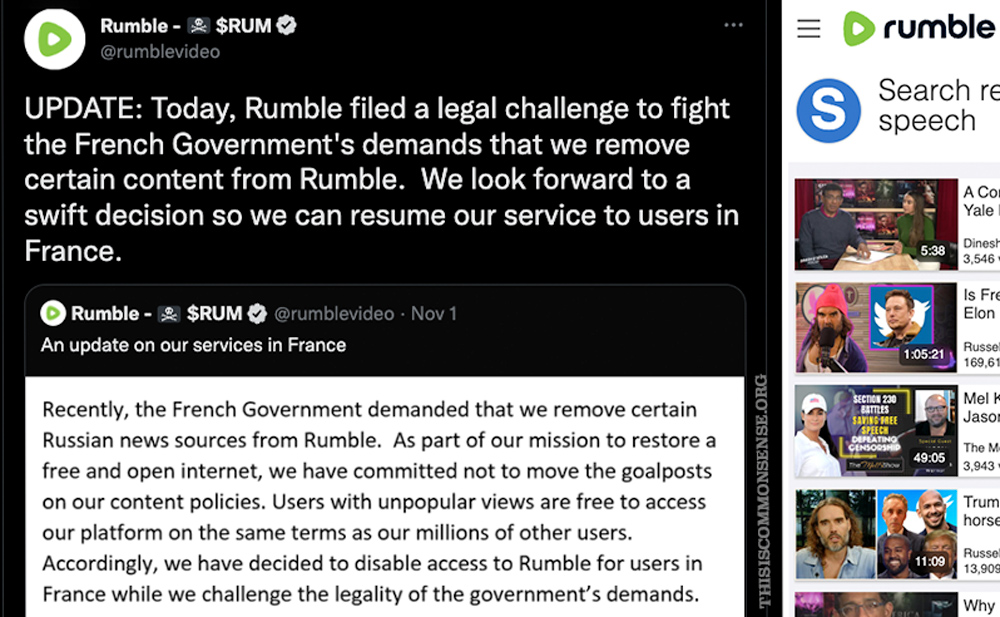
When government pays people to help censor critics of its policies and talking points, this makes it even more obvious that it’s acting to repress speech and violate the First Amendment.

Thanks to a recent lawsuit against the Biden administration, we have been seeing emails confirming that government officials routinely ask Big Tech to censor this and that.

Now, Just the News reports that government agencies and liberal groups such as Common Cause and the Democratic National Committee worked with a consortium of private groups — the Election Integrity Partnership — during the 2020 election season to target and censor social media posts.

The EIP “set up a concierge-like service in 2020 that allowed federal agencies like Homeland’s Cybersecurity Infrastructure Security Agency and State’s Global Engagement Center to file ‘tickets’ requesting that online story links and social media posts be censored or flagged by Big Tech.”

About 35 percent of the many posts EIP flagged in 2020 were sanctioned in some way by Big Tech.

Millions of tax dollars have been funneled to consortium members to fund these efforts to censor “misinformation,” i.e., speech that government officials disapprove of.

The EIP remains active in 2022.

Of course, politically controversial speech is just the kind of speech that the Founders were concerned to protect. Madison and Mason didn’t expect that the ability to publicly debate whether Bach is better than Beethoven or the best way to shingle a roof would ever be in great jeopardy.

This is Common Sense. I’m Paul Jacob.


PDF for printing

Illustration created with DALL-E

See all recent commentary
(simplified and organized)
See recent popular posts
Categories
Accountability First Amendment rights national politics & policies

Repression Pal

No explanation, no warning.

PayPal has closed the account of another innocent customer: UsForThem, a UK organization that has fought to keep schools open during the pandemic.

PayPal also blocked the group’s access to its PayPal balance, thousands of pounds in donations, for 180 days.

According to cofounder Molly Kingsley: “No prior warning or meaningful explanation was given, and despite their saying we could withdraw our remaining balance, we cannot.”

This is, alas, just one of many examples. 

Last year, the Electronic Frontier Foundation reported that PayPal shut down the twenty-year-old PayPal account of Larry Brandt, which he had been using to support Tor. Tor is a way of encrypting Internet communications to protect the privacy of users, in part from regimes that repress political opponents.

No explanation, no warning — and, again, the same 180-day lockdown of funds belonging to the account holder.

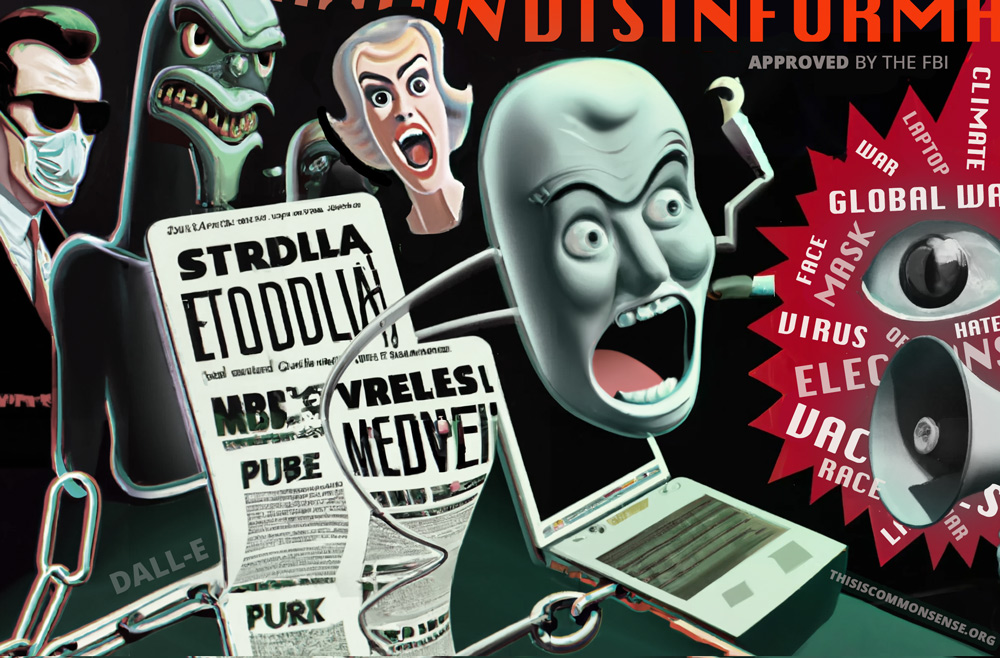
At least in its stated intentions, PayPal originated as a radical alternative to establishment ways of doing things. But it now conducts itself in a repressive spirit, routinely hobbling customers whose legal speech or other legal activities it dislikes.

Or perhaps that governments dislike.

Email documents made public during a recent lawsuit in the United States confirm that our own federal government is issuing marching orders to Big Tech firms to repress users who say or do things that government officials dislike. 

The firms are loath to acknowledge such pressure openly, let alone refuse on principle to cooperate. 

This is how the Bill of Rights becomes void: made irrelevant in secret public-private partnerships.

This is Common Sense. I’m Paul Jacob.


PDF for printing

Illustration created with DALL-E

See all recent commentary
(simplified and organized)
See recent popular posts
Categories
First Amendment rights general freedom international affairs paternalism too much government

Deadly Dress Code

Iranian women are again out in the streets protesting the brutality of the regime.

We can only hope that their efforts will bear fruit — or, if we’re Elon Musk, we can also provide protesters with Internet service via Starlink satellite, now that the Iranian government has blocked the Internet in much of the country.

The immediate spark was the death of 22-year-old Mahsa Amini.

On September 13, Mahsa was arrested by Iran’s morality police for incorrectly wearing the hijab, the traditional head covering mandatory for Iranian women since 1979. Some of her hair showed.

According to witnesses, the police beat Mahsa in the police van; the police deny it.

Within hours of being detained, Mahsa was hospitalized and in a coma. She soon died. The police not very plausibly claimed that she had a heart attack. All a terrible coincidence. The family says that Mahsa had no health problems before being detained.

The immoral morality police were obeying the country’s new president, Ebrahim Raisi, who on August 15 decreed that the nation’s dress code be more strictly enforced.

The protests — in which women have been burning their hijabs, cutting their hair, and shouting “Death to the oppressor!” — are ongoing and nationwide, and have spread to other countries. 

At least thirty protesters have been killed.

In the words of the New Yorker’s Robin Wright, Mahsa’s death “lit the fuse of long-smoldering dissent in Iran,” and its people have taken to the streets before.

Godspeed this time.

This is Common Sense. I’m Paul Jacob.


PDF for printing

Illustration created with DALL-E

See all recent commentary
(simplified and organized)
See recent popular posts
Categories
First Amendment rights Fourth Amendment rights

The Bidening

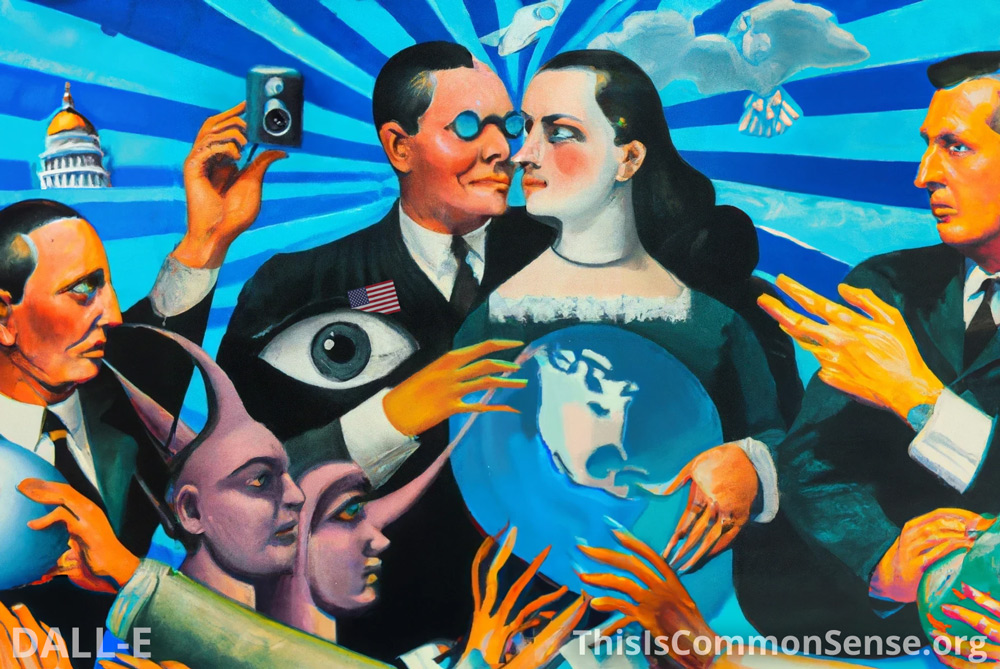
It does seem — because of the raids and surveillance and things targeting critics of the regime — that the Biden administration (“the Biden”) is out to get its political opponents.

John Hinderaker of Powerline notes a few recent tip-of-the-iceberg actions by the Biden or its political allies.

The Dilbert comic strip by Scott Adams was suddenly dropped from 80 newspapers after the strip began mocking certain modish pieties about diversity. We’ve learned that ostensibly private censorship is often done at the behest of government or politicians eager to muzzle somebody.

The Biden issued a slew of subpoenas to persons associated with the Trump administration for documents about efforts to challenge the 2020 election results. Nearly all these pertain “to activities that are plainly lawful,” observes Hinderaker.

The Biden seized the cell phone of Mike Lindell, CEO of MyPillow and infamous skeptic of the 2020 election results. He’s accused of identity theft and damaging a computer related to an alleged breach of Colorado voting machines, accusations that Hinderaker regards as implausible on their face. “This all has to do with his opposition to the regime.”

Although the Biden may provide rationales for the targeting, these tend to be paper-thin. Why? Probably because the Biden wants you to know exactly why all this banana-republic stuff is happening. You are expected to take the micro-thin excuses as a hint — so that you will adopt a paranoid stance.

And to avoid saying or doing anything that may get you, too, targeted by the Biden.

This is Common Sense. I’m Paul Jacob.


PDF for printing

Illustration created with DALL-E

See all recent commentary
(simplified and organized)
See recent popular posts
Categories
crime and punishment education and schooling First Amendment rights folly general freedom

Freedom of Disassociation?

Groucho Marx famously quipped that he wouldn’t want to join any club that would have him as a member. Some people take this hankering to an extreme: they want to force every group averse to their membership to accept them.

Keywords: forced inclusion. The current political rage — thought to be a “right.”

Now, Yeshiva University, which calls itself “the world’s premier Torah-based institution of higher education,” does not accept homosexuality. It’s against the Law.

And by “the Law” they mean: the ancient Jewish scriptures.

For those of us who are neither Jewish nor gay, we might look upon both groups as “clubs.”  And being in neither, we might just shrug; we aren’t going to be accepted in the either ranks and that’s just fine.

But some students at Yeshiva University tried to form an LGBT group on campus. The university resisted, the case went to court, and a court ordered the university to accept the group. And then last week, the Supreme Court refused to order a stay on the lower court’s order.

In reaction, Yeshiva University has suspended all campus club activities.

“Every faith-based university in the country has the right to work with its students, including its LGBTQ students, to establish the clubs, places and spaces that fit within its faith tradition,” the university’s president proclaimed. “Yeshiva University simply seeks that same right of self-determination.”

Since the right to “freedom of association” is part of the Bill of Rights, one might think this would be non-controversial in America. And settled law. 

But one would be wrong. On both counts. 

This is Common Sense. I’m Paul Jacob.


PDF for printing

Illustration created with DALL-E

See all recent commentary
(simplified and organized)
See recent popular posts
Categories
Accountability First Amendment rights general freedom social media

Facebook, the FBI’s Snitch

All we have is the word of Department of Justice whistleblowers.

They told the New York Post that over the last 19 months, Facebook has been cooperating with the FBI to spy on “private” messages of users “outside the legal process and without probable cause.”

The targets were gun enthusiasts and those who questioned 2020’s election results.

“They [Facebook and the FBI] were looking for conservative right-wing individuals. None were Antifa types.”

According to the whistleblowers, Facebook flagged allegedly subversive private messages and sent them to the FBI to be studied by agents specializing in domestic terrorism.

Facebook provided the FBI “with private conversations which are protected by the First Amendment without any subpoena.” Subpoenas were then issued to obtain the conversations that Facebook had already revealed to the FBI.

According to one DOJ source: “As soon as a subpoena was requested, within an hour, Facebook sent back gigabytes of data and photos. It was ready to go. They were just waiting for that legal process so they could send it.”

Facebook has issued a denial. The FBI has issued a non-denial denial.

The allegations might seem very implausible but for the fact that as the November election approaches, the DOJ has been openly targeting Trump allies for claiming “that the vice president and/or president of the Senate had the authority to reject or choose not to count presidential electors.”

In short, for talking out of turn.

This is Common Sense. I’m Paul Jacob.


PDf for printing

Illustration created with DALL-E

See all recent commentary
(simplified and organized)
See recent popular posts
Categories
crime and punishment First Amendment rights free trade & free markets general freedom ideological culture

Okay Not to Harm

A recent appeals court ruling means that (some) doctors and other medical practitioners won’t be forced to violate their ethical principles against doing harm.

The Fifth Circuit ruling affirms a lower-court decision “permanently enjoining [HHS] from requiring Franciscan Alliance to perform gender-reassignment surgeries or abortions in violation of its sincerely held religious beliefs.”

What is troubling about the decision is its apparent incompleteness.

In a truly free society, no private professionals or organizations would be coerced to offer their services to anybody. Everybody would be free to participate or to decline to participate in any transaction with a prospective customer related to any medical procedure. Just as any person is now (mostly) free to patronize or not patronize any provider of a good or service.

We don’t live in that free society. But at least we can hope that no person will be compelled to provide the types of services that violate the person’s moral conscience.

Like services they believe harm others.

That harm children . . . including the unborn.

So the court’s ruling is fine — as far as it goes. But it seems to protect only persons making religious objections, or only members of the Franciscan Alliance, not also non-religious medical practitioners who also morally object to providing abortions or sex-change operations.

Which means that there is more legal work to be done to protect the rights of all of us.

This is Common Sense. I’m Paul Jacob.


PDF for printing

Illustration created with DALL-E

See all recent commentary
(simplified and organized)
See recent popular posts