Categories
Accountability folly free trade & free markets ideological culture local leaders moral hazard nannyism property rights too much government

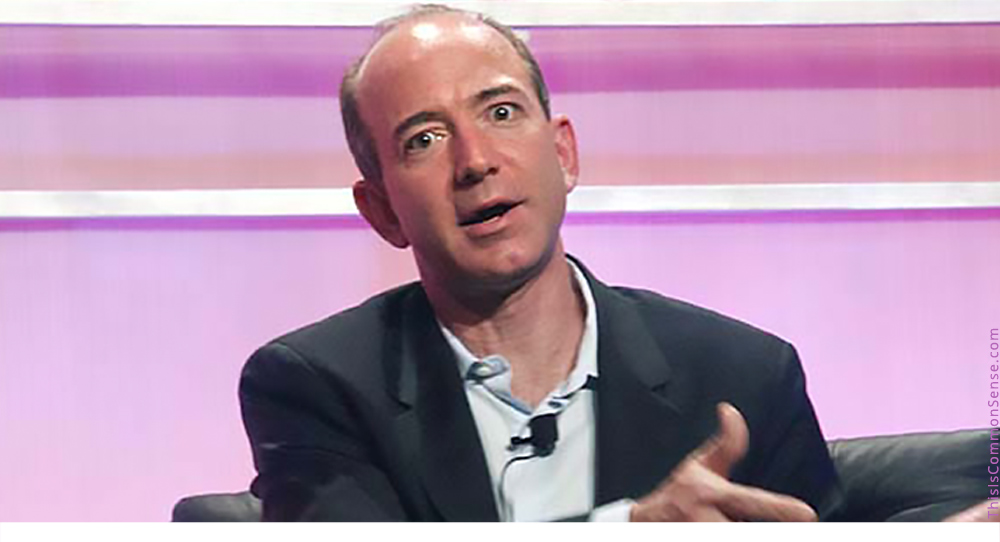
Amazon’s Jeff Bezos Is …

A half a year ago, when trying to make sense of the much-publicized search for Amazon’s “HQ2” — a second headquarters city, away from Seattle — I concentrated on the subsidies that cities and metro areas were apparently throwing at Amazon.

It all seemed desperate, indecent.

But there was a story behind the story. Amazon has every reason to be looking for an escape route from the Evergreen State’s biggest city.

The city’s leadership is nuts.

“Seattle City Council members have finally released draft legislation,” the Seattle TimesDaniel Beekman wrote last month, “for a new tax on large employers that would raise $75 million next year to address homelessness.”

The council blames the big companies for enticing workers into the city, thereby driving up rental costs and housing prices.

The tax would be on employee hours, would go into effect next year, and “in 2021, it would be replaced by a 0.7 percent payroll tax on the same category of companies,” explains the Seattle Times.

Now, if you tax something you discourage that something. That’s why progressives like sin taxes on sodas and fast foods. To discourage consumption.

So when progressives seek to tax big producers, they are apparently trying to tax away the housing crunch by driving away big business.

Amazon reacted. It put a halt to an expansion project.

“Jeff Bezos is a bully,” said Kshama Sawant, the confessed socialist, speaking for the council. “I think we are in broad agreement on that.”

If that is her attitude, and that of the council — and the consensus of the city’s denizens — then what Amazon’s Jeff Bezos really is?

A “good businessman.”

This is Common Sense. I’m Paul Jacob.


PDF for printing

Photo by JD Lasica


Categories
Accountability education and schooling folly government transparency insider corruption local leaders moral hazard nannyism national politics & policies responsibility too much government

Reading, Writing & Racketeering

When I attended a public school — many decades ago, in a galaxy far, far away — teachers told students that cheating was unacceptable and would be punished.

Harshly.

Today, the idea has students laughing — all the way to graduation.

Last year, after DC Public Schools officials breathlessly announced massive improvements in graduation rates, several honest teachers broke ranks, and an investigation uncovered massive fraud: a whopping one of every three graduates across the city resulted from falsified records.

Many students played hooky for a third or even half the school year. Administrators also pressured teachers to improve grades to hike the graduation rate.

“The problem,” Washington Post columnist Colbert King concluded, “is systemic indeed.”*

You see, employment evaluations and cash bonuses for teachers and administrators were — and still are — tied in part to student graduation stats. It turns out that an incentive to good work can also serve as an incentive to cheat. Could it be that government employees grading their own work does not encourage honesty?

Just months after confirmation of the worst fears of public school corruption, new allegations against teachers and administrators at Roosevelt High School more than suggest fudging attendance records is ongoing.

“This growing environment of fear and mistrust,” asserts Elizabeth Davis, president of the Washington Teachers’ Union, “has never been addressed and continues to be a disservice to students and teachers.”

City officials have had plenty of time to address the issue. And of the common sense idea that the best way to avoid fear and mistrust is to follow the rules?

Crickets.

This is Common Sense. I’m Paul Jacob.


* Nor is the fraudulent behavior limited to dishonestly boosting graduation rates. Former DCPS Chancellor Antwan Wilson resigned back in February after it became public knowledge that his daughter jumped 600 other students on a waiting list for her school. A recent Post story about enrollment fraud, whereby non-residents grab spots at prestigious schools such as the Duke Ellington School of the Arts, without paying the non-resident fee, was entitled, “Stop enrollment fraud? D.C. school officials are often the ones committing it.” Two-thirds of pending cases involve a current or past DCPS employee.


PDF for printing


Categories
education and schooling general freedom ideological culture moral hazard nannyism national politics & policies too much government

Grading Democracy on the Curve

Voters, we are told, are amazingly ignorant. So, what to do?

“Ultimately, the ideal democracy is one in which as many citizens as possible vote,” writes Dambisa Moyo at The Guardian, “and the voters are armed with the most objective information. Yet today only a fraction of the electorate are voting, and many are armed with a diet of hyped-up statistics and social media propaganda.” Among her proposals is a voting booth access test: “why not give all voters a test of their knowledge?”

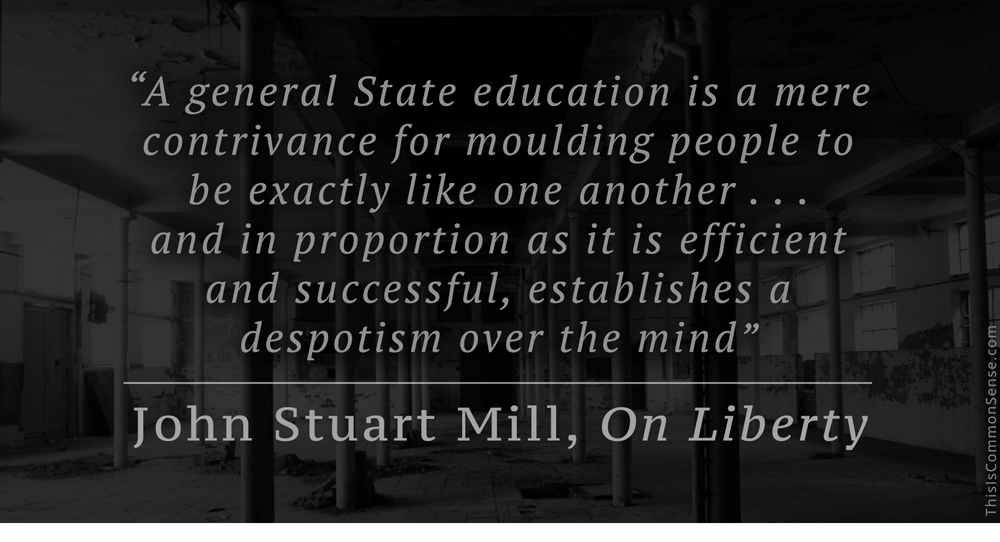
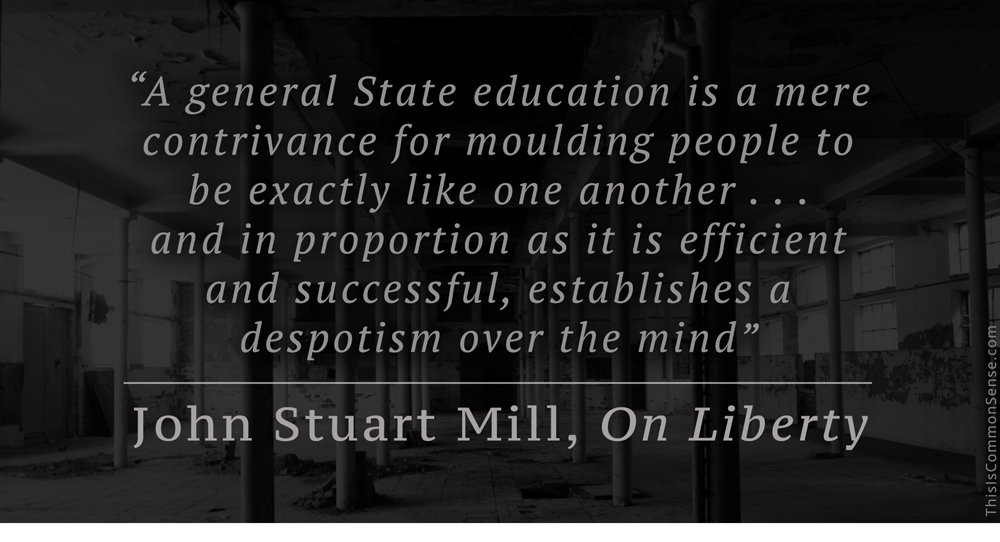
I can think of a whole bunch of reasons, as can Ilya Somin, over at Volokh Conspiracy, who considers just a few. One of the more interesting is this: whereas Moyo has no wish to shove poor people out of the voting booth, and so envisions public schools to teach to the test — “the knowledge needed should be part of the core curriculum” — Somin quotes John Stuart Mill about the very political dangers of the very idea of public schooling: “A general State education,” wrote Mill in On Liberty, would inevitably be devised to please and serve “the dominant power in the government, whether this be a monarch, an aristocracy, or a majority of the existing generation” and must constitute “a despotism over the mind.”

Though Moyo does observe incumbency and political careerism as big problems, she is innocent of the more fundamental issues.

Indeed, she does not consider the obvious: today’s voter ignorance of politics and government is in no small part the result of government schools.

For politicians, general ignorance is not a bug, it’s a feature.

Let’s look for solutions to political problems that do not give politicians more power.

This is Common Sense. I’m Paul Jacob.


PDF for printing


Categories
crime and punishment general freedom ideological culture initiative, referendum, and recall local leaders national politics & policies political challengers property rights Regulating Protest too much government

A Sanctuary from Centralization

Defiance . . . nullification. It is a trend.

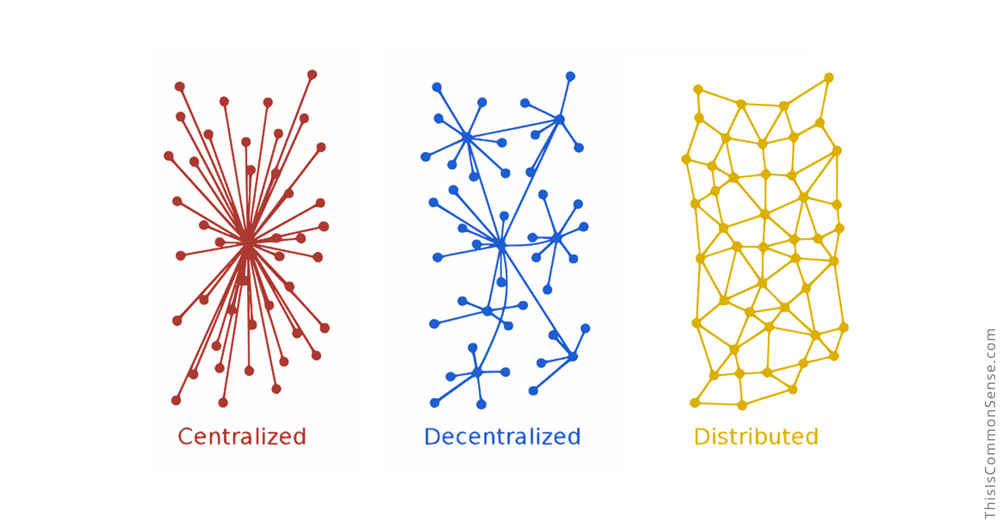
I take it as a sign of our contentious times that we now witness states in open rebellion against centralized control from the Imperial City of Washington, D.C., while cities and counties are also rattling the chains set by their respective state capitals.

The sweep of marijuana decriminalization and legalization is only the most obvious. The rise of “sanctuary cities” defying federal government immigration laws — often backed up by state legislatures — has been a contentious issue, with progressives supporting this sort of nullification and conservatives opposing it.

But the latest development does not hail from the left.

In Illinois, a number of rural governments have taken a cue from the immigration debate by “declaring themselves sanctuary counties for gun owners,” we learn from the AP’s Don Babwin, writing in the Chicago Tribune. “The resolutions are meant to put the Democratic-controlled Legislature on notice that if it passes a host of gun bills . . . the counties might bar their employees from enforcing the new laws.”

An Effingham County Board Member calls “sanctuary” an attention-getting “buzzword,” reporting that “at least 20 Illinois counties and local officials in Oregon and Washington have asked for copies of Effingham County’s resolution.”

Now, cities and counties do not have an analogous relationship to their state governments as do states to the federal government: the states created the “United States of America,” while cities and counties are also state creations.

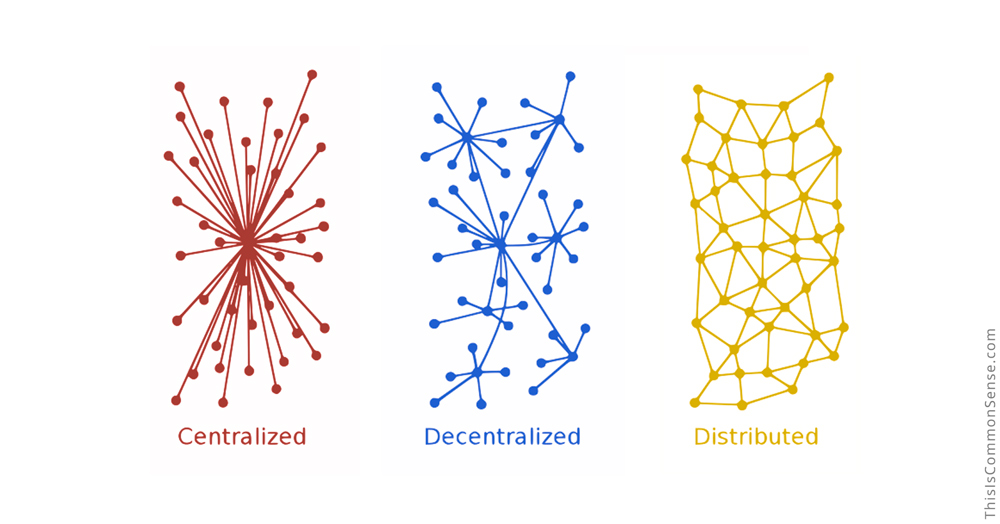
Yet this move is important. It shows a growing recognition of the tyrannical nature of centralized power.

And the usefulness of decentralization.

This is Common Sense. I’m Paul Jacob.


PDF for printing


Categories
Accountability folly government transparency local leaders media and media people too much government

Low Bigotry Expectations

“Man, it just started snowing out of nowhere this morning, man. Y’all better pay attention to this climate control, man, this climate manipulation,” explained Washington, D.C. Councilman Trayon White back in March.

White (who is black) went on to accuse “the Rothschilds” (who were Jewish financiers) of “controlling the climate to create natural disasters they can pay for to own the cities, man.”

Man. Oh. Man.

White later apologized, taking up the invitation of the Jewish Community Relations Council of Greater Washington to tour the Holocaust Museum. During the tour one of White’s staffers referred to the infamous Warsaw Ghetto as “a gated community.” Then, before the tour’s end, the councilmen unceremoniously bugged out.

Next, news broke that Councilman White had used his constituent services account,* which the Washington Post reports “must [by law] benefit D.C. residents,” to send $500 to a Nation of Islam event in Chicago.

At which Minister Louis Farrakhan denounced Jews.

The Post noted how all this “turned into a test of the ability of city officials to handle the explosive race and class resentments that can arise in a city whose prosperity masks a troubling gap between its haves and have-nots.”

Even D.C. Council member Elissa Silverman (who is Jewish) echoed the partial excuse that White “represents the poorest parts of our city, . . . whose residents feel like they haven’t benefited, and the remarks were directed at a community that’s largely affluent here, and seen as powerful.”

Is bigotry against an entire religion wrong or not so much, depending on the race or socio-economic status of the people espousing the bias?

No, man.

This is Common Sense. I’m Paul Jacob.


* Why do we have programs allowing politicians to hand out free money? This never ends well.


PDF for printing


Categories
Accountability general freedom media and media people moral hazard national politics & policies responsibility too much government U.S. Constitution

Matter-of-After-the-Fact

“For some time now,” writes Sen. Rand Paul for The American Conservative, “Congress has abdicated its responsibility to declare war.”

Kentucky’s junior senator knows how unconstitutional this is. “The Founders left the power to make war in the legislature on purpose and with good reason,” Rand Paul explains — correctly. “They recognized that the executive branch is most prone to war.”

So, Washington Senators Bob Corker and Tim Kaine are here to help?

This bipartisan pair has retrieved — from deep within the bowels of congressional R & D — a new Authorization for Use of Military Force (AUMF). This would, explains Paul, give “nearly unlimited power to this or any other president to be at war whenever he or she wants, with minimal justification and no prior specific authority.”

The wording of the new AUMF “would forever allow the executive unlimited latitude in determining war, and would leave Congress debating such action after forces have already been committed” — allowing Congress only carping rights.

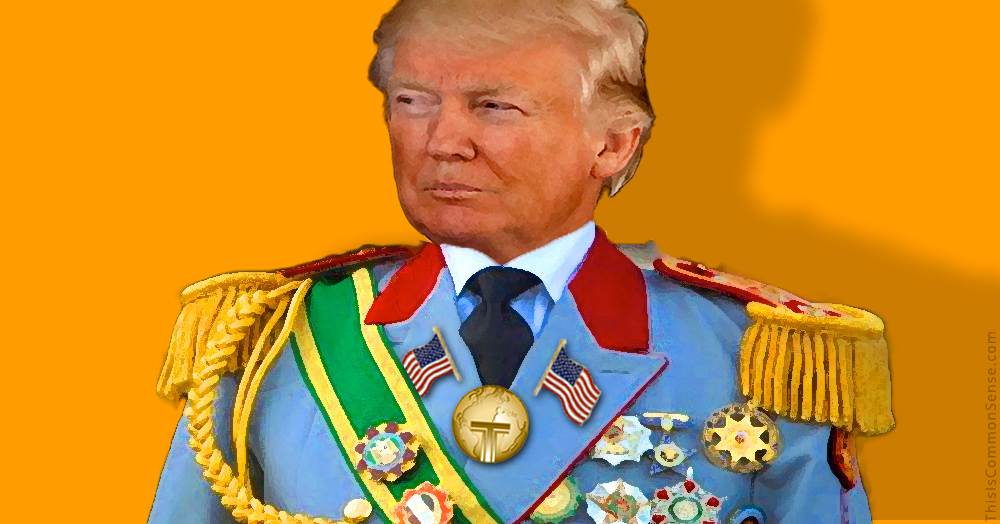
Shades of the Roman Republic, in which the Senate appointed dictators in tough times.*

These days, all times are tough times.

Meanwhile, Bob Corker is in the news for having just received the “George Washington University Institute for Public Diplomacy and Global Communication’s first annual Walter Roberts Award for Congressional Leadership in Public Diplomacy.”

And Kaine just a few weeks ago made a big deal about his no vote for Trump’s Secretary of State nominee: “We have a president who is anti-diplomacy and I worry that Mike Pompeo has shown the same tendency to oppose diplomacy.”

How does making a foreign policy dictator out of Trump (or any future president) advance diplomacy?

This is Common Sense. I’m Paul Jacob.


* Arguably Congress’s open-ended AUMF’s are much worse than ancient Roman practice, since today’s crises are not specified and the dictator is not forced to step down after the problem is solved — or a term limit of six months reached.


PDF for printing


Categories
education and schooling folly ideological culture media and media people moral hazard privacy

The Propriety of Cultural “Appropriation”

Young Keziah Daum committed a terrible crime. She wore a traditional Chinese dress and displayed it online.

No wonder she was chastised by hordes of frothing guardians of cultural purity.

Many Chinese themselves say they find the criticism baffling. Perhaps they are burdened by common sense. They are probably not sociologically sophisticated enough to mind when an American orders Chinese takeout, either.

“Puritanism is the haunting fear,” H.L. Mencken once explained, “that someone, somewhere, may be happy.”

Cultural appropriation” is the currently favored bludgeon wielded by today’s “puritans” to ruin enjoyment. According to this misbegotten notion, it is somehow wrong-souled to enjoy somebody else’s culture.

The very idea is hard to pin down. It is unduly fuzzy. How? Well, borders between countries or groups are pretty arbitrary as cultural boundaries. To try to be consistent, enemies of culture-grabbing would have to berate any partaking of culture not strictly one’s own.

Alas, the amount of culture a person can produce single-handedly is paltry.

Nor can anybody create any unit of culture without being influenced by — “appropriating” — the creations of others. Cultural creators have shamelessly “appropriated” each other’s stuff for millennia, a process that accelerated with improvements in travel and communication.

Should all seven billion of us live our lives in separate cubicles?

Enemies of “cultural appropriation” subscribe to every kind of silliness when they attack watching foreign films or wearing socks, dresses or Halloween costumes that evoke the culture of another country, state, town, or block.

No matter from whom they stole the idea of “cultural appropriation,” they should give it back.

This is Common Sense. I’m Paul Jacob.


PDF for printing


Categories
Accountability crime and punishment government transparency insider corruption local leaders media and media people Popular

Sweet Schadenfreude?

Yesterday, jurors convicted former Arkansas State Senator Jon Woods on 15 felony counts consisting of conspiracy, wire fraud, mail fraud and money laundering.

Woods was at the center of a corrupt scheme to reward cronies at Ecclasia College and AmeriWorks with GIFs — state General Improvement Funds — in return for kickbacks. Former State Rep. Micah Neal, his co-conspirator, pleaded guilty more than a year ago. And last month, the former president of Ecclesia College, Oren Paris III, also admitted guilt.

Regular readers may remember Woods as the Senate author of Issue 3, placed on the 2014 ballot by legislators — along with a summary for voters to read that fibbed about “establishing term limits” and imposing a gift ban between lobbyists and legislators.

Enough voters were hoodwinked,* leading to the gutting of term limits (allowing a legislator to stay in the same seat for 16 years), the empowering of a legislature-appointed “Independent” Commission to bestow a 150 percent pay raise on legislators, and the enabling of legislators to eat every meal at the lobbyists’ trough.

Mr. Woods now faces as many as 20 years on each of 14 counts and ten more years on the money laundering conviction. Having experienced, in a previous life, the poor customer service in the federal prison system, I do not wish that on anyone.

But justice has been done.

More good news: the Arkansas Supreme Court has since ruled the entire corrupt GIF program unconstitutional . . . while Arkansas Term Limits closes in on completion of their petition drive to place a measure on this November’s ballot to restore the term limits stolen by Woods.

This is Common Sense. I’m Paul Jacob.


* The measure passed 52 to 48 percent at the ballot box.


Previous coverage here of Woods’ corruption:


PDF for printing


Categories
crime and punishment free trade & free markets general freedom media and media people moral hazard nannyism national politics & policies property rights too much government U.S. Constitution

The Studio System: The Sequel

Evermore virtue signaling, everless virtue — that pretty much encapsulates Oscars’ night. The industry that brought us Harvey Weinstein and the occasion for #MeToo made the 90th Academy Awards two months ago unwatchable for most of us.

Now, as the Academy of Motion Pictures Arts and Sciences loses touch with audiences around the country, Netflix appears to have decided to horn its way into the Oscars. “Netflix will reportedly begin purchasing movie theatres,” informs The Independent, “to help it get ahead in the race for Academy Awards.

The streaming giant has aimed to land an Oscar nod since the release of its first original feature in 2015, Beasts of No Nation

I have not seen that film, but I have made time for some entertainment (and a few documentaries) on Netflix. After Stranger Things and Wormwood, I think I can safely repeat a point I’ve made before: this is the new Golden Age of Television.

But Netflix wants more prestige than the TV industry’s “Emmys.”

Whether the company succeeds with the Oscars, notice: Netflix is becoming a major studio — complete with “vertical integration.” Just what the Supreme Court tried to kill in 1948 when it ruled against the studio system’s “monopoly” status.

That decision, plus the rise of broadcast television, dealt a death blow to the studios — and arguably movie quality.

Maybe a new studio system (also courtesy of Amazon Prime, Apple, and other players) will make for a renaissance.

For feature-length films.

If we can just keep government out of it.

This is Common Sense. I’m Paul Jacob.


PDF for printing


Categories
Accountability First Amendment rights ideological culture media and media people moral hazard U.S. Constitution

Exit Strategy Advised

The First Amendment applies only against governments, but our free speech rights can be violated by nearly anyone.

These days, these rights are most notoriously and routinely violated by mobs of students . . . attending colleges and universities nearly all of which depend upon taxpayer subsidies.

David E. Bernstein, writing at the Volokh Conspiracy, in “USC Law Professor: Supporters of Campus Free Speech are ‘Preying on Vulnerable Teenagers,’” makes a number of points regarding a law professor’s published defense of nasty student reactions to a Federalist Society speaker . . . on a campus not his own.

Bernstein notes that “the article has to have the requisite references to the Emmanuel Goldsteins of the modern left, the Koch Brothers, who are mentioned four times for no discernable reason.” The reason, of course, is demonization. For a movement needs enemies.

The USC law professor argues that journalists should ignore campus speaking events that “goad” students into “tactical mistakes” by the “mean-spirited provocations” of “seasoned political operatives preying on vulnerable teenagers and inexperienced young adults.”* Bernstein shows that the “tactical mistakes” amount to peaceful and intellectual speakers being “harrassed, shouted down, and subject to or threatened with violence”; every reasonable person knows that disagreeing with the ideas someone communicates does not excuse violating that someone’s rights.

No matter how “provocative.”

Most chillingly, the speaker who incited student ire and accusations, etc., had been advised by “a security guard” before his “talk” to devise “an ‘exit strategy.’” This indicates that the American taxpayer needs an exit strategy from subsidizing anti-democratic mob activism.

And its professorial enablers.

This is Common Sense. I’m Paul Jacob.


* Don’t you find this language awfully coddling of people who should be treated as responsible for their actions, and who, by their attendance at an institution of higher learning, should be capable of listening to any point of view? I find it maddening.


PDF for printing