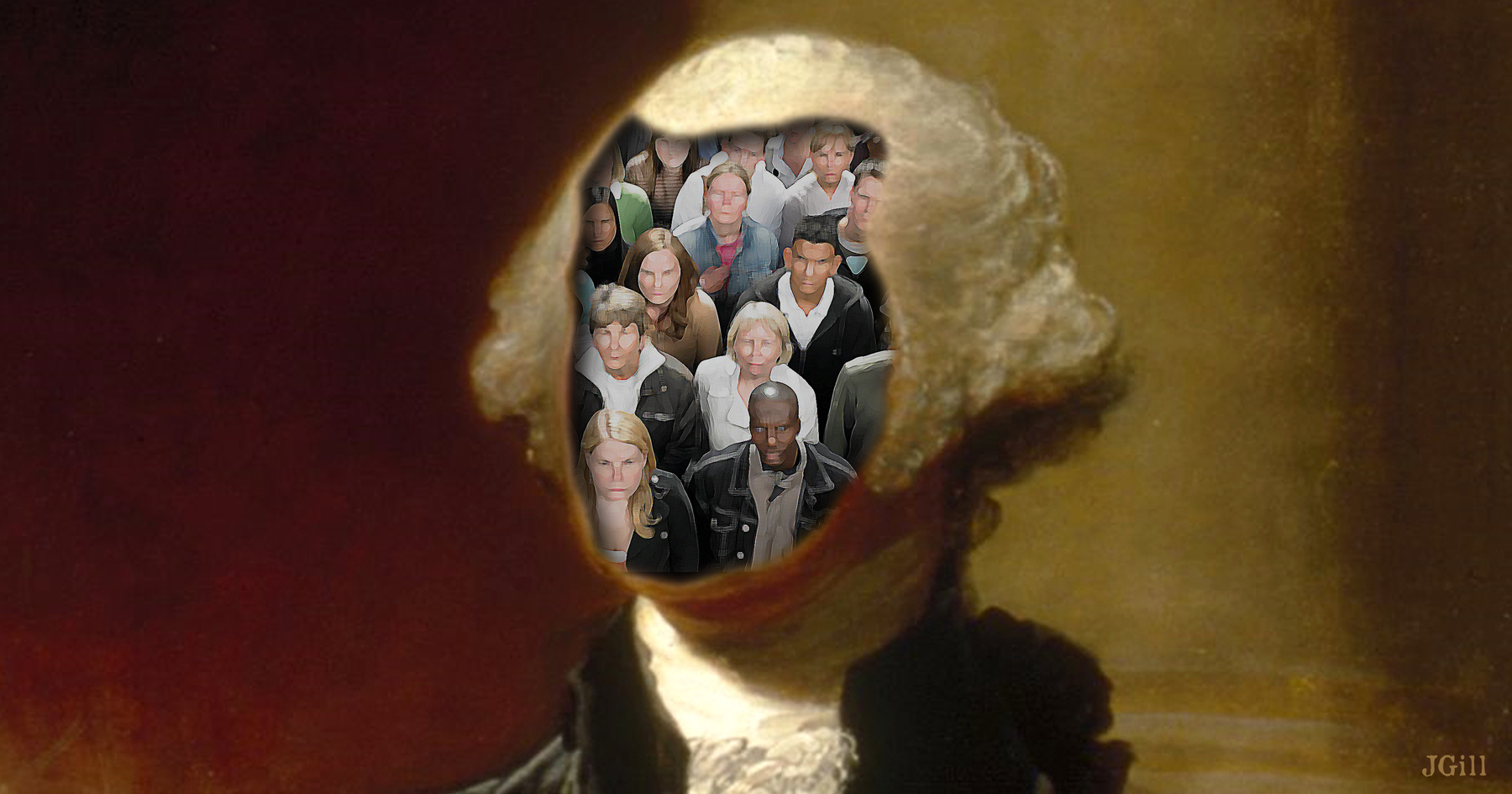
Because BIG BROTHER is okay as long as enough people vote for him!
CLICK BELOW for a high resolution version of this image:
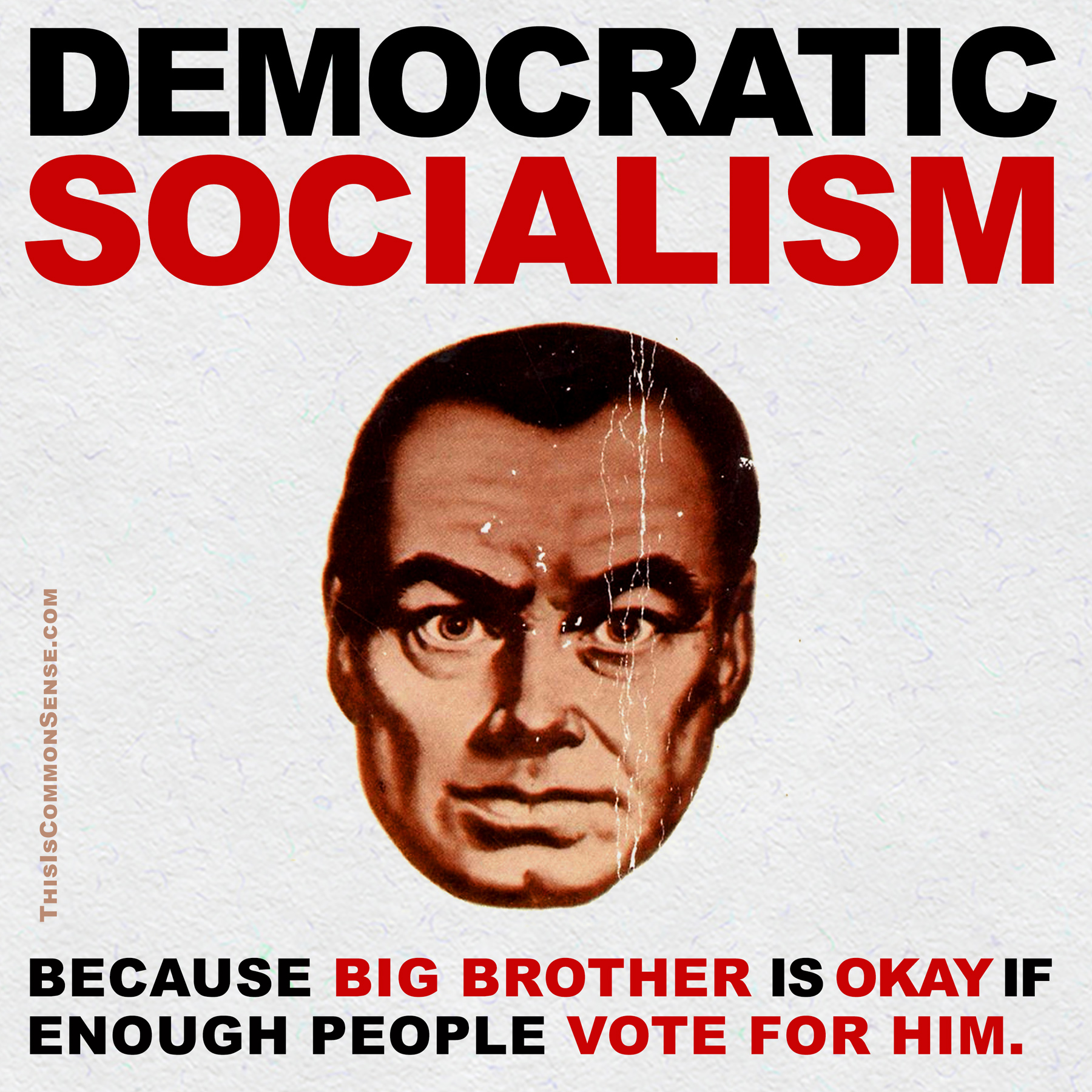
Because BIG BROTHER is okay as long as enough people vote for him!
CLICK BELOW for a high resolution version of this image:
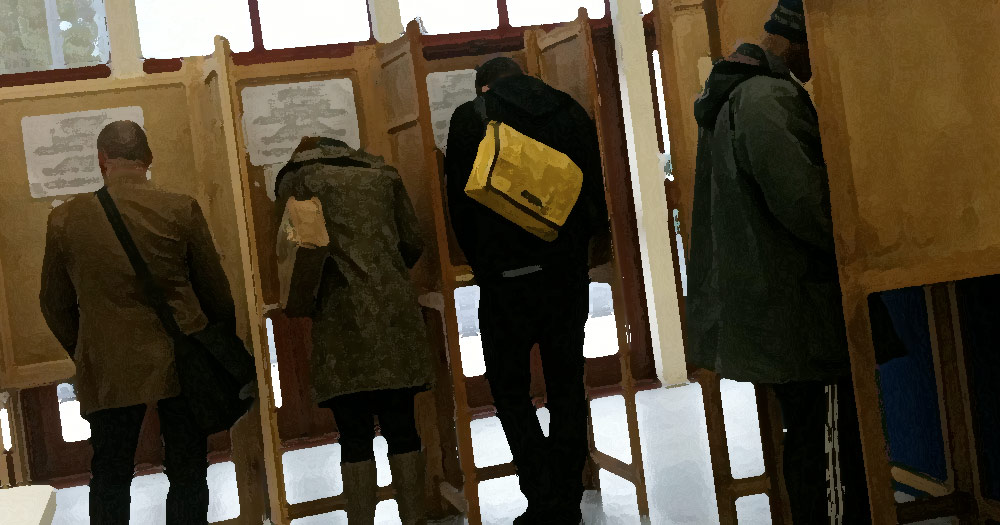
Voting’s a right, not a duty.
So voter registration and actual voting should be made easy. But I’m not for mandating that people vote, or for registering them involuntarily.
Which is why I oppose the Automatic Voter Registration Initiative (AVRI), an indirect Nevada initiative that state officials just announced has turned in enough petition signatures.
Now, you may not be familiar with this “indirect initiative” process. These are initiatives that first go to the legislature and then, should the legislature not pass them, appear on a later ballot (in this case, 2018’s) for voters to either enact or reject.
Currently, when Nevadans conduct business at the Department of Motor Vehicles, they’re asked if they’d like to register to vote. If they opt in, i.e., say “yes,” then the DMV transmits their information to the Secretary of State to be added to the voter rolls.
However, the new initiative would automate the process, so every person’s information gets whisked over to the Secretary of State, whether said person wants to be registered or not. It reads: “Unless the person affirmatively declines in writing,” he or she “shall be deemed to be an applicant to register to vote.”
Declining registration must be “in writing”?
A simple, “No, thank you,” won’t suffice?
Now, I understand: should the AVRI become law, the seriousness of the injury Nevada’s government would inflict on those seeking to remain unregistered admittedly pales in comparison to the Japanese internment camps during World War II, the Trail of Tears, civil asset forfeiture abuse, etc., etc.
But still. Assert a simple truth: people have a right to register and vote, which entails a right not to register and not to vote.
This is Common Sense. I’m Paul Jacob.
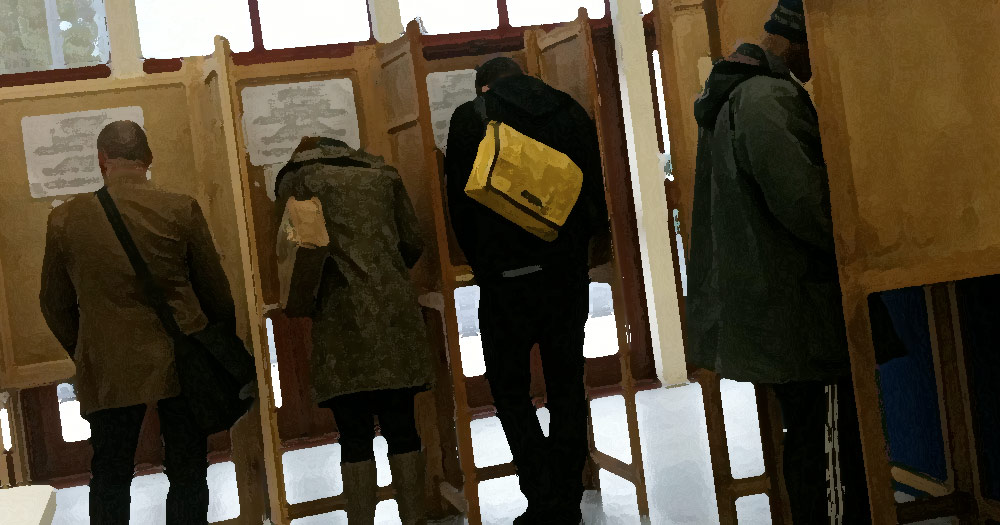
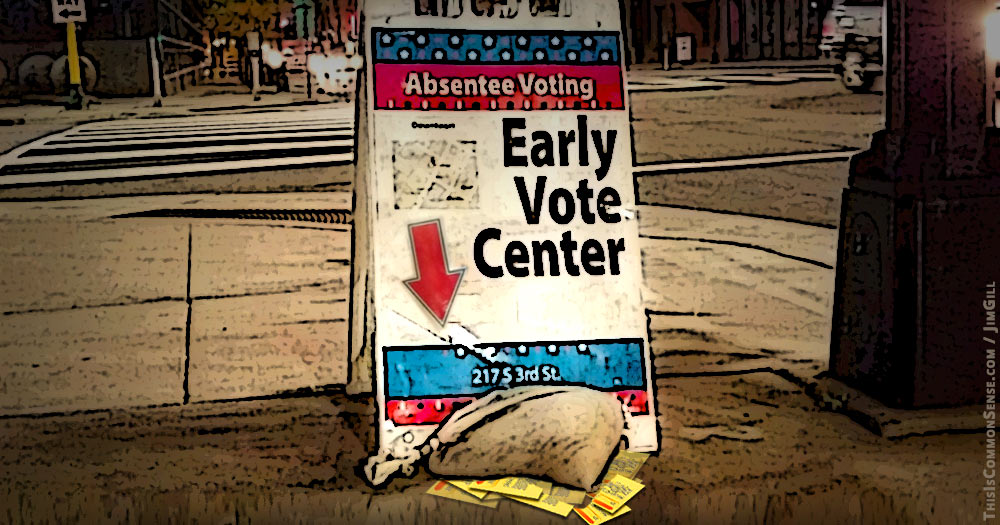
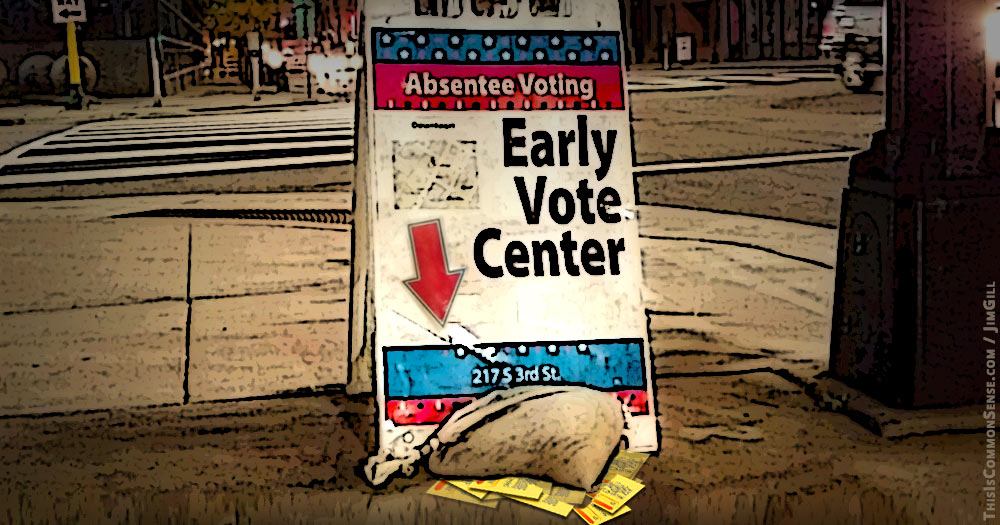
Voted yet? The Pew Research Center thinks about 50 million Americans have, representing 38.5 percent of the voter turnout forecast.
I’m for making it as easy as possible for people to cast a ballot. Who isn’t? Well, I mean who among normal people isn’t? I’m not counting politicians and their hacks.
But even I am opposed to extended “early voting.”
Here’s why:
First, the longer the voting period goes, the greater the cost — as more paid advertisements, phone calls and mailings are needed to keep reaching voters over many weeks. No problem here with more money in politics — money is essential, and my candidates and ballot issues could certainly always use more promotion. But let’s not artificially advantage big money by running the meter.
Several states now allow more than six weeks of voting prior to so-called Election Day. Even a three-week voting period is far more expensive than building toward a single day — or, say, a weekend through Tuesday voting period (four days).
Second, we ought to vote together, close to the same time, all of us privy to the latest public knowledge. This year’s drip of near daily “October”* surprises, thanks to WikiLeaks and the FBI, shows the potential problem should a major scandal or incident impact the race after so many folks have already voted.
Third, early voting tends to advantage incumbents. Challengers often don’t catch up to the better known and organized incumbent until the final days of the race.
As for voting often, as in more than once, that’s a crime. Plus, with these candidates, once is more than enough.
This is Common Sense. I’m Paul Jacob.
*Well into November, some of these surprises, eh? I mean, it is as if they saved the blood rituals for last.
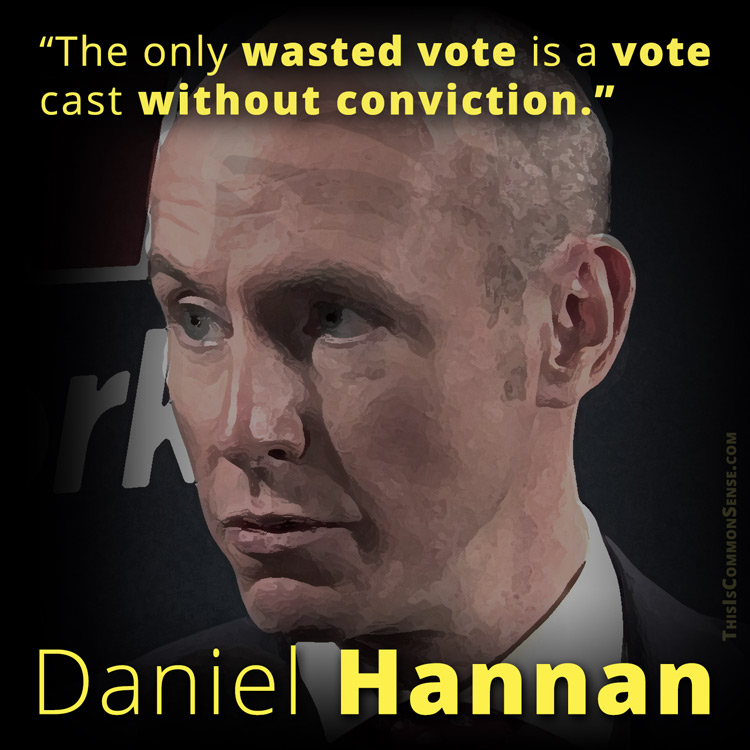
“The only wasted vote is a vote cast without conviction.”
–Daniel Hannan

The biggest political story of the month? Brexit.
The people of Great Britain will vote, this week, whether to remain in, or exit, the European Union. (Britain+exit=“Brexit,” you see.)
Establishment forces in Britain have engaged in hysterical, hyperbolic overkill, warning of grave disaster were Britain to leave the union. America’s President Barack Obama contributed to this, recently, when he warned that an independent Britain might find itself placed “at the back of the queue” in trade talks.
Tragically, things got more troubling last week when anti-Brexit, pro-union campaigner Jo Cox, a Member of Parliament and prominent Labour Party activist, was brutally slain last week in front of her local library. The man had just left a mental health facility, after requesting help.
At first, major media reported that the killer had shouted “Britain First,” an old patriotic motto as well as the name of a pro-Brexit political party, while shooting and stabbing her. Of the several eyewitnesses to have allegedly testified to this murderous shout, only one is sticking to the story . . . a member of the British Nationalist Party, which is antagonistic to Britain First. Other eyewitnesses deny the story.
Next, both sides promised to cease campaigning, out of good taste. Still, polls fluctuated, while remaining close.
Much of the furor has risen over immigration policy, especially fears about EU laxity towards Muslim refugees.
But the bedrock issue is Big Government. The EU is not effectively controlled by citizens; indeed, membership representation is mostly show, a mockery of republican government.
That is why, if I were British, I’d vote to Brexit.
This is Common Sense. I’m Paul Jacob.

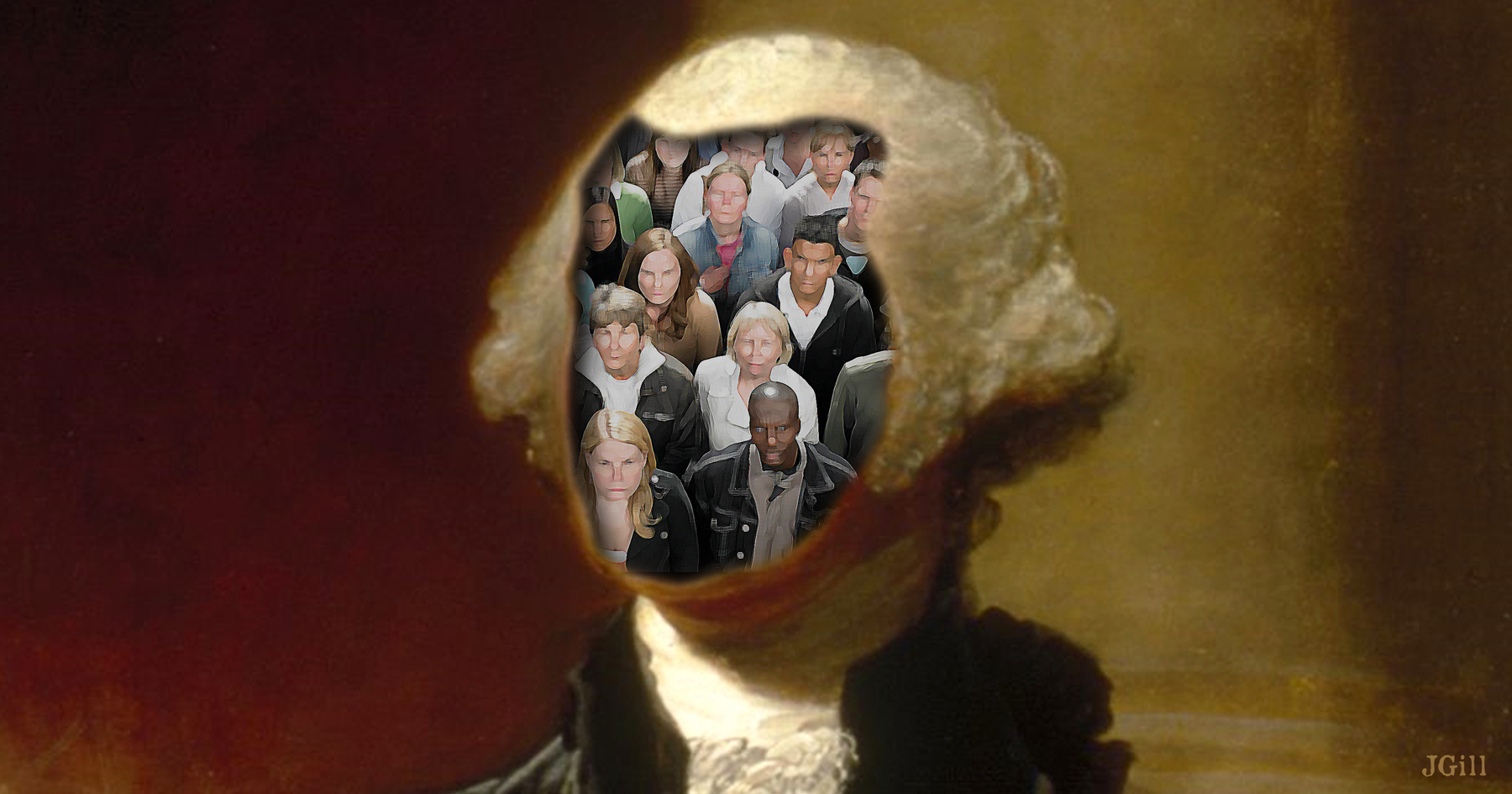
As the leading Republican candidate for the presidency ascends into the air in a helicopter filled with kids, and makes his most astute declaration yet — “I am Batman” — it becomes clearer than ever how distracting these presidential campaigns are.
Much of American Big League politics is theatrics, with some pandering for good measure. Of course, all people running for the presidency are by definition over their heads, at best . . . posturing attention-seekers at worst. Fretting about what they believe and “would do” if voted in as President of these United States is mostly a waste of time. Experience tells us that what they promise is perhaps the least likely outcome of all.
What is more effective? Affecting the political environment by getting together with like-minded folk to advance principled causes closer to home. As a side effect of your activism, a successful issue in a single city or region — especially one that spreads — can have a dramatic influence on present and future presidential wannabes.
With organization and consistent activity at the local level, your voice can be heard. But you have to do something. That activity doesn’t have to be to “run for office”; you can turn up the volume by proposing (and sometimes opposing) ballot initiatives, constitutional and charter amendments in the state, county and city where you live.
There is so much to be done at this level that could create political climate change, which in turn would invariably make federal-level candidates better, that it seems a shame to see us so focused on long shot bets.

They must be proud of themselves, the Little Rock insiders who pushed through a vote on a bond measure in hot-as-Hades mid-July.
Less than 4 percent of eligible voters turned out for the off-cycle exercise in 100-degree democracy. The measure, which refinances previous library bonds and puts an influx of cash into Little Rock public library branches, passed with over four-fifths of the minuscule turnout.
Now, as bond measures go, this one sure seems like a dream; its advocates say it will reduce, not increase, taxes.
But that July 14 vote!
“There was no organized opposition to the bond refinancing campaign,” we read, courtesy of the Arkansas Democrat-Gazette. “Still, Pulaski County Election Commission Executive Director Bryan Poe expected a higher voter turnout.” He thought they would get at least 6,000 voters. Still, even that many votes would have amounted to less than 5 percent of the over 126,000 registered city voters.
It certainly wasn’t any surprise, then, that turnout would be tiny and democratic decision-making left to a tiny fraction of the public.
Detect a certain odor?
It stinks of redistricting. When politicians redistrict voters so that predictable partisan outcomes can be reached — somehow to the benefit of those doing the redistricting — the insiders are not really trying to provide representation to voters. They are trying to continue their business as usual.
“Insiders know best”?
By selecting a summer date for the vote, insiders in effect redistrict the voters using time as the gerrymandering boundary. Call it temporal redistricting, advantaging those with the most at stake in the vote’s outcome.
Call it democracy for the 1 (or 3½) percent.
This is Common Sense. I’m Paul Jacob.