
Categories
Accountability free trade & free markets general freedom national politics & policies tax policy

Death and . . .

It’s a sure thing — that most folks will like President Trump’s tax cuts. Though we don’t yet know all the details.

When it comes to taxes, less is more

That is, if you’re paying taxes. It is no great mystery that people like it when their own taxes are reduced.

But what about reducing other people’s taxes?

“The core economic case for tax cuts is that they reduce the obstacles to creative and productive activities,” economist Don Boudreaux explained yesterday at the Café Hayek blog.

Cutting the corporate tax rate — which even former President Bill Clinton supported during last year’s campaign — won’t immediately appear in people’s paychecks, but can stimulate economic growth helping everyone. Recent experiences in both Britain and Canada bear this out.

Cutting taxes, of which “the rich” pay more, can also spur growth.

Yet, these ideas do not dominate popular discussions of tax cuts. Boudreaux lamented media reporting that treats any tax reduction as simply a “‘gift’ to high-income earners,” dubbing the coverage: “Biased. Benighted. Blind.”

“Suppose that freedom of the press were reported in the same way as . . . a ‘giveaway to the press’?” he asked. “Most people, of course, do not own newspapers or other media outlets.”

Boudreaux concluded, “When the press is free, the chief beneficiaries are the general public.”

Freedom — of both the press and to keep more of the fruits of our labors — helps the common man. As well as the uncommon man. A tax cut for me helps me directly, and you indirectly. And vice versa. Just as a free press is great for those in journalism as well as those of us not in journalism.

That is not blind, but eyes open; not benighted, but enlightened; not biased, but . . .

. . . Common Sense. I’m Paul Jacob. 


Printable PDF


Categories
Accountability folly incumbents national politics & policies term limits

Authority and Accountability

Roll, Founding Fathers, roll over. The situation with Congress is grave.

You designed three branches of government, each to check the others’ power. The first branch, and the most essential, is Congress. It not only controls the purse strings, but also the power to declare war.

But today’s Congress cannot even muster the courage to regulate the use of military force through legislation such as the War Powers Act or by passing an AUMF — an Authorization for the Use of Military Force.*

Yesterday on NBC’s Meet the Press, host Chuck Todd raised the issue of whether a new AUMF was necessary after the attack on Syria, especially for any further action. And would Congress dare to debate a new AUMF? 

“I don’t think anybody wants a vote on this,” remarked Danielle Pletka, a defense and foreign policy expert at the American Enterprise Institute. She pointed out that any action would put Congress in line for blame should problems arise. “Look, the problem for Congress is . . . There’s no percentage for them.”

“If Congress doesn’t exert its authority here,” Todd offered, “then they’re ceding it.”

“Yes,” agreed National Review Editor Rich Lowry. “This is something the founders never counted on, that you’d have one branch of government that didn’t want to protect its prerogatives because too much accountability would be involved.”

Must the very foundation of our Republic always take a backseat to the personal political interests of professional politicians? Career congressmen disdain leadership, preferring to lead the cheers when things go well and criticize when they don’t.

Another important reason for term limits.

This is Common Sense. I’m Paul Jacob. 
 

*The AUMF passed after 9/11 gave the president authority to go after Osama Bin Laden and al-Qaeda. It has become a catch-all authorization due to congressional fear of being held accountable for authorizing — or not — any new use of military force. Instead, Congress has simply pretended that President Obama’s regime-change military intervention in Libya and the military actions against the Islamic State fit under the post-9/11 AUMF. 


Printable PDF


Illustration includes photo by Petras Gagilas on Flickr


Categories
Accountability government transparency ideological culture moral hazard nannyism national politics & policies political challengers porkbarrel politics responsibility too much government

Legislating in the Real World

Rolling back Big Government is not easy, especially when you are not that into it.

Robert Draper, profiling Steve Bannon in the New York Times, gives us a view into the mind of Trump’s right-hand man, who appears to think GOP insiders are obsessed with principles. “[I]t’s all this theoretical Cato Institute, Austrian economics, limited government — which just doesn’t have any depth to it. They’re not living in the real world.”

At best, this only fits the Freedom Caucus members, who killed RyanCare. But who is avoiding reality, here?

“Bannon clearly is not as familiar with the mindset of congressional Republicans as he imagines,” counters Jeff Deist, head of the “Austrian” Mises Institute. “They are primarily concerned with how the whole ‘repeal and replace’ debacle plays back home.”

Like Deist, I see the spectacular fizzle of RyanCare as evidence of the increasing irrelevance of Republican compromising. “The GOP is the party of trillion dollar military budgets,” Deist insists, noting that it “won’t even kill an openly cronyist program like the Export-Import Bank.”

If keeping Big Government secure is all Republicans can do, what use are they?

“All around us are the almost unimaginable benefits of markets, cooperation, and technology,” Deist explains, “yet somehow we’re naïve if we don’t want to funnel human activity through government cattle chutes.”

Bannon will not secure solid GOP support if he keeps pushing the usual establishment compromises while pretending they are either realistic or revolutionary. Freedom Caucus Republicans seem bent on doing something Republicans usually avoid: change “the real world” for the better by practically limiting government.

Not just in theory.

Bannon seems to have other goals.

This is Common Sense. I’m Paul Jacob.

Printable PDF


Categories
Accountability free trade & free markets moral hazard national politics & policies political challengers porkbarrel politics responsibility subsidy too much government

Trump Proposes a Budget

Will Donald Trump, infamously successful businessman, actually do something about the federal government’s out-of-control deficits and mounting debt?

Economist Pierre Lemieux, writing in the Financial Post, finds some reason for hope in President Trump’s “America First: A Budget Blueprint to Make America Great Again”:

The proposal to eliminate funding for agencies like the Corporation for Public Broadcasting, the National Endowment for the Arts, and the National Endowment for the Humanities is welcome. Artists should be able to stand on their own two feet with the support of private sponsors and organizations, of which there are many in America. Lovers of concerts should finance their own passion.

Though Lemieux gives good reason to want to cut “official arts and humanities” subsidies even sans their budgetary implications, imagine the backlash from Democrats, the media and the whole collegiate sector!

Actually, the backlash has already begun.

Can united government under the GOP cut even these most obviously least necessary aspects of government subsidy?

I’m not holding any pockets of air in my two lungs.

“Many monstrous bureaucracies would be reined in,” Lemieux goes on, listing proposed cuts to the Environmental Protection Agency (-31 percent), Department of Labor (-21 percent), and other departments of the so-called “discretionary” budget. But this is all small potatoes. “Really cutting federal expenditures would require reducing the welfare state — which Trump has no intention of doing.”

And the fortunes Trump wishes to throw at the military? No knack for parsimony there.

Though we can expect a little exceptional hack-and-slashery from Trump, Lemieux remains skeptical of any overall major effect.

Get used to ballooning debt.

Like you haven’t already.

This is Common Sense. I’m Paul Jacob.


Printable PDF


Categories
folly general freedom ideological culture media and media people nannyism national politics & policies too much government

The Weight of Politics

Folks sure go crazy over diets. And that’s without the insanity of politics à la mode.

Consider the new Trump Diet — actually, several of them.

Actress Lena Dunham pledged to move to Canada if Donald Trump won last November. Instead, she stayed to offer a new weight loss scheme. “Everyone’s been asking like, ‘What have you been doing?’” she told Howard Stern. “And I’m like, ‘Try soul-crushing pain and devastation and hopelessness and you, too, will lose weight.’”

So, there is hope!

Conversely, comedian Judd Apatow complains, “It’s very hard to lose weight in the Trump era.” The acclaimed Hollywood producer, director and writer adds, “Most of us are just scared and eating ice cream.”

Not Barbra Streisand. Oh, yes, she tweeted: “Donald Trump is making me gain weight.” But she made it clear that “after the morning news, I eat pancakes smothered in maple syrup!” At least, her new song, “People, People Who Need Pancakes,” is moving up the scales — er, charts.

With mixed results for shedding pounds in the U.S., let’s graze elsewhere.

Certainly, no diet regime has been as successful, nor as rigorously tested, as the Maduro Diet — made famous in Venezuela by President Nicolás Maduro. The entire socialist nation is on it, and a new survey discovered that three of four Venezuelans lost “at least 19 pounds” during 2016.

Think socialism doesn’t produce results? Fat chance.

Still, such a steady diet of politics is hard to stomach. Instead, maybe we better concentrate on exercising . . .

. . . our freedom.

This is Common Sense. I’m Paul Jacob.


PDF for printing


Categories
Accountability folly ideological culture media and media people national politics & policies political challengers

Bigly Truthiness

“Journalists should be tough when powerful people say untrue things,” writes the Books and Arts columnist for The Economist.

I’m with “Johnson,” that pseudonymous author, except for one thing. In calling President Trump a Big League liar, he himself seems to miss the whole truth, nothing but the truth.

At the very least, The Economist scrivener proves himself rather obtuse . . . especially for a column de plume tipping the hat to the great Samuel Johnson. Many of the Trumpian falsehoods he mentions are indeed whoppers. No doubt. But a few cry out for a more subtle reading.

After distinguishing between falsity, lying, and fantasizing, “Johnson” speculates that Trump may actually believe “his own guff.”

But then, about Trump’s murder rate statements, Johnson quickly runs off the rails: “Mr. Trump said something wildly wrong about something easily checkable, leaving an adviser, Kellyanne Conway, flailing to cover for him. . . .” But Conway did suggest that Trump may have been speaking about certain cities wherein the murder rate has gone up.

Trump often speaks as hyperbolist: murder has gone up in a few major cities; he relates the fact as if murder had gone up generally. This annoys sticklers. Me, included. But Trump’s been using the rhetoric of exaggeration.

You could call it the rhetoric of inexactitude.

It’s how he trolls.

Trump could also be charged with “truthiness,” comedian Stephen Colbert’s signature 2005 coinage about confidence in factoids for intuitive reasons, sans evidence.

But so might this “Johnson.” When subtle men miss homespun subtleties, one has to wonder whether they might miss it for . . . intuitive reasons.

This is Common Sense. I’m Paul Jacob.


Printable PDF


Categories
folly ideological culture media and media people

Deep Dark Truthful Mirror

At my advancing age, I couldn’t stay up late enough to watch Hollywood’s winners grab their Oscars and punctuate their rambling, teary-eyed acceptance speeches by hurling brickbats at President Trump.

The Donald will have to defend himself for perverse statements such as heard on the Access Hollywood tape: “[W]hen you’re a star . . . You can do anything.” Live by the stars, die by the stars.

Still, consider: how much more effective would those Hollywood (snoozed-through) scoldings be had these cultural “icons” voiced similar disfavor against President Bill Clinton’s similar actions.

Regardless of the precise Clintonian “is”-ness of “is,” clearly “hypocrisy” is up in lights in Tinseltown.

Another seeming Hollywood double-standard strolls down the red carpet unimpeded: the gender pay gap. “Compared to men, in most professions, women make 80 cents to the dollar,” actress Natalie Portman said last month. “In Hollywood, we are making 30 cents to the dollar.”

Much ballyhooed and largely erroneous, the national gender wage gap compares the median male income against the median female income out of hundreds of millions of workers, without regard to jobs done, hours worked, or levels of experience. Conversely, leading roles in a movie can more fairly be compared.

The North Korean hack of Sony Pictures revealed numerous cases where female stars were paid far less than their male counterparts. For instance, in the film No Strings Attached, Ashton Kutcher, Portman’s male co-star, received compensation three times greater.

Yesterday, at Townhall, I asked a simple question: Wouldn’t it better serve the interests of fairness and equality were actors to muster whatever truth to be had directly at the Hollywood power structure . . . sitting before them in the ballroom?

This is Common Sense. I’m Paul Jacob.


Printable PDF


Categories
folly ideological culture media and media people national politics & policies

No-Go Zones

“We’ve got to keep our country safe,” President Donald Trump said last week at a rally in Melbourne, Florida. Hardly objectionable.

It was what he said next that baffled . . . some.

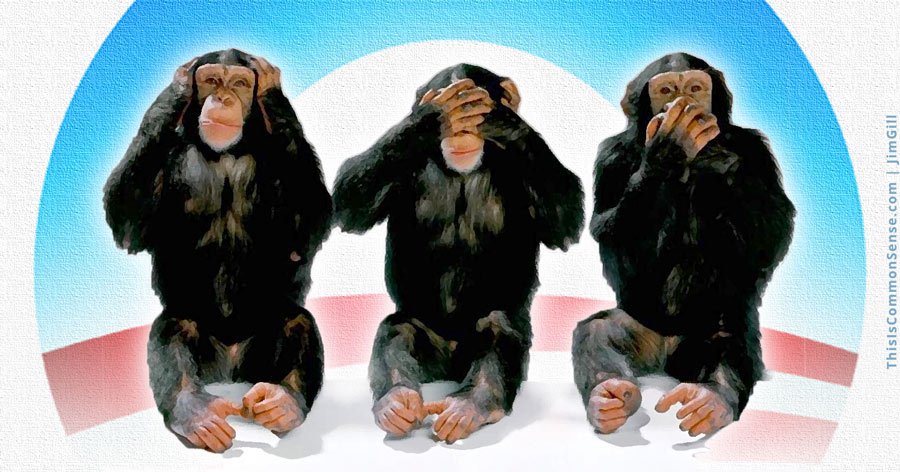
“You look at what’s happening in Germany, you look at what’s happening last night in Sweden — Sweden, who would believe this?”

Many news outlets ran with the official Swedish response: puzzlement. What happened the night before in Sweden? Was he suggesting a terror attack? There was no terror attack. Ah, President Trump: lying again!

Social media erupted with the usual anti-Trump mockery.

Swedes were understandably confused. As Tucker Carlson noted, “The president ought to be precise in what he says.” But Carlson added that the “analysis” of numerous network news programs was “so stupid that it’s hard to believe it made it on television.”

One key job of professional journalists is interpretation.

When Trump uttered “last night,” he wasn’t referring to what happened, he was referring to what he saw the night before on Tucker Carlson’s show: an interview with Ami Horowitz, who recently produced an exposé on the violence in Sweden’s “no-go zones,” enclaves of immigrants from Muslim-majority countries.

Where even Sweden’s police fear to tread.

“Sweden — they took in large numbers,” Trump went on. “They’re having problems like they never thought possible. You look at what’s happening in Brussels. You look at what’s happening all over the world.”*

The mass refugee surge into Europe is a huge problem.

But the American press assuming the worst regarding President Trump and reporting it?

It’s a problem, too.

Could reasonable interpretation itself be morphing into a “no-go zone”?

This is Common Sense. I’m Paul Jacob.
 

* Trump went on to say, “Take a look at Nice. Take a look at Paris.” He is referring to terrorist attacks in those cities. He may also be referring to “no-go” communities where police and non-Muslims appear to be unwelcome, as reported in Germany, Britain, France and Belgium.


Printable PDF


Categories
Accountability folly ideological culture moral hazard nannyism national politics & policies responsibility too much government U.S. Constitution

Tough Luck, Chumps

Advertised as a big deal ahead of time, the debate didn’t get much play afterwards.

Especially from the Left blogosphere.

Why?

Billed as about the “future of ObamaCare,” it was really about what should replace ObamaCare.

The CNN debate pitted Sen. Ted Cruz, well-known Republican opponent of the Affordable Care Act*, against Sen. Bernie Sanders, well-known “independent” proponent of what he likes to call the “Medicare for All single-payer program.”

Upshot? While either Bernie or Ted may possibly be construed to have won, there was indeed one certain loser, ObamaCare itself.

Sen. Sanders conceded nearly every charge Sen. Cruz lobbed at the program. He merely countered with his support for treating health care “as a right, not a privilege” (a leftist farrago from days of yore) and moving on to single-payer medicine.

That’s how bad ObamaCare really is. Its chosen champion refused to champion it.

The basic tension was best summed up between “town hall” questioners Carol, suffering from multiple sclerosis, who asked Cruz to promise continued coverage for cases like hers, and LaRonda, a woman with a chain of hair care shops who cannot afford insurance for herself or her employees and also cannot expand her company because at 50 employees the ACA would force her to provide insurance.

Cruz expressed his sympathy for Carol, but seemed to meander around her request for a guarantee. He also evaded** a straightforward answer re: “healthcare as a right.”

Sanders was a tad more honest, in effect giving the “tough luck” answer that the entrepreneur just “should” pay*** for her employees’ medical insurance.

Well, we sure are all “paying” for ObamaCare, one way or another.

This is Common Sense. I’m Paul Jacob.
 

* Which is the same thing as ObamaCare. Some folks purportedly hate ObamaCare but love the ACA. No reader of Common Sense, of course.

** Cruz concluded the debate better, alluding to an old SNL skit about a recording session wherein the cowbell ringer always wanted “more cowbell” in every take. “It was government control that messed this all up. And Bernie and the Democrats’ solution is more cow bell, more cow bell.”

*** “[I]f you have more than 50 people, you know what, I think — I’m afraid to tell you — I think you will have to provide health insurance.”


Printable PDF


Categories
Accountability crime and punishment moral hazard nannyism national politics & policies property rights too much government U.S. Constitution

Watcha Gonna Do?

At a White House meeting last week between President Trump and law enforcement officials, a Texas sheriff raised a concern about legislation introduced by a state senator to require a conviction before police could take someone’s property.

Mr. Trump asked for that senator’s name, adding, “We’ll destroy his career.” The room erupted with laughter.

“That joke by President Trump,” Fox News’s Rick Schmitt said on Monday, “has the libertarian wing of the Republican Party raising their eyebrows, instead of laughing.”

Not to mention the civil libertarians in the Democratic Party and the Libertarian Party itself.

Civil asset forfeiture, as we’ve discussed, allows police to take people’s cash, cars, houses and other stuff without ever convicting anyone of a crime — or even bringing charges. The person must sue to regain their property.

Lawyers aren’t free.

Two bedrock principles are at stake:

  1. that innocent-until-proven-guilty thing, and
  2. Our right to property.

Since police departments can keep the proceeds of their seizures, they’re incentivized to take a break from protecting us — to, instead, rob us.

“Our country is founded on liberties,” offered Jeanne Zaino, a professor at Ionia College. “[G]overnmental overreach is not something that is natural for Republicans to embrace.”

Schmitt acknowledged that “Libertarians would hate this. They don’t want big government. But they don’t have a lot of pull.”

Libertarian-leaning Republicans like Sen. Rand Paul and Rep. Justin Amash are trying to end civil forfeiture, but the president will likely veto their legislation.*

Let’s not wait. Activists in three Michigan cities put the issue on last November’s ballot and won. You can, too.

This is Common Sense. I’m Paul Jacob.

 

* FoxNews.com reported that, “Trump signaled he would fight reforms in Congress, saying politicians could ‘get beat up really badly by the voters’ if they pursue laws to limit police authority.”


Printable PDF