Categories
Accountability folly general freedom moral hazard national politics & policies

Of Course, You Know, This Means War

When Steve Bannon was booted out of the White House, my thoughts turned immediately to war. As I wrote in frustration on Friday,

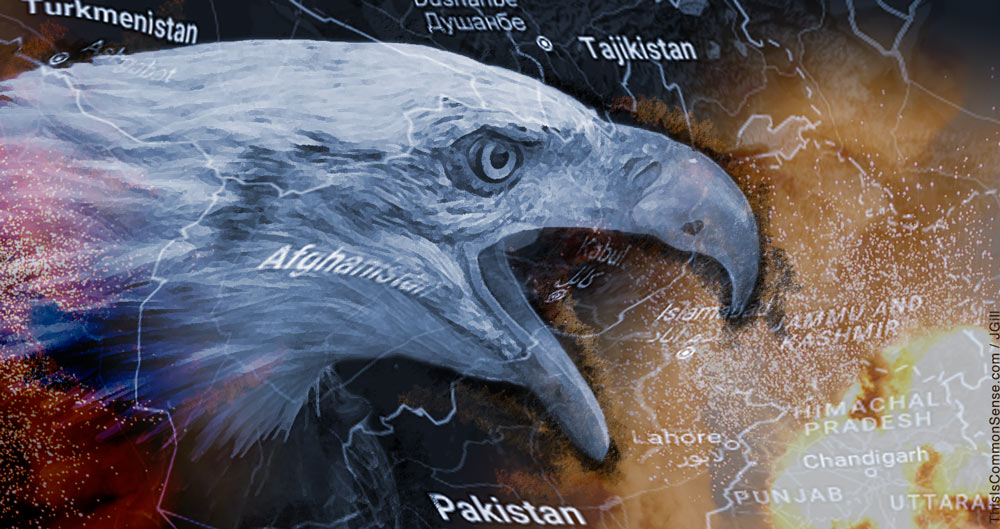
Bannon’s departure probably means the slim chance that the US might withdraw from “our” open-ended, never-ending occupation of Afghanistan has been foreclosed.

If we don’t win the war by ushering in a completely transformed, modernized and westernized Afghanistan, at least our children and grandchildren and great grandchildren, etc., etc., will each have. their turn.

Of course, if the fabled “Graveyard of Empires” continues to work its historic magic, maybe future generations won’t face that burden: the United States could fall . . . as a worldwide imperial presence. And, if our global military archipelago fails — for, say, want of wealth to throw overseas — do we have any reason to believe that our republic would bounce back?

There remains more than enough reason to work for foreign policy sanity.

Prior to his evening national address on the day of the eclipse, Trump explained what he intends to do in Afghanistan — send 4,000 more troops.

Meanwhile, Steve Bannon’s door-slapped rump did not dissuade him from tweeting out what he intends to do “on Capitol Hills, in the media, and in corporate America”:

If there’s any confusion out there, let me clear it up: I’m leaving the White House and going to war for Trump against his opponents. . . .

Call this the Bugs Bunny Policy: “Of course, you know, this means war!

And considering the promises made in the President’s speech, we can amend that to “of course, this means never-ending war.”

This is Common Sense. I’m Paul Jacob.

PDF for printing


Categories
Accountability general freedom ideological culture initiative, referendum, and recall local leaders moral hazard national politics & policies

Reactionary America

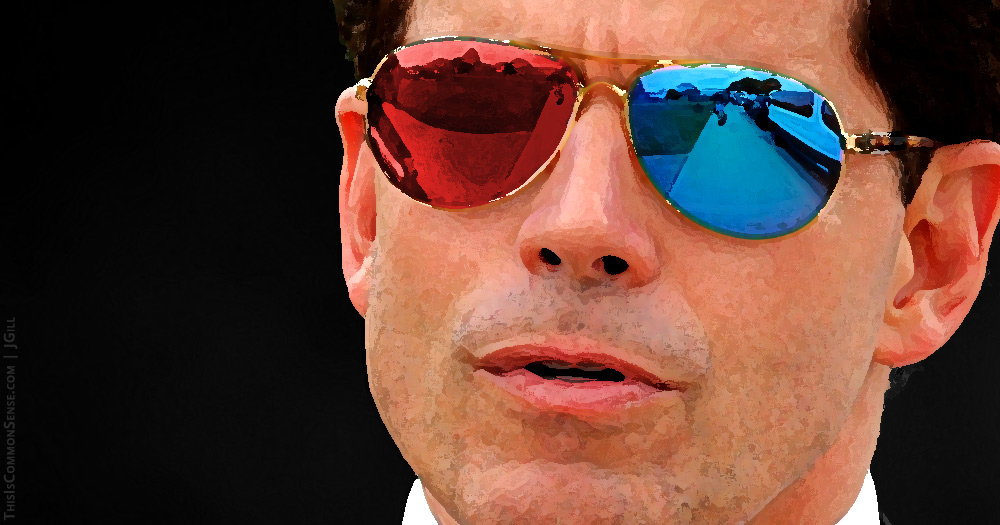
With the meteoric transit of Anthony Scaramucci — into the Trump Administration and then, in an eye-blink, out of it — I have never been more convinced of the vital importance of state and local activism.

Yes, it’s been a chaotic week in Trumptown. The new White House Director of Communications vulgarly communicated himself into administrative excommunication. So to speak.

Everybody’s heard the vulgarisms; we’ve all processed the insanity. It looks like Mr. Scaramucci is one of those professionals who think everybody else is an idiot, and in so thinking it, proves himself to be what he himself despises. @#$%&?!

The man nicknamed “The Mooch” screwed the pooch, as we now say, and we can all shake our heads and . . .

what?

What is the lesson?

We have long known the worst: our national politics is broken. It has been for a very long time. Is it possible we never recovered from the LBJ and Tricky Dick fiascos of my childhood? The parties have become more ideological and less regional, while the regions have become . . . less rational. The only word seems to be . . .

reactionary.

The press reacts to the president’s tweets, and the president tweets in response to media reaction.

Progressives hate progress; conservatives conserve nothing.

“Reactionary” is the apt word, despite all the term’s past Marxist associations, because no one seems able to think forward, independent of partisan oppositionalism.

Don’t drive yourself crazy with this. Look homeward; think locally, act locally, and let’s build on a solid foundation.

This is Common Sense. I’m Paul Jacob.

Printable PDF


Categories
folly general freedom local leaders moral hazard national politics & policies responsibility

Syria & Sanity

President Trump has decided to end the CIA’s covert* program to arm and train moderate Syrian rebels battling the government of Bashar al-Assad,” the Washington Post first reported last week, immediately adding that it was “a move long sought by Russia.”

This insinuation that the policy change was simply a concession to Russia belies the recent history of U.S. involvement — and failure — in Syria.

President Barack Obama had intervened.

Very ineffectively.

“Calling” for regime change.

In 2012, Reuters disclosed that the president had signed “a secret* order authorizing U.S. support for rebels seeking to depose Syrian President Bashar al-Assad and his government.” In 2013, after accusing the Assad regime of using chemical weapons, Obama announced the U.S. would provide direct military aid to rebel groups.

But Obama’s execution seemed more designed to make it look like the U.S. was trying really hard than actually toppling Mr. Assad.**

This may have been a good thing, though, seeing that some of the best-organized rebel groups in Syria are aligned with al-Qaeda and ISIS.

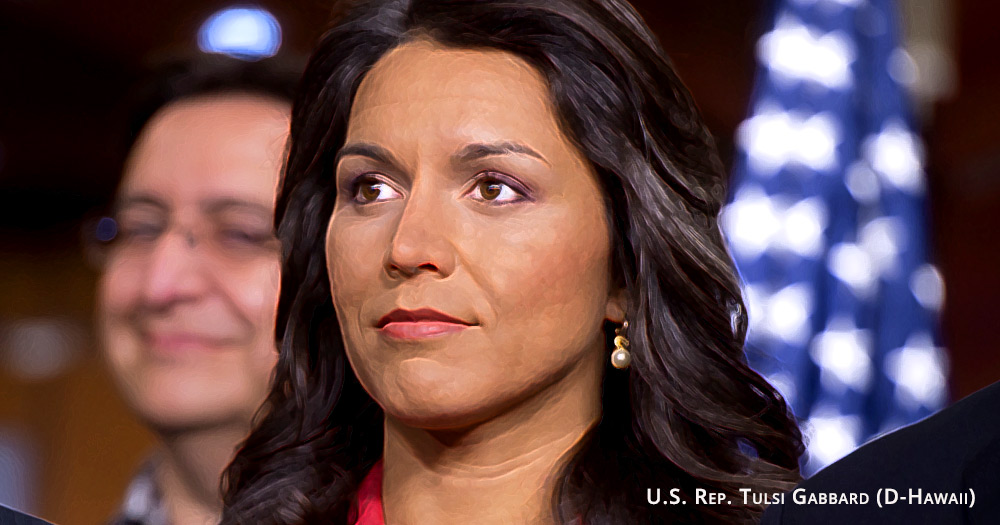
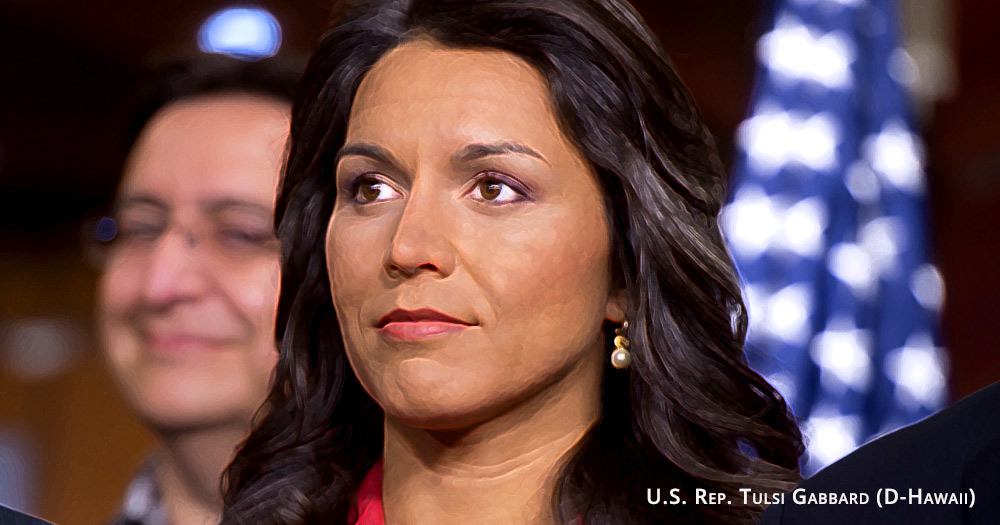
U.S. Rep. Tulsi Gabbard (D-Hawaii) has introduced “The Stop Arming Terrorists Act”*** to prevent American weaponry and material from being handed to terrorists. She cheered Trump’s move, explaining to Tucker Carlson on Fox News that “providing direct and indirect” aid to the “very same terrorist group that attacked us on 9/11” made no sense.

Also lacking in sense is the Obama Administrations claim that the congressional Authorization for the Use of Military Force, which specifically authorizes action against al-Qaeda, also covered the attack upon Assad’s regime. Surely arming rebel groups aligned with al-Qaeda couldn’t be justified under such an AUMF.

This is Common Sense. I’m Paul Jacob.
 

* It was not very covert. And not secret.

** In 2015, the Administration abandoned a separate $500 million program to put together a moderate rebel force opposed to both ISIS and the Syrian Government of Basher al-Assad after training only 4 or 5 soldiers. The BBC suggested much of the problem was indecisiveness, observing that, “US President Barack Obama never seemed to want a train-and-equip programme for Syrian rebels.”

*** The Senate bill is SB 532, introduced by Sen. Rand Paul (R-Ky).


Printable PDF


Categories
Accountability crime and punishment government transparency moral hazard national politics & policies property rights responsibility too much government U.S. Constitution

The Police State Is in Sessions

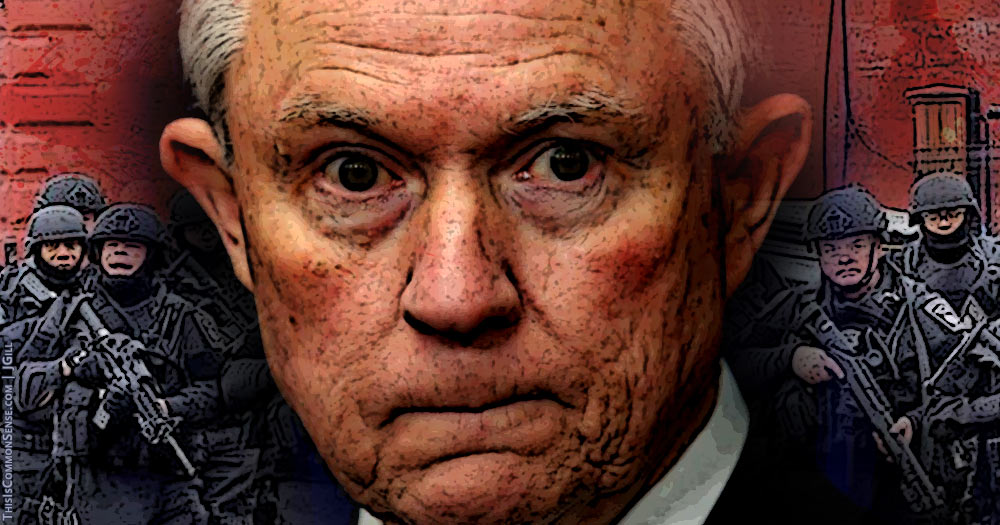
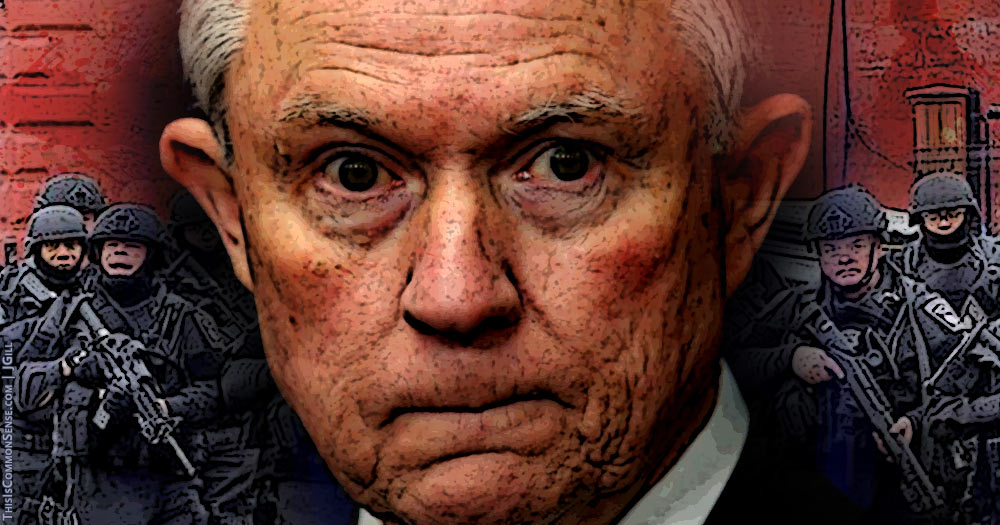
U.S. Attorney General Jeff Sessions threatens to make himself one of the biggest threats to your liberty.*

President Donald Trump’s pick for Attorney General just promised to encourage police departments to seize the personal property (cars, houses, cash) of criminal suspects.

The practice is called asset forfeiture. It comes in two forms, criminal and civil. Compelling objections have been raised against civil forfeiture, which accounts for nearly 90 percent of all forfeitures. Abuse is rampant in cities, counties and states around the country, routinely used against people who have not even been charged, much less prosecuted and convicted. (Often not really even suspected of criminality.)

“No criminal should be allowed to keep the proceeds of their crime,” he told conference attendees in Minneapolis, Minnesota, on Monday.** But how can our top federal law enforcement officer ignore the profound difference between a suspect and a criminal?

No one is a criminal, before the law, until proved in court. Taking away property to make it harder for suspects to defend themselves — which is what RICO laws and other Drug War reforms intended to do — is obviously contrary to the letter of the Fourth and Fifth Amendments as well as the spirit of the U.S. Constitution.

Sessions announced he’ll soon offer a “new directive on asset forfeiture — especially for drug traffickers.” Unless he clearly indicates that it will only be used against the property of persons legally convicted of crimes, Sessions will be merely making charges of an “American Police State” stick.

America’s top lawman argues completely contrary to American principles of justice.

This is Common Sense. I’m Paul Jacob.
 

* Bigger than Eric Holder was. Bigger than Loretta Lynch.

** Sessions also went on to say that “sharing with our partners” — local police departments around the nation — is a good thing. This is, systemically, the most dangerous aspect of it all, for it encourages police departments to take things for their own benefit.


Printable PDF


Categories
folly ideological culture media and media people meme national politics & policies

CNN, You’ve Been Trolled

The Cable News Network, known popularly and un- as CNN — and satirically as the “Clinton News Network” and “Fake News” — so hysterically hates the president that it has become completely unhinged.

Well, unhinged from decency and journalistic standards, anyway.

The latest slips downward?

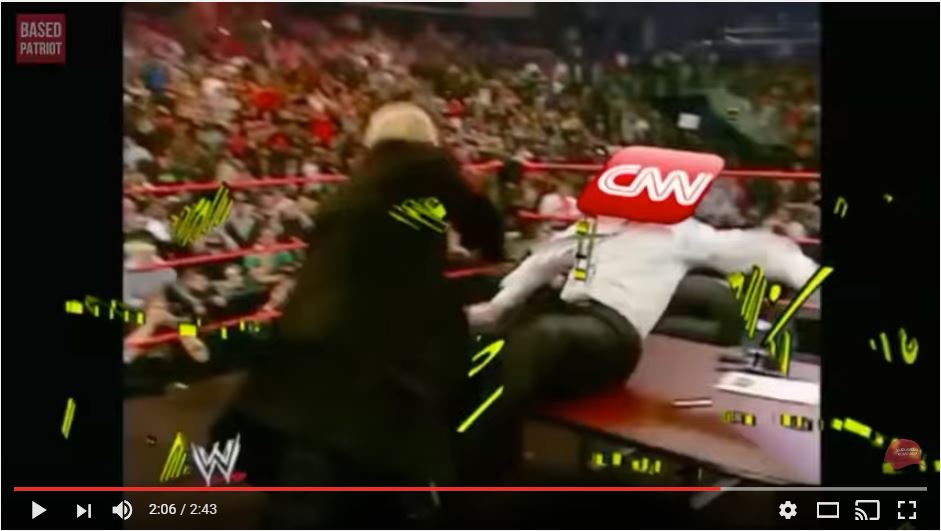
First, some pseudonymous guy* on Reddit created a little gif** that placed a CNN-logo on the head of a wrestler whom Donald Trump “took down” in some weird bit of nonsense publicity the entertainer-entrepreneur was prone to, pre-presidency. Trump then retweeted a version of the gif, calling CNN (once again) “fake news.” This made CNN look silly,*** so CNN tracked the originator down and pressured him to make a humiliating apology — for it and other, more tasteless contributions. He deleted most of what he had done on Reddit.

CNN looks petty: a bully. And clueless about the free-for-all that is the Internet.

The Twitterverse erupted against the news outfit.

This went super-viral on July 4, the same day that CNN tried to humiliate Mr. Trump by tweeting a quote from Abraham Lincoln: “Let the people know the facts, and the country will be safe.”

How apt!

And yet . . . Lincoln did not say it. Not exactly. The “fake news” network faked a presidential quote.

CNN apparently doesn’t understand that responding to trolls feeds the trolls and makes you look bad, to boot.

I suppose you could blame Trump for all this. His ridiculous tweets and whoppers have so corrupted the culture that his enemies (CNN being the obvious media leader) have adopted his methods.

But I won’t. Not this time.

Just blame the people at CNN.

This is Common Sense. I’m Paul Jacob.
 

* He referred to himself as a “shitposter,” which is what satirists and trolls on the Web are called.

** A “gif” is an image file, and has been around since the beginning of the World Wide Web. Nowadays, when we talk about “gifs” we usually are referring to brief animated gifs.

*** Frankly, it made the president look silly, too.


PDF for printing

CNN, Trump, meme


Categories
Accountability crime and punishment government transparency media and media people national politics & policies responsibility

A Handy Evasion

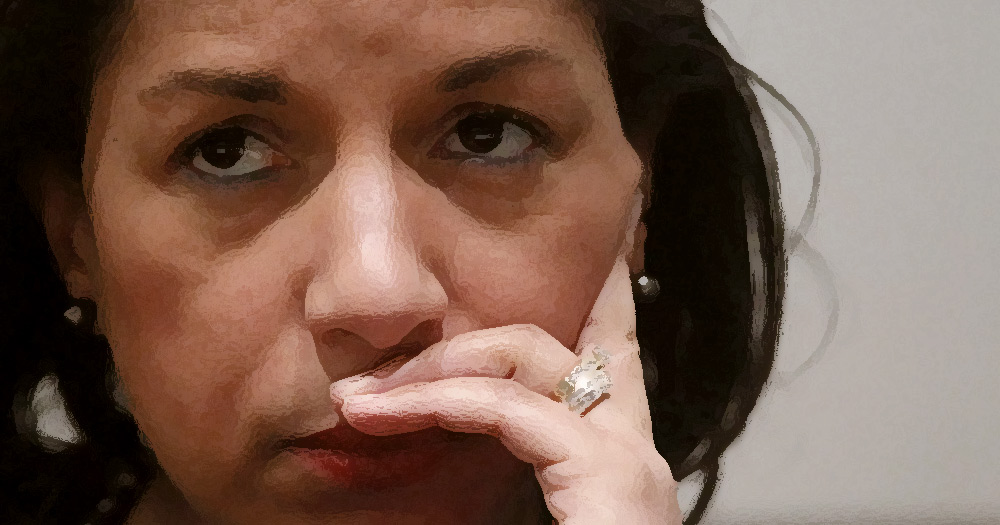
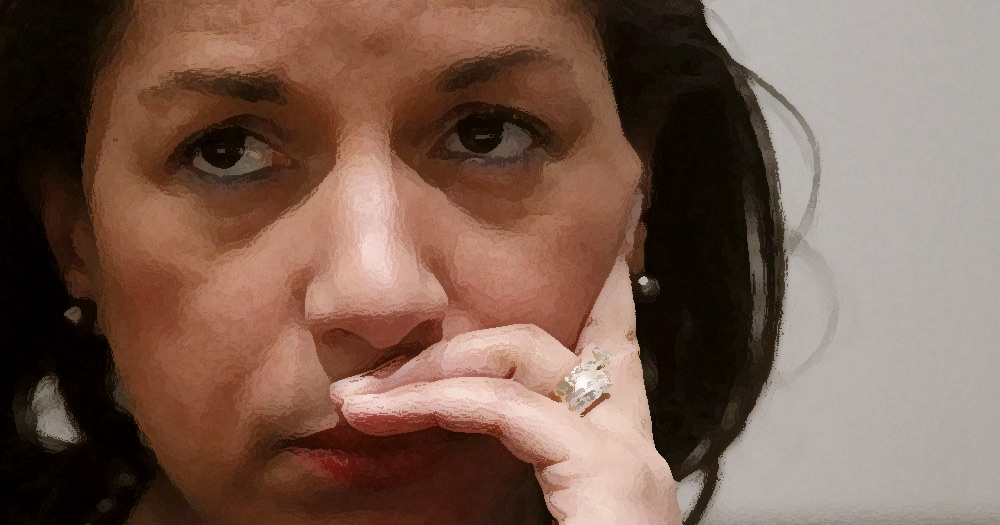
Susan Rice, National Security Advisor in President Barack Obama’s administration (2013 – 2017), is being picked on, she speculates, for reasons pertaining to her race and gender.

Handy evasion.

At issue is not her infamous prevarication in the Benghazi affair. We are used to being lied to about foreign policy, so that was barely a shock.

What is news now? The Trump-Russia story.

Background: Ever since her defeat to Donald Trump, former Secretary of State Hillary Clinton has provided the very model of how to deflect attention from one’s own defects. She’s blamed FBI Director James Comey, the vast right wing conspiracy, and, of course, Russia.*

Amusingly, the Russia biz still boils down to how Russian hackers, apparently directed from high in the hierarchy of the Eastern warlord state, illegally liberated information from private servers. Those revealed emails showed Mrs. Clinton and her campaign in a negative light. Excuse-makers call this “hacking the election.”**

It turns out, the biggest crimes committed during the campaign, and somewhat regarding Russia, were engaged in by the Obama Administration, perhaps especially by Rice herself. She is accused of illegally surveilling the Trump campaign and those around it by “unmasking” their identities in the course of surveillance reports, which are legally required to be anonymous . . . when catching in the net folks tangential to the target.

The law requires FISA court go-aheads for such identifications. And the Obama administration was roundly reprimanded by a FISA court for not following protocols.

In any case, the idea that only women and African-Americans are hounded by opposition parties and the press does not hold up to scrutiny.

Nixon, anyone?

This is Common Sense. I’m Paul Jacob.
 

* Her team has also blamed President Barack Obama

** A private server was hacked, not an election.


Printable PDF


Categories
Accountability incumbents insider corruption moral hazard national politics & policies term limits too much government

Most Hated

I was once “the most hated man in Washington.”* Why? For my work on term limits.

I wore the appellation as a badge of honor.

Last year I noted that Ted Cruz had taken up the mantle, but now, certainly, it’s President Donald Trump’s.

Has ever a president been as hated?

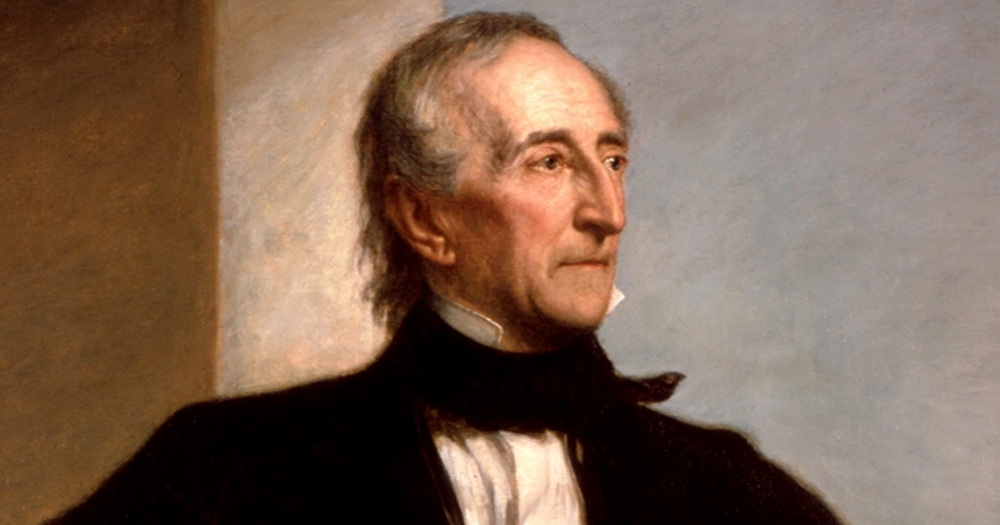
Thomas Jefferson was characterized as the Antichrist. Andrew Jackson made many enemies in overthrowing the Second National Bank. But John Tyler is the most interesting case.

President Tyler was a Jeffersonian democrat who took up the office from William Henry Harrison, who died several weeks after being sworn in. Tyler was never accepted as legitimate by — get this — the Whig Party that nominated him. He was dubbed “His Accidency.” After opposing a revival of the national bank notion, there were riots, and his party expelled him. He received hundreds of death threats in the mail. Later he was almost impeached.

Admittedly, Republicans haven’t abandoned Trump — yet. But the Democrats have opposed him from the beginning. And the Entertainment Industrial Complex never ceases to wage a culture war against him. What should the most hated man do?

Make the most of it.

One of his promises was to put congressional term limits into the Constitution. Congress is reluctant. But Trump can do what I couldn’t: use all the powers of the presidency — from the bully pulpit to the veto pen — to leverage those in Congress into proposing a constitutional amendment.

It won’t make President Trump any less hated in Washington, but will win support everywhere else.

This is Common Sense. I’m Paul Jacob.
 

* That was in days of yore, the 1990s, and it was Bob Novak who gave me the appellation. Politicians, lobbyists and other government insiders hate term limits.


Printable PDF


Categories
Accountability general freedom national politics & policies responsibility

A Threat We Can’t Refuse

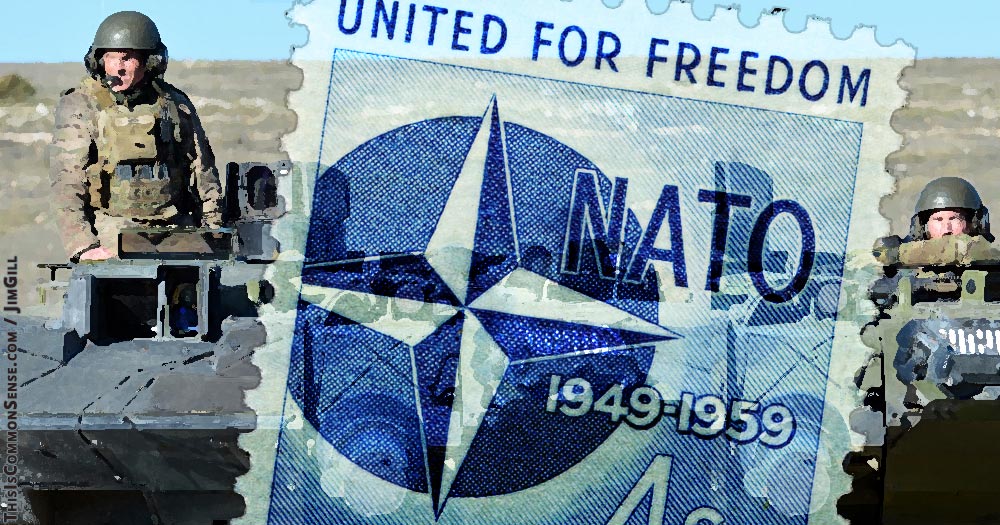
“Recent days have shown me that the times when we could rely completely on others are over to a certain extent,” German Chancellor Angela Merkel told folks in a Munich beer hall last Sunday. “We also know that we Europeans must really take our destiny,” she said, on the heels of the NATO and G7 meetings, “into our own hands.”

Merkel may have designed her comments to elicit shock and dismay among the inhabitants of America. But my shock is that anyone would find anything shocking, at all.*

Merkel’s responding, of course, to President Donald Trump’s censure of European NATO members for not ponying up to their treaty obligations.** This is widely whispered as . . . rude. Mustn’t upset Germany and other allies, even if only five of NATO’s 28 nations have reached the agreed-upon two-percent of GDP goal.

The received wisdom seems to be: don’t embarrass the freeloaders.

I’m often not copacetic with Mr. Trump’s demeanor. But the “threat” that U.S. soldiers might somehow not be permitted to shed their blood to defend deadbeat countries against a feared Russian attack is . . . just not all that threatening.

What’s so scary about self-reliance?

It was also announced that German security agencies won’t share intelligence with the U.S. regarding alleged Russian interference in their upcoming election.

This, too, we can survive.

But, gee whiz, I hope we aren’t banned from the cool countries’ lunch table at the cafeteria in the brand new $1.23 billion NATO headquarters — for which the U.S. pays a disproportionately high 22 percent.

This is Common Sense. I’m Paul Jacob. 
 

* In my judgment, Merkel should have jettisoned “to a certain extent” and put a period after “over.”
** It’s worth noting that Trump is not the first president to marshal this complaint.


Printable PDF


Categories
Accountability general freedom national politics & policies responsibility

The First Casualty

Former Marine Lt. Gen. H.R. McMaster, President Trump’s current national security advisor, is the author of Dereliction of Duty, a look at how President Lyndon Johnson conducted the Vietnam War. 

Last Sunday, the Washington Post’s Carlos Lozada reviewed the 1997 non-fiction book, noting that McMaster hadn’t minced words. 

McMaster argues, for instance, that LBJ had a “real propensity for lying.” McMaster also takes Defense Secretary Robert McNamara and the Joint Chiefs of Staff to task for not telling Johnson hard truths about the war, and going along with what they knew were poor policies. 

Life-and-death policies. 

“McMaster explains how a culture of deceit and deference, of divided and misguided loyalties, of policy overrun by politics, resulted in an ever-deeper U.S. involvement in Vietnam,” Lozada reports. 

Lozada then compares the dishonest bubble within which LBJ made decisions about Vietnam to the people around President Trump today, fearing they too will fail to tell the president inconvenient truths or dare risk his wrath by opposing his policy whims. 

That tilted Trump focus is the 24/7 obsession of the national press corps.

But this problem isn’t new with Trump. It’s universal. 

The wise have long understood that truth is the first casualty of war. If not taken out before hostilities even begin.

It is critical to find people of integrity to work at the White House and tell presidents the unvarnished truth. And even more critical is to pick presidents with integrity to tell the American people — the ultimate decision-makers — the truth. 

It’s long past time that U.S. foreign policies be publicly discussed — and decided — by an informed electorate.

This is Common Sense. I’m Paul Jacob.

Printable PDF


Whisper cc photo by Jamin Gray on Flickr

Categories
Accountability folly general freedom moral hazard national politics & policies

An Inconvenient Empire

“Don’t look to the United States for hope. Our values make us sympathetic to your plight, and, when it’s convenient, we might officially express that sympathy. But we make policy to serve our interests, which are not related to our values. So, if you happen to be in the way of our forging relationships with your oppressors that could serve our security and economic interests . . . You’re on your own.”

That’s Senator John McCain’s New York Times op-ed mockery of Secretary of State Rex Tillerson, who recently told State Department employees that conditioning our foreign policy “on someone adopting our values . . . creates obstacles to our ability to advance our national security interests, our economic interests.”

In his op-ed, entitled “Why We Must Support Human Rights,” McCain recounted the hope it gave him to know America would not abandon him as a prisoner of war during Vietnam. But, of course, Tillerson wasn’t suggesting the U.S. abandon POWs.  

McCain highlighted dissidents throughout the world, urging the U.S. to speak out for them, to provide “hope . . . a powerful defense against oppression.”

No fan of President Trump*, the senator is playing up the praise Trump has awkwardly offered despots, including Russia’s Vladimir Putin, the Chinese leaders behind the Tiananmen Square massacre and recently North Korea’s Kim Jong-un. Still, recent successes in freeing Americans and others from the grasp of tyrants in Egypt, Iran and China suggest some degree of caring by Tillerson, Trump and Co.

The inconvenient truth? American foreign policy has long pursued certain political and economic interests at the expense of extolling human rights. As Glenn Greenwald wrote in The Intercept: “The list of U.S.-supported tyrants is too long to count. . . .”

Hypocrisy alone won’t change that.

This is Common Sense. I’m Paul Jacob.
 

* Very early in the presidential campaign, Trump needled the senator and reacted to McCain being called a war hero, by echoing a four-lettered Chris Rock routine: “He’s not a war hero. He was a war hero because he was captured. I like people who weren’t captured, okay. I hate to tell you.”

In 1967, McCain was shot down over Hanoi, North Vietnam, on his 23rd bombing mission of the war. He broke both arms and one leg and nearly drowned after parachuting into a lake. Denied medical treatment by the North Vietnamese, McCain spent the next five and a half years as a POW, some of it at the infamous “Hanoi Hilton” prison, where he was tortured.


Printable PDF