Categories
Accountability ideological culture media and media people national politics & policies

Listen to the Warm

I like publicity stunts as much as the next activist. But haven’t we had enough of the whole Greta Thunberg bit yet?

On Wednesday, the 16-year-old Swede provided testimony on an apt stage, let us grant her that — the U.S. House of Representatives’ foreign affairs subcommittee joint hearing on the global youth climate change movement

She didn’t prepare any remarks, though. She merely “attached” the IPCC Special Report on Global Warming “as her testimony.” Her rationale? “I don’t want you to listen to me, I want you to listen to the scientists.” And “to unite behind science.”

You know, for “real action.”

It was what happened right after she demanded “real action,” though, where the stark reality of the situation became clear: a grown man in a suit, elected to Congress, asked, “Could you expand on why it’s so important to listen to the science?”

And then the non-scientist spoke . . . not very expansively.

 Forget that science qua science isn’t to be “listened to,” it is to be engaged in, with conjectures, research and refutations. (There was nothing like that at the hearing.) Forget also that the science is increasingly less clear on the severity of what warming we see. Remember only that an elected official used a girl to imbue a text (the IPCC report) with moral legitimacy, dubbing it “best available ‘united science’” — the better to push an unargued-for massive coercive government intervention into the life of our civilization.

Is no adult in the room ashamed of what they are doing . . . exploiting a cute youngster to subvert rationality?

This is Common Sense. I’m Paul Jacob.


Greta

See all recent commentary
(simplified and organized)
See recent popular posts

Categories
ideological culture national politics & policies

Labor’s Holiday

Most of us celebrate Labor Day by not working. Labor and celebration being distinct, this is not really as funny as it may sound.

The celebration became federal law in the late 19th century, a time beset by “labor unrest” and “agitation.” At least two major violent incidents at that time can help us understand the origins of our Labor Day, and reduce the current collective blood pressure.

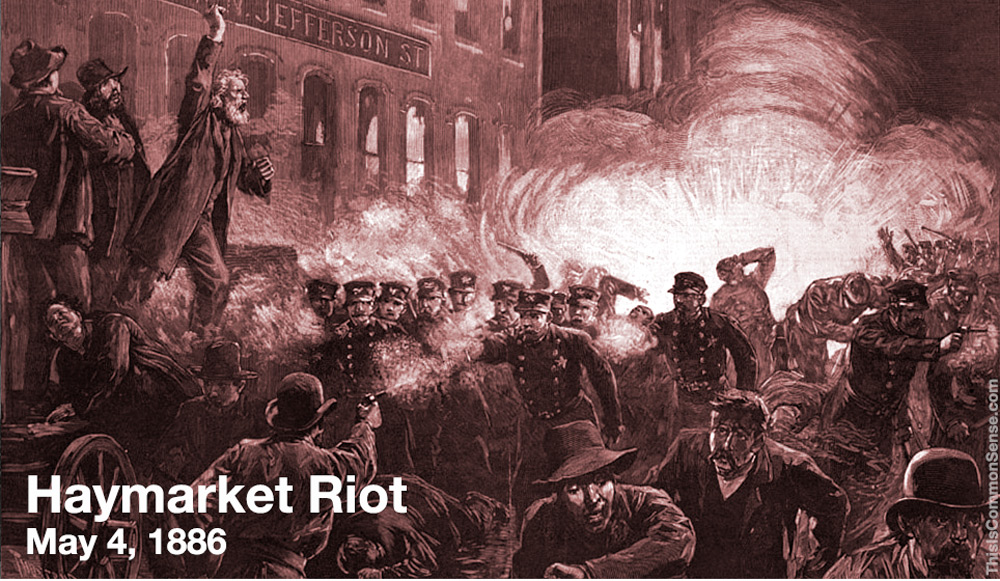
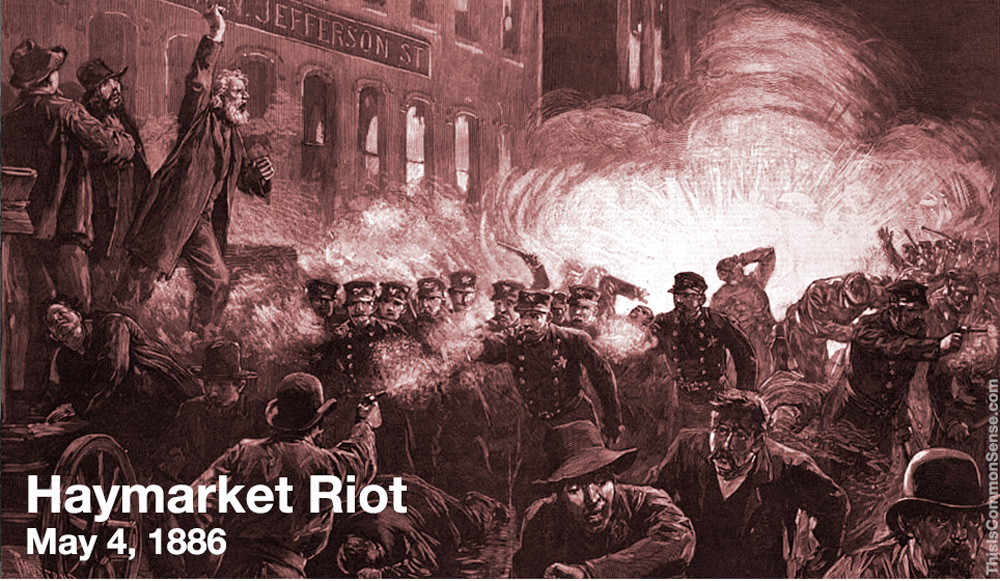
The date of the first was May 4, 1886, a labor demonstration at Haymarket Square in Chicago that went very bad. This Haymarket Affair is one of those handful of stories in our high school history books we tend to remember, involving bombs, deaths, anarchists, hasty prosecution, hangings, pardons, and much more. People still argue about who is to blame. What we don’t argue with is the aftermath: the Second International of communist and socialist parties chose, in 1889, the ancient celebratory day of May 1 to commemorate the Haymarket riot as “International Workers’ Day.”

It has come to be known as “Labor Day” in some countries.

But other, less radical labor activists had already pushed a Labor Day for their cities and states before Haymarket, and they had chosen early September as the proper time for a celebration of “the working man.” A majority of states had enacted early September labor holidays by 1894.

In June of 1894, Congress passed legislation making the first Monday of September “Labor’s Holiday.”

President Grover Cleveland signed the bill into law mere days after the Pullman Strike ended — with a not quite universal judgment that he had mishandled it. Cleveland’s intervention in the strike led to a higher body count and more property damage than the Haymarket riot. That being said, it does not appear to have moved President Cleveland as much as you might think — he did not spearhead the Labor Holiday legislation, and his signature is not as important as it may seem, since congressional support was high enough to override any veto.

Associated then with activism to increase the economic and legal power of unions, to this day the official Labor Day in September serves as an alternative to the more radical celebrations in May. But both seem antiquated, now. Our alleged “radicals” today have shifted their focus from labor remuneration and working conditions to providing to workers and non-workers alike free stuff. 

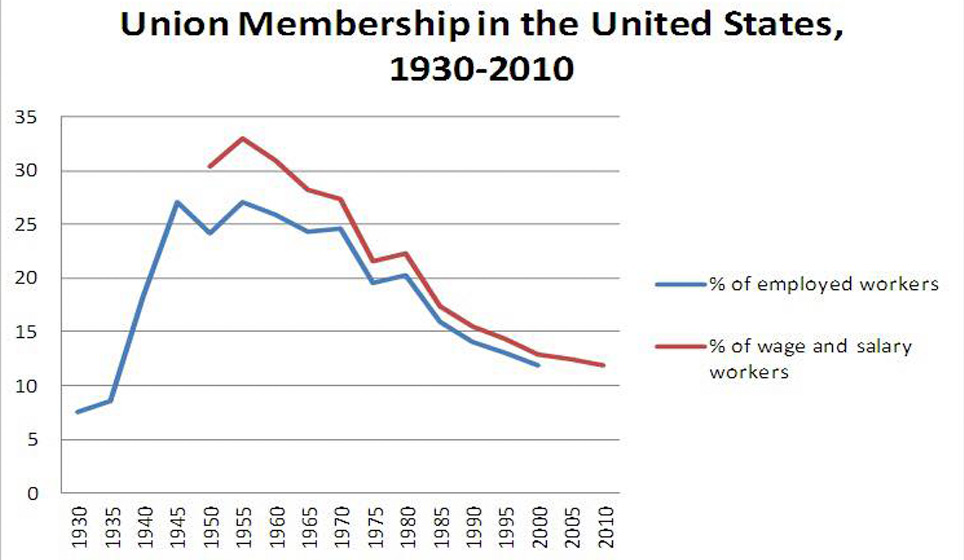
And union participation in America, which waxed up until about the time I was born, has waned since. Only the government worker segment is heavily unionized today.

Nowadays, Labor Day has about the same symbolic and political significance as Arbor Day.

The most important lesson may be this: we talk about how divided the country is, politically and culturally. But the level of foment is not nearly as violent as it was when Labor Day became a national holiday.  

This is Common Sense. I’m Paul Jacob


Haymarket Riot

See all recent commentary
(simplified and organized)
See recent popular posts
Categories
ideological culture media and media people Popular

The Fifth Century Begins

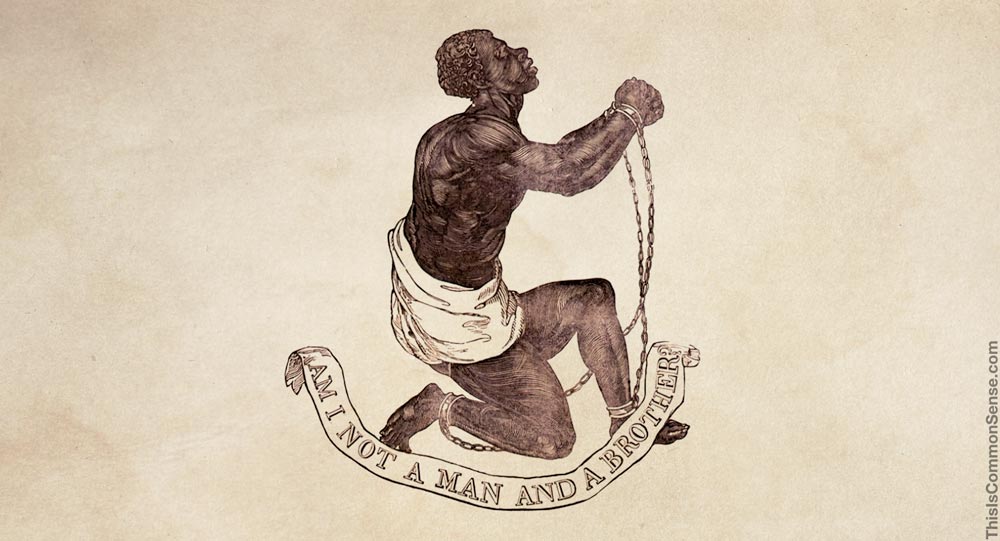
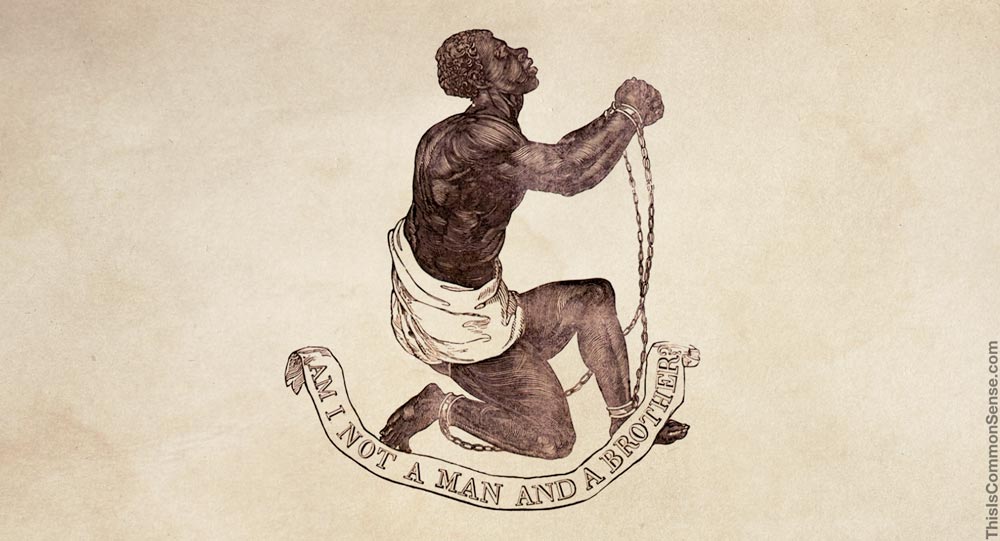
When socialists and woke scolds talk about slavery, you can almost hear the chains and smell the leather of the slaver’s whip — and not always in a good way.

Project 1619 is the New York Times effort to acknowledge 400 years of Africans in America. Thankfully, the project’s page is more coherent and forthright than Matthew Desmond’s New York Times Magazine farrago of August 14, “In order to understand the brutality of American capitalism, you have to start on the plantation.”

Indeed, that piece (like others in the series) is such a tangle that there is no hope to unravel it in this limited space. Just note that Desmond does his darnedest to help the enemies of liberty tie slavery into the idea of free markets, private property, and free association.*

Project 1619, on the other hand, accepts the complexity of slavery in America without being idiotically tendentious. It recognizes that the captured Africans brought to Virginia shores in August 1619 were treated as indentured servants. Unfortunately, unlike the Englishmen arriving under indentured servitude, the first Africans in Virginia lacked explicit contracts. So negotiating their way out was . . . problematic. Still, one African, arriving two years later, was soon freed and became a landowner. And it was he who was awarded another African as a slave for life, in civil court in 1655, marking the real start of chattel slavery in America.

Which is to say, slavery in America was not exclusively a matter of race.**

Why is this important? Because slavery is wrong not because racism is wrong (as wrong as that is), but because people have a right to freedom.

Could it be that socialists emphasize racism regarding slavery because they fear that focusing on freedom might scuttle their socialism?

This is Common Sense. I’m Paul Jacob.


* See my discussion of slavery yesterday.

** This becomes clear once you read Mark Twain’s Pudd’nhead Wilson, or learn how Thomas Jefferson’s wife was related to Sally Hemings

PDF for printing

slavery, 1619, freedom, chains,

See all recent commentary
(simplified and organized)
See recent popular posts
Categories
ideological culture Popular too much government

Slaves All?

A bizarre argument is gaining popularity: the United States of America not merely allowed slavery in its first hundred years, it depended upon it, grew rich by it . . .  and, “therefore,” not only the federal government but also its constitutional principles and even capitalism are all tainted . . . and . . . “therefore” . . . we must have socialism!

Why long-dead chattel slavery requires political slavery now is hard to figure.

And no, you should not need to read George Fitzhugh’s Cannibals All! or Sociology for the South to see that socialism is slavery.*

But these days it is more common to link slavery with . . . freedom (this is hard even to type) in the form of free markets. 

Leftists who make this linkage are helped by some popular historians who argue that since the   antebellum South (1) grew faster, economically, than the North, (2) slavery was profitable for slaveholders, and (3) slaves became more productive in picking cotton, the “peculiar institution” was key to American success. Vincent Geloso, a visiting assistant professor of economics at Bates College, writing for the American Institute for Economic Research, ably shows that not one of these three theses hold up to scrutiny.

Most importantly, though, Geloso demonstrates that the slavery system was like all other interventionist systems, with some people (slavers) benefiting at the expense of others (slaves, of course, but also free people . . . through a variety of subsidies).

Geloso uses the term “deadweight loss” to make his case that slavery made America poorer.

He is certainly not wrong. But once you understand why freedom and prosperity are linked, not much economic jargon is necessary.

This is Common Sense. I’m Paul Jacob.


* This pro-slavery southerner did argue against the very idea of liberty and free labor on the grounds that freedom is bad and socialism is good. Indeed, “Fitzhugh disliked ‘political economy’ (as economics was then called), which he saw as ‘the science of free society,’” economist Pierre Lemeiux explains, “as opposed to socialism, which is ‘the science of slavery.’” That forthright appraisal is about all that’s good in Fitzhugh.

PDF for printing

slave, ancient, Roman, Rome, chains,

Photo by Jun on flickr

See all recent commentary
(simplified and organized)
See recent popular posts

Categories
national politics & policies Popular

Bernie and Economic Law

One of the things Vermont Senator Bernie Sanders is known for is his push for a $15 per hour “living wage.” But this is politics — a policy position is never complete until its advocates demonstrate just how idiotic the policy actually is.

As Bernie just did.

His presidential campaign has been embroiled in labor union negotiations and a mini-scandal.

Some staffers have been paid a flat salary, not according to a per-hour contract, making Bernie’s “living wage” commitment a bit murky. You see, these salaried employees worked longer hours than a typical 40-hour work week (as is common in political campaigns), dipping their wage breakdown below the $15/hour “minimum.” 

Now, no one is more deserving of this bit of policy blowback than resplendent millionaire Bernie Sanders.

Yet, it’s his campaign’s response that is especially droll: reduced hours!

So, while in one sense staffers got a pay raise, they did not get more money. Which is, as Matthew Yglesias acknowledged at Vox, “exactly the point that opponents of minimum wage increases are always making — if you force employers to pay more, they’re going to respond by cutting back elsewhere.” 

Ryan McMaken, at mises.org, dug deeper, noting that there are a number of ways that the new union deal could amount to cuts in real wages. By “cutting worker hours, the Sanders campaign elected to provide fewer ‘services’ in the form of campaign activities. In practice, this will likely mean fewer rallies, less travel, or fewer television ads.” Less chance for growth. And decreased likelihood for increased employment of other workers.

Not exactly shocking. But a lesson. A terrible way to run a business.

Or a campaign. 

Perhaps we should say, “Thanks, Bernie!”

This is Common Sense. I’m Paul Jacob.


Bernie Sanders, minimum wage,

See all recent commentary
(simplified and organized)
See recent popular posts

Categories
national politics & policies

Truth Squad

“I hesitate to contribute to this freak show,” Sen. John Kennedy (R-La.) told Tucker Carlson on Tuesday night. 

I know the feeling. 

“I don’t think President Trump is a racist,” added the senator. “I don’t think his original tweet was racist.”

While I haven’t peered into the president’s soul, I didn’t see racism in his tweet, either. But I did catch a whiff of other wrongs. 

Xenophobia, for instance. 

And nastiness.

I didn’t like Mr. Trump’s attempt to paint “the Squad” — Congresswomen Alexandria Ocasio-Cortez (D-N.Y.), Ilhan Omar (D-Minn.), Ayanna Pressley (D-Mass.), and Rashida Tlaib (D-Mich.) — as somehow un-American or illegitimate by tweeting: “Why don’t they go back and help fix the totally broken and crime infested places from which they came.”

All but Rep. Omar were born here, and immigrant Omar is just as much an American citizen as was George Washington. 

“Our opposition to our socialist colleagues has absolutely nothing to do with their gender, with their religion, or with their race,” Rep. Liz Cheney (R-Wyo.) rightly said. “It has to do with the content of their policies.”*

Let’s note that only two, AOC and Tlaib, have chosen the socialist label. Reps. Omar and Pressley have not, though their policy positions seem in sync.

It may be, as NBC News reporter Jonathan Allen wrote, that Trump’s tweet was designed to “flip the script,” ending the feud between the Squad and Speaker Pelosi, because “he wants the Democratic Party stuck to its progressive fringe.” 

But the ends do not justify the means. Two wrongs don’t make a right. And our politics stinks. 

This is Common Sense. I’m Paul Jacob.


* Cheney added (and I concur): “They are wrong when they pursue policies that would steal power from the American people and give that power to the government.”

PDF for printing

the squad, Alexandria Ocasio-Cortez, lhan Omar,Ayanna Pressley,Rashida Tlaib, socialism, racism,

See all recent commentary
(simplified and organized)
See recent popular posts


Categories
ideological culture national politics & policies

Inslee, AOC, and the Watermelon

Washington State Governor Jay Inslee is running to lead the Democratic Party in the next presidential election to take back the imperial capital, Washington, D.C. His chief issue? Fighting “man-made climate change.” But he also dares to say goofy things, apparently on the theory that It Works For Trump.

Seeking to promote “more unity across the world and more love rather than hate,” he has said, in an apparent attempt at impish if instructive irony, that his “first act will be to ask Megan Rapinoe to be my secretary of state.”

Inslee is not referring to Ms. Rapinoe’s best-known statement, her infamous scream, upon a sports win last week, “I deserve this!” 

Inslee is referring, instead, to her admonishment for everyone “to be better. We have to love more, hate less. We got to listen more, and talk less. . . .” And so on.

With this sort of inanity awarded by a major Democratic pol, you might wonder, is his primary policy plank equally hollow?

Not according to Saikat Chakrabarti, chief of staff to Rep. Alexandria Ocasio-Cortez (D-N.Y.). 

Talking off the cuff with the climate director for Inslee’s campaign, Chakrabarti praised the Democrat’s “comprehensive plan” for fitting together disparate parts.

As I noted several months ago, AOC’s Green New Deal suffers from an over-abundance of extraneous-to-climate change elements. But Chakrabarti insists that the “interesting thing about the Green New Deal is it wasn’t originally a climate thing at all.” 

It was “a how-do-you-change-the-entire-economy thing.”

Which brings us back to the old Watermelon Theory of environmentalism: “green on the outside but red in the middle.”

This “green” agenda isn’t hollow. It is dangerous.

This is Common Sense. I’m Paul Jacob.


PDF for printing

Jay Inslee, Washington, president, election, socialism, watermelon, green on the outside, red on the inside,

See all recent commentary
(simplified and organized)
See recent popular posts


Categories
ideological culture

Not Your Mother’s How-To Manual

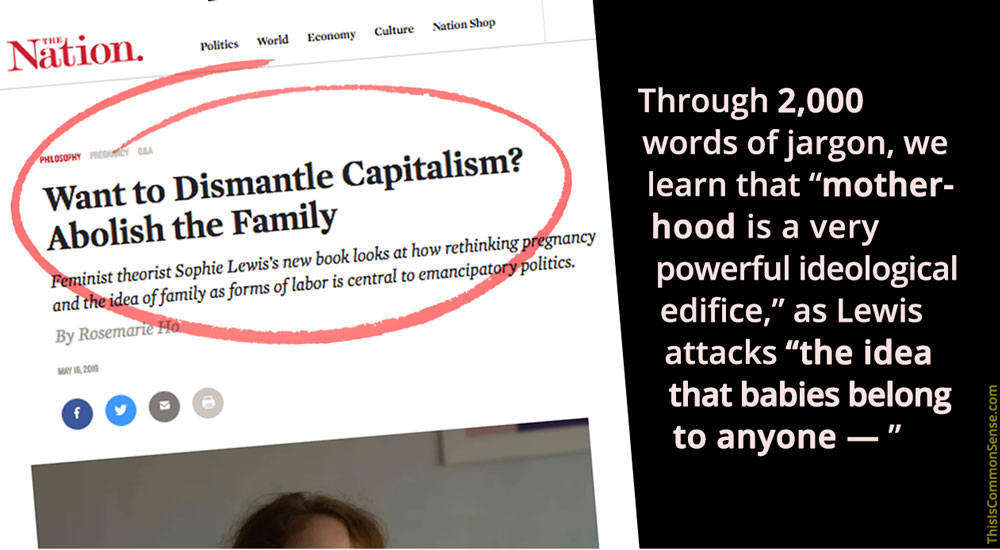
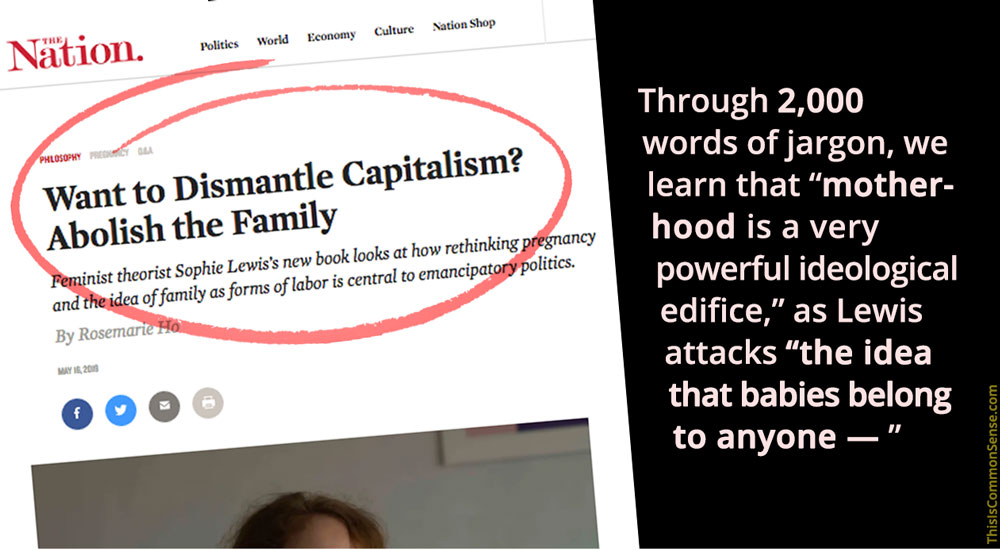
“Want to Dismantle Capitalism?” asks The Nation headline for a recent interview with feminist Sophie Lewis, immediately answering: “Abolish the Family.”

In a world of YouTube videos on how to do almost everything, apparently the progressive publication noticed something missing: There is no reliable guide for going full commie.

Rosemarie Ho prefaces her discussion with Ms. Lewis, author of “Full Surrogacy Now: Feminism Against Family,” by observing that “the most infamous demand of The Communist Manifesto is the ‘abolition of the family.’”

“The family, Marx and Engels noted, was where patriarchy and capitalism worked in tandem to produce willing, alienated workers,” writes Ho, “where women became little more than ‘instruments of production’ for the men who lorded over them.”

Ah, “little more” — how depressingly reductionist.

Ho applauds that Lewis “takes up this forgotten struggle” and “gives us an account of the material conditions — the biological and societal violence — that gestators, or people who are carrying fetuses, have to bear.”

“Mothers nurture,” acknowledges Lewis, “but they also kill and abuse their wards. That’s why it’s so valuable to denaturalize the mother-child bond. To do anything otherwise is to devalue that work. That’s the horizon that I think opens up the space for a revolutionary politics.”

Through 2,000 words of jargon, we learn that “motherhood is a very powerful ideological edifice,” as Lewis attacks “the idea that babies belong to anyone — the idea that the product of gestational labor gets transferred as property to a set of people.” After all, she informs that we should “think about babies as made by many people.”

Gestators of the world unite! We have nothing to lose but our sanity!

Oh . . . and the family. 

This is Common Sense. I’m Paul Jacob.


communism, socialism, freedom, capitalism, motherhood, family,

See all recent commentary
(simplified and organized)
See recent popular posts


Categories
meme Popular

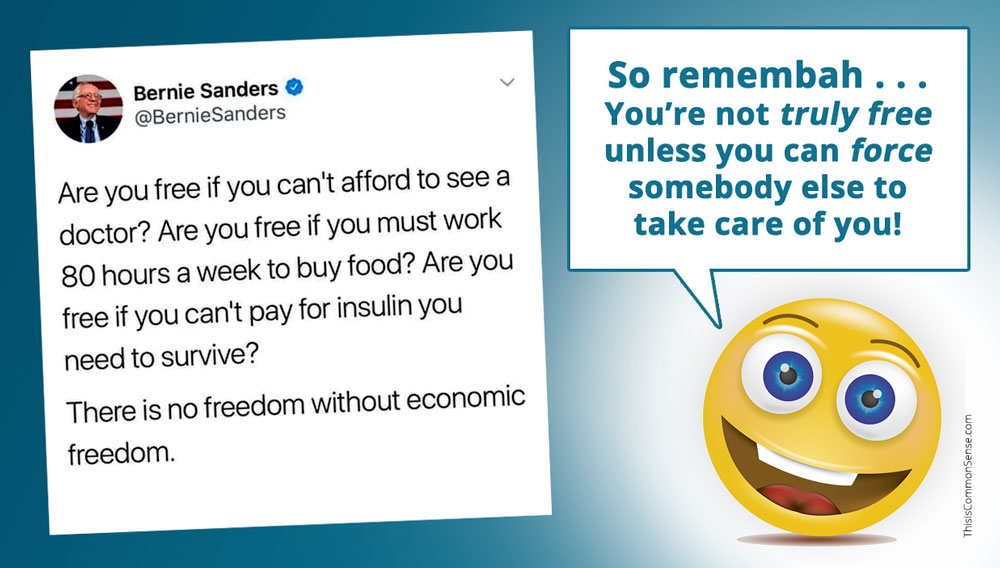
Are You Truly Free?

Categories
ideological culture media and media people Popular

Gray Lady Commies

The New York Times has long leaned left. But is it really a stable Pisa-tower lean, at this point? It sure seems that, in recent years, the Gray Lady has gone extreme, abandoning its “respectable” center-left perch. 

The change, economist Alex Tabarrok writes for FEE, appears to have happened “around 2010-2014,” when we can see “an inflection point” where phrases and buzzwords like “social justice” and “diversity and inclusion” increased in number in Times editorials and news stories.

Forget, for a moment, the why — is it demand side, with the paper trying to court Millennial readers; or supply side, a result of new hires out of journalism programs and other indoctrination factories; or a mixture of both? — and concern ourselves with how far will the Gray Lady go?

Communism, apparently.

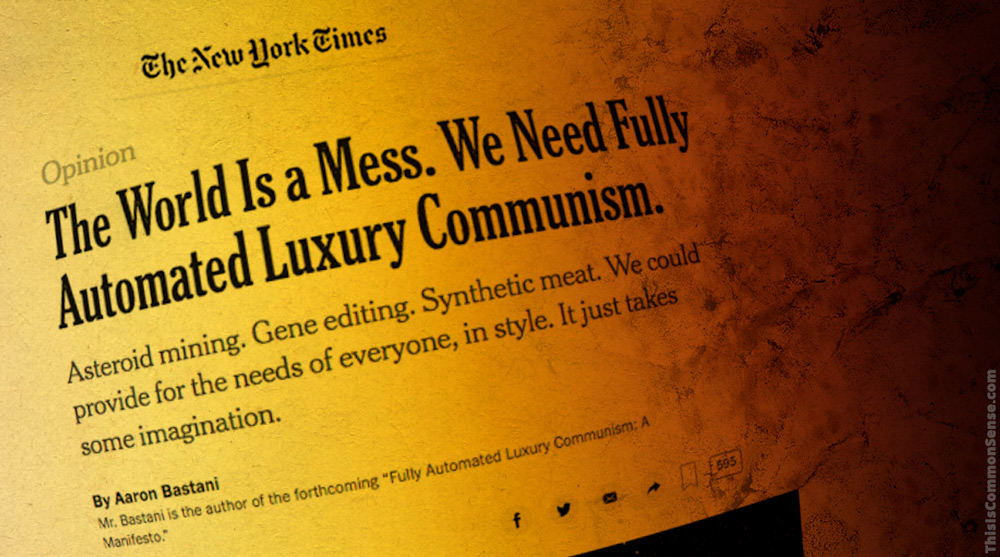
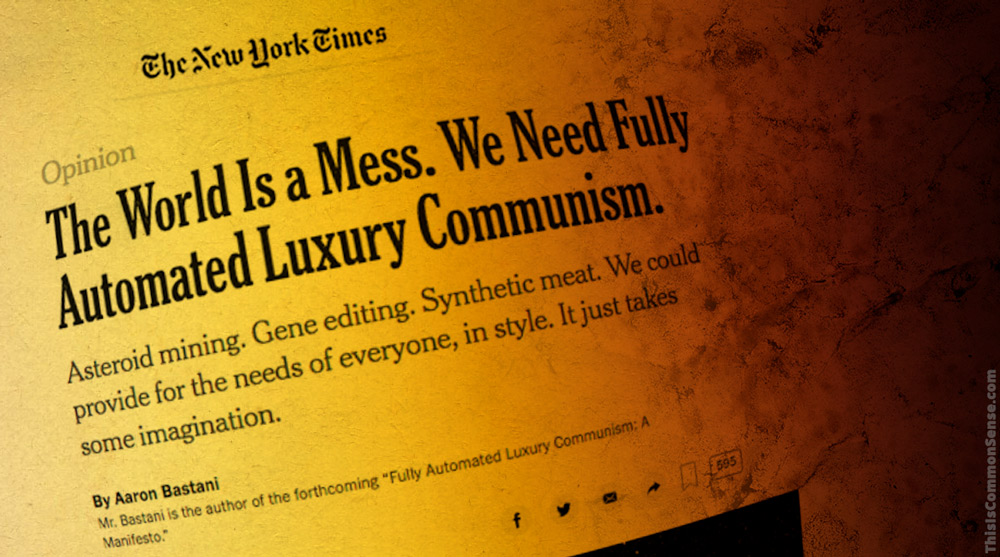
Or, at least, “Automated Luxury Communism,” as identified in what may be the stupidest article to appear in any newspaper in years.

“The plummeting cost of information and advances in technology are providing the ground for a collective future of freedom and luxury for all,” the author asserts, upon the evidence of innovations he has identified as arising . . . in our capitalist mixed economy, chiefly in the market sector: lab-grown burgers and “molecular whiskey.”

It all smacks of a loafer’s Marxism, with robots and AI as the proles. I could explain this better had the author bothered to do any real work on his vision, but, unfortunately (?), he offers nothing but a “wouldn’t it be neat if” blog post. 

That the Times’ placed on its front page.

I guess since Democratic pols are now calling themselves socialists, their lead thought organ must seize the advance guard position by going full commie.

This is Common Sense. I’m Paul Jacob.


PDF for printing

New York Times, communism, socialism, journalism, pandering, newspaper,

See all recent commentary
(simplified and organized)
See recent popular posts