
Categories
First Amendment rights national politics & policies partisanship

Who Is the Lawfare King?

Last Sunday on Meet the Press, Sen. Rand Paul (R‑Ky) addressed two areas where President Trump has stumbled in recent days, losing many conservatives and civil libertarians: censorship and lawfare. 

“Senator,” Kristen Welker asked, “do you believe that President Trump is sending the message that he only supports free speech when it’s speech that he agrees with?”

“Well, I can’t control everything the president says. And I don’t think that having the FCC weigh in on licenses is right. I will fight that,” the junior senator from Kentucky declared. “But I can tell you that throughout government, the censorship apparatus that Biden had put in place is gone.”

Under President Biden, the senator explained, employees and ex-​employees of both the FBI and Department of Homeland Security set up offices inside Twitter, while “Facebook was told to take down information concerning the origins of the Covid virus” under threat of “being broken up by antitrust. So we have had official censorship going on for many years now, and everybody on the left just looked the other way. 

“They actually had an office, an office of censorship.”

Welker then inquired if he thought it was “appropriate for the president to direct the attorney general to go after his political opponents”?

“I think lawfare in all forms is bad,” Rand Paul replied. “What they did to Donald Trump was an abomination. But yes, it is not right for the Trump administration to do the same thing.

“We need to get politics out of the judicial system as much as we can. But we can’t do it without acknowledging that the king of lawfare was Biden.”

True enough, with the full title: Marionette Censor Joe, King of Lawfare, First of His Name If Not of His Kind.

This is Common Sense. I’m Paul Jacob.


PDF for printing

Illustration created with Krea and Firefly

See all recent commentary
(simplified and organized)

See recent popular posts

Categories
national politics & policies partisanship

Abolish. Or Set in Stone

The filibuster is racist. 

That’s what Progressive House Caucus Chairwoman Pramila Jayapal (D‑Wash.) claimed … as long as Democrats were to control the U.S. Senate. 

“The choice is clear,” she once tweeted. “Abolish the Jim Crow filibuster.”

The filibuster demands a 60-​vote supermajority in the 100-​seat Senate in order to shut off debate and vote on most legislation. Yet, in recent times, both parties, when in the majority, have carved out exceptions.

To be clear, the majority party could at any time kill the filibuster. It is simply a Senate rule — not a law, not a constitutional provision. 

Why get rid of it?

If “we had the trifecta” (meaning control of both chambers of Congress and the White House), Jayapal urgently supports ending it: “because we have to show that government can deliver.”

Why keep the rule?

She wants to use the 60-​vote threshold against Republicans; she certainly wants to block them from delivering.

Mock Jayapal’s hypocrisy, as we may, but it is ubiquitous in the capital. Besides, there are more consequential issues to address. 

Either the United States Senate should have a filibuster rule or not. Let’s debate and decide. But one thing is clear: the Senate should not have a 60-​vote majority requirement that either majority party can jettison whenever it so desires. 

Put the filibuster into the Constitution. 

Or — because an amendment is such a long, arduous process — pass a statute establishing the filibuster in law. This would at least provide a presidential check on Congress monkeying around with it. 

And on this one matter, abolish the hypocrisy.

This is Common Sense. I’m Paul Jacob.


PDF for printing

Illustration created with Midjourney and Firefly

See all recent commentary
(simplified and organized)

See recent popular posts

Categories
government transparency partisanship term limits

A Bazooka to Congress

It is “like bringing a bazooka to a sword fight,” complains an anonymous long-​serving Democratic congressional aide.

“Democratic leaders are hammering Republicans,” Mike Lillis explains in The Hill.

At issue? The House Republican caucus is “considering term limits,” Punchbowl News was first to report, “on committee leaders of both parties if the GOP flips control of the House next year.” 

Republicans, since taking Congress back in the 1994 term limits wave, have mostly imposed a three-​term limit on committee chairmanships, when in the majority, and on a committee’s ranking opposition member, when in the opposition. What may be different in the next Congress is that Republicans are looking to impose term-​limits on committee leaders of both parties. 

Democrats, too. By House rule.

Though Democratic Party bigwigs won’t like it … especially current committee chairs who would get the heave-​ho next year, such as Representatives Frank Pallone (D‑N.J.) now in his 34th year in Congress; Bobby Scott (D‑Va.), in his 30th year; Adam Smith (D‑Wash.) in his 26th year; Bennie Thompson (D‑Miss.), in his 26th year; and Maxine Waters (D‑Calif.), in her 32nd year.*

Some younger congressional Democrats, on the other hand, see term limits … as an opportunity.

“High functioning organizations become so by building strong benches and limiting the tenure of leaders,” tweeted Rep. Dean Phillips (D‑Minn.), now in his 4th year. “No matter which party controls Congress in ’23, we should adopt term limits for committee chairs & get serious about developing a new generation of leaders.”

Lillis calls it “a recurring predicament for Democratic leaders.”

But no fuss at all for the rest of us: we’re for term limits. On committee leadership as well as Congress membership.

This is Common Sense. I’m Paul Jacob.


* Even without this change, these Democrats would lose their chairmanships in the next Congress, should the GOP gain a majority in this November’s elections. But with this change they would also be denied the position of ranking member and thus would lose their hold on the chairmanship if Democrats won back the majority in 2024.

PDF for printing

See all recent commentary
(simplified and organized)

See recent popular posts

Categories
incumbents national politics & policies term limits

The Age of Octogenarians

As someone who fervently hopes to some day reach the age of 88 — and still actively contribute — I have only heartfelt well-​wishes for Chuck Grassley, the senior U.S. Senator from Iowa.

Grassley celebrated his birthday earlier this month. Then, last week, after 59 consecutive years in elected office (six in the U.S. House, 41 years thus far in the Senate, along with 12 prior in the state legislature), the Republican incumbent announced he will be seeking re-​election to the U.S. Senate next year.

At 88, Mr. Grassley isn’t the oldest Senator — Sen. Dianne Feinstein (D‑Calif.) is three months his elder, and U.S. Rep. Don Young (R‑Alaska) owns the title of Oldest Octogenarian in Congress, born 13 days before Feinstein back in 1933. 

We all remember Sen. Strom Thurmond (R‑SC) turning 100 while supposedly still “serving” in the Senate. That wasn’t pretty. 

Grassley, on the other hand, appears in great shape, both mentally and physically — doing 22 push-​ups before cameras and a crowd at a recent event.

He would be only 95 years old when completing that full term. And he is very likely to be reelected.

“Grassley has proved to be the most reliable vote-​getter in Iowa for the entirety of his four decades in the Senate,” The Washington Post informed, concluding: “Grassley’s candidacy effectively then takes Iowa off the board as a competitive race.”

I have no problem with Sen. Grassley’s age. I do have a problem with the power of incumbency, a system that allows one man to wield power for decades and leaves our elections so much less competitive.

This is Common Sense. I’m Paul Jacob.


PDF for printing

See all recent commentary
(simplified and organized)

See recent popular posts

Categories
deficits and debt folly national politics & policies

Catastrophic! Calamity! The Debt

“Once again, the stability of the U.S. financial system is at risk,” warned CNN State of the Union host Jake Tapper, “thanks to political brinksmanship in Congress.

“If lawmakers do not act, the federal government will shut down this week. And, next month, the Treasury secretary says, the U.S. will not be able to pay its bills … which … could be catastrophic for the U.S. economy.”

Incredulous, Tapper further bemoaned, “that has not convinced a single Republican lawmaker to get on board to raise the debt ceiling.”

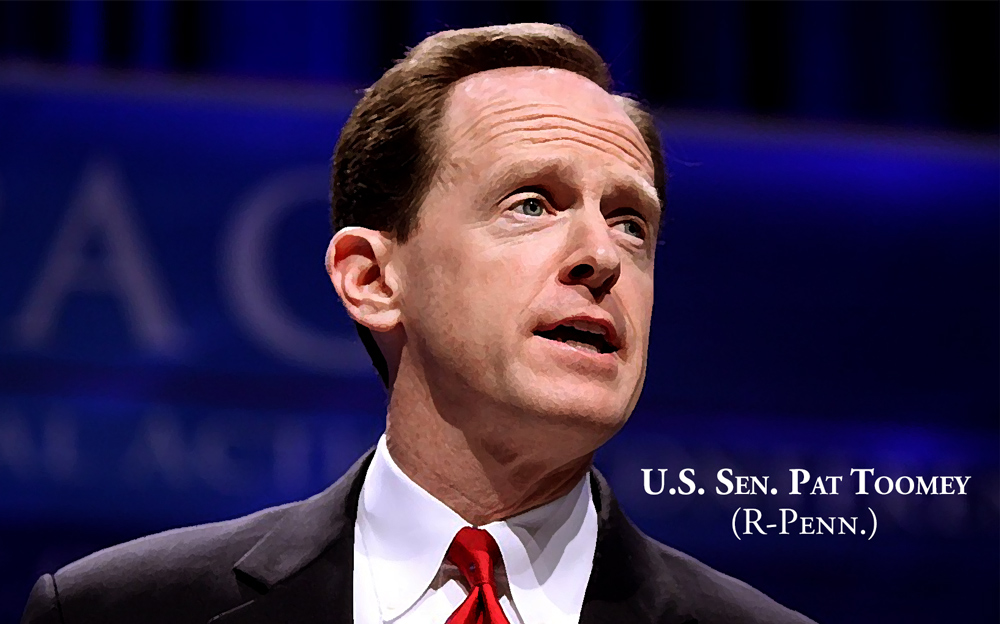
But he made the mistake of inviting retiring U.S. Sen. Pat Toomey (R‑Penn.) on the Sunday program.*

“[O]n combining the debt ceiling increase or suspension with the continuing operations of the government,” Toomey declared his vote is NO. 

“And there is no calamity that’s going to happen, Jake.”

Toomey explained that “after Republicans vote no, Chuck Schumer is going to do what he could have done months ago, what he could have done weeks ago, what he could do tomorrow, and that is, he will amend the budget resolution so that Democrats can pass the debt ceiling all by themselves.”

Noting that Democrats were “in the midst of an absolutely unprecedented, very damaging spending spree on a scale that we have never seen,” Toomey emphatically refused to “authorize the borrowing to help pay for it.”

Over the weekend, a Washington Post editorial attacked Republicans for being “unwilling to lift a finger to avoid financial calamity,” while excusing Democrats. 

“For their part,” The Post justified, “Democrats … want the same political cover they gave Republicans during Mr. Trump’s presidency by raising the debt limit in a bipartisan fashion.”

The nation’s newspaper of record in full-​throated advocacy of political cover.

This is Common Sense. I’m Paul Jacob.


* Sen. Toomey has been a stalwart term limits supporter in Congress. He leaves having kept a pledge to serve only six years in the House, left the Congress for six years before winning a Senate seat and now stepping down after two terms in the U.S. Senate.

PDF for printing

See all recent commentary
(simplified and organized)

See recent popular posts
Categories
Accountability insider corruption local leaders national politics & policies Voting

Bring the Bozos Home

“Sen. Rand Paul (R‑Ky.) announced Sunday he has covid-​19,” The Washington Post reports, “and four other GOP senators are quarantined. Sen. Amy Klobuchar (D‑Minn.) disclosed Monday that her husband, too, is infected with the virus.”

Social media was not uniformly brimming with support for the Kentucky senator, of course, and some folks noted, in earnest horror, that the Republican who had been shot at by a Bernie Bro and blindsided by his deranged Democrat neighbor had dared work six days in the Senate after being tested but before receiving his diagnosis.

He should have been sequestered!

To let the big “stimulus” packages sail through Congress?

But there are work-arounds.

“We should not be physically present on this floor at this moment,” argued Sen. Richard Durbin (D‑Ill.) yesterday, urging the Senate to facilitate social distancing by allowing remote voting. Asked about it at his Sunday news conference, President Trump gave thumbs up: “I would be totally in favor of it on a temporary basis.”

I say, let’s take this a step further: do it permanently

Remote voting makes sense in an emergency. Sure. But it also makes sense all the time, because legislators voting from their home states and districts rather than within the Washington swamp would hear more from constituents than special interest lobbyists and, therefore, likely represent us better. 

Plus, not tethered to life in Washington, or the confines of the capitol, we might reduce the size of congressional districts from over 700,000 people to more like 70,000 and see real representation return to our land. 

This is Common Sense. I’m Paul Jacob.


PDF for printing

telecommute, Rand Paul, Congress, Senate, Coronavirus, Corona Virus,

Original photo by Manuel Bahamondez H

See all recent commentary
(simplified and organized)

See recent popular posts