Categories
free trade & free markets national politics & policies too much government

More of the Same?

For those who hated NAFTA, and have supported Donald Trump in his complaints about “the very bad deal” that the North American Free Trade Agreement [allegedly] has been, I ask: what was bad about NAFTA that isn’t in Donald Trump’s new version, the United States-​Mexico-​Canada Agreement?

Actual question. I am not in the least bit interested in gotchas, here. I am willing to celebrate USMCA when (a) I can make sense of it and (b) it proves not just more of the same.

The thing I liked best about NAFTA was that it had “Free Trade” in the title. I like free trade. Trade is good; freedom is good. It is not generally bad to trade with Mexico and Canada — for Mexicans, Canadians, and Americans. I simply have trouble believing that politicians and their aides (along with overly-​friendly lobbyists) know better than market competition what the terms of those zillions of deals should be.

But I freely admit, what I didn’t like about NAFTA was that there was more “free trade” in the title than in the agreement itself.

NAFTA was managed trade. 

As far as I can make out, so is USMCA.

Oddly, I just heard two of the three Daily Wire guys* praising USMCA for setting quotas on how much of what can be produced where.

Quotas and mandates and the like are not free trade.

“Managed trade” is just another way of saying “protectionism.” Savvy politicians don’t even like calling it “managed trade.” They call it “fair trade.” 

Free trade is fair enough. Politicians’ “fair trade” isn’t free enough.

This is Common Sense. I’m Paul Jacob.


* Andrew Klavan and Michael Knowles, recent podcasts: dailywire​.com.

PDF for printing


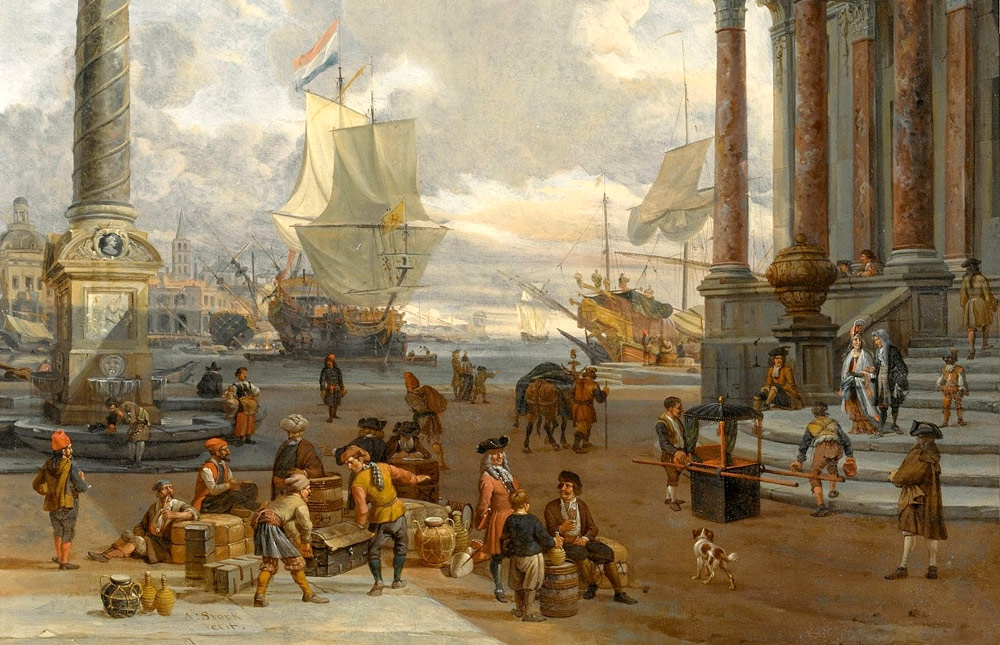
Illustration: Dutch free traders in Harbor Scene by Abraham Storck  (1644 – 1708)


Categories
crime and punishment folly general freedom local leaders moral hazard nannyism privacy responsibility too much government

The Winds of Regulation

Among the many goofy occupational licensing laws in these United States, Arizona’s licensing for professional blow-​drying services is up there with the silliest. 

“Under current law, using a blow-​dryer on someone else’s hair, for money, requires more than 1,000 hours of training and an expensive state-​issued license,” we learn at Reason. “Blow-​drying hair without a license could — incredibly — land you in jail for up to six months.”

This came into the news because of a campaign to deregulate the cosmetology industry — just a bit, anyway. Gov. Doug Ducey, in his recent State of the State address, “mocked the state agency that licenses stylists, barbers, nail technicians and affiliated professionals in Arizona, and endorsed legislation to remove training requirements for those who simply wash, brush and blow-​dry customers’ hair.”

Licensed cosmetologists — well, at least some organized ones — have gone into a tizzy.

Hardly surprising, since occupational licensing, though usually argued for on consumer safety grounds, rarely finds consumers clamoring for it. 

It’s groups of established businesses, professionals.*

Brandy Wells, the sole non-​cosmetologist on the state board overseeing the regulation of the industry, supports the liberalizing bill. So of course she has been called every name in the book. But even she was amused by one stylish denigration: “your logic on deregulation of cosmetology is much like your hair, dull and flat.”

The issue may seem trivial, with not all that much on the line — though jobs are … and freedom is

But it doesn’t lack for hot air.

This is Common Sense. I’m Paul Jacob.


* As Adam Smith argued, whenever businessmen (“dealers”) in the same industry group together, their proposals should be listened to “with great precaution.”


PDF for printing


Categories
Accountability folly free trade & free markets too much government

Jonesing for Disaster

First, do no harm. Second, stop harming.

You might think that these would be the Two Commandments of Government.

But no.

Politicians make a good show of saving us, sure. Sadly, appearance alone suffices. For them. Much easier to announce a new program than get rid of a harmful old one. 

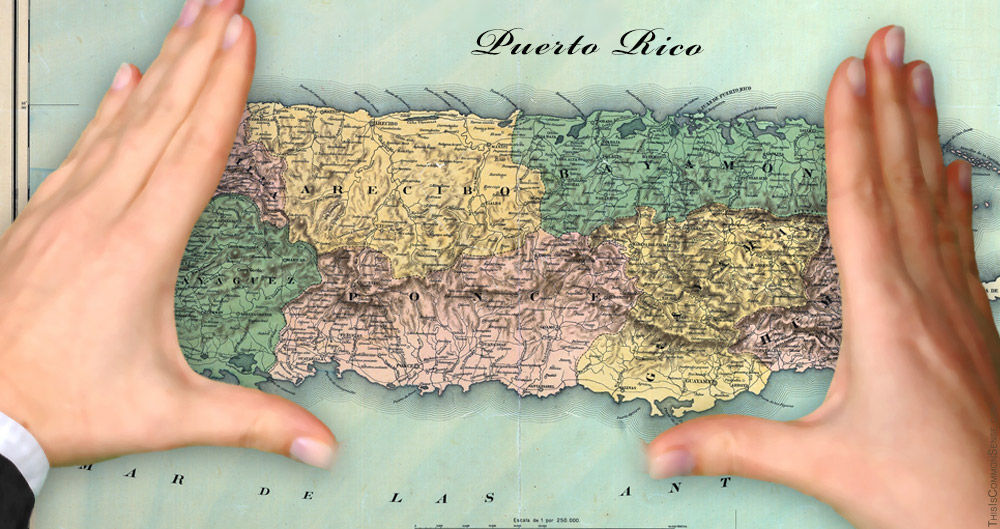
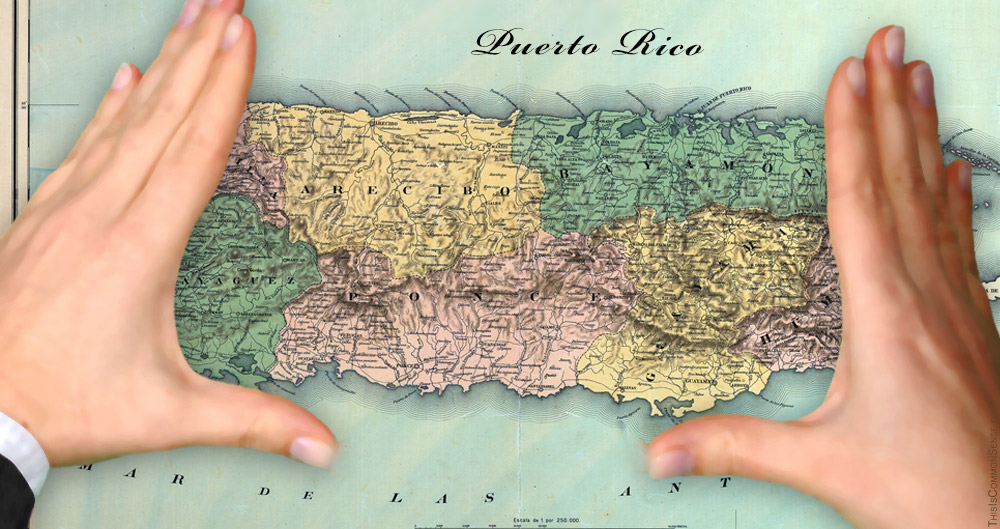
Latest case? Courtesy of a storm and a new president, we now get to witness hurricane recovery mismanagement all over again, but this time outside the continental United States.

“The administration announced some bad news for Puerto Rico,” writes Scott Shackford at Reason. It will not, Mr. Shackford explains, “be waiving the Jones Act, which significantly restricts the ability of foreign or foreign-​owned ships from bringing goods to Puerto Rico.” 

The “unincorporated U.S. territory” that is the island must take its lumps.

The Jones Act* limits foreign ships port access … down to one. The mandate allowing port-​to-​port commerce only to American-​manned ships is designed to save a few jobs and grease a few union wheels in the mainland.

And now, especially, that old, ongoing “centralized government planning for the benefit of a small group of powerful U.S. shipping interests” amounts to a real kick to a people already devastated by Hurricane Maria.

Closing ports to much needed help doesn’t help. An emergency order could suspend the ongoing harm of throwing roadblocks in the way of a swift recovery and rebuilding.

Or Congress could repeal the Jones Act entirely.

Neither is likely.

So the wounded Puerto Ricans — prior to the storm hobbled by years of territorial misgovernance — can expect more fake government help. 

This is Common sense. I’m Paul Jacob.


* Not to be confused with the Jones-​Shafroth Act of 1917, which set up territorial  governance of the island.


PDF for printing


Categories
free trade & free markets national politics & policies responsibility too much government

The Skinny on Trumponomics

President Donald Trump does not trust economists. So he is demoting the Council of Economic Advisors, booting out of the Cabinet the Council’s chairperson.

If this were only because economists as economists cannot do what he has been able to do — make a big success in business and trade — we could give him something like a pass.

After all, successful entrepreneurs have a knack for guessing an unpredictable future. Economists, not so much. Why the difference? Maybe because entrepreneurs have “skin in the game.” Governments boards and bureaus — or endowed professorships — don’t risk anything like skin.

Besides, prediction is an art, not a science.

Could Trump be fooled by his knack for working with real risk?

But all this may be irrelevant.

Trump’s problem seems to be that he cannot find enough reputable economists to jump on board his protectionist bandwagon.

Trade barriers, high tariffs and punitive measures to control corporate behavior — among Trump’s most popular policies — aren’t big among economists.

According to Josh Zumbrun, writing in the Wall Street Journal, a “survey of every former living member of the CEA for both Republican and Democratic administrations found that not one member publicly supported Mr. Trump’s campaign.”

Economist Pierre Lemieux, writing in response to Zumbrun’s article, clarified Trump’s particular problem: economists “have methods and theories that prevent them from saying stupidities. They are difficult to turn into parrots. And they believe in the benefits of exchange.”

That latter notion, really basic, is what protectionists like Trump do not understand.

And the kind of predictions economists can successfully make run like this: “Well, that won’t work!”

It’s usually said about protectionism.

But whose skin is on the line now?

This is Common Sense. I’m Paul Jacob.


Printable PDF


Categories
folly free trade & free markets meme moral hazard national politics & policies

Trump’s Dangerous Idea

A lot of people were impressed by the reasonableness of Donald Trump’s foreign policy speech yesterday … despite the usual hyperbolic promises of “best” and “great” and “beautifully.”

Its general tenor? Refreshing. Rejecting post-​Cold War foreign policy for a return to “national interest” and “America first”? Long overdue. Like Trump, I think we should eschew nation building.

But still there is that one big problem: Trump is a mercantilist. He believes in protectionism. He thinks that trade has to be “fair” in order to benefit both participants. He thinks NAFTA and similar trade agreements (which generally promoted trade while still reserving a lot of room for government futzing about) are what hurt American industry. Trump is always blaming the “bad deals” made with Mexico and China, rather than placing the blame where it squarely belongs, on

  • America’s world-​high corporate income tax, and
  • chaos of regulatory excess, and
  • impenetrable tax code.

But protectionism makes sense to a lot of people. They are incredulous when they hear the (well-​established) idea that free trade — even unilateral free trade — is a benefit to the people who live under it.

Surely, they snort, when you target aid or protection to some industries, you are doing good, right?

Wrong. Oh, yeah, of course protectionism protects the chosen few, the advantaged. That’s what it obviously does. But it doesn’t protect the general interest – consumers pay more and producers allocate resources to less valued uses.

You have to look beyond the obvious (“the seen”) to get the full picture (“the unseen”).

Trump’s at his most dangerous right here — forget his loose talk — by continuing to pretend that protectionism helps America.

We cannot afford another Smoot-​Hawley.

This is Common Sense. I’m Paul Jacob.


Printable PDF

Donald Trump, trade, protectionism, Donald Trump, war, borders, Bastiat


Common Sense Needs Your Help!

Also, please consider showing your appreciation by dropping something in our tip jar  (this link will take you to the Citizens in Charge donation page… and your contribution will go to the support of the Common Sense website). Maintaining this site takes time and money.

Your help in spreading the message of common sense and liberty is very much appreciated!


Categories
free trade & free markets national politics & policies

Buy Whoppers to Oppose Whoppers

U.S. Senator Sherrod Brown has proposed a boycott of Burger King. Try Wendy’s or White Castle instead, he urges.

Why? Are the Burger King burgers moldy now?

No, they’re still delectable. In fact, I’m stepping up my patronage of Burger King thanks to Brown’s attack. All who seek to productively improve their lives should follow suit.

For that’s the actual crime here. Honest self-​improvement. Contrary to Brown, though, it deserves no chastisement.

Burger King has been caught pursuing an opportunity to improve its offerings and bottom line. It is buying Tim Hortons, a Canadian coffee-​and-​donut chain. It will also be moving its headquarters to Canada.

Why?

Because our federal government taxes corporate earnings more heavily than many other countries do, the Burger King move north means a smaller tax bite. More money for the shareholders.

And, thus, less money for Uncle Sam.

Fine with me. I don’t begrudge an honestly earned dollar. And our government’s wastrel ways  won’t be cured by ever-​higher taxes on us. But if politicians fear the exodus of U.S. firms for tax reasons, why not eliminate that motive by reducing corporate taxes?

Brown gestures in the direction of lower taxes but also demands a “global minimum tax rate” to thwart absconders. Nah. Chuck the stick. Just use the carrot. Slash what U.S.-based firms must pay and American firms will stay.

Slash them enough and maybe successful foreign firms will move HQs here, too.

Entice the economic titans who benefit us so much; don’t chase them away. Instead of badgering with boycotts, inspire with freedom.

This is Common Sense. I’m Paul Jacob.

Categories
free trade & free markets ideological culture national politics & policies

China Syndrome, 2012

The two major presidential candidates, incumbent Obama and challenger Romney, must spend their final weeks of the campaign appealing to

  1. Members of their respective parties disappointed enough to stay home on election day — or vote the dreaded “Third Party” ticket;
  2. Independent voters apt to find something distasteful about both candidates;
  3. The apathetic and the uninformed.

How to appeal to all three groups simultaneously? Well, go for the old standby: fear and hatred of foreigners.

This year, it’s the Chinese.

Romney started the China-​bashing by calling our Chinese trading partners “cheaters.” Apparently he is much vexed about how the Chinese don’t respect established intellectual property rights, “stealing” our technology, “everything from computers to fighter jets.” Of course, this mainly happens after “we” set up manufacturing plants for that technology there. He charged that President Obama has not deigned to “stand up to China.”

Earlier, he had accused China of manipulating its money in its favor. He seems to have dropped that, perhaps out of embarrassment — our own Fed’s monetary manipulations, after all, dwarf China’s.

The Obama campaign responded by avoiding the intellectual property issue just as Romney now avoids the monetary one, calling Romney himself a “cheater.” You see, in his Bain Capital days, Romney invested in firms that relocated jobs to “low wage countries like China.” Romney, we are told, has “never stood up to China.”

By which is meant: Romney engaged in globalism and opposed protectionism.

Is Mr. Obama really suggesting that prosperity will come if we shrink from global competition and enact barriers to international trade in goods and services?

The biggest problem the U.S. economy faces isn’t Beijing; it’s Washington.

This is Common Sense. I’m Paul Jacob.

Categories
free trade & free markets

Stark Protectionism

The markets of the ancient world were often sewn up by kings and courts and priesthoods. In Egypt or Assyria or Rome, you had to pay off a guild to practice a trade, at least if yours was a common craft, and even ask permission of the sovereign.

Closed entry was the norm, and it certainly contributed to the age’s forbidding pyramid of wealth (which overshadows present One Percenter concerns): Vast hordes of the very poor and the “just scraping by”; tradesmen; slaves to the landed and wealthy; and then the very few rich and powerful. In Europe, this system opened up, in fits and starts, after the fall of Rome, but the basic idea was retained in the policy of mercantilism, against which Anders Chydenius, Adam Smith, and the exponents of laissez faire argued so persuasively. The social advantages of competition for customers and laborers and capital became widely recognized.

And yet free trade never won full sway anywhere.

Cut to today. Dateline: St. Louis, Missouri.

Michael Munie

Michael Munie wanted to go into the moving business, but needed the permission of … his competitors.

This, the very opposite of “free enterprise,” is the living embodiment of mercantilist “public-​private” collusion, where the state secures existing businesses from “upstart” competitors in what Timothy Sandefur calls “an especially stark example of legislative protectionism.”

So, best wishes to Mr. Munie’s lawsuit, Munie v. Skouby, and the Pacific Legal Foundation, which has helped him bring it. Freedom requires the breaking down of barriers to business entry. Always has. Always will.

This is Common Sense. I’m Paul Jacob.

Categories
free trade & free markets national politics & policies

Blame China

The Great Depression was made “great” by government mismanagement. 

Political action, first under Hoover and then under FDR, made things a whole lot worse. And it wasn’t just the Democrats’ misguided New Deal barrage of regulation, cartelization, and general anti-​business central planning. The Hoover Era Smoot-​Hawley Tariff, a huge Republican reassertion of high-​barrier protectionism, crippled international markets and devastated the one industry it was meant, especially, to help: agriculture. 

Protectionism is the idea that government should outrageously harm domestic consumers to “protect” domestic producers. And politicians, often thinking they must “do something” (i.e., “anything”) often feel the push to “save us all” by erecting barriers to trade. Since the crash of 2008, I’ve kept an eye on our Washington insiders, to see if they’d try to revive Thirties-​style self-​destructive nostrums.

Well, we’ve got a sighting. 

Congress is gearing up for some anti-​Chinese protectionism. An unfortunately bipartisan movement is festering there, saying China’s yuan is too valuable, making trade “unfair” for American producers. The Senate seems bent on passing the Currency Exchange Rate Oversight Reform Act.

But, according to Daniel Ikenson, what’s really going on is politics: Faced with “public approval ratings hovering in the low-​to-​mid teens, an embattled Congress is looking for plausible scapegoats for the dismal state of U.S. economic affairs.”

This is not sophisticated economic theory. It’s not conscientiously developed public policy.

It’s grasp-​at-​anything grandstanding.

And it could do a whole lot of harm.

This is Common Sense. I’m Paul Jacob.

Categories
free trade & free markets

Tire Trade War, Tiring

Political folly comes around, again and again, like a puncture in a rapidly deflating tire as you drive down the freeway. The end is never good.

President Obama and congressional Democrats pushed a tariff hike on China-​made tires, up to 35 percent — and the WTO okayed it. They excuse their action because they wish to “retaliate” against China for its alleged monetary “manipulations” — manipulations that bear remarkable resemblance to our own Federal Reserve’s policies, by the way — which they say cause our current trade imbalance.

And, like non-​economists everywhere, these buffoons judge the trade deficit a horrible thing. The fact that U.S. consumer’s get great benefit from lower-​priced goods coming from China, and can — as a result of less expensive, Chinese-​made tires – afford to replace their tires more often, thereby saving lives and health-​care costs, doesn’t appear in politicians’ protectionist arguments.

It’s the economy that’s making our representatives stupid, of course. Blaming foreign competition is an easy out, when times get tough. It helps you avoid blaming your own country’s regulations, taxes, and (ahem) monetary policy.

This blame game is nothing new. The Smoot-​Hawley Tariff was pushed through early in the Great Depression, and it made a lot of sense to … politicians.

But the the trade wars the infamous tariff engendered became a major factor in making the Great Depression so Great.

Our politicians, reviving tired old policies — regarding tires, no less — merely make matters worse. Greatly worse.

This is Common Sense. I’m Paul Jacob.