Categories
media and media people national politics & policies subsidy

Propaganda Shoved Where?

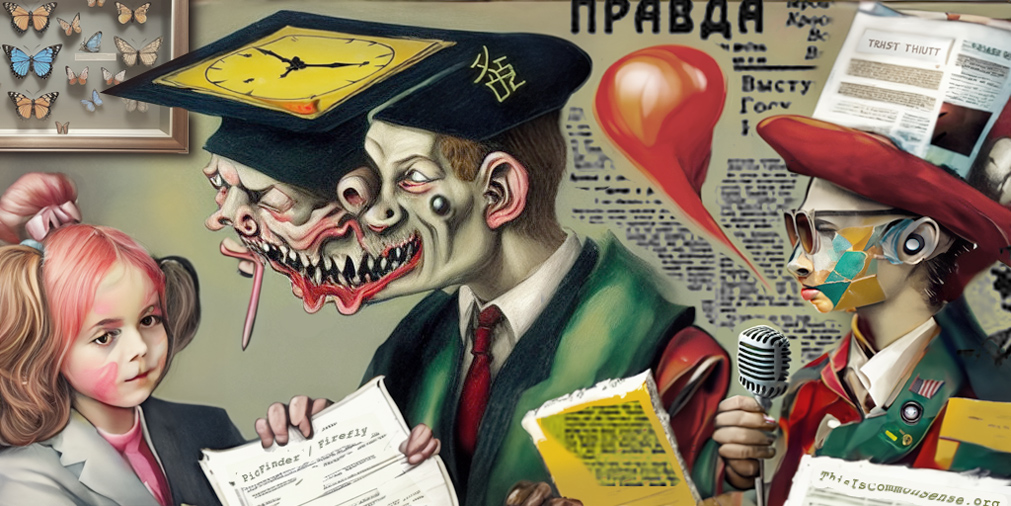
The continued existence of “public radio” and “public television” is out of place in these United States. Not because it’s partisan — all news vendors tend to toe some partisan line — but because it’s partisan and taxpayer subsidized.

Though NPR aficionados tend to downplay the subsidies to NPR and PBS, what public media boosters have more consistently done is deny the partisanship

They have no standing any longer — if the evidence of our senses weren’t enough. 

In “The Bell Finally Tolls for National Public Radio,” Matt Taibbi explains how the media behemoth’s CEO Katherine Maher admitted NPR’s and PBS’s partisanship in her defense of it.

That won’t help her case in Congress, though, notes Mr. Taibbi. 

While the New York Times insists that tax-​funded “public” media “improves the lives of millions of Americans” and “strengthens American interests” (presumably by being relentlessly progressive), it has no defense to Taibbi’s indictment: the branches of the Corporation for Public Broadcasting have taken “the country’s signature public news shows into an endless partisan therapy session, a Nine Perfect Strangers retreat for high-​income audiences micro-​dosing on Marx and Kendi.”

Taibbi makes clear just how annoying the dish served by CPB/​NPR/​PBS is, the entities seeing no “problem with taking funds from a huge plurality or even a majority of citizens and pursuing a nakedly politicized, ear-​splitting propaganda project in opposition to the views of those people. NPR is the vegetables we refuse to eat, administered up a different entrance for our own good.”

I was thinking about the blight upon our eyes and ears and reason, but point taken.

De-​fund National Public Propaganda immediately.

This is Common Sense. I’m Paul Jacob.


PDF for printing

Illustration created with Krea and Firefly

See all recent commentary
(simplified and organized)

See recent popular posts
Categories
media and media people national politics & policies

SuperPressPAC Problem?

Who wouldn’t want the media behind them — air-​brushing the public images of their candidates; telling stories to dramatize the political agenda items they’re running on? 

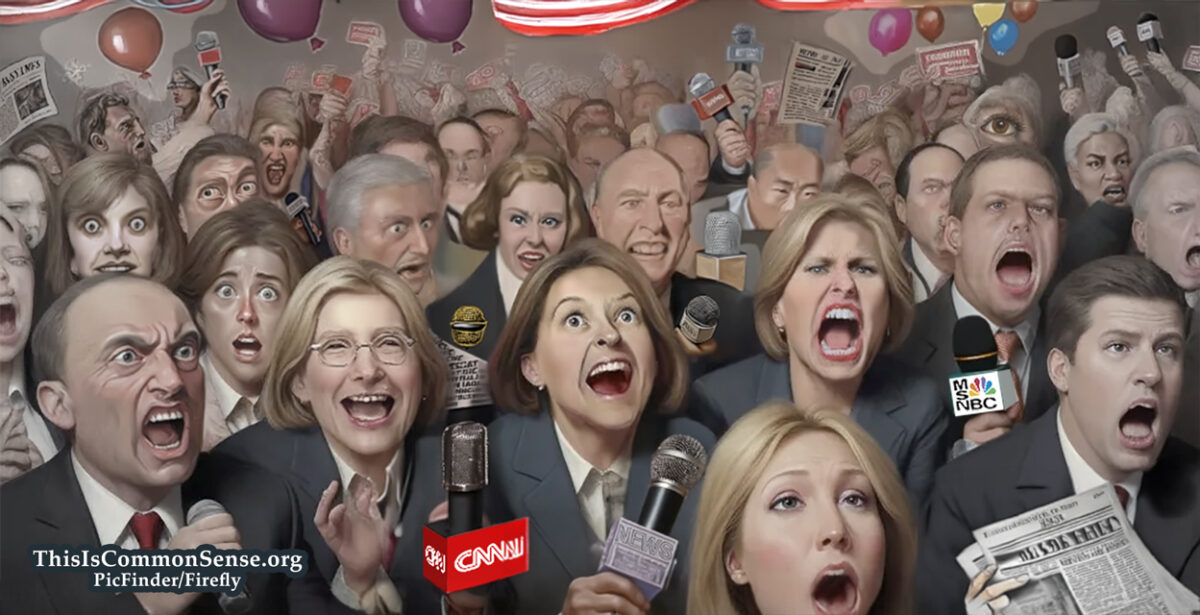
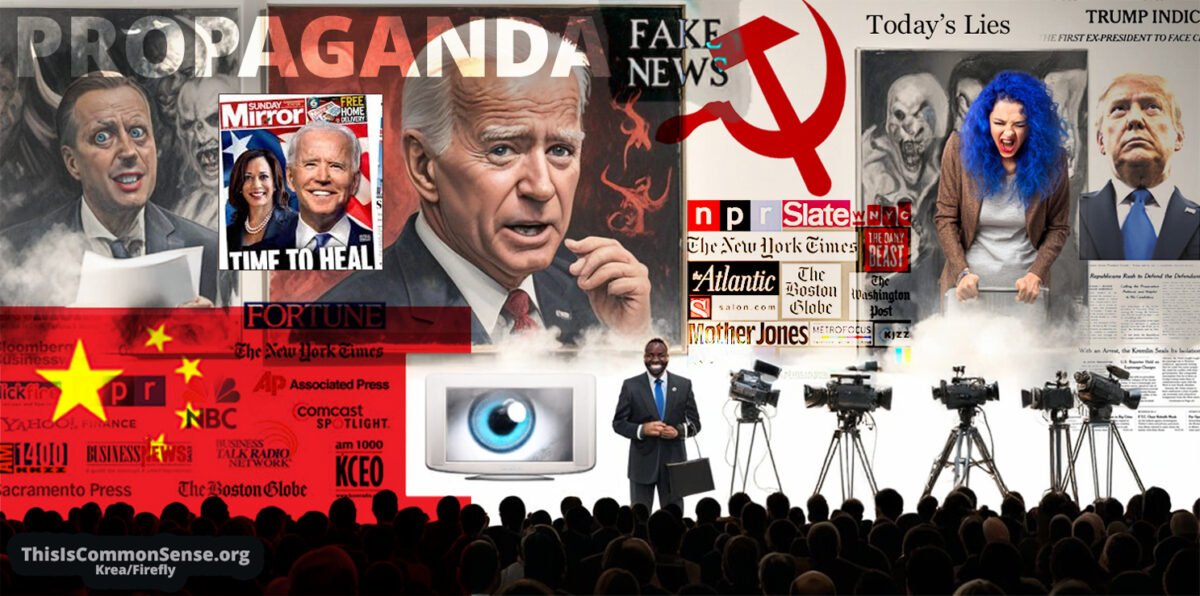
Back in November 2015, I agreed with then-​Senator and presidential candidate (now Secretary of State) Marco Rubio’s characterization of the national news media as a “SuperPAC” for national Democrats. 

How to even place a monetary value on the relentlessly one-​sidedly progressive news coverage on network TV and in print outlets like The New York Times and The Washington Post?

But is there a downside? Could this Super-​est of all SuperPACs possibly be, on balance, less than helpful?

Let me posit that (a) the Washington press corps is ideologically to the left of the Democratic Party and, accordingly, (b) the national news media lures liberal Dems to far-​out leftist positions that they’d otherwise never dare entertain — all because there exists this massive supportive left-​wing echo chamber.

Then, on Election Day, national Democrats discover quite abruptly that, unlike DC’s editors and reporters, regular folks don’t like high gas prices or men winning women’s sporting events or releasing violent illegal migrants to commit more crimes. And, doggone it, they cast a lot more votes than the Beltway’s fifth column, er, Fourth Estate. 

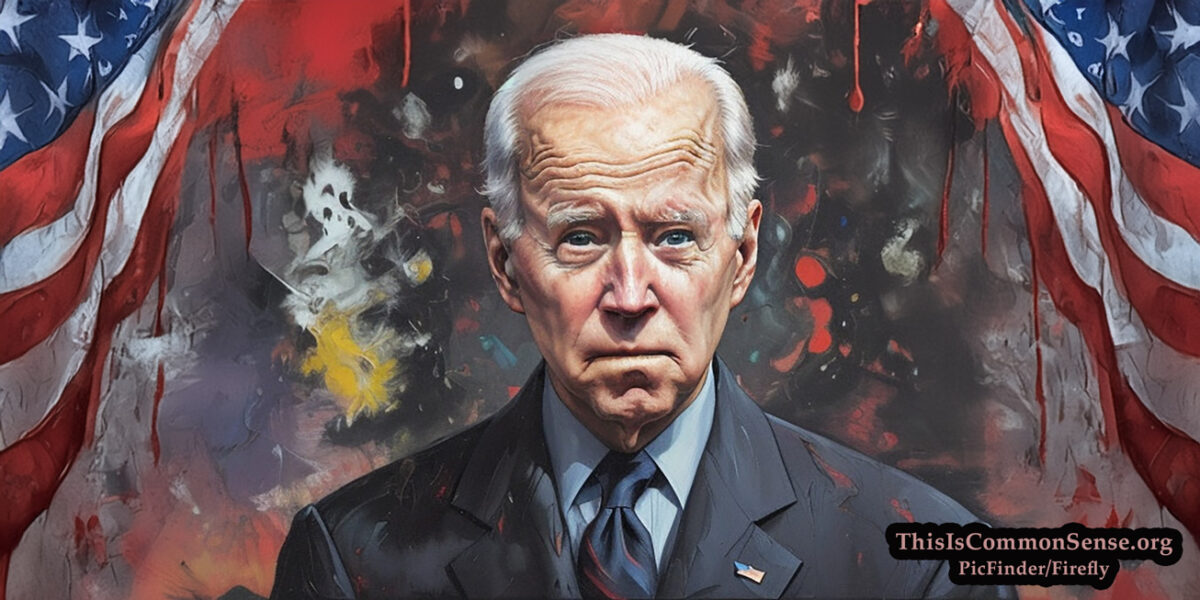
Take, for example, the current controversy regarding former President Biden’s cognitive abilities; consider, also, the decisions made by Mr. Biden and auto-​pen possessing handlers. 

Would a Republican president and his White House advisors ever think for a second that they could get away with keeping the press away from the commander-​in-​chief of the Free World, holding only heavily staged public events? For months? Forever

I don’t think so. The mainstream media would — rightly! — question, berate, harangue and bloviate until the cognitive functionality of the POTUS had been popularly established. 

But the Washington media did not hold a Democrat president to that (any?) standard.

Thus enabled, Biden kept going. 

Costing Democrats!

This is Common Sense. I’m Paul Jacob. 


PDF for printing

Illustration created with Krea and Firefly 

See all recent commentary
(simplified and organized)

See recent popular posts

Categories
government transparency

De-​Classification or Re-Regurgitation?

What do the JFK assassination files and an obscure booklet called “The Adam and Eve Story” have in common?

Both are examples of how the CIA and other Deep State actors keep us guessing and in the dark: by over-classification. 

A “sanitized” copy of Chan Thomas’s immortal classic of seeming ultra-​nuttery, the aforementioned “Adam and Eve Story,” was de-​classified in 2013. Now on the CIA’s website, it floats a wild theory about human history and life on this planet, complete with repeated global, world-​turned-​on-​end catastrophes. 

Most people had never heard of the work until de-​classified and placed on the website. The Wikipedia entry mentions the de-​classification of the document but not why it was classified as secret in the first place.

Here’s a theory: to confuse us

The only reason most people ever give the booklet a second glance is because the CIA made it secret.

Now turn to the present, with something circulating today as “evidence” from the recent release of backlogged JFK assassination documents: a summary of passages in the New Left journal Ramparts, June 1967. It reproduces a rumor about one Gary Underhill and his alleged blurting out that “a small clique within the CIA was responsible” for the shooting in Dealey Plaza. 

All the rage online, but this document was merely the re-​regurgitation of public information — which is what an awful lot of classified material is.

We take note of this Underhill story not because it proves anything, but because the report was made secret in the first place. 

It’s almost as if they want some people to believe something, and others to scoff at it all. 

But maybe what they are doing is burying us in useless “information.”

This is Common Sense. I’m Paul Jacob.


PDF for printing

Illustration created with Krea and Firefly

See all recent commentary
(simplified and organized)

See recent popular posts

Categories
ideological culture Voting

Don’t Kill Yourself

As Donald Trump appeared to be winning last night, the number of Twitterers who proclaimed a hankering or a design to kill themselves rose dramatically. Michael Malice and others found humor in it, but it’s a super-​saddening development, if you ask me.

These Kamala Harris voters are not really going to kill themselves. It is just something to say on Twitter.

I really hope I’m not wrong about this.

I’ll leave to others the counsel of life. That is the job of friends and family and emergency hotline dispatchers. My counsel is different: talking about suicide because your candidate lost is undemocratic. If the authoritarian pronouncements of both major candidates alarmed you about the danger of anti-​democratic trend, this fad should raise the alarm several decibels.

The whole point of democracy is to allow a transition of power sans bloodshed. And that requires both contenders and supporters not to shed each other’s blood … or their own. When they fail.

It’s a requirement. Not to over-react.

The losers have to accept the loss, and the winners have to refrain from using the state to punish the losers further. 

It’s sort of that simple.

Resignation is key, as scientist Lawrence M. Krauss (@LKrauss1) indicated: “Going to bed, reasonably resigned to Trump win at this point as it seemed to me from a distance for some time. He may be a nut, a liar, and a crook, but the bright side is a likely boost free speech and due process at unis and bump in tech sector, if we survive the rest.”

We will survive. If Trump wins the Electoral Vote (I’m going to bed, too, before a final determination), or if Harris does.

This is Common Sense. I’m Paul Jacob.


PDF for printing

Illustration created with Midjourney

See all recent commentary
(simplified and organized)

See recent popular posts
Categories
media and media people social media

TikTok Astroturf

According to sociologist Jacques Ellul, propaganda is not rhetoric; it’s not you and me expressing our opinions and trying to persuade others; it’s not our letters to editors of newspapers or the “memes” we share online. Propaganda is the coordination of many forms of social influence, of many media. States are usually involved, or political parties (wannabe states) or huge interest groups (which can be bigger than many states).

If, however, you secretly get paid to push a message in a specific way, you may be a propagandist.

Take TikTok.

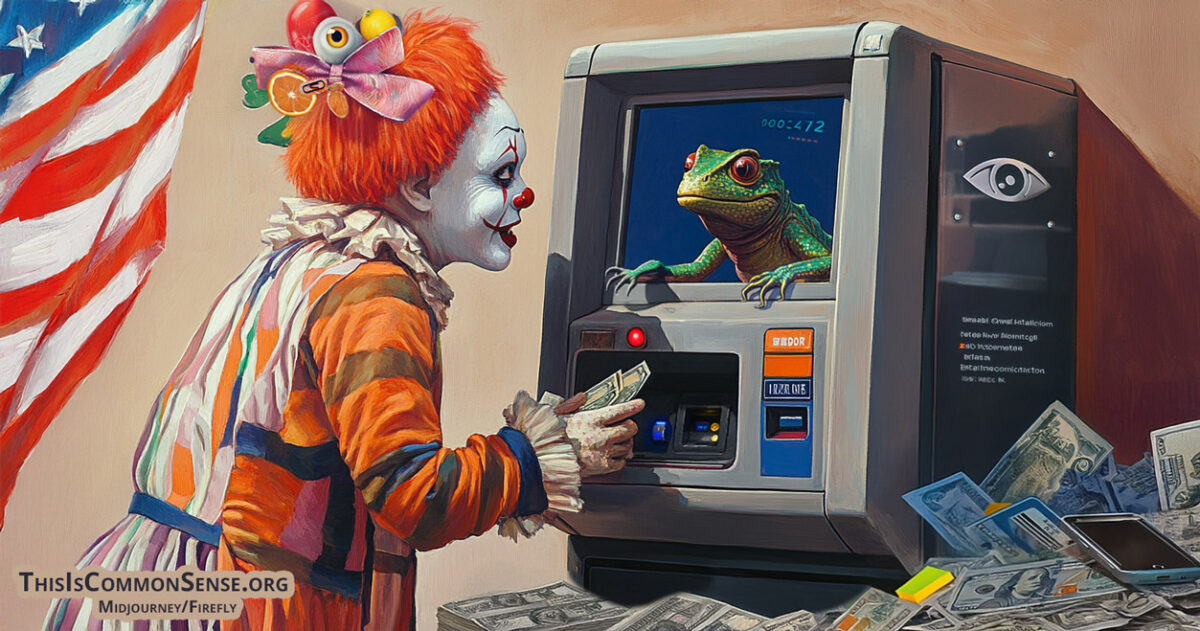
This is the video-​sharing social media site so popular with young people. It’s been controversial; I’ve discussed it before. But I’m no expert. Still, I was not surprised to learn that Democrats have been paying “social influencers” on that platform to serve up the Democratic Party line.

A TikToker named Madeline Pendleton made a video about how the Democrats offered “nearly $15,000” to talk about “how awesome the Democratic Party is.” She found the idea ridiculous, characterizing the offer as a way to distract attention from the party’s “genocide.” But she recognizes that it can be effective. Many of her “mutuals” on TikTok are indeed spouting the same lines that she was “pitched” by Democrats, and they did so within 48 hours of her receiving the offer.

She went on to say that she received two offers: one to make ongoing videos up to the election, and the other to scarify Heritage Foundation’s Project 2025, which she is no fan of, but thinks is not that big a deal.

“You guys should be aware that that when you see videos like that, the Democrats are actively paying people to talk about how awesome the Democrats are.”

Awesome propagandists, anyway.

This is Common Sense. I’m Paul Jacob.


PDF for printing

Illustration created with Midjourney and Firefly

See all recent commentary
(simplified and organized)

See recent popular posts
Categories
incumbents insider corruption

Involuntary Campaign Contributions

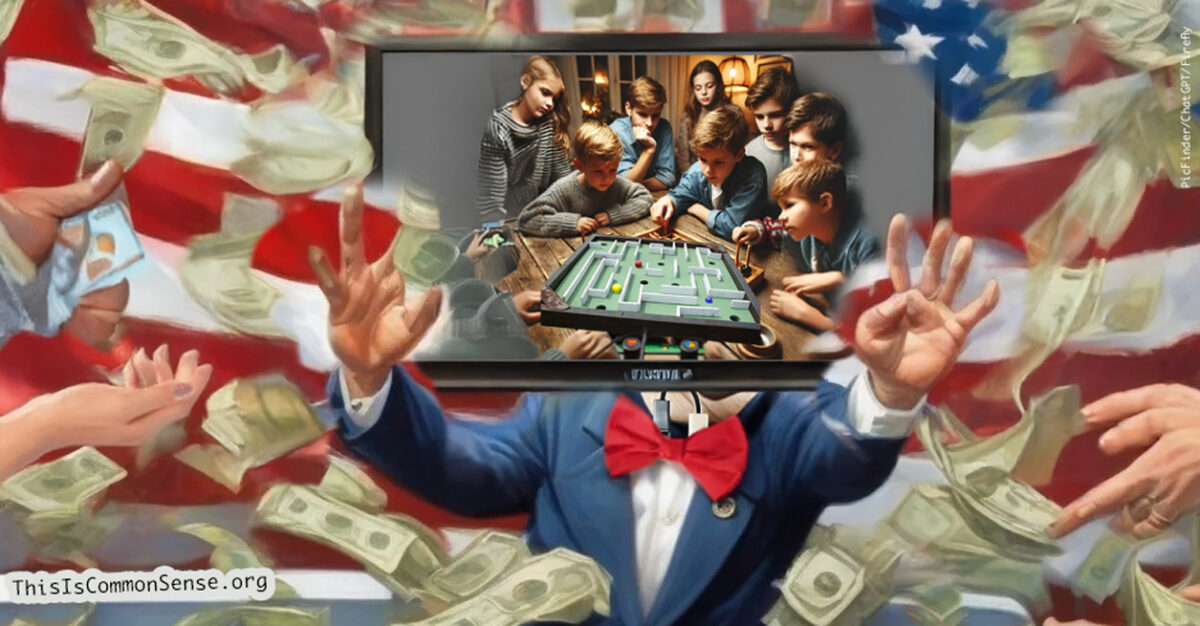
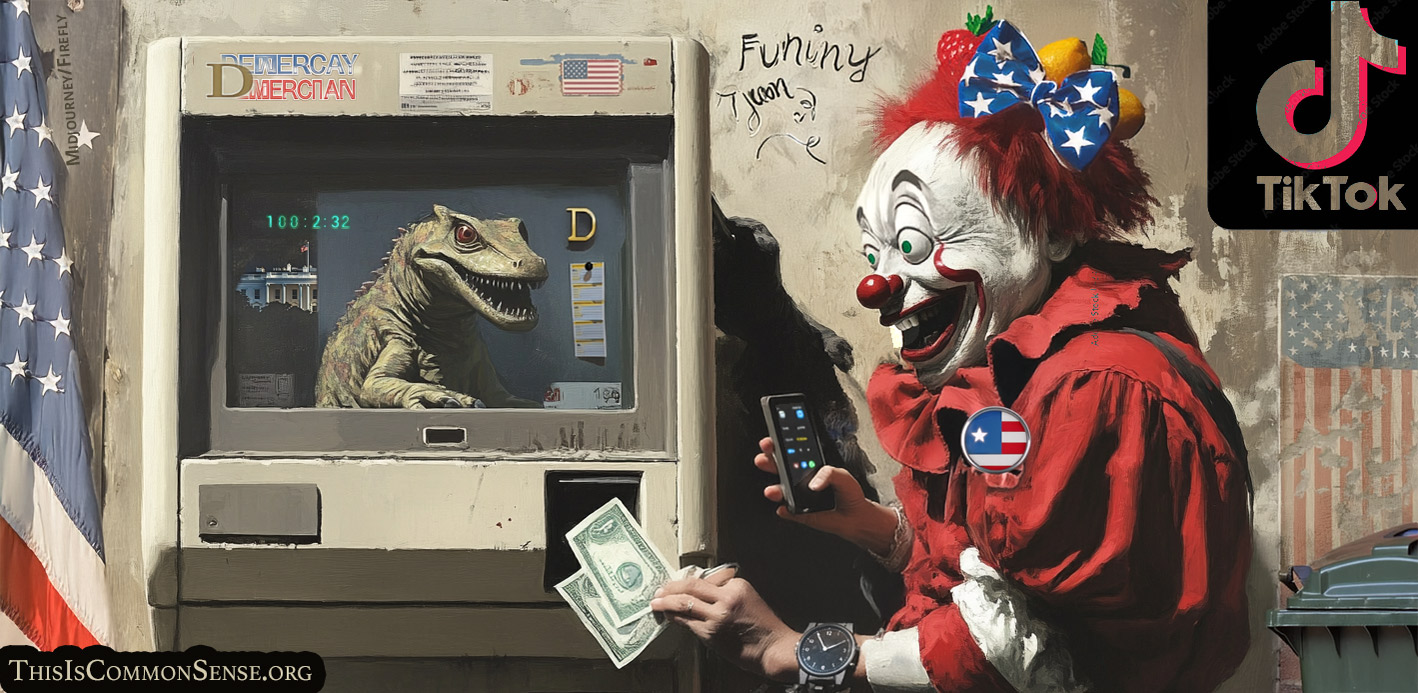
Incumbent lawmakers should not be looting taxpayer dollars to fund their election campaigns.

Investigative reporter Lee Fang has learned that incumbents of both major parties are ignoring ethics rules in order “to use government money for ads clearly designed to influence voters.” 

Back in the 1990s, I was shocked to discover that the average incumbent congressperson spent more using the franking privilege, government funding of “official” newsletters to constituents, than the average challenger spent in his or her entire campaign. In this video age, they’ve upgraded their bragging to living color.

Here is a bipartisan couple from the many examples Fang discovered:

Democrat: A taxpayer-​funded ad aired by the campaign of New York Representative Tom Suozzi, talks about how “Tom worked across party lines to convince the president” to do something about the border.

Republican: A taxpayer-​funded ad aired by the campaign of Virginia Representative Jen Kiggans, in which she boasts about her track record on issues pertaining to veterans and the military.

Fang has identified at least nine other culprits and put together a YouTube video compiling some of these taxpayer-​funded ads. Everyone sees these as campaign spots — or “campaign-​style ads,” as Fang also puts it.

The ads even say (for example, in Wesley Hunt’s video) that they were “paid for with official funds” from the office of the congressman or with “official funds authorized by the House of Representatives.”

These “official funds” are not voluntary campaign contributions.

Congressmen, you’ve been caught. 

So stop.

This is Common Sense. I’m Paul Jacob.


PDF for printing

Illustration created with PicFinder and ChatGPT and Firefly

See all recent commentary
(simplified and organized)

See recent popular posts