Categories
crime and punishment national politics & policies

Frisky Friends

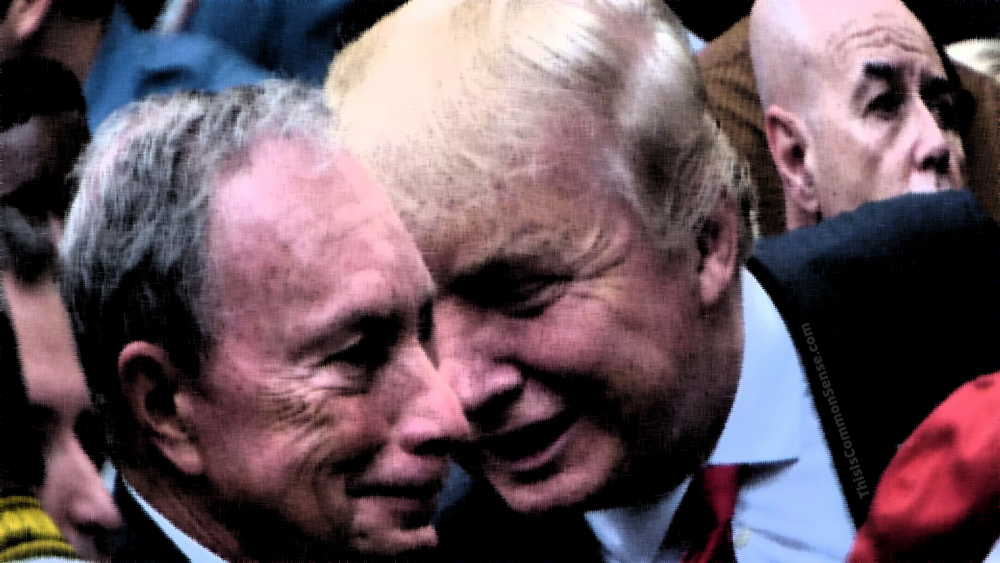
“WOW, BLOOMBERG IS A TOTAL RACIST!” tweeted President Donald J. Trump.

He was reacting to a recording, recently unearthed, of Democratic presidential aspirant Michael Bloomberg speaking to the Aspen Institute in 2015 about his controversial “stop-​and-​frisk” police policy while mayor of New York City.

“Ninety-​five percent of your murders, murderers and murder victims fit one M.O.,” Bloomberg told his audience. “You can just take the description, Xerox it and pass it out to all the cops. They are male, minorities, 16 to 25.… that’s where the real crime is.”

“And the way you get the guns out of the kids’ hands,” explained Mayor Mike, “is to throw them up against the wall and frisk them.”

Bloomberg has since apologized for targeting young male minorities to be regularly detained, searched, harassed and thrown into walls by police on the basis of nothing more than being young male minorities. Ultimately, a federal court struck down Bloomberg’s program as an unconstitutional mass violation of Fourth Amendment rights. 

“We did it in New York, it worked incredibly well and you have to be proactive and, you know, you really help people sort of change their mind automatically,” Trump argued in 2016, floating a national roll-​out and defending Bloomberg as “a very good mayor.” 

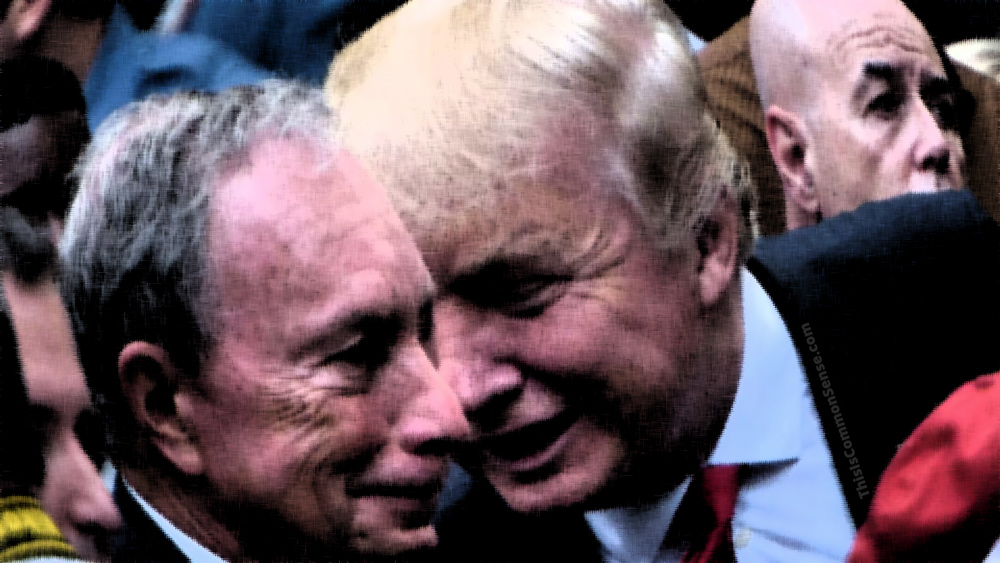
Back in 2009, Mr. Bloomberg and Mr. Trump were together on something else: Bloomberg disregarding a campaign promise and defying two clear citywide referendums to run for a third mayor term.

“Well, I’m not a believer in term limits,” Trump said then, adding, “Michael is a friend of mine.”

Funny, asked about then-​Sen. Hillary Clinton, Trump offered, “I think she’s a wonderful women,” but “she’s a little bit misunderstood.”

Not long after posting the racist-​baiting tweet noted above, the president deleted it.

We understand.

This is Common Sense. I’m Paul Jacob.

PDF for printing

Michael Bloomberg, Donald Trump, stop and frisk,

See all recent commentary
(simplified and organized)
See recent popular posts


Categories
First Amendment rights national politics & policies political challengers

Dem Noodles

Though skipping Iowa and New Hampshire, Michael Bloomberg’s advertisements are ubiquitous on television and YouTube seemingly everywhere in America.

“New Hampshire voters to Steyer: Make it stop!” readsPolitico headline sparked by that taller, poorer billionaire’s unbearable barrage of spots.

At Reason, Eric Boehm notes that Bloomberg and Tom Steyer — both very rich and both running for the Democratic nomination for the presidency — are proving that money cannot buy elections. “Given how Bloomberg and Steyer have struggled to gain traction despite their willingness to set fire to their respective campaign war chests, it’s a bit ironic to hear some of their Democratic primary opponents repeatedly bemoaning the influence of money in politics.”

But Senator Elizabeth Warren’s complaints about the two billionaires are almost certainly just playing to partisan prejudice, which has been seeded for years by the left’s relentless complaints about the Citizens United decision.

Eric Boehm argues that the reality is the opposite of the propaganda: overturning Citizens United would make it easier, not harder, for rich folks to game the system. 

But in Free Speech America, the Bloomberg and Steyer advertising efforts are proving unimpressive. “While it is foolish to rule out any electoral outcome in a world where Donald Trump is president,” Mr. Boehm writes, “voters have responded to both Democratic billionaires with a resounding meh, and there seems to be little reason to think that will change next year, no matter how much money the two candidates pour into the race.”

You don’t eat spaghetti by pushing wet noodles. You gotta entice voters to slurp down your message.

Bloomberg and Steyer, the very soggiest of noodles, are living proof..

This is Common Sense. I’m Paul Jacob.


PDF for printing

Tom Steyer, Michael Bloomberg, Citizens United, free speech, money,

See all recent commentary
(simplified and organized)
See recent popular posts


Categories
national politics & policies political challengers

Billions Of, By and For Bloomberg

Might Gotham’s gun-​and-​Big-​Gulp-​grabber-​in-​chief catapult to Commander in Chief? 

Michael Bloomberg, the former New York City mayor, “is actively preparing to enter the Democratic presidential primary,” writes Alexander Burns in The New York Times.

Bloomberg’s estimated $53 billion could financially pummel even Democratic candidate Tom Steyer, working with a mere $1.6 billion. 

“More billionaires seeking more political power surely isn’t the change America needs,” chimed in Faiz Shakir, presidential campaign manager for Vermont socialist and Senator Bernard Sanders. 

Billionaires are the really evil ones. 

Millionaires? Not so bad anymore. 

In 2016, Bernie badmouthed both “millionaires and billionaires” … until found to be a millionaire himself — worth $2.5 million to be specific

Massachusetts Senator Elizabeth Warren, Mr. Sanders’ rail-​against-​the-​rich presidential rival, offered Mayor Bloomberg her “Calculator for Billionaires” — showing how much those sorts of people would have to pay per her Wealth Tax. 

No mention of what her own family, worth $12 million would pay.

Bloomberg’s entrance into the race is expected to hurt former Vice-​President and multimillionaire Joe Biden the most, both appealing to the more “moderate” wing of the Democratic Party.

Still, Bloomberg is no Democrat messiah, however. He’s not particularly popular. In fact, Bloomberg’s last political campaign for a third term as New York mayor ten years ago was “the most expensive campaign in municipal history.” After double-​crossing voters on term limits by supporting a council change allowing him (and them) a third term, Bloomberg had to spend a whopping $183 per vote to win an “unexpectedly close race.”

To garner as many votes for president as Hillary Clinton’s 2016 effort, at that same cost, adds up to $12 billion!

Bloomberg’s good news? He has it.

Bloomberg’s bad news? Hillary lost.

This is Common Sense. I’m Paul Jacob.


PDF for printing

Michael Bloomberg, president, democracy,

See all recent commentary
(simplified and organized)
See recent popular posts

Categories
Accountability crime and punishment folly general freedom ideological culture media and media people moral hazard nannyism privacy property rights responsibility tax policy too much government U.S. Constitution

Brave New Paternalism

Michael Bloomberg is rich. He’s also in politics — a public health crusader.

And, for years, he “has personally funded and promoted all sorts of regressive taxes and regulations in an attempt to push people around,” the folks at Americans for Tax Reform tell us. “He uses the coercive power of the government to force people to live their lives as he sees fit.”

Onstage at a globalist event, One-​on-​One with Christine Lagarde — who is managing director of the International Monetary Fund — Bloomberg blurts out his approach to government policy regarding what he calls “those people.”

“If you raise taxes on full sugary drinks,” he says, “they will drink less and there’s just no question that full sugar drinks are one of the major contributors to obesity and obesity is one of the major contributors to heart disease and cancer and a variety of other things.”

Against the charge often made that such taxes fall heaviest upon the poor, he is forthright. Regressive? “That’s the good thing about them because the problem is in people that don’t have a lot of money.”

Notice that he is not talking about a public service campaign to help people learn how to drink (and eat) better. And he is not talking about removing all the government policies that have encouraged bad eating and drinking habits (as well as lethargy) — the government programs to encourage the overuse of high fructose corn syrup; the welfare state’s poverty trap that stifles life at the lower incomes; the subsidized consumption of food and drink — he wants to add another government program.

He can only see betterment by increased governmental bullying. 

This is Common Sense. I’m Paul Jacob.


PDF for printing

Michael Bloomberg, tax, policy, nanny state, vice, social engineering, statist, technocrat

Photo by Center for American Progress

Categories
nannyism

Big Soda Ban Still Fizzles

One of the Nanny State’s ninniest nannies is New York City Mayor Michael Bloomberg, eager to save New Yorkers from big cups of sugary drinks. Big Soda supposedly makes you tubby. Bloomberg feels that it is the government’s job to prevent such tubbiness. (No word yet on bans of big chocolate, big hamburger, big pizza …)

In July, a court upheld a prior ruling that the NYC Board of Health had exceeded its bounds by trying to ban certain Big Soda sales. According to the Times, the justices objected to “exceptions and carve-​outs in the rule [that] demonstrated that the board was concerned with matters beyond its core mission to improve public health.…”

The now-​banned ban was indeed full of carve-​outs and contradictions — unavoidable this side of a totalitarian state. To achieve its goals consistently, the government would have to monitor our every sip. How much more must it have to do to really stop us from gaining “too much” weight, Bloomberg’s rationale for the assault on Big Soda sales?

It is not government’s job to compel good living by violating the very political rights that we need in order to live well. Its job is to safeguard those rights; i.e., to safeguard the freedom to make choices about matters big and small according to our own judgment. A state that bans every conceivable “wrong” choice also prohibits our means of making the choices that are — for each of us, given our individual purposes and priorities — the right choices.

This is Common Sense. I’m Paul Jacob.

Categories
Accountability initiative, referendum, and recall national politics & policies

Time to Wait

“You don’t ever want a crisis to go to waste,” said Rahm Emanuel in the aftermath of the mortgage/​financial/​intervention-​induced crisis of 2008. “It’s an opportunity to do important things that you would otherwise avoid.”

The “important things” most politicians want to do usually involve more government controls. Post-​crisis, they hurry to expand the state’s power over us before crisis-​bred emotions like panic and anger can fade.

In doing so, they often blindly ignore relevant facts that even a little time for discussion would bring to light. That’s why Glenn Reynolds argues for a “Waiting period for laws, not guns” in a recent USA Today column.

Efforts to push legislation through while emotions are high mean that the legislation doesn’t get the kind of scrutiny that legislation is supposed to get. Laws are dangerous instruments, too, and legislators seem highly prone to sudden fits of hysteria.

Even New York City Mayor Michael Bloomberg now says we must “start thinking a little bit more about the implications of things before we rush to legislate.” That’s “a bit rich” for Reynolds, since Bloomberg had PR men on standby to exploit the latest mass shooting as quickly as possible.

Still, if even Bloomberg is okay with hitting the pause button, “maybe the next time politicians want to rush a bill through without sufficient deliberation, others will have the fortitude to slow things down, read the bill and inform the public.”

This is not a pie-​in-​the-​sky proposal. In many cities and states, today, an informed public can even petition a hastily enacted law onto the ballot for a referendum, at least when legislators don’t slap on a phony “emergency clause” to speed their worst enactments past the people.

This is Common Sense. I’m Paul Jacob.

Categories
media and media people national politics & policies Second Amendment rights

Bloomberg’s Megaphone

When New York City Mayor Michael Bloomberg is not breaking his term limits pledge like a dictator, he’s outlawing soft drinks like a nanny.

Now he’s trying to undermine our Second Amendment rights, spending $12 million of his reported $27 billion net worth to run television spots in 13 states. Those advertisements aim to rile up the public and encourage folks to pressure their U.S. Senators into supporting gun control legislation.

Hey, da mayor’s just not my kind of guy. Except in one respect: His spending of $12 million … of his own money.

I admire that.

And, even with his $27 billion set against my … well, er … I’m not scared of his wealth advantage. I welcome his speech. Because my best chance to prevail politically is for all voices to be free to speak.

Plus, as National Rifle Association head Wayne LaPierre ably put it last Sunday on NBC’s Meet the Press, Bloomberg “can’t buy America.”

In fact, I don’t think the mayor harbors any such illusions. Bloomberg’s savvy enough to know that his rented megaphone won’t necessarily convince Americans … who are not mindless automatons programmed by 30-​second television ads.

We make up our own minds.

Too bad he doesn’t extend this notion across the board. You know, to soda drinks and such.

So, regardless of Bloomberg’s inconsistencies and indecencies, let’s welcome folks like him who finance causes they believe in. They provide the venture capital for informed citizen decision-making.

We could use a few more billionaires giving on the side of freedom and responsibility, though. Any takers? I mean, givers?

This is Common Sense. I’m Paul Jacob.

Categories
judiciary nannyism too much government

A Big Gulp for Bloomberg

New York City Mayor Michael Bloomberg’s much-​talked-​about prohibition of large-​size sugary drinks, like Coke and Pepsi, set to have gone into effect today, has been over-​ruled. At least temporarily. New York Supreme Court Judge Milton Tingling put the kibosh on the law, on Monday, enjoining and restraining the city “from implementing or enforcing the new regulations.”

Mayor Bloomberg promises to appeal the ruling. Apparently, he sees this as such an important policy move that spending taxpayers’ money on legal fees is another great thing he can do for the people he’s supposed to serve.

But, until his next assault, let’s appreciate the judge’s ruling:

In halting the drink rules, Judge Tingling noted that the incoming sugary drink regulations were “fraught with arbitrary and capricious consequences” that would be difficult to enforce with consistency “even within a particular city block, much less the city as a whole.”

“The loopholes in this rule effectively defeat the stated purpose of the rule,” the judge wrote.

The judge also censured Bloomberg for overstepping his bounds by cooking up the regs not via the City Council — the city’s legislative body — but from the Board of Health, which just happens to have been appointed by … Michael Bloomberg.

The prohibition of larger-​sized soft drinks never made much sense. Add onto its limited scope (applying to some vendors, not others) and its core notion (prohibiting sale by dosage, when consumers could with only marginal inconvenience get around the rules) Bloomberg’s legislative hanky panky, and it wasn’t just any Nanny State horror.

It was an autocratic move.

Nicely stopped. For now.

This is COmmon Sense. I’m Paul Jacob.

Categories
political challengers term limits

Dollars and Change

Big spending by candidates doesn’t always win elections. For instance, New Jersey Governor — soon to be ex-​Governor — Jon Corzine outspent his opponent, Chris Christie, more than three to one … and still lost.

Of course, spending more money usually works better than spending less.

Michael Bloomberg won his race for mayor of New York City. But barely. Bloomberg spent 16 times more than his challenger — over $100 million dollars to get just 50 percent. It cost him more than $150 for every vote. Ouch.

So, why did the mayor have to spend so much to eke out a win?  Two words: term limits.

Bloomberg’s deal with the council to gut the city’s two-​term limit and allow them all to run for a third term didn’t cost him his powerful perch. But it did cost him millions of dollars. And his reputation.

There were also a number of initiatives on the ballot. Before Tuesday’s election, at Townhall​.com, I highlighted Maine and Washington State measures to put a cap on state spending growth. Both measures were defeated, but it was educational to take note of the spending.

In the final months, Maine’s measure was outspent by about ten to one. Washington’s? $3.5 million to nothing. Predictably, the big money came  from groups already wealthy from standing in the receiving line for government spending.

Spending money to make money … spending money to take money.

This is Common Sense. I’m Paul Jacob.

Categories
term limits

The Revenge of the Mantra

“We have term limits; they’re called elections.” That’s the beloved mantra of term limits’ opponents.

For all their professed love of elections, though, these politicians don’t care much for the elections in which voters have enacted term limits. They regularly try any and every trick in the book to overturn such votes — anything to stay longer in office.

Take New York City. Voters passed term limits in one election; years later they smashed a term-​limit weakening measure put on the ballot by the city council. But then Mayor Michael Bloomberg and the city council found a legal loophole, allowing themselves an extra term.

And they refused to permit the people any vote on their power grab.

But just weeks ago there was an election. Seventeen council members who had voted to weaken their own term limits faced primary opponents. Three were defeated. Two more are in races too close to call — with re-​counts now underway. Another six won in very, very close contests. 

The New York Times called the results “the greatest repudiation of incumbents in a generation.”

According to David Birdsell, dean of Baruch College’s School of Public Affairs, “Public frustration with what seems to be self-​serving government officials is at a fever pitch right now.”

Call it “the revenge of the mantra”: Take away term limits, and voters will take away future terms the old-​fashioned way … with elections.

This is … wonderful! This is Common Sense. I’m Paul Jacob.