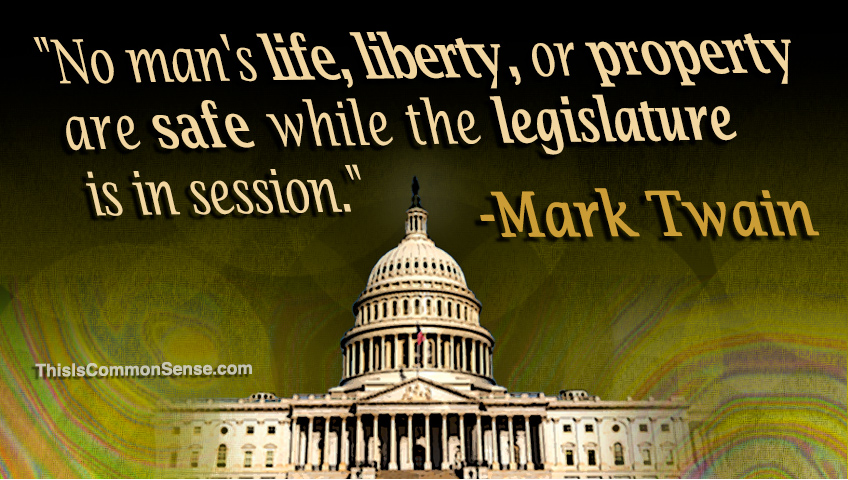
Twain on Congress and Liberty
When I wrote about the Donald’s change of troop positions abroad last week, it was less than completely clear that the US President aimed to withdraw troops from Afghanistan as well as Syria. But multiple reports on the day I posted “Strategic Disengagement” make it clearer: about half of America’s 14,000 troops stationed there are scheduled to exit.
Why not all?
Well, you can see how entrenched foreign intervention is for American leaders. While most of the GOP policy establishment howled at Donald Trump’s betrayal of the cause (whatever that cause is, exactly), so, too, did many of the Democrats. And they seem awfully earnest. More earnest than one has reason to expect from the objectors to “George W. Bush’s wars.”
Even Noam Chomsky came out saying that the U.S. should stay in Syria to save the Kurds, and Howard Dean tweeted that American troops must remain in Afghanistan for the sake of women’s rights.
What we are witnessing are eternal programs that do not ever — and cannot ever — fulfill their basic purpose. No amount of occupation of Syria or Afghanistan or Iraq is going to give us what the neoconservatives promised: freedom and democracy and jubilation in the streets.
Freedom and democracy do not work that way.
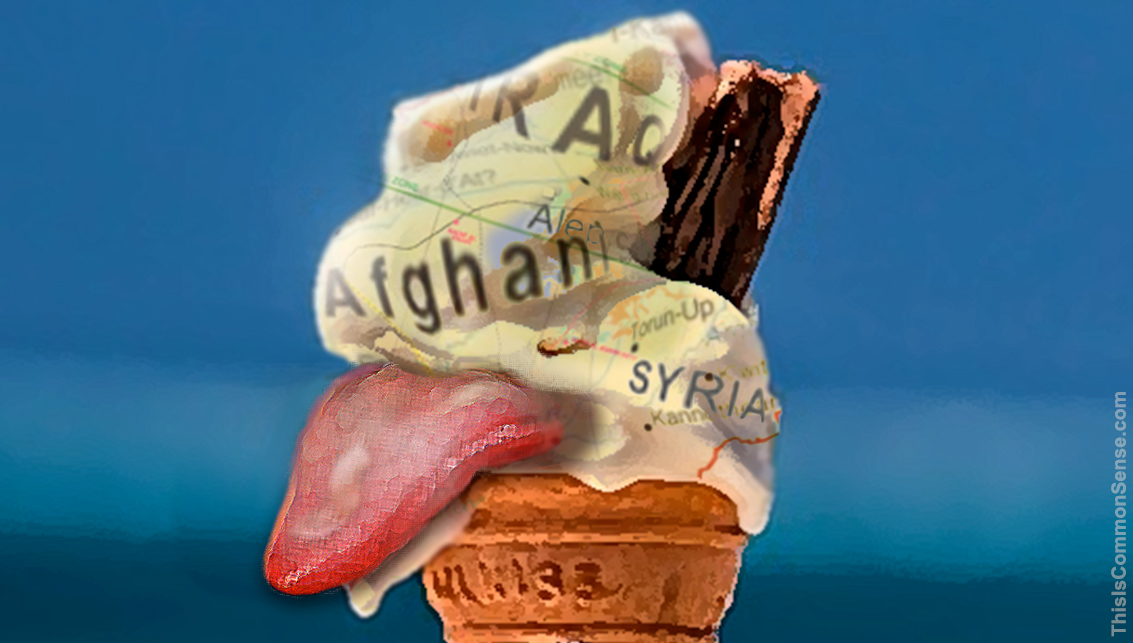
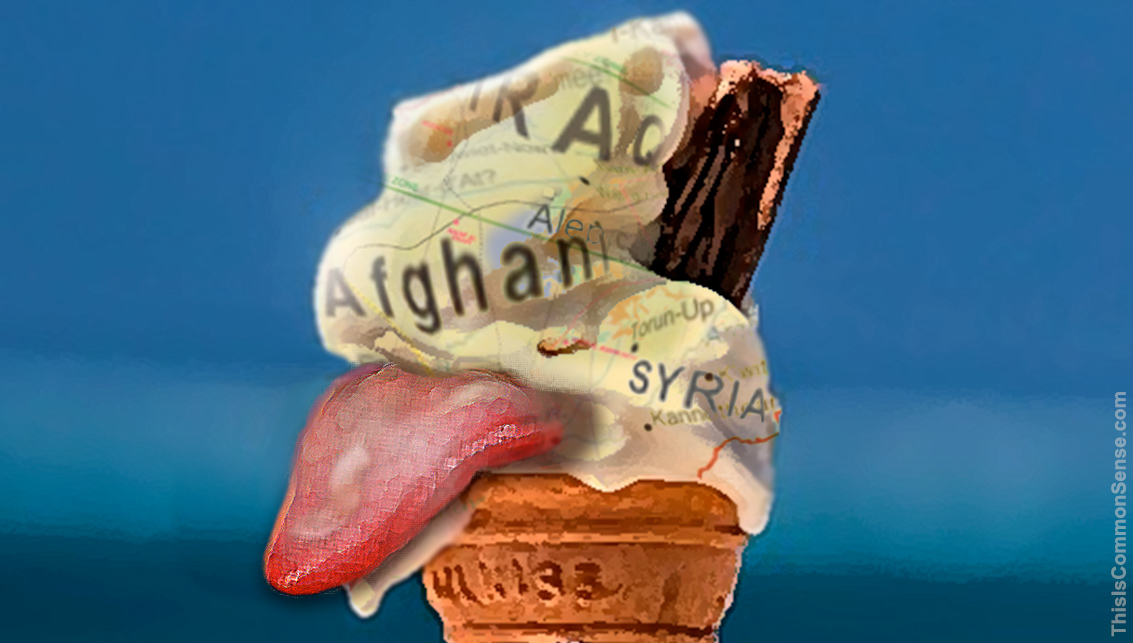
There is a term for such impossible-to-win/impossible-to-stop policy messes: “self-licking ice cream cones.”
The term means a “self-perpetuating system that has no purpose other than to sustain itself,” which is just standard operating procedure for domestic bureaucracies.
But in foreign military action?
Awfully cold imagery, and too comic . . . for tragedy.
This is Common Sense. I’m Paul Jacob.

See all recent commentary
(simplified and organized)
See recent popular posts
“We’re not going to make America great again,” New York Gov. Andrew Cuomo proclaimed at a bill-signing ceremony this week. And then, further poking the president, the governor added, to gasps from the audience: “It was never that great.”
America — for all its faults, failings, and wrongdoings — has been a tremendous force for good, for freedom. At the same time, talking about how great we are really seems . . . what’s the word? Boastful.
“We have not reached greatness,” Cuomo went on to clarify. “We will reach greatness when every American is fully engaged. We will reach greatness when discrimination and stereotyping against women, 51 percent of our population, is gone and every woman’s full potential is realized and unleashed and every woman is making her full contribution.”
This is pie-in-the-sky stuff. Utopianism. The state government of New York is not going to succeed — or even actually try — to “engage” every citizen “fully.” Neither will the Empire State help “every” female New Yorker to self-actualize . . . while magically wiping out “stereotyping.”
When very real governments fixate on fantasy, they can only fail. Achievable responsibilities — like fixing roads, improving schools, enforcing laws — fall by the wayside.
Both President Trump and Governor Cuomo would do well to concern themselves with running the government. Leave the greatness to the rest of us.
Oh, and the rest of the story?
“I’m Andrew Cuomo, and I work for you,” the governor said in a 2010 video announcing his entry into the gubernatorial race.
“Together,” he went on to declare, “we can make New York great again.”
This is Common Sense. I’m Paul Jacob.
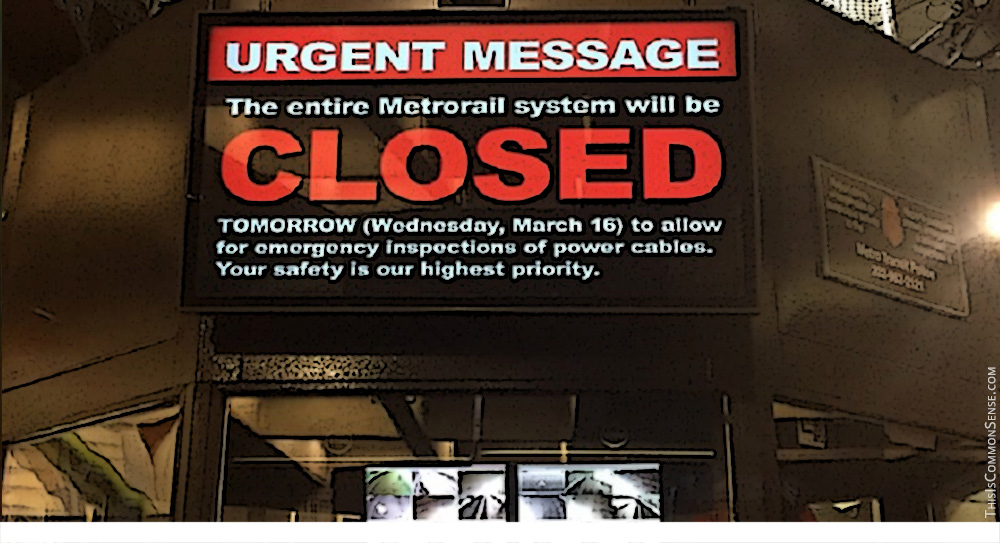
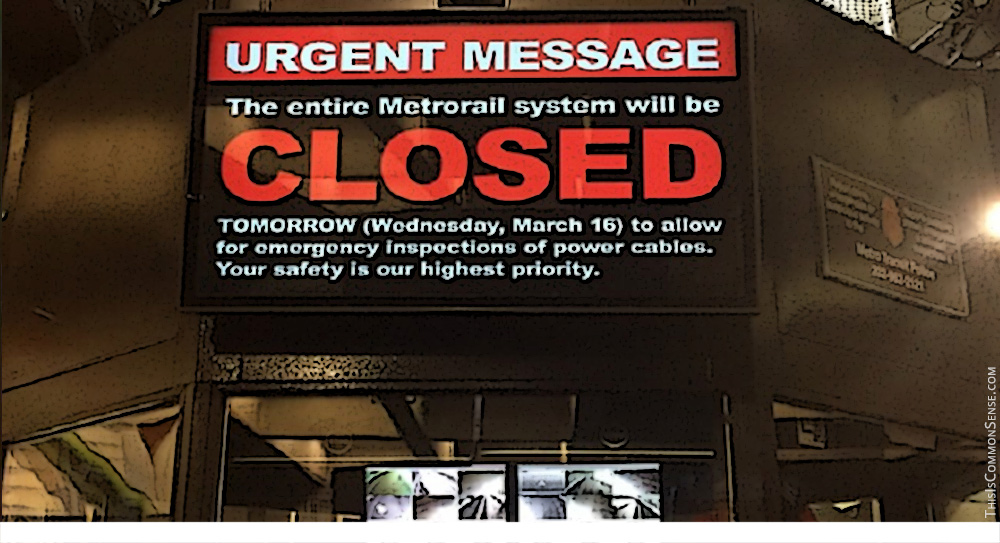
Long I have criticized the Washington, DC, Metro — the transit authority in our nation’s imperial capital — most recently in March. But I am foursquare in support of the government body’s recent hazard warning: “Only take Metro if you have no other option.”
Good general principle.
But what’s the particular occasion? There will be “Major 24/7 Construction Activity” for 15 days in mid-August. The service is advising usage of buses and even freely-provided shuttle services to compensate for commuters stuck in the repairs.
Christian Britschgi, writing at Reason, actually dared ride one embattled line. He found what you might expect: a long history of lazy, perverse incompetence at Metro, bordering on corruption. When concrete started falling from the ceiling at one station in 2016, “an internal investigation . . . uncovered Metro safety inspectors at the station had taken to just cutting and pasting positive evaluations from prior year reports instead of actually checking for damage in some hard-to-reach areas of the station,” Britschgi explains
This is the kind of thing you expect to find in government. Why? Because we don’t allow government projects to go under, even after repeated and massive failures. Ignominy.
Should we be shocked, though? No. Spectacular non-success is close enough for government work. Markets work better because of important communication via profit and loss. Without that stick of loss, governments just take our taxes as their carrot.
Not a whole lot rides on actually serving riders.
This is Common Sense. I’m Paul Jacob.
Having the federal government centrally plan the economy is “a huge waste of everyone’s time and resources” states an amazingly common-sensical Washington Post editorial.
“In a well-functioning modern economy, businesses are generally free to buy and sell the things they need, absent a compelling public need for government intervention,” the editors further expound.
Hmmm, a capitol-town rag that regularly extols the virtues of big government regulation of everything now notices the importance of freedom.
Of avoiding, especially, a system where bureaucrats and other government bullies micromanage commerce.
“Were we directed from Washington when to sow and when to reap,” Thomas Jefferson wrote long ago, “we should all want for bread.”
And aluminum.
“Worse,” the Post argues, the system “also politicizes — and, indeed, corrupts — economic life. Companies that feel threatened by any particular tariff exclusion request have the right to present their objections to the Commerce Department, meaning that each decision represents a high-stakes competition for federal favor between at least two companies with every incentive to influence it through lobbying, campaign contributions, you name it.”
Correct. It seems we may have Donald Trump to thank for opening the Post’s eyes.
“[T]he way to get ahead in Mr. Trump’s economy,” those editors conclude, “is not making better products for the people, but making better connections in Washington.”
Tragically true.
But, sadly, true long before Mr. Trump entered the White House. No new powers have been given to Trump.
Let’s drain the stinking Washington swamp. Let’s end the corrupting influence of a regulatory state run amok. Let’s limit the power of the people wielding political power.
How?
Free the markets!
This is Common Sense. I’m Paul Jacob.
Voters, we are told, are amazingly ignorant. So, what to do?
“Ultimately, the ideal democracy is one in which as many citizens as possible vote,” writes Dambisa Moyo at The Guardian, “and the voters are armed with the most objective information. Yet today only a fraction of the electorate are voting, and many are armed with a diet of hyped-up statistics and social media propaganda.” Among her proposals is a voting booth access test: “why not give all voters a test of their knowledge?”
I can think of a whole bunch of reasons, as can Ilya Somin, over at Volokh Conspiracy, who considers just a few. One of the more interesting is this: whereas Moyo has no wish to shove poor people out of the voting booth, and so envisions public schools to teach to the test — “the knowledge needed should be part of the core curriculum” — Somin quotes John Stuart Mill about the very political dangers of the very idea of public schooling: “A general State education,” wrote Mill in On Liberty, would inevitably be devised to please and serve “the dominant power in the government, whether this be a monarch, an aristocracy, or a majority of the existing generation” and must constitute “a despotism over the mind.”
Though Moyo does observe incumbency and political careerism as big problems, she is innocent of the more fundamental issues.
Indeed, she does not consider the obvious: today’s voter ignorance of politics and government is in no small part the result of government schools.
For politicians, general ignorance is not a bug, it’s a feature.
Let’s look for solutions to political problems that do not give politicians more power.
This is Common Sense. I’m Paul Jacob.
If you are innocent of a crime, should you be punished as if guilty? Despite no arrest, no trial, no conviction?
If you say “Yes,” raise your hand.
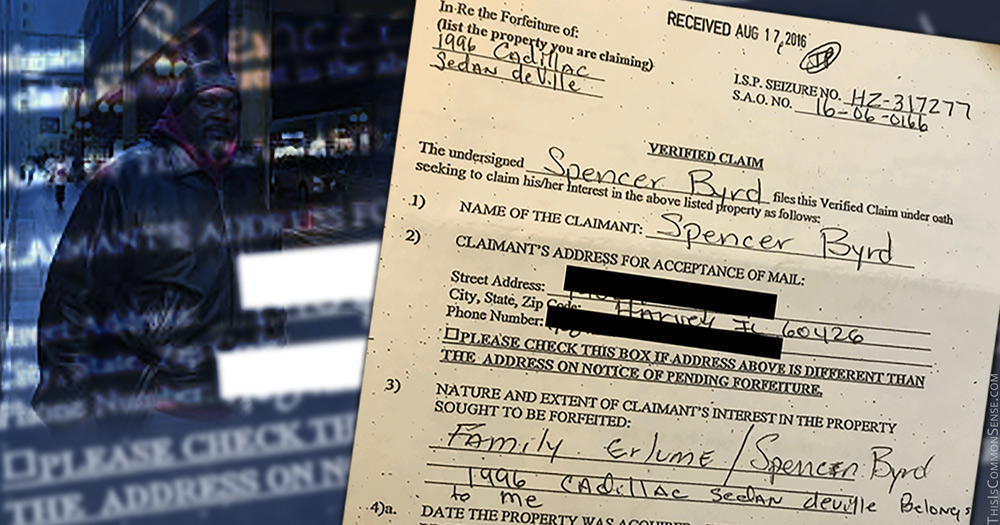
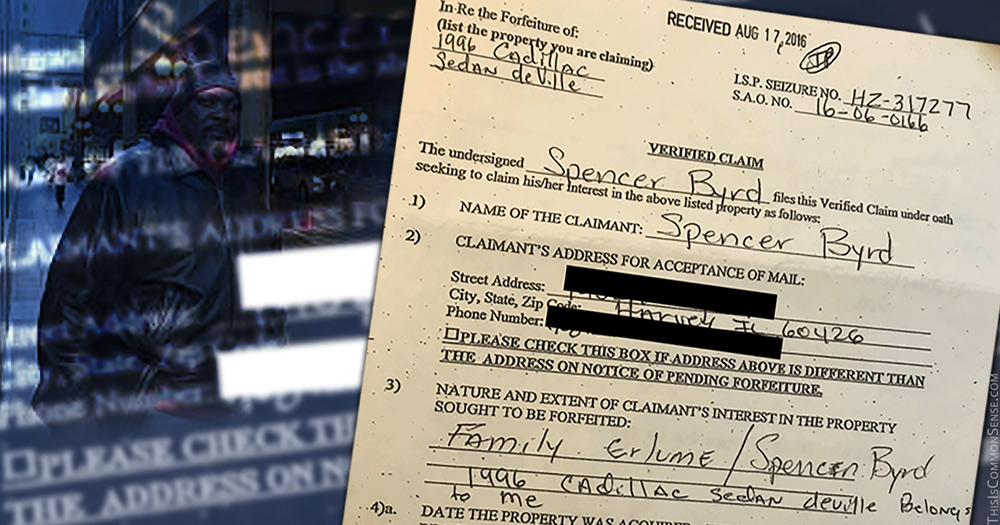
I see no raised hands among my regular readers. But my readers don’t include the wicked Chicago officials who impounded the automobile of Spencer Byrd.
Byrd’s case is reported in a Reason article by C.J. Ciaramella. The author relates how Chicago extracts money by grabbing the vehicles of innocent people. The drug war and asset forfeiture laws help make it possible.
Byrd is a carpenter and auto mechanic who sometimes gives rides to clients stuck without their cars. One night, when he was stopped on the road for an allegedly broken turn signal, police discovered that a new client riding with him was carrying heroin. Byrd was questioned but quickly released. He was never charged with a crime.
But his car was impounded; it’s been impounded for years. This has hurt his business. For one thing, he has $3,500 worth of tools in the trunk.
Byrd persuaded a judge to order that his car be returned to him. But the city still wouldn’t release it unless Byrd paid $8,790 in fees and fines (later reduced to $2,000). He is still struggling to retrieve his car, within a labyrinth the injustices of which I’ve barely touched on.
May I suggest . . . ? If you do ever recover your Cadillac, Mr. Byrd, put pedal to the floor and get the heck out of Dodge.
I mean, Chicago.
This is Common Sense. I’m Paul Jacob.
“We could care less about instant runoff voting,” fibbed Allan Wade, the city attorney for Memphis, Tennessee.
Wade was rebutting the recent Commercial Appeal revelation that Memphis’s “City Council worked behind the scenes to find a sponsor for legislation this year that could ban instant-runoff elections statewide.”
After long relying on the mayor’s lobbyists, was it purely coincidental that the council suddenly spent $120,000 on its own Nashville lobbyists?
One of the bill’s sponsors, Rep. Mark White (R-Memphis), missed the memo. He acknowledged being “approached . . . on the council’s behalf to ask if he would again sponsor the bill.” A lobbyist also confirmed to the Memphis Flyer that the council engaged him to push the ban on what is also known as ranked choice voting.
So, the city council is directly lobbying the Tennessee Legislature to overrule their city’s residents — who voted 71 percent YES for instant runoff voting in 2008.
And there’s a twist. The council has placed two measures that would repeal instant runoff voting on this November’s ballot, hoping to somehow convince voters to scrap the reform. Wait . . . why lobby the legislature when the voters are already set to make the decision?
Oooooooooohhhhhhhh!!!!!!!!!!!!!!!!!!!
“Now they are using our money to take away that choice from us,” protests Aaron Fowles with Save Instant Runoff Memphis.
This city council — in addition to their sneaky, anti-democratic assault on instant runoff voting — has also placed a measure on the ballot to weaken their own term limits, passed by an 80 percent vote.
To paraphrase Memphis’s King, these rabid-dog politicians ain’t never caught a rabbit and they ain’t no friends of ours.
This is Common Sense. I’m Paul Jacob.
P.S. After media coverage, a hearing on the Senate version of the bill to ban instant runoff voting, SB 2271, was abruptly postponed for three weeks.
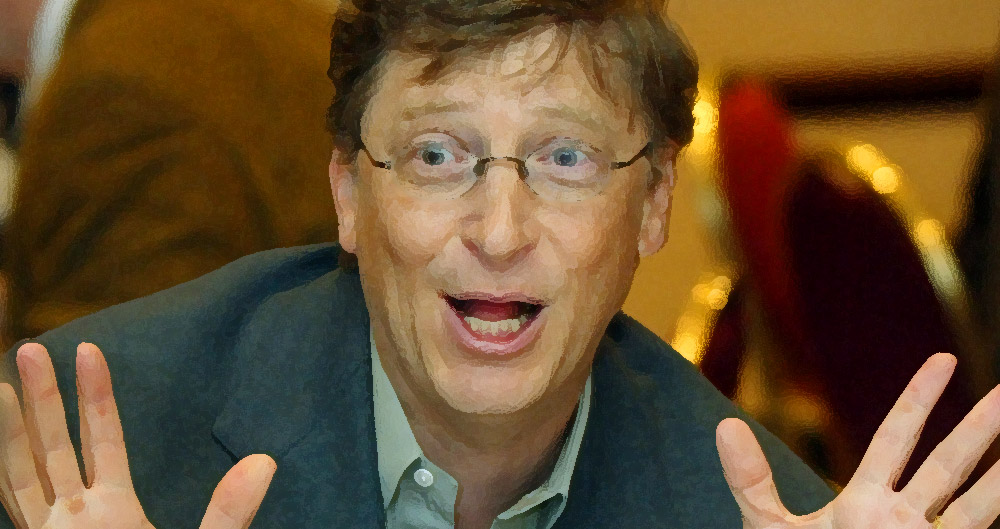
“I need to pay higher taxes,” Bill Gates told CNN’s Fareed Zakaria on Sunday.
He was making a case against Republican tax cuts, but his actual argument? Insignificant. It’s just another unlearned, narrow-perspective “growing inequality” farrago. But his conclusion intrigues . . . as a man-bites-dog story, because people have this goofy idea that rich people are somehow against government and for reduced taxes.
They aren’t. Not even most of the richest.
“I’ve paid more taxes, over $10 billion, than anyone else,” says the man worth $90 billion, “but the government should require the people in my position to pay significantly higher taxes.”
Why? To spend his money better than he could?
Were all the wealth of America’s billionaires confiscated whole and that sum would actually pay off the federal debt (which I doubt), what do you think Washington politicians would do? Go on the straight and narrow and never over-spend again?
No. Politicians would take the new influx of funds as a signal to go on an even bigger spending binge.
But what about his mere income tax increase notion? What then? As sure as the Blue Screen of Death it would be applied down to millionaires, too. And then rates for less-than-millionaires would likely go up. We have a history with this. And what would that do?
It would hit up-and-coming entrepreneurs the hardest. It would nip Bill Gates’s company’s competition in the bud.
But surely Gates wouldn’t be mercenary in his theatrical play for media adoration, would he?
Not Saint Bill!
This is Common Sense. I’m Paul Jacob.
On Tuesday, SpaceX launched one of the largest rockets ever, the Falcon Heavy. Because it is still experimental, it didn’t carry up an expensive satellite. Too early for that. Instead, it has sent up a Tesla Roadster.
And it’s not aiming for orbit . . . around Earth.
It’s aiming for, well, “a precessing Earth-Mars elliptical orbit around the sun.”
All the while playing the late David Bowie’s “Space Oddity.”
This is all very bizarre, of course. But SpaceX is headed by Elon Musk, who is one of those daring people who do daring things. The very fact that he kept finding funding (no small amount of it from taxpayers, sadly) for Tesla Motors (which he also founded), while failing to make a profit, is a tribute to . . . something.
Sending Musk’s personal car into space — to circuit Sol for a billion years — is, the visionary says, at least not boring. (Musk, perhaps not coincidentally for that word choice, also founded the Boring Company.) The Roadster, “piloted” by a dummy “Starman,” is an upgrade with flair.
But who is he playing to? The masses of auto buffs? Stargazers? Science fiction fans?*
Maybe the mad-scientist/eccentric-mogul is playing for bureaucrats, Capitol Hill staffers, and politicians. For, by one estimate, his companies have received $4.9 billion in government subsidies.
So, think of what’s going into orbit as just another part of the skyrocketing — spacerocketing — federal debt.
This is Common Sense. I’m Paul Jacob.
* The odd payload choice might make sense in sci-fi context, for, in the early days of science fiction, one idea often mentioned was to literally send a bomb to the Moon: an explosion, after all, could be seen, in early Space Age days, with old technology right here from Planet Earth surface. This was the case in the boys’ book The Rocket’s Shadow as imagined in 1947.