Categories
Accountability ideological culture subsidy

Red-​Flagged Welfare Fraud

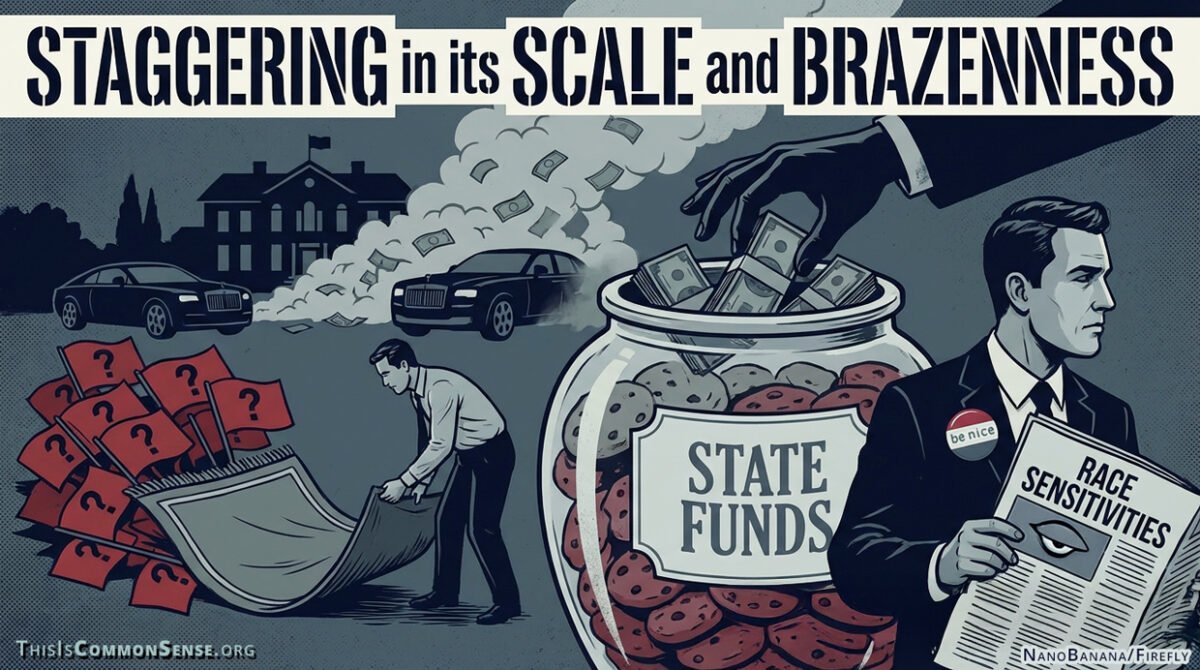
“Staggering in its scale and brazenness.” 

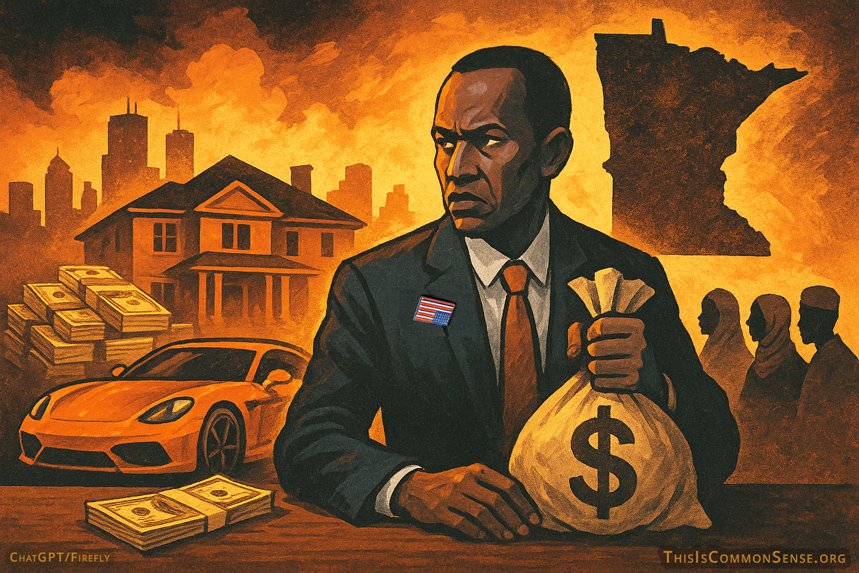
That’s how The New York Times describes the more than $1 billion in fraud that “took root in pockets of Minnesota’s Somali diaspora as scores of individuals made small fortunes by setting up companies that billed state agencies for millions of dollars’ worth of social services that were never provided.”

Quite a lucrative business model: Stealing from programs to prevent homelessness and keep children fed during the pandemic, the crooks instead “spent the funds on luxury cars, houses and even real estate projects abroad.” 

So far, prosecutors have convicted 59 people, with “all but eight of the 86 people charged” of “Somali ancestry.”

According to Ryan Pacyga, an attorney representing several defendants, The Times reports that “some involved became convinced that state agencies were tolerating, if not tacitly allowing, the fraud.”

What?

“No one was doing anything about the red flags,” argues Pacyga. “It was like someone was stealing money from the cookie jar and they kept refilling it.”

Why was nothing done?
Well … the federal prosecutor contends that what The Times calls “race sensitivities” (read: fear of being called racist) were “a huge part of the problem.” 

One former fraud investigator, a Somali American named Kayseh Magan, blames “the state’s Democratic-​led administration” which was “reluctant to take more assertive action in response to allegations in the Somali community.”

“There is a perception that forcefully tackling this issue might cause political backlash among the Somali community,” Magan explains, “which is a core voting bloc.” 

For Democrats.

Very expensive votes.

This is Common Sense. I’m Paul Jacob.


PDF for printing

Illustrations created with ChatGPT, NanoBanana and Firefly

See all recent commentary
(simplified and organized)
See recent popular posts
Categories
folly Fourth Amendment rights property rights

Can They Do That?

Residential tenants in Zion — and their landlords — can breathe a sigh of relief.

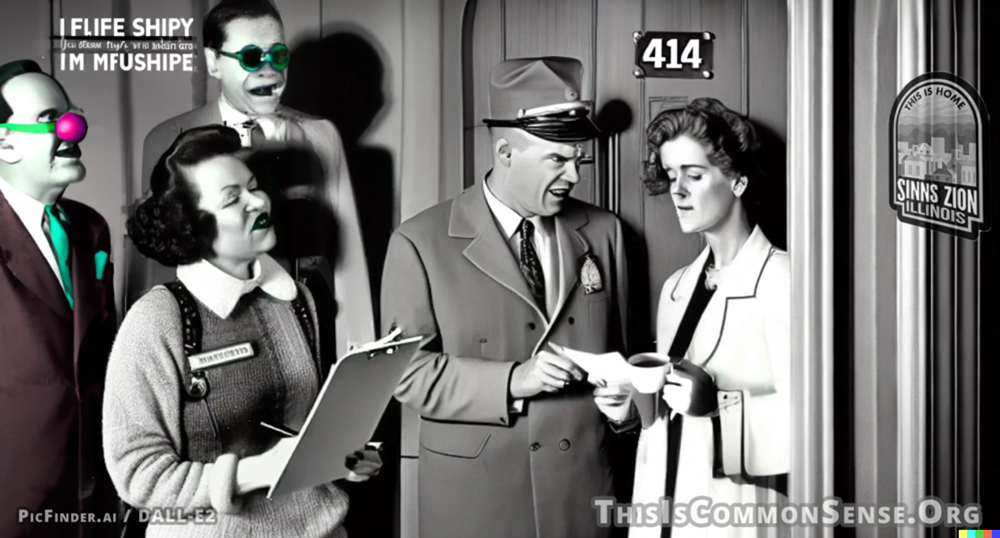
The Zion, Illinois, government can no longer send officials to barge into rented homes at will to conduct obnoxious inspections.

The inspection regime was instituted in 2015 by a mayor who blamed an excess of renters for the town’s financial troubles. The motive for the searches, then, may have been to make it more uncomfortable to rent in Zion. Seriously. As dumb and thuggish as that.

Robert and Dorice Pierce and their landlord were among the victims of this regime.

When an inspector showed up at the Pierces’ door, they told him to get a warrant. But judges don’t generally accept “important to harass tenants” as a reason for issuing warrants. In any case, any respect for constitutional constraints was incompatible with the very nature of these intrusive practices.

So Zion’s response was to threaten the landlord, Josefina Lozano, with daily and mounting fines until she compelled the Pierces to capitulate. That’s when the trio turned to the Institute for Justice and decided to go to court.

This was familiar territory for IJ, which in the 1990s had successfully fought a similar inspection regime in Park Forest, Illinois.

And now, after three years of judicial proceedings, IJ and its clients have secured a consent decree prohibiting the warrantless inspections and prohibiting the fines.

But those who enacted this outrageous regime deserve a reprimand more stern than merely a loss in court. 

This is Common Sense. I’m Paul Jacob.


PDF for printing

Illustration created with PicFinder​.ai and DALL-E2

See all recent commentary
(simplified and organized)
See recent popular posts
Categories
folly Popular tax policy too much government

A Fake Mystery

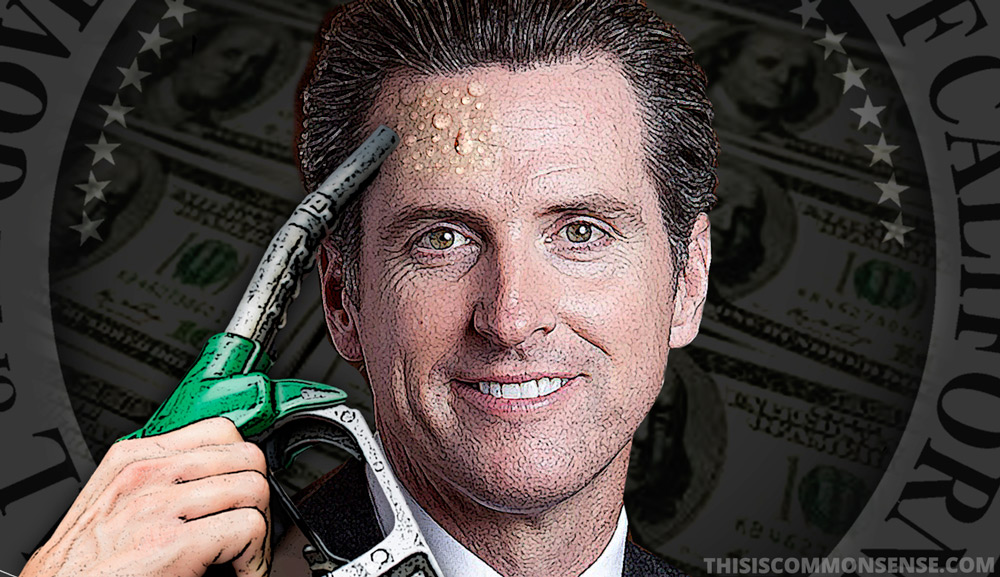
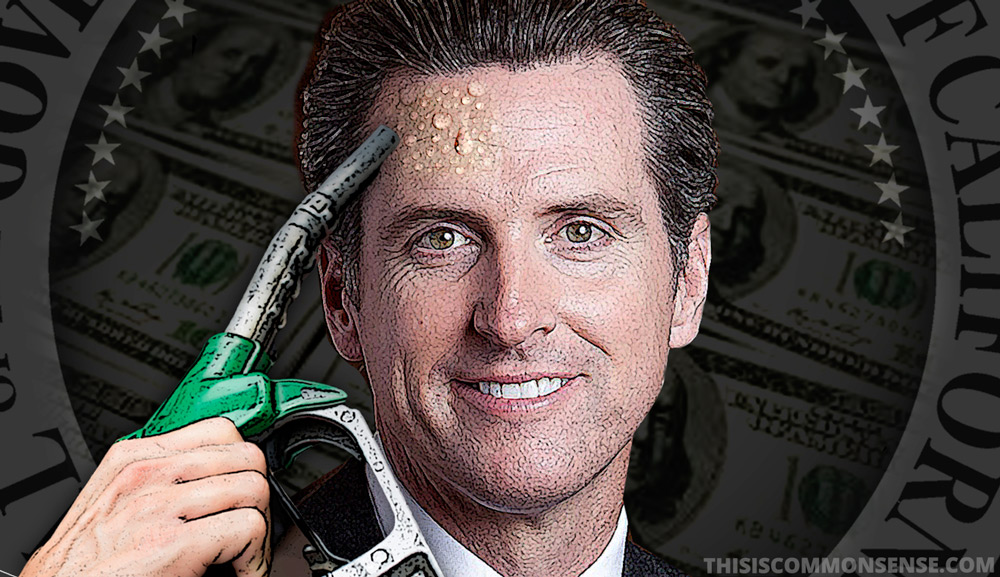
California’s new top banana is playing politics the old-​fashioned way: passing the buck.

Last week Governor Gavin Newsom directed the California Energy Commission (CEC) to look into the state’s higher-​than-​average gasoline prices.

“Independent analysis suggests that an unaccounted-​for price differential exists in California’s gas prices and that this price differential may stem in part from inappropriate industry practices,” he wrote in an official letter to the CEC.  “These are all important reasons for the Commission to help shed light on what’s going on in our gasoline market.”

Ah, shed light!

We are not talking about the bulb in your outbuilding.

Californians understandably grumble about having to pay higher taxes than elsewhere in the U.S. So Newsom pretends to suspect “inappropriate industry practices.” But what is inappropriate is Newsom’s directive to the CEC. As Christian Britschgi drolly informs us at Reason, Newsom, while lieutenant governor, had “supported a 2017 bill increasing the state’s gas taxes,” which looks like all we really need to know. Raise taxes, and businesses tend to increase prices rather than eat the extra cost. Higher gas prices are the result of higher taxes.

Duh.

But there’s more.

“When running for governor in 2018,” Britschgi explains, “he opposed a ballot initiative that would have repealed that same increase.”

So, is Newsom truly clueless of the obvious?

Hardly. And neither are “17 legislators who voted for the tax hike” who joined the governor in “wanting answers to this difficult headscratcher.” They are doing what pols usually do: deflect; misdirect; blame others … hoping that voters don’t pay close enough attention, or remember recent history. And busy people often do not.

Finding a bogeyman helps, too.

This is Common Sense. I’m Paul Jacob.


PDF for printing

Gavin Newsom, Governor, California, gas, tax, prices, folly,

See all recent commentary
(simplified and organized)
See recent popular posts
Categories
national politics & policies political economy Popular

Re-​Packaging Nonsense as Wisdom

When committed to folly, clever people make it look wise.

An article last week in Forbes, “The Green New Deal: How We Will Pay For It Isn’t ‘A Thing’ — And Inflation Isn’t Either,” by Robert Hockett, says that “how could we pay for it?” challenges have already been answered best by Rep. Alexandria Ocasio-Cortez. 

She demands to know why only “useful ideas,” like hers, get challenged that way. “Where were the ‘pay-​fors’ for Bush’s $5 trillion wars and tax cuts, or for last year’s $2 trillion tax giveaway to billionaires?”

Where? Here!

And anywhere there’s common sense.

Hockney has his own retort, though, retrieving from the peanut gallery of economics an idiocy called “Modern Monetary Theory” (MMT). 

“Congress will authorize necessary spending, and Treasury will spend,” he writes. Government funds are “never ‘raised’ first” because “federal spending is what brings that money into existence.” 

Look, the United States has indeed come to rely upon debt financing. But it wasn’t always the rule. More importantly, the widespread and long-​term effects are where post-​gold standard monetary creation gets tricky. 

So are MMT advocates. Tricky, that is. What they hide are the dispersed costs, many of which we pay in higher prices.

Their main “contribution” — as stated in the National Review, of all places, yesterday — is that “When a government issues its own currency, as our federal government does, it is in a financial situation different from those of most institutions or households.”

Not really. When a household writes checks it knows will bounce, it does pretty much the same thing.

When governments rely upon debt money, someone is still getting ripped off. With government, though, it isn’t the businesses holding bad checks, it is all of us.

This is Common Sense. I’m Paul Jacob.


N.B. This episode of Common Sense has been corrected from the email version: the author of the Forbes article is not the painter David Hockney.


PDF for printing

green new deal, AOC, money, folly

See all recent commentary
(simplified and organized)
See recent popular posts
Categories
First Amendment rights too much government

Burning Isn’t the Only Way to Attack Books

The U.S. Copyright Office is enforcing an unjust and destructive law merely because it is there.

Selectively enforcing.

Valancourt Books prints books on demand. It keeps no stocks of books in a warehouse in between orders. Even so, the Copyright Office is demanding to be supplied with physical copies of each of the 400+ books in Valancourt’s catalog.

Failure to comply means crippling fines.

Why the harassment?

Well, once upon a time the Copyright Office required publishers to submit physical copies of books in order to receive copyrights for them. Yet the work of authors is now automatically copyrighted as soon as they create it.

Of course, the government doesn’t demand printed copies of their titles from every small publisher in the country. The Copyright Office just happens to have noticed and targeted Valancourt Books.

The Institute for Justice, which is representing the publisher in court, argues that this requirement unconstitutionally forces people to give up property without compensation, violating the takings clause of the First Amendment.

IJ also argues that the law violates the right of freedom of speech protected by that amendment. “People have a right to speak and to publish without notifying the government that they are doing so or incurring significant expenses,” IJ’s Jeffrey Redfern concludes.

“Because it’s there” may be a good reason to climb a mountain. It is a very poor reason to use an old — and outdated — law to destroy the livelihood of innocent people.

This is Common Sense. I’m Paul Jacob.


PDF for printing


Categories
Accountability folly general freedom government transparency moral hazard national politics & policies porkbarrel politics responsibility too much government

While the Clock Ticks

Pushing annual federal spending over a trillion bucks into the red?

It has consequences. 

“Our debt is growing, and it’s growing fast,” writes Veronique de Rugy at Reason. “Though it’s a shame that lawmakers passed tax cuts without cutting spending to offset short-​term losses in revenue, there’s no doubt that Social Security and Medicare deficits are almost entirely to blame for our impending debt crisis.”

Ms. de Rugy, a senior research fellow at the Mercatus Center, has a typo in the version of her article that I read (it has probably since been corrected): “Based on current trends, the debt held by the public is set to reach $15.7 trillion by the end of this year and continue rising to $28.7 trillion by 2028.” She surely meant “$25.7 trillion,” since the current debt clock figure shows the U.S. public debt at over $21 trillion. Still, $25.7 seems a bit high … but at this point we can leave the exact numbers to the professionals.

We just know that the debt’s too damn high.

As de Rugy explains, it has present as well as future cost. And, yes, entitlements are the biggest problem — but even more than Ms. de Rugy suggests. Congress owes the Social Security “trust fund” (in Al Gore’s infamous and non-​existent “lock box”) nearly $3 trillion.

Our solons would have to (painfully) switch from revenue deficits to revenue surpluses just to pay off its debt to a much-​relied upon institution.

What will happen, though, is surely this: Congress will borrow more from elsewhere to pay what Social Security needs — which all too soon will be a lot more than $3 trillion. 

That’s not Common Sense. (But I am Paul Jacob.)


PDF for printing


Categories
Accountability folly ideological culture national politics & policies responsibility

Politics as Painfully Usual

The crazed nature of our leaders’ willingness to spend beyond revenue, and accumulate debt, is not limited to one party. Both Democrats and Republicans are responsible for their outrageously perverse fiscal policies. 

Their irresponsibility hides in plain view, and can be seen in most of the major policy discussions of our time. Take two: 

  1. the Democrats’ idea of putting every American on Medicare and 
  2. the Republicans’ current tax reduction bill.

Though the Republicans often pretend to be all about something called “fiscal conservatism,” their murky tax plan is not fiscally sound. Not yet, anyway — after all, it is “evolving.”

And I expect it to get worse, not better.

“The current plan proposes about $5.8 trillion in tax reduction offset by about $3.6 trillion in base-​broadening offsets, meaning that it would result in a $2.2 trillion deficit increase over the next decade,” Peter Suderman summarizes over at Reason.

They have a number of cuts in the works, but also plan to spend more on defense and the like. The debt would go up.

But if the Republicans are hypocritical and irresponsible, the Democrats add sheer insanity to their irresponsibility. 

“Medicare for All” is pushed by Senator Bernie Sanders, who serves Vermont, where a similar universal system was enacted, only to be repealed after it proved unaffordable even with huge tax increases. All single-​payer/​socialized medicine proposals would require whopping tax increases to work, and the increases in spending would inevitably yield greater deficits.

Besides, Medicare is heading for financial Armageddon. Adding more burdens to a system that they cannot (or simply will not) now make solvent? 

Only a politician could consider such a “solution.”

This is Common Sense. I’m Paul Jacob.


PDF for printing


Art by John Goodridge on Flickr


Categories
Accountability folly free trade & free markets too much government

Jonesing for Disaster

First, do no harm. Second, stop harming.

You might think that these would be the Two Commandments of Government.

But no.

Politicians make a good show of saving us, sure. Sadly, appearance alone suffices. For them. Much easier to announce a new program than get rid of a harmful old one. 

Latest case? Courtesy of a storm and a new president, we now get to witness hurricane recovery mismanagement all over again, but this time outside the continental United States.

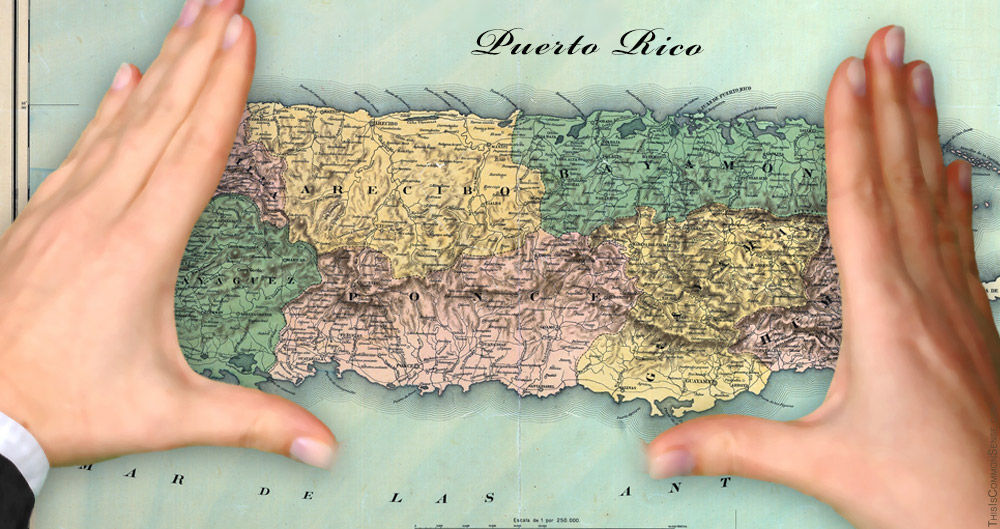
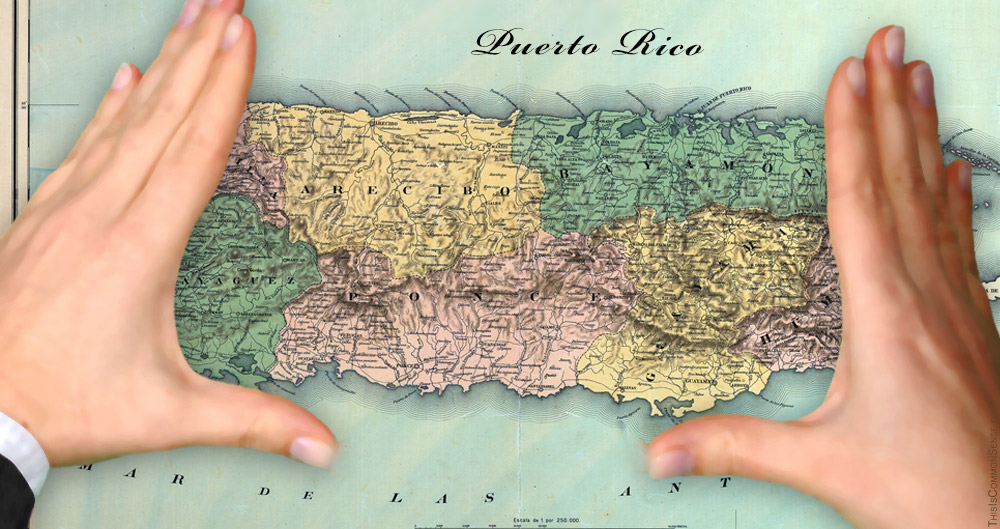
“The administration announced some bad news for Puerto Rico,” writes Scott Shackford at Reason. It will not, Mr. Shackford explains, “be waiving the Jones Act, which significantly restricts the ability of foreign or foreign-​owned ships from bringing goods to Puerto Rico.” 

The “unincorporated U.S. territory” that is the island must take its lumps.

The Jones Act* limits foreign ships port access … down to one. The mandate allowing port-​to-​port commerce only to American-​manned ships is designed to save a few jobs and grease a few union wheels in the mainland.

And now, especially, that old, ongoing “centralized government planning for the benefit of a small group of powerful U.S. shipping interests” amounts to a real kick to a people already devastated by Hurricane Maria.

Closing ports to much needed help doesn’t help. An emergency order could suspend the ongoing harm of throwing roadblocks in the way of a swift recovery and rebuilding.

Or Congress could repeal the Jones Act entirely.

Neither is likely.

So the wounded Puerto Ricans — prior to the storm hobbled by years of territorial misgovernance — can expect more fake government help. 

This is Common sense. I’m Paul Jacob.


* Not to be confused with the Jones-​Shafroth Act of 1917, which set up territorial  governance of the island.


PDF for printing


Categories
Common Sense folly free trade & free markets general freedom ideological culture media and media people moral hazard nannyism national politics & policies

Evil Capitalists Hook Brazil On Eating

Have you heard the latest? 

More and more peoples around the world these days have the unfortunate misfortune of having adequate food — not merely vegetables either!! — thanks to the ruthlessly profit-​seeking food producers and their unconscionable engagement in the division of labor, capital accumulation, and international trade. 

It’s right there in The New York Times, which is, as you know, the paper of record. 

“DealBook: How Big Business Got Brazil Hooked on Junk Food.”

Dastardly! Those Big American Businessmen must have kidnapped the Brazilians, strapped them into chairs, and pumped Doritos into those poor souls with a syringe. Heaven knows, the fecklessly irresponsible Brazilians can’t be held responsible for their own diets.

How bad is it? 

This bad: “As growth slows in wealthy countries, Western food companies are aggressively expanding in developing nations, contributing to obesity and health problems.”

One expert quoted in the story (no hungry people consulted) says, “Part of the problem … is a natural tendency for people to overeat as they can afford more food.” 

Worse than Hurricane Irma!

Thanks to the Times’s aggressive investigative journalism, we know that these brazenly food-​selling companies do not even nag their international customers to be careful about their diets. Ergo, it’s chips and other indiscriminately convenient snacks for everybody, no strings attached. 

It’s become all too easy to be well-​fed and overfed and mis-fed. 

Thanks a lot, capitalism.

Oh for the good old hunting-​and-​gathering days when human beings spent much of their time starving, and the world had the human population of Binghamton. No problem with anyone gorging on Twinkies and Doritos back then. No problem of epidemics of corpulence.

We’ve lost that swell paradise … perhaps forever. 

This is Common Sense. I’m Paul Jacob.


PDF for printing


Illustration based on original photo by David Goehring on Flickr.


Categories
Accountability folly free trade & free markets ideological culture media and media people national politics & policies

Next Bubble to Pop?

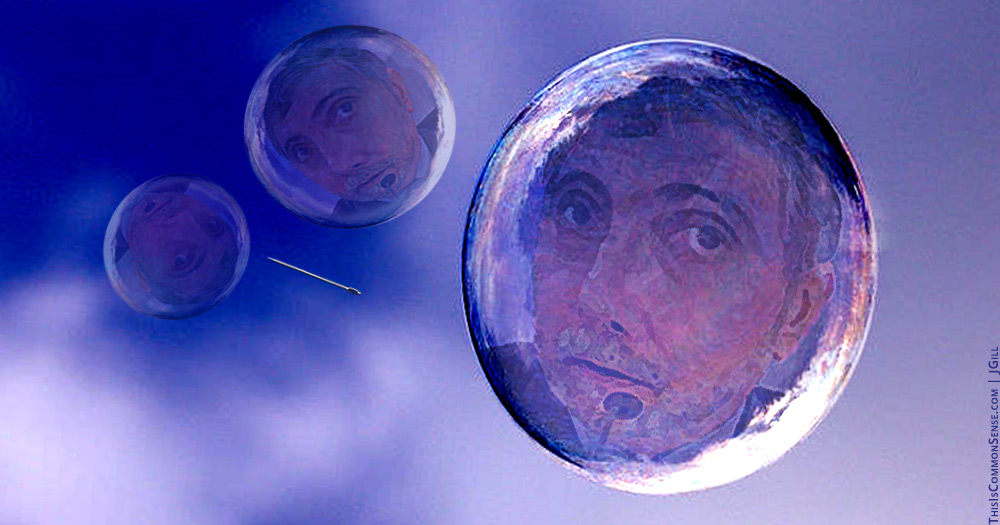
There was a great and wondrous moment, a decade and a half ago, when economist Paul Krugman, Nobel Laureate and New York Times’s unregistered shill for the Democratic Party, suggested that what the economy really needed was another housing bubble. 

What he wrote, specifically, was this: “To fight this recession, the Fed needs more than a snapback; it needs soaring household spending to offset moribund business investment. And to do that, as Paul McCulley of Pimco put it, Alan Greenspan needs to create a housing bubble to replace the Nasdaq bubble.”

Krugman later reinterpreted that statement in a clever (if not convincingly honest) way. After the subprime loan industry collapsed in 2008, he attributed that bust to financial market malfeasance, not the Fed-​inflated bubble we got … and that he had previously called for.

Now we are looking at several ready-​to-​burst bubbles:

  • The student loan debt problem seems scary. 
  • The sovereign debt problem is undoubtedly more dangerous and far larger, but is perhaps still able to take on more fake money — all the world’s 1s and 0s have to go somewhere! 
  • So the current bets seem to be on a huge auto loan industry bubble, about to pop.

Loan terms have increased in duration, and the average amount new car buyers are financing has jumped over 17 percent in five years. The idea has been “to continually lower monthly payments,” says David Stockman, “so people can get behind the wheels of vehicles they can’t really afford.”*

Which bubble does Krugman favor? I don’t have the stomach to check.

But, be certain, as we play pop goes the bubble, he’ll play pop goes the weasel.

This is Common Sense. I’m Paul Jacob.


* Stockman seems to be echoing warnings made by Eric Peters, of Eric Peters Autos.


Printable PDF