Categories
Accountability education and schooling free trade & free markets general freedom local leaders national politics & policies responsibility too much government

SEZ Ed

The great barrier to educational advance in our time is the federal government. The second great barrier? Your state government. The third great barrier? Your local government.

Proposals to break up government-subsidized and -enforced school monopolies have ranged from tax credit proposals and voucher programs to charter schools and (the biggest success so far) home schooling.

But it may be time to advance something a little . . . more daring. Break the stranglehold of government on dysfunctional schooling.

How?

Apply the “free trade zone” (FTZ) idea to education.

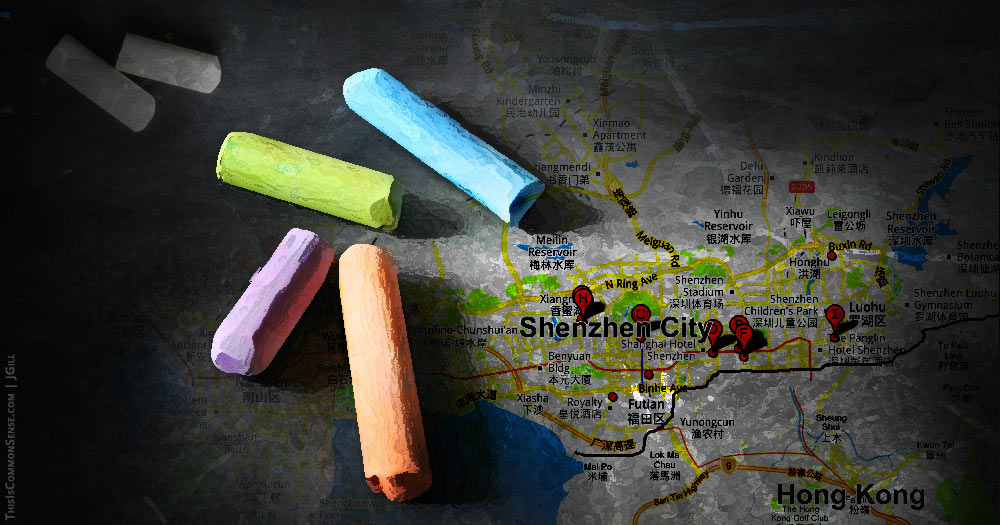
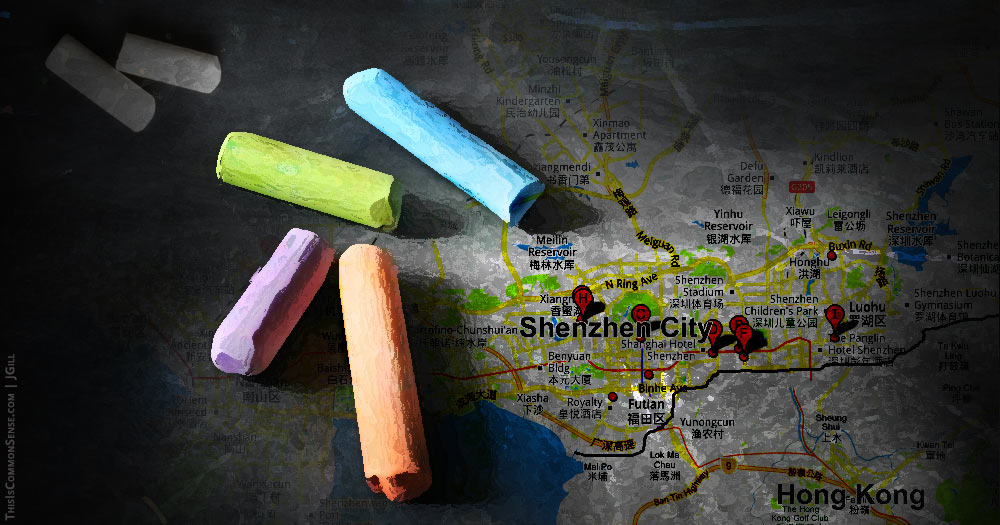
We remember the FTZ proposal because of its rise in popularity amongst academics and policy wonks in the 1980s and 1990s. But the notion is an old one. And in China, where they are called “special economic zones” (SEZs) — and it is this term that is catching on — they have been amazingly successful, the former fishing village of Shenzhen being the most obvious example.

What about America? Take a devastated region, like inner-city Chicago or Detroit,* and simply nullify the regulations and rules. (This probably would require federal enabling legislation on top of state leadership.) With the ensuing freedom and opportunity, entrepreneurs, established businesses and schools, teachers, community groups and activists could cook up new solutions to the oldest schooling problem there is:

actual education.

I’ve heard whispers of this Educational SEZ idea for some time now.

It is time for rational and quite public discussion.

And then the shouting.

This is Common Sense. I’m Paul Jacob.
 

* Of course, any area could work. The reason to focus on demonstrably failed educational regions is that such areas have lost hope, and thus the politically resistant are likely to give in and allow it.


Printable PDF


Categories
Accountability education and schooling folly responsibility

Only Make Believe

Problems can be solved. But for those lacking the merest clue how to solve a given problem . . . alternatives exist.

Books can be cooked to pretend the problem no longer exists. And perhaps to fool others.

A series of articles in the Washington Post highlights the effort to reduce the rate by which city schools suspend students for misbehavior. The good news? “D.C. Public Schools has reported a dramatic decline in suspensions at a time when school systems around the country have been under pressure to take a less punitive approach to discipline.”

Results? A whopping 40-percent decline.

The bad news?

A Post investigation found that “at least seven of the city’s 18 high schools have kicked students out of school for misbehaving without calling it a suspension and in some cases even marked them present.” In those schools, “most suspensions were not reported.”*

The Post further uncovered documentation showing that “DCPS officials knew students were being sent home without documentation at least as early as 2010.”

It brings to mind the recent scandal in Prince George’s County (Maryland) Public Schools, where a dramatic announcement that the county increased its student graduation rate faster than any other county . . . was followed by an investigation into grade tampering by school administration officials, which numerous teachers have alleged.

It is also reminscent of the systematic cheating on standardized tests in Atlanta — and across the nation.

Hiding the truth, cheating on tests, lying about results . . . not the actions of a system teaching kids a love of truth.

This is Common Sense. I’m Paul Jacob.
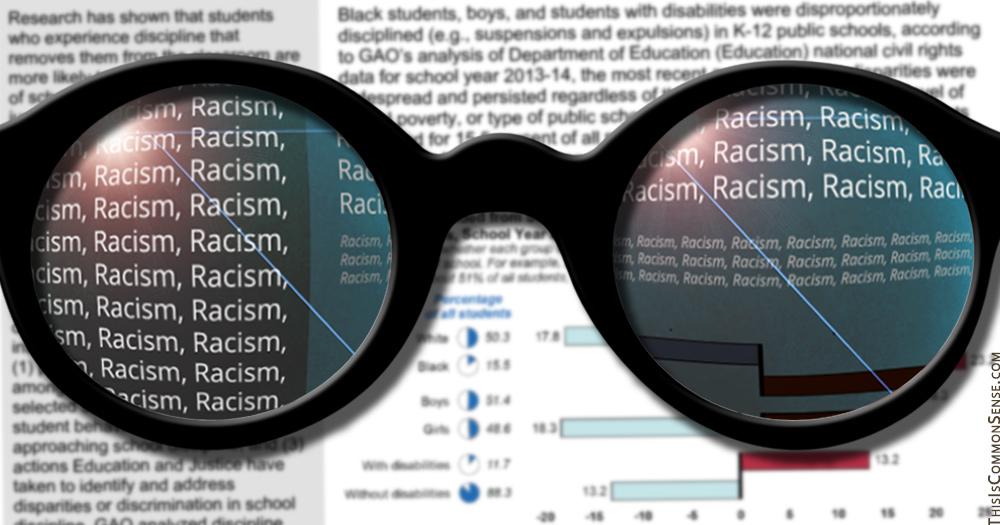
 

* Seven schools’ emails show that students spent a total of 406 days in suspension in January 2016. Officially recorded? Only 15 percent.


Printable PDF


Illustration based on a photo by Tod Baker

Categories
Accountability education and schooling folly local leaders moral hazard

Ugly Scrutiny

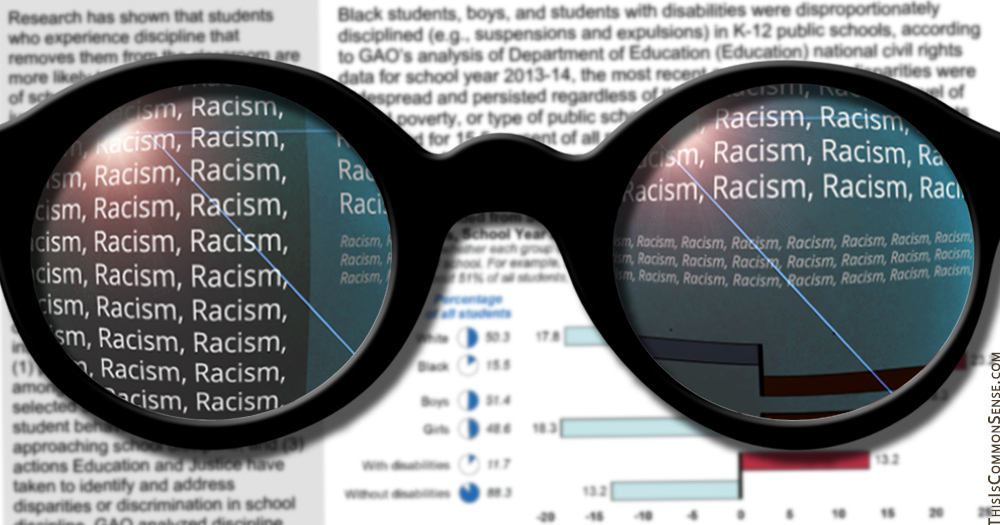
Prince George’s County Public Schools have increased their graduation rates faster than all other schools in Maryland. Measuring from 2013 to 2016, the graduation rate jumped from 74.1 percent to 81.4 percent.

Great! 

Well . . . a fly has stuck itself into the soothing salve of their success — what county principals called an “unfair, ugly scrutiny.” Said scrutiny came from the Old Line State’s Board of Education, which voted to pursue an investigation* into what the Washington Post described as “grade tampering” to “drive up graduation rates.”

Keith Maxwell, the county schools’ CEO, says he welcomes the investigation. 

Dozens of whistleblowers have reportedly come forward. Several spoke with the Post, anonymously, for fear of retaliation: 

  • “We knew that it wasn’t real,” said a teacher at a high graduation rate school. “It’s just common knowledge that they push kids through who shouldn’t be pushed through.”
  • “I’m not averse to helping a student pass,” one educator explained. “But when people are pressuring you to do it, when it happens behind your back, that’s when it’s problematic.”
  • “For a child not to come to class — maybe been in class three days in a whole quarter — and you’re going to change their grade?” questioned another teacher. “It’s not right. If they don’t come to school, and they don’t do the work, they deserve to fail.”

She added, “It doesn’t help them.”

Which is the point: the students are being cheated. If graduation doesn’t mean anything, then . . . their diplomas don’t mean anything.

This is Common Sense. I’m Paul Jacob.
 

*The investigation had been requested by Governor Larry Hogan.


Printable PDF


Categories
Accountability education and schooling free trade & free markets national politics & policies responsibility

The Leading Edge of Higher Ed

“People are paying tons of money to be kept out of the real world . . . being taught by people most of whom have never even worked in the business world. It’s kinda crazy.”

Well, yeah. There’s a lot of crazy in modern college life.

Which is one reason to work around it. That’s what Isaac Morehouse — quoted above — has done.

Morehouse is the founder of Praxis. You may have heard him on The Tom Woods Show or seen him interviewed on Fox News. “The mindset of ‘obey the rules, follow procedures, chase credentials, chase grades, and wait to be told what to do and you’ll be handed this magical ticket to a job,’” Morehouse told Fox’s Tucker Carlson, “it’s just not true.”

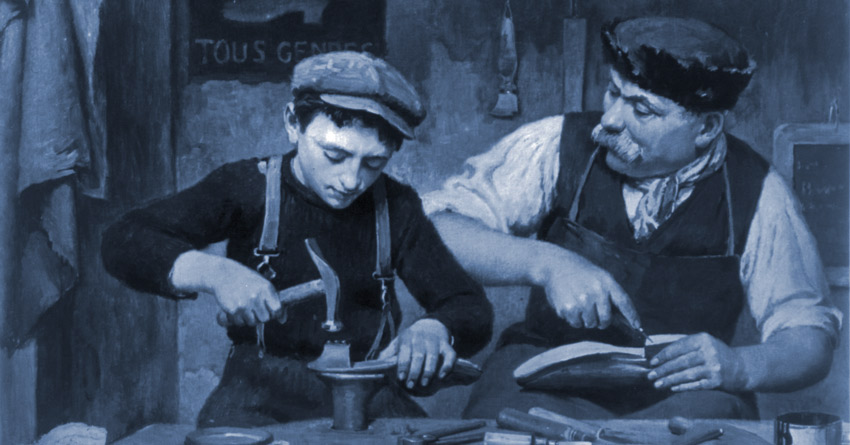
His alternative is simple: leverage the apprenticeship idea, combine it with counseling and instruction, and arrange with participating companies a guaranteed job at program’s end.

Our college system deserves a failing grade. Colleges sponge away fortunes (often borrowed) from students, while neglecting to train them to do much of anything but . . . college work.

This means not only that college grads have trouble finding work, but, as Mr. Morehouse discovered before he hit upon the Praxis idea, there are many, many companies trying to hire competent workers, but unable to find them.

A market opportunity!! Praxis unites demand and supply, connecting companies needing smart, energetic, cooperative workers with willing, eager young folks seeking meaningful (and well-paid) employment.

You can find a good overview of his effort — and a way to sign up! — at discoverpraxis.com.

Praxis’s testimonials are inspiring.

As the future should be.

This is Common Sense. I’m Paul Jacob.


Printable PDF


Categories
Accountability education and schooling general freedom ideological culture national politics & policies

Parents in Context

Consider the intersection of freedom and decontextualized fragments.

The specific “decontextualized fragments” in question appear in great and not-so-great works of literature, assigned in public schools for young adults to read: a graphic rape scene in Toni Morrison’s Beloved; racial slurs in Huckleberry Finn; sex, violence.

“Virginia regulators are drafting rules that would require school districts to red-flag objectionable teaching material and make it easier for parents to control what books their children see in the classroom,” reports the Washington Post.

Those regulations won’t be finalized for a year or more (because government bureaucracies are painfully slow). Yet an “earlier version of the language released on a state website drew hundreds of comments from the public,” the Post informs.

“Most parents were supportive of the change. . . .”

Teachers? Against.

Stafford County Public Schools literacy coordinator Sarah Crain worries about literature being wrongly labeled “sexually explicit.” To “reduce a book or a work down to something that is a mere decontextualized fragment of the work,” she argues, “actually impedes the ability for teachers and parents to have informed conversations.”

What about freedom?

Well, public schools aren’t primarily about freedom.

Teachers have a job to do; students follow instruction.

And it is pretty easy to see one reason for the opposition by “the professionals”: the new rules would entail more work.

Nonetheless, parents and their kids deserve as much choice as can be provided. And in every context.

Here, freedom means acknowledging the right of parents to decide. Not experts. Parents.

This is Common Sense. I’m Paul Jacob.


Printable PDF

education, parents, children, Virginia, freedom


Original photo credit: wealhtheow on Flickr


Categories
education and schooling national politics & policies responsibility

Half a Sawbuck for Civilization

Just gave a fiver to a sixth grader . . . to help the public schools.

He was going door to door, which I’ve had occasion to do, and he was nice and well-spoken. Glad to give.

And it was only five bucks — that’s what I had in my pocket. It was like buying a Starbucks venti-something.

No big deal.

But something does bug me.

What is it?

The fact that the school system sends kids around to pull on our heart-strings but when our homeschooled kids could benefit by taking part in sports or band or debate or other extra-curricular activities through the public schools, without enrolling as a full-time student, they’re told to “go play in traffic.”*

So, why did I give that screwed-up system anything that wasn’t taken at gunpoint?

For starters, a young person stood before me, not the governor or the school superintendent. I don’t want to approach their level of cold-heartedness.

Next, there is something I really do want: Community. My desire, as a committed individualist, is to grow and strengthen and be part of the community of folks who live close to my family.

There’s no contradiction here.

I want civilization. And five dollars is an awfully cheap price for a smidgen of it. I want that kid to receive a good education. I want our community to succeed, including him and all the other kids.

Why call yourself an individualist or libertarian and not work for voluntary community? Free individuals form better, more sustainable communities than those built on state power or authoritarianism.

Hey, maybe I should go door to door.

This is Common Sense. I’m Paul Jacob.

 

* For two straight legislative sessions, Gov. Terry McAuliffe has vetoed legislation allowing homeschoolers to participate in sports, band, debate and other such activities. On a county by county basis, Virginia public schools are free to permit or to block homeschoolers from taking academic classes and joining after-school clubs — with roughly half of counties deciding to accommodate homeschoolers.


Printable PDF

schools, schooling, home, education, civilization, illustration


Original (cc) photo by Swaminathan on Flickr


Categories
education and schooling folly free trade & free markets general freedom ideological culture national politics & policies responsibility too much government

Miseducated and Unemployed

The persistence of the issue of raising the minimum wage is an indictment of public education, for at least two reasons:

  1. It shows that “our” schools are not teaching basic economics. Generally, those who think minimum wages help the poor do not understand what wages are (price of labor), why they are paid (worker productivity bolstering the bottom line) and what a minimum wage law is (a prohibition on contracting for work below the arbitrary government-prescribed rate).
  2. It shows that schools aren’t preparing the young for real-world activity. Wages track productivity. If disturbingly large numbers of people are affected by the minimum, that means they haven’t been adequately trained in the skills they need.

Bernie Sanders wanted a 15-buck minimum. Hillary went on record supporting a 12-buck rate. Donald Trump would prefer that the minimum wage regulations be enacted by the states, though he says a hike to ten dollars per hour would really help the less fortunate.

It wouldn’t.

That is the tacit theme in a Wall Street Journal piece on the recent minimum wage rate hikes in 14 American cities, including the nation’s capital. A classic, succinct article on BET makes the point even more stark: a duo of economists from Trinity University “report that when a state, or the federal government, increases the minimum wage, Black teens are more likely to be laid off. The duo analyzed 600,000 data points, which the Employment Policies Institute says included ‘a robust sample of minority young adults unprecedented in previous studies on the minimum wage.’”

Just as theory predicts.

Could it be that politicians promise a raise because they believe government-schooled Americans too miseducated to know better?

This is Common Sense. I’m Paul Jacob.


Printable PDF

minimum wage, illustration, money, economics


Categories
Accountability crime and punishment education and schooling insider corruption local leaders responsibility

Schooled in Corruption

Michigan’s governor just signed a $49 million emergency funding bill, designed by legislators to keep Detroit’s public schools open.

Open for what?

Will any of that dough actually make it to the classroom, where children might possibly be educated?

Or, as I inquired at Townhall yesterday, is it merely another opening for . . . graft?

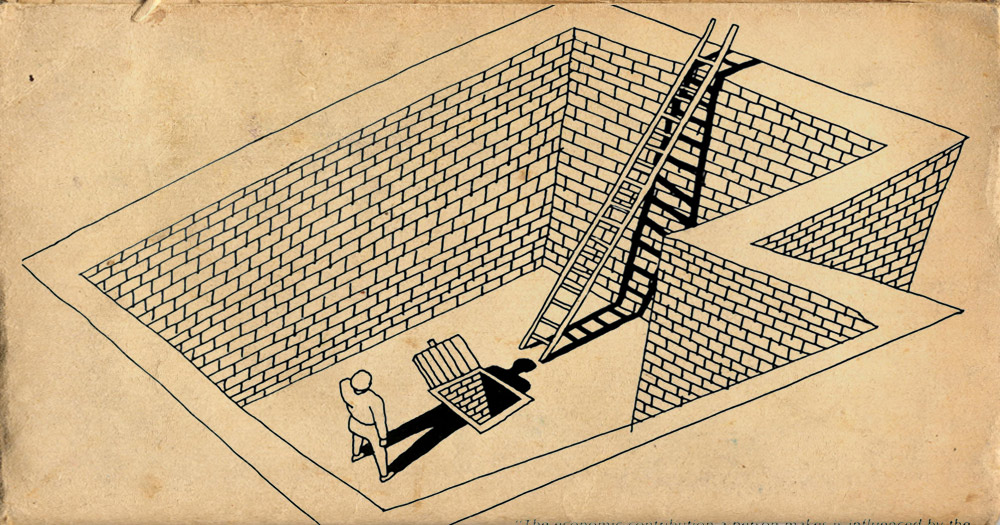
Less than a week after the rescue bill, U. S. Attorney Barbara McQuade brought criminal charges against more than a dozen DPS principals and administrators, as well as a vendor of school supplies. Their kickback scheme was simple: school officials received big, fat bribes from the vendor for school supplies that, as the Detroit Free Press put it, “were rarely ever delivered.”

The scam involved at least twelve separate Detroit schools over as long as 13 years. During that time, more than $900,000 was paid in bribes to DPS officials.

The newspaper highlighted how “shocked” teachers were that their principals had been indicted. “It’s pitiful that they’re going after principals who are probably just doing what they need to do even if it might be a little bit unethical in order to provide the students in their schools with the supplies and materials that they need that district and the state should be providing us,” was the excuse one teacher offered.

“A little bit unethical”?

Frankly, the fraud didn’t deliver, but deny “supplies and materials” to students — supplies taxpayers had sacrificed to provide.

This same teacher added that her indicted principal is “always putting students’ interests first. It’s not just rhetoric with her. It’s actual practice.”

Except for the graft.

This is Common Sense. I’m Paul Jacob.

Printable PDF

Detroit, kickbacks, bribes, crime, education, schools


Common Sense Needs Your Help!

Also, please consider showing your appreciation by dropping something in our tip jar  (this link will take you to the Citizens in Charge donation page… and your contribution will go to the support of the Common Sense website). Maintaining this site takes time and money.

Your help in spreading the message of common sense and liberty is very much appreciated!


Categories
Accountability education and schooling

A Public Fraud in the Midwest

The standard case for government-run industry runs like this: some goods, by their very nature, are best provided by government . . . to ensure high quality and low cost.

City sewers, firefighting, roads and education are traditionally explained as requiring government operation, organization, and tax funding.

The trouble is, it’s no longer plausible, really, to say that one of the most expensive and omnipresent of these industries, “public education” (government schooling) guarantees much of anything.

Certainly we aren’t getting quality at low cost.

But a few folks do get wealthy.

I wrote about Barbara Byrd-Bennett a few weeks ago. She’s the Chicago public school administrator who had to resign her CEO-ship because of the overwhelming evidence against her scamming Chicago’s schools . . . for over $2 million in kickbacks.

And now, it turns out, she has a prehistory — in the Motor City. “Federal investigators were looking at Barbara Byrd-Bennett’s role in a $40 million textbook contract that was awarded while she worked in Detroit,” explains the Chicago Sun-Times, “long before she became Mayor Rahm Emanuel’s schools chief. . . .”

Republican, democratic government relies upon an alert press and citizenry to catch folks like Byrd-Bennett. Why? Because government, by its nature, is most efficient in delivering wealth from many into the hands of the few. Having it serve the many is difficult, and requires eternal vigilance.

Which is one reason why we need limited government: the more extensive government’s scope, the harder to keep track of all the frauds and exploitative con jobs.

This is Common Sense. I’m Paul Jacob.

Printable PDF

Barbara Byrd-Bennett, Chicago, school, education, graft, corruption, illustration, Common Sense, Paul Jacob


Categories
Common Sense crime and punishment education and schooling folly general freedom national politics & policies

Another Leaf Out of Gov’t’s Playbook

Could government be a suck-hole for intelligence? Could one’s proximity to government reduce one’s IQ?

America’s public (read: government) schools too often serve as Wisdom-Free Zones.

The Ahmed Mohamed story shocked a lot of people. A kid with a clock was mistaken for a terrorist with a bomb and the school and local police threw reason and procedure and everything else out the window. But no one should be shocked. Every week, maybe every day, news creeps out of America’s “common schools” to prove, once again, that its administrators and teachers seem to be deficient in common sense.

When I wrote about Ahmed’s timepiece yesterday, I mentioned several examples of public school hysteria over fictitious, symbolic, or non-existent weapons. Such stories are Old Faithfuls here at Common Sense. But one case I haven’t written about* is the six-month-old tale of the Bedford County, Virginia, lad who was expelled from school for possession of a marijuana leaf.

The police dropped the drug case upon testing the leaf in evidence. It was not Cannabis sativa but Acer palmatum, the Japanese maple leaf, a harmless shrub.

Still, the school stuck to the year-long suspension, wouldn’t let up. Zero tolerance.

Now, the 11-year-old boy had supposedly boasted about having marijuana. And schools do have rules against “look-alike” drugs. I just wonder why the student received zero due process and how we expect youngsters to grow up in a world without even a tidbit of tolerance.

This dysfunction is not racism or fear or Islamophobia, as some claim in the Ahmed case.

It’s just the inflexible witlessness of those with too much unchecked authority.

This is Common Sense. I’m Paul Jacob.
 

* Coming, as it did, immediately on the heels of the infamous Pop Gun Tart insanity. . . .


Printable PDF

Zero Tolerance, schools, hysteria