Categories
education and schooling folly

Not Fired for Teaching

The headline states that a “USC Professor Who Used Chinese Word That Sounds Like English Slur” was “ ‘Not Dismissed Nor Suspended.’ ”

Sure. The professor was “only” removed from the course he was teaching.

Greg Patton, who teaches business communication at the University of Southern California, had been telling students about “filler words,” which for native English speakers is stuff like “uh, uh, uh.” We apparently don’t all grope for words in exactly the same way. If one grew up speaking Mandarin, one tends to say “nèi ge, nèi ge, nèi ge.”

No sooner had the example been provided than a contingent of the perpetually aggrieved lurched into action. 

Their failure to simply talk to Professor Patton, and the overkill of their response — including a letter claiming that his utterance “offended all of the Black members of our Class. . . . Our mental health has been affected. . . .” — suggests the disingenuousness of that response.

A USC dean issued an abject public apology. 

Patton also, regrettably, apologized.

Fortunately, many of Patton’s students, and others, rose to his defense, including Chinese class members who noted that Patton’s “use of ‘nei ge’ [was] an accurate rendition of common Chinese use, and an entirely appropriate . . . illustration of the use of pauses.”

If only the professor had been a mind reader and expert military strategist, he might have avoided this land mine. But training in proactive appeasement of bullies is not the solution here. 

What’s needed is a determination to stop appeasing bullies.

This is Common Sense. I’m Paul Jacob.


PDF for printing

See all recent commentary
(simplified and organized)
See recent popular posts
Categories
education and schooling

The Panic Over Pods

“You really want to get the best for your child,” a father told NBC News, describing his family’s motivation to secure private educational services.* They are part of the “Pandemic Pod” movement “now sweeping the nation” — as so many public schools offer only remote learning this fall. 

Increasingly, parents are getting together to form small groups — or “pods” — and hire a teacher to better provide instruction to their children. 

It shows initiative — and a refreshing sense of parental responsibility. Of course, not everyone can afford to hire a private teacher. 

“It just seems really privileged,” a Portland, Oregon, woman advised The Washington Post.

“The frantic activity . . . of families soliciting private tutors for their children,” San Francisco school board member Alison Collins explained, “is frightening to many black parents and parents of color.” 

L’Heureux Lewis-McCoy, associate professor of sociology of education at New York University, called the private effort: “opportunity hoarding.” 

“For those families that are most vulnerable, particularly lower-income families, black families, brown families, language-minority families,” declared the professor, “they are locked out of that.”

“Experts say that will widen the education gap,” NBC reporter Stephanie Gosk chimed in. 

Ah, the experts — and their Procrustean** obsession!

Their fixation on gaps and inequality, as opposed to enhancing opportunities and achievement where possible, leads to the absurd notion that we should deny educational opportunities to some children (our children) unless we can provide those benefits to all children . . . city-wide, statewide, nationwide — or worldwide.

Read a bedtime story to your kid or grandchild tonight. Insist on quality . . . and leave the equality to feckless education theorists.

This is Common Sense. I’m Paul Jacob.


* The father and the family happen to be black.

** Procrustes, in Greek myth, was a robber who made his victims lie on a bed and stretched them out if they were too short for the bed, or lopped parts of them off, if too tall; killed by Theseus on said bed: “Procrustean” is a synonym for absurdly strict egalitarianism.

PDF for printing

See all recent commentary
(simplified and organized)
See recent popular posts
Categories
education and schooling

End Educational Freedom Now!

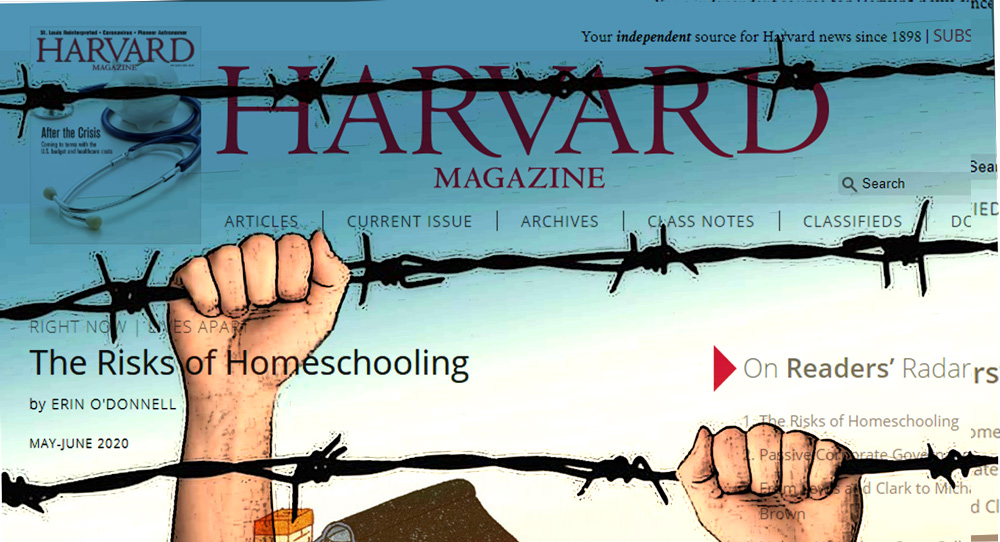
“A rapidly increasing number of American families are opting out of sending their children to school,” Erin O’Donnell informs in the May-June issue of Harvard Magazine, “choosing instead to educate them at home.” 

Yippee! Thanks for the great news — right?

Not to O’Donnell, or to Harvard Law Professor Elizabeth Bartholet. O’Donnell’s article is something of a friendly regurgitation of Bartholet’s Arizona Law Review article, entitled, “Homeschooling: Parent Rights Absolutism vs. Child Rights to Education & Protection.”

Bartholet “recommends a presumptive ban on homeschooling.” Why? Because, as O’Donnell offers, it “violates children’s right to a ‘meaningful education’ and their right to be protected from potential child abuse . . .”

Her evidence? Professor Bartholet offers none. Harvard Magazine does not need any.

Avoided, perhaps, because research shows students educated at home significantly outperform public school students on standardized tests. 

As for the specter of homeschooling as massive smokescreen enabling vicious child predators? “The limited evidence available shows that homeschooled children are abused at a lower rate than are those in the general public,” Dr. Brian Ray reported in 2018, adding that “an estimated 10% (or more) of public and private schoolchildren experience sexual maltreatment at the hands of school personnel.”

So, what is going on here? 

Perhaps O’Donnell provides the explanation, writing that “surveys of homeschoolers show that a majority of such families . . . are driven by conservative Christian beliefs, and seek to remove their children from mainstream culture.” 

Oh, my, can that be permitted? Should people choose their own religious and cultural beliefs? May parents freely educate their kids?

Bartholet calls that “essentially authoritarian control,” which is “dangerous.”

There, she is correct. Homeschooling is dangerous . . . to experts hell-bent on telling us what to think.

This is Common Sense. I’m Paul Jacob.


PDF for printing

home schooling, education, Harvard, authoritarianism,

See all recent commentary
(simplified and organized)
See recent popular posts

Categories
education and schooling subsidy

The Most Foolish Bank of All

There are few things more foolish than turning the Department of Education into a bank.

“Congress never set up the U.S. Department of Education to be a bank, nor did it define the secretary of education as the nation’s ‘top banker,’” said Betsy DeVos, Trump’s controversial Department of Education secretary, at an annual education conference in Reno. “But that’s effectively what Congress expects based on its policies.”

Secretary DeVos “recommended that Federal Student Aid (FSA) — the nation’s largest provider of financial aid — be spun off from the Education Department so student loans can be better managed and administered,” Forbes summarizes.

The FSA is a bank, but not a very good one. It makes bad bets, which Mrs. DeVos tries to make clear by asking a few rhetorical questions:

  • “Is it any surprise . . . that both principal and interest are currently being paid down for only one in four loans? 
  • “Nearly 11 million borrowers have loans that are delinquent or in default? 
  • “And 43 percent of all loans are considered ‘in distress’?”

Even worse, the loans amount to an especially cumbersome form of subsidy, one that has corrupted the university system, misallocated higher education resources and inflated tuitions, and sunk generations into debt.

While DeVos’s reforms might possibly be an improvement, what if the troubles associated with the federal government’s student loan programs are not the result of how they are managed, but that the federal government is involved at all?

Centralizing consumer credit in specialized Congress-created lending institutions (Fannie Mae and Freddie Mac) was at the heart of last decade’s massive financial crisis. Shouldn’t a major banking reform focus on avoiding the moral hazards involved in government-run credit and subsidies?

DeVos’s plan doesn’t strike me as educated on this angle.

This is Common Sense. I’m Paul Jacob.


education, bank, loans, Devos,

See all recent commentary
(simplified and organized)
See recent popular posts


Categories
education and schooling national politics & policies Popular too much government

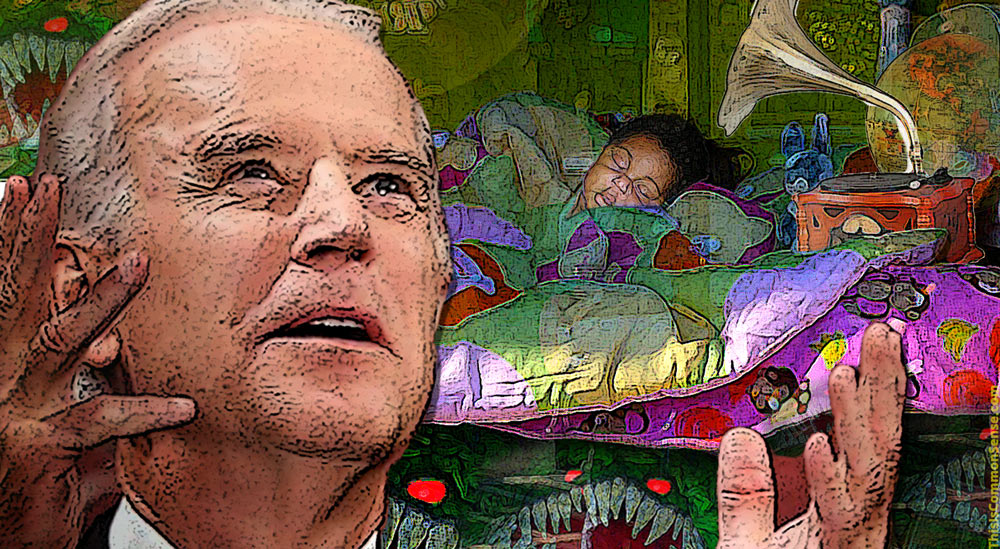
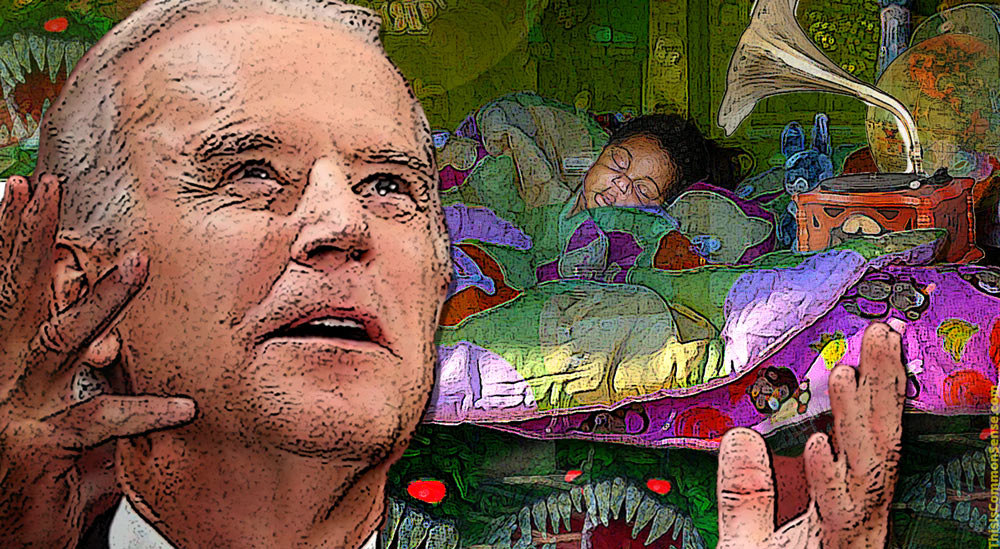
Biden Under the Bed

Former Vice-President Joe Biden was put on the spot, again, about race. During last Thursday’s presidential candidates’ debate, ABC newscaster Lindsey Davis asked what responsibility Americans should “take to repair the legacy of slavery in our country?”

Triple, Biden said, “the amount of money we spend. . . .”

On “very poor schools, the Title I schools.”

From $15 to $45 billion a year.

Dodging the reparations question, he offered a four-part plan for educating poor children that was very . . . educational. 

Biden’s second solution is “make sure that we . . . help the teachers deal with the problems that come from home.” 

Send in more psychologists!

Step three is to “make sure that . . . 3-, 4-, and 5-year-olds go to school. School. Not daycare. School.”

Sounds like forcing every parent to put their 3-year-old into school. Or just “poor” 3-year-olds? Neither sounds good.

If my elementary school math still holds, next comes policy objective No. 4. 

And it’s a doozy. 

“We bring social workers in to homes and parents to help them deal with how to raise their children,” Sleepy Joe declared. Because as he explained “they”— wealth-challenged parents — “don’t know quite what to do.”

But Biden does. “Play the radio, make sure the television — excuse me, make sure you have the record player on at night, make sure that kids hear words.” 

The former VEEP explained that children from “a very poor background will hear four million words fewer spoken by the time they get [to school].”

Language skills matter. But do we really want the next president to station a social worker under every kid’s bed to make sure the record player isn’t skipping?

This is Common Sense. I’m Paul Jacob.


PDF for printing

Joe Biden, bed, monsters, record player, black child,

Illustration adapted from an image by Rusty Clark

See all recent commentary
(simplified and organized)
See recent popular posts
Categories
education and schooling initiative, referendum, and recall tax policy

Taxing Panicsville

There is a big problem with Delaware school districts asking voters for additional tax money via ballot referendums. You see, sometimes the people don’t vote the way school officials and politicians want.

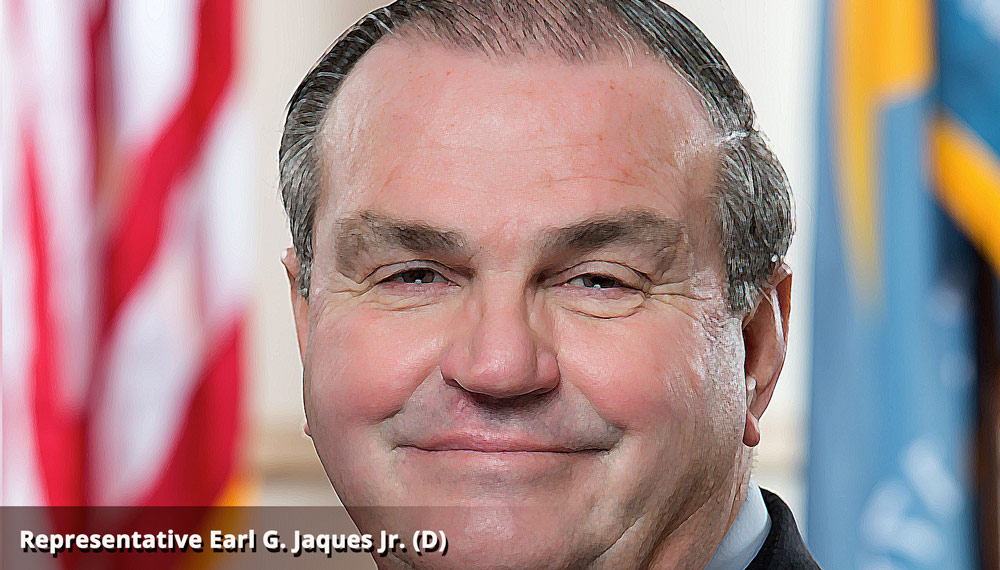
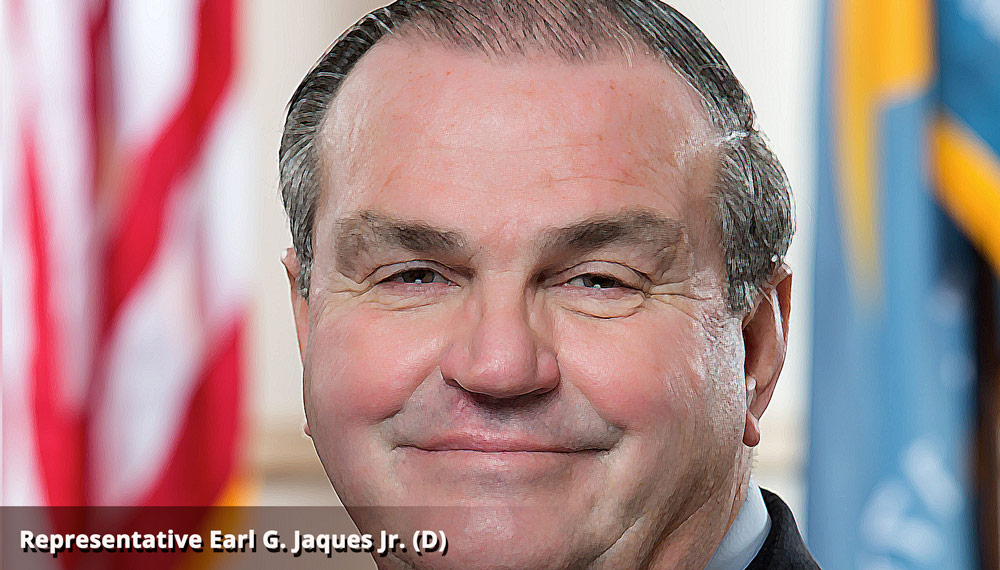
Have no fear: Rep. Earl Jaques (D-Glasgow) has authored House Bill 129 to solve this thorny problem. 

“This bill creates a mechanism,” its official summary reads, “by which school boards may increase funds for a school district both with and without a referendum.” 

Meaning, of course, without a referendum . . . since current law requires a public vote. 

“That way, [school districts] know the money is there if they need it, and they don’t abuse it because they know it’s there,” explained Jaques. “The problem with the referendum system is that they have to ask for more than they actually need, because they know it’s going to be a long time before they can come back.”

“Despite his assurances that the system would not be abused,” the Dover Post reports, “technically, school districts could raise taxes by 2 percent each year.” Or by any increase in the Consumer Price Index, whichever is higher.

Inexplicably, three stories — in the Dover Post, Newark Post and Delmarva Now — told readers it was the “lower” of the two. The bill clearly says the “higher.” Odd that media outlets would not grasp the ever-so-subtle difference between the words “higher” and “lower.”

“Everybody’s in ‘Panicsville,’ but it’s really not that way at all,” offered Jaques. “We, my colleagues in the legislature and I, could raise your income tax right now, and what’s your recourse? Vote us out at the next election.”

Excellent advice.

This is Common Sense. I’m Paul Jacob.


PDF for printing

Earl G. Jaques

See all recent commentary
(simplified and organized)
See recent popular posts

Categories
education and schooling general freedom

Top School Fails

Illiteracy, innumeracy, low standards, grade inflation — signs of a general failure of education, sure, and of public schooling in particular. But for the worst failing, look no further than Harvard University.

The Ivy League school just caved to a student mob. 

“Harvard said on Saturday that a law professor who has represented Harvey Weinstein would not continue as faculty dean of an undergraduate house after his term ends on June 30,” explains Kate Taylor at the New York Times, “bowing to months of pressure from students.”

The lawyer in question, Professor Ronald S. Sullivan, Jr., has served with his wife, law school lecturer Stephanie Robinson, at one of Harvard’s residential houses for undergraduate students. 

Now, the African-American couple has not been fired from faculty. Just as deans. No great tragedy, if the official Harvard statement be true — that there were multiple reasons for not renewing their contracts.

But the context: pressure from students who expressed horror — “trauma-inducing”! — at Sullivan’s legal defense of the former Mirimax mogul accused of numerous sex crimes.

We expect lawyers to defend even the worst criminals. Everyone is entitled to a legal defense. It’s sad that not only do some students fail to accept this but also that this crimson-colored college plays along with their uncivilized complaint. Harvard has, in effect, denied one legal foundation of a free society. 

Remember that the “common school movement” for government schools was started to inculcate republican values. Horace Mann’s great big excuse for government control and taxpayer funding of schools was to promote civilized American liberties.

Schools, generally, have failed. And Harvard has just accepted their worst failure as the new passing grade. 

This is Common Sense. I’m Paul Jacob.


PDF for printing

Common School, education, values, American, public school, law, lawyer,

See all recent commentary
(simplified and organized)
See recent popular posts

Categories
education and schooling ideological culture moral hazard nannyism national politics & policies Popular

Make Others Pay?

Special Olympics has found a way to get kids and young adults with disabilities to feel something important: Able.

Three decades ago, as part of a community service requirement, I spent one day each week working with physically and intellectually-challenged adults at Easter Seals in Little Rock, Arkansas. I loved it. 

Most unforgettable were their beaming smiles of pride when they got a chance to show what they could do. I’ve always loved sports, but never as much as there and then. In the decades since, my family has given to the Special Olympics what financial support we could afford. 

So, can you imagine how I must feel hearing Education Secretary Betsy DeVos testify in favor of cutting all $17.6 million in federal funding for the Special Olympics? 

“It’s appalling,” declared Rep. Barbara Lee (D-Calif.).

John Kasich, the former Republican governor of Ohio, called the cut “outrageous” and “ridiculous.”

“Cruel and reckless” were the words Rep. Rosa DeLauro (D-Conn.) used.

“The Special Olympics is . . . a private organization. I love its work, and I have personally supported its mission,” countered Sec. DeVos.* “But given our current budget realities, the federal government cannot fund every worthy program, particularly ones that enjoy robust support from private donations.”

Federal funding provides only 10 percent of Special Olympics revenue, with over $100 million raised annually in private donations.

So, how must I feel about DeVos’s suggested cuts? 

Gratitude . . . for her generous contributions to Special Olympics — and for her fiscal responsibility. Let’s fund this wonderful program without the government forcing (taxing) support from others.

Check, cash or credit card is always preferable to virtue-signaling gum-flapping.

This is Common Sense. I’m Paul Jacob.


* Special Olympics is one of four charities to which DeVos donated her entire 2017 federal salary.

PDF for printing

Betsy Devos, education, special olympics, funding, budget, debt, spending,

See all recent commentary
(simplified and organized)
See recent popular posts

Categories
education and schooling ideological culture moral hazard responsibility too much government

An Expert Explains Failure

The failures of the public high schools in the District of Columbia go on an on. It is quite a scandal, as I explained this weekend at Townhall.

And yet some “charter schools that serve large populations of children from low-income families,” notes the Washington Post, after providing much detail about the massive failures, “recorded big increases in scores.”

What hint about improving education does that fact give?

Well, Kevin Welner, a professor who heads the National Education Policy Center at the University of Colorado, has an interesting thought: “People want to read into these test scores lessons about what the schools are doing. But these scores, even the growth scores, depend a great deal on students’ opportunities to learn outside of school. If we address the poverty and racism, then we will see these test scores increase.”

Hmmm. Let’s review: (a) the problem is at home and (b) it cannot be overcome by the schools. Moreover, the esteemed professor perceives the cause of these detrimental home environments to be “racism and poverty.” 

Once upon a time, public education was proclaimed to be the great equalizer, allowing the disadvantaged to climb the economic ladder, and, if not wipe out poverty completely, to certainly dramatically reduce it. 

Now, we discover from a certified education expert that we had it backwards.

So maybe it is time to chuck the whole experiment and just try to educate kids.

Not “save” them, or society.

This is Common Sense. I’m Paul Jacob.


PDF for printing


Categories
Accountability education and schooling folly government transparency insider corruption local leaders moral hazard nannyism national politics & policies responsibility too much government

Reading, Writing & Racketeering

When I attended a public school — many decades ago, in a galaxy far, far away — teachers told students that cheating was unacceptable and would be punished.

Harshly.

Today, the idea has students laughing — all the way to graduation.

Last year, after DC Public Schools officials breathlessly announced massive improvements in graduation rates, several honest teachers broke ranks, and an investigation uncovered massive fraud: a whopping one of every three graduates across the city resulted from falsified records.

Many students played hooky for a third or even half the school year. Administrators also pressured teachers to improve grades to hike the graduation rate.

“The problem,” Washington Post columnist Colbert King concluded, “is systemic indeed.”*

You see, employment evaluations and cash bonuses for teachers and administrators were — and still are — tied in part to student graduation stats. It turns out that an incentive to good work can also serve as an incentive to cheat. Could it be that government employees grading their own work does not encourage honesty?

Just months after confirmation of the worst fears of public school corruption, new allegations against teachers and administrators at Roosevelt High School more than suggest fudging attendance records is ongoing.

“This growing environment of fear and mistrust,” asserts Elizabeth Davis, president of the Washington Teachers’ Union, “has never been addressed and continues to be a disservice to students and teachers.”

City officials have had plenty of time to address the issue. And of the common sense idea that the best way to avoid fear and mistrust is to follow the rules?

Crickets.

This is Common Sense. I’m Paul Jacob.


* Nor is the fraudulent behavior limited to dishonestly boosting graduation rates. Former DCPS Chancellor Antwan Wilson resigned back in February after it became public knowledge that his daughter jumped 600 other students on a waiting list for her school. A recent Post story about enrollment fraud, whereby non-residents grab spots at prestigious schools such as the Duke Ellington School of the Arts, without paying the non-resident fee, was entitled, “Stop enrollment fraud? D.C. school officials are often the ones committing it.” Two-thirds of pending cases involve a current or past DCPS employee.


PDF for printing