Categories
international affairs

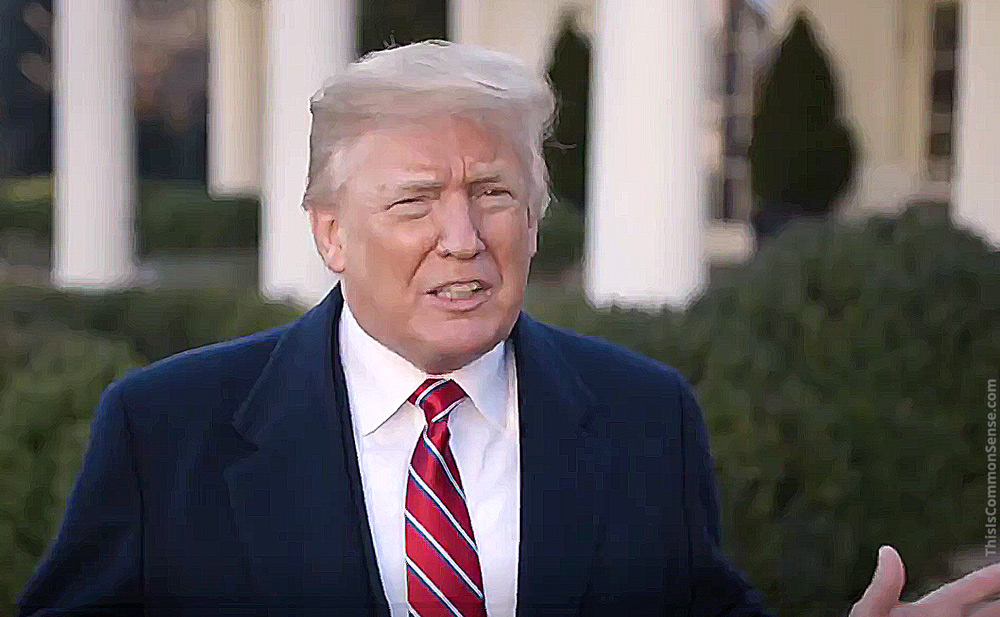
The Grateful President

What are you thankful for?

Surely you were asked over Thanksgiving by friends or relatives — just as the president was by reporters. No doubt you had more social grace than to launch into a full-throated self-endorsement.

In his defense, President Trump first answered, “For having a great family,” before quickly pivoting to “and for having made a tremendous difference in this country. . . . This country is so much stronger now than it was when I took office that you wouldn’t believe it.”

Yes, hard to believe.

Thankful for Saudi Arabia? The Donald is. Oil prices are down.

Controversially, Trump also decided that Saudi Arabia has suffered enough for their grisly state murder of Washington Post contributor Jamaal Khashoggi. U.S. sanctions have indeed been firmly placed on 17 Saudis accused of involvement in the murder, but no action taken against Crown Prince Mohammed bin Salman, who the CIA “assesses” was “likely responsible.” 

“It’s a very complex situation,” the president told reporters. “It is what it is.

“We’re not going to give up hundreds of billions of dollars in orders and let Russia, China and everybody else have them,” Trump continued. “It’s America first.”

“Our relationship with Saudi Arabia has always been transactional,” explained the American Enterprise Institute’s Danielle Pletka on NBC’s Meet the Press. “Our relationship with Saudi Arabia has always been about our larger goals in the region, not out of admiration for Saudi Arabia’s rule of law, human rights record, or anything else.”

“Transactional” is a pretty word for this foreign policy, with pretense about human rights or without.

How thankful should we be for that?

This is Common Sense. I’m Paul Jacob.


PDF for printing


» See popular posts from Common Sense with Paul Jacob HERE.


Categories
ideological culture media and media people national politics & policies

When Experts Are Wrong

Standard theory has it that “mid-term elections” serve as a “referendum on the President.”

In a typical article this weekend, a political scientist trotted out that common wisdom and then went on to say that “control of the referendum has shifted. It is now a referendum on leadership, on character . . . and that’s not good news for Donald Trump.”

My crystal ball is in the repair shop, but I have my doubts. The “experts” got the 2016 election so wrong in no small part because they were leveraging their expertise to influence the outcome more than understand the contest.

Academics, journalists and other Democrats want today’s votes to serve as a “referendum on leadership” because they yearn for their leaders and not Trump. 

In a Wall Street Journal op-ed and a Slate follow-up interview, Yale computer scientist David Gelernter explored the lack of “rapport between the left and what I consider the average American.” He also dismissed as absurd the idea that Donald Trump is racist — a mainstay of the Democratic critique of the president. What Trump is, instead, is “the average American in exaggerated form — blunt, simple, willing to fight, mistrustful of intellectuals” but completely without “constraints to cramp his style except the ones he himself invents.”

The Democrats, meanwhile, “have no issues” — except their hatred of Trump, argues Gelernter.

Thankfully, the mid-terms often serve as a check on the power of sitting presidents. But if “average Americans” hear the reasons to vote for the opposition party as all about how racist and xenophobic Trump is, it may work no better than in the last election.

Prophecy’s a tricky business.

This is Common Sense. I’m Paul Jacob.


PDF for printing


Categories
Accountability folly ideological culture national politics & policies Popular

A Fraction of a Reaction

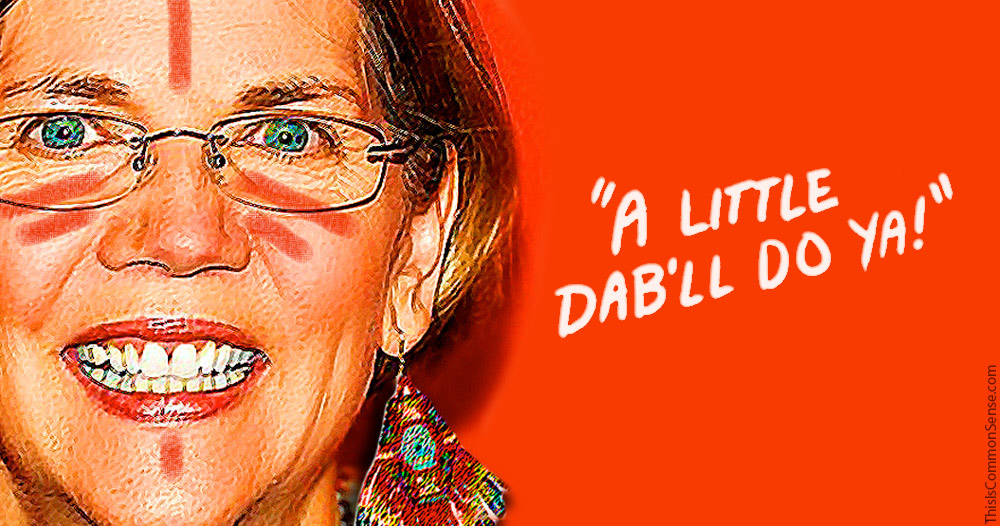
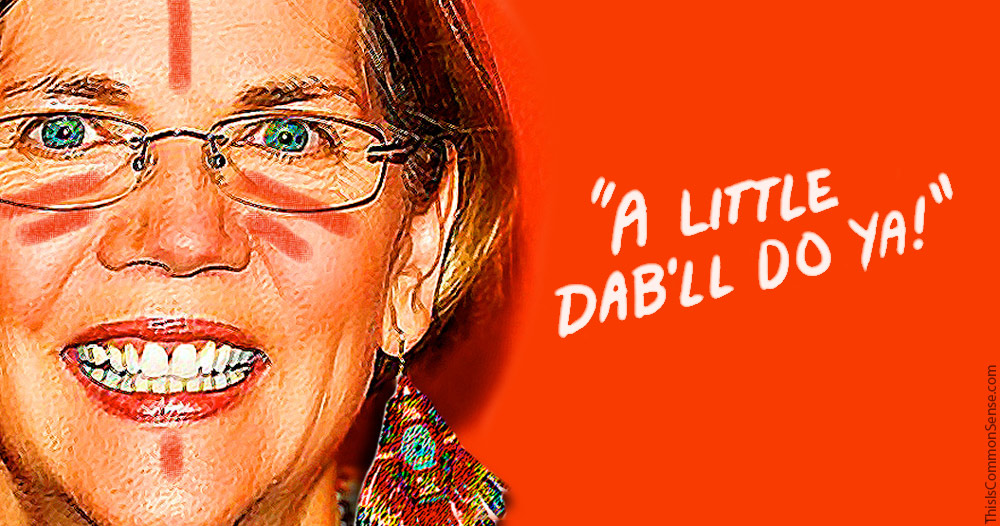
“A little dab’ll do ya.”

That was from Brylcream, not 23andme.

President Donald Trump has been mocking Senator Warren, relentlessly, for her claims to native American heritage, calling her “Pocahontas.”* Some have dubbed him “racist” for doing this, but his point was plausibly anti-racist. In 1995, Harvard Law School ballyhooed her as its first “first woman of color” hire. 

 Some argue Warren benefited from this racial categorization, but that’s not been shown. Warren has ceased labeling herself Native American and defended her belief that she was of Cherokee or Delaware descent based on family lore as well as her physiognomy (“high cheekbones”). 

“Let’s say I’m debating Pocahontas,” Trump declared during an uproarious routine at a Montana rally back in July, promising the crowd that “when she proclaims that she is of Indian heritage,” he would toss her a DNA kit and offer: “I will give you a million dollars, to your favorite charity, paid for by Trump, if you take the test and it shows you’re an Indian.”

Under pressure, Warren took a DNA test.** And (inadvisedly?) made a big deal about it.

Upshot? Six to ten generations ago she may indeed have had one ancestor who was a native American. The post-test squabbles have been mostly embarrassing, but Trump at least had the wit to note the lower end of Warren’s native mix was “1/1024, far less than the average American.”

The “memed” jokes on the Internet have been hilarious.

But who gets the last laugh? While we allow ourselves to be done in by little dabs of trivia, the great crises of our age build ominously. 

At what ratio, though, I don’t know.

This is Common Sense. I’m Paul Jacob.


* And then apologizing to the real Pocahontas for the comparison.

** The full story of who she went to, and the reliability of her DNA report, is itself bizarre and complicated. See “Did Elizabeth Warren Just Kill Identity Politics?” See also Tim Pool.

PDF for printing


Categories
Common Sense free trade & free markets government transparency insider corruption local leaders media and media people national politics & policies too much government

Never Trust a Politician

One of my more persistent critics on this site asked, last week, why I might believe anything the current president says — considering all the lies.

For reasons of decorum I won’t repeat his exact wording.

The odd thing about the comment was not the vulgarity, though (unfortunately). It was the idea that I was relying upon belief in Donald Trump’s veracity. The whole point of my commentary regarding Trump’s handling of trade and foreign policy was to read between some lines.

I try never to believe anything . . . er, everything . . . any politician says.

In Donald Trump’s case, though, there are lies and there are fictions and there are exaggerations. And corkers . . . and “negotiating gambits.” Separating the wheat from the chaff from the grindstone is not always easy.

Based not only on some of what he says, but also on results-thus-far from the EU negotiations, Trump’s idea of “fair trade” appears to be multilateral free trade. But he has chosen a bizarre method to get there: the threat of high-tariff protectionism — which in the past has led to multilateral protectionism, not free trade.

Trump sees everything as a contest. Trade isn’t a contest as such. It’s win-win. But trade negotiations are contests. And Trump’s game of chicken is dangerous.

Regarding foreign policy generally, though, he seems to be playing a more familiar game: we can outspend everybody. The recent increase in Pentagon spending is bigger than Russia’s annual military budget!

So, who pays? Americans in

  1. higher taxes and 
  2. the consequences of massive debt, as well as in
  3. the higher prices from his tariffs.

That’s awfully daring of him. For us.

This is Common Sense. I’m Paul Jacob.


PDF for printing


Photo from Max Pixel


Categories
free trade & free markets government transparency media and media people national politics & policies too much government

Most Outrageous Negotiation Strategy Yet

The best defense of Donald Trump’s presidency, so far? He is smarter than the rest of us, and knows how to negotiate with bad guys and insider players. We have to discount what he is saying, the theory goes, because he is not telling truths . . . obviously. 

He is negotiating.

Take nothing at face value, including Trump’s professed beliefs.

Protectionism, for example. Trump has long been against NAFTA and the modern version of “free trade.”* But, as I noted in late July, Trump does not seem to be demanding managed trade, or high tariffs as a means to protect American producers, or even tariffs as a means to increase government revenue. He appears — at least some of the time — to be using tariffs as a way to bargain other countries to reduce their tariffs.

This method has not worked in the past.

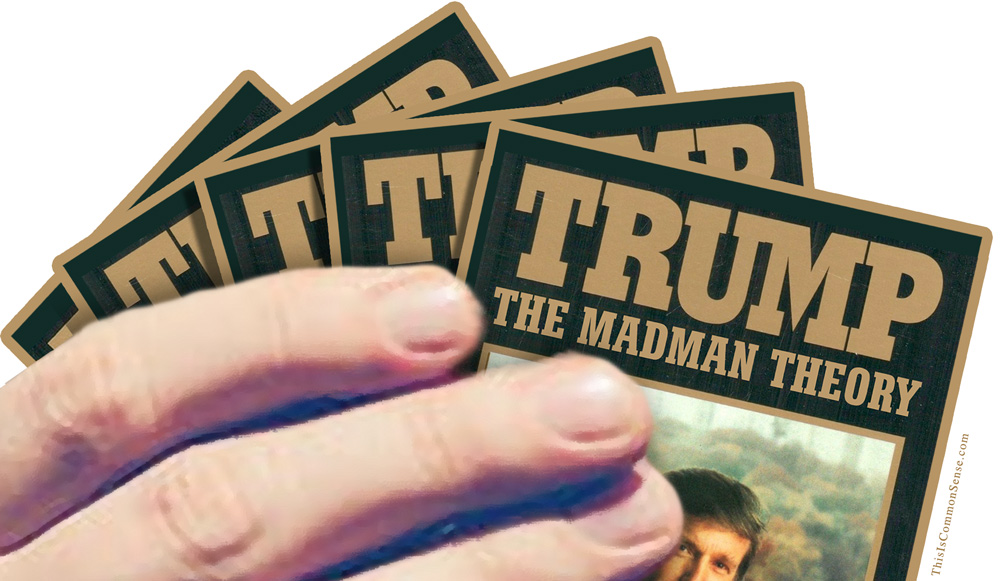
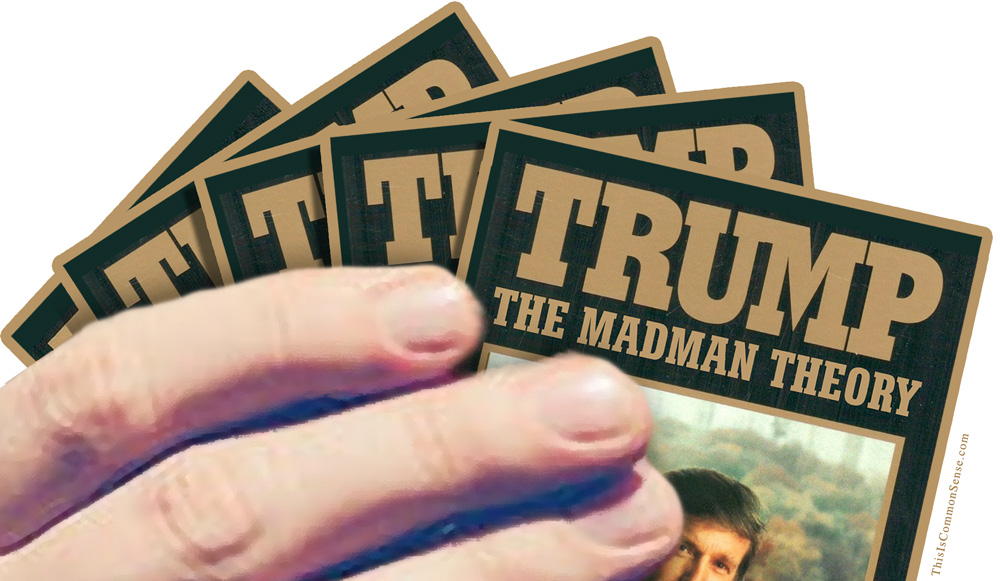
But is Trump different enough a politician to pull off a “madman” strategy to get leaders in other countries to do the right thing and reduce their tariff and regulatory burdens on their own countries?

A long shot — and several sectors of American business are being hurt right now in this “negotiating” (threat) phase of Trump’s outrageous gambit.

Another area where one might express such hope for a master-negotiator president is in reining back the Pentagon. In the run-up to November 2016, Trump sure seemed defiant of the neo-conservative/neo-“liberal”/center-left establishment on foreign policy.

But now he just signed a huge increase in the Pentagon budget: an $82 billion increase.

Is Trump’s plan to bring big-spending military-industrial complex lobbyists to heal by first giving them what they want?

That. Won’t. Work. 

This is Common Sense. I’m Paul Jacob.


* Post-WWII trade policy has consistently defended treaty-based global trade, but with heavy elements of protective tariffs, regulations and subsidies, making the whole thing look less like Free Trade and more like Mis-Managed Trade.

PDF for printing


Categories
Accountability general freedom nannyism national politics & policies political challengers porkbarrel politics responsibility too much government U.S. Constitution

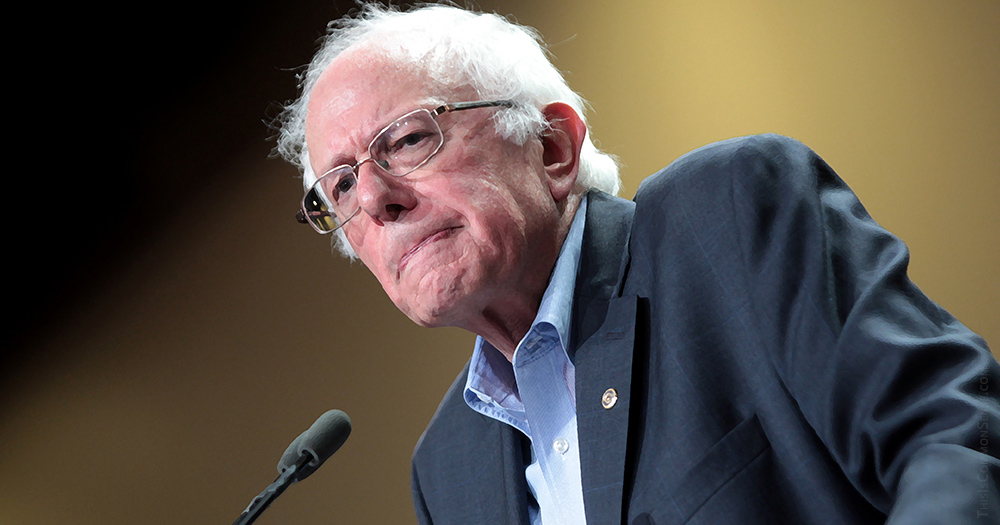
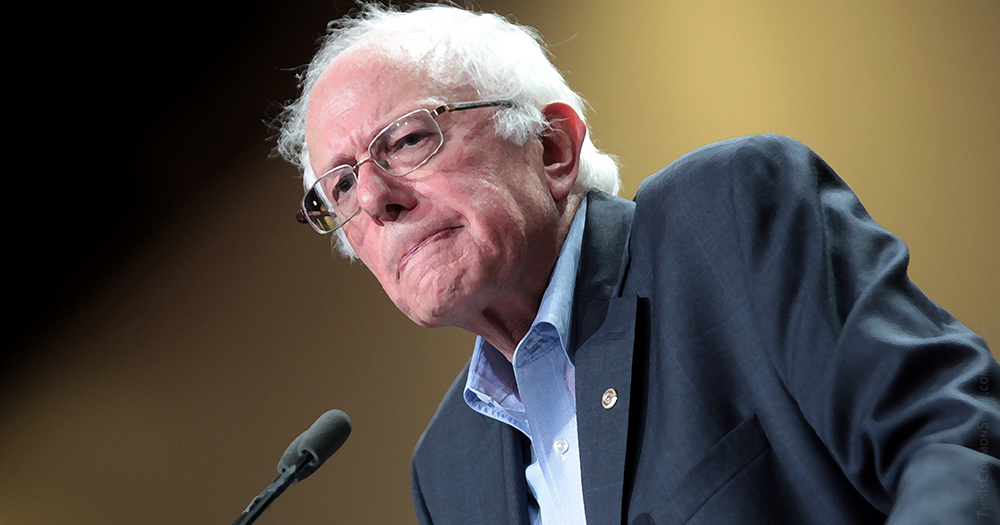
How Bernie’s Like Trump

Yesterday I made fun of Bernie Sanders’ jobs guarantee idea. Today, let’s take it seriously.

Not as policy, mind you. As propaganda.

It’s not worth talking about as a policy because there is no policy yet. “It is not clear when Sanders will announce the plan,” Fox News relates, “and a Sanders spokesperson told the Post that it was still being crafted.”

It is mere advocacy. A press release. Vaporware.

But that’s the key to it, really. The jobs guarantee isn’t policy.

It’s a ploy.

Bernie Sanders knows there is hardly a hope of passing such a bill. He probably understands that the current fiscal mess precludes it. He might even understand that it is literally a horrible notion, the worst policy idea in the world, and he would still have reason to pitch for it relentlessly.

Because what he is really after is the hiking of the national minimum wage to $15/hr. That is the next Democratic ratcheting up of government. And by insisting that the government guarantee $15/hr jobs, he is readying everyone to accept, as a compromise, the hiking of the minimum wage to that very figure.

Yesterday I noted a link between socialism and slavery. But minimum wages link up not with slavery but unemployment.

Which Bernie knows all too well. Before he got in politics, he was a layabout, a bum.

Not like President Trump at all, that way.

But by fixing on one key, “anchor” concept ($15/hr) and demanding the Moon, he might just get his mere lunacy, er, minimum wage hike.

And that is a Trumpian* ploy.

This is Common Sense. I’m Paul Jacob.


* Though Trump’s better. His “linguistic killshots” are far more memorable . . . because funny and (usually) visual.


PDF for printing


Categories
Accountability general freedom government transparency media and media people moral hazard national politics & policies U.S. Constitution

Wag the Wolf

Once upon a time, President Donald Trump was against attacking Syria merely on grounds that its dictator is a murderously bad guy — despite numerous chemical attacks on civilians in opposition-occupied and -contested areas that had been blamed on Syrian dictator Bashar Hafez al-Assad.

Almost exactly a year ago, a sarin gas attack spurred President Trump to order a cruise missile strike on the Syrian airstrip where it was alleged the Assad regime sent those planes to drop weaponized chemicals on innocent populations. The strike was widely characterized as “Donald Trump’s most dramatic military order since becoming president.”

Since then, after another reported gassing — this time “chlorine”; this time a hospital as target — the drumbeat for war has gotten louder, despite Russia’s stern warning that there would be “grave repercussions” were the U.S. to attack its ally again.

Whoops and war cries even from the anti-Trump media.

But as Tucker Carlson argues, there are still legitimate disputes about previous gas attacks — about who really perpetrated them, and the uncertainty of proclaiming Assad the malefactor in the most recent one.*

Meanwhile, the FBI raided Trump’s personal attorney Michael Cohen’s offices. The rationale? Apparently unrelated to the “Russia investigation.” Instead, it is about “campaign finance law” — that is, the paid-off pornstar issue.

In the 1990s, we called Bill Clinton’s bombing of a “chemical weapons” factory in Africa — on the very same day that Monica Lewinsky testified before a grand jury about her affair with the president — “wag the dog.”

Trump cries “witch hunt!” but I wonder if the Deep State may not be trying to wag the wolf this time around.

This is Common Sense. I’m Paul Jacob.


* News stories about atrocities have been faked before in the Middle East — remember the hospital baby-murder story in Kuwait? “Both” sides in Syria are known to possess chemical weapons.


PDF for printing


Categories
Accountability moral hazard national politics & policies responsibility too much government

You’re Fired!

If government were reality TV — and it is — this current administration would obviously be The Apprentice.

Who do you most want fired?

Last week, President Trump gave Veterans Administration Secretary Dr. David Shulkin the heave-ho, after a “damning” Inspector General’s report not only charged Shulkin with misusing tax dollars but also detailed myriad problems at the VA that continue to “put patients at risk.”

In a New York Times op-ed, the former Secretary defended his “tenure at the department,” arguing that he had “expanded access to health care by reducing wait times, increasing productivity and working more closely with the private sector.”

Speaking of the private sector, however, Shulkin suggested his firing was orchestrated by those favoring privatization — and that “privatization leading to the dismantling of the department’s extensive health care system is a terrible idea.”

Last April, President Trump signed the Veterans Choice Improvement Act, expanding the ability of vets to access private medical care outside the confines of the VA system. Why? Because IG investigations discovered that wait times were actually killing veterans — and the VA bureaucracy was actively covering up the problem.

“Critics have questioned whether increasing veterans’ reliance on private doctors might move the VA toward privatization,” the Washington Examiner noted at the time, “while proponents of such efforts have accused the VA of resisting steps to implement the program in order to protect the status quo.”

Vets deserve a choice, not a bureaucracy. After failing veterans for decades, Status Quo, you’re fired!

This is Common Sense. I’m Paul Jacob. 


PDF for printing


Categories
ideological culture media and media people national politics & policies

The Sitcom Society

If we are entering a new Golden Age of television, it is for the most part passing the legacy TV networks by.

So, Roseanne Barr to the rescue!

The reboot of ABC’s Roseanne — a hit situation comedy of the late 1980s and much of the 1990s — should put the network and the art form back in the spotlight.

But though it is very popular, the show is not without . . . its political controversy. You see, funny-woman Roseanne plays Roseanne Conner, and she . . . (drum roll) . . . voted for Trump.*

Horrors!

Predictably, our modal mainstream media cultural mavens are not on board. Roxanne Gay, in the New York Times, complains that Roseanne’s views are “muddled and incoherent.”

Roseanne to Roxanne, hello-o-o: the character is fictional. Who said characters in a comedy should have coherent views? One would think the point of comedy would require the opposite.

Jezebel provides another fine example of this. In “What’s Up, Deplorable; Roseanne Is Back,” Rich Juzwiak opines that “[n]ever discussed was the laundry list of hateful, stupid, and wrong things Trump said, nor their even more nefarious implications.” On Twitter, Professor Jared Yates Sexton calls the character’s perspective “a cleaned-up lie,” and amounts to a turning a “blind eye to Trump’s many, many bigoted statements.”

Neither Juzwiak nor Sexton mentions any problem with the main alternative to the president in the last election — something Roseanne does in the show itself.

It’s almost as if what these (and many similar) critics want is a tidy propaganda piece for their opinions; it’s almost as if their objection is to the show’s realism.

Now that’s comedy.

This is Common Sense. I’m Paul Jacob.


* In the season opener, Roseanne defends the president from her dippy Democrat sister, whom she had not been speaking with since the election. Her sister, Jackie (played hilariously by Laurie Metcalf), enters the tenth season wearing a red pro-Hillary t-shirt and one of those grab-em-by-the-x pink hats. Their reconciliation is a hoot.


PDF for printing


Categories
Accountability media and media people national politics & policies U.S. Constitution

Jokesters in Power

Ronald Reagan was known to make a jest or two. After being shot, he joked with his surgeons about their partisanship. In front of a hot mic, he shocked the media by saying he had “signed legislation to outlaw Russia forever,” and that bombing would begin “in five minutes.”

The down-homey half-quips of George W. Bush turned malaprop into something almost endearing — to some. And Barack Obama’s appearances on talk shows were often well-crafted comedy routines.

So, let’s not take President Donald Trump’s recent quip in honor of China’s President Xi Jingping too seriously.

Let’s not freak out just yet.

Sure, he seemed to favor Xi’s moves to remove the constitutional term limits placed upon him. But, not reported in much of the coverage, was the tone.

Trump was joking.

“He’s now president for life. President for life. No, he’s great,” Trump said. “And look, he was able to do that. I think it’s great. Maybe we’ll have to give that a shot some day.”

That is supposed to be funny. Trump does have good comic timing and delivery. Hillary Clinton not so much.* That may be one of the reasons he squeaked into the White House.

But to take it all seriously for a moment. What Trump is talking about is basically an elected king. Which is precisely what Alexander Hamilton first pitched in Philadelphia, so long ago. It was struck down — along with most of his nationalist agendaby the convention. But he did “give it a shot.”

And was it entirely unrelated that Thomas Jefferson’s first Vice President later gave Hamilton a shot?

Too soon?

This is Common Sense. I’m Paul Jacob.


* Just compare how Barack Obama killed with UFO material, and how Hillary seemed to be several degrees too clumsy at it.


PDF for printing