Categories
Accountability government transparency national politics & policies

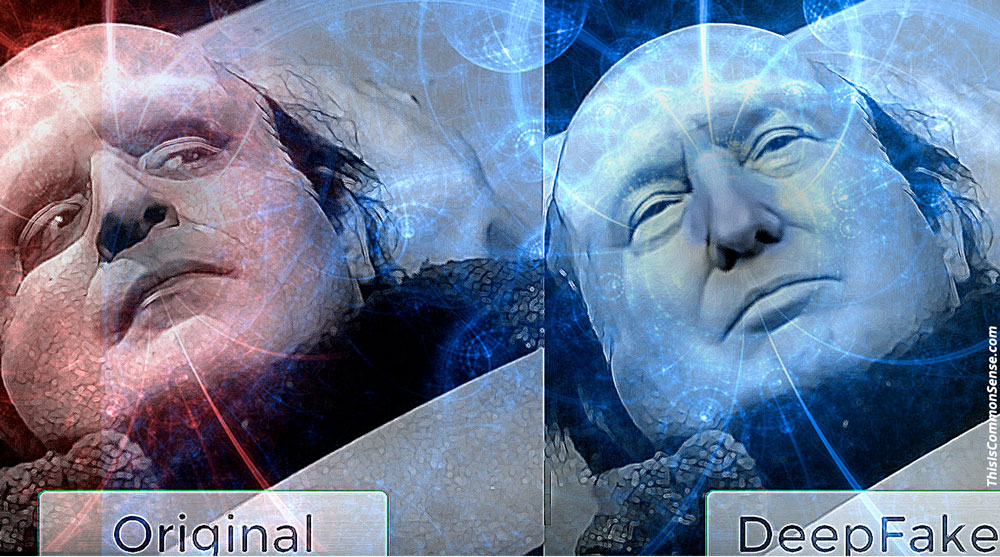
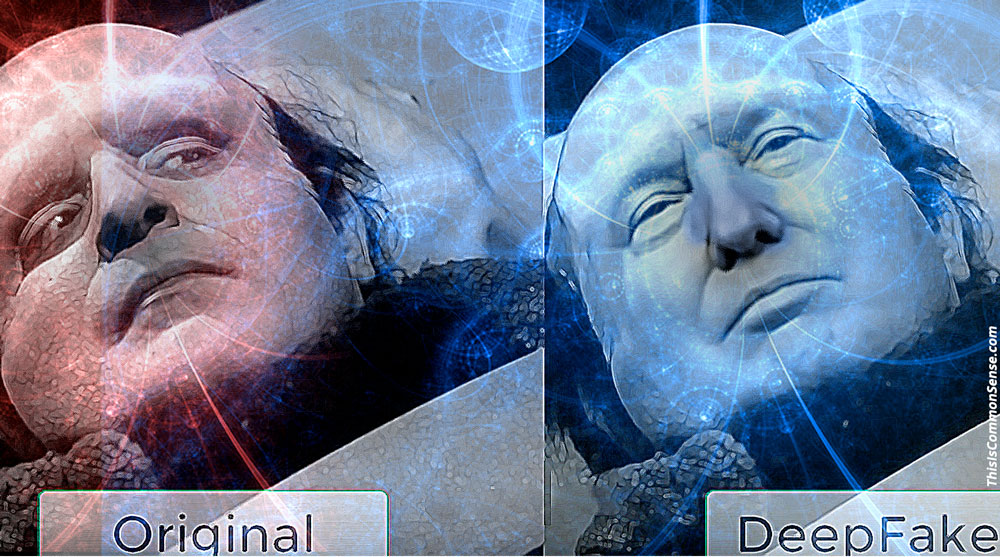
Deep State, Deeply Fake

Is there a good, presumptive reason to believe what the government tells us?

Not when it comes from the “intelligence” agencies.

One of the more breathtaking developments of recent years has been the transformation of Democratic Party politicians and activists from skeptics of alphabet soup intelligence agencies — CIA, NSA, FBI and many more — to becoming enthusiastic cheerleaders.

On the bright side, Republicans are drifting in the other direction, from their old-fashioned lockstep support of “intelligence agencies” to a new realism — the relentless Deep State “coup” attempts against the Trump Administration having proved . . . instructive.

While we might wish to think that, whew!, these agencies are comprised of loyal Americans, consider what Senator Chuck Schumer said earlier this year, almost approvingly: “You take on the intelligence community — they have six ways from Sunday at getting back at you.”

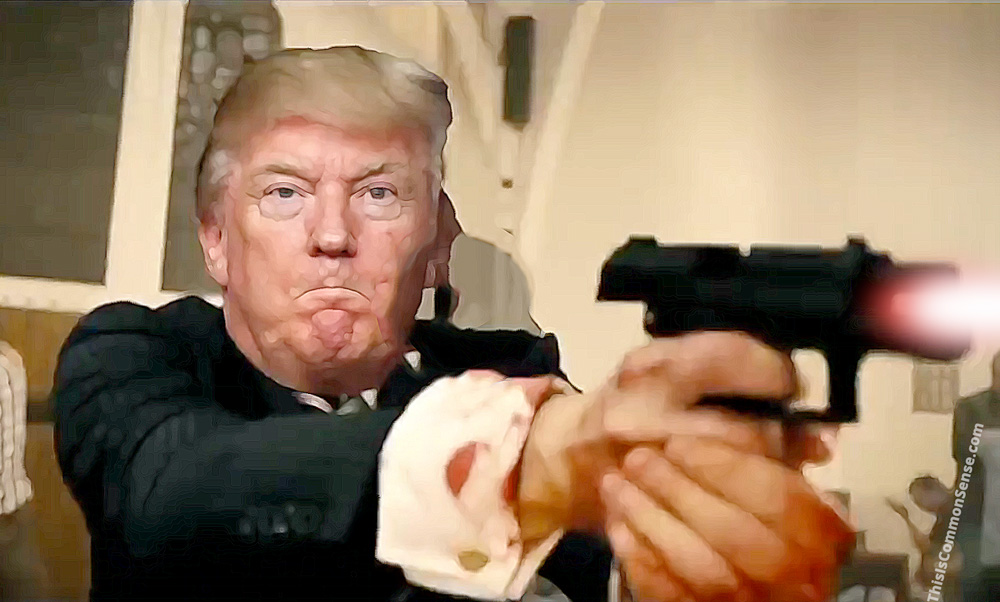
But more important than all this is the developing techniques the Deep State can marshal. I refer to Deepfake tech, where anything video can be faked, convincingly and completely. If not now, then very soon, technicians within the Deep State — and outside, too — will be able to videofake anything, from Trump cavorting with Moscow hookers to an Iranian “attack” to . . . UFO landings.

We shouldn’t have trusted intelligence agencies in the run-up to the Iraq conquest, now we have good reason to doubt anything and everything they tell us. 

Which means Congress should take very tight control of them, rein these agencies in — for Congress is indeed worried about deepfake tech.

How?

Well, de-classifying old secrets might be a good start. The last bit of the JFK assassination files? Maybe. UFOs? Maybe. But it’s what’s not on our radar that may be the most important.

This is Common Sense. I’m Paul Jacob.

PDF for printing

deep fake, Donald Trump, Young Frankenstein,

See all recent commentary
(simplified and organized)
See recent popular posts


Categories
national politics & policies Popular responsibility U.S. Constitution

Congress’s King

Politics today reveals a troubling dialectic.

Thesis: President Trump boasts that he is going to unilaterally “do something” as if he were Emperor, not President. 

Antithesis: Then comes pushback from political opponents and the media, castigating our current commander-in-chief for imagining himself a lawless dictator. 

Synthesis: This is soon followed, however, by the discovery that the president does have such awesome power. 

Legally.

In our constitutional system, can a president can just wake up one day and slap tariffs on imports? Well, numbskulls in Congress passed a law handing the president that specific power.

When President Trump declared an emergency to re-direct money, appropriated by Congress for different purposes, toward building the Wall, many argued that the president cannot usurp Congress’s undisputed power of the purse. True, but irrelevant. Congress had indeed delegated all these undefined and largely unchecked “emergency” powers to the prez.

Last week, as the trade war with China was coming to a boil, Mr. Trump tweeted, “Our great American companies are hereby ordered to immediately start looking for an alternative to China, including bringing . . . your companies HOME and making your products in the USA.”*

I thought, “Does Trump really think he has the legal authority to order all U.S. businesses to leave China?”

Yes . . . and apparently he does. It’s called The International Emergency Economic Powers Act.

“One of the enduring phenomena of the Trump era,” University of Texas law professor Stephen Vladeck told CNN, “is going to be the list of statutes that give far too much power to the President, but that many didn’t used to worry about — assuming there’d be political safeguards.”

Or that “the right person” would always be in office.

This is Common Sense. I’m Paul Jacob.


* Note that Mr. Trump did not order the companies to leave, but did assert his “absolute right” to do so.

PDF for printing

King of Diamonds, King Donald, Donald Trump, trade, tariff, power,

See all recent commentary
(simplified and organized)
See recent popular posts


Categories
international affairs

Buying Ice

The president wants to buy more land.

On our dime.

“The idea of the U.S. purchasing Greenland has captured the former real-estate developer’s imagination,” began a Wall Street Journal report last week. Donald Trump has asked about it anyway, “with varying degrees of seriousness.”

Grønland — “Kalaallit Nunaat” — is Danish territory now. But the United States does run the Thule Air Base on the glacier-dominated island already. So it might seem . . . natural.

The last major American purchase of territory from another sovereign power was, actually, from the Kingdom of Denmark back in 1917, when the United States obtained the U.S. Virgin Islands

The notion of buying Greenland was floated back during the Truman administration, too. So there is ample precedent. Which gives Trump a plausible context to advance a destabilizing meme for his upcoming visit to Denmark, where he will no doubt be doing some “negotiating” . . . about more important matters.

And what might those be? Well, matters like the country’s contributions to its own defense. Denmark is low on the list of contributing NATO participants, devoting only 1.7 percent of GDP to defense, not the treaty level of 2 percent.

It’s mainly just amusing, of course — probably even to Trump himself. “It’s just something we’ve talked about,” he’s explained. “We’re very good allies with Denmark. We’ve protected Denmark like we protect large portions of the world, so the concept came up.”

Of course, the U.S. doesn’t need Greenland. And it certainly doesn’t need to spend money it doesn’t have to do so.

Still, there have been and will be more idiotic proposal floated this election season. Plenty.

This is Common Sense. I’m Paul Jacob.


Greenland, Trump, land, territory, purchase, ice,

Photo from pixabay

See all recent commentary
(simplified and organized)
See recent popular posts
Categories
media and media people meme national politics & policies Popular

Courage and Wisdom?

President Donald Trump responded to the weekend’s two shooting atrocities by decrying hatred and making five substantive proposals. 

“They include tools to identify early warning signs in mass shooters, reducing the glorification of violence, reforming mental health laws, enacting ‘red flag’ laws to stop dangerous individuals from gaining access to firearms, and enacting the death penalty for mass murderers,” the Epoch Times summarizes.

But how useful are these?

  1. The “early warning signs” of a criminal are often identical to grumpiness and even righteous indignation in others — “tools to identify” could easily serve as excuses for unwarranted meddling and worse.
  2. Who would enforce lessening the “glorification of violence”? The federal government that is always at war?
  3. Is it mental health laws that should be reformed, or the practice of putting whole generations of boys on Ritalin and worse . . . made especially ominous by the percentage of shooters on such drugs?
  4. Denying “dangerous individuals . . . access to firearms” remains problematic under any semblance of due process and the ‘innocent until proven guilty’ principle.
  5. Since “death by cop” is often one of the apparent goals of many would-be shooters, how much of a deterrent could death by sterile procedure actually be?

But if you are looking for even worse reactions, look beyond Trump. The Democrats took the occasion to raise funds

And complain to the New York Times, which “changed a headline on its front page because it presented Trump in a neutral light,” reports independent journalist Tim Poole. “This was in response to far left activists and Democrats expressing shock and outrage and demanding everyone cancel their subscriptions to NYT over it.”

Ideological bias or old-fashioned market pressure?

If it is in tragedy that we find our greatest tests of courage and wisdom, the weekend’s shootings show a lot of political and media failure.

This is Common Sense. I’m Paul Jacob.


PDF for printing

gun violence, gun control, law, mass shooting, 2nd Amendment, Donald Trump,

See all recent commentary
(simplified and organized)
See recent popular posts

Categories
government transparency

Transparent on Twitter?

I find Twitter distasteful, annoying, even stupid. I sometimes wonder why I should care about that particular “micro-blogging” platform.

But since it is a big deal to others, I struggle to understand.*

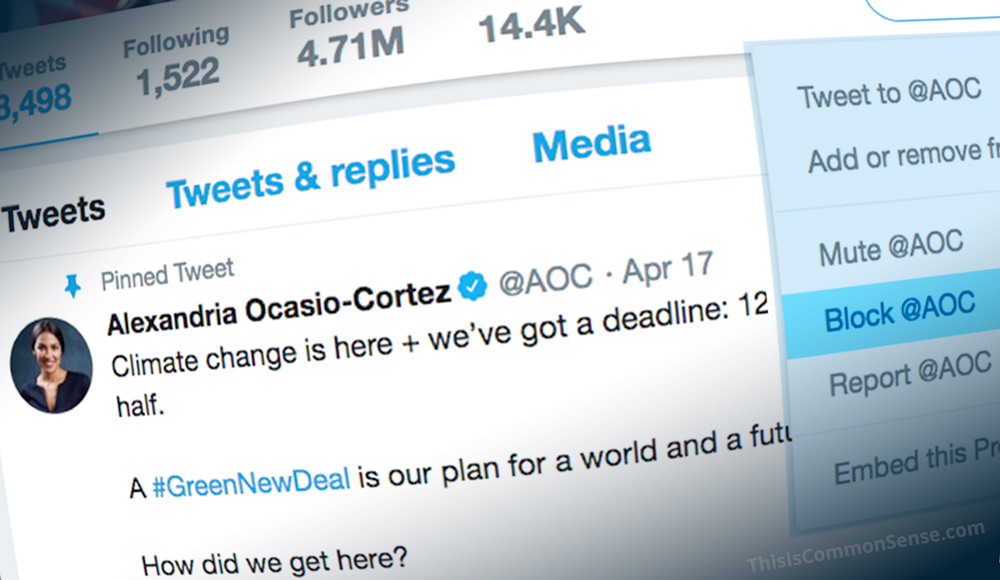
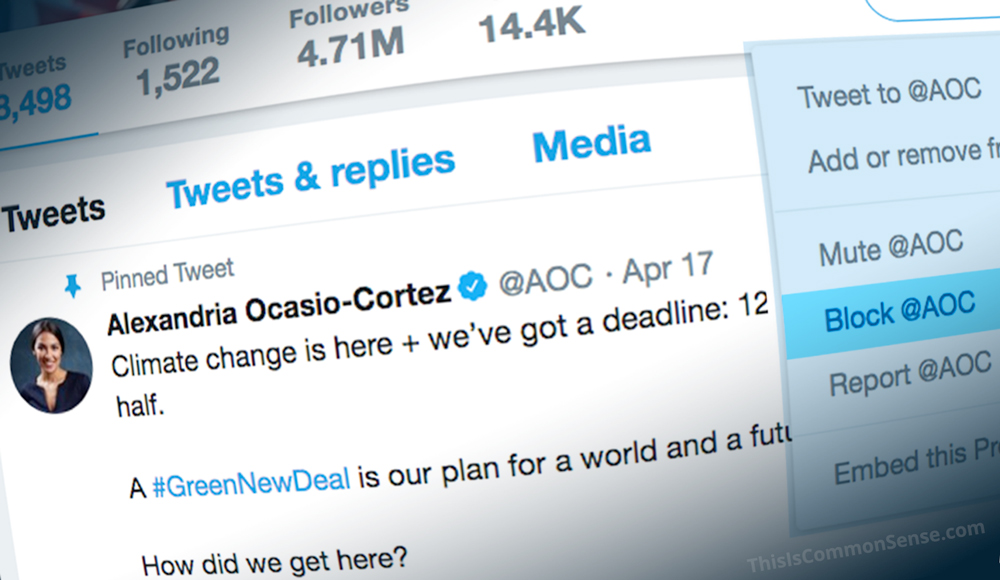
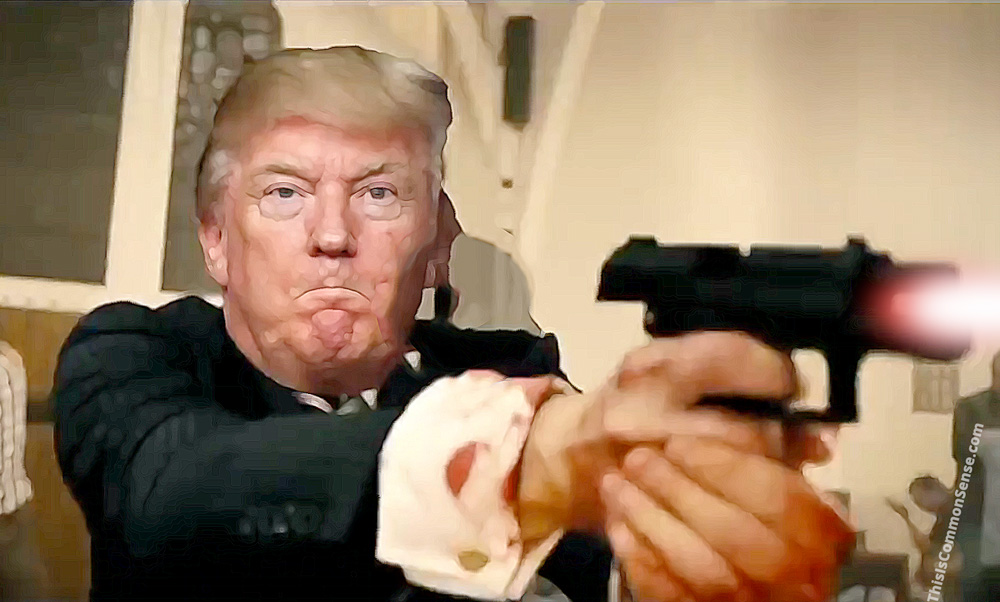
Joining me in the struggle are our two most famous political Twitterers, President Donald Trump and Representative Alexandria Ocasio-Cortez (D-N.Y.).

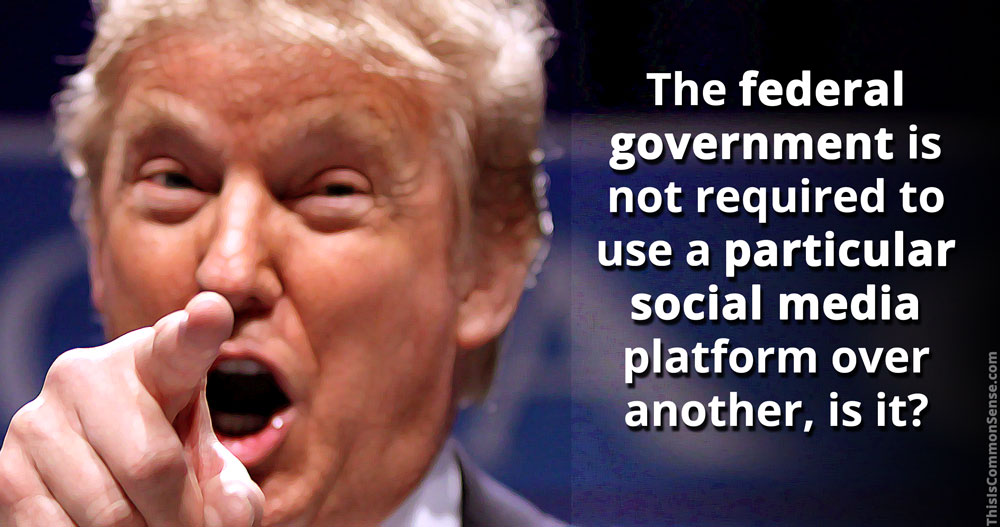
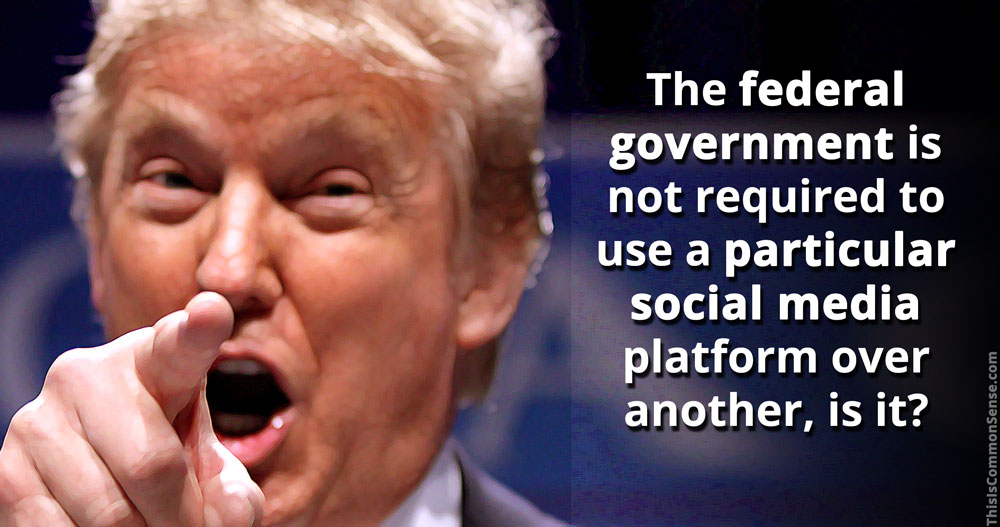
The president lost in court the other day, with the 2nd Circuit Court of Appeals telling him he must no longer block users on the social media platform.

Now AOC finds herself in a similar pickle. On Tuesday, a former Democratic New York Assemblyman filed a lawsuit in federal court against the popular freshman U.S. Representative for doing the same thing Trump had been doing: blocking users on Twitter based on their personal viewpoints.

The litigant surmises that AOC had blocked him “apparently because my critique of her tweets and policies have been too stinging.”

Ouch?

“Twitter is a public space,” insists this Democrat, Dov Hikind, “and all should have access to the government officials on it.”

This puts me in a pickle, too. I am all for government transparency — and I do think officials and representatives should not be completely insulated from the citizens they serve. But we don’t have a right to follow them into their bedrooms or bathrooms.

So, high-profile federal employees who in any way discuss public matters on social media should not be allowed to block Americans from seeing their posts. But take pity on the poor pols: they should be able to mute users, that is, keep others from cluttering up their social media experience.

Oddly, the lawsuit does not address this muting option.

This is Common Sense. I’m Paul Jacob.


* I even use it, occasionally.

PDF for printing

AOC, Trump, twitter, block, blocking, free speech,

See all recent commentary
(simplified and organized)
See recent popular posts

Categories
media and media people

Morning Mind-Probe

There’s news reporting, done well or not, and opinion, with which one can agree or disagree. But on MSNBC’s Morning Joe you get something even more illuminatingmind-reading.

Yesterday, the show addressed U.S. Attorney General William Barr’s testimony the previous day before a Senate subcommittee. Viewers were shown The Washington Post’s succinct front-page headline: “Barr thinks U.S. spied on Trump.”

 And heard the Attorney General tell Senators that he wanted to “explore” and “make sure there was no unauthorized surveillance” of the Donald Trump for President campaign. “I think spying on a political campaign is a big deal,” he added.

“You’re not suggesting that spying occurred?” asked Sen. Jeanne Shaheen (D-N.H.)

“I think spying did occur,” Barr replied, “yes.” Barr defined “spying” as “unauthorized surveillance.”

“Someone’s been Trumped!” co-host Mika Brzezinski exasperatedly declared as the footage ended. Co-host and husband Joe Scarborough then took over, likewise uninterested in any such inquiry.

“[Barr] knows that what he’s saying is unbelievably reckless,” the clairvoyant former congressman informed. “And you can almost see in his mind, Barr going, ‘How do I answer this question so that Trump doesn’t tweet at me, so that I keep my job, but still not make a jackass of myself for lying?’”

As on-set bobbleheads nodded, Mike Barnacle vouched for Joe’s telepathic veracity, sharing a tale that “two people who have known Bill Barr for 30 years” were “stunned.” These unnamed sources are known only to Mr. Barnacle, the disgraced former Boston Globe columnist, a plagiarist and fabricator of stories, once described accurately as “cynically churning out fiction clothed as journalism.”

“I want to satisfy myself that there were no abuse of law enforcement and intelligence powers,” Barr told the committee. “I think that is one of the principal roles of the attorney general.”

I agree . . . but you read my mind.

This is Common Sense. I’m Paul Jacob.


PDF for printing

Joe Scarborough, Morning Joe, Donald Trump, Russia,

See all recent commentary
(simplified and organized)
See recent popular posts
Categories
Accountability government transparency national politics & policies too much government

Long Gone Rogue

Back in the 1990s, we used to talk about “rogue agencies” of the U.S. Government. And for good reason: the Branch Davidian massacre and the Ruby Ridge fiasco were hard to forget.

After 9/11/2001, however, we cut the agencies some slack. Why? Their incompetence and our hope.

But it became obvious from the NSA’s illegal metadata collection program, as revealed by Edward Snowden, the core agencies of the military-industrial complex do not like playing by rules that the American people have a say in.

How bad is it?

On New Year’s Day this year, Sen. Chuck Schumer was talking to MSNBC’s Rachel Maddow about their favorite conspiracy theory. Maddow, as we all know, had gone Full Nutter on this “collusion”/“corruption” story, and Democratic politicians (along with nearly the whole of the mainstream news media) ran with the story for two years. Then, the Mueller report is “no collusion.”

But on that first Tuesday of 2019, Ms. Maddow was talking about Trump’s tweets which she characterized as “taunting” the CIA and other agencies obsessed with the “Russian hacking” angle of the brouhaha. And Schumer’s response? 

“Let me tell you: You take on the intelligence community — they have six ways from Sunday at getting back at you.”

We should take this as a signal. It is like making prison rape jokes. It says something about the situation: prison rape or Deep State machinations. And about the speaker: leveraging a rogue element as a threat.

No wonder many now think the Russiagate/Mueller investigation was a “Deep State Coup” attempt.

A republic with rogue agencies is hardly a republic at all.

This is Common Sense. I’m Paul Jacob.


PDF for printing

Chuck Schumer, Rachel Maddow, deep state, Donald Trump

See all recent commentary
(simplified and organized)
See recent popular posts

Categories
national politics & policies

The Cohen Conspiracy?

The whole “Russia conspiracy” charge, relentlessly picked at and hyped since Donald Trump’s election in 2016 — and, more relevantly, since Hillary Clinton’s loss — suggests that Trump’s an evil mastermind. The infamous “dossier” that included tales of Russian harlots in a suite Barack Obama stayed in, suggests that Trump’s something of a madman as well as a narcissist.

Trump’s former fixer, Michael Cohen, Esq., in his testimony before Congress, has called Trump a racist, con-man and cheat. Cohen has publicly confessed his many grievous sins and technical crimes, re: bribery of hookers, etc., and generally repented of having served as the Evil Trump’s minion. Cohen has pleased Democrats by relentlessly castigating the president’s character, Igor finking on Frankenstein.

One important take-away, however, is that the biggest charge against Mr. Trump appears untrue. Cohen did not go to Prague to meet with Russians to advance some nefarious business-cum-political deal.

So this is the end?

Sure looks like it, but I am waiting for someone to notice that Cohen’s testimony could be a ruse. 

Were Trump truly an evil mastermind, he would have figured that the only way to convince his enemies was to have the testimony of his innocence come from someone who hates him, who says all the right things against him.

In this scenario, Cohen still plays thrall to Trump. He has delivered the poison pill in the sweetest chewable form: his own public defection from Trump.

Is this psyop what’s going on?

Probably not.

But if one sees Trump as both an evil mastermind and a crummy, petty narcissist bordering on buffoon, then what would you believe? Were you right all along . . . but completely played?

This is Common Sense. I’m Paul Jacob.


PDF for printing

Donald Trump, 4d Chess, strategy, Michael Cohen, investigation, Russia

See all recent commentary
(simplified and organized)
See recent popular posts
Categories
international affairs Popular too much government

Strategic Disengagement

The policy was announced in a Tweet: President Trump said it was time to pull out of Syria. We won, he explained. “After historic victories against ISIS, it’s time to bring our great young people home!”

There is, of course, much outcry among Republicans, Sen. Lindsey Graham (R-SC) and pundit Ben Shapiro making the same point: this is, in the senator’s words, “a huge Obama-like mistake.”

But not a few are supportive. “U.S. forces should not be engaged in Syria — or any country,” explained Rep. Justin Amash (R-Mich), “without legitimate military justification AND proper congressional authorization.”

And there is no doubt that after pulling out of the region — and yes, it looks like Trump is readying forces for a pull-out of the expensive and ridiculous Afghanistan occupation — there will be outrageous horrors. But are they America’s? 

Should they be?

The problem with trying to solve every worldwide conflict is clear: by intervening, we make those conflicts ours.

The idea that the American military can successfully micromanage conflicts around the world seems implausible. And increasingly counter-factual. 

The same logic against intervening in the domestic economy to “wisely” promote some businesses and demote others also applies against most foreign military intervention: “unintended” consequences get conjured up, and even blowback.

Also, somehow, almost no one ever consults Just War theory to test various proposed interventions. Instead, military interventionism is all audacious hope and lofty language.

No realism, despite “Mad Dog” Mattis’s protests to the contrary.

Foreign policy scholar Earl Ravenel had the perfect term for what Trump may be and should be doing: strategic disengagement. We have much to gain from a more restrained — and constitutional — foreign policy.

This is Common Sense. I’m Paul Jacob.


PDF for printing

Donald Trump, Trump, Syria

See all recent commentary
(simplified and organized)
See recent popular posts


Categories
government transparency too much government

Fill Up the Swamp Some More

Donald Trump’s “drain the Swamp” promise was good rhetoric, great politics — because nearly everybody knows that the federal government just cannot restrain, constrain, or re-train itself.

So it would have to take an outside force.

Along comes said Outside Force — the current president — yet the Swamp remains.

Unfortunately, too few of the president’s most ardent supporters see the deepest part of the Swamp.

That is, the Department of Defense.

“Less than a week after calling the Pentagon’s $716 billion budget ‘crazy’ and indicating that he wanted to trim it, President Donald Trump is reportedly proposing to push America’s military spending to greater heights,” writes Eric Boehm at Reason. “Trump told Mattis to submit a $750 billion budget request for next year — well in excess of the $733 billion level that had been previously planned.”

And he does this despite the fact that just recently this military establishment failed to give a competent accounting of its spending.

Sadly, poor accounting is rigged into the Department of Defense, as demonstrated in an important exposé last month.

“For decades, the DoD’s leaders and accountants have been perpetrating a gigantic, unconstitutional accounting fraud,” The Nation explains, “deliberately cooking the books to mislead the Congress and drive the DoD’s budgets ever higher, regardless of military necessity.”

Even the imperiled Social Security juggernaut is not run as badly as the Pentagon. We at least know where its funds go and have gone.*

It may be that a real leader — with substantive ideas, reliable information, and a sense of the enormity of governmental carelessness — will inspire Americans and challenge the Deep Swamp, er, State, before catastrophe.

Unfortunately, Trump is looking less and less like that drainer.

This is Common Sense. I’m Paul Jacob.


* One recipient of Social Security “contributions” has been, in fact, the Pentagon, since budget deficits have been at least partially covered by congressional borrowing from Social Security’s “surpluses.”

PDF for printing

Photo credit: Puck, 1909


See all recent commentary
(simplified and organized)
See recent popular posts