Categories
crime and punishment education and schooling folly general freedom too much government

Under Their Thumb

What if police grabbed your children off the street and held them for five hours?

Alexander and Danielle Meitiv of Silver Spring, Maryland, have been investigated three times. First, when their children were discovered playing by themselves in a park a block from their home. The second time when police picked up the kids walking home from a park about a mile away. The third investigation was launched when the Meitiv’s 10-​year-​old son and 6‑year-​old daughter were arrested and held for five hours for walking home from a different park.

Nothing came of the first investigation. In the second, CPS originally found the couple guilty of “unsubstantiated neglect.” But last week, the Meitivs received a letter from Maryland’s Child Protective Services (CPS) now ruling out neglect in the second investigation.

Gee whiz, it’s good news. But the Meitivs still have investigation No. 3 to contend with. And CPS remains completely mum on whether the agency’s letter means the Meitivs and other parents can now freely allow their kids to walk to and from public parks and other venues.

Or not.

Can we really live in the “Land of the Free” and our children not be free to walk in public? What kind of freedom is that?

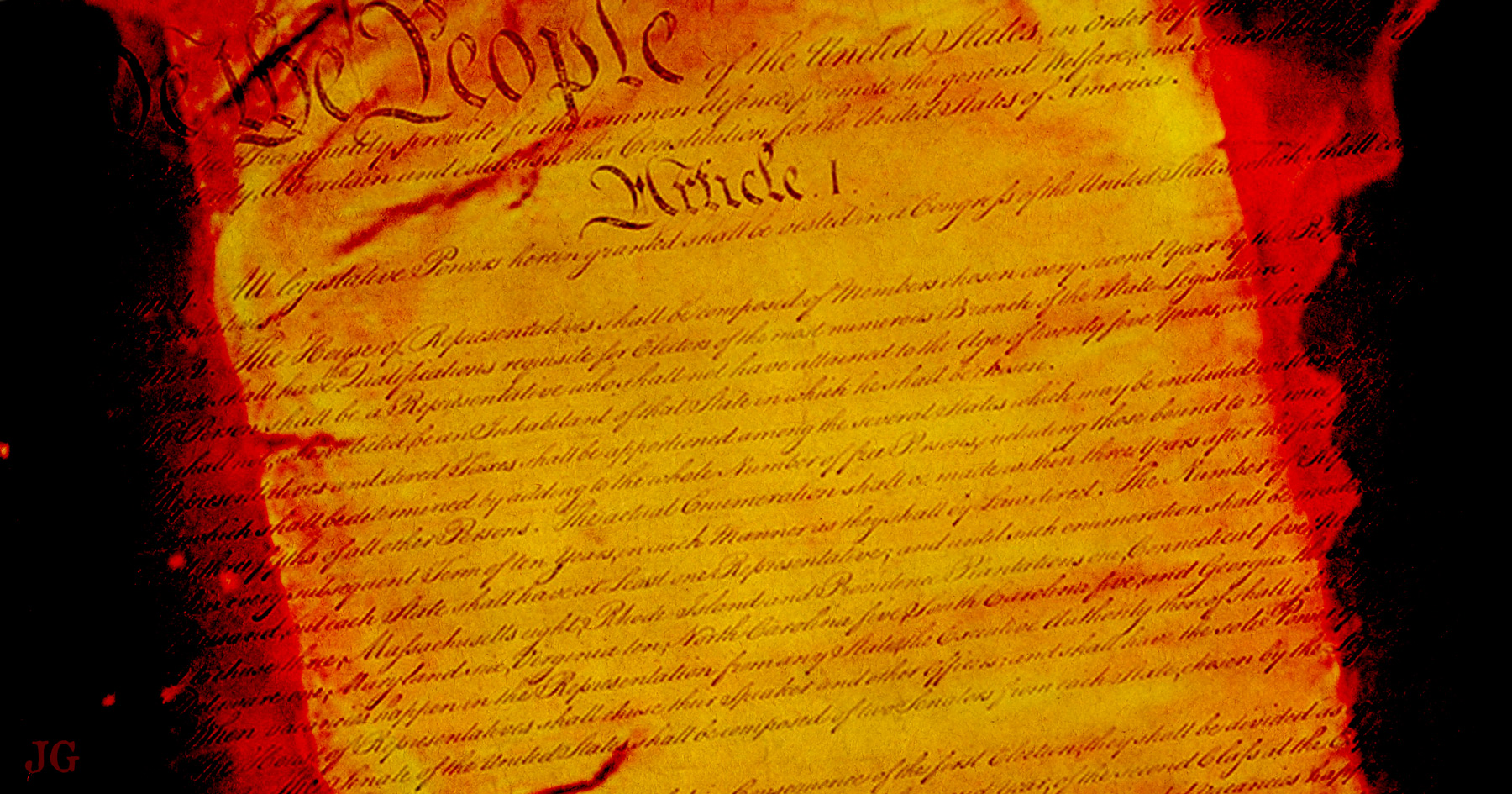
If the Constitution isn’t sufficient to stop police and child welfare [sic] agencies from snatching kids off the street, terrifying them, investigating their parents and threatening to take those children, we need to pass new laws granting children the right to walk down the street …

… as long as it’s okay with their parents.

This is Common Sense. I’m Paul Jacob.

Printable PDF

Free Range Kids


Categories
Common Sense general freedom individual achievement meme U.S. Constitution

Everything That Could Be Done

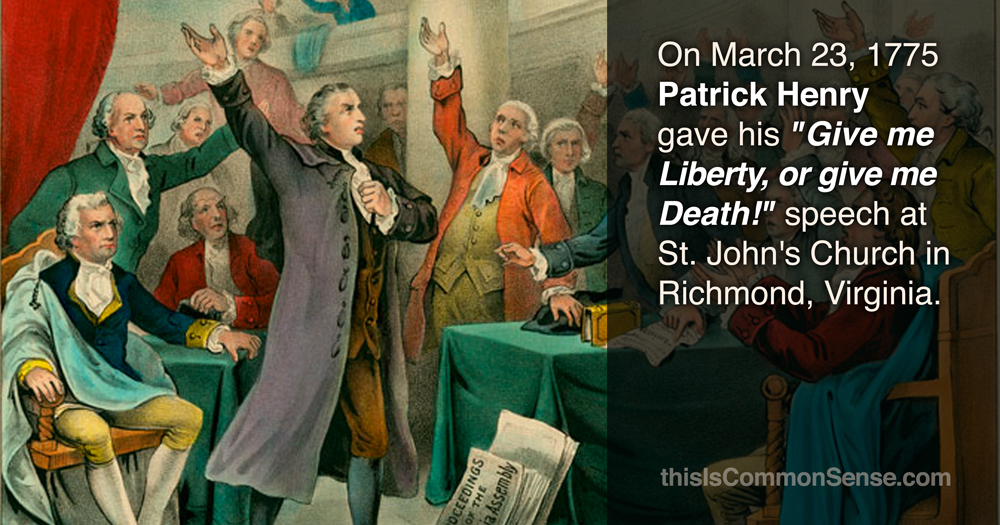
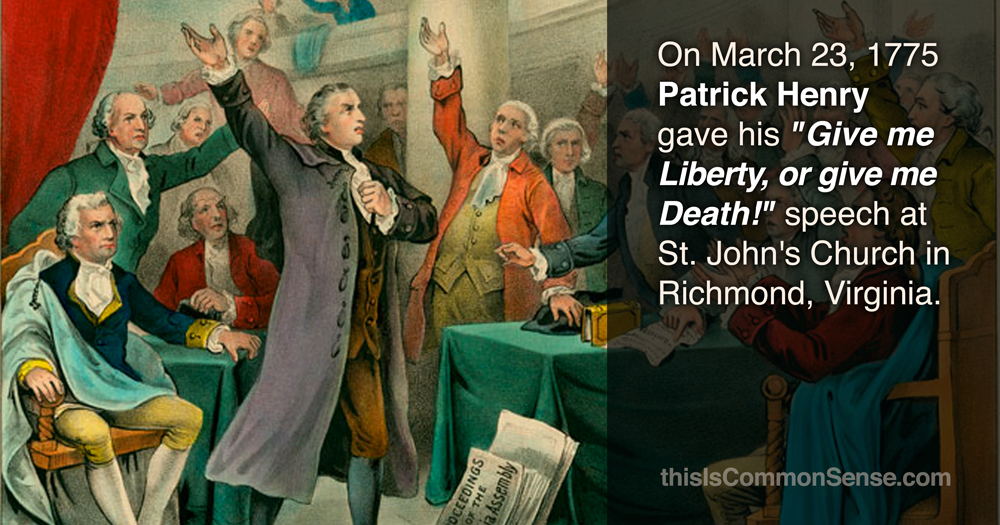
Two hundred forty years ago, the situation was dire. In the Virginia Colony, not too far from where I live, representatives to the Second Virginia Convention were debating the problems they were having with their “masters” in Britain — and the more dangerous, violent situation that was developing to the north.

Several days into the convention, Patrick Henry spoke. His speech was rousing. And it changed minds, concluding with the famous words “give me liberty or give me death!” — an ultimatum quite stark indeed.

Mr. Henry was for action, and waiting no longer. Addressing himself to the president of the convention, he said, “Let us not, I beseech you, sir, deceive ourselves longer. Sir, we have done everything that could be done to avert the storm which is now coming on.” And they had done a great deal, engaging in

- petitioning

- remonstration

- supplication

and, Henry went on, had even “prostrated ourselves before the throne.” And they got worse than the cold shoulder for all their efforts. They got the brush-​off, the turn of the cold robe. Along with troops of occupation.

Hence the need for serious action.

Then, Americans were wrestling with the world’s most powerful nation: the British Empire. Today we again face the world’s most powerful empire: our own.

A federal regime similarly out of control in terms of spending and debt, arrogance and corruption, intrusiveness and incompetence. As if dictated by a know-​it-​all king of old, or a cabal of insiders acting as oligarchs.

Then it was a far-​off Parliament; today it is our own far out-​of-​it representatives … duly elected.

We are engaged in a sort of class war, insiders vs. outsiders, and it is the insiders who are bringing the country to the brink of collapse.

The biggest difference between 1775 and 2015? We haven’t done all we can. There is much more to do. And possibly even succeed before the doom of another financial collapse, sovereign debt crisis, or … worse.

It often seems a Herculean task, but as Mr. Henry implored, “Sir, we are not weak, if we make a proper use of those means which the God of nature hath placed in our power.”

Let’s join together to give ourselves, our loved ones, and generations hence liberty.

This is Common Sense. I’m Paul Jacob.


Printable PDF

Read the entire speech here

Printable PDF of the entire speech here

Get a high-​resolution screensaver of this day’s image. Click on the thumbnail picture below to open a large version that you can download.

The Meaning of "Liberal"


Categories
ideological culture

Too Fine a Point

Whatever one makes of the direction Egypt is headed, the most ominous headline I’ve seen, recently, is the one that is ostensibly optimistic: “Egypt: 98.1% of voters approve constitution.”

That was in USA Today.

It is not, of course, believable.

What do more than 98 percent of America’s voters agree on?

Transplant that radical supermajority to Egypt, where politics is often deadly, a coup recently took out the biggest faction — and with it, the previous working constitution — and where the major faction is associated with terrorism and street violence, and we are to expect a consensus like this?

The title defeats itself, undermines itself.

It might as well have said, “This Title Is a Lie,” except without the paradox.

Then again, with only 38.6 percent of voters going to the polls, that 98.1 figure takes on a new meaning. Could it be that, of 38.6 percent of eligible voters actually voting, the ones who did show up were nearly unanimous in their support of the new regime?

More likely, but still not likely at all.

Revolutionary politics is an ugly business. And what we are to make of what’s really happening in Egypt is beyond my ken. I just know that 98.1 percent of Egyptian voters do not approve of the constitution.

But if this kind of nonsense gets reported with a straight face in America, it should make us more circumspect about the other information we receive about conflicts overseas.

I’m 98.1 percent confident of that opinion. At least.

This is Common Sense. I’m Paul Jacob.

Categories
ideological culture too much government U.S. Constitution

The 14th Amendment Escape Clause?

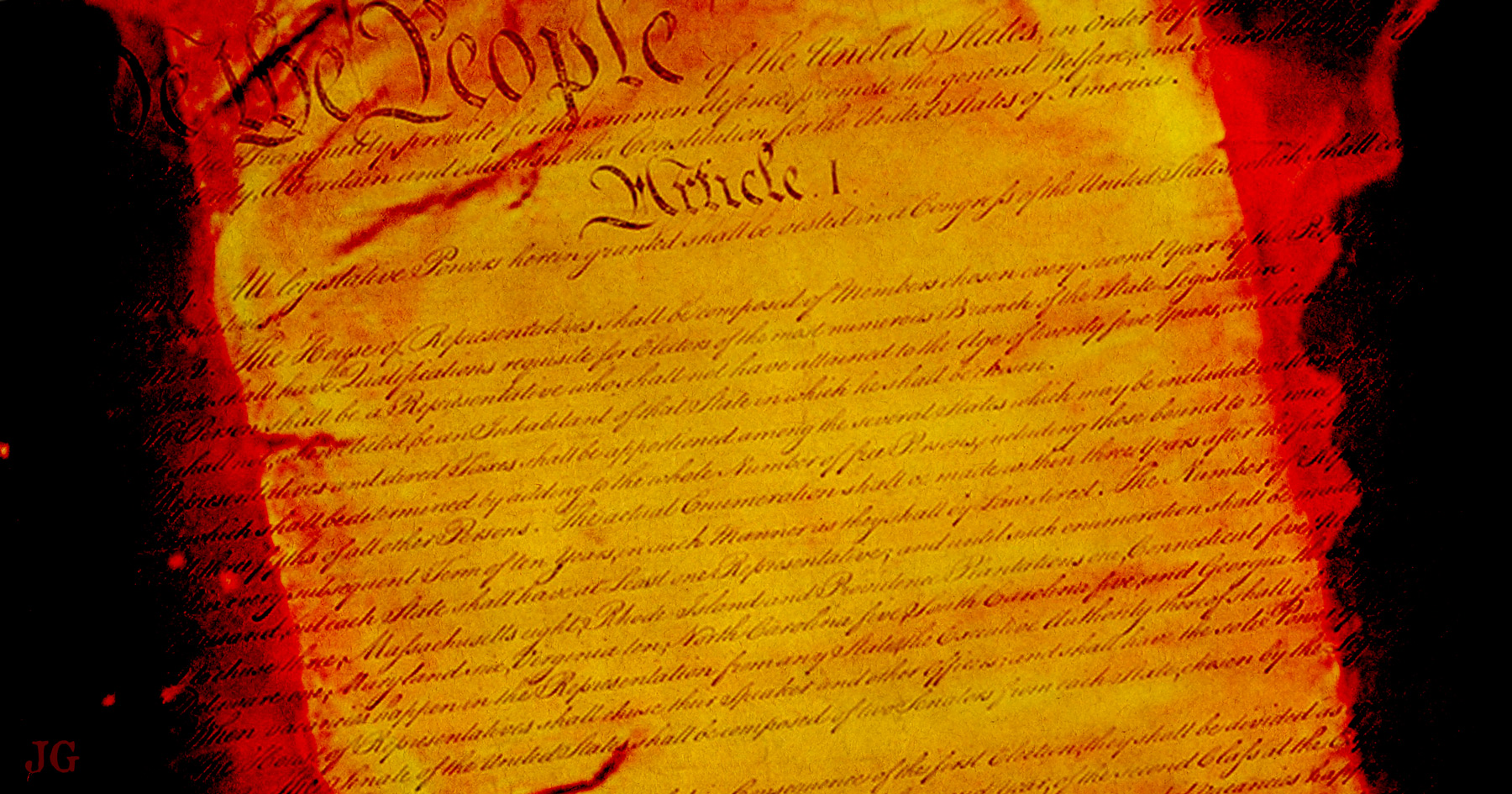
Just as Tea Party representatives begin to bring the Constitution back into vogue, primarily to curb the power and spending of Congress, an innovative interpretation of the 14th Amendment floats around the capital, finding enthusiastic supporters amongst advocates of never-​ending debt accumulation.

You see, Congress has limited the debt, by law, since 1917. And has raised that limit umpteen times (ten times this past decade). Now that Tea Party Republicans are using the debt limit to negotiate cuts in spending, the pro-​spending forces are becoming frantic.

And clever.

Some of them now argue that Section Four of the 14th Amendment would allow the president to raise the debt limit without Congressional permission. After all, “The validity of the public debt of the United States, authorized by law, including debts incurred for payment of pensions and bounties for services in suppressing insurrection or rebellion, shall not be questioned.” 

At first blush this makes some sense, until one realizes that the 1917 law is, in fact, “the authorization” mentioned in the very clause — at which point the argument collapses faster than the integrity of politicians in closed session.

Still, the idea of the Executive Branch interposing between Congress and the people — like “state nullification” interposed, in James Madison’s very words, between the federal government and the people — is worth thinking about. And Congress could reinstate the president’s power to “impound” funds designated by Congress that he judges not authorized by the Constitution.

But you won’t find pro-​spending forces advocating that.

This is Common Sense. I’m Paul Jacob.
Categories
national politics & policies U.S. Constitution

Reading Comprehension

Never has the Constitution been read on the floor of the U.S. House of Representatives. And, boy, does our political situation show it.

When the 112th Congress convenes this week, the law of the land — the limited, enumerated powers granted to the federal government by “We the People” in this 223-​year old document — will for the first time be spoken aloud for all honorables to hear. It’s a quick read, less than 5,000 words, and presumably cameras will be rolling, so we’ll know if any elected representative sticks finger into ear during the recitation.

A hat-​tip to the Tea Party movement, this reading of the Constitution is a great way to remind our legislators that such a document actually exists.

Even better, a new rule will be proposed requiring every piece of legislation to have affixed a citation “where in the Constitution Congress is empowered to enact such legislation.”

Sure, Washington pundits have mocked this newborn constitutionalism, crying “gimmick!” One history professor called it “entirely cosmetic.” Tea Party activists are skeptical, too. As they should be.

Neither reading the Constitution nor declaring the constitutional authority for legislation amounts to magic. But, with a political process in which politicians rarely recognize any limits to their wizardry, a requirement that Congress specifically pay attention to whether its actions are permitted by the Constitution is, well, really good.

Will it lead to Congress actually abiding by the limits of our Constitution? It certainly couldn’t hurt.

This is Common Sense. I’m Paul Jacob.
Categories
ideological culture

Tea Readers

According to a New York Times article by Kate Zernike, the “Movement of the Moment Looks to Long-​Ago Texts.” A strange way of saying that Tea Party folks are reading, learning, and studying ideas older than those of, say, Paul Krugman.

Tea Partiers are reading classics … but ones not recognized as such by the New York Times:

  • Frédéric Bastiat, The Law
  • F. A. Hayek, The Road to Serfdom
  • Saul D. Alinsky, Rules for Radicals

Huh? That third book serves as an oddity on the list. It’s a handbook on street-​level ways to effect political change. The left’s loved it for years. Now it’s in the hands of people with scant interest in mass expropriation or heavy, vindictive regulation, or a vast, tax-​funded gimme-​gimme state. 

The article cites the “Austrian School of Economics” — a brand of economics that includes many of the most important free-​market thinkers — as an important force, but merely mentions its 20th century leader, Ludwig von Mises, as if a duty. Bastiat, a French economist who died before the school was founded, is lumped in with Mises and Hayek, perhaps because he’s so radically anti-taxation that the Times hopes by mentioning his ideas over and over, readers might dismiss him as a nut.

That could backfire. Some of the Times’s smarter readers might become curious, reading Bastiat and Mises and Hayek with the notion of learning something. 

Maybe they’ll even read the Constitution.

Wow. What a revolutionary thought.

This is Common Sense. I’m Paul Jacob.

Categories
term limits

Long Time (1996+12=2008) Coming

Been a long time coming. The twelve-​year term limits law passed by Nevada voters in 1996 is finally taking effect.

Except for state lawmakers elected in 1996, that is.

Nineteen ninety-​six plus twelve equals 2008. But in 1996, legislators seized on a technicality to claim that — unlike for other office-​holders — for them the count didn’t start until 1998. That’s because, under Nevada law, state lawmakers take office the day after the election. Yet it takes more than a day to ratify ballot results. So the argument goes that it would be unfairly “retroactive” to include the 1996 term in the twelve-​year limit.

Inspect the Nevada constitution, and you’ll see provisions stating that no person may be elected to legislative or other elective office who “has served in that office … twelve years or more.…” Nothing about starting the clock on the date the ballot measure is ratified.

But in 1996 politicians and courts pretended the new law was not retroactive, and got away with it.

Come 2008, non-​legislative office-​holders finally facing term limits scavenged for yet another technicality. They claimed that the law is unconstitutional and should be thrown out altogether. Fortunately, the Nevada Supreme Court didn’t play along with the latest scam, so Nevada voters must wait only two more years for state lawmakers to be ousted by it. 

Better late than never.

This is Common Sense. I’m Paul Jacob.

Categories
Common Sense

Petty Police State

Could the most important thing one does for one’s community be to send a pocket copy of the U.S. Constitution to local politicians and police?

Some officers in the Dallas Police Department are doing things against the letter and the spirit of our laws. After writing a traffic ticket up, and getting the signature, too many on the force then add on infractions.

Gretchen West was stopped for a burned-​out tail light. She took away her ticket for $220. And paid. Then she got a letter in the mail, saying she owed an extra $378 for failing to wear a seatbelt and driving without her headlights on.

But, but … the officer had not mentioned those alleged violations!

The Dallas Morning News informs us that an assistant city attorney documented about a dozen cases like this in recent months.

This weird twist on ex post facto law is Kafkaesque, actually, the kind of thing you’d expect from a police state.

Now, I know: Dallas, Texas, today, is a better place to live in than was Moscow, USSR, circa 1950. The Soviets set in place a totalitarian police state.

Here in America, when our rulers and enforcers forget the importance of the rule of law, and the primacy of citizen liberties, they tend to set up not totalitarian police states but petty ones.

Sure, the pettiness is a bit of a relief. But it’s just not the American way.

This is Common Sense. I’m Paul Jacob.